
金融服务

Search documents
黄金、白银齐创新高,知名机构做空白银亏了420万
21世纪经济报道· 2026-01-20 10:29
Core Viewpoint - The article highlights the significant rise in gold and silver prices, with silver's performance exceeding market expectations, leading to substantial losses for short-sellers like TD Securities [1][3]. Group 1: Current Market Performance - As of January 20, gold reached $4734.096 per ounce, up 1.39%, while silver was priced at $95.241 per ounce, up 0.89%, with a year-to-date increase of over 33% [1][2]. - TD Securities faced a loss of $606,000 from a short position in silver, marking their second significant loss due to shorting silver in recent months [3][5]. Group 2: Market Dynamics and Predictions - The Bloomberg Commodity Index's rebalancing has been fully absorbed by the market, with new long positions emerging that offset approximately $7.5 billion in outflows [3][4]. - Analysts predict that silver will face significant selling pressure in 2026, with estimates suggesting a $7 billion sell-off, while gold's sell-off is expected to be around $2.1 billion [4]. Group 3: Future Outlook - Despite recent losses, TD Securities maintains that the silver market is overbought, with potential catalysts for a market correction, such as changes in import tariffs on silver [5]. - Analysts from various institutions express optimism for silver's long-term prospects, citing its dual role as a financial and industrial asset, with potential price targets reaching $100 per ounce [8][9]. - The Chicago Mercantile Exchange plans to launch a new 100-ounce silver futures contract in February 2026 to meet growing retail demand, enhancing market accessibility [10][11].



中粮资本:1月20日召开董事会会议
Mei Ri Jing Ji Xin Wen· 2026-01-20 10:13
Group 1 - The core point of the article is that COFCO Capital announced a board meeting to discuss the issuance of capital supplementary bonds by its subsidiary, Zhongying Life [1] - The board meeting took place on January 20, 2026, and was conducted via communication methods [1] - The agenda included the proposal regarding the issuance of capital supplementary bonds [1] Group 2 - The article also highlights a trend in the tech industry where an AI programming tool has gained significant popularity among Silicon Valley programmers, leading to mixed feelings of excitement and fear [1] - A CEO from a tech company expressed that skills honed over a lifetime can be resolved by this tool in an instant [1] - This reflects a broader impact of AI on traditional programming roles and skillsets within the industry [1]

LPR按兵不动静待时机,二季度降息稳增长可期
Jin Rong Jie· 2026-01-20 09:59
Group 1 - The 1-year LPR remains at 3.0% and the 5-year LPR at 3.5%, unchanged for eight consecutive months since June 2025, indicating a stable monetary policy environment in the short term [1] - The stability of LPR is attributed to two main factors: the unchanged policy rates and the lack of pricing power among commercial banks due to historically low net interest margins [1] - The sustained stability of LPR reflects the resilience of China's macroeconomic environment, supported by strong exports and rapid development in high-tech manufacturing [1] Group 2 - Despite a downward trend in economic growth due to real estate market adjustments and weakened investment and consumption, positive signals are emerging in the economy, with expectations of a GDP growth rebound to around 4.7% in Q1 2026 [2] - The central bank's recent policy direction suggests that both policy rates and LPR quotes are likely to remain stable in the first quarter, with room for further adjustments in reserve requirement ratios and interest rates [2] - Future economic trends may face uncertainties, particularly with the impact of high tariffs on global trade and exports, potentially leading to downward pressure in Q2 2026 [2] Group 3 - Following initial structural monetary policy rate cuts, a comprehensive policy rate reduction may occur, leading to lower LPR quotes and consequently lower loan rates for businesses and consumers, which is crucial for stimulating consumption and investment in 2026 [3] - The low inflation environment in 2026 provides ample room for monetary policy adjustments, including potential interest rate cuts, especially as expectations for further rate cuts by the Federal Reserve reduce constraints on domestic monetary policy [3] - Stabilizing the real estate market is a key task for 2026, with expectations that regulators may significantly lower the 5-year LPR to alleviate high mortgage rates and stimulate housing demand [3]
两部门:鼓励各类金融机构在依法合规、风险可控、商业可持续的前提下积极参与城市更新,强化信贷支持
Xin Lang Cai Jing· 2026-01-20 06:56
Core Viewpoint - The Ministry of Natural Resources and the Ministry of Housing and Urban-Rural Development have issued measures to further support urban renewal actions, emphasizing diversified financing methods and increased central budget investments [1][2]. Financing Support - The government plans to enhance support through ultra-long-term special bonds for eligible projects, with central financial backing for urban renewal initiatives [1][2]. - Local governments are encouraged to increase fiscal input and consolidate relevant funds, utilizing special local government bonds for qualifying urban renewal projects while prohibiting illegal debt financing [1][2]. Tax and Financial Policies - Implementation of tax and fee reduction policies related to urban renewal is highlighted [1][2]. - Various financial institutions are encouraged to actively participate in urban renewal under the conditions of legal compliance, risk control, and commercial sustainability, with a focus on strengthening credit support [1][2]. Market Participation - The measures aim to improve market-oriented financing models to attract social capital for urban renewal projects [1][2]. - Eligible projects are encouraged to issue real estate investment trusts (REITs), asset-backed securities, and corporate credit bonds in the infrastructure sector [1][2].
墨西哥的全球非集中清算保证金规则:交易后运营的下一步走向
Refinitiv路孚特· 2026-01-20 06:02
Core Viewpoint - Mexico has aligned its over-the-counter (OTC) derivatives market with the global non-centrally cleared margin rules (UMR) established by BCBS-IOSCO in 2015, aiming to reduce uncollateralized risk exposure and enhance financial stability [1] Group 1: Regulatory Framework - The new margin requirements will officially take effect on December 31, 2024, with a second phase expanding coverage to development banks and corporations by September 30, 2025 [1] - Financial institutions and investment funds must exchange initial margin (IM) and variation margin (VM) for non-centrally cleared derivatives [1] Group 2: Initial Margin Requirements - The exchange threshold for IM/VM is set at 20 billion UDI, applicable only above this level [3] - Each counterparty is required to maintain over 1.25 billion UDI in initial margin, which must be held in isolation and cannot be reused [3] - Daily settlement of variation margin is required, reflecting current risk exposure without a threshold limit [3] Group 3: Compliance and Preparation - Companies nearing the IM threshold should allocate at least six months for preparation, covering IM calculations, legal documentation, and the establishment of segregated accounts [2] - A checklist for compliance includes confirming counterparty classifications, signing collateral support annexes, and obtaining legal opinions on enforceability [4][5][6] Group 4: Post Trade Solutions - LSEG's Post Trade Solutions aims to enhance operational efficiency and compliance with UMR requirements, allowing companies to build more efficient post-trade processes [7] - The solutions include tools for seamless calculation and reconciliation of initial margin, verification of risk models, and simplified collateral management [11][10] - The integration of Acadia, Quantile, and SwapAgent is designed to streamline operations and reduce risks while enhancing capital efficiency [13][15]

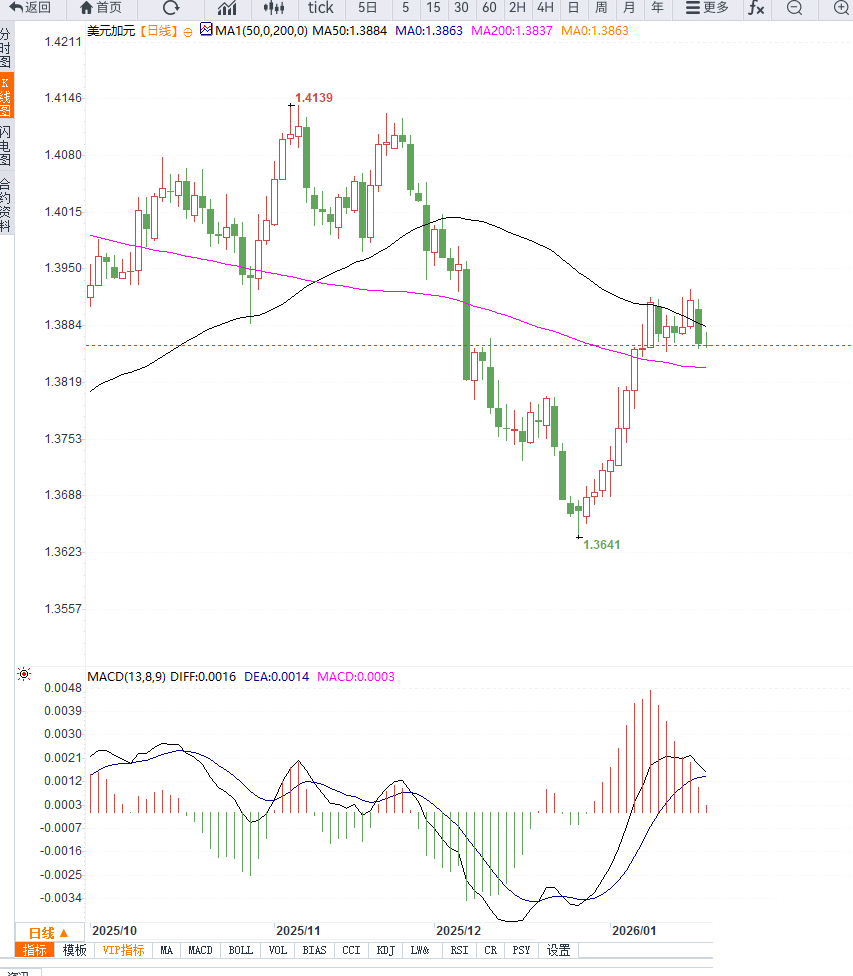
ETO Markets:油价跌美元降息推迟 美元兑加元回升至1.3870
Sou Hu Cai Jing· 2026-01-20 05:27
Group 1 - The core viewpoint of the articles indicates that the USD/CAD exchange rate is experiencing a slight rebound, driven primarily by the correlation with international oil prices and ongoing trade concerns between the US and Europe [1][2]. - The recent adjustments in the Federal Reserve's interest rate expectations suggest that US rates will remain elevated for a longer period, which supports the USD's relative strength while limiting the potential for a significant pullback against the CAD [2]. - The technical analysis of the USD/CAD exchange rate shows a generally strong upward trend, with key support levels above 1.3800 and significant resistance around 1.3900-1.3920, indicating a range-bound market influenced by oil price fluctuations and US monetary policy expectations [3]. Group 2 - The market sentiment remains cautious due to uncertainties surrounding trade dynamics and energy demand, which could impact the CAD's performance against the USD [2]. - The interplay between oil price movements and US monetary policy is crucial for the USD/CAD exchange rate, with macroeconomic risks still present, suggesting a likely continuation of the range-bound trading between 1.38 and 1.39 [3]. - Future developments in oil prices and US economic data will be critical in shaping the market's outlook on the Federal Reserve's interest rate decisions and the overall USD/CAD exchange rate trajectory [3].
促消费再加力!两项贷款贴息政策优化
Sou Hu Cai Jing· 2026-01-20 05:13
Core Viewpoint - The Ministry of Finance and other departments have announced the extension and optimization of the personal consumption loan interest subsidy policy until the end of 2026, aiming to boost consumer spending and support the service industry amid increasing external uncertainties [1][3]. Group 1: Policy Adjustments - The implementation period for the personal consumption loan interest subsidy policy has been extended to December 31, 2026, with the new effective period from September 1, 2025, to December 31, 2026 [1]. - The scope of support has been expanded to include credit card installment payments, with an annual interest subsidy rate of 1% [2]. - Restrictions on consumption areas have been lifted, allowing residents to enjoy subsidies for various types of consumption using personal loans and credit card installments, subject to verification by the lending institutions [2]. Group 2: Subsidy Standards - The subsidy standard has been improved by removing the previous cap of 500 yuan on single transaction subsidies and the 1,000 yuan limit on cumulative subsidies for individual borrowers at a single institution [2]. - The annual cumulative subsidy limit of 3,000 yuan per borrower at a single institution remains unchanged [2]. Group 3: Economic Context - The service industry is identified as a crucial driver for boosting consumption, with service consumption expenditure projected to grow at an average annual rate of 9.6% from 2020 to 2024 [4]. - In the first 11 months of 2025, service retail sales increased by 5.4%, indicating strong performance in areas such as travel and entertainment [4]. - The interest subsidy policy is seen as a targeted correction to address the structural imbalance of "strong production, weak demand," helping to restore cash flow and balance sheets in the service sector [4].

解读丨2026年美国证监会重振美国IPO市场计划
Sou Hu Cai Jing· 2026-01-20 03:39
Core Viewpoint - The SEC's proposed structural reforms aim to reduce disclosure burdens on small companies and address the significant decline in the number of publicly listed companies in the U.S. since the 1990s, which has decreased by 40% [1][2][3] Group 1: Proposed Reforms - The SEC plans to adjust disclosure requirements based on company size and maturity, shifting from quarterly to semi-annual reporting, with a rule-making timeline set for 2026 [1][5] - The reforms are intended to lower compliance costs and revitalize IPO activity, while potentially increasing information asymmetry and investor skepticism towards smaller companies [1][2][6] - The proposed changes are part of a broader deregulation agenda, which includes reforms to the SEC's enforcement procedures and aims to create a more attractive environment for IPOs [6][7] Group 2: Impact on Small Companies - The current one-size-fits-all disclosure requirements create significant compliance costs for smaller companies, as those with a market cap of $250 million are required to submit the same information as those with a market cap 100 times larger [2][3] - The SEC's initiative is seen as a critical structural shift that could enhance the competitiveness of public markets and attract the next generation of innovators [3][4] - The proposed semi-annual reporting system has been successfully implemented in the EU, UK, and Japan, suggesting its feasibility and potential benefits for U.S. companies [5][6] Group 3: Market Dynamics - The SEC's reforms may reduce regulatory friction and lower the costs of going public, which could lead to an increase in IPOs, as evidenced by a 38% quarter-over-quarter growth in U.S. IPOs earlier this year driven by strong investor demand [7]
RT曝光:美国最大的敌人不是中国,中国只需坐着看美国作死就行?
Sou Hu Cai Jing· 2026-01-20 03:12
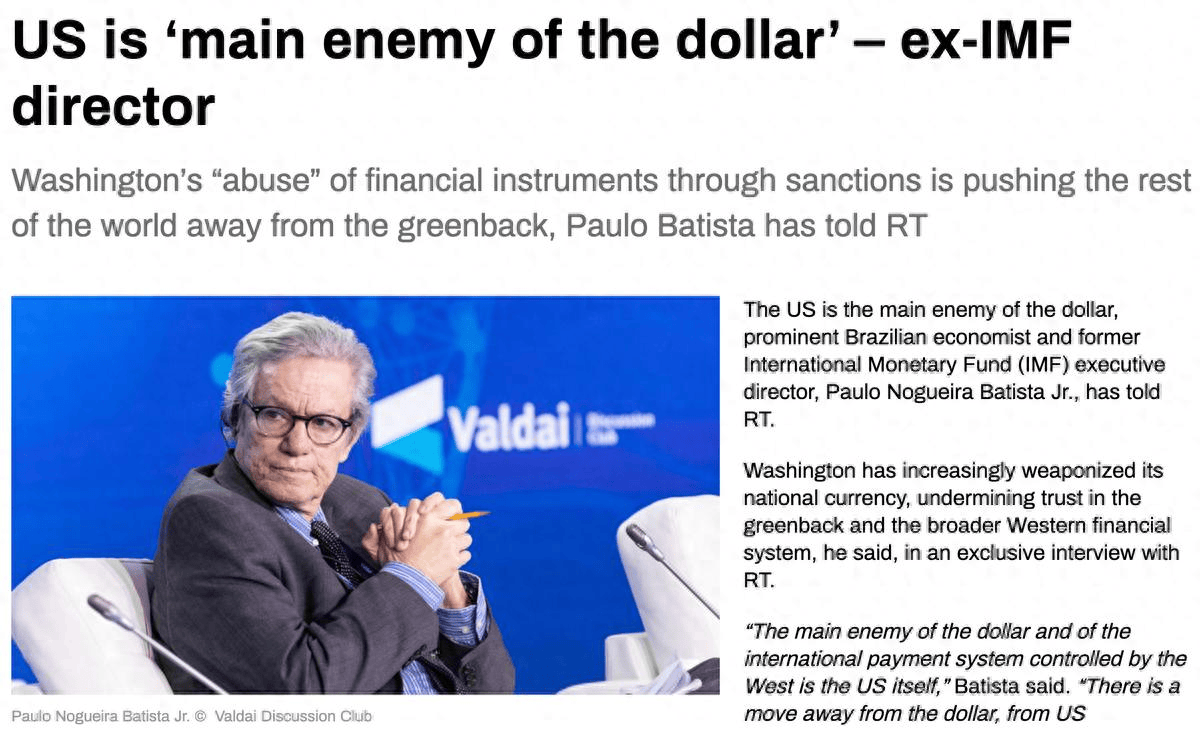
当今世界,关于美元的讨论已跳出经济学家与金融专家的圈层,普通民众也愈发关注这一全球货币霸主的地位动摇。美国政客频频将中国视作"头号敌人", 妄图通过对抗维系金融霸权,却忽视了一个核心事实:真正威胁美元根基的,正是美国自身的短视与越界行为。 在巴蒂斯塔看来,靠恐惧维系的霸权注定脆弱。当SWIFT丧失中立性、沦为地缘政治工具,其在全球金融体系中的合法性便大幅削弱。全球贸易迫切需要一 种不受政治干预、不会随意"断网"的支付保障,而美国显然无法提供这种确定性,各国加速搭建替代支付网络,本质上是对美元信用破产的集体回应。 作为全球核心储备货币,美元的地位建立在"中立性"与"安全性"的隐性承诺之上,而美国早已突破这一底线。2022年,美国联合盟友冻结俄罗斯央行约3000 亿美元海外储备,这不仅是对俄罗斯的精准经济打击,更是对国际金融规则的公然践踏。这笔储备并非私人财富,而是俄罗斯凭借资源出口与劳动创造积累 的合法主权资产,依据传统金融契约精神,央行储备享有绝对主权豁免权,美西方的举动无疑沦为赤裸裸的"国家抢劫",彻底击碎了各国对美元资产安全的 信任。 信任一旦崩塌便难以修复,各国为规避潜在风险,纷纷加速探索美元替代方案, ...
澳元陷入区间拉锯 商品政策反转
Jin Tou Wang· 2026-01-20 02:51
Core Viewpoint - The Australian dollar (AUD) is experiencing a range-bound trading pattern against the US dollar (USD), influenced by commodity price fluctuations and changing market expectations regarding the Reserve Bank of Australia's (RBA) monetary policy [1][2]. Group 1: Currency Performance - As of January 20, the AUD/USD exchange rate is at 0.6698, showing a slight decline of 0.16% from the previous trading day, with fluctuations between 0.6685 and 0.6702 [1]. - The AUD has been under pressure since reaching a high of 0.68 on January 7, currently trapped in a consolidation range of 0.6650 to 0.6750 [1]. - The recent price action reflects a balance of bullish and bearish forces, with the AUD showing signs of hesitation [1]. Group 2: Commodity Price Influence - The AUD's performance is significantly influenced by the divergent trends in commodity prices, particularly iron ore and copper [1]. - Iron ore prices remain above $130 per ton, supported by temporary demand from Chinese infrastructure projects, but are expected to decline by 4% by 2026 due to a sluggish real estate market in China [1]. - Conversely, copper prices are projected to rise by 1% by 2026, driven by demand from renewable energy technologies and AI infrastructure, providing some support for the AUD [1]. Group 3: Monetary Policy Expectations - Market expectations regarding RBA policy have shifted from a focus on rate hikes to anticipations of early rate cuts, influenced by recent inflation data [2]. - The probability of a rate hike in February has decreased from 36% to 22% following a lower-than-expected CPI increase of 3.4% year-on-year [2]. - Some institutions are betting on a rate cut cycle, with JPMorgan predicting potential cuts as early as mid-2026 if core inflation falls below 3% [2]. Group 4: Technical Analysis - The short-term outlook for the AUD/USD shows increasing downward pressure, with technical indicators suggesting a bearish trend [2]. - Key resistance levels are identified at 0.6745 and 0.6768, while support levels are at 0.6665 and 0.6650, with a potential test of the 0.6610-0.6595 range if the 0.6650 support is breached [2]. Group 5: Institutional Perspectives - There is a notable divergence in institutional views on the AUD's trajectory, with some predicting short-term volatility and others maintaining a bullish outlook for the medium term [3]. - JPMorgan forecasts a trading range of 0.66-0.68 for the AUD in the short term, while Goldman Sachs is more optimistic, projecting a rise to 0.69 by the third quarter [3]. - The overall outlook for 2026 suggests a strengthening AUD, with a projected average exchange rate of 0.69, although falling iron ore prices may limit appreciation [3]. Group 6: Risk Factors - Key risk factors that could disrupt the current trading range include upcoming inflation data from the RBA, developments in China's real estate policies, and fluctuations in the USD index [3]. - Monitoring the 0.6650 support level is crucial for assessing the potential for further short-term adjustments in the AUD [3].