
商品货币

Search documents
澳元强势震荡通胀高企加息预期
Jin Tou Wang· 2026-02-26 02:43
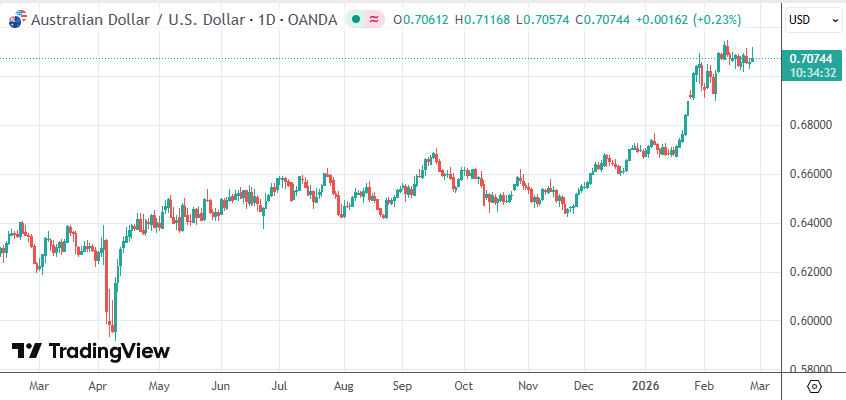
Core Viewpoint - The Australian dollar (AUD) is experiencing strong fluctuations against the US dollar, supported by high inflation and a hawkish stance from the Reserve Bank of Australia (RBA) [1] Group 1: Economic Indicators - As of January, Australia's Consumer Price Index (CPI) year-on-year is at 3.8%, remaining steady from December and exceeding expectations [1] - The core CPI has risen to 3.4%, consistently above the RBA's target range of 2%-3% [1] - The RBA raised interest rates by 25 basis points to 3.85% on February 3, becoming the first developed economy to increase rates in 2026, reinforcing hawkish expectations [1] Group 2: Market Dynamics - The Australian dollar has appreciated by 6.2% since the beginning of 2026, outperforming other major currencies [1] - The strength of the AUD is attributed to rising prices of industrial and precious metals, as well as record iron ore shipments [1] - The US dollar is under pressure, with market expectations of two potential rate cuts by the Federal Reserve in 2026, creating additional space for AUD appreciation [1] Group 3: External Factors - The recovery of domestic demand in China and the evolving trade relationship between China and the US are significant external factors influencing the AUD [1] Group 4: Challenges and Technical Analysis - The consumer confidence index in January is at 92.9 points, indicating pessimism, which may suppress domestic demand due to sensitivity to interest rate hikes [1] - The RBA must balance growth and employment, with an unemployment rate of 4.1%, limiting the scope for further rate increases [1] - Technically, the AUD faces resistance at the 0.7157 level and support at 0.7013, requiring a breakthrough of the resistance to open up further upward potential [1] Group 5: Short-term Outlook - The short-term outlook for the AUD is characterized by strong fluctuations, supported by inflation, rate hike expectations, and rising commodity prices [2] - However, consumer weakness, limited rate hike capacity, and resistance levels may constrain upward movement [2] - Investors are advised to monitor central bank signals, inflation trends, and US dollar movements for cautious operations [2]
三大商品货币率先起飞,市场押注全球即将重回加息周期
Feng Huang Wang· 2026-02-25 22:23
Core Viewpoint - The Australian dollar, Norwegian krone, and New Zealand dollar have significantly outperformed other major currencies this year as traders bet on a shift from interest rate cuts to hikes in global monetary policy [1][3]. Group 1: Currency Performance - The Australian dollar has appreciated over 6% against the US dollar year-to-date, reaching its highest level in nearly three years [1]. - The New Zealand dollar has risen approximately 3.7% against the US dollar this year, with expectations of an upcoming interest rate hike [3]. - The Norwegian krone has gained over 5% due to unexpectedly high inflation, leading traders to speculate on a potential small rate hike in the first half of the year [3]. Group 2: Monetary Policy Shifts - The Reserve Bank of Australia raised its benchmark interest rate by 25 basis points to 3.85%, marking its first rate hike in over two years [1][3]. - Analysts believe this could signal the beginning of a sustained tightening cycle, with expectations of one to two more rate hikes this year, each by 25 basis points [3]. - The shift in monetary policy reflects a broader trend among major economies to end years of rate cuts and focus on controlling inflation [3]. Group 3: Economic Context - The economic structures of Australia, New Zealand, and Norway are heavily weighted towards commodities, often categorizing them as "commodity currencies" [3]. - Recent increases in oil, copper, and other export commodity prices have provided additional support for these currencies [3]. - Concerns over the U.S. government's fluctuating policies and rising debt levels have led investors to seek diversification away from dollar-denominated assets, benefiting these commodity currencies [4].

加息也难救多头?澳元八年最高看涨头寸遭金价暴跌“定点爆破”
Sou Hu Cai Jing· 2026-02-06 08:30
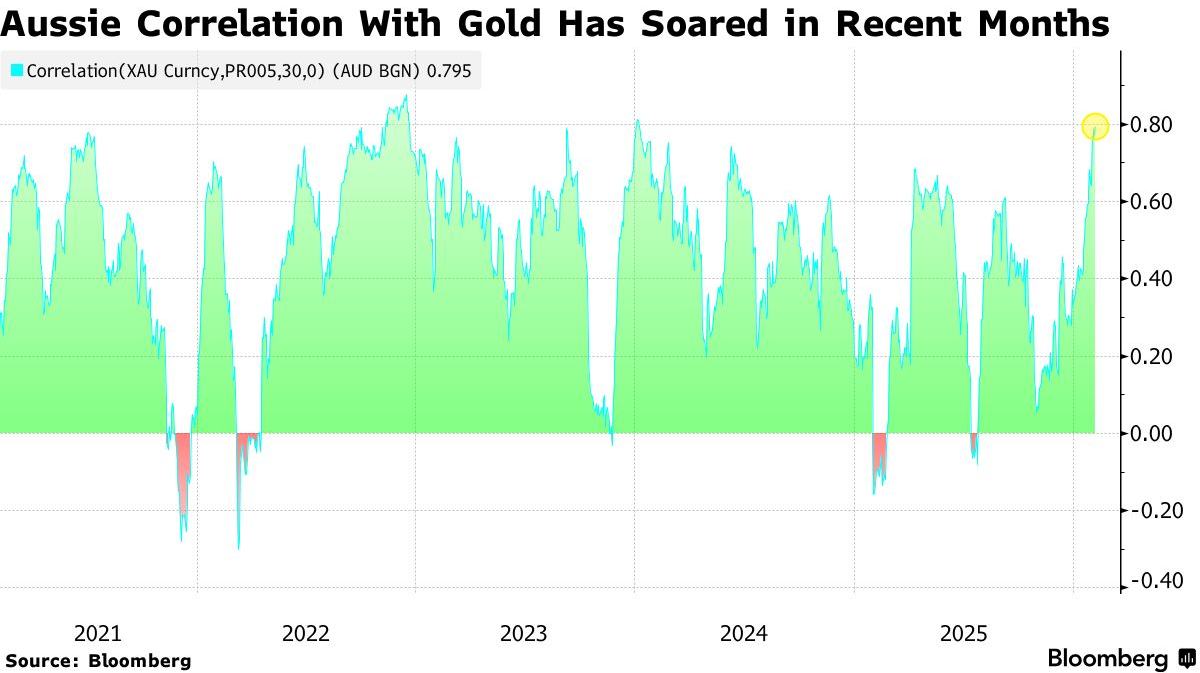
Group 1 - The Reserve Bank of Australia (RBA) unexpectedly resumed its interest rate hike cycle, raising the official cash rate by 25 basis points to 3.85%, breaking a two-year period of policy inaction to address persistent inflation pressures [1] - The Australian dollar (AUD), which should benefit from narrowing interest rate differentials, faced resistance after reaching a near three-year high, primarily due to significant fluctuations in the global precious metals market [1][2] - The decline in gold and silver prices, which fell nearly 12% from historical peaks, has undermined the bullish sentiment surrounding the AUD, pushing it into a challenging downward trajectory [1][2] Group 2 - Hedge funds have increased their long positions in the AUD to the highest level since December 2017, raising questions about whether they misjudged the market dynamics [1] - Despite the RBA's hawkish stance, the AUD's future performance will depend on the resilience of domestic economic growth and the external financial environment, with the RBA lowering its economic growth forecast for the coming year [2][3] - International investors are closely monitoring potential changes in U.S. monetary policy, as any unexpected hawkish signals could negate the benefits of the RBA's rate hike [3]
加息也难救多头?澳元八年最高看涨头寸遭金价暴跌“定点爆破”
智通财经网· 2026-02-06 07:59
Group 1 - The Reserve Bank of Australia (RBA) unexpectedly resumed its interest rate hike cycle, raising the official cash rate by 25 basis points to 3.85%, breaking a two-year period of policy inaction to address persistent inflation pressures [1] - The Australian dollar (AUD), which should benefit from narrowing interest rate differentials, faced resistance after reaching a near three-year high, primarily due to significant fluctuations in the global precious metals market [1][2] - The decline in precious metal prices has not only offset the optimistic sentiment from interest rate hike expectations but has also pushed the AUD into a more severe downward trend, raising questions about whether hedge funds misjudged the situation as their bullish positions reached the highest level since December 2017 [1] Group 2 - The AUD experienced a 4.4% surge last month due to rising expectations of RBA tightening and a significant increase in gold and silver prices, which provided a reasonable basis for hedge funds' optimistic stance at that time [1] - However, the current environment presents a dual challenge of policy shifts and a commodity bear market, putting the effectiveness of their strategies to an unprecedented test [1] - The AUD's sensitivity to precious metal price movements was further highlighted by a 1% drop to 69.27 cents, triggered by signs of cooling in the U.S. labor market, leading to accelerated withdrawals from commodities and risk assets [5] Group 3 - Despite the challenges, the AUD still has strong support from various asset management firms and institutions, with options traders increasing bullish positions ahead of the RBA's rate hike [8] - The macro perspective indicates that the future trajectory of the AUD will depend on the balance between domestic economic growth resilience and external financial conditions, with the RBA lowering its economic growth forecast for the next year [8] - International investors are closely monitoring potential changes in U.S. monetary policy, as any unexpected hawkish signals could negate the benefits of the RBA's rate hikes, presenting a critical test for hedge funds between currency policy benefits and systemic risks in the commodity market [8]
澳元强势加息大宗商品双重支撑
Jin Tou Wang· 2026-02-06 02:44
Core Viewpoint - The Australian dollar (AUD) is experiencing a strong upward trend against the US dollar (USD), supported by the Reserve Bank of Australia's (RBA) interest rate hike, robust commodity prices, and resilient economic performance [1][2]. Group 1: Monetary Policy and Economic Indicators - The RBA raised the benchmark interest rate by 25 basis points to 3.85% on February 3, marking its first increase in over two years, primarily due to rising inflation, with the overall CPI increasing by 3.8% year-on-year in December [1]. - Core inflation in the fourth quarter rose to 3.4%, significantly above the RBA's target range of 2%-3%, indicating persistent inflationary pressures [1]. - The RBA's hawkish stance has bolstered market sentiment towards the AUD, with expectations of further rate hikes if demand remains strong [1]. Group 2: Commodity Prices and Economic Resilience - As a commodity currency, the AUD benefits from rising commodity prices, with iron ore stabilizing at $130 per ton and copper and gold reaching new highs, driven by recovering demand from China and supply disruptions [2]. - Australia's economy shows strong resilience, with GDP growth in the fourth quarter exceeding expectations, stable unemployment at around 4.1%, and robust private demand and housing investment [2]. Group 3: Comparative Central Bank Policies - The divergence in monetary policy among major central banks highlights the relative strength of the AUD, as the RBA initiates a rate hike cycle while the Federal Reserve and European Central Bank are discussing rate cuts [2]. - The interest rate differential between Australia and the US has widened to a new high since 2022, attracting cross-border capital inflows into AUD assets [2]. Group 4: Future Outlook - Institutions are optimistic about the AUD's future performance, with forecasts suggesting it may reach the 0.70 mark against the USD by the end of March 2026 [3]. - Key support levels for the AUD/USD are identified at 0.6900 and 0.6840, with resistance around the 0.70 mark, influenced by RBA policy statements, inflation data, and commodity price trends [3]. - Investors are advised to monitor upcoming RBA announcements, January inflation data, and commodity price movements, while also considering the broader economic recovery and global central bank policy divergence [3].
澳元鹰派政策 利差优势凸显
Jin Tou Wang· 2026-01-30 03:01
Core Viewpoint - The Australian dollar (AUD) has shown strong performance against the US dollar (USD) and is positioned as a leading currency among G10 currencies, driven by monetary policy divergence and robust commodity prices [1][2][3]. Group 1: Currency Performance - As of January 30, 2026, the AUD/USD exchange rate reached 0.7016, with a year-to-date increase of nearly 4% [1]. - The AUD has consistently broken key resistance levels against the USD, reaching a 16-month high of 0.6931 on January 26 and further climbing to 0.7050 [1]. - The AUD/CNY exchange rate has shown high volatility, fluctuating between 4.86 and 4.90, indicating a strong overall performance since the beginning of the year [1]. Group 2: Monetary Policy Divergence - The Reserve Bank of Australia (RBA) has maintained a benchmark interest rate of 3.6% and indicated a shift towards potential rate hikes, contrasting with the US Federal Reserve's recent rate cuts [2]. - Australia's consumer inflation expectations rose to 4.7% in December 2025, exceeding the RBA's target range, which has strengthened the case for interest rate increases [2]. - The market is pricing in a nearly 50% chance of a rate hike in March, with predictions that the benchmark rate could rise to 3.85% [2]. Group 3: Commodity Prices and Economic Indicators - The AUD is closely linked to commodity prices, with recent strong performances in gold, copper, and iron ore, benefiting Australia's trade balance [3]. - Australia's GDP grew by 2.1% year-on-year in Q3 2025, and the unemployment rate fell to 4.1%, indicating a robust economic environment [3]. - The National Australia Bank's business survey showed a capacity utilization rate of 83.3%, reflecting strong operational performance across sectors [3]. Group 4: Market Sentiment and Technical Analysis - The USD index has weakened due to expectations of coordinated intervention to support the Japanese yen and rising concerns over US government debt [4]. - The AUD is viewed as a preferred alternative investment due to its high yield and solid fundamentals, with analysts expressing optimism about its future performance [4]. - Technical indicators suggest a clear bullish trend for the AUD/USD, with significant support levels identified at 0.7000 and 0.6931 [4]. Group 5: Future Outlook - Analysts from major banks predict that the AUD/USD could reach the 0.70 mark by the end of March 2026, with a probability exceeding 70% according to options market data [5]. - Despite the positive outlook, potential risks include a downturn in commodity prices, lower-than-expected interest rate hikes, and geopolitical tensions that could affect the AUD's performance [6]. - Key variables to monitor include the RBA's upcoming policy meeting, the Federal Reserve's meeting minutes, and changes in Chinese demand and commodity prices [6].
加元震荡走强央行维稳共振走势
Jin Tou Wang· 2026-01-30 02:52
Core Viewpoint - The Canadian dollar (CAD) is experiencing a strong upward trend against the US dollar (USD), supported by the Bank of Canada's (BoC) stable monetary policy and a weakening USD, with a cumulative increase of over 1.4% since the beginning of the year [1][2]. Group 1: Monetary Policy and Economic Indicators - The BoC maintained the benchmark interest rate at 2.25%, reflecting a cautious stance towards economic uncertainty, with the governor emphasizing the need to monitor various risks [1]. - The inflation rate in Canada is projected to remain close to the target level of 2%, with no need for aggressive monetary policy adjustments, enhancing the attractiveness of CAD assets [2]. - The BoC's neutral policy stance contrasts with the Federal Reserve's (Fed) easing expectations, further supporting the CAD's strength against the USD [2]. Group 2: Commodity Prices and Economic Recovery - CAD's performance is closely linked to global commodity prices, with stable prices providing auxiliary support for the currency, as Canada is a major resource exporter [3]. - The Canadian economy is showing moderate recovery, with a projected growth rate of 1.1% in 2026, which, despite being lower than other developed economies, provides a solid foundation for CAD's strength [3][4]. Group 3: Risks and Market Sentiment - The potential for US trade restrictions poses a structural risk to Canadian economic growth, which could negatively impact CAD if trade tensions escalate [4]. - Despite the current strong position of CAD, factors such as moderate long-term growth and global economic uncertainties may limit its upward potential [4]. - Market sentiment remains cautiously optimistic regarding CAD's trajectory, with expectations of a gradual upward movement towards the 0.75 mark against the USD, contingent on external economic factors [5].
加元区间震荡拉锯 政策分歧与油价波动
Jin Tou Wang· 2026-01-22 03:04
Core Viewpoint - The USD/CAD exchange rate is experiencing a narrow trading range, influenced by the divergent monetary policies of the Federal Reserve and the Bank of Canada, with short-term trends lacking clarity [1][2]. Group 1: Monetary Policy Divergence - The Federal Reserve is expected to be one of the few central banks to continue cutting rates before the end of 2026, with an implied cumulative cut of about 54 basis points, although strong labor market data has delayed the first cut to June [1]. - The Bank of Canada is maintaining a wait-and-see approach, keeping the benchmark interest rate at 2.25%, with mixed market expectations regarding future rate changes [2]. Group 2: Economic Indicators - Canada's economy showed resilience with a 2.6% annualized GDP growth in Q3 2025, surpassing market expectations, and an addition of 181,000 jobs from September to November [2]. - However, the Bank of Canada warns of a likely slowdown in Q4 GDP growth, with rising unemployment rates and cautious hiring intentions limiting the strength of the Canadian dollar [2]. Group 3: Commodity Correlation - The Canadian dollar's performance is closely linked to oil prices, with recent fluctuations in WTI crude oil prices impacting the currency's strength [3]. - Concerns over trade tensions affecting global energy consumption are weakening the Canadian dollar, while positive economic data from major Asian economies is supporting oil demand [3]. Group 4: Technical Analysis - The USD/CAD exchange rate is maintaining a strong oscillating trend above 1.3800, with resistance levels identified between 1.3900 and 1.3925, and support levels between 1.3820 and 1.3850 [4]. - A breakout above 1.3925 could target 1.3950 and 1.3980, while a drop below 1.3820 may trigger a correction towards 1.3750 [4].
商品货币逆势走强 加元趋势延续下行
Jin Tou Wang· 2026-01-21 02:26
Group 1 - The overall market sentiment remains low despite a recovery in US stocks, with commodity currencies like the Australian dollar, New Zealand dollar, and Canadian dollar appreciating against the US dollar, which is unusual in a risk-averse environment [1] - The Canadian dollar has reacted positively to Prime Minister Mark Carney's efforts to expand global trade partnerships, particularly with China, although Canada's economic dependence on the US limits its ability to escape US economic influence [2] - The geopolitical tensions and internal divisions within international alliances, particularly NATO, are becoming focal points for market attention, overshadowing previous discussions on Ukraine [2] Group 2 - The USD/CAD exchange rate has retreated from the strong resistance level of 1.3900-1.3950, indicating that the downward trend established since last February remains intact, with bears maintaining control of the market [3] - If the USD/CAD breaks below the 1.3800 support level, the next target for bears will be 1.3700, with further testing of liquidity below the December low of 1.3642 [3] - Conversely, if the USD/CAD successfully breaks through the 1.3900-1.3950 resistance range, the 1.4000 level may serve as a short-term consolidation point, potentially leading to an upward trend [3]
澳元陷入区间拉锯 商品政策反转
Jin Tou Wang· 2026-01-20 02:51
Core Viewpoint - The Australian dollar (AUD) is experiencing a range-bound trading pattern against the US dollar (USD), influenced by commodity price fluctuations and changing market expectations regarding the Reserve Bank of Australia's (RBA) monetary policy [1][2]. Group 1: Currency Performance - As of January 20, the AUD/USD exchange rate is at 0.6698, showing a slight decline of 0.16% from the previous trading day, with fluctuations between 0.6685 and 0.6702 [1]. - The AUD has been under pressure since reaching a high of 0.68 on January 7, currently trapped in a consolidation range of 0.6650 to 0.6750 [1]. - The recent price action reflects a balance of bullish and bearish forces, with the AUD showing signs of hesitation [1]. Group 2: Commodity Price Influence - The AUD's performance is significantly influenced by the divergent trends in commodity prices, particularly iron ore and copper [1]. - Iron ore prices remain above $130 per ton, supported by temporary demand from Chinese infrastructure projects, but are expected to decline by 4% by 2026 due to a sluggish real estate market in China [1]. - Conversely, copper prices are projected to rise by 1% by 2026, driven by demand from renewable energy technologies and AI infrastructure, providing some support for the AUD [1]. Group 3: Monetary Policy Expectations - Market expectations regarding RBA policy have shifted from a focus on rate hikes to anticipations of early rate cuts, influenced by recent inflation data [2]. - The probability of a rate hike in February has decreased from 36% to 22% following a lower-than-expected CPI increase of 3.4% year-on-year [2]. - Some institutions are betting on a rate cut cycle, with JPMorgan predicting potential cuts as early as mid-2026 if core inflation falls below 3% [2]. Group 4: Technical Analysis - The short-term outlook for the AUD/USD shows increasing downward pressure, with technical indicators suggesting a bearish trend [2]. - Key resistance levels are identified at 0.6745 and 0.6768, while support levels are at 0.6665 and 0.6650, with a potential test of the 0.6610-0.6595 range if the 0.6650 support is breached [2]. Group 5: Institutional Perspectives - There is a notable divergence in institutional views on the AUD's trajectory, with some predicting short-term volatility and others maintaining a bullish outlook for the medium term [3]. - JPMorgan forecasts a trading range of 0.66-0.68 for the AUD in the short term, while Goldman Sachs is more optimistic, projecting a rise to 0.69 by the third quarter [3]. - The overall outlook for 2026 suggests a strengthening AUD, with a projected average exchange rate of 0.69, although falling iron ore prices may limit appreciation [3]. Group 6: Risk Factors - Key risk factors that could disrupt the current trading range include upcoming inflation data from the RBA, developments in China's real estate policies, and fluctuations in the USD index [3]. - Monitoring the 0.6650 support level is crucial for assessing the potential for further short-term adjustments in the AUD [3].