
医疗

Search documents
资产资金双端发力 释放资本市场“活”的潜能
Zhong Guo Zheng Quan Bao· 2025-07-28 21:05
Group 1 - Over 90% of the 57 companies that have listed on the A-share market this year belong to strategic emerging industries, indicating a strong focus on innovation and technology sectors [1] - The China Securities Regulatory Commission (CSRC) aims to deepen reforms to invigorate the multi-tiered capital market, emphasizing the need for collaboration between asset and capital sides to unleash market potential [1][2] - The number of companies involved in strategic emerging industries includes significant representation from information technology, new materials, and healthcare sectors [1] Group 2 - Mergers and acquisitions (M&A) in the hard technology sector have been prominent this year, with policies supporting listed companies to focus on technological innovation and industrial upgrades [2] - The implementation of the "1+6" policy measures for the Sci-Tech Innovation Board and the continued application of the third set of standards for the Growth Enterprise Market are expected to provide diversified financing support for tech startups [2][3] - The establishment of guiding funds to support technological innovation is accelerating, with local governments setting up funds to attract venture capital [2] Group 3 - The Asset Investment Company (AIC) is anticipated to become a vehicle for patient capital, with suggestions to implement long-term assessment and error tolerance mechanisms to encourage investment in early-stage hard technology projects [3] - The development of diversified exit channels for private equity investments is progressing, with the establishment of secondary market funds and M&A funds enhancing the exit mechanisms [3][4] - Regulatory bodies are focused on maintaining a balanced approach between asset and capital sides to ensure a stable market environment [3][4] Group 4 - Enhancing the multi-tiered capital market system is crucial for a vibrant capital market, with various measures being implemented to support long-term capital inflow and public fund reforms [4][5] - The bond market's support for technological innovation is also highlighted as a key component in promoting an active capital market [5] - Optimizing the capital market ecosystem is essential, with recommendations for improved judicial and administrative collaboration to prevent conflicts of interest and enhance corporate governance [5]
资金汹涌进场,各板块雨露均沾!哪些超跌的ETF值得关注?
市值风云· 2025-07-28 10:02
Core Viewpoint - The current market is in a bull phase, with significant losses reported among short sellers in commodity and stock index futures. The article suggests that the most certain investment opportunities in a bull market are either in leading sectors or in severely undervalued stocks [2]. Group 1: Investment Opportunities - The article emphasizes that low-priced stocks tend to be driven up to reasonable levels during a bull market, indicating that underperforming sectors may see substantial gains due to ongoing liquidity and policy support [2]. - The upcoming major meetings are expected to enhance expectations for "stabilizing growth," which may provide considerable policy space for undervalued industries [2]. Group 2: ETF Analysis - The article utilizes the net value percentile calculation method to assess which sectors are currently in a state of severe undervaluation [3]. - A table is provided showing various ETFs, their net value percentiles since 2023 and 2024, and their performance in 2025, highlighting sectors like photovoltaic, alcohol, and real estate [7]. Group 3: Sector-Specific Insights - The photovoltaic sector is identified as particularly undervalued, with ETFs like the photovoltaic ETF (515790.SH) and new energy ETF (516160.SH) showing significant declines. The sector's performance is closely tied to government policies aimed at stabilizing growth [9][10]. - The alcohol sector, particularly the alcohol ETF (512690.SH), is also noted for being in a state of decline, with a lack of clear catalysts for recovery until consumer data improves [20][21]. - The real estate sector shows signs of divergence, with the real estate ETF (159707.SZ) experiencing intermittent policy-driven rallies but ultimately returning to lower levels [25][26]. Group 4: Medical and Pharmaceutical Sector - The medical and pharmaceutical sectors are highlighted as being collectively undervalued, with various ETFs like the biopharmaceutical ETF (159859.SZ) showing potential for recovery due to recent policy shifts regarding procurement practices [33][35]. - The medical ETF (512170.SH) is also mentioned as being in a relatively low valuation position, with a modest performance outlook [39]. Group 5: Commodity and Chemical Sectors - The coal sector has seen a significant price drop but is experiencing a rebound due to rising prices in coking coal and coke futures, with the coal ETF (515220.SH) reflecting this trend [43][45]. - The chemical sector is noted for its broad product range and recent price increases in lithium carbonate, with the chemical ETF (159870.SZ) positioned as relatively undervalued [49][54]. Conclusion - The article concludes that sectors such as chemicals, biopharmaceuticals, medical, alcohol, and photovoltaic are currently in a state of severe undervaluation, presenting potential investment opportunities for discerning investors [56].


2025年第29周:数码家电行业周度市场观察
艾瑞咨询· 2025-07-28 09:04
Group 1 - The "Hundred Glasses War" has begun, with major players like Xiaomi and Meta entering the smart glasses market, indicating a shift from niche products to mainstream consumer electronics by 2025 [2][16] - Human-shaped robots are expected to reach a market size of 5.3 billion yuan in China by 2025, driven by technological advancements and policy support, although challenges in commercialization remain [3][4][11] - AI is reshaping the strategies of BAT (Baidu, Alibaba, Tencent), with each company adopting different paths: Baidu focuses on foundational infrastructure, Tencent on ecosystem collaboration, and Alibaba on business automation [5] Group 2 - The collaborative office market is projected to reach 13.9 billion yuan by 2025, with major players like DingTalk, Feishu, and WeChat Work competing through differentiated strategies [6] - The AI research landscape shows that the US leads in foundational research with 35,117 papers, while China follows closely with 31,694 papers, indicating a competitive edge in application [7] - The home appliance industry is witnessing a transformation driven by health technology, with 83% of consumers willing to pay a premium for health features [17][18] Group 3 - Major Chinese home appliance companies like Haier, Midea, and Hisense are accelerating their investments in robotics to counteract slowing growth in traditional markets [18][19] - The AI agent concept is gaining traction, with significant investments and developments from companies like ByteDance and Alibaba, although challenges in stability and commercial viability persist [9] - The medical AI sector is experiencing uneven application levels across hospitals, influenced by factors such as hospital size and digital investment [10][37] Group 4 - The AI toy market is expected to grow to $18.1 billion by 2024, driven by technological maturity and changing consumer demands, but companies must navigate challenges like competition and rapid technological changes [12] - The exoskeleton market is projected to grow significantly, with prices dropping from millions to thousands, making it more accessible for various applications [15] - The integration of AI in retail and delivery services is being pursued by companies like Meituan, which is investing heavily in robotics to enhance operational efficiency [30][36] Group 5 - The home decoration market is undergoing significant changes with JD's acquisition of Life Home, indicating a trend towards digital transformation and supply chain integration [33] - The competition in the AI agent space is intensifying, with various companies exploring applications in content creation and enterprise services, while also facing potential market bubbles [9][21] - The development of AI health applications by Ant Group aims to connect various healthcare services, although it faces challenges in regulatory standards and market integration [37]

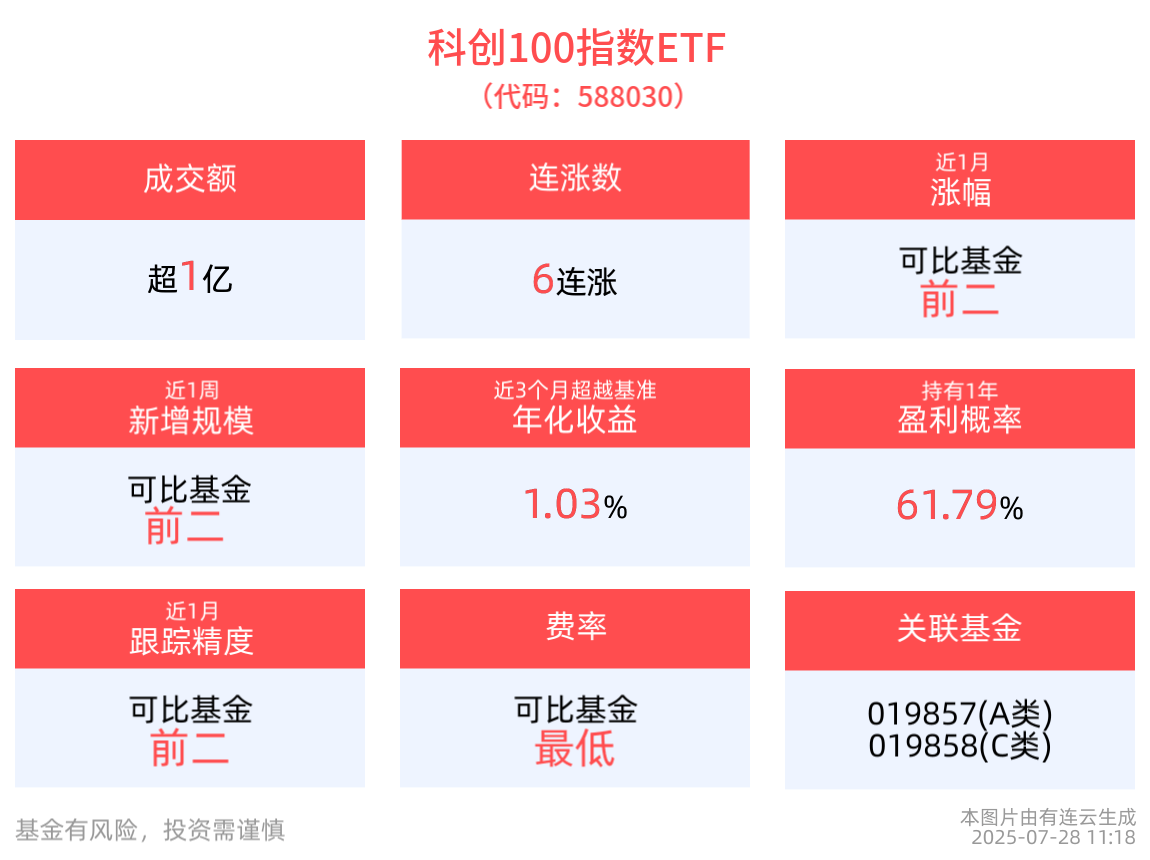
科创100指数ETF(588030)冲击6连涨,近1周规模增长显著,智元机器人发布首个动作驱动世界模型
Sou Hu Cai Jing· 2025-07-28 03:32
Core Insights - The Shanghai Stock Exchange Sci-Tech Innovation Board 100 Index (000698) has shown a positive trend, with a 0.66% increase as of July 28, 2025, and notable gains in constituent stocks such as Shengyi Electronics (688183) and Huafeng Technology (688629) [3] - The Sci-Tech 100 Index ETF (588030) has experienced a 3.82% increase over the past week, ranking 2nd among comparable funds [3] - The ETF has seen significant liquidity, with a turnover rate of 2.39% and a transaction volume of 1.54 billion yuan [3] Industry Developments - On July 27, 2025, Zhiyuan Robotics launched the "Genie Envisioner," the first open-source platform for action-driven world models in the industry, enhancing robotics capabilities [3] - Quark Health's large model has passed assessments for 12 core medical disciplines, marking a significant milestone in AI healthcare development in China [4] - The medical sector remains optimistic, with medical devices and services showing strong performance, suggesting a growing interest in AI healthcare and innovative medical devices [4] Fund Performance - The Sci-Tech 100 Index ETF has seen a net value increase of 57.22% over the past year, ranking in the top 10.96% among equity index funds [4] - The ETF's highest monthly return since inception was 27.67%, with an average monthly return of 8.57% during profitable months [4] - The ETF's management fee is 0.15%, and its tracking error is 0.013%, indicating high tracking precision compared to similar funds [5] Market Composition - As of June 30, 2025, the top ten weighted stocks in the Sci-Tech 100 Index accounted for 22.99% of the index, including companies like BeiGene (688235) and Huahong Semiconductor (688347) [6]

核心资产不断拉升 近600只权益基金翻红
Bei Jing Shang Bao· 2025-07-28 03:04
Market Performance - The A-share market has shown strong performance recently, with the Shanghai Composite Index returning to a relative high of 3600 points [1][2] - As of May 27, the Shanghai Composite Index, Shenzhen Component Index, and ChiNext Index closed at 3608.85, 14897.19, and 3226.11 points, with daily increases of 0.43%, 0.7%, and 0.92% respectively [2] Fund Performance - Equity fund returns have significantly rebounded, with some star fund managers seeing their products' year-to-date returns turn positive and continue to rise [1][2] - Notable fund performances include E Fund's Blue Chip Select Mixed Fund with a year-to-date return of 8.43%, Invesco Great Wall Dingyi Mixed Fund at 8.48%, and China Europe Medical Health Mixed A Fund at 16.68% [2] Investor Sentiment - Many investors have expressed relief at recovering their investments, with some stating they have "broken even" after previous losses [4] - However, a portion of investors remains in a loss position, particularly those who entered the market during high net asset values before the recent downturn [4] Market Recovery Factors - The recent market recovery is attributed to a temporary easing of liquidity and a reduction in commodity price pressures [3] - As of May 26, the number of equity funds with negative year-to-date returns decreased to 1170, representing less than 20% of the total, indicating a significant recovery in fund performance [3] Future Outlook - Industry experts maintain an optimistic outlook for the market, suggesting that high-quality blue-chip stocks will continue to attract investment [5] - There is a consensus that while market sentiment may fluctuate, structural opportunities for growth remain, particularly as systemic risks have decreased [5]
今年上半年 我国稳外资政策持续落地显效 外资高科技项目加速落地
Yang Guang Wang· 2025-07-28 01:27
Group 1 - The core viewpoint is that China's foreign investment policies are yielding positive results, with significant foreign investment projects showing progress and improving the quality of investment in the country [1][2] - Foreign investment is crucial for promoting high-level opening-up, with many foreign enterprises reinvesting profits earned in China, indicating strong confidence in the Chinese market [1] - Key sectors attracting foreign equity investment include new energy vehicles, healthcare, and green economy, with a notable increase in ESG investments [1] Group 2 - China is accelerating institutional opening-up, with a series of policies introduced to facilitate foreign equity investment [2] - The "2025 Action Plan for Stabilizing Foreign Investment" encourages foreign investment in equity and provides operational guidelines for strategic investments [2] - Measures to optimize the foreign equity investment policy system are being explored through pilot programs in free trade zones and service industry expansion, aimed at attracting more global capital [2]
智能时代 同球共济——二〇二五世界人工智能大会侧记
Ren Min Ri Bao· 2025-07-27 22:06
Group 1: Event Overview - The 2025 World Artificial Intelligence Conference and High-Level Meeting on Global Governance of AI was held in Shanghai from July 26 to 28, focusing on the theme "Cooperation in the Intelligent Era" [1] - The conference showcased over 3,000 cutting-edge exhibits, including more than 100 global debuts and Chinese premieres, highlighting the innovation and development trends in the AI industry [2] Group 2: Product Launches and Innovations - The conference featured significant product launches, such as the new generation foundational model Step 3 by Jieyue Xingchen, which is a full-size, native multimodal reasoning model capable of complex tasks [2] - Tencent introduced the Mixed Yuan 3D World Model 1.0, enabling users to generate panoramic images from simple text or images, enhancing efficiency in game creation and virtual asset generation [2] - Westwell Technology launched the Q-Tractor P40 Plus, a new energy autonomous driving tractor with a 200 km range and 5-minute quick battery swap, designed for airport and logistics center applications [3] Group 3: Industry Applications of AI - AI is accelerating integration with the real economy, driving industrial upgrades and economic growth across various sectors [5] - In manufacturing, AI technologies have led to a 30% reduction in equipment failure rates and a 25% decrease in maintenance costs for automotive manufacturers [5] - In healthcare, AI-assisted diagnosis has improved diagnostic accuracy by 20% in grassroots medical institutions [5] - In finance, AI risk control systems at CITIC Bank have enabled real-time monitoring and fraud detection, saving the bank significant losses annually [5] Group 4: Global Governance Initiatives - The "Global AI Innovation Governance Center" was officially launched at the conference, aiming to facilitate international dialogue and cooperation on AI governance [6] - The center seeks to create a global governance framework and standards through collaboration among various countries [6] - Experts emphasize the importance of integrating resources and global wisdom to explore effective governance paths for AI [6]
全球约八成医疗机构正在部署或设点生成式AI工具 人工智能正重构医疗健康全产业链
Shang Hai Zheng Quan Bao· 2025-07-27 18:48
Group 1 - The core viewpoint of the articles is that artificial intelligence (AI) is fundamentally reshaping the global healthcare industry, with approximately 80% of medical institutions deploying or planning to implement generative AI tools [2][3] - AI is becoming the core engine driving leapfrog development in the healthcare sector, enabling new applications in clinical diagnosis, drug and device development, and hospital management [1][2] - The integration of AI technologies into healthcare is leading to a new paradigm characterized by intelligent, precise, and personalized medicine [1] Group 2 - The rapid development of AI technology is profoundly reconstructing the entire healthcare industry chain, with significant advancements from research labs to clinical applications and hospital management systems [2] - Challenges such as data barriers, regulatory ethics, and technical standards are emerging as major obstacles to the development of AI in healthcare [3] - Trust issues and the "black box" nature of algorithms are identified as the biggest barriers to the application of AI in healthcare, necessitating the establishment of transparent and inclusive systems [3]
财政部最新下达:690亿元
Jin Rong Shi Bao· 2025-07-26 04:19
Group 1 - In the first half of the year, the national general public budget revenue was 115,566 billion yuan, a year-on-year decrease of 0.3%, with tax revenue at 92,915 billion yuan, down 1.2%, and non-tax revenue at 22,651 billion yuan, up 3.7% [1] - The national general public budget expenditure reached 141,271 billion yuan, an increase of 3.4% year-on-year [1] - The Ministry of Finance addressed key social concerns such as local government debt risk, fiscal spending for people's livelihoods, and the issuance of government bonds during a press conference [1] Group 2 - By the end of June, 90% of the 20,000 billion yuan local government debt replacement bonds for 2025 had been issued, with 14,400 billion yuan already utilized [3] - The implementation of the replacement policy has significantly reduced debt interest payments and repayment pressures, while also releasing economic development momentum [3] Group 3 - The central government has allocated 66.74 billion yuan in employment support funds this year, focusing on employment priority strategies and reducing unemployment insurance rates [4] - Basic pension benefits for retirees have been increased by 2% nationwide, with the minimum standard for urban and rural residents' basic pensions raised by 20 yuan [4] Group 4 - The per capita financial subsidy standard for basic public health services has been increased by 5 yuan to 99 yuan per person per year, while the subsidy for urban and rural residents' medical insurance has been raised by 30 yuan to 700 yuan per person per year [5] - The central government has allocated 5,522 billion yuan in related subsidy funds for medical assistance this year [5] Group 5 - A record high of 78,800 billion yuan in government bonds was issued in the first half of the year, an increase of 20,547 billion yuan or 35.28% year-on-year, with an average issuance interest rate of 1.52% [6] - The average bid-to-cover ratio for book-entry government bonds was 3.03 times, indicating strong investor interest [6] Group 6 - The Ministry of Finance has allocated 690 billion yuan in the third batch of ultra-long-term special government bond funds to support the "old for new" consumption initiative, with total sales in this area reaching 1.6 trillion yuan in the first half of the year [7] - Retail sales of home appliances and other consumer goods saw significant year-on-year growth, contributing to a 5% increase in total retail sales of consumer goods [7]
大湖股份2025年中报:盈利能力回升但营收下降,现金流改善显著
Zheng Quan Zhi Xing· 2025-07-25 22:09
Core Viewpoint - Dahu Co., Ltd. reported a decline in total revenue for the first half of 2025, but showed improvements in profitability metrics, indicating better cost control and operational efficiency [2][4]. Operational Overview - As of the reporting period, total revenue was 426 million yuan, a year-on-year decrease of 14.4%. The net profit attributable to shareholders was -2.57 million yuan, an increase of 81.34% year-on-year, while the net profit excluding non-recurring items was -4.54 million yuan, up 72.92% year-on-year [2]. - In Q2, total revenue was 274 million yuan, down 4.96% year-on-year, but the net profit attributable to shareholders was 867,800 yuan, an increase of 114.78% year-on-year [3]. Profitability Analysis - The company's gross margin was 25.0%, an increase of 4.36% year-on-year, and the net profit margin was 2.08%, up 376.87% year-on-year, indicating improvements in cost control and operational efficiency despite declining revenue [4]. Expense Control - Total operating expenses (selling, administrative, and financial expenses) amounted to 79.31 million yuan, accounting for 18.64% of revenue, a decrease of 3.33% year-on-year, reflecting effective expense management [5]. Cash Flow Situation - Operating cash flow per share was 0.17 yuan, an increase of 180.86% year-on-year, indicating significant improvement in cash flow from operating activities. Cash and cash equivalents totaled 233 million yuan, up 22.89% year-on-year, enhancing liquidity [6]. Main Business Composition - Revenue from the aquaculture segment was 197 million yuan, accounting for 46.21% of total revenue with a gross margin of 11.61%. The medical segment generated 186 million yuan, representing 43.70% of total revenue with a gross margin of 30.88%. The liquor segment contributed 40.20 million yuan, or 9.45% of total revenue, with the highest gross margin of 62.06% [7]. Regional Distribution - Revenue from the East China region was 262 million yuan, accounting for 61.46% of total revenue with a gross margin of 25.36%. The Central South region contributed 113 million yuan, or 26.66% of total revenue, with a gross margin of 29.76% [8]. Development Review and Outlook - The company aims to upgrade towards the health industry, focusing on aquaculture, processing, and sales of freshwater fish and related products, liquor production and sales, and rehabilitation medical services. Despite challenges in liquor sales due to market competition and consumer downgrading, positive progress has been made in frozen seafood and medical services. Future growth is anticipated in the health industry with support from national policies and changing market demands [9].
