消费品

Search documents
将湘超IP热度化为业绩动能 企业需四维创新
Zheng Quan Ri Bao· 2025-12-24 16:25
Core Insights - The 2025 Hunan Province Football League (湘超) has demonstrated strong regional sports IP appeal since its launch in September, driving a surge in cultural and tourism consumption, with core products from related companies continuing to sell well [1][2] Group 1: Concept Innovation - Companies need to move away from traditional marketing methods focused on "exposure at the venue" and instead explore the unique value of regional IP, integrating "sports + local culture + consumption" to create a differentiated competitive advantage [1] Group 2: Product Innovation - Simple "event-customized packaging" is insufficient; companies should infuse products with authentic Hunan characteristics, such as using local embroidery and dyeing techniques, and develop exclusive product categories that reflect Hunan's spicy flavor [1][2] Group 3: Marketing Innovation - Marketing efforts should aim to evoke deep emotional resonance, leveraging the regional emotional cohesion of 湘超. This can include performances that incorporate local cultural elements and campaigns that collect fan stories to create engaging marketing content [2] Group 4: Technological Innovation - Companies can utilize artificial intelligence for precise marketing and improved efficiency, analyzing fan consumption habits to offer targeted promotions and adjusting marketing strategies based on real-time factors like weather and game progress [2] Group 5: Long-term Value Creation - The popularity of 湘超 presents opportunities for companies to transform short-term excitement into long-term brand value by rooting their concepts in local culture, highlighting Hunan characteristics in products, conveying regional emotions in marketing, and leveraging smart technology [2]
上海“小进博”再掀消费热 更多进博好物走进千家万户
Yang Shi Xin Wen· 2025-12-20 16:33
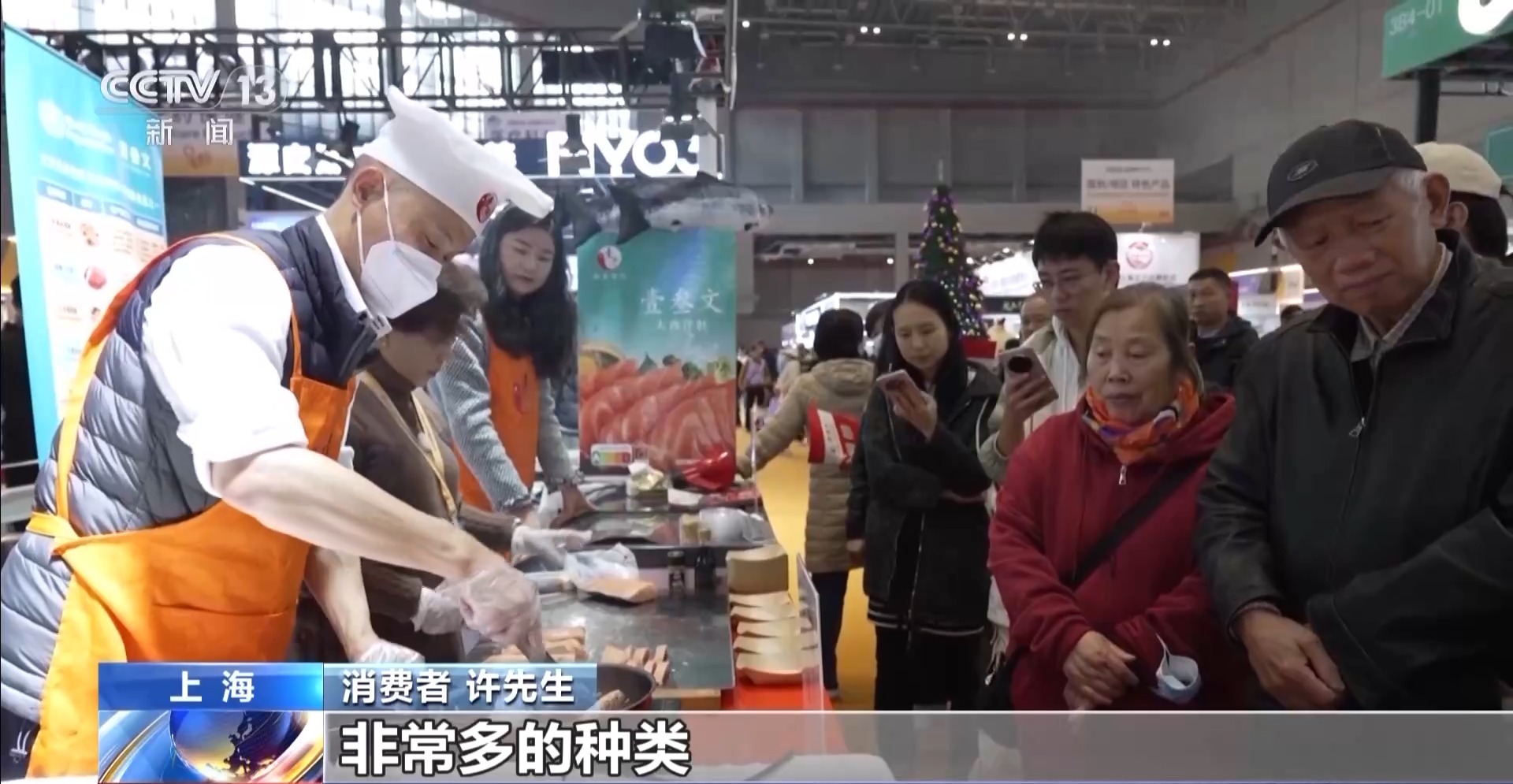
Core Viewpoint - The first Import Expo Quality Products Trade Fair will be held from December 19 to 21 in Shanghai, extending the reach of the Import Expo and allowing more quality products to enter households across China [1]. Group 1: Event Overview - The trade fair will cover an exhibition area of over 53,000 square meters, featuring over 700 companies from more than 60 countries and regions [1]. - The event will showcase a variety of products including food, consumer goods, agricultural products, health products, and automobiles [1]. Group 2: Consumer Engagement - Consumers have expressed interest in the event, noting the opportunity to see a wide range of products and brands not typically available in stores [3]. - Some consumers are returning to the fair to purchase additional items after previous experiences at the Import Expo [3]. Group 3: Focus on Innovation - The trade fair is primarily aimed at the consumer end while also attracting numerous buyers, service providers, and channel distributors [5]. - A special 500 square meter area called the "Import Expo New Product Launch Zone" will feature over a hundred innovative products, facilitating quicker access to global innovations in the Chinese market [5].

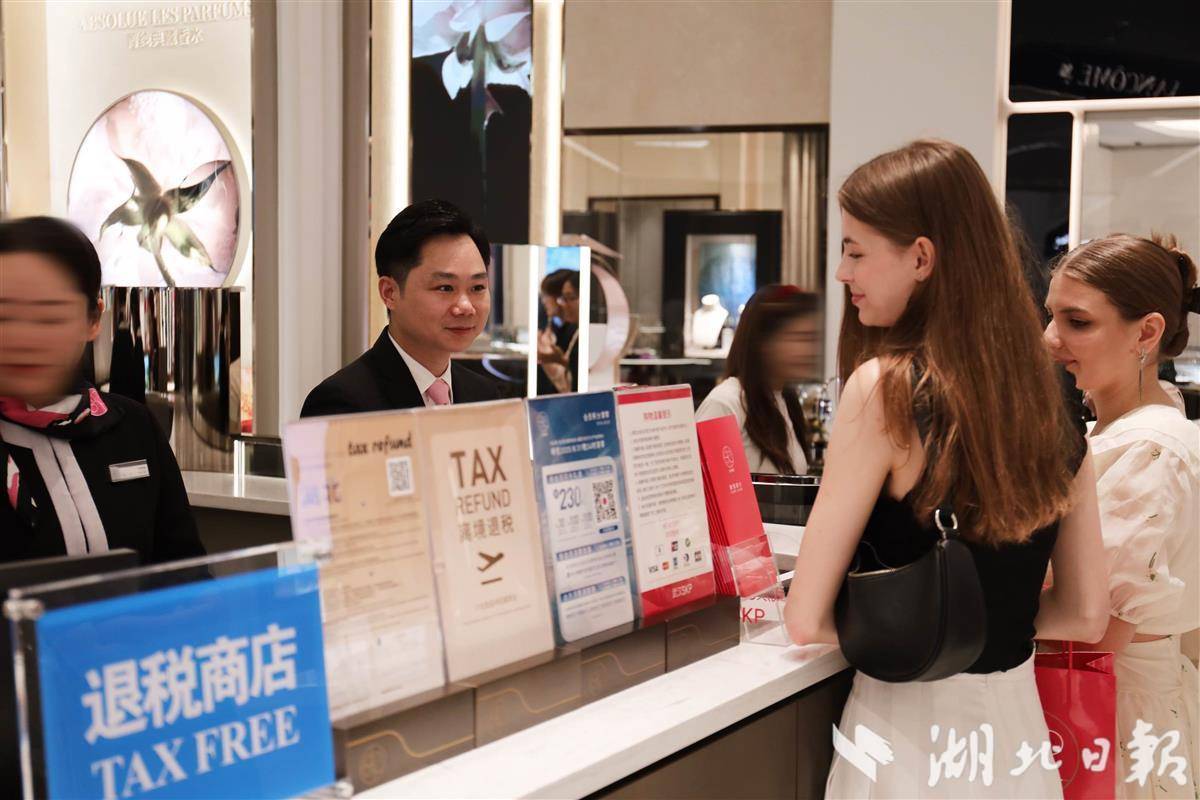
做优进博“金融服务引擎”,中国银行上海市分行护航进博优品交易会
第一财经网· 2025-12-19 01:09
Group 1 - The 2025 Import Expo Quality Products Trade Fair has opened at the National Exhibition and Convention Center (Shanghai), with the Bank of China deeply involved in this event, referred to as "Mini Import Expo," injecting financial momentum to help quality products reach households [1] - The Bank of China has leveraged its eight years of experience in supporting over a hundred overseas exhibition activities, forming two major exhibition groups: the "Bank of China Consumer Goods Exhibition Group" and the "Bank of China Automotive Exhibition Group" [2] - The Bank of China Shanghai Branch has created a 500 square meter quality lifestyle consumer goods exhibition area featuring ten well-known consumer brands, offering a one-stop quality lifestyle experience that includes smart home appliances, trendy clothing, and gourmet food [2] Group 2 - The Import Expo Quality Products Trade Fair showcases global premium goods, new product launches, and intangible cultural heritage brands, with the Bank of China actively connecting with exhibitors as a purchaser, enhancing the concept of bringing "Import Expo quality products into thousands of households" [3] - The Bank of China provides comprehensive financial services for the fair, including a dedicated payment service called "Bank of China Smart Payment," integrating various payment methods and ensuring quick fund turnover for merchants [4] - The Bank of China is committed to enhancing the consumer experience through promotional activities, such as discounts for credit and debit card payments and digital currency consumption red envelopes, aiming to create a vibrant marketplace [4]

十大国产PLM系统,全球供应链协同款!
Sou Hu Cai Jing· 2025-12-18 18:28
Core Insights - The article emphasizes that Product Lifecycle Management (PLM) systems are no longer exclusive to large multinational corporations but are increasingly being adopted by Chinese manufacturing enterprises to enhance their core business processes [2] - Domestic PLM systems are designed to address complex global supply chain challenges, offering unique advantages in aligning with local operational models and facilitating cross-regional and cross-enterprise collaboration [2] Group 1: Collaborative Capabilities of Domestic PLM Systems - To assess whether a PLM system possesses the "global supply chain collaboration" capability, it is essential to examine its internal logic architecture that supports the entire lifecycle data flow from concept to disposal [3] - A significant barrier to global collaboration is "data silos," where different departments may not be able to access or utilize the same data effectively. A robust PLM system acts as a powerful data hub, enforcing a single source of truth for all participants [4] - Real-time and transparent data synchronization in PLM systems helps avoid rework and waste caused by information delays, with experts noting that the success of PLM implementation largely depends on the standardization and unified management of data [4] Group 2: Process Integration and Automation - The core value of collaborative PLM lies in managing processes rather than just outcomes, enabling the automation of complex engineering change processes and new product introduction workflows [5] - In a collaborative PLM environment, all relevant personnel receive tasks and can view change details, comment, and approve online, significantly speeding up decision-making and ensuring compliance and consistency in processes [5] Group 3: Overview of Leading Domestic PLM Systems - The article identifies ten prominent PLM systems in the domestic market based on market share, technological advancement, industry reputation, and supply chain collaboration features [6] - CAXA PLM is highlighted as a leading solution, providing an integrated platform that connects design and manufacturing processes, showcasing its capability to manage complex product data effectively [9] - Other notable systems include Yonyou PLM, Kingdee PLM, and Siemens Teamcenter (localized version), each with unique strengths tailored to specific industries [9] Group 4: Future of PLM Systems - The evolution of domestic PLM systems is increasingly focused on "global supply chain collaboration," which is essential for maintaining resilience and agility in a competitive global landscape [10] - The integration of technologies such as artificial intelligence, industrial internet, and digital twin technology is expected to make PLM systems more intelligent and proactive in predicting supply chain risks and optimizing R&D paths [10]

“小进博”明日启幕 6万平方米展馆呈上环球消费新场景
Sou Hu Cai Jing· 2025-12-18 15:32
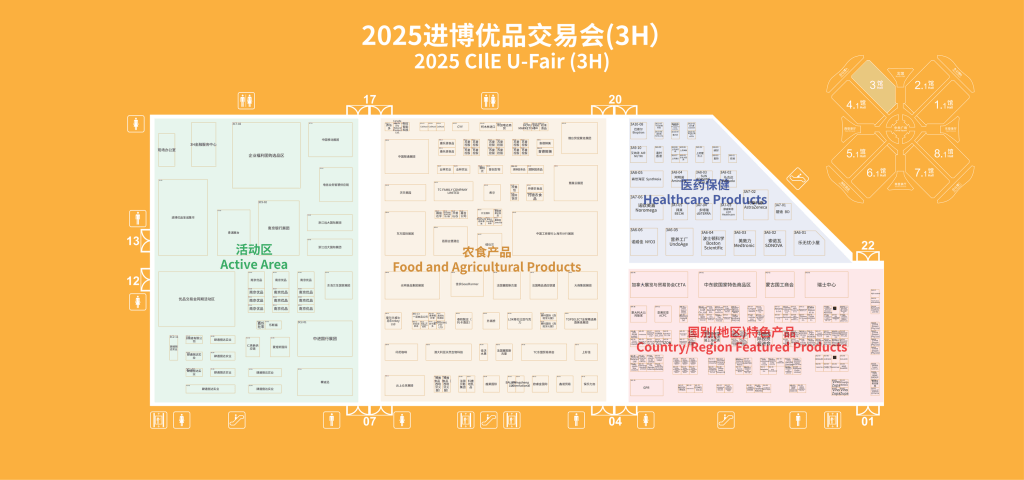
Core Viewpoint - The 2025 Import Expo Quality Goods Trade Fair ("Small Import Expo") will debut from December 19 to 21 at the National Exhibition and Convention Center in Shanghai, serving as a consumer-oriented extension of the China International Import Expo, aiming to enhance import expansion and consumer upgrade [1] Group 1: Event Overview - The exhibition area for this year's "Small Import Expo" is 60,000 square meters, expecting around 3,000 buyers and over 80,000 professional visitors and individual consumers [1] - Unlike previous expos that focused on B2B trade, this event targets the consumer end with a "retail-first, ordering-second" model, allowing for immediate purchases and online ordering for home delivery [1] Group 2: Exhibition Layout - The exhibition is divided into two main areas: Hall 3H focuses on agricultural food products and healthcare, while Hall 4.1H centers on consumer goods and automobiles [5] - Hall 3H features a medical science popularization area and showcases products from countries like Canada, Australia, and Italy, while Hall 4.1H includes a 5,000 square meter area for automobiles and a section for traditional crafts and quality domestic products [5] Group 3: Innovation and Experience - A special "New Product Launch Area" will present high-quality goods debuting at the expo, highlighting trends in global industry innovation and lifestyle aesthetics [6] - The event will include interactive activities such as tasting stations for global cuisine, beauty workshops, and cultural performances, enhancing visitor engagement and showcasing cutting-edge industry elements like low-altitude economy [6]
海南封关,和湖北有什么关系?
Sou Hu Cai Jing· 2025-12-18 13:09
Core Viewpoint - The launch of the Hainan Free Trade Port's full island closure on December 18 marks a significant step towards creating a special customs regulatory area, enhancing openness while managing trade effectively [1][2]. Group 1: Trade and Customs - The "first line" refers to Hainan's access to the world, allowing most imported goods to enter without tariffs, VAT, or consumption tax, simplifying customs procedures [4]. - The "second line" is designed to prevent tax evasion by ensuring that goods entering the mainland from Hainan are subject to appropriate checks and taxes [4]. - Hainan aims to become a "super free trade transit hub," facilitating easier international trade while maintaining regulatory oversight on domestic transactions [4]. Group 2: Consumer Benefits - Tourists can continue to shop in Hainan without additional procedures, with an annual duty-free shopping limit of 100,000 yuan per person, and an expanded range of duty-free products available [8]. - The introduction of international resources in education and healthcare, such as access to over 520 innovative medical products in the Boao Lecheng International Medical Tourism Pilot Zone, enhances the attractiveness of Hainan for both residents and visitors [8]. Group 3: Opportunities for Hubei Enterprises - Hubei enterprises can benefit from a 30% value-added processing exemption from tariffs, presenting significant cost savings for industries like food processing and biomedicine [10]. - For example, processing Argentine beef in Hainan could save approximately 43,000 yuan in tariffs, enhancing profit margins for local businesses [10]. - Hubei's strengths in production can be leveraged with Hainan's favorable policies, creating competitive advantages in the market [10].
2026年1月,斯里兰卡贾夫纳国际贸易博览会将迎来400家参展商
Shang Wu Bu Wang Zhan· 2025-12-18 11:23
Core Viewpoint - The Jaffna International Trade Fair (JITF) will take place from January 23 to 25, 2026, marking its 16th consecutive year as a significant commercial platform in the region [1] Group 1: Event Details - The fair is organized by Lanka Exhibition and Conference Services and the Yarlpanam Chamber of Commerce, to be held at the Muttraweli Square in Jaffna [1] - The event aims to deepen business connections, support investments, and promote technology-driven growth in the Northern Province [1] - The 2026 fair is expected to feature over 400 booths across various sectors including construction, automotive, consumer goods, agriculture, food and beverage, packaging, information and communication technology, financial services, education, and healthcare [1] Group 2: Participation and Impact - Last year's event attracted over 78,000 visitors and around 5,000 invited business representatives, including corporate executives, entrepreneurs, and policymakers [1] - Approximately 70% of attendees engaged in direct business negotiations, leading to collaborations, distribution agreements, and investment opportunities [1] - The timing of the 2026 fair has been strategically planned to avoid local holidays, maximizing participation and business activities [1] Group 3: Economic Significance and Sustainability - The JITF has become a crucial part of the economic recovery in the Northern Province following the conflict, supported by accelerated infrastructure development and private investments [1] - The fair will implement the "Plastic Neutrality Initiative" for the second consecutive year, establishing waste collection and recycling stations at the venue and collaborating with approved waste management agencies, reflecting the growing emphasis on sustainability in large commercial events [1]
研判2026年工业经济:《赛迪展望2026》系列成果正式发布
Jing Ji Wang· 2025-12-18 08:59
Core Insights - The 17th New Industrialization Lecture hosted by the China Electronic Information Industry Development Research Institute (CCID) focused on "Industrial Economy 2026: New Starting Point and New Momentum" [1] - The CCID released the "CCID Outlook 2026," which includes 9 comprehensive articles and 12 industry-specific articles, providing an authoritative reference for promoting high-quality industrial economic development in the context of the 14th Five-Year Plan [1] Group 1: Industrial Economic Outlook - The chief researcher of industrial economic operation at CCID, Qiao Baohua, forecasts that by 2026, the industrial economy will continue to develop towards high, new, and green directions, driven by reforms and stable growth policies [1] - Recommendations include solidifying foundations, enhancing supply-demand coordination, promoting integrated development, and improving enterprise services to achieve qualitative and reasonable quantitative growth in the industrial economy [1] Group 2: Industry-Specific Insights - Various industry experts presented their outlooks for 2026, including: - Ma Beibei on the electronic information manufacturing industry [2] - Zhang Hailiang on the raw materials industry [2] - Yin Xunfei on the equipment manufacturing industry [2] - Yu Juan on the consumer goods industry [2] - Li Yiming on future industries [2] - Liu Lichao on the artificial intelligence industry [2] - Zhu Junyu on the low-altitude economy [2]
领航工厂的“成长密码”
Zhong Guo Fa Zhan Wang· 2025-12-18 08:01
Core Insights - The Ministry of Industry and Information Technology and five other departments have announced the first batch of 15 leading smart factories for 2025, which serve as benchmark examples for technological innovation and industrial upgrading in key sectors such as equipment manufacturing, raw materials, electronic information, and consumer goods [1][2] Group 1: Smart Factory Levels - Smart factories are categorized into four levels: basic, advanced, excellent, and leading, with the leading level representing the highest standard in China's manufacturing sector [2] - As of now, over 30,000 basic smart factories, 7,000 advanced smart factories, and 504 excellent smart factories have been established, with the addition of 15 leading smart factories [2] Group 2: Industry Distribution - The first batch of 15 leading smart factories includes 4 from equipment manufacturing, 3 from raw materials, 5 from electronic information, and 3 from consumer goods, covering critical areas of China's manufacturing transformation [2] Group 3: Development Trends - The leading smart factories utilize artificial intelligence in over 70% of their applications, with more than 6,000 AI models and over 1,700 key technology equipment breakthroughs, reflecting six core development trends: virtual-real integration, lean leap, extreme flexibility, unconventional manufacturing, all-domain collaboration, and intelligent embedding [3] Group 4: Regional Focus - The Yangtze River Delta region, including Shanghai, Jiangsu, and Zhejiang, has emerged as a significant hub for leading smart factories, benefiting from a strong industrial base, active innovation ecosystem, and policy collaboration [4][5] - Shanghai has cultivated 2 national leading smart factories, 28 excellent smart factories, and over 300 advanced smart factories, maintaining the highest number of national-level smart factories in the country [5] Group 5: Ecosystem Development - The emergence of leading smart factories marks a shift from isolated "smart workshops" to a collaborative ecosystem involving head enterprises, industrial internet, and data as production factors, aimed at addressing the challenges of the manufacturing sector [7] - Leading smart factories are positioned as the central nodes in this ecosystem, possessing capabilities in technology spillover, resource integration, and standard-setting [7] Group 6: Future Directions - The integration of technologies such as 5G, AI, and industrial internet will continue to expand the boundaries of leading smart factories, enhancing their role as core competitive advantages and providing replicable experiences for global manufacturing digital transformation [8] - The Ministry of Industry and Information Technology emphasizes the importance of encouraging leading smart factories to share advanced experiences and solutions to enhance the competitiveness of the entire industrial ecosystem [9]
拉美拓展合作渠道消减对美依赖
Jing Ji Ri Bao· 2025-12-18 06:14
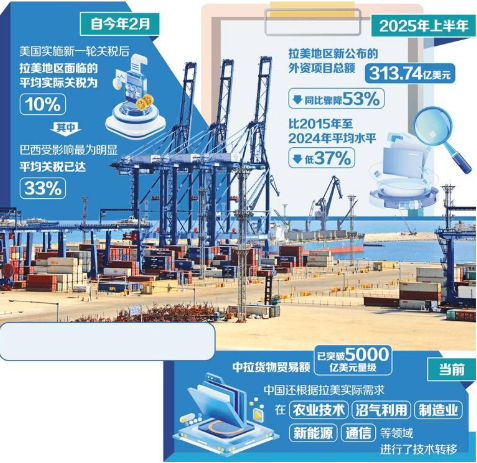
Core Viewpoint - The global tariff increase policy implemented by the U.S. government has significantly impacted the Latin American region, which is highly integrated with the U.S. economy. The UN Economic Commission for Latin America and the Caribbean (ECLAC) emphasizes the urgent need for these countries to reduce their trade dependence on the U.S. and pursue market diversification strategies [1][2]. Trade Dependency Challenges - Since the U.S. imposed a new round of tariffs in February, the average actual tariff faced by Latin America has reached 10%, with Brazil being the most affected at 33%. Despite a projected 5% growth in goods exports by 2025, structural risks remain [2]. - The current trade resilience is largely due to U.S. importers engaging in "front-loading" to avoid anticipated tariffs, indicating that this short-term prosperity is unsustainable. The negative impacts of tariffs are expected to become more pronounced by 2026 [2]. - Foreign investment attractiveness has been severely undermined, with new foreign investment projects in Latin America totaling only $31.374 billion in the first half of 2025, a 53% year-on-year decline and 37% below the average from 2015 to 2024. Investment in export-oriented industries targeting the U.S. market has contracted significantly, with declines exceeding 60% in sectors like automotive, consumer goods, and metal minerals [2]. Structural Transformation Setbacks - The deep dependence of Latin America on the U.S. market is rooted in over a century of "center-periphery" economic relations, with the Monroe Doctrine shaping U.S. policies towards the region. This has led to a dependency on primary product exports, resulting in weak industrial manufacturing and development capabilities [6]. - Despite efforts to promote industrial transformation, the region remains heavily reliant on primary product exports, particularly to the U.S. market, where a significant portion of imports in categories like bananas, sugar, and refined copper comes from Latin America [6]. - Internal structural challenges, such as high informal employment rates, tax system flaws, and inadequate infrastructure, complicate the path to reducing market dependency [7]. Diversified Cooperation for Solutions - To address tariff escalations and dependency issues, ECLAC recommends that regional countries deepen trade relations with diverse partners, including China, the EU, India, and ASEAN, while enhancing regional infrastructure connectivity and trade facilitation [8]. - The current U.S. administration's "America First" policy, characterized by exclusivity, poses challenges to Latin America's ability to collaborate with other major powers. However, the rise of the Global South offers new strategic opportunities for Latin America [8]. - Latin American countries are actively seeking diversified cooperation channels, focusing on practical collaboration with major economies and enhancing South-South cooperation through multilateral platforms [9]. Regional Integration Revitalization - Latin American regional integration is experiencing a resurgence, with leaders focusing on strengthening regional cooperation to collectively address external interventions and hegemonic actions. Countries like Brazil and Colombia are promoting regional integration processes in key areas such as security and energy connectivity [9].