
环保

Search documents
中建环能:2025年全年净利润同比预减84.69%—89.80%
2 1 Shi Ji Jing Ji Bao Dao· 2026-01-29 12:04
Core Viewpoint - The company, China Construction Environmental Energy, anticipates a significant decline in net profit for the year 2025, projecting a decrease of 84.69% to 89.80% compared to the previous year, primarily due to macroeconomic factors and increased competition in the environmental protection industry [1] Group 1: Financial Performance - The expected net profit attributable to shareholders for 2025 is projected to be between 9 million and 13.5 million yuan [1] - The expected net profit after deducting non-recurring gains and losses is projected to be between 4 million and 6 million yuan, reflecting a year-on-year decrease of 88.02% to 92.01% [1] Group 2: Business Operations - The company reports stable business orders and some success in debt collection efforts, leading to continuous optimization of operating cash flow [1] - Despite improvements in cash flow management, the company faces challenges due to a tightening of client funds, resulting in an increase in the aging of accounts receivable [1] Group 3: Industry Challenges - The decline in profit margins is attributed to a slowdown in investment growth within the environmental protection industry and intensified competition, which has negatively impacted the company's profitability [1] - The company has taken measures to strengthen debt collection, which has helped to curb the growth trend of accounts receivable [1]

晚间公告|1月29日这些公告有看头
Di Yi Cai Jing· 2026-01-29 10:34
Group 1 - Meinian Health plans to participate in the restructuring of Zhejiang Bangjie Holdings, aiming to become the controlling shareholder after the completion of the restructuring [3] - Baiyin Nonferrous Metals reported that the revenue from gold and silver products accounted for a low proportion of total operating income, with gold sales contributing 18.67% and silver sales 4.54% in the first half of 2025 [4] - Tiens Wind Power decided to implement a long-term production suspension for six wholly-owned subsidiaries to optimize resource allocation and focus on core businesses [5] Group 2 - Tongling Nonferrous Metals indicated significant uncertainty in the price fluctuations of its main products, with a low self-sufficiency rate for copper concentrate posing supply stability risks [6] - *ST Aowei received a notice of termination of listing due to its market capitalization falling below 500 million yuan for twenty consecutive trading days [7] - Foton Motor expects a net profit increase of approximately 1551% year-on-year for 2025, driven by sales growth in new energy vehicles and overseas markets [9] Group 3 - Beimo High-tech anticipates a net profit increase of 1076.16% to 1261.87% for 2025, supported by cost control and reduced credit impairment losses [10] - Zhongke Sanhuan forecasts a net profit growth of 566.23% to 899.35% for 2025, attributed to technological innovation and improved operational efficiency [12] - Wancheng Group expects a net profit increase of 222.38% to 266.94% for 2025, driven by growth in its retail business and improved sales margins [13] Group 4 - Huayi Technology anticipates a net profit increase of 191.52% to 330.34% for 2025, benefiting from product optimization and cost reduction measures [14] - Nanmo Biology expects a net profit growth of 269.49% to 423.44% for 2025, supported by increased revenue in the biopharmaceutical sector and improved cost control [15] - Baiao Saitu forecasts a net profit increase of 384.26% to 443.88% for 2025, driven by expansion in overseas markets and recovery in the domestic biopharmaceutical industry [16] Group 5 - Hailanxin expects a net profit increase of 387.47% to 631.2% for 2025, supported by advancements in technology and increased market share in marine observation [17] - Panjiang Co. anticipates a net profit growth of 205.3% to 264.83% for 2025, driven by increased coal production and reduced costs [18] - Huaguang New Materials expects a net profit increase of 104.67% to 141.88% for 2025, with significant growth in the electronic sector [20] Group 6 - Guo Sheng Securities forecasts a net profit increase of 25.44% to 67.25% for 2025, supported by active capital market participation and growth in various business segments [25] - Shengyi Technology expects a net profit growth of 87% to 98% for 2025, driven by increased sales of copper-clad laminates [26] - Sifutian anticipates a net loss of 30 million to 45 million yuan for 2025, although this represents a significant reduction in losses compared to the previous year [27] Group 7 - Maanshan Steel expects a net loss of 1.9 billion to 2.5 billion yuan for 2025, with a substantial reduction in losses compared to the previous year [28] - Shennong Seed Industry forecasts a net profit of 90 million to 120 million yuan for 2025, marking a turnaround from previous losses [30] - Jifeng Co. anticipates a net profit of 410 million to 495 million yuan for 2025, achieving a turnaround from losses [31]





碳价与绿证市场预期升温
HTSC· 2026-01-29 02:30
Investment Rating - The industry investment rating is "Overweight" for both Utilities and Environmental sectors [8]. Core Insights - The carbon pricing market is undergoing a value reconstruction driven by both policy and market forces, with carbon prices expected to stabilize at 150-200 RMB/ton by 2030 [3][7]. - The green certificate market is currently underperforming, with prices at only 8% of the carbon price, indicating significant potential for value release [5][7]. - The upward pressure on electricity prices is anticipated from both carbon costs and green certificate revenues, with wholesale electricity prices projected to increase by 10% to 385 RMB/MWh [6]. Summary by Sections Carbon Price Trends - Carbon prices peaked at 98 RMB/ton by the end of 2024 but fell to a low of 38 RMB/ton in 2025 due to declining energy prices and increased renewable energy capacity [4]. - As of January 2026, carbon prices have stabilized at an average of 73 RMB/ton, supported by compliance demand from the power sector and the expansion of carbon markets in heavy industries [4]. Green Certificate Market - The average price of green certificates was 4.2 RMB per certificate in 2025 and increased to 5.5 RMB in 2026, still significantly lower than carbon prices [5]. - The low price of green certificates is attributed to the incomplete integration with the carbon market and insufficient market demand for green electricity [5]. Electricity Price Dynamics - Current carbon and green certificate prices are expected to push wholesale electricity prices from 350 RMB/MWh to 385 RMB/MWh, with further increases anticipated if carbon prices rise to 150-200 RMB/ton [6]. - If green certificate prices align with carbon prices, wholesale electricity prices could increase by 24-31% [6]. Future Outlook - The carbon market is expected to transition from "soft constraints" to "hard constraints" by 2027, with a gradual tightening of quotas and an increase in the proportion of paid allowances [7]. - Policies are being established to link the environmental value of green certificates with carbon reduction values, which may enhance the economic viability of green electricity [7].


生态环境部:“四措并举”激发绿色动能 环境经济政策成效显著
Zhong Guo Jing Ji Wang· 2026-01-28 13:30
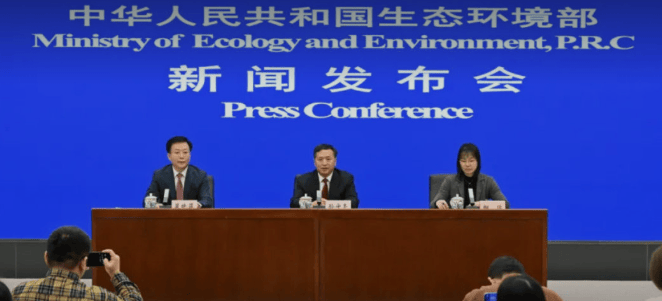
Core Viewpoint - The Ministry of Ecology and Environment of China is actively enhancing the environmental economic policy framework through a "four-pronged approach," which has shown significant results in regulating market entities' environmental behaviors and optimizing ecological governance [1][3]. Group 1: Financial and Taxation Measures - The Ministry has emphasized the role of green taxation to create a fair market environment, with nearly 120 billion yuan collected in environmental protection taxes during the 14th Five-Year Plan period, and tax reductions for enterprises exceeding 80 billion yuan due to low emissions and waste management [3][4]. - The steel industry has seen a cumulative reduction of 24.9% in pollutant emissions over five years, with expected tax reductions exceeding 9 billion yuan, highlighting the benefits of the "polluter pays" principle [3][4]. Group 2: Ecological Compensation and Regional Cooperation - The reform of ecological compensation and horizontal compensation systems has led to the inclusion of 104 counties in key compensation areas and the establishment of 33 cross-provincial ecological protection compensation mechanisms across 24 provinces [4]. - In Beijing's Yanqing District, a reward fund of 50 million yuan per year has been set up to promote ecological protection, resulting in significant income increases for local village collectives [4]. Group 3: Financial Support and Trade Policies - The Ministry is working on a policy framework to support the construction of a "Beautiful China," promoting financial institutions to invest in green and low-carbon projects, with a project recommendation mechanism established for 2025 [4][5]. - The Ministry has collaborated with customs to release four batches of 276 products under a bonded maintenance directory, facilitating nearly 240 bonded maintenance projects, thus supporting high-quality trade development [4][5]. Group 4: Market Dynamics and Corporate Self-Regulation - The release of a new version of the "Comprehensive Environmental Protection Directory" aims to help enterprises gain better market access and tax incentives, serving as a guide for green and low-carbon development [5]. - Nearly 90,000 enterprises have disclosed environmental information, enhancing the identification of compliant companies and supporting green finance and ESG rating activities [5][6]. Group 5: Future Directions - The Ministry plans to further refine fiscal and tax policies, enhance financial market support, and strengthen industry self-regulation to stimulate market entities' internal motivation for ecological protection [6].

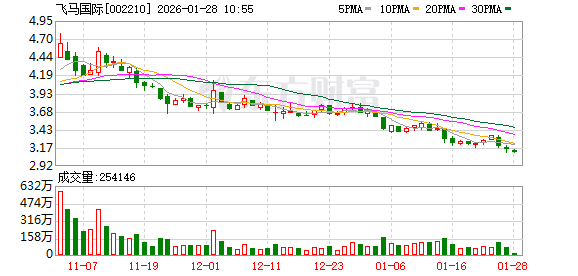
飞马国际:大同富乔目前在运营项目主要包括垃圾焚烧发电、供热、污泥处置等,暂不涉及光伏发电领域
Mei Ri Jing Ji Xin Wen· 2026-01-28 02:54
Group 1 - The core business of Datong Fuqiao, a subsidiary of Feima International, includes waste incineration power generation, heating, and sludge disposal, but does not currently involve photovoltaic power generation [2] - Feima International confirmed that there are no short-term plans for photovoltaic power generation projects [2]

1月27日机械设备、汽车、国防军工等行业融资净卖出额居前
Sou Hu Cai Jing· 2026-01-28 02:05
Summary of Key Points Core Viewpoint - As of January 27, the latest market financing balance is 27,059.04 billion yuan, showing a decrease of 2.12 billion yuan compared to the previous trading day, with 17 industries experiencing an increase in financing balance, while 14 industries saw a decrease [1]. Industry Financing Balance Changes - The communication industry had the highest increase in financing balance, rising by 1.11 billion yuan to a total of 1,339.67 billion yuan [1]. - Other industries with notable increases include: - Pharmaceutical and biological: increased by 0.44 billion yuan to 1,696.03 billion yuan - Non-ferrous metals: increased by 0.41 billion yuan to 1,494.54 billion yuan - Public utilities: increased by 0.29 billion yuan to 569.69 billion yuan [1]. - Conversely, the following industries experienced significant decreases in financing balance: - Machinery and equipment: decreased by 1.70 billion yuan to 1,418.93 billion yuan - Automotive: decreased by 0.96 billion yuan to 1,242.31 billion yuan - National defense and military: decreased by 0.68 billion yuan to 1,040.47 billion yuan [2]. Percentage Changes in Financing Balance - The coal industry recorded the highest percentage increase in financing balance at 1.09%, totaling 149.82 billion yuan [1]. - Other industries with notable percentage increases include: - Communication: 0.84% - Steel: 0.79% - Agriculture, forestry, animal husbandry, and fishery: 0.59% [1]. - Industries with the largest percentage decreases include: - Machinery and equipment: decreased by 1.19% - Comprehensive: decreased by 1.10% - Oil and petrochemicals: decreased by 0.89% [1].
张家港生态环境质量持续向好
Su Zhou Ri Bao· 2026-01-28 01:57
在服务发展和优化治理方面,全年为155个项目提供总量要素保障,完成苏州首例跨县排污权交 易,政务服务"一网通办"审批项目173个。围绕六五环境日、企业开放日等主题,累计开展志愿服务活 动近3万人次,不断筑牢全民参与的环保防线。同时,全年排查整改各类环境问题63件,集中攻坚"房前 屋后"环境问题42件,切实守护群众身边的生态福祉。 下一步,张家港将持续推进重点减排项目建设,深化"无废城市"创建,聚焦群众关切,系统整治突 出环境问题,优化生态环境服务,持续擦亮港城生态名片,为高质量发展提供更加坚实的生态支撑。 水环境质量稳中向好。围绕新增国考断面,全面开展溯源排查,为重点断面量身定制"一断面一方 案"。全年2个集中式饮用水水源地水质稳定达到Ⅱ类,13个国省考断面、5个苏州市考断面以及19条主 要入江河道优Ⅲ比例,连续8年实现三个"100%";优于Ⅱ类水体比例历史性达到76.9%。 土壤与固废治理同步推进。张家港市重点建设用地安全利用率保持100%。通过打造"无废"示范样 板、推进锂渣资源化利用项目,助力苏州入选联合国全球"迈向'无废'城市"名单,成为全球20个入选城 市之一。 昨天(1月27日),记者从张家港市生 ...
守正创新稳增长 精准施策惠民生——河南省2025年财政工作综述
He Nan Ri Bao· 2026-01-27 23:10
Core Viewpoint - The fiscal system in the province is focused on achieving a robust economic recovery and improving people's welfare while laying a solid foundation for the "15th Five-Year Plan" through a more resilient and high-quality fiscal policy [1][2][8] Fiscal Performance - In 2025, the province's total fiscal revenue reached 7018.7 billion, marking a 2.4% year-on-year increase, with general public budget revenue at 4501.7 billion, up 2.5%, and general public budget expenditure at 11516.1 billion, growing by 0.5% [2] - Over the "14th Five-Year" period, the province's general public budget revenue and expenditure reached 22 trillion and 54 trillion respectively, ranking 8th and 6th nationally, with growth rates of 18.8% and 19.9% compared to the previous five years [1] Investment and Economic Support - The province implemented policies to stimulate investment and consumption, with over 200 billion allocated to support key projects in critical areas [2] - Special funds of 175.1 billion were allocated to enhance the transportation network, achieving record highs in port throughput and international train operations [2] Support for Enterprises - The province has rolled out fiscal policies to support small and medium-sized enterprises, including issuing bonds to clear debts and optimizing the procurement environment [3] - State-owned financial capital has significantly increased, with total assets of 47 trillion, a 54% increase since early 2021, and net assets growing by 58.5% [3] Focus on Key Areas - Fiscal funds are directed towards technology innovation, rural revitalization, and social welfare, with significant investments in agricultural safety and infrastructure [4][5] - The province's spending on people's livelihoods reached 8499.4 billion, accounting for 73.8% of general public budget expenditure, with a focus on education, healthcare, and social security [5] Risk Management - The province has established a multi-faceted risk prevention system, focusing on debt resolution and platform transformation to ensure high-quality development [6] - In 2025, the province issued 1227 billion in replacement bonds and implemented strict management mechanisms to mitigate debt risks [6] Fiscal Reform and Management - The province is advancing fiscal management reforms, including zero-based budgeting and performance management, to enhance resource allocation and fund efficiency [7] - A total of 290.9 billion was saved through fiscal reviews, demonstrating a commitment to fiscal discipline [7] Future Outlook - The fiscal system will continue to focus on the "1+2+4+N" target system, implementing more proactive fiscal policies to support economic growth and modernization efforts in the province [8]
G60科创走廊“创赢未来”大赛获奖企业融资路演活动举行
Sou Hu Cai Jing· 2026-01-27 12:23
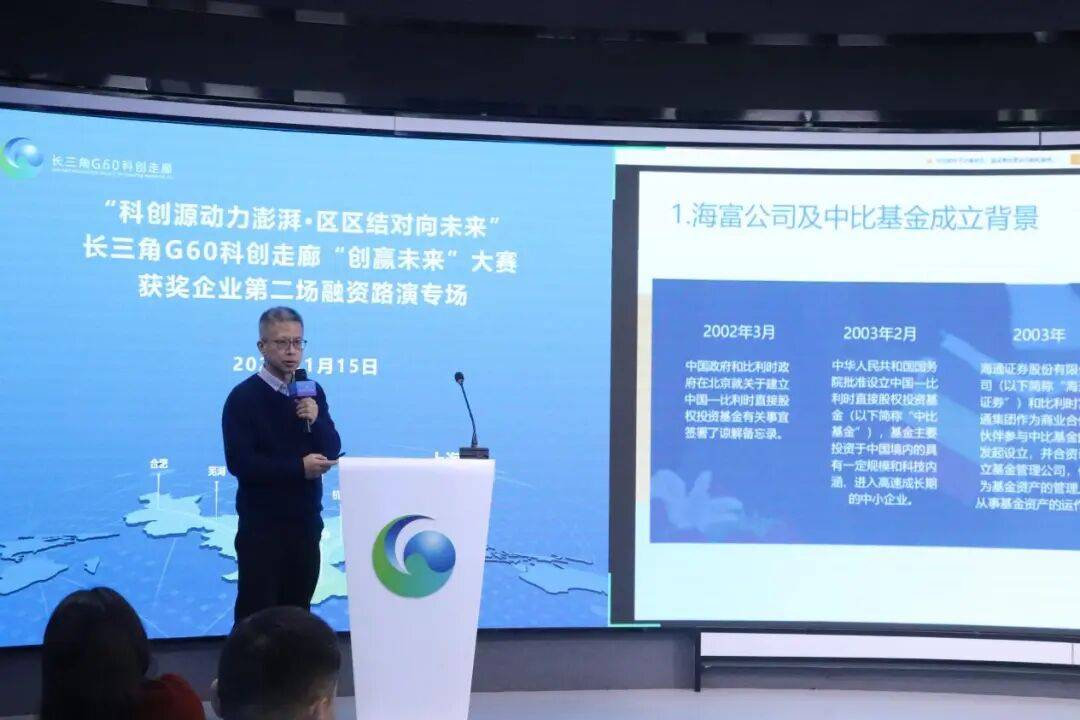
Core Insights - The G60 Science and Technology Corridor is being further developed to enhance the innovation ecosystem in the region, particularly focusing on the Songjiang University Town's innovation source [1] Group 1: Event Overview - The "Winning the Future" competition's second financing roadshow for award-winning companies was held in Shanghai Songjiang [1] - The event aimed to promote the G60 Science and Technology Corridor and support the construction of the Songjiang University Town innovation source [1] Group 2: Financial Products and Presentations - Various financial products were introduced, including the G60 Technology Achievement Transformation Fund and G60 Technology Financial Service Solutions [3] - Nine award-winning companies participated in the roadshow, showcasing their core technological breakthroughs, commercialization efforts, and financing needs [3] Group 3: Investor Engagement - Over 50 professional investors and institutional experts from G60 Financial Service Alliance member organizations attended the event [4] - The event facilitated one-on-one exchanges between investors and company founders, focusing on key dimensions such as application innovation, patent barriers, and market competition [3][4] Group 4: Future Initiatives - The G60 Joint Office plans to continue leveraging the "Financial Empowerment · Building Brands" roadshow platform to establish a regular mechanism for resource, technology, and talent integration [4] - The goal is to create a comprehensive empowerment platform covering all licenses, industry chains, and life cycles [4]
苏伊士:做客户绿色转型的技术伙伴
Zhong Guo Hua Gong Bao· 2026-01-27 01:35
"十五五"开局之际,面对未来多变的市场环境,环境产业如何进行价值重构?近日,苏伊士亚洲地区高 级副总裁孙明华表示,站在苏伊士进入中国50周年的新起点,苏伊士未来的战略非常清晰:聚焦工业水 处理赛道,目标是向环保服务商转型。 她说,"十五五"是美丽中国建设承上启下、从攻坚向拓展巩固迈进的关键时期,环境产业也在经历战略 定位和商业模式的根本性变革,从末端污染治理向绿色低碳解决方案综合服务转型。这一战略源于对工 业环保需求升级的深度洞察。在"双碳"目标下,高耗水、高污染行业对高效、低碳的工业环境解决方案 的需求日益迫切,行业正从规模扩张转向价值创造。 孙明华总结道,未来企业要真正站稳脚跟、赢得尊重,至少要具备三种能力并形成一个完整的闭环:过 硬的技术、对客户业务的深度洞察,以及将环保投入转化为客户经济效益的能力。"苏伊士正朝着此方 向扎实行动,聚焦于优化资产和架构、全面降本增效,并精准投资于能创造长期价值的项目。"孙明华 说。 中国市场孕育三大机遇 孙明华强调,中国市场正孕育着三大机遇:一是工业全面绿色化带来的深度服务机遇,即从"末端处 理"升级为"资源创造",例如苏伊士在鄂尔多斯从光伏废水中回收高纯度氟,实现"变 ...