私募

Search documents
证监会严肃查处瑞丰达违法违规案件:共计罚没超4100万元,实控人终身市场禁入
Mei Ri Jing Ji Xin Wen· 2026-01-23 09:27
2024年5月10日,《每日经济新闻》记者来到浙江瑞丰达资产管理有限公司上海办公区,发现上海市公安局浦东分局经侦支队抵达现场,并且查封了瑞丰 达资产的办公处。有上海市公安局浦东分局经侦支队人士告诉记者,"我们公安机关现在介入了这个情况,正在调查取证中。" 每经编辑|何小桃 据证监会1月23日消息,近日,证监会对浙江瑞丰达资产管理有限公司(以下简称瑞丰达)及关联私募机构、实际控制人孙伟等相关责任人员违法违规行 为作出行政处罚。经查,瑞丰达及关联私募机构、相关责任人员严重违反私募基金法律法规。上海证监局对瑞丰达及关联私募机构共罚没2800余万元,对 5名责任人员罚款1300余万元,对瑞丰达实际控制人采取终身证券市场禁入措施。中国证券投资基金业协会注销相关私募机构管理人登记。对于相关违法 行为可能涉及的犯罪问题线索,证券监管部门将坚持应移尽移的工作原则,依法依规移送公安机关。 证监会将坚决贯彻落实党中央、国务院决策部署,持续依法严厉查处私募基金领域违规募集、侵占挪用、自融自用、利益输送等恶劣违法违规行为,严肃 追究违法主体责任,提高违法违规成本,持续净化市场环境,同时推动私募机构抓紧整改各类不规范行为,促进行业规范 ...


瑞丰达案处罚落定!罚没合计4100万,犯罪线索已移送公安
Di Yi Cai Jing· 2026-01-23 09:21
Core Insights - The incident involving the actual controller of Ruifengda "running away" has attracted widespread attention, leading to an investigation by the China Securities Regulatory Commission (CSRC) which announced a formal investigation on May 11 [1][2] - After over a year of investigation, the CSRC identified multiple violations and imposed a total fine of over 41 million yuan on Ruifengda and related private equity institutions, marking one of the heaviest penalties in history [2] Group 1: Investigation and Penalties - The CSRC found that Ruifengda's products were unable to be redeemed as early as April, and there were significant changes in shareholders, along with abnormal trading behaviors [1][2] - The total fines imposed on Ruifengda and its associated private equity institutions amounted to over 28 million yuan, with an additional 13 million yuan in fines for five responsible individuals, including a lifetime ban for the actual controller, Sun Wei [2][3] Group 2: Specific Violations - Sun Wei and several institutions under his control faced administrative penalties for failing to invest funds as per contractual agreements and for misreporting information regarding actual controllers and related parties [3][4] - Specific penalties included 14 million yuan for Shanghai Riying, 500,000 yuan for Hunan Beichen Yuren, and smaller fines for other institutions, totaling 1.19 million yuan for Sun Wei himself [3][4] Group 3: Related Institutions - Other associated private equity institutions, such as Guangdong Jumi and Shanghai Jun Guan, also faced penalties for discrepancies in reported addresses and for delegating investment management responsibilities improperly [5][6] - The CSRC is actively pursuing violations in the private equity sector, with ongoing investigations and administrative measures against numerous institutions and individuals [6]
新锐私募2025年哪家强?云起量化、海南盛丰、京盈智投领跑!
私募排排网· 2026-01-23 07:00
本文首发于公众号"私募排排网"。 (点击↑↑ 上图查看详情 ) 2021-2025年的近5年间,私募行业先经历规模萎缩与出清阵痛,又在流动性改善、监管完善与策略升级的共同作用下,于2025年迎来新一轮"黄 金扩张期",整体呈现出 "总量增长、结构优化、头部集中、质量提升"的鲜明特征。 在此期间,有一批新锐私募成立并逐步成长壮大。私募排排网数据显示,截至2025年12月31日,在近5年间成立的私募共有990家,占所有私募 总数的13.17%。其中,旗下至少有3只产品有业绩展示的新锐私募共有79家,平均收益为36.42%。 那么,有哪些新锐私募在短短的五年期间就晋升为头部私募?2025年来业绩在三大规模组(规模为50亿以上、规模为10-50亿、规模为0-10亿) 位列10强的新锐私募又有哪些? 0 1 50亿以上:新锐私募不足3%!云起量化、海南盛丰业绩领衔 在990家近五年成立的私募中,头部私募(规模50亿以上)仅有28家,占比仅有2.82%。其中,百亿私募有11家,准百亿(规模50-100亿)的私 募有17家。其中,2025年内成立的私募共有4家,且实控人均为机构;另外,2025年规模跃升至头部的私募共有11 ...

济安金信杨健:银行、券商、私募、评级机构共生共荣彼此成就
Xin Lang Cai Jing· 2026-01-23 06:36
Core Viewpoint - The asset management industry is characterized by a symbiotic relationship among banks, securities firms, private equity, and rating agencies, forming a value-creating ecosystem that enhances overall industry quality and competitiveness [1][17]. Group 1: Role of Rating Agencies - Rating agencies serve as the "value benchmark" and "risk lookout tower," providing essential decision-making foundations for banks, securities firms, and private equity through independent and objective credit ratings [2][18]. - For private equity, rating agencies offer professional support for investment research, target selection, and product risk control, helping to reduce information asymmetry and enhance product standardization [2][18]. - For securities firms, they provide critical risk assessment for investment banking, brokerage, and proprietary trading, which is essential for pricing and investor recommendations [2][18]. - For banks, rating agencies are crucial for managing credit risk in lending and wealth management, ensuring compliance with asset management regulations [3][19]. Group 2: Role of Banks - Banks act as the "capital reservoir" and "customer flow pool," providing essential funding and client access to securities firms, private equity, and rating agencies [4][20]. - They offer core funding sources and client outreach channels for private equity, addressing fundraising challenges and enhancing the product offerings in wealth management [4][20]. - For securities firms, banks facilitate capital flow and business collaboration, enhancing operational efficiency through joint product offerings [5][21]. - Banks generate vast amounts of credit and transaction data that can enhance the rating agencies' models and market coverage [6][21]. Group 3: Role of Securities Firms - Securities firms function as the "connector" in capital markets, bridging various financing entities and providing professional services [7][22]. - They create essential investment and exit channels for private equity, offering diverse paths for liquidity and professional research support [7][22]. - For banks, securities firms provide specialized services in asset management and capital market transactions, enhancing asset diversification and risk management [8][23]. Group 4: Role of Private Equity - Private equity acts as the "value excavator" and "product innovator," enriching the ecosystem with innovative investment strategies and tailored products [9][24]. - They enhance banks' wealth management offerings by providing specialized investment opportunities that meet diverse client needs [9][24]. - For securities firms, private equity investments can lead to growth opportunities and subsequent business engagements, improving operational efficiency [9][24]. Group 5: Mutual Empowerment and Value Creation - The relationship among banks, securities firms, private equity, and rating agencies is characterized by mutual empowerment and a value-creating closed loop, where each party leverages its core competencies [11][26]. - The ecosystem promotes a cycle of demand and supply that drives professional capability upgrades and expands business boundaries [12][27]. - Collaborative efforts among the four parties contribute to industry rule-making and risk management, transitioning from homogeneous competition to differentiated cooperation [13][28]. Group 6: Principles for Deeper Collaboration - To maximize the synergistic effects among banks, securities firms, private equity, and rating agencies, adherence to principles of independence, resource sharing, professional learning, and long-term cooperation is essential [14][28]. - Maintaining compliance and independent judgment, especially for rating agencies, is crucial to ensure sustainable collaboration [14][28]. - Sharing data and resources while respecting regulatory requirements can enhance decision-making accuracy and operational efficiency [14][28].
私募规模跃升榜揭晓:徐翔旗下坤灵私募跃升4档!23家私募新晋百亿!
私募排排网· 2026-01-23 03:59
Core Insights - In 2025, A-shares, Hong Kong stocks, and US stocks all performed well, with the Shanghai Composite Index rising over 18%, the Shenzhen Component Index nearly 30%, and the ChiNext Index over 49% [3] - The average return for private equity in 2025 was approximately 25%, with 675 private equity firms experiencing significant growth in management scale [3] - The growth in management scale was attributed to either a notable increase in product net value or gaining investor trust, leading to more entrusted funds [3] Group 1: Private Equity Growth - A total of 675 private equity firms saw their management scale increase, with 369 being subjective, 159 quantitative, and 131 using a combination of both strategies [3] - Among the firms that achieved significant growth, 23 new firms entered the billion-yuan private equity club, while 15 firms returned to this status [4] - The new billion-yuan private equity firms included 14 quantitative and 6 subjective firms, with 18 focusing on stock strategies [5] Group 2: Notable Firms and Strategies - Notable firms that achieved a scale increase of more than two tiers included Chengyang Investment, Dadao Investment, and Square and Investment, all of which grew from 20-50 billion yuan to over 100 billion yuan [5][8] - The firm Square and Investment, led by Lü Jieyong, has received over 70 awards and focuses on stock strategies with a strong quantitative approach [10] - Among the 15 firms returning to the billion-yuan club, 8 were subjective and 6 were quantitative, with 12 focusing on stock strategies [11] Group 3: Performance Rankings - The top 20 private equity firms for 2025 were identified, with the threshold for inclusion being a return exceeding a certain percentage [19] - The top five firms based on returns included Shanghai Hengsui Asset, Beijing Xiyue Private Equity, and Qiantou Investment, with a significant number of subjective firms in the rankings [19][20] - The firm Beijing Xiyue Private Equity achieved a scale increase from 5-10 billion yuan to 20-50 billion yuan, ranking second in returns for 2025 [22][23] Group 4: Long-term Performance - Over the past three years, the top-performing private equity firms included Zhongying Investment and Beijing Xiyue Private Equity, both achieving high returns [24] - In the five-year performance rankings, Zhongying Investment ranked first, with a significant number of subjective firms also making the list [27] - The firm Hualong Private Equity, focusing on futures and derivatives, ranked third in three-year returns, showcasing strong performance in the market [26]

中小险企试水私募量化 借道MOM投资引关注
Zheng Quan Shi Bao· 2026-01-22 18:21
Core Viewpoint - Insurance funds are increasingly investing in private quantitative products, particularly since the "9·24" market rally in 2024, with several small and medium-sized insurance companies participating in this trend [1][2][5]. Group 1: Investment Trends - There is a noticeable trend of insurance capital investing in private quantitative index-enhanced products, which have shown strong performance [1][4]. - The preference among insurance funds is shifting towards quantitative index-enhanced products due to their better explainability and relatively stable performance compared to subjective products [2][4]. - Small and medium-sized insurance companies are primarily experimenting with private quantitative investments, with investments still at a small scale and not yet a major part of their portfolios [6][7]. Group 2: Market Environment - The current low-interest-rate environment poses significant challenges for insurance investments, leading to a necessity for exploring private quantitative options to enhance returns [7][8]. - In a bull market, quantitative index-enhanced products are attractive as they often outperform the index, while in a bear market, the demand for such products may decrease [5][7]. Group 3: Regulatory Landscape - The regulatory framework regarding insurance capital investing in private products remains unclear, with existing guidelines generally excluding private securities funds from eligible investment categories [10][11]. - There is an expectation that regulatory bodies may refine existing regulations to clarify the compliance of such investments, potentially introducing specific requirements for the management of insurance funds [11]. Group 4: Performance and Risk - Quantitative strategies are perceived to mitigate some risks associated with traditional private investments, such as performance sustainability and governance issues [9]. - Despite the potential benefits, there are concerns regarding compliance and the regulatory status of private investments, which could pose risks for insurance companies [8][10].
私募最新投资策略来了
券商中国· 2026-01-22 14:57
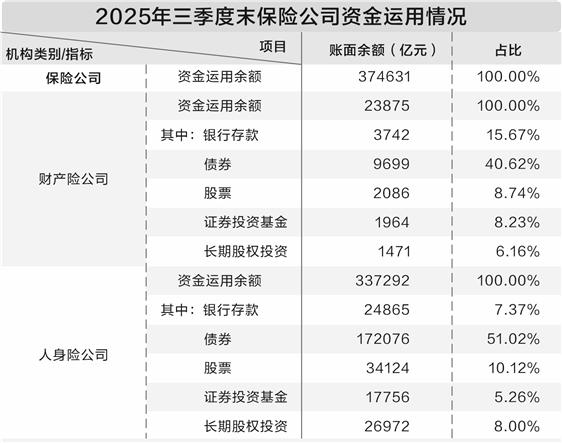
Core Viewpoint - The A-share market has shown strong momentum since the beginning of 2026, driven by changes in the preferences of private equity institutions regarding market funding sources and opportunities within the technology growth sector [1][3]. Group 1: Insurance Capital as a Key Variable - Insurance capital is expected to be a major source of incremental funds in the equity market for 2026, influencing market style significantly [3]. - The influx of funds into the stock market is largely due to the ongoing downturn in the real estate market, prompting a reallocation of capital from real estate to equities, with insurance products acting as the main conduit [3][4]. - As of Q3 2025, insurance funds directly held 3.62 trillion yuan in secondary market stocks, surpassing the 3.56 trillion yuan held by actively managed equity mutual funds, indicating that insurance capital has become a core institutional investor in A-shares and Hong Kong stocks [4]. Group 2: Technology Growth Sector Dynamics - The technology growth sector, particularly AI and innovative pharmaceuticals, remains a crucial investment theme, but private equity firms are reassessing the internal structure of this sector [5]. - Concerns about potential bubbles and the viability of business models in the AI sector necessitate breakthroughs in AI applications for sustained market performance [5][6]. - Investment strategies in AI should shift from a total investment logic to a structural logic, focusing on areas with tight supply and insufficient market recognition, particularly in the fields of autonomous driving and robotics [6]. Group 3: Outlook for Non-Ferrous Metals - The precious and non-ferrous metals sectors continue to strengthen, with gold and silver prices reaching historical highs, and international copper prices also hitting new records [7]. - The investment logic for non-ferrous metals remains robust, influenced by global order reconstruction and technological competition, although the short-term price increases have been significant [7]. - The long-term performance of non-ferrous metals will be shaped by the evolving global monetary landscape and the critical role these metals play in technological advancements [7].

碰瓷大佬?腾腾爸手撕但斌业绩!
Xin Lang Cai Jing· 2026-01-22 10:09
私募大佬但斌最近热度不断,前脚刚就2024年"9·24"行情判断向任泽平致歉,承认确实是牛市,为这场持续近两年的多空之争画上句号;后脚就被财经大 V腾腾爸揪着业绩不放,公开叫板质疑。 日前,腾腾爸发微博表示:"但总旗下私募基金,最近三年(2023-2025)综合收益大约140%+,表现确实不错。但2021-2022连续两年大幅回撤。2021年 我没找到数据,2022年有报道称大约回撤了45%。也就是说,但总基金最近5年,先来了个腰斩,又上涨了140%+,5年总体收益大约20%+。年化不到 5%。" 质疑之余,他还拉出日斗投资董事长王文的业绩作对比:"百亿规模基金,最近5年王文总旗下基金总体收益220%+。这个是真厉害了。" 文末,腾腾爸还故作疑问补了一句"我计算的对吗?" 司机在这里直接给出答案:大错特错!腾腾爸连最基本的业绩数据都算错,这根本就是拿着错误数 据碰瓷大佬的流量闹剧! 2021年但斌的收益数据,腾腾爸称"没找到",但司机从权威媒体报道中查到:私募大佬但斌管理的产品在2021年确实大幅亏损,东方港湾旗下超90只产品 2021年亏损超10%。 但斌本人也曾坦言:"从业29年,2021年算经历了又一次 ...

关键时刻,私募大佬吴伟志发声!
Xin Lang Cai Jing· 2026-01-22 05:35
Core Viewpoint - The current market is characterized by a typical summer bull market feature, with active trading, accelerated sector rotation, and expanding profit effects, but without signs of overall bubble or extreme emotional exuberance, indicating that both time and space have not yet peaked [1][10] Market Characteristics - The A-share market is experiencing a "slow bull" and "long bull" formation, contrasting with previous short bull and long bear trends [6][14] - The Chinese stock market's recent rise is more of a "catch-up" rather than a "bubble" compared to global markets, with the current valuation still at a low level [3][12] Economic Comparison - Compared to Japan's market performance post-1990s, China's economic fundamentals are stronger, with manufacturing advantages significantly surpassing Japan's, and a record trade surplus achieved in 2025 [4][12] - The Chinese economy is showing a better upward trend in new economic sectors like semiconductors and the internet compared to Japan's past performance [4][12] Valuation Insights - As of Q3 2025, the dynamic price-to-earnings ratio of the CSI 300 index is approximately 14 times, significantly lower than the S&P 500 (about 29 times) and the Nasdaq (about 42 times), indicating a valuation gap [5][13] - The A-share market has underperformed global markets, with the Wind All A index down nearly 30% from 2021 to 2024 [5][13] Investment Opportunities - The company identifies five key "hard asset" investment directions: "Technology Innovation+", pharmaceutical and biotechnology, resource supply-side reversal, gold, and high-dividend assets [3][7][15] - "Technology Innovation+" includes internet platform companies returning to reasonable valuations and AI-enabled new business opportunities [7][15] - In pharmaceuticals, innovative drug development is entering a harvest phase, with several biotech firms expected to reach profitability [7][16] - Resource supply-side reversal is driven by a supply gap in key metals due to insufficient capital expenditure over the past five years, alongside growing demand from sectors like new energy and military [7][16] - Gold assets are gaining value as a non-credit asset amid global de-dollarization and ongoing geopolitical conflicts, with potential support for gold prices if the Federal Reserve continues to lower interest rates [8][16] - High-dividend assets in sectors like electricity, telecommunications, and banking provide stable cash flow, serving as a stabilizing component in investment portfolios during volatile market conditions [8][16]
百亿私募产品业绩如何?量化多头“大放异彩”!龙旗领衔;仍有主观多头“突出重围”!
私募排排网· 2026-01-21 12:00
Core Viewpoint - In 2025, the A-share market is expected to show a fluctuating upward trend driven by policy dividends and industrial transformation, with the Shanghai Composite Index, Shenzhen Component Index, and ChiNext Index rising approximately 18.41%, 29.87%, and 49.57% respectively [3] Group 1: Market Performance - The overall market activity has significantly increased, with A-share total market value, total transaction volume, and financing balance reaching record highs [3] - The average return of 5,192 private equity funds with performance disclosures in 2025 was 31.93%, while the 634 funds under the management of billion-yuan private equity firms achieved an average return exceeding 32% [3][4] Group 2: Strategy Performance - Among strategies, the stock strategy and multi-asset strategy products performed best, with average returns of 34.79% and 30.72% respectively [5] - In the secondary strategy segment, quantitative long products had the highest average return, exceeding 50% in 2025 [3][5] Group 3: Top Performing Products - The top three stock strategy products in 2025 were from Yuanxin Investment, Jiuqi Investment, and Yinye Investment, all of which are subjective long strategies [7] - The average return for 502 stock strategy products under billion-yuan private equity was 34.79% [7] Group 4: Multi-Asset Strategy Highlights - The top three multi-asset strategy products were from Jiuqi Investment, Guoyuan Xinda, and Bolun Yintai Investment, with the average return for 68 multi-asset strategy products being 30.72% [15][20] Group 5: Futures and Derivatives Strategy - The average return for 23 futures and derivatives strategy products was 11.96%, with the top three products coming from Xinhong Tianhe, Bolun Yintai Investment, and Qianyan Private Equity [21][27] Group 6: Bond Strategy Performance - The average return for 37 bond strategy products was 11.99%, with the top three products from Luoken International, Yinye Investment, and Yingfeng Capital [27][28]