连锁餐饮

Search documents
汉堡王8个月转手赚2亿刀,外资到底在玩什么?
3 6 Ke· 2025-11-13 08:44
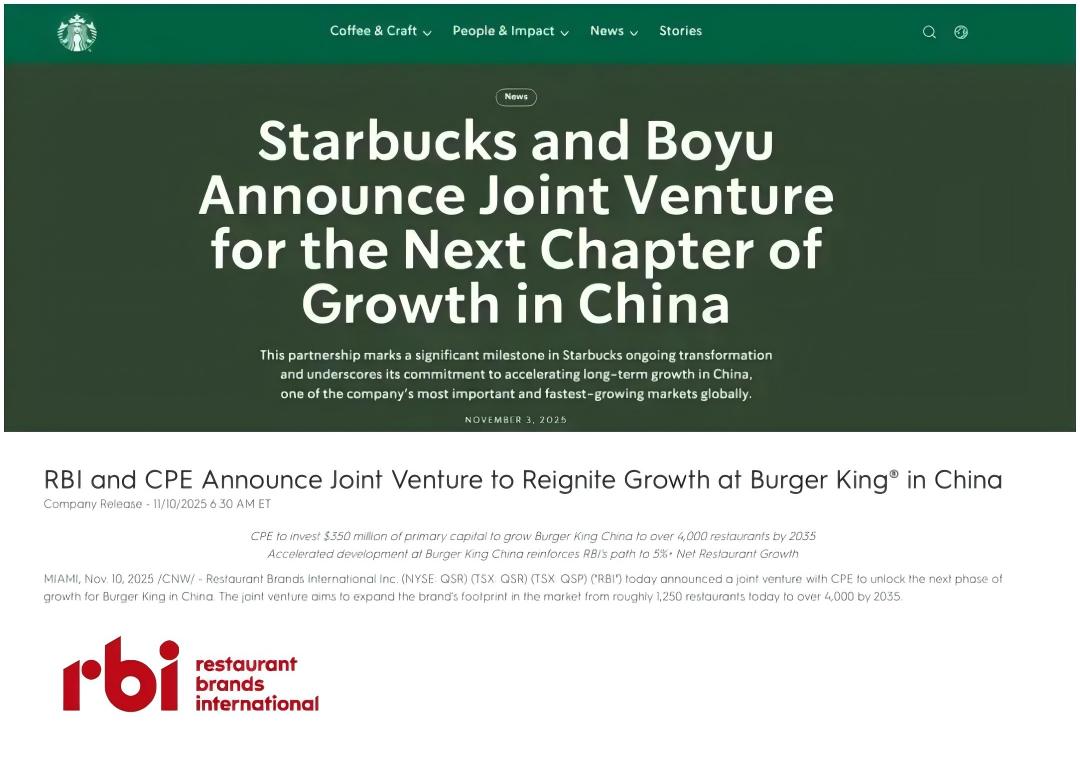
01 看了一堆汉堡王和星巴克"卖身"的标题党新闻后,我都快笑死了。 图|来源网络 一周之内,两条重磅:11月4号星巴克宣布把中国业务60%股权卖给博裕资本;11月10号汉堡王把83%股权卖给CPE源峰。 然后一堆媒体开始喊"外资餐饮大败退""洋品牌水土不服"。 我看完这些标题,又看了看交易细节,我感觉我又行了。 这哪是败退,这明明是换了个更舒服的姿势继续赚钱。 图|来源网络 星巴克一次性套现40亿美元,手里还握着40%股权,未来十年以上每年躺着收品牌授权费,加起来总价值超过130亿美元。 汉堡王拿走3.5亿美元,保留17%股权,还签了20年的品牌授权协议。 你们说这是败退? 这是完美退出好吧。 02 先别急着喊口号,咱们算笔账。 以星巴克为例,很多人觉得它把控股权卖了,是不是混不下去了? 朋友,你想多了。 星巴克在中国目前8000家店,2025财年全年营收31亿美元。 听起来不错对吧? 但你得知道,这31亿美元是怎么赚来的——门店租金、人力成本、供应链投入、营销费用,全是钱。 图|来源网络 更要命的是,星巴克还得跟瑞幸死磕。瑞幸现在27000家店了,年底冲刺30000家,而且价格比星巴克便宜一半还拐弯。 这意 ...


连锁餐饮,责任也要“连锁”(微观)
Ren Min Ri Bao· 2025-11-12 22:19
Core Insights - The article emphasizes the importance of brand consistency and quality in the chain restaurant industry, highlighting that the chain restaurant model is increasingly favored by consumers due to its stable quality and unified branding [1] Group 1: Industry Trends - The chain restaurant penetration rate in China has increased from 15% in 2020 to 23% in 2024, indicating a growing trend towards brandization and scale in the restaurant industry [1] - Chain restaurants face management challenges due to their wide geographic coverage and numerous outlets, which can lead to quality decline and food safety issues if not properly managed [1] Group 2: Food Safety Responsibility - The recent regulations from the State Administration for Market Regulation aim to enforce food safety responsibilities among chain restaurants, ensuring consumer safety and improving corporate governance [1][2] - A clear "responsibility chain" is necessary for chain restaurants, involving all stakeholders from headquarters to individual outlets, to effectively manage food safety risks [2] Group 3: Management and Standards - Implementing standardized management practices across all outlets is crucial for maintaining consistent food safety and quality, allowing consumers to trust the brand regardless of location [2] - Regular evaluations and risk prevention measures should be established to address potential food safety issues across all operational stages, from procurement to delivery [2] Group 4: Consumer Trust and Market Growth - Building consumer trust through transparency in food safety practices, such as real-time kitchen monitoring and ingredient sourcing, is essential for long-term success in the chain restaurant sector [3] - Ensuring food safety is not only a regulatory requirement but also a fundamental aspect of boosting consumer confidence and stimulating market growth [3]
西贝舆论风波整整2个月,生死如何?
Xin Lang Cai Jing· 2025-11-12 19:20
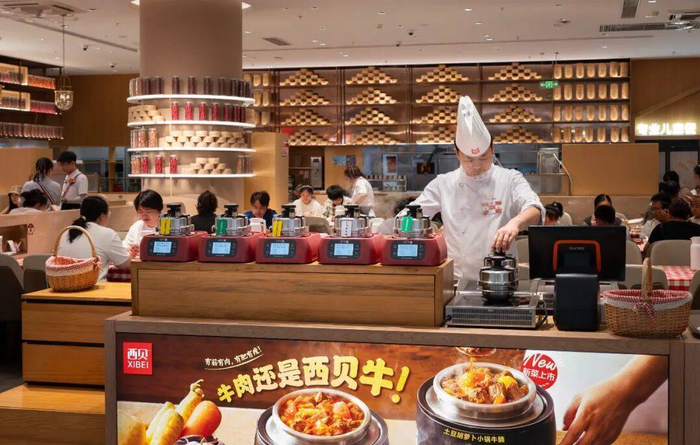
Core Viewpoint - The restaurant chain Xibei is undergoing significant changes in response to a recent public relations crisis, focusing on product adjustments, service improvements, and price reductions to regain customer trust and enhance brand image [1][3][9]. Product Adjustments - Xibei has committed to improving food safety and has made several product changes, including transitioning from pre-prepared to on-site cooking. As of September 30, the first batch of product adjustments has been completed, such as switching to non-GMO soybean oil and preparing certain dishes fresh in-store [5][9]. - The second phase of product adjustments includes handmade dumplings and freshly made chicken soup, with ongoing discussions with suppliers to shorten product shelf life while ensuring safety [5][9]. Service Improvements - The company is refocusing on family dining and enhancing services for children, the elderly, and women. By November, all stores will be equipped with first aid kits, and by December, each store will have at least one staff member trained in first aid [5][9]. Customer Traffic and Sales Strategies - Following the adjustments, customer traffic has begun to recover, with some stores reporting a 20% increase in weekend traffic compared to the previous year. However, trust issues remain among some consumers [6][8]. - To address complaints about high prices, Xibei implemented significant price reductions on over 40 dishes starting October 1, with discounts exceeding 20%. Additionally, the company distributed free vouchers to attract customers, resulting in a 5% increase in overall customer traffic compared to the previous year [7][8]. Store Adjustments - Xibei has closed nearly 10 stores since October, which the company states is a normal part of restaurant operations, with an annual store adjustment rate of about 10%. In 2022, Xibei opened 13 stores and closed 31, while in 2023, it opened 26 and closed 14 [7][8]. Brand Recovery Efforts - The company is focused on transforming the crisis into an opportunity for brand rebuilding, emphasizing transparency and customer engagement. While some progress has been made in restoring customer traffic, full recovery of brand trust will take time [9].
星巴克中国被卖后,“第三空间”歌单变了?
Bei Ke Cai Jing· 2025-11-11 06:38
Core Viewpoint - Starbucks is undergoing significant changes in its branding and customer experience following the sale of 60% of its shares in China, aiming to adapt to shifting consumer preferences and regain market share lost to lower-priced competitors [8][14][21]. Group 1: Changes in Atmosphere and Branding - The atmosphere in Starbucks stores has shifted from a business-oriented environment to a more casual and nostalgic setting, with changes in music selection reflecting this transformation [6][12][26]. - The new music playlist features popular Chinese songs from the past, creating a sense of familiarity and nostalgia among younger consumers [10][23]. - The design and branding of some stores have also been altered, contributing to a more approachable and relatable image [5][6]. Group 2: Market Position and Competition - Starbucks' market share in China has significantly declined from 34% in 2019 to 14% last year, prompting the company to seek changes to attract customers [14]. - The company faces intense competition from lower-priced coffee brands, forcing it to reconsider its pricing strategy while maintaining quality [21]. - The shift in target demographics, with younger consumers becoming the primary customer base, has influenced Starbucks' approach to marketing and product offerings [23]. Group 3: Evolving Consumer Behavior - The concept of the "third space" is evolving, with consumers now seeking more personalized experiences in coffee shops, which are becoming social hubs rather than just places for coffee [25][29]. - The changing reasons for visiting Starbucks reflect broader societal trends, with customers now valuing emotional connections and community over mere consumption [19][29]. - The integration of various interests and activities within Starbucks locations, such as pet-friendly spaces and hobby areas, indicates a shift towards a more inclusive and engaging environment [25].

CPE源峰与汉堡王母公司RBI达成战略合作 将成立合资企业
Zheng Quan Shi Bao Wang· 2025-11-11 05:07
Core Insights - Following Starbucks' transfer of its controlling stake in China, Burger King's parent company RBI has also entered into a strategic partnership with CPE Yuanfeng to establish a joint venture, Burger King China, thereby transferring its controlling stake in the Chinese market [1][2] Group 1: Strategic Partnership - CPE Yuanfeng will inject an initial capital of $350 million into Burger King China to support restaurant expansion, marketing, menu innovation, and operational improvements [1] - After the transaction, CPE Yuanfeng will hold approximately 83% of Burger King China, while RBI will retain about 17% [1] Group 2: Market Adaptation - The establishment of joint ventures with local investment institutions is becoming a new paradigm for foreign brands in China, enhancing their adaptability to the local market [2] - The ability of these brands to maintain global brand consistency while responding flexibly to rapidly changing local consumer demands remains to be observed [2] Group 3: Growth Plans - CPE Yuanfeng aims to empower Burger King China by focusing on product upgrades, brand marketing, store expansion, online channel restructuring, digital system development, and financial optimization [3] - The plan includes expanding the number of Burger King stores in China from approximately 1,250 to over 4,000 by 2035, along with achieving sustainable same-store growth [3] Group 4: Confidence in Market Potential - CPE Yuanfeng's investment reflects confidence in Burger King's long-term growth potential in China, leveraging its deep understanding of local consumers [3] - RBI's CEO emphasized that China remains one of the most attractive long-term growth markets for Burger King globally, and the partnership with CPE Yuanfeng is expected to unlock significant growth potential for the brand in China [3]
“汉堡王中国”被卖了,CPE源峰出资3.5亿美元
2 1 Shi Ji Jing Ji Bao Dao· 2025-11-10 14:34
Core Insights - CPE Yuanfeng has entered into a strategic partnership with Burger King, which is fully owned by Restaurant Brands International (RBI), to establish a joint venture named Burger King China [1] - CPE Yuanfeng will inject an initial capital of $350 million into Burger King China to support restaurant expansion, marketing, menu innovation, and operational improvements [1] - Following the transaction, CPE Yuanfeng will hold approximately 83% of the shares in Burger King China, while RBI will retain about 17% [1] Expansion Plans - The partnership aims to increase the number of Burger King outlets in China from approximately 1,250 to over 4,000 by 2035, with a focus on sustainable same-store growth [1] CPE Yuanfeng Background - CPE Yuanfeng has invested around 10 billion RMB in the chain consumption service sector, with investments in various companies including Mixue Ice City, Aier Eye Hospital, Laopu Gold, Pop Mart, Beautiful Farm, Yonghe Hair Transplant, and Sixi Hair Care [1]
一个月闭店近10家,西贝工作人员回应
Xin Lang Cai Jing· 2025-11-10 04:51
Core Viewpoint - The company Xibei has faced significant challenges following a controversy regarding the use of pre-prepared dishes, leading to the closure of nearly 10 stores across multiple locations since October [2][4]. Group 1: Store Closures - Xibei has closed nearly 10 stores nationwide as part of a unified arrangement, with specific reasons not disclosed beyond what is stated on the store notices [2]. - Recent closures include locations in Suzhou, Yiwu, Beijing, Shantou, and Nanjing, among others [4]. Group 2: Controversy and Public Response - The controversy began on September 10 when a public figure criticized Xibei for serving pre-prepared dishes, which led to a significant impact on the company's reputation [4]. - Xibei's CEO responded by denying the use of pre-prepared dishes and announced plans to make the menu available for public scrutiny [4]. - Following the backlash, Xibei acknowledged a gap between its production methods and customer expectations, leading to an apology and a commitment to improve food preparation practices [5]. Group 3: Financial Impact - The controversy resulted in a significant drop in daily revenue, with losses of approximately 1 million yuan on September 10 and 11, and an estimated loss of 2 to 3 million yuan on September 12 [5]. - In response to the declining customer traffic, Xibei implemented strategies such as introducing new dishes, lowering prices, and offering discounts, which eventually led to a resurgence in customer interest [5].
【特稿】美媒:马斯克或成万亿富豪凸显美国贫富分化
Xin Hua She· 2025-11-07 09:48
Core Points - Elon Musk's $1 trillion compensation plan approved by Tesla shareholders highlights the growing wealth disparity in the U.S. [1] - The plan sets ambitious performance targets for Musk over the next decade, with potential rewards of nearly $1 trillion in Tesla stock if all 12 goals are met [1] - The approval of Musk's compensation plan coincides with a political shift in New York, reflecting public frustration with the current economic system [1] Group 1 - Musk's potential to become the world's first trillionaire has sparked discussions about wealth inequality and the struggles of the working class in New York City [2] - Comparatively, Musk's potential earnings far exceed those of other top executives, such as Satya Nadella and Tim Cook, who earned approximately $79 million and $75 million respectively last year [2] - Opposition from non-profit organizations highlights concerns that Musk's compensation plan may set a precedent for excessively high CEO pay in the future [2]

美联储与企业共同承认:美国经济确实存在问题!
Jin Shi Shu Ju· 2025-11-03 02:45
Economic Disparity - Financial pressure on low-income and young groups in the U.S. is increasingly significant, with consumer spending concentrating among high-income households [1] - Federal Reserve Chairman Powell acknowledged that while overall economic strength persists, it is not evenly distributed, with spending primarily driven by high-income consumers [1][3] - The economic resilience attributed to AI and tech investments is not benefiting the broader population, leading to potential pressures on companies linked to average consumers [1] Chipotle's Performance - Chipotle's CEO Scott Boatwright reported a noticeable decline in spending among young and low-income customers, resulting in a nearly 20% drop in the company's stock price [1] - Families earning less than $100,000, which account for approximately 40% of Chipotle's sales, have significantly reduced their spending, particularly among consumers aged 25 to 35 [2] - This trend is not unique to Chipotle but is observed across the restaurant industry and many non-essential consumer goods sectors [2] Consumer Confidence and Economic Indicators - A general decline in consumer confidence has been noted, with all income groups experiencing reduced spending frequency, particularly among middle and low-income consumers [2] - The unemployment rate for Americans aged 20 to 24 reached 9.2% in August, up from 7.9% a year earlier, marking the highest level since early 2021 [2] - High-income households are less willing to cut spending, while middle and low-income families continue to exhibit economic anxiety, as reflected in the October consumer confidence index [3]

杨国福回应“豆芽一斤28元”;南航通报安全员参加体能测试猝死;马斯克最新预测:五年后传统手机和APP将消失丨邦早报
创业邦· 2025-11-03 00:11
Core Insights - The article discusses various recent events and developments across different industries, highlighting key issues and trends that may impact investment opportunities and risks. Group 1: Food Industry - Yang Guofu's response to the high price of mung bean sprouts, which reached 28.8 yuan per pound, indicating a lack of uniform pricing across stores due to cost issues [2]. Group 2: Automotive Industry - Li Auto's product line head detailed the "MEGA 2024" fire incident, revealing that a battery insulation fault was reported four hours before the incident, and the company had contacted the driver [4]. - BMW announced that by 2027, half of its M series models will be electric or hybrid, showcasing its commitment to transitioning to new energy vehicles [19]. Group 3: Technology and AI - OpenAI's internal conflicts were exposed, with allegations against Sam Altman for misleading behavior, leading to a loss of trust from the board [10]. - Microsoft CEO Satya Nadella stated that power shortages are becoming a bottleneck for AI computing expansion, resulting in many AI chips remaining unused in warehouses [18]. - Geoffrey Hinton warned that tech giants may need to lay off workers to profit from AI, indicating a potential shift in the labor market due to automation [19]. Group 4: Robotics and Manufacturing - China's high-tech manufacturing sector saw a 9.6% year-on-year increase in value added, with industrial robot production significantly contributing to this growth, reaching 76,300 units in September, a 28.3% increase year-on-year [22]. Group 5: Investment and Financing - Yika Technology announced a $150 million investment agreement to support its global business growth [21]. - Whatnot completed a $225 million Series F funding round, doubling its valuation to $11.5 billion since earlier this year [21].