
芯片

Search documents
现场视频来了!黄仁勋已到深圳,现身公司楼下,“周边经济链”浮现!
Xin Lang Cai Jing· 2026-01-28 04:43
1月28日,全球最高市值公司英伟达的CEO黄仁勋出现在位于深圳市南山区的英伟达半导体(深圳)有 限公司(以下简称"英伟达深圳公司")楼下,身穿黑色夹克和黑色裤子。 黄仁勋在书上签名。 宋春雨/摄 图源:"八合里潮汕鲜牛肉火锅"小红书账号 吃了牛肉火锅之后,黄仁勋夸赞深圳的牛肉"很新鲜,很好吃",并在三个餐盘上进行了签名留念。1月 28日上午11时,八合里店员向证券时报记者表示:"黄仁勋昨天点了牛骨清汤锅底,还有匙肉、肥牛等 招牌菜。这个点我们刚营业,暂时还没有感受到'芯片大佬'带来的热度,中午可能人会更多一些,已经 有不少打电话来问黄仁勋'同款菜'的顾客了。" 图源:"八合里潮汕鲜牛肉火锅"小红书账号 证券时报记者在现场了解到,黄仁勋在上午参加完英伟达深圳公司的活动后,于中午12时左右下楼,与 现场人群互动并签名,随后黄仁勋乘车离开。此前在2025年1月,黄仁勋曾在深圳公司的年会上派发"万 元大红包",包括十多个1万元和2.5万元的红包,以及五个4万元的红包,当时黄仁勋在现场表示,下次 到访时红包金额将达到10万元。 据了解,本次"中国行"黄仁勋已经陆续到访上海、北京、深圳三大城市,他分别参加了三地分公司举办 ...



异动盘点0128 | 内房股多数上涨,芯片股表现强势;医疗保险股盘前集体大跌,热门中概股盘前走高
贝塔投资智库· 2026-01-28 04:01
Group 1: Hong Kong Stock Market Performance - Most property stocks in Hong Kong rose, with China Jinmao (00817) up 7.95%, Greentown China (03900) up 5.79%, and China Overseas Macro Yang Group (00081) up 4.62%. Vanke Enterprises (02202) also saw a gain of 2.49% following significant progress in debt resolution, with the extension proposals for two medium-term notes totaling 5.7 billion yuan approved [1][1]. - Pop Mart (09992) increased by over 4.8%, reflecting confidence in its development as it recently repurchased shares for the first time since early 2024, which is expected to attract more investors [1][1]. - Nanshan Aluminum International (02610) rose over 4.7% after announcing plans to invest approximately 4.37 billion USD (about 30.56 billion yuan) in a new aluminum project in Indonesia [1][1]. Group 2: Notable Company Announcements - Alibaba Health (00241) rose over 3.3% after launching a new feature for its AI medical application "Hydrogen Ion" [2][2]. - GCL Global (GCL.US) increased by 9.91% ahead of its earnings call scheduled for January 30, 2026 [5][5]. - Ericsson (ERIC.US) continued its upward trend with a 4.03% increase after reporting a strong Q4 2025 financial performance, with adjusted EBITA rising 24% year-on-year [5][5]. Group 3: Market Trends and Price Adjustments - The gold market saw a significant rise, with spot gold prices surpassing 5200 USD, leading to a 7.38% increase in the shares of Wan Guo Gold Group (03939) [2][2]. - The semiconductor sector showed strong performance, with stocks like Naxin Micro (02676) up 10.62% and a price adjustment announcement from Zhongwei Semiconductor indicating a price increase of 15% to 50% due to supply-demand pressures [3][4]. - The storage sector also experienced a pre-market surge, with Micron Technology (MU.US) up 5.44% as price increases spread across the storage market [7][7].



人形机器人“大脑”,迎来国产替代新方案
Guan Cha Zhe Wang· 2026-01-28 03:45
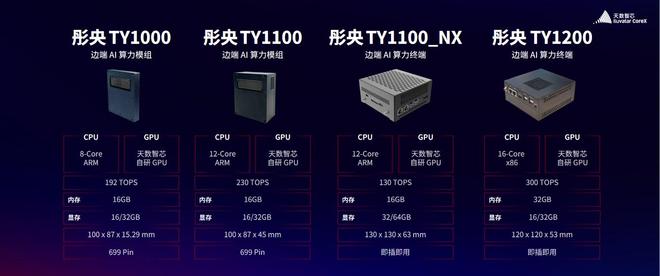
目前主要仍由英伟达垄断的人形机器人"大脑"芯片模组,迎来了国产替代的新选择。 1月26日,国产GPU企业天数智芯发布了芯片四代架构路线图,并推出"彤央"品牌系列边端侧AI算力 产,可用于具身智能,以及交通智能、工业智能、车路云一体化等典型边端场景。 彤央系列产品的突出特点在于兼容CUDA生态,机器人操作系统、具身模型及算法可在彤央产品和英伟 达Orin系列产品上丝滑切换,给具身智能领域的产业应用提供更多选择。 具体来看,此次发布的"彤央"系列包括四款产品,各有侧重:彤央TY1000算力模组采用 699pin 接口, 以口袋大小集成行业级算力与开放生态,实现便携化部署;彤央TY1100算力模组集成ARM v9 12核 CPU与自研GPU模组,以充沛算力提供多元选择;彤央TY1100_NX 算力终端凭借更大显存成为高性价 比之选,堪称边端算力"小钢炮";彤央TY1200 算力终端则以 300 TOPS的极致性能与小巧身材,为 AIPC、具身智能等前沿场景提供核心支撑。 | 参数 | TY1200 | | --- | --- | | CPU | 16-Core X86 | | GPU | 天数智芯GPGPU MXM ...

追加300亿美元投资,孙正义清仓英伟达,All in奥特曼
3 6 Ke· 2026-01-28 03:34
Group 1 - SoftBank is negotiating a potential additional investment of up to $30 billion in OpenAI, which could bring OpenAI's total funding close to $100 billion and its valuation to an astonishing $830 billion [1][2] - This investment is part of a larger strategy involving SoftBank's chairman Masayoshi Son, OpenAI's CEO Sam Altman, and Foxconn, aiming to transform AI competition into a heavy industrial contest focused on energy, land, and steel through the "Project Stargate" infrastructure initiative [1][2] - SoftBank's shift from general hardware to "super intelligence" reflects its belief that future profits will concentrate among companies with "model sovereignty" and "computing power sovereignty" [2][3] Group 2 - SoftBank has already invested $1 billion in its subsidiary SB Energy to establish a renewable energy matrix in key energy regions like Texas, emphasizing that "the end of AI is energy" [3] - The "Project Stargate" aims to build 20 giant data center clusters in the U.S., which will operate as "sovereign computing islands" with independent energy supply systems [2][3] - Foxconn's involvement signifies a shift from consumer electronics to "computing heavy industry," with a focus on local manufacturing of core hardware [5][6] Group 3 - OpenAI's valuation of $830 billion represents a significant restructuring of early investment stakes, with Microsoft holding approximately 27% of OpenAI after investing around $13 billion [7][8] - At this valuation, Microsoft's stake would be worth about $224.1 billion, yielding an ROI exceeding 1700%, although the liquidity of this asset remains highly restricted [7][8] - The potential issuance of new shares in this funding round could dilute Microsoft's stake unless it opts to invest further, challenging its position as the largest shareholder [8]

这款芯片,算力是英伟达10倍
Xin Lang Cai Jing· 2026-01-28 03:31
Core Insights - Neurophos, an AI chip company based in Austin, Texas, has announced significant testing results for its Optical Processing Unit (OPU), claiming it achieves ten times the performance of NVIDIA's latest AI supercomputer while maintaining similar power consumption levels [3][4] - The breakthrough is attributed to larger computational matrices and higher clock frequencies, which provide a key advantage over traditional GPUs [3][4] Company Highlights - Neurophos's CEO, Patrick Bowen, detailed the OPU's hardware design, featuring a 1000 x 1000 pixel photonic sensor matrix, which is 15 times larger than the typical 256 x 256 pixel matrices used in most AI GPUs [4] - The company has successfully reduced the physical size of photonic transistors by approximately 10,000 times, addressing integration challenges faced by traditional silicon photonic chips [4][6] - The first-generation optical accelerator, Tulkas T100, has a core unit size of about 25 square millimeters and operates at a clock frequency of 56 GHz, significantly surpassing traditional electronic chip performance limits [5][6] Industry Context - Photonics is emerging as a key area in the semiconductor field, with major tech companies like NVIDIA and AMD investing in optical technologies to enhance data transmission and processing capabilities [7] - The advancements in optical computing, such as those demonstrated by Neurophos, represent important milestones in the maturation of the photonics industry, which aims to overcome limitations of traditional electronic chips [7][8] - The ongoing demand for AI computing power is pushing the boundaries of traditional electronic chip performance, making photonics a promising direction for future breakthroughs [8]

科技巨头重磅财报出炉前夕,标普500指数创历史新高
2 1 Shi Ji Jing Ji Bao Dao· 2026-01-28 03:25
南方财经 21世纪经济报道记者吴斌 上海报道 在科技股和芯片股的提振下,标普500指数创下历史新高。 美国东部时间1月27日,标普500指数收涨0.41%,报6978.60点,时隔半个月再创历史新高;纳斯达克综 合指数涨0.91%,报23817.10点;道琼斯指数跌0.83%,报49003.41点。 财报方面,约五分之一的标普500成分股本周公布季度业绩,"七巨头"中有苹果、微软、Meta和特斯 拉。 本轮财报季的一个关键主题在于:企业是否开始真正从AI相关投资中获益?在2025年末,市场一度担 心大规模投向数据中心及其他基础设施的资本支出能否带来回报,这种疑虑一度打压科技股及其他AI 概念股,本周市场将对此高度关注。 科技巨头能否继续走高? 1月27日,"七巨头"中六家上涨,英伟达、苹果涨逾1%,微软、亚马逊涨逾2%,仅特斯拉一家下跌。 Globalt Investments高级投资组合经理Thomas Martin分析称,大家都在关注任何能让外界深入了解人工 智能技术发展趋势的信息,投资者将重点关注各公司的资本支出水平以及与AI商业化相关的信息,除 了资本支出和运营支出总额之外,相关评论也将是关注的焦点。 ...




加拿大之后,欧洲终于明白:平等的朋友,美国给不了
Xin Lang Cai Jing· 2026-01-28 03:25
Core Viewpoint - The increasing friction between Europe and the United States in the technology sector indicates a potential shift towards technological independence for Europe, driven by long-standing grievances and a desire for self-sufficiency [1] Group 1: Current State of Dependence - Europe's reliance on American technology is evident, with U.S. companies like Amazon, Microsoft, and Google holding over two-thirds of the cloud computing market in Europe, while local suppliers account for only about 15% [3] - The search engine market is dominated by Google, which holds a 90% market share, and Amazon leads in the e-commerce sector [3] Group 2: Regulatory Responses - In response to this dependence, the EU has enacted regulations such as the Digital Services Act and the Digital Markets Act to counter the violations of U.S. tech giants, resulting in significant fines, including €29.5 billion for Google and €1.2 billion for X platform [5] - The U.S. government's reaction to these fines has escalated tensions, with political figures labeling them as "malicious fines" and implementing visa restrictions on European officials [5] Group 3: Broader Industry Conflicts - The conflict extends beyond digital technology to critical industries like renewable energy and semiconductors, where U.S. subsidies under the Inflation Reduction Act have diverted investments away from Europe [7] - The EU's efforts to boost its semiconductor industry through the Chips Act face significant challenges, with an EU audit indicating that achieving a 20% global market share by 2030 is "extremely unlikely" [7] Group 4: Future Initiatives for Autonomy - The EU plans to launch an "AI Super Factory" project by 2026 and aims to triple data center capacity in the next 5 to 7 years through the Cloud and AI Development Act [9] - However, achieving technological autonomy is hindered by funding and time constraints, with estimates suggesting a need for €300 billion and potentially up to €5 trillion in total costs [9] Group 5: Long-term Outlook - Despite the challenges, the trend towards technological independence in Europe is irreversible, as the region seeks to move away from being a follower of U.S. technology [11] - Successful navigation of this path will require collaboration among European nations and sustained investment, with the potential to reshape the global technology landscape over time [11]
科技巨头重磅财报出炉前夕,标普500指数创历史新高|美股一线
2 1 Shi Ji Jing Ji Bao Dao· 2026-01-28 03:23
南方财经 21世纪经济报道记者吴斌上海报道 在科技股和芯片股的提振下,标普500指数创下历史新高。 美国东部时间1月27日,标普500指数收涨0.41%,报6978.60点,时隔半个月再创历史新高;纳斯达克综 合指数涨0.91%,报23817.10点;道琼斯指数跌0.83%,报49003.41点。 财报方面,约五分之一的标普500成分股本周公布季度业绩,"七巨头"中有苹果、微软、Meta和特斯 拉。 本轮财报季的一个关键主题在于:企业是否开始真正从AI相关投资中获益?在2025年末,市场一度担 心大规模投向数据中心及其他基础设施的资本支出能否带来回报,这种疑虑一度打压科技股及其他AI 概念股,本周市场将对此高度关注。 科技巨头能否继续走高? Globalt Investments高级投资组合经理Thomas Martin分析称,大家都在关注任何能让外界深入了解人工 智能技术发展趋势的信息,投资者将重点关注各公司的资本支出水平以及与AI商业化相关的信息,除 了资本支出和运营支出总额之外,相关评论也将是关注的焦点。 近年来,由于人工智能领域的热潮,美国股票发行总量急剧上升。凯投宏观市场经济学家Joe Maher提 ...
开门红!又新高!华宝基金旗下权益ETF规模升超1400亿元
Xin Lang Cai Jing· 2026-01-28 03:10
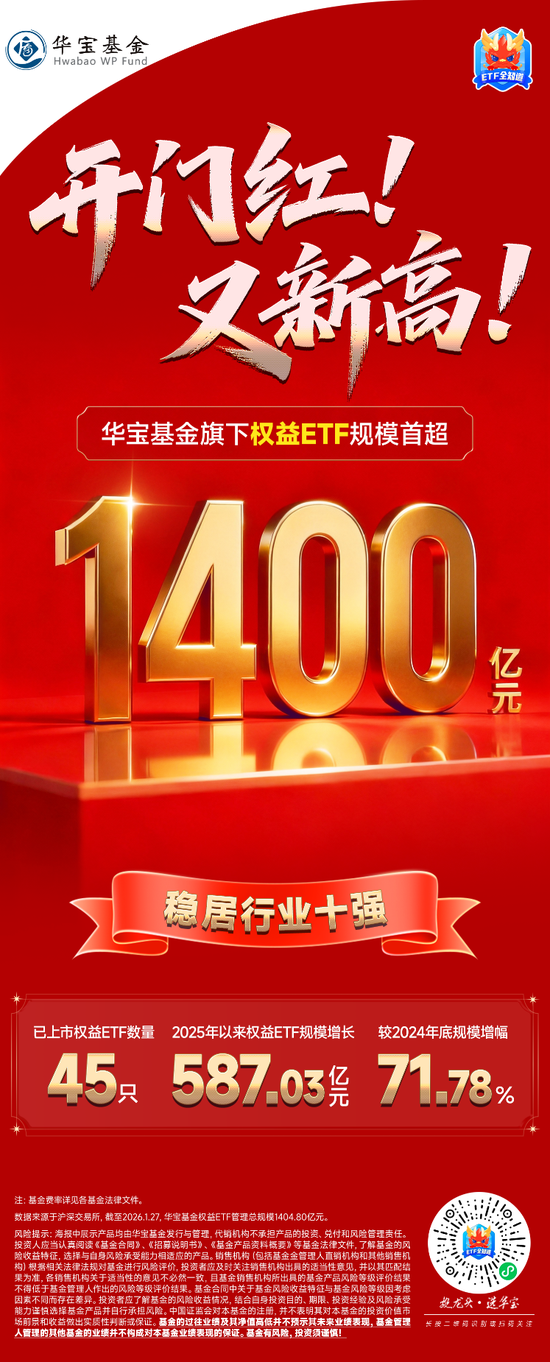
Core Viewpoint - The Hong Kong stock market is expected to perform strongly in 2026, with various Hong Kong Stock Connect ETFs becoming key instruments for investors to engage in this bullish trend. Analysts predict a long-term bull market driven by technology as the main theme [1][28]. Group 1: Market Performance and Trends - The Hong Kong stock market had disappointing performance in Q4 2025, which may set the stage for a better performance in 2026. A potential influx of 10% of A-shares' funds into Hong Kong could double its trading activity [28]. - As of January 27, 2026, the trading volume of Hong Kong stocks was less than 300 billion HKD, while A-shares reached 30 trillion HKD, indicating a significant disparity in market activity [28]. - The Hong Kong Stock Exchange achieved a record IPO financing total of 274.6 billion HKD in 2025, ranking first globally, with domestic tech companies being the main contributors [48]. Group 2: ETF Growth and Features - Huabao Fund's equity ETF management scale surpassed 140 billion HKD, reaching 140.48 billion HKD as of January 27, 2026, marking a 71.78% increase from the end of 2024 [1][30]. - The Hong Kong Stock Connect ETFs support T+0 trading, enhancing investment efficiency and liquidity, with a diverse range of industry themes and unique products [33][47]. - Notable ETFs include the Hong Kong Information Technology ETF (159131), which focuses on the chip industry and is the first to track the CSI Hong Kong Stock Connect Information Technology Index [33][39]. Group 3: Sector-Specific ETFs - The Hong Kong Internet ETF (513770) has a significant focus on leading internet companies and had a fund size of 14.5 billion HKD as of January 27, 2026, with an average daily trading volume exceeding 600 million HKD [33][39]. - The Hong Kong Automotive ETF (520780) targets scarce leading automotive companies, while the Hong Kong Medical ETF (159137) covers four major medical sectors, including CXO and biopharmaceuticals [33][40]. - The Hong Kong Dividend Low Volatility ETF (159220) has shown strong performance since 2021, outperforming the CSI 300 Index, highlighting its defensive and growth potential in volatile markets [41][43]. Group 4: Investment Strategies and Future Outlook - The focus on technology and high dividend strategies is forming a robust product line for Huabao Fund, with a comprehensive "high dividend ETF family" across A-shares and Hong Kong stocks [41][46]. - The influx of southbound funds into the Hong Kong market reached a record net inflow of 1.404 trillion HKD in 2025, with continued interest into 2026, indicating a growing demand for Hong Kong investments [49]. - The market is expected to see more high-quality Chinese tech companies listed, providing effective tools for investors to capture beta returns through various Hong Kong ETFs [49].
中泰期货晨会纪要-20260128
Zhong Tai Qi Huo· 2026-01-28 03:03
1. Industry Investment Rating No relevant content provided. 2. Core Views Fundamental Analysis - Based on fundamental factors, the trend of some commodities is judged. For example, the trend of red dates and eggs is bearish, while the trend of synthetic rubber is bullish [4]. Quantitative Analysis - Based on quantitative indicators, the trends of some commodities such as soybeans and zinc are judged to be bearish, while the trends of methanol and rubber are judged to be bullish [9]. 3. Summary by Directory Macro News - UK Prime Minister Starmer will visit China from January 28 - 31, and high - level meetings will be held to discuss bilateral relations [11]. - Trump's remarks on the US dollar caused the US dollar index to fall by more than 1%, reaching a new low in nearly four years [11]. - A new round of price hikes in the global chip industry, with significant price increases from companies like Samsung and SK Hynix, and domestic companies also raising prices [12]. - The AI assistant Clawdbot has become popular overseas, and domestic AI models are also booming [12]. - In 2025, the total profit of large - scale industrial enterprises in China reached 7.4 trillion yuan, with a year - on - year increase of 0.6%, reversing a three - year decline [13]. - The impact of the Indian Nipah virus on China is relatively small, and no cases have been found in China [13]. - China's first interstellar navigation college was officially established [13]. - In 2025, the bank wealth - management market increased by more than 3.3 trillion yuan, while small and medium - sized banks' self - operated wealth management faced scale reduction or elimination [13]. - US population growth slowed down in 2025 due to a significant slowdown in immigration [14]. - Trump decided to raise tariffs on South Korean products from 15% to 25% [14]. - The EU and India reached a free - trade agreement [14]. - The US consumer confidence index in January dropped to a new low since 2014 [14]. - Some customers in futures trading were restricted for suspected irregularities [15]. - Citigroup and Deutsche Bank believe that gold may reach $6000 per ounce [15]. Macro - Finance Stock Index Futures - The upward trend of IC/IM may continue, and trend - following strategies are recommended. The A - share market showed an oscillating upward trend, with small - and medium - cap stocks outperforming large - cap stocks [18]. Treasury Bond Futures - It is recommended to wait and see. The capital market has loosened, but the cost of funds is still relatively high, and the central bank's monetary policy is turning loose [19]. Black Commodities Steel and Iron Ore - The black market will remain in an oscillating trend. Steel will be in an oscillating and consolidating state in the short term, and iron ore is relatively weak and should be short - sold on rallies [21]. Coking Coal and Coke - The price of coking coal and coke may oscillate and consolidate in the short term. Pay attention to the production changes in coal mines and the procurement progress of downstream enterprises [23]. Ferroalloys - Silicon iron is recommended to be bought on dips in the medium term, and for manganese silicon, it is recommended to hold short positions established at high levels and wait and see [24]. Soda Ash and Glass - It is recommended to wait and see. Pay attention to the production changes of the supply side of soda ash and glass [25]. Non - ferrous Metals and New Materials Zinc - It is recommended to wait and see or re - enter short positions. The domestic zinc inventory has decreased, but the upward movement of precious metals may be restricted, which may drive the non - ferrous metal sector down [27]. Lead - It is recommended to wait and see and continue to hold short positions. The social inventory of lead has reached a new high in nearly two months [28]. Lithium Carbonate - The price of lithium carbonate may move up after a short - term correction, with wide - range oscillations [30]. Industrial Silicon and Polysilicon - Industrial silicon will operate in an oscillating manner, and opportunities to sell out - of - the - money call options after a rebound should be awaited. Polysilicon will continue to operate in an oscillating manner, and the anti - monopoly and anti - over - competition rectification plan should be awaited [31]. Agricultural Products Cotton - It is recommended to conduct short - term trading. The short - term supply of cotton is loose, but the long - term supply may decrease, and there are contradictions between pre - festival replenishment and declining downstream production [33]. Sugar - It is recommended to conduct short - term trading in the low - price range. Domestic sugar is under pressure from supply and weak demand during the peak season [36]. Eggs - A bearish view is recommended for the current position. The pre - festival egg inventory may peak and weaken, and the futures price has limited upward space [39]. Apples - The futures price may run strongly. The apple market is in a game between supply support and demand constraints, and the price will oscillate in a range [40]. Corn - It is recommended to conduct short - term trading and pay attention to the port collection situation. The corn price is stable in the short term, and the possibility of a sharp decline before the Spring Festival is low [41]. Red Dates - The red date market will oscillate and consolidate in the short term. Pay attention to the sales situation in the peak consumption season [43]. Pigs - Pay attention to the impact of weight reduction before the Spring Festival on the spot price, and look for opportunities to short the near - month contracts on rallies [44]. Energy and Chemicals Crude Oil - There is a risk of short - term market fluctuations. The supply of crude oil is in surplus, but geopolitical factors have increased the risk premium [46]. Fuel Oil - The price of fuel oil will fluctuate with the price of crude oil. The supply - demand situation has improved marginally, and the current focus is on geopolitical factors [48]. Plastics - Polyolefins have large supply pressure and are weak in terms of supply - demand. Although the upstream is in a state of large losses, the rebound space is limited due to the expected new - capacity release [48]. Rubber - It is recommended to sell out - of - the - money put options on dips. The fundamentals are stable, and pay attention to the inventory changes and downstream procurement [48]. Synthetic Rubber - It is recommended to buy on dips. The supply of butadiene is expected to be tight in the first half of the year, and the price of synthetic rubber may remain strong [48]. Methanol - It is recommended to take a bearish view on the short - term correction. The supply - demand situation of methanol has improved, but there is a risk of inventory accumulation at the end of the month [48]. Caustic Soda - A bearish view is recommended for the near - month contracts, and a bullish view for the far - month contracts. The caustic soda market has high inventory and low profit, but there may be a turnaround in the far - month [50]. Asphalt - The price of asphalt will fluctuate with the price of crude oil and is expected to be oscillating and strong in the short term. Pay attention to geopolitical factors and raw - material price changes [51]. Polyester Industry Chain - It is recommended to consider rolling long - buying at low prices or positive spreads between May and September contracts. The near - term fundamentals of the polyester industry chain are weak, but the cost side provides strong support [52]. Liquefied Petroleum Gas (LPG) - LPG will remain strong in the short term, but pay attention to the negative feedback from the demand side. It is recommended to wait and see in the short term and try short - selling on rallies in the long term [53]. Pulp - The pulp market will have large intraday fluctuations. The spot market has weakened, but there is support from the long - term external price. It may oscillate and strengthen if the commodity sentiment improves [54]. Logs - The fundamentals of logs are oscillating and strong, and the spot price has stabilized. The futures price is expected to be oscillating and strong with the improvement of commodity sentiment [55]. Urea - Urea futures are expected to be oscillating and strong. The spot market is stable, and pay attention to the improvement of future liquidity [55].