咖啡

Search documents
壹快评|LV巨轮驶来,首发经济为何青睐上海
Di Yi Cai Jing· 2025-06-26 13:20
Core Insights - Louis Vuitton's new landmark "Louis Ship" has debuted in Shanghai, highlighting the city's status as an international hub and its innovative spirit [1][3] - The project represents a significant investment with a total area of 1,600 square meters, featuring a three-level experiential space [3] Investment and Economic Impact - The "Louis Ship" project covers 1,600 square meters, with a height of 30 meters and a length of 114.5 meters, showcasing a blend of exhibition, café, and retail experiences [3] - Shanghai is experiencing a surge in international brand launches, with significant projects from companies like Starbucks, Apple, Disney, and LEGO, indicating a robust consumer market [3][6] Consumer Trends - The acceptance of new business models and consumer experiences in Shanghai is driven by the diverse and personalized demands of younger generations, particularly Gen Z and Millennials [6] - Consumers are increasingly valuing cultural and emotional connections with brands, which aligns with the offerings of international brands [6] Infrastructure and Accessibility - Shanghai's comprehensive transportation network, including domestic and international flights, railways, and cruise services, supports the influx of tourists and enhances the city's capacity to host international projects [6][8] - The city is projected to welcome over 6.7 million inbound tourists in 2024, marking an 84% increase year-on-year, with international tourism revenue expected to reach $11 billion [6] Business Environment - The successful establishment of the "Louis Ship" reflects Shanghai's commitment to creating a favorable business environment, with over 100 themed events attracting more than 20 million visitors in the Jing'an District alone [7] - The Nanjing West Road area, known for its high density of luxury brands, provides a conducive ecosystem for both international and local brands to thrive [7] Collaboration and Efficiency - The rapid development of the "Louis Ship" project, completed in approximately three months, demonstrates the efficiency of local government processes and inter-departmental collaboration [8] - The presence of skilled professionals and a high level of technological advancement in Shanghai contribute to the city's attractiveness for new economic initiatives [8] Future Outlook - The ongoing development of the "first launch economy" in Shanghai is expected to continue, with more projects enhancing consumer experiences and revitalizing the market [8]


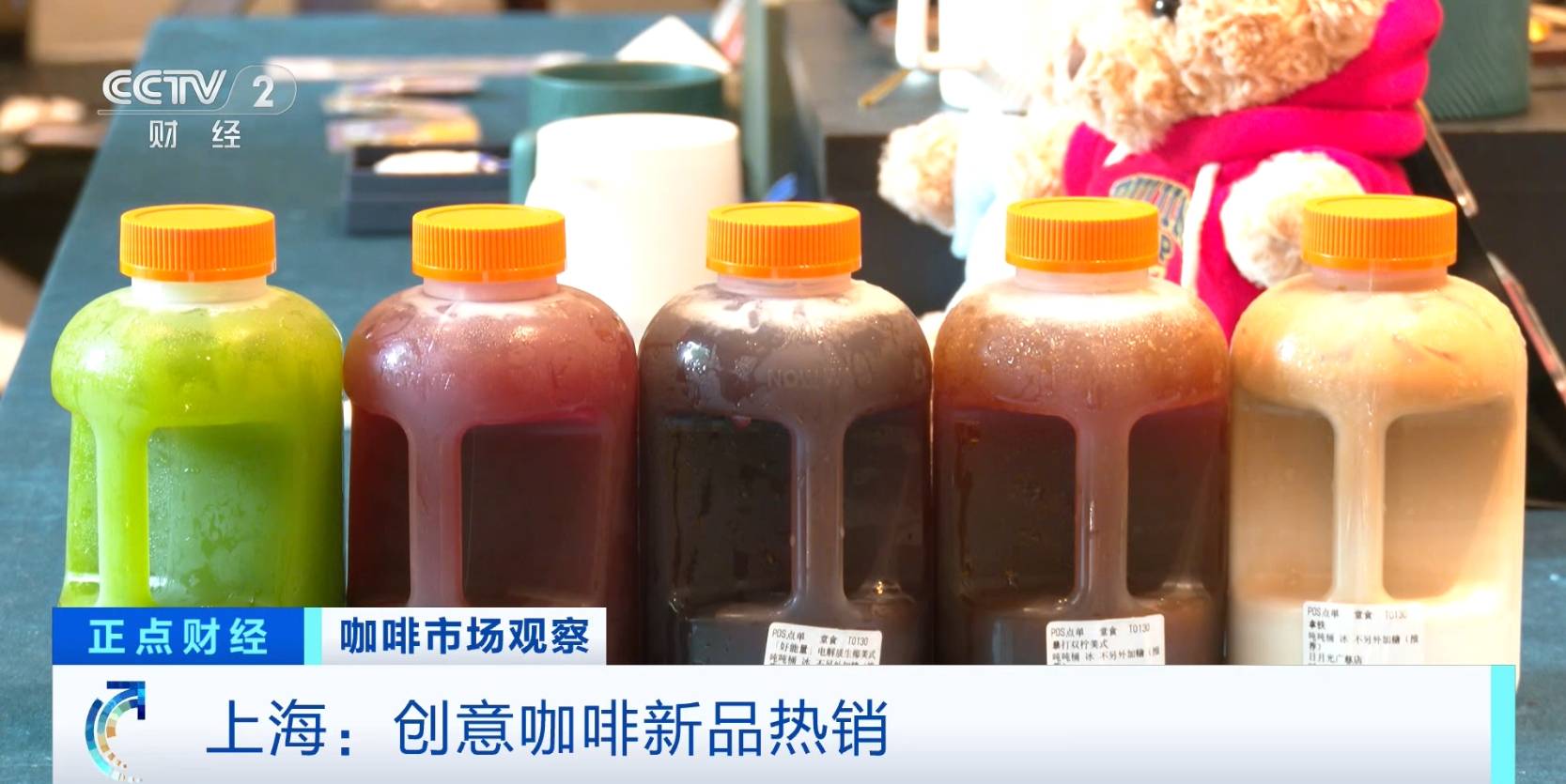
麻酱拿铁、啤酒咖啡...上海创意咖啡新品热卖,咖啡器具需求激增
Sou Hu Cai Jing· 2025-06-26 11:23
Core Viewpoint - The coffee consumption market in China is expanding rapidly, driven by local cultural influences and consumer preferences, leading to innovative product offerings that enhance market appeal and pricing power [1]. Group 1: Market Trends - The introduction of localized coffee products, such as "Sauce Latte," "Sesame Coffee," and "Beer Coffee," is attracting a younger demographic and diversifying flavor options beyond traditional milk coffee [3]. - Sales of innovative coffee products can account for over 50% of daily sales in some cafes, indicating strong consumer interest and demand for new flavors [5]. Group 2: Equipment Demand - There is a growing demand for home coffee equipment, with consumers increasingly investing in coffee machines and grinders, reflecting a shift towards home brewing [7]. - The sales of manual coffee brewing equipment have reportedly increased by over five times from 2020 to the present, showcasing a healthy market expansion [11]. Group 3: Market Projections - In the home coffee machine market, imported machines currently hold a 68% market share, while domestic machines account for 32%. However, projections suggest that by 2028, domestic machines could dominate with a 68% share [13].
太平洋证券:全球咖啡豆供需格局生变 云南产区迎精品化转型机遇
智通财经网· 2025-06-26 03:26
Group 1: Market Growth and Trends - The Chinese ready-to-drink coffee market has rapidly expanded from 51.6 billion yuan in 2019 to 172.1 billion yuan in 2023, with a compound annual growth rate of 36.3% [1][3] - Despite a low per capita consumption of 22 cups per year compared to mature markets, the lower-tier markets have become the core of growth, driving the number of stores to exceed 225,000 [3] - The industry is witnessing a dual-track development towards "cost-effective mass-market" and "high-end boutique" coffee due to Yunnan's premiumization policies [1][3] Group 2: Coffee Bean Supply and Production - Yunnan province accounts for over 98% of China's coffee bean production, with major production areas including Pu'er, Baoshan, Lincang, and Dehong [2] - The coffee bean industry in Yunnan faces structural issues such as low profits at the planting end and reliance on international futures pricing [2] - In 2023, Yunnan's coffee production reached 143,000 tons, a slight increase of 0.1% year-on-year, following a recovery from a decline due to global oversupply and quality fluctuations [2] Group 3: Import Dependency and Global Market Dynamics - China relies on imports for approximately 51% of its coffee beans, with Brazil being the largest source, accounting for 39% of import volume and 30% of import value [1] - The global coffee bean market is dominated by Arabica (60%-70% of production) and Robusta (35%), with major producers being Brazil, Vietnam, and Colombia, which together account for about 56% of global production [1]

估值超359亿元,星巴克中国回应收购:正在评估增长的最佳方式;市场份额缩水至14%
Sou Hu Cai Jing· 2025-06-26 02:53
Core Viewpoint - Starbucks China is facing significant operational challenges and is exploring potential strategic changes, including the possibility of selling a minority stake in its business, amid interest from major investment firms [2][3][4]. Group 1: Potential Acquisition Interest - Major investment firms, including Hillhouse Capital, Carlyle Group, and CITIC Capital's Xincheng Capital, have shown interest in acquiring Starbucks China's business, with an initial valuation estimated between $5 billion to $6 billion (approximately RMB 35.9 billion to RMB 43 billion) [2][3]. - Goldman Sachs is acting as the exclusive financial advisor for this potential transaction, which is expected to continue until 2026 [3]. Group 2: Performance Challenges - Starbucks China's market share has significantly declined from 34% in 2019 to 14% in 2024, indicating a loss of competitive position in the Chinese coffee market [7][8]. - Despite expanding its store network, Starbucks' revenue in China has decreased from a peak of $3.7 billion in fiscal year 2021 to $3 billion in fiscal year 2024, with signs of stabilization in fiscal year 2025 but ongoing pressure [8]. Group 3: Strategic Responses - In response to competitive pressures from local brands like Luckin Coffee and Koolearn Coffee, Starbucks has reduced prices on over 20 beverage items by an average of RMB 5, aiming to capture the growing non-coffee beverage market in China [9]. - The company is also considering operational adjustments, such as optimizing store structures and potentially closing underperforming locations, while exploring a smaller store model and relaxing franchise policies [10].

最新总门店数超过1.5万家,库迪缓了一口气?
3 6 Ke· 2025-06-26 01:04
Core Insights - Kudi has over 15,000 stores, with 3,000 pending openings, including standard stores, in-store shops, and convenience stores [1] - In May, nearly 90% of Kudi's standard stores achieved a net profit exceeding 10,000 yuan, indicating the effectiveness of recent delivery subsidies [1] - Kudi's average operating cash flow per store reached 27,000 to 28,000 yuan in May, a 40% year-on-year increase [2] Expansion Strategy - Kudi's growth strategy focuses on expanding its franchisee base to sustain its subsidy model and has set a target of 50,000 stores by 2025 [3] - The company has invested in upstream supply chains to support store expansion, particularly in regions like Anhui [3] - Kudi's previous plan to open 8,000 in-store shops in six months was halted due to operational challenges and brand consistency issues [3][4] Operational Challenges - Kudi faces management issues, including inconsistent product quality and hygiene problems, which have been criticized on social media [4] - The company plans to appoint 1,100 regional managers to improve store oversight, aiming for a more standardized operational model [5] - The current management ratio of 1 regional manager to 14 stores is seen as more reasonable compared to previous instances where one manager oversaw up to 90 stores [5] Market Dynamics - Kudi's growth has been significantly driven by delivery subsidies, primarily supported by JD.com, which may not be sustainable in the long term [5] - The average price of Kudi's products on JD's delivery platform is approaching 9.9 yuan, raising concerns about future sales volume as subsidies decrease [5][6] - The competitive landscape in the coffee industry is expected to intensify, with a potential market shakeout as profitability becomes more challenging [6]
挪瓦店里挤爆的人头,揭开了咖啡反内卷的秘密
远川研究所· 2025-06-25 12:27
Core Viewpoint - The article discusses the competitive landscape of the coffee industry in China, highlighting the unique strategies of NOWWA Coffee as it navigates a highly saturated market and positions itself as a leader through differentiation and understanding of consumer trends [3][34]. Group 1: Industry Overview - The coffee market in China is described as highly competitive, with major players like Starbucks facing challenges and rumors of selling out due to performance issues [3][4]. - The article emphasizes the concept of "involution" in the industry, where brands engage in intense competition, often leading to unsustainable practices [3][34]. Group 2: NOWWA Coffee's Strategy - NOWWA Coffee has successfully positioned itself as a "hidden champion" by focusing on a product price range of 9.9-12 yuan, which is slightly above the price war threshold, leading to high sales volumes [5][6]. - The company has over 3,000 stores globally, including locations in Macau and Melbourne, showcasing its rapid expansion [6]. Group 3: Understanding Young Consumers - NOWWA Coffee has identified two key trends among young consumers: a focus on health and emotional value in products [10][11]. - The brand has implemented a "nutritional choice" labeling system, becoming the first in the industry to do so, which aligns with the health-conscious preferences of its target demographic [11][12]. Group 4: Marketing and Cultural Engagement - The company actively collaborates with popular IPs and celebrities to resonate with young consumers, enhancing brand visibility and emotional connection [15][17]. - A notable marketing success was seen with a collaboration that resulted in a 460% increase in sales on the first day of a limited product launch [17]. Group 5: Channel Strategy - NOWWA Coffee emphasizes content operation capabilities to engage consumers effectively, utilizing platforms like Xiaohongshu for marketing and customer interaction [21][23]. - The brand has also recognized the importance of delivery services, achieving significant sales growth through effective online strategies, with a reported 130% increase in GMV in 2023 [25][26][36]. Group 6: Partnership with Convenience Stores - NOWWA Coffee has partnered with thousands of convenience stores, significantly increasing their revenue and customer traffic, with some stores reporting a tenfold increase in revenue [30][32]. - The brand's high repurchase rate and contribution to convenience store sales demonstrate its effectiveness in driving additional business for partners [30][32]. Group 7: Conclusion - The article concludes that NOWWA Coffee's success lies in its ability to find differentiation in a crowded market, focusing on health and emotional value, which allows it to thrive without engaging in destructive price wars [34][35][36].

品牌云集,咖啡在济何以越磨越“香”
Qi Lu Wan Bao Wang· 2025-06-25 11:25
Market Overview - The coffee market in Jinan is experiencing rapid expansion with numerous brands entering the scene, including Starbucks, Luckin Coffee, and local brands like PD and Fangsou [1][2] - The number of new coffee-related enterprises in Jinan reached 317 in 2024, with a 51.3% increase in new businesses by June 23, 2025 [3][4] Consumer Behavior - The customer base for coffee shops is expanding, with a significant portion of patrons being young people aged 20-35 [1][2] - Consumers are increasingly drawn to the coffee experience, with some seeking high-quality coffee while others prioritize ambiance and aesthetics [2][7] Competitive Landscape - The coffee market is highly competitive, with over 50 coffee shops within a one-kilometer radius of certain locations, leading to a "war" among brands [2] - Despite the competition, the presence of multiple brands is seen as beneficial for market maturity, attracting new consumers [2][7] Cost Structure - The operational costs for coffee shops are rising, with average survival periods for some cafes potentially decreasing from 2-3 years to 1.5 years due to high costs and competitive pricing [4][5] - The cost of raw materials varies significantly, with chain brands like Luckin and Kudi having lower costs per cup (1-2 RMB) compared to boutique cafes (5-6 RMB) [4][5] Profitability - Chain coffee shops in Jinan report daily sales of 400-800 cups, with monthly profits ranging from 60,000 to 80,000 RMB after deducting costs [6] - Jinan's coffee market is ranked among the top ten in sales in northern China, indicating strong profitability potential [6] Industry Development - Jinan has become a significant hub for coffee equipment and material trading, with a complete industry chain from roasting to consumer experience [6] - The coffee market in Jinan is growing at an annual rate of 15%, driven by increasing brand presence and consumer interest [6][7] Future Outlook - The market is expected to evolve into a diverse landscape with a mix of chain brands, boutique shops, and high-end custom offerings to cater to various consumer needs [7] - The local coffee association plans to support new brands with operational and technical assistance, aiming to enhance Jinan's coffee industry profile [7]
出海速递 | 星巴克中国要卖了,瑞幸却把9.9咖啡带进纽约/小马智行纳入纳斯达克中国金龙指数
3 6 Ke· 2025-06-25 11:13
Group 1 - Starbucks China is reportedly selling its operations while Luckin Coffee is expanding into New York, raising questions about competition in Starbucks' home market [2] - The domestic market for Haidilao is experiencing a downturn, prompting Haidilao to explore international opportunities [3] - The Robotaxi industry in China is accelerating its commercialization process, with companies like Pony.ai and others expanding overseas [5] Group 2 - Hong Kong's refinancing scale has seen explosive growth, with a total of HKD 142.85 billion raised this year, significantly surpassing the previous year's total [6] - The Yangtze River Delta region's foreign trade has exceeded CNY 101.2 trillion since 2018, showcasing strong resilience and vitality [6] - The UAE is expected to attract nearly 10,000 millionaires in 2025, continuing its trend as a preferred destination for high-net-worth individuals [7] Group 3 - Binance founder Zhao Changpeng's pardon has been approved by former President Trump, indicating potential shifts in the cryptocurrency landscape [7] - Xiaomi is set to open its first physical store in South Korea, marking a significant step in its New Retail strategy [5] - The Flow Port logistics solution proposed by Qatar aims to optimize supply chains for Chinese manufacturers entering the Saudi market [8]

李佳琦奈娃咖啡618表现亮眼,今年将扩大线下开店
Guan Cha Zhe Wang· 2025-06-25 10:38
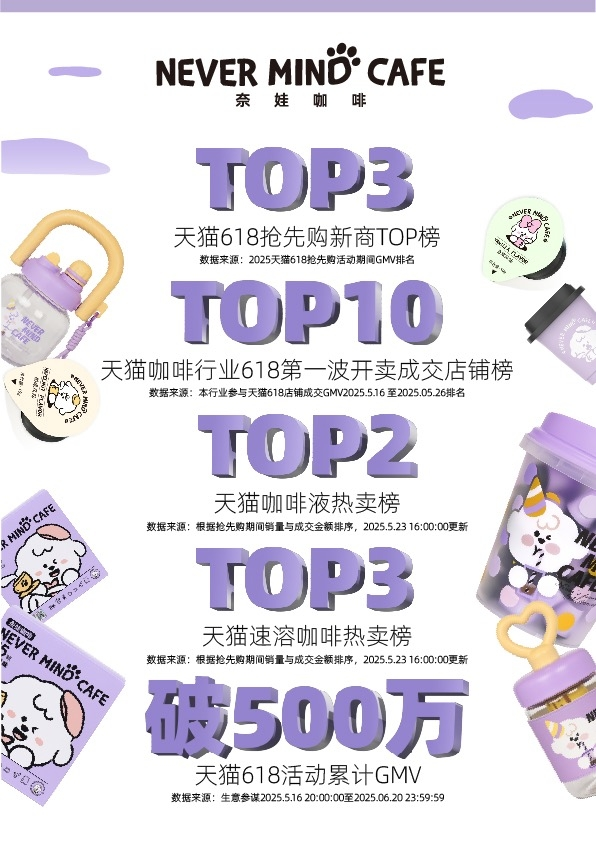
Core Insights - The company has successfully expanded its coffee business with the launch of the NEVER MIND CAFE in collaboration with Bear Paw Coffee in Shanghai, and has achieved impressive sales during the 618 shopping festival [1][3] Group 1: Sales Performance - Naiwa Coffee's Tmall flagship store achieved a GMV of nearly 5 million yuan during the first wave of the 618 shopping festival, ranking third in the food and fresh industry [1] - The store also made it to the top three in the Tmall instant coffee sales list and the second in the coffee liquid sales list, placing among the top ten stores in the coffee industry for the first wave of transactions [1] Group 2: Brand Development - Since its launch in September last year, Naiwa Coffee's Tmall flagship store has gained over 745,000 followers, establishing itself as a "phenomenal" player among new coffee brands [3] - The brand has successfully commercialized the Naiwa family IP, which has been integrated into various products, including cosmetics and merchandise [3] Group 3: Supply Chain and Sustainability - Naiwa Coffee sources its main raw material, Yunnan coffee beans, from a high-altitude area in Pu'er City, Yunnan, and has established a partnership with a local coffee plantation to ensure quality supply [4] - The company has set up the Naiwa Coffee Assistance Farm, employing local disabled individuals and implementing environmentally friendly processing equipment to reduce wastewater pollution [4] Group 4: Future Expansion Plans - By 2025, Naiwa Coffee plans to extend its store network to campus locations, starting with Nanjing Media College and Duke Kunshan University, aiming to create social and quality experiences for young consumers [4] - The company intends to introduce interactive activities such as "One Day Store Manager" and "Wish Mailbox" to enhance brand engagement in more cities [4]
星巴克中国,要卖了
盐财经· 2025-06-25 10:17
Core Viewpoint - The article discusses the increasing interest from private equity firms in acquiring Starbucks' business in China, highlighting the competitive landscape and the company's strategic considerations amid declining sales and market share [4][5][6][21]. Group 1: Acquisition Interest - Hillhouse Capital has shown interest in acquiring Starbucks' China operations, participating in a reverse management roadshow [4][12]. - Other notable investment firms, including Carlyle Group and Xincheng Capital, are also involved in the bidding process, with Starbucks' China business valued at approximately $5 to $6 billion (around 35 to 43 billion RMB) [5][12]. - The competitive bidding landscape includes major players like KKR, PAG, and potential domestic buyers such as China Resources Group and Meituan [13]. Group 2: Market Challenges - Starbucks has faced intensified competition from local brands like Luckin Coffee and Mixue Ice Cream, leading to a growing sense of urgency within the company [6][21]. - The company has seen a decline in same-store sales by 6% in Q1 2025, marking its first price reduction in 25 years of operations in China [21][22]. - The rise of Luckin Coffee, which has expanded to over 24,000 stores, has significantly impacted Starbucks' market position, prompting the need for strategic changes [21]. Group 3: Strategic Evolution - Starbucks has been exploring various strategies to adapt to the competitive environment, including digital transformation and localized innovations [20]. - The new CEO, Brian Niccol, has emphasized the importance of understanding the operational landscape in China and the need for external strategic investors to drive future growth [10][22]. - The article draws parallels with McDonald's successful acquisition and localization strategy in China, suggesting that Starbucks could benefit from a similar approach [25].