智能制造

Search documents
深圳4区上榜千亿城区第一梯队
2 1 Shi Ji Jing Ji Bao Dao· 2025-08-08 10:40
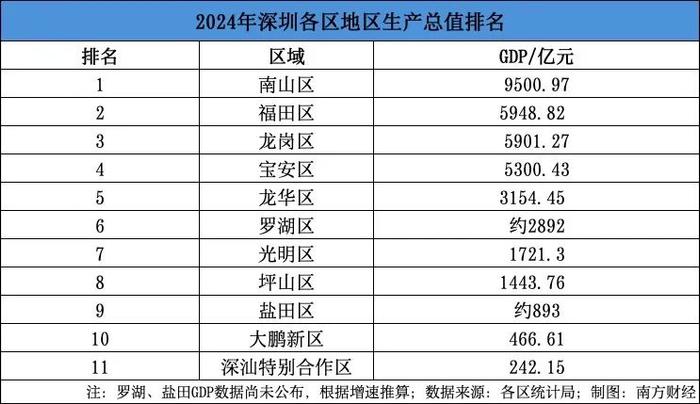
Core Insights - The report highlights the significant role of urban areas in driving economic growth and innovation in China, with a focus on high-quality development in urban economies [1][4]. Economic Growth - From 2020 to 2024, China's urban GDP is projected to grow from 45.2 trillion yuan to 57.2 trillion yuan, with a compound annual growth rate of 6.1% [1]. - The number of "billion-yuan urban areas" is expected to increase from 156 in 2023 to 171 in 2024, with 16 new areas joining this category [4][7]. Urban Rankings - In 2024, the top urban areas by GDP include: - Nanshan District, Shenzhen: 9500.97 billion yuan - Futian District, Shenzhen: 5948.82 billion yuan - Longgang District, Shenzhen: 5901.27 billion yuan - Bao'an District, Shenzhen: 5300.43 billion yuan [2][8]. Investment and Innovation - The report indicates that urban areas are enhancing their innovation capabilities, with a focus on investment recovery and expanding consumer markets [4][11]. - Shenzhen's Longgang District is noted for its industrial internet innovation center and partnerships with leading companies to foster technological advancements [11][12]. Industry Development - The report emphasizes the importance of integrating technology and industry, with a focus on advanced manufacturing and smart manufacturing in urban areas like Bao'an [12]. - The number of urban areas with GDP exceeding 2000 billion yuan has increased to 45, representing 46.8% of the total GDP of the 171 billion-yuan urban areas [4][7]. Future Directions - The report suggests five key pathways for high-quality urban economic development, including promoting deep integration of technology and industry, advancing green transformation, and innovating governance models [12].

深圳4区上榜千亿城区第一梯队
21世纪经济报道· 2025-08-08 10:14
Core Insights - The report highlights that urban areas are crucial for regional economic development, acting as innovation hubs and core engines for economic growth [1] - From 2020 to 2024, China's urban GDP is projected to grow from 45.2 trillion yuan to 57.2 trillion yuan, with an average annual growth rate of 6.1% [1] - The number of "billion-yuan urban areas" is expected to increase from 111 in 2020 to 171 in 2024, with an average addition of 15 new "billion-yuan urban areas" each year [1] Economic Performance - The report indicates that the number of "billion-yuan urban areas" will rise from 156 in 2023 to 171 in 2024, with 16 areas breaking the billion-yuan threshold for the first time [4] - Urban areas with GDP exceeding 200 billion yuan and 300 billion yuan have also increased, reaching 45 and 22 respectively [4] - The total GDP of the 45 "two-thousand-billion urban areas" is projected to reach 14.7 trillion yuan, accounting for 46.8% of the total GDP of the 171 "billion-yuan urban areas," reflecting a 1% increase from the previous year [4] Regional Rankings - In 2024, the top-ranked urban areas by GDP in Shenzhen include Nanshan District (9500.97 billion yuan), Futian District (5948.82 billion yuan), Longgang District (5901.27 billion yuan), and Bao'an District (5300.43 billion yuan) [2][8] - Nanshan District has maintained its top position for nine consecutive years, with its GDP approaching one trillion yuan [8] - The second tier consists of 17 urban areas with GDP between 300 billion and 500 billion yuan, with notable growth in several districts [9] Innovation and Development Trends - The report identifies six new trends in the development of China's top urban areas, including a shift from technology catch-up to original innovation leadership [12] - Shenzhen's Longgang District is highlighted for its industrial internet innovation center and global R&D center, fostering a cluster development model [12] - Bao'an District focuses on "smart manufacturing" and has nurtured 7229 national high-tech enterprises, emphasizing the importance of technology in setting industry standards [13] Recommendations for High-Quality Development - The report suggests five key pathways for promoting high-quality urban economic development, including deep integration of "science and technology + industry," strengthening advanced manufacturing, and fostering urban renewal [13]

“霸榜”百强区,深圳四个千亿城区站在第一梯队
Sou Hu Cai Jing· 2025-08-08 07:32
Core Insights - The report highlights the significant role of urban areas as innovation hubs and core engines for regional economic development in China, projecting a GDP growth from 45.2 trillion yuan in 2020 to 57.2 trillion yuan by 2024, with a compound annual growth rate of 6.1% [1][2] Economic Performance - The number of "billion-yuan urban areas" is expected to increase from 156 in 2023 to 171 in 2024, with 16 areas breaking the billion-yuan threshold for the first time [2] - The total GDP of the 45 "two-thousand-billion urban areas" will reach 14.7 trillion yuan, accounting for 46.8% of the total GDP of the 171 "billion-yuan urban areas," reflecting a 1% increase from the previous year [2] - The top ten newly added "billion-yuan urban areas" for 2024 include Shenyang Hunnan District, Ningbo Fenghua District, and others, with GDPs ranging from 1,000 billion to 1,123 billion yuan [2] Urban Hierarchy - The first tier of "billion-yuan urban areas" includes Shenzhen's Nanshan, Futian, Longgang, and Bao'an districts, as well as Guangzhou's Tianhe District, with Nanshan's GDP nearing 9.5 trillion yuan [3] - The second tier consists of 17 urban areas with GDPs between 3,000 billion and 5,000 billion yuan, with seven areas surpassing 3,000 billion yuan for the first time [3] Innovation and Development Trends - The report identifies six new trends in the development of China's top 100 urban areas, emphasizing a shift from technology catch-up to original innovation leadership [4] - Shenzhen's Longgang District is highlighted for its industrial internet innovation center and partnerships with leading companies, showcasing a model for cluster development [4] Industry Focus - In Bao'an District, a focus on "smart manufacturing" has led to the establishment of 7,229 national high-tech enterprises, with significant global market shares in sectors like panoramic cameras and LED screens [5] - The report suggests five key pathways for high-quality economic development in urban areas, including promoting deep integration of "science and technology + industry" and advancing green transformation aligned with carbon neutrality goals [5]
钱江世纪城产业新地标开建
Hang Zhou Ri Bao· 2025-08-08 02:33
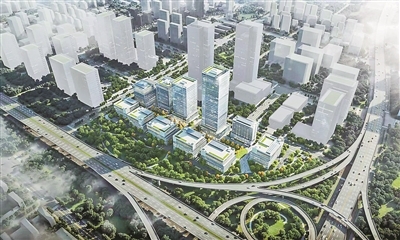
Core Viewpoint - The Qianjiang Century City Intelligent Comprehensive Science and Technology Park has officially commenced construction, marking the first "industrial building" project in the area, which aims to explore urban industrial development practices [3][4]. Group 1: Project Overview - The project is located in the Qiantang Bay Future Headquarters Base, covering a total area of 100 acres, consisting of 11 independent buildings, including a 150-meter tall office building that will become a new landmark in the region [3]. - The park is expected to be completed by June 2028 and will focus on developing leading industries such as low-altitude economy and artificial intelligence, as well as pillar industries like smart manufacturing and smart home [3]. Group 2: Industrial Development Strategy - The "industrial building" concept represents a systematic innovation in industrial production methods, with approximately 149,000 square meters designated for industrial and research facilities, featuring differentiated designs for general, specialized, and composite factory types based on enterprise needs [3][4]. - The project aims to redefine perceptions of industrial development in central business districts, creating a new urban development model that integrates "business + manufacturing" [4]. Group 3: Investment and Leasing Strategy - Prior to the construction, a proactive leasing strategy was initiated, targeting specialized and high-tech enterprises, with a management approach allowing companies to customize factory details for a "ready-to-move-in" experience [4]. - Several companies, including a high-end home textile brand, have already committed to leasing over 60,000 square meters of space, indicating the effectiveness of the innovative leasing model [4].
从“积极”向“更加积极”转变
Guang Xi Ri Bao· 2025-08-08 02:09
Group 1: Fiscal Policy and Economic Growth - The fiscal policy is a key support for high-quality economic and social development in Guangxi, focusing on promoting consumption, expanding investment, and improving people's livelihoods [1] - Guangxi's fiscal revenue and expenditure growth has maintained a dual increase for six consecutive months, indicating effective implementation of more proactive fiscal policies [1][2] Group 2: Consumption and Retail Growth - Guangxi has achieved a 4.2% year-on-year growth in social retail sales of consumer goods by stimulating both supply and demand [2][3] - The implementation of vehicle replacement subsidy policies has significantly increased consumer participation in trade-in programs, with nearly 60% of customers opting for such programs [3] Group 3: Investment and Infrastructure Development - Guangxi is actively seeking various funding sources, including central budget investments and special bonds, to support manufacturing upgrades and infrastructure projects [5][6] - The government has allocated 31.43 billion yuan to support the development of a cross-border artificial intelligence industry ecosystem [7] Group 4: High-Tech Industry and Innovation - The high-tech service industry in Guangxi has seen a 16.3% increase in revenue, with technology transfer services growing by 46.1% year-on-year [9] - The establishment of various investment funds has facilitated the integration of technology, industry, and finance, promoting innovation and industrial development [8] Group 5: Social Welfare and Employment - Guangxi's social welfare spending reached 2,671.56 billion yuan in the first half of the year, marking a 6.6% increase and maintaining a high proportion of public budget expenditure [10] - The region has issued 20.2 billion yuan in entrepreneurial guarantee loans, significantly supporting small businesses and creating over 40,000 jobs [10][11]
2025年上半年苏州亿元以上产业项目新签约1166个
Su Zhou Ri Bao· 2025-08-08 00:29
Group 1: Project Development and Investment - In the first half of the year, Suzhou signed 1,166 new industrial projects with investments over 100 million, started 947 projects, and put 689 projects into operation [1] - High-tech industries in Suzhou completed investments of 55.71 billion, showing a year-on-year growth of 10.1%, indicating a positive investment structure [1] - In Kunshan, 57 new industrial projects were signed in the first half, with a total investment exceeding 1 billion, including significant projects like Visionox and Taiguang Electronics [3] Group 2: Emerging Industries and Technological Advancements - GCL-Poly's GW-level perovskite industrial base project was launched in Kunshan, with a total investment of 5 billion and a target capacity of 2GW, marking a significant breakthrough in green energy [2] - The perovskite photovoltaic technology is expected to play a crucial role in the photovoltaic industry and energy transition [2] - The establishment of the Suzhou Advanced Materials Valley project aims to enhance innovation and development in the materials sector, with strategic cooperation signed with China National Building Material Group [5] Group 3: Economic Growth and Structural Optimization - Suzhou's economy has shown resilience against external pressures, achieving structural optimization and fostering new growth drivers [5] - The Wujiang District reported a year-on-year increase of 29.9% in new projects signed, with 152 projects over 100 million signed in the first half [5] - The Suzhou Industrial Park achieved a project commencement rate of 92.6% and a production rate of 64.4% for projects signed over 100 million [8] Group 4: Service and Support for Enterprises - Suzhou has implemented a project lifecycle management service system to support major projects, ensuring efficient service and rapid project initiation [7] - The city aims to enhance its business service brand, "Suzhou Most Comfortable," to facilitate project planning, attraction, and support [8] - The AI+ Transportation Industrial Park project in Suzhou High-speed Railway New City was officially put into operation, receiving positive feedback from enterprises [7]
民间投资分化之中显韧性
Jing Ji Ri Bao· 2025-08-07 22:49
Core Viewpoint - The article highlights the gradual recovery and growth potential of private investment in China, driven by policy support and regional differentiation, despite a slight overall decline in the first half of the year [1][2][3]. Group 1: Investment Trends - In the first half of the year, private investment in China saw a year-on-year decline of 0.6%, but several provinces reported positive growth, indicating regional differentiation [1]. - Notable growth was observed in Xinjiang with a 23.2% increase, and in Shaanxi with a 13.8% increase, significantly above the national average [1]. - The manufacturing sector, particularly in emerging fields like new energy and intelligent manufacturing, is experiencing robust growth, with Shaanxi's manufacturing investment rising by 31.4% [2]. Group 2: Structural Changes - The real estate market's downturn has negatively impacted overall private investment, with real estate development investment dropping by 11.2% in the first half of the year [2]. - Excluding real estate, other private investments grew by 5.1%, indicating a shift of capital towards new sectors [2]. - The manufacturing sector's rapid growth is closely linked to industrial upgrades, enhancing China's overall economic competitiveness [2]. Group 3: Policy Support and Environment - National policies, such as the implementation of the Private Economy Promotion Law, have bolstered private enterprise confidence and investment activity [3]. - Local governments are optimizing the business environment and addressing financing challenges to stimulate private investment [3]. - The National Development and Reform Commission has introduced over 3,200 projects to attract private capital, with a total investment exceeding 3 trillion yuan [3]. Group 4: Future Directions - The central government has emphasized the need to "stimulate private investment vitality," with plans to enhance policies promoting private investment in sectors like transportation and energy [4]. - As policies are implemented, private capital is expected to flourish in these areas, leveraging its inherent flexibility and innovation [4].
秦创原特色产业园区为临空经济发展聚势赋能
Zhong Guo Xin Wen Wang· 2025-08-07 16:35
Group 1 - Jining Lightweight Auto Parts (Xi'an) Co., Ltd. has achieved an annual production capacity of 12 million steel plate blanks and 4 million hot-stamped parts, becoming a key supplier in Shaanxi's hot-stamping component industry [1] - The Xi'an Airport New City is focusing on building a modern airport industry system by optimizing industrial layout, enhancing innovation, and deepening international cooperation [1][2] - The Airport Economic Industrial Park has established five "park within park" carriers, focusing on industries such as aviation maintenance and manufacturing, and has attracted 350 enterprises with a total output value of 3.7 billion yuan by the end of 2024 [1][2] Group 2 - The Free Trade Blue Bay Industrial Park targets new material research, life sciences, and "airport services + digital economy," attracting major aviation companies and biomedical projects [2] - Both industrial parks are enhancing their industrial ecosystem by attracting over 50 related enterprises, forming a "vertical integration and horizontal diversification" development pattern [2] - The parks have established a "business demand response closed-loop" mechanism, providing services to enterprises and addressing their urgent needs, with 950 services and 417 issues resolved in 2024 [2] Group 3 - The parks are creating opportunities for local enterprises to expand internationally by hosting exchange salons and facilitating "going global" initiatives [3] - The Xi'an Airport New City is leveraging its unique advantages to build "going out" channels for enterprises, promoting technology exports to emerging markets [3] - The collaborative efforts of the two parks are aimed at strengthening the airport industry cluster and advancing towards becoming an "airport city" [3]
徐翔之母大恒科技股权接盘方再曝光:神秘女子斥资3.6亿成最大流通股东,曾经的第一大股东花2.3亿“杀回”,还有人说“不认识徐翔”
Mei Ri Jing Ji Xin Wen· 2025-08-07 12:00
Core Viewpoint - The auction of 130 million shares of Daheng Technology by Zheng Suzhen, mother of the former private equity mogul Xu Xiang, attracted significant attention, with a total auction amount of 1.712 billion yuan, and a mysterious buyer named Li Rongrong becoming the largest circulating shareholder [1][12]. Group 1: Auction Details - The auction involved eight buyers, with Li Rongrong acquiring 6.29% of the shares for 360 million yuan [1]. - The total auction price reached 1.712 billion yuan, with the shares sold at an average price of 13.17 yuan per share [8]. - The remaining seven buyers included China New Era Limited, which was previously the largest shareholder of Daheng Technology [1][12]. Group 2: Buyer Profiles - Li Rongrong's background was initially reported as a middle-level cadre at Ningbo Jinhai Logistics Service Co., but later sources indicated she is a regular contractor, raising questions about the source of her funds [1][5]. - Other notable buyers include Yang Runzhong, who has significant investments in smart manufacturing and new energy sectors, and Hua Jinzhu, who controls a company specializing in automation equipment [10][11]. - China New Era Limited, which previously transferred a significant stake to Zheng Suzhen, has returned to the company, indicating potential strategic interests [12][14]. Group 3: Legal and Regulatory Considerations - Legal experts noted that the term "middle-level cadre" used to describe Li Rongrong is not a legally defined term, making it difficult to ascertain any potential violations of disclosure regulations [5][6]. - The issue of whether the shares are held on behalf of others (equity holding) requires clear evidence, as merely having funds from relatives does not automatically imply such arrangements [6]. - Daheng Technology confirmed that the shares have been transferred, resulting in a change of control within the company [7].


吴世春:多数创业者,对融资都有两个误解
创业家· 2025-08-07 10:23
Core Viewpoint - The article emphasizes that seeking financing only when a company is out of money is a misconception. Companies should consider their long-term goals and the potential for investment even when they are profitable [2][4]. Group 1: Financing Insights - Companies should not wait until they are financially struggling to seek funding; proactive financing can be beneficial [2][3]. - Investors are willing to consider companies with cash flow issues if they can demonstrate how previous funds were utilized and highlight current investment-worthy aspects [5][6][7]. - The effectiveness of additional funding depends on whether it can genuinely address the company's existing problems; merely injecting cash may not suffice if issues are deeply rooted [9]. Group 2: Networking and Value Creation - Entrepreneurs are encouraged to step out of their comfort zones and build networks, as connections can provide significant value [10][11]. - Learning from past experiences and connections can illuminate future paths for entrepreneurs [14]. Group 3: Investment Opportunities - The company plans to invest no less than 1.5 billion in the upcoming months, indicating a robust investment strategy [17][18]. - The article promotes an upcoming event aimed at fostering connections among entrepreneurs and exploring new growth engines in the industry [15][30]. Group 4: Event Details - The event will take place from September 21 to 23, focusing on deep learning and collaboration among entrepreneurs in various sectors, including robotics, smart manufacturing, and satellite communications [21][22][30]. - Participants will engage in immersive learning experiences, including discussions on technology innovation and industry breakthroughs [30][32]. Group 5: Notable Investment Cases - The company has a history of investing in over 600 enterprises, with a total fund management scale exceeding 10 billion, showcasing its significant presence in the investment landscape [26].