
信息技术

Search documents
北交所四周年总市值超9000亿,市场期待更多改革措施
Di Yi Cai Jing· 2025-09-01 11:05
Group 1 - The Beijing Stock Exchange (BSE) has shown steady development over the past four years, with a total of 274 listed companies and a market capitalization exceeding 900 billion yuan [1][2] - The BSE has successfully positioned itself as a platform for innovative small and medium-sized enterprises (SMEs), achieving significant results in this area [1][3] - The number of qualified investors has increased by approximately 5 million since the exchange's inception, indicating a growing and optimizing investor base [2] Group 2 - In 2023, the BSE has led the A-share market in IPO applications, with 115 out of 177 applications directed to the BSE, reflecting its attractiveness for new listings [4] - The performance of new stocks has been remarkable, with several stocks experiencing first-day gains exceeding 400%, showcasing strong market interest [6] - The North Certificate 50 Index has outperformed other major indices, with a nearly 40% increase in the first half of the year, indicating improved market liquidity and investor confidence [5][7] Group 3 - The BSE has implemented various reforms, including the "Deep Reform 19 Measures," aimed at enhancing market liquidity and attracting long-term capital [8][9] - There is a strong expectation for further policy initiatives to accelerate the implementation of reforms and improve the overall market ecosystem [8] - Recommendations for future reforms include optimizing the listing process, enhancing market liquidity, and strengthening international cooperation to attract foreign capital [9]
正股行情延续,转债精选板块
Xiangcai Securities· 2025-09-01 09:24
Group 1 - The convertible bond market underperformed the underlying stocks in August, with the China Convertible Bond Index rising by 4.32% compared to a 10.74% increase in the China All Share Index. Year-to-date, the respective increases are 14.85% and 20.49% [3][14]. - High-priced convertible bonds showed a significant increase of 8.92% in August, outperforming low-priced (3.14%) and mid-priced (3.26%) indices, indicating stronger performance in a rising equity market [3][16]. - The technology sector continued to perform strongly, with the information technology convertible bond index rising by 6.62% in August, benefiting from a 23% increase in the underlying technology stocks [4][27]. Group 2 - The dual-low strategy index increased by only 2.48% in August, while the high-priced low-premium strategy rose by 7.07%, highlighting the latter's stronger stock-like characteristics in a bullish market [5][32]. - The dual-low combination generated a return of 8.52% in August, outperforming the China Convertible Bond Index by 4.2 percentage points, and a cumulative return of 12.45% since June [6][35]. - For September, the dual-low strategy will focus on a reduced selection of bonds due to increased risks of delisting, with a final selection of 10 bonds primarily from the non-ferrous metals and light manufacturing sectors [6][38]. Group 3 - The report suggests maintaining a focus on growth sectors such as robotics and AI hardware, while also considering the military industry, which is expected to show improving fundamentals in September [8][40]. - The convertible bond market is likely to remain in a high valuation state if market activity continues, with high-priced low-premium convertible bonds expected to yield more returns when the underlying stocks are anticipated to rise [8][40].
科创板去年业绩领跑A股 “硬科技”企业活力、韧性尽显
Zheng Quan Ri Bao· 2025-09-01 02:33
去年,在复杂多变的国内外环境下,科创板多数公司仍保持稳健经营,板块业绩领跑A股,展现了 我国"硬科技"企业的活力与韧性。 上交所数据显示,2022年,科创板公司营业收入达1.21万亿元,同比增长29%;归母净利润合计 1135.89亿元,同比增长6%,业绩跑赢A股平均水平。今年一季度科创板实现经营业绩"开门稳"。截至4 月底,除中芯国际、百济神州和诺诚健华3家多地上市红筹企业未披露一季报外,近六成科创板公司一 季度营收实现同比增长,超四成科创板公司一季度净利润实现同比增长。 派能科技董秘叶文举对《证券日报》记者表示,科创板公司"硬科技"底色持续彰显,整体业绩延续 了较快增长态势。 板块特色更加鲜明 从细分行业来看,去年以来,新能源领域中光伏、储能领域公司业绩持续稳定增长。行业人士认 为,在国家政策支持下,行业高景气度有望延续。 晶科能源相关人士对记者表示,受益于全球光伏装机量和组件出货量增加,光伏行业一体化组件头 部公司今年一季度业绩普遍同比增速较快。展望全年,预计拥有较大比例N型先进产能的头部一体化组 件企业的业绩将有较好表现。 科创板业绩稳定增长,持续吸引机构投资者的目光。据财通证券研报统计,自2019年 ...
股市必读:佳缘科技(301117)8月29日董秘有最新回复
Sou Hu Cai Jing· 2025-09-01 01:35
Group 1 - The core viewpoint is that Jiayuan Technology (301117) has officially joined Huawei's "AI SSD Innovation Alliance," marking a significant expansion of their collaboration from software to hardware integration [2] - Jiayuan Technology aims to leverage Huawei's advanced storage technology to enhance the performance and efficiency of its solutions, particularly in key sectors such as healthcare and government [2] - On August 29, Jiayuan Technology's stock closed at 35.29 yuan, with a 0.8% increase, a turnover rate of 10.15%, a trading volume of 80,700 shares, and a transaction value of 282 million yuan [1] Group 2 - On August 29, the net inflow of main funds into Jiayuan Technology was 11.706 million yuan, indicating positive engagement from major investors [2] - Retail investors showed a net outflow of 7.8546 million yuan, while speculative funds experienced a net outflow of 3.8514 million yuan on the same day [2]

中国、亚美尼亚联合声明
券商中国· 2025-08-31 12:05
Political Dialogue - Both parties adhere to the five principles of peaceful coexistence, emphasizing mutual respect for sovereignty and territorial integrity, non-aggression, non-interference in internal affairs, equality and mutual benefit, and peaceful coexistence [2][3] - Armenia upholds the One China principle, recognizing Taiwan as an inseparable part of China, and firmly opposes any form of "Taiwan independence" [2] - China supports Armenia's political independence, sovereignty, and territorial integrity, and endorses Armenia's proposed peace agenda [2][3] Economic, Trade, and Investment Cooperation - Both parties welcome the stable development of bilateral trade relations and aim to promote trade growth, encouraging more Armenian goods to be exported to China and attracting Chinese investment [10] - There is a commitment to enhance cooperation in infrastructure, information technology, renewable energy, agriculture, and industry [11] - Both sides emphasize the importance of the intergovernmental economic cooperation committee in promoting economic collaboration and plan to hold regular meetings [11] Industry Cooperation - Both parties aim to promote cooperation in technology, education, and language exchange, including the teaching of Chinese and Armenian languages [13] - There is a focus on enhancing cooperation in scientific research and technology transfer, particularly in information technology, innovation, and artificial intelligence [14] - Both sides agree to elevate cultural cooperation, including mutual cultural events and heritage preservation [14] Global and International Cooperation - Both parties are committed to maintaining an international order based on international law and the principles of the UN Charter, and they aim to strengthen cooperation within the UN framework [18] - Armenia welcomes China's global development initiatives and supports the implementation of the UN 2030 Sustainable Development Agenda [18] - Both parties plan to enhance policy coordination and development planning under the Belt and Road Initiative, with Armenia being an early participant [19]

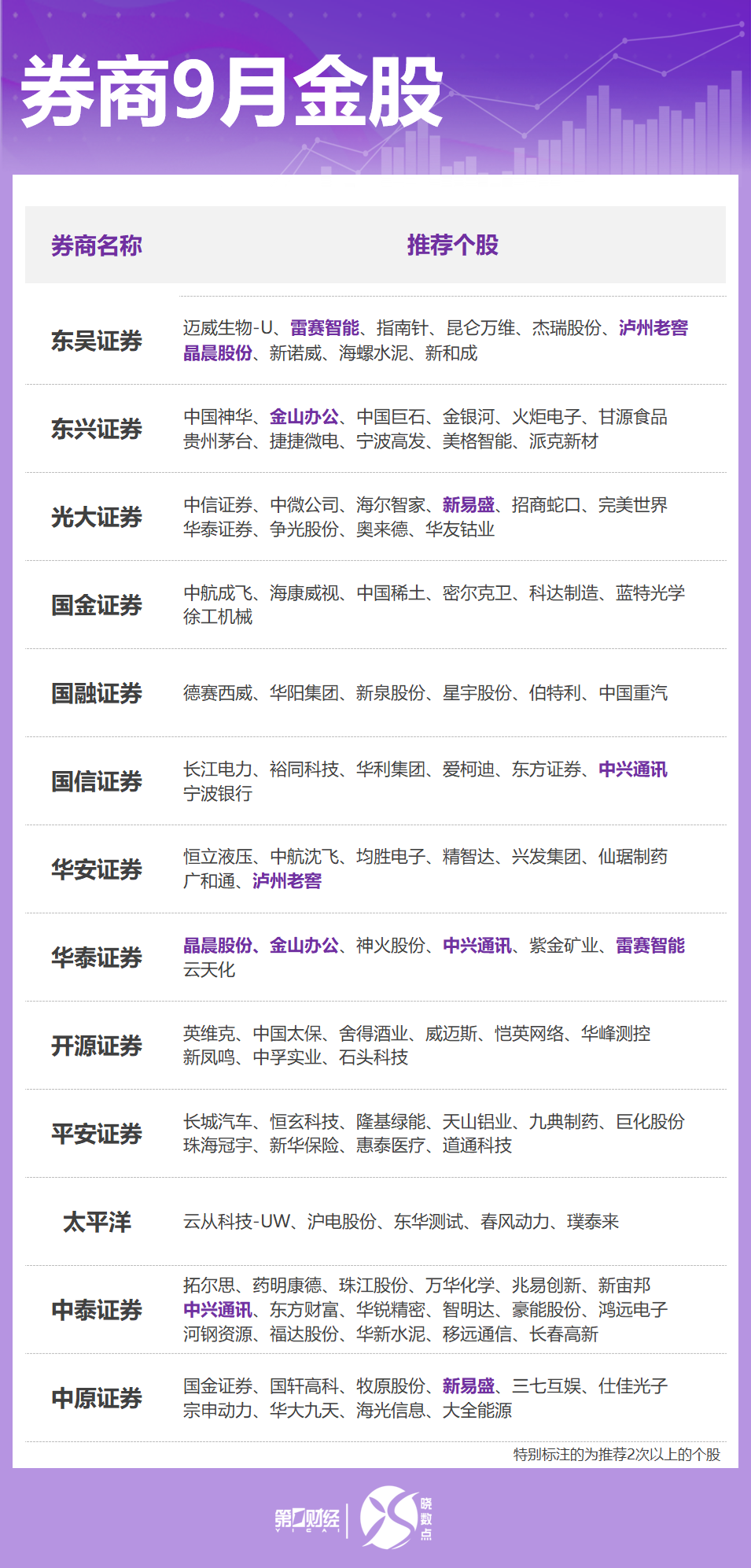
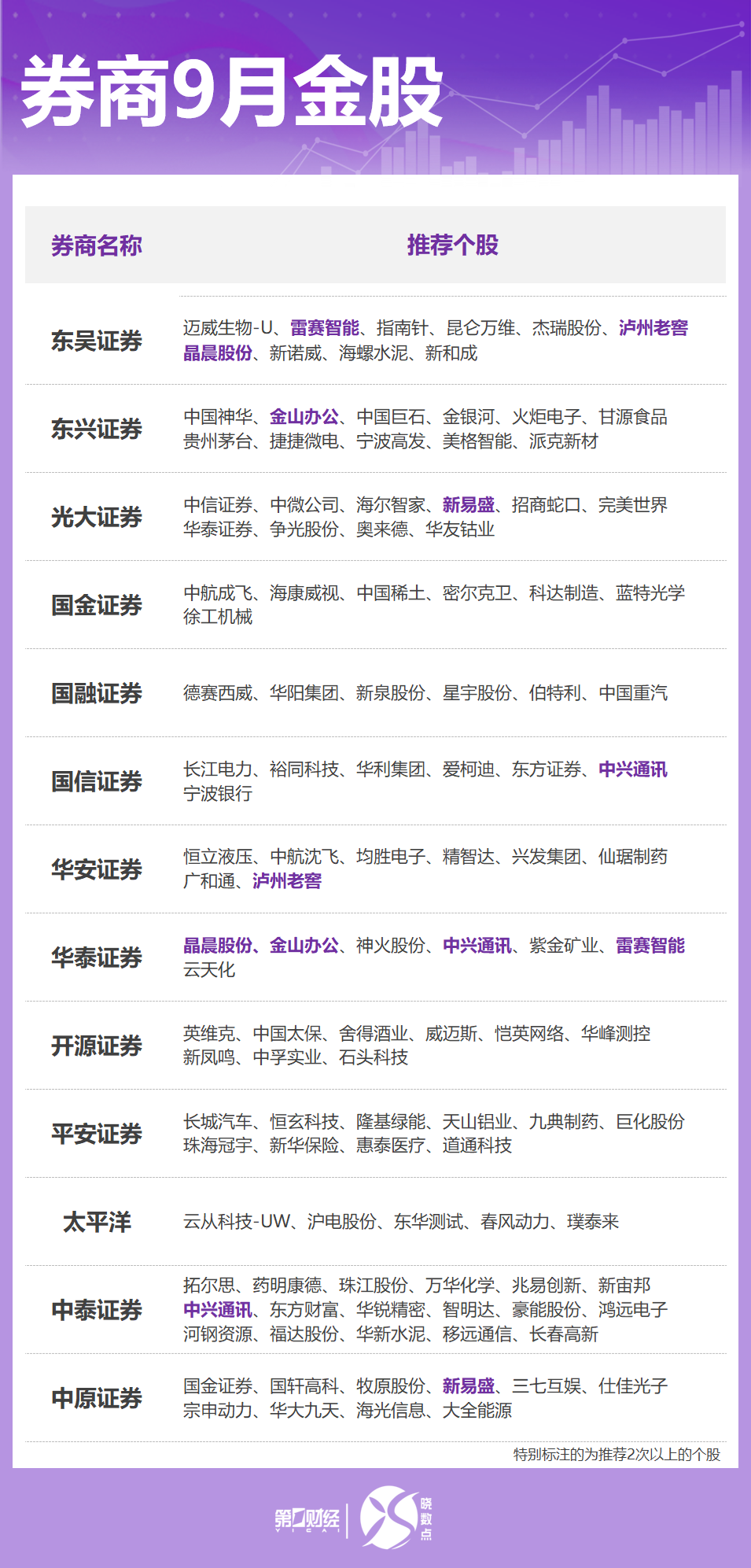
券商9月金股出炉:这些股获力挺,看好科技、“反内卷”方向
Di Yi Cai Jing· 2025-08-31 02:08
Group 1 - The A-share market is expected to continue its upward trend, with a focus on technology, cyclical sectors, and "anti-involution" manufacturing [1][6] - In August, the Shanghai Composite Index rose by 7.97%, the Shenzhen Component Index increased by 15.32%, and the ChiNext Index surged by 24.13% [1] - Several brokerages have released their investment portfolios for September, covering various sectors including consumption, technology, and finance [1] Group 2 - The most frequently recommended stock among brokerages is ZTE Corporation, receiving recommendations from three brokerages [3] - Other notable stocks include Kingsoft Office, Neway Technology, Crystal Clear Technology, and Race Intelligent, each receiving two recommendations [3] - Neway Technology had the highest increase in August, with a rise of over 88%, closing at 356.2 yuan [3] Group 3 - The market is characterized by a preference for small-cap stocks and growth over value, driven by an increase in risk appetite [6] - The focus remains on technology and advanced manufacturing, with significant attention on AI, autonomous control, humanoid robots, and low-altitude economy sectors [6][7] - The "anti-involution" policy is promoting high-quality industrial development, with ongoing attention to sectors like electric equipment and basic chemicals [7] Group 4 - Domestic demand policies are expected to create opportunities in industries such as machinery, home appliances, automobiles, and consumer electronics [7]
晓数点丨券商9月金股出炉:这些股获力挺,看好科技、“反内卷”方向
Di Yi Cai Jing· 2025-08-31 01:59
Group 1 - The A-share market is expected to continue its upward trend, with a focus on technology, cyclical sectors, and "anti-involution" manufacturing [1][6] - In August, the Shanghai Composite Index rose by 7.97%, the Shenzhen Component Index increased by 15.32%, and the ChiNext Index surged by 24.13% [1] - Multiple brokerages have released their investment portfolios for September, covering various sectors including consumption, technology, and finance [1] Group 2 - The most frequently recommended stocks include ZTE Corporation, which received recommendations from three brokerages, while Kingsoft Office, New Yisheng, Crystal Morning, and Race Intelligent received two recommendations each [4] - ZTE Corporation's stock price increased by 32.52% in August, closing at 45.44 yuan, with a market capitalization of 207.15 billion yuan [5] - New Yisheng had the highest increase in August, with a rise of over 88%, closing at 356.2 yuan [4][5] Group 3 - Brokerages suggest focusing on technology and advanced manufacturing as key growth areas, with high-tech manufacturing maintaining strong profitability [7] - The "anti-involution" policy is expected to promote high-quality industrial development, with a focus on sectors like electric equipment and basic chemicals [8] - Domestic demand policies are anticipated to create opportunities in industries such as machinery, home appliances, automobiles, and consumer electronics [8]




AI狂赚!美股Q2爆了,现在还能上车吗?
Xin Lang Cai Jing· 2025-08-30 00:17
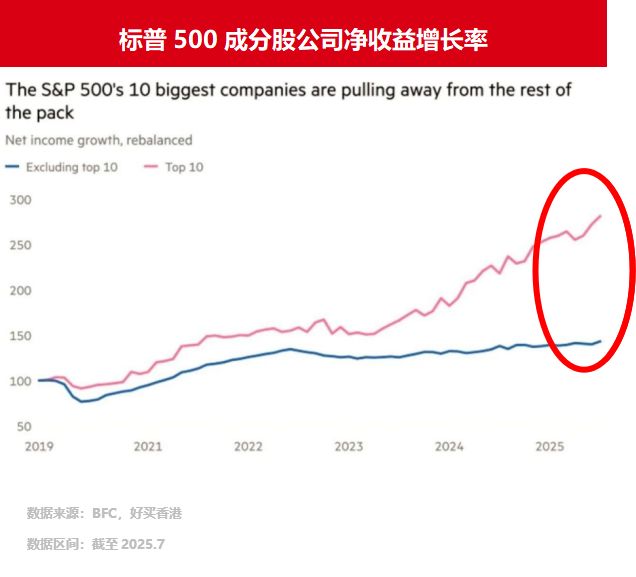
Group 1: Overall Performance - Over 92% of S&P 500 companies have reported their Q2 earnings, marking the best performance since Q3 2021 with a historical level of "earnings surprise frequency" [1] - U.S. companies saw significant revenue and profit growth, with profits increasing by 12% year-over-year, surpassing analysts' July estimate of 5% [1] Group 2: Sector Performance - The technology sector, particularly the "Big Seven" tech giants, has been a major driver of overall performance, with about two-thirds of growth concentrated in communication services and information technology [1] - Meta reported a 22% year-over-year revenue growth driven by AI technology, with net profit increasing by 36% and operating profit margin rising from 38% to 43% [1] - Microsoft also showed strong performance with a 25.62% year-over-year increase in intelligent cloud revenue, indicating that AI investments are beginning to yield financial returns [2] Group 3: Market Reactions and Structural Issues - Despite the earnings exceeding expectations, market reactions have been cautious, with a lower-than-average reward for companies that surpassed expectations and a heavier penalty for those that did not [8] - The top 10 S&P 500 companies contributed nearly all of the profit growth, indicating a structural crisis where the remaining 400 companies are experiencing slow growth [8] - The retail sector is showing signs of weakness, with S&P 500 retail revenues (excluding e-commerce giants) slowing to a 3.2% year-over-year growth, down from 4.5% in Q1 [9] Group 4: Consumer Behavior and Economic Outlook - Consumer spending behavior is shifting, with over half of surveyed individuals planning to cut back on spending in the coming months, impacting retail performance [9] - The overall economic and corporate landscape in the U.S. is characterized by a "two-tier" situation, where companies not benefiting from AI spending are struggling to maintain their positions [8]


汇纳科技2025年中报简析:营收上升亏损收窄,盈利能力上升
Zheng Quan Zhi Xing· 2025-08-29 22:41
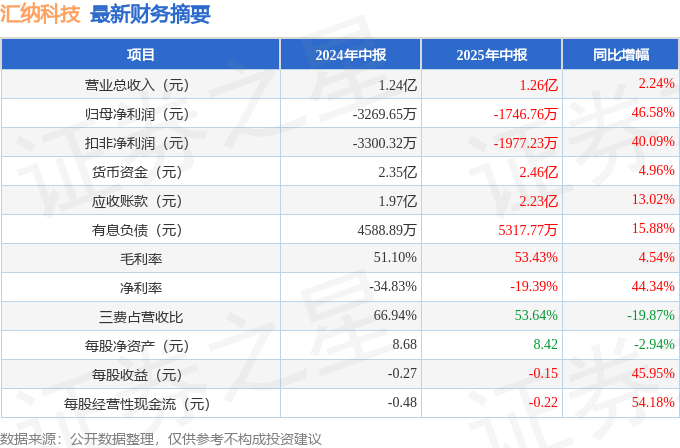
Group 1 - The core viewpoint of the article highlights the financial performance of Huina Technology (300609) for the first half of 2025, showing a slight increase in revenue and a significant reduction in net loss compared to the previous year [1] - The total operating revenue for the first half of 2025 reached 126 million yuan, a year-on-year increase of 2.24%, while the net profit attributable to shareholders was -17.47 million yuan, improving by 46.58% year-on-year [1] - In Q2 2025, the operating revenue was 74.03 million yuan, up 0.9% year-on-year, but the net profit attributable to shareholders decreased by 26.12% to -14.83 million yuan [1] Group 2 - The gross profit margin increased by 4.54% to 53.43%, and the net profit margin improved by 44.34% to -19.39% [1] - Total expenses (selling, administrative, and financial) amounted to 67.79 million yuan, accounting for 53.64% of revenue, a decrease of 19.87% year-on-year [1] - The company reported a significant improvement in operating cash flow per share, which was -0.22 yuan, an increase of 54.18% year-on-year [1] Group 3 - Historical data indicates that the company's median ROIC since its listing is 12.77%, with a poor performance in 2022 showing a ROIC of -2.96% [3] - The company has reported negative net profits in four out of seven annual reports since its listing, indicating a generally poor financial history [3] - Analysts expect the company's performance in 2025 to yield a net profit of 9 million yuan, with an average earnings per share of 0.08 yuan [3]
行业布局各有侧重 外资公募隐形重仓股曝光
Shang Hai Zheng Quan Bao· 2025-08-29 19:49
Core Viewpoint - The mid-year reports of public funds reveal the hidden heavy holdings of foreign public funds, indicating their investment strategies for the second half of the year, with a focus on technology, new consumption, high-end manufacturing, pharmaceuticals, and high-dividend stocks [1][2]. Group 1: Hidden Heavy Holdings - Fidelity's hidden heavy holdings include Jiangsu Shentong, ZhongAn Online, Jinzheng Co., AVIC Xi'an Aircraft Industry, and Xingyun Co., with a high allocation in information technology and industrial sectors [2]. - In the case of the Invesco Great Wall Mixed Fund, hidden heavy holdings include Yunnan Baiyao, Chongqing Bank, Giant Network, Qilu Bank, and China Pacific Insurance, focusing on AI supply, experiential consumption, financial dividends, and pharmaceuticals [2]. - Allianz China Select Mixed Fund's hidden heavy holdings consist of Zhuoyi Information, Junshi Biosciences, Zhaomin Technology, Fuda Co., Fule New Materials, and Zhongjian Technology, maintaining a high stock position amid global tech transformation [2]. Group 2: Investment Strategies for the Second Half - Fund managers express optimism about the market's investment value due to ongoing supportive policies, strong growth potential in AI and advanced manufacturing, and stable expansion of corporate return on equity [3]. - Schroder's China Power Stock Fund adopts a barbell strategy, focusing on high-dividend sectors benefiting from risk-averse capital inflows and technology and high-end manufacturing sectors [3]. - Allianz's fund manager emphasizes the importance of quality tech assets in the ongoing value reassessment of Chinese stocks, with a focus on TMT, machinery, pharmaceuticals, and chemicals [3][4].