
低空经济

Search documents
如何看待低空经济“成长的烦恼”?
Shang Hai Zheng Quan Bao· 2025-09-17 19:28
Group 1 - The low-altitude economy is facing scrutiny after a collision incident involving eVTOL aircraft, highlighting that safety is the absolute prerequisite for the industry's development [1][2] - The collision occurred during a rehearsal at the Changchun Airshow, where two Xiaopeng Huaitian eVTOLs collided due to insufficient flight spacing, resulting in one aircraft catching fire upon landing [1] - The incident raises questions about the readiness of the eVTOL industry for public demonstrations, with concerns about pilot proficiency and the current inadequacies in the flight support system and infrastructure [1][2] Group 2 - The low-altitude economy is still in its infancy, facing challenges in airspace management, safety regulation, technical standards, and infrastructure development [2] - Following the incident, it is anticipated that regulatory bodies may implement stricter low-altitude flight management regulations, including mandatory collision warning systems, which could temporarily limit the commercial operation of flying vehicles [2] - Despite the accidents, there is a belief that low-altitude flying can be safe and that the industry should maintain a balanced perspective, recognizing the importance of safety while fostering development [2][3] Group 3 - Recommendations for the development of the low-altitude economy include enhancing flight safety measures, improving infrastructure and support services, and establishing comprehensive management and industry standards [3] - There is a call for strengthening certification management for low-altitude flying vehicles and enhancing training and management for pilots [3] - Emphasizing that safety is crucial for the low-altitude economy to thrive and become a new engine for economic growth [4]
聚合智能融合发展成新能源产业壮大关键路径
Zheng Quan Ri Bao· 2025-09-17 16:09
Core Insights - The rapid development and application of artificial intelligence technologies have made smart vehicles, low-altitude travel, and embodied robots key carriers of AI applications, with a consensus emerging on the importance of scaling smart vehicle components to empower these sectors [1][2] - The concept of "aggregated intelligence" is characterized by deep coupling of technology, industry chains, and application scenarios, which is seen as a new direction for the new energy industry to break through single development bottlenecks and unlock trillion-yuan market potential [1][7] Group 1: Technological Synergy and Industry Chain Interconnectivity - Smart vehicles, embodied robots, and low-altitude economy share significant "homogeneity" in their underlying technologies, all supported by artificial intelligence, leading to a unified terminal industry chain [2][3] - The supply chain overlap exceeds 60%, with some companies estimating it to be as high as 70%, allowing components from smart vehicles to directly support robots and low-altitude vehicles [2][3] - The cost reduction in components, such as LiDAR, has been significant, with prices dropping from 100,000 yuan in 2019 to 800 yuan today, demonstrating the potential for cost-effective solutions in robotics and low-altitude travel [3] Group 2: Scene Integration and Ecological Co-construction - The shift from a single product mindset to an ecological thinking is becoming a consensus among professionals in the new energy sector, with examples like the "robot football league" showcasing developer ecosystems [5] - The low-altitude economy is showing great potential in reconstructing transportation scenarios, with electric flying cars expected to reduce costs significantly from millions to around 200,000 yuan [6] - Companies like Sichuan Wofei Chang Kong Technology are actively developing electric flying vehicles and have plans for commercial operations by 2026, indicating a growing market for low-altitude travel solutions [6][7] Group 3: Strategic Collaborations and Future Outlook - Companies like Jianghuai Automobile Group are exploring collaborative ecosystems by sharing technologies and resources across smart vehicles, robots, and low-altitude travel [7] - The integration of smart vehicles, embodied robots, and low-altitude economy is expected to form a trillion-yuan "new trio" export force in the next five years, emphasizing the importance of fusion development [7]
施政报告专家解读:香港全力发展成为国际创新科技中心
Xin Hua She· 2025-09-17 15:48
Core Insights - The Hong Kong Chief Executive's policy address emphasizes the integration of education, technology, and talent development to establish Hong Kong as an international innovation and technology hub [1][2][3] - The report highlights Hong Kong's strong potential in technology development, ranking third globally in digital competitiveness and first in the "Shenzhen-Hong Kong-Guangzhou" cluster in the 2025 Global Innovation Index [1] - Key initiatives include enhancing the innovation and technology ecosystem, accelerating new industrialization, and promoting the development of artificial intelligence and low-altitude economy [1][2][3] Group 1: Education, Technology, and Talent Development - The policy report outlines strategies for integrating education, technology, and talent to build a rich resource pool and enhance Hong Kong's competitiveness [1] - Hong Kong ranks fourth globally and first in Asia in the 2025 World Talent Ranking, showcasing its strong education system and talent competitiveness [2] Group 2: Innovation and Technology Initiatives - The report proposes various measures to establish a competitive low-altitude economy ecosystem, positioning Hong Kong as a hub for low-altitude innovation applications in the Asia-Pacific region [3] - The establishment of a guiding fund for innovation and technology will focus on investments in life sciences and artificial intelligence, enhancing Hong Kong's innovation density [3] Group 3: Industry Collaboration and Economic Transformation - The report emphasizes the importance of collaboration between academia, government, and industry to strengthen the innovation ecosystem and high-end talent pool [2] - The promotion of AI development and support for small and medium enterprises will bolster Hong Kong's research capabilities and international appeal [2][3]
产业升级下一局:不拼故事,改拼「精耕」|36氪2025产业未来大会金句集锦
36氪· 2025-09-17 13:35
会上,36氪合伙人、副总裁李政分享了其对行业的前瞻观察:今年一级市场募资端和投资端呈现同比双升态势,投资方向也逐步 转向符合国家战略导向的硬科技领域,从关注用户量、GMV到频繁地讨论起技术参数、良品率,创投市场已经从上一个"创新模 式"周期进入"硬核时代"。硬科技创业者除了需要在各自的技术领域上深耕,他们也需要产业资本多维度的赋能,更需要社会共同 搭建起一个适合创新产业发展的生态环境,而这也是产业资本的未来方向。 此外,参与本次大会的国资与财务基金掌舵人、明星创业公司及产业龙头创始人们分别带来了最前沿的理论洞察、最敏锐的资本 洞察、最真实的产业需求以及最鲜活的实战经验。一句点睛,或许就得以窥见未来一隅。让我们回顾大会嘉宾的精彩洞见—— 此刻,我们正站在产业逻辑被彻底重塑的时代转折点。 2025 产业未来大会 中国·厦门 | 9.10-9.11 9月10日,由36氪主办的2025年36氪产业未来大会在中国厦门盛大启幕。本次大会重磅携手商务部主办的"中国国际投资贸易洽谈 会",以"精耕时代,潮涌嘉禾"为核心主题,倾力打造一场兼具国家高度、产业深度与市场热度的高规格、高价值、高影响力产业 盛典。大会紧密锚定国家战略 ...


车百会张永伟:从出口“新三样”到聚合智能“三大件”
Zhong Guo Jing Ji Wang· 2025-09-17 11:51
Core Insights - The conference highlighted the collaborative development logic and practical paths of three key industries: smart cars, embodied robots, and low-altitude economy [1][2] Group 1: Industry Integration - The concept of "aggregated thinking" is identified as a hallmark of the Fourth Industrial Revolution, emphasizing the deep integration of smart cars, embodied robots, and low-altitude economy [2] - These three sectors share commonalities: they rely on artificial intelligence as a foundational technology, have over 60% supply chain overlap, and show trends of application integration [2] - The smart car industry is projected to exceed $100 billion in global component output this year, with the Chinese market expected to surpass $50 billion [2] Group 2: Shared Supply Chain - The shared supply chain is crucial for the synergistic effect of the three key sectors, covering areas such as perception, computation, actuators, batteries, communication, and materials [2][3] - Significant cost reductions in core components have been observed, such as the price of lidar dropping from 100,000 yuan in 2019 to 800 yuan today, while performance has increased significantly [3] - The demand for chips in L2-level smart cars drives innovation in mobile terminal chips, with a notable increase in the number of chips required compared to traditional vehicles [3] Group 3: Development Paths - Four practical paths for the collaborative development of the three sectors were proposed: establishing manufacturing advantages, expanding single-component companies into aggregated fields, promoting internationalization, and advancing mechanism innovation [4][5] - The manufacturing cost control is critical, with electric vehicles achieving over 10% annual cost reduction in components, which is expected to be mirrored in the robotics sector [4] - The internationalization of the Chinese autonomous driving industry is accelerating, with many companies receiving overseas orders without actively seeking them [4] Group 4: Policy and Infrastructure - A shift from single-industry thinking to integrated thinking is necessary to break down barriers between industries, technology, policy, and departments [5] - Infrastructure planning should integrate air and ground facilities with computing platforms to avoid redundancy [5] - The collaborative development of smart cars, embodied robots, and low-altitude economy is seen as essential for China's industrial upgrade and a key direction for new productivity breakthroughs [5]


香港新一份施政报告提多项创新举措拼经济
Zhong Guo Xin Wen Wang· 2025-09-17 11:41
Economic Development Initiatives - The Hong Kong government will establish a "Mainland Enterprises Going Global Task Force" to assist mainland companies in utilizing Hong Kong as a platform for international expansion, particularly targeting Southeast Asia and the Middle East [3] - The government aims to deepen international cooperation by seeking to establish an office for the Asian Infrastructure Investment Bank in Hong Kong and hosting several international economic conferences in the coming year [3] - Hong Kong will collaborate with exchanges in the Greater Bay Area to explore new businesses in bulk commodity trading and carbon trading, including the development of an offshore soybean spot market [3] Financial Sector Enhancements - The government plans to accelerate the development of new growth areas to solidify Hong Kong's status as an international financial center, including the establishment of an international gold trading market and a leading bond market [5] - Initiatives will encourage more companies to issue bonds in Hong Kong and promote the use of offshore Chinese government bonds as collateral in various clearing houses [5] Low-Altitude Economy Development - A "Low-Altitude Economy Development Action Plan" will be formulated, which includes enhancing core infrastructure and introducing specific legislation for non-traditional flying vehicles weighing over 150 kilograms [5][6] - The government will simplify the licensing process for low-orbit satellites and promote investments related to commercial space and aerospace technology [5] Tourism and Yacht Economy - The government will promote the yacht economy by easing requirements for visiting yachts and discussing measures for facilitating cross-border yacht travel with Guangdong Province [5] Innovation and Manufacturing - The government emphasizes the importance of technology innovation in driving high-value manufacturing and plans to introduce leading European aviation service companies to develop a sustainable aviation fuel industry [6] Local Economic Support Measures - The report includes measures to support the local economy, such as reducing water and sewage fees for non-residential users by 50% and encouraging banks to adopt more flexible credit policies for well-performing businesses [8]
深圳举办“企业品牌出海服务日”活动
Sou Hu Cai Jing· 2025-09-17 10:58
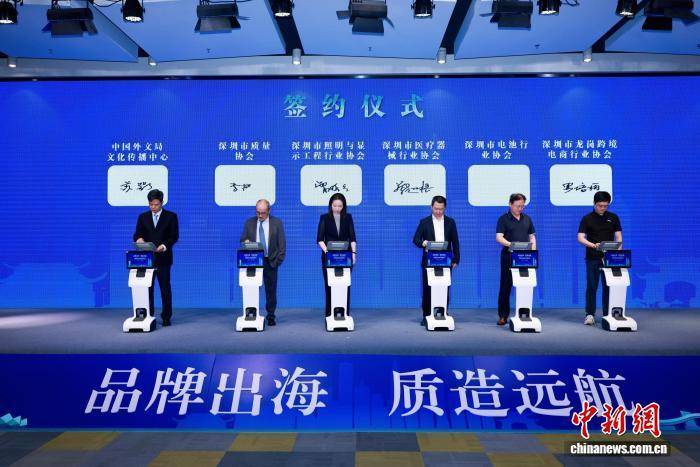
Group 1 - The event "Shenzhen Enterprise Brand Going Global Service Day" was held in Longgang District, Shenzhen, focusing on building a service platform for brands, especially for small and medium-sized enterprises (SMEs) [1][3] - Approximately 150 representatives from business organizations, experts, and industry associations from countries such as Thailand, Malaysia, Singapore, and Italy participated in the event [1] - The Shenzhen Market Supervision Administration plans to enhance policy collaboration to support brand cultivation, promotion, quality improvement, and talent development for brands [3] Group 2 - The Longgang District Committee emphasized four key areas to support brand development: showcasing creativity, transforming designs into production, upgrading products to brands, and facilitating global brand expansion [3] - The China Foreign Languages Publishing Administration is actively supporting Shenzhen enterprises in overseas brand launches, product displays, and participation in international exhibitions to enhance the global influence of Chinese brands [3][5] - A cultural communication innovation cooperation base was established in Shenzhen to create a national-level public service platform for brand going global, integrating service resources into the city [5] Group 3 - The "2025 Wonderful China - Touch Shenzhen" initiative was launched to narrate Shenzhen's brand development story to the world, aiding in the integration of Shenzhen brands into the global market [7]
车百会理事长张永伟:以 “聚合思维” 推动智能产业迈入 “三大件” 时代
Zheng Quan Ri Bao Wang· 2025-09-17 08:28
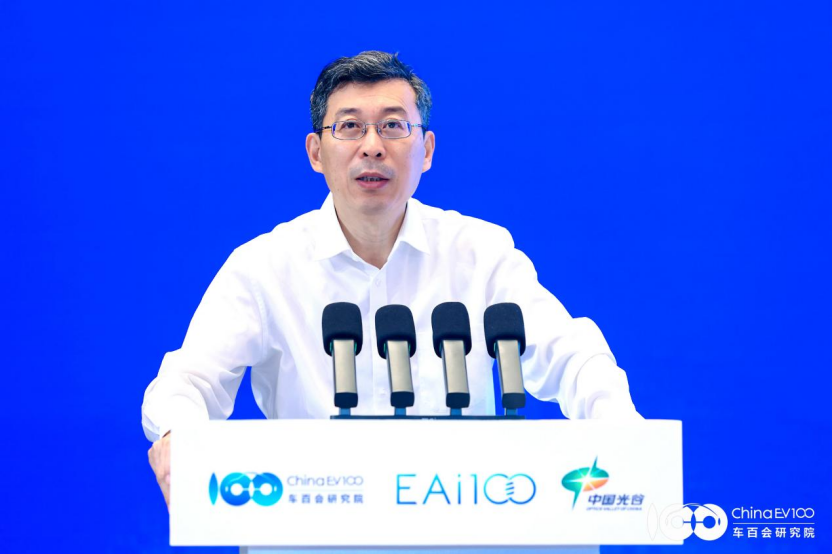
Core Insights - The speech by Zhang Yongwei at the first Aggregated Intelligent Industry Development Conference emphasizes that "aggregated thinking" will be the core driving force for industrial breakthroughs, with collaborative and shared industrial chains as key pillars for achieving synergistic development [1][6] - The "three major components" (smart cars, embodied robots, and low-altitude economy) are highlighted as new engines for economic growth and overseas market expansion, succeeding the "new three samples" (electric vehicles, power batteries, and photovoltaics) [3][6] Summary by Sections Aggregated Thinking and Industrial Revolution - Aggregated thinking is identified as a hallmark of the Fourth Industrial Revolution, contrasting with the single-core dynamics of previous revolutions. Technologies like new energy and artificial intelligence are accelerating integration, necessitating a shift from single-industry thinking to cross-industry aggregated thinking [2][4] Synergy in the Three Major Components - The three major components exhibit deep coupling in three aspects: 1. Shared technology base, with AI as the core technology for smart cars, robots, and low-altitude vehicles [2] 2. Over 60% supply chain overlap among the three fields, indicating a shared industrial chain [3] 3. Emerging integrated applications and infrastructure, with interwoven application scenarios [2][3] Market Potential and Economic Impact - The global market for core components of smart vehicles (excluding complete vehicles) is projected to exceed $100 billion by 2025, with China accounting for over 50%, approximately $50 billion. By the end of the 14th Five-Year Plan, the market for smart driving components and systems is expected to double to over $200 billion, with China potentially reaching $100 billion [3][6] Development Paths for the Industry - Four development paths are proposed to deepen the synergy among the three major components: 1. Strengthening manufacturing advantages to accelerate cost reduction, aiming to lower robot prices from millions to between 100,000 and 200,000 yuan within five years [5] 2. Encouraging cross-industry expansion and supply chain collaboration, exemplified by Tesla's robot supply chain [5] 3. Expanding into international markets to seize blue ocean opportunities, particularly in the robot sector where trade barriers are minimal [5][6] 4. Innovating governance mechanisms to break down silos and promote integrated planning and policy adaptation across the three fields [6] Conclusion - The integration of smart cars, embodied robots, and low-altitude economy represents a significant opportunity for China to seize a competitive edge in the Fourth Industrial Revolution. By leveraging aggregated thinking and focusing on shared industrial chains, the country aims to create unique advantages in the aggregated intelligent industry, driving high-quality economic development [6]
产业升级下一局:不拼故事,改拼“精耕”|36氪2025产业未来大会金句集锦
3 6 Ke· 2025-09-17 07:33
Group 1 - The conference focused on five core sectors: artificial intelligence, low-altitude economy, advanced manufacturing, new energy, and large consumption, aiming to align with national strategic directions and industry development frontiers [1] - The investment landscape in the primary market has shown a year-on-year increase in both fundraising and investment, with a shift towards hard technology sectors that align with national strategies [4][1] - Industry capital is expected to provide multidimensional empowerment to hard technology entrepreneurs, who need to cultivate an ecosystem conducive to innovation [4][1] Group 2 - The low-altitude economy is emerging as a significant investment area, with many companies generating substantial revenue and preparing for IPOs [12] - Investment in the low-altitude economy is characterized by early-stage funding, continuous support for leading companies, and a shift in focus from manufacturers to upstream core technologies and key components [16] - The low-altitude economy aims to create a comprehensive transportation network that integrates cargo and passenger transport, potentially leading to a trillion-level market scale [17] Group 3 - The importance of integrating technology with market demand is emphasized, as entrepreneurs must balance technical breakthroughs with real-world applications to achieve cash flow stability [8] - The role of government as a "scene provider" and market investment institutions as observers is crucial for reducing industrialization barriers and facilitating technology commercialization [11] - The investment strategy should focus on concentrated investments in leading industries and supporting innovative enterprises to enhance technological capabilities and drive growth [5]

苏州国资入主港股上市企业首秀,与东吴水泥会擦出怎样的“火花”?
Zhi Tong Cai Jing· 2025-09-17 06:27
Core Viewpoint - The article highlights the significant breakthrough in domestic GPU development in China, led by Jiang Xueming and his investment in Lishan Technology, which has resulted in the first fully self-developed GPU surpassing NVIDIA's RTX series in certain benchmarks and gaming performance [1] Company Developments - Jiang Xueming's company, Dongxin Co., has transitioned from textiles and cement to storage chips and now to GPUs, embodying a philosophy of engaging in industries essential for national development [1] - Dongwu Cement has introduced Suzhou state-owned capital as its largest shareholder, marking a significant integration of local state-owned enterprises with overseas capital markets [1][2] - Following the acquisition, Hong Kong Port and Shipping Group became the largest shareholder with a 28% stake, while Jiang Xueming retains 16.89% [2] Strategic Transformation - The entry of Suzhou state-owned capital into Dongwu Cement is expected to lead to a strategic transformation or the injection of new resources, potentially moving away from traditional cement operations [2][3] - Dongwu Cement has already begun divesting from its biopharmaceutical and rare earth businesses, indicating preparations for a strategic shift [2] Industry Trends - Local state-owned enterprises typically aim for industrial optimization and upgrading, focusing on strategic emerging industries such as new energy, new materials, and high-end manufacturing [3] - There is speculation that Dongwu Cement may pivot towards emerging sectors like smart warehousing, modern logistics, and low-altitude economy, with a strong emphasis on low-altitude economy due to Jiangsu's proactive stance in this area [3][4] Market Expectations - The market has reacted positively to the involvement of Suzhou state-owned capital, with Dongwu Cement's stock price increasing by over 160% since August, reflecting optimism about its future development potential [5] - The innovative model of "local state-owned capital + overseas listed platform + industrial resources" is anticipated to set a new precedent for resource optimization and integration through mixed ownership reform [5]