
家电

Search documents
红利资产逆市活跃,现金流ETF嘉实(159221)聚焦内生增长能力的“现金牛”组合
Xin Lang Cai Jing· 2026-01-15 03:52
Group 1 - The core viewpoint of the articles highlights the active performance of the dividend assets in the A-share market, with a focus on the "new and old coexistence" structural feature, where technology and overseas expansion are central to the profit pattern reshaping [1] - The National Securities report indicates that the technology and overseas expansion sectors currently account for 36% of A-share profits, with expectations to rise to 60%, establishing a dual mainline in fundamentals [1] - The PPI stabilization is driving profit recovery in upstream resource products, with notable performance in globally priced commodities like non-ferrous metals [1] Group 2 - The top ten weighted stocks in the National Securities Free Cash Flow Index as of December 31, 2025, include China National Offshore Oil Corporation, SAIC Motor, Gree Electric Appliances, and others, collectively accounting for 51.95% of the index [2] - The cash flow ETF, Jia Shi (159221), closely tracks the National Securities Free Cash Flow Index, aiming to create a combination of profitability quality and dividend potential [2] - Investors can also access opportunities through the cash flow ETF Jia Shi's off-market connection (024574) [3]
政府搭台 平台助力 企业参与 从线上到线下全面推动“广货行天下”
Guang Zhou Ri Bao· 2026-01-15 01:57
Core Viewpoint - The "Guangdong Goods Going Global" spring initiative aims to enhance the visibility and market influence of high-quality Guangdong products through a collaborative effort involving the government, platforms, and enterprises, thereby creating new wealth opportunities in the market [2][11]. Group 1: Initiative Overview - The initiative will host nearly 30 key events, supported by over 10 major commercial platforms and more than 6,000 participating enterprises [2]. - The campaign is a modern expression of Guangdong's long-standing commercial heritage, focusing on innovative supply to drive consumption and expand domestic demand [2]. Group 2: Industry Leadership - The home appliance sector is leading the initiative, leveraging Guangdong's dominant position in manufacturing, with 15 out of 31 national economic categories ranked first in scale [3][4]. - Guangdong's home appliance production includes significant outputs: 99.34 million air conditioners, 245.36 million refrigerators, 113.10 million washing machines, and 183.41 million color TVs, representing 27.02%, 34.54%, 8.55%, and 57.16% of national production, respectively [4]. Group 3: Technological Advancements - Guangdong's home appliance industry features a complete supply chain from chips to assembly, with over 10,000 manufacturing enterprises collaborating [6]. - The integration of AI algorithms into home appliances is transforming them into intelligent partners that understand user needs and provide proactive services [6][10]. Group 4: E-commerce and Marketing Strategies - The initiative includes innovative sales methods such as "one-click pick Guangdong goods," enhancing product visibility and consumer engagement [7]. - Major e-commerce platforms like JD.com and Pinduoduo have launched dedicated pages for "Guangdong Goods Going Global," offering various discounts and promotions [7][8]. Group 5: Global Recognition and Quality - Brands like "藏里羊" have gained international acclaim, showcasing Guangdong's strong supply chain capabilities and quality products [10]. - Guangdong produces 70% of the world's consumer drones, 40% of smartphones, and significant portions of industrial robots and integrated circuits, highlighting its manufacturing strength [10]. Group 6: Strategic Goals - The initiative aims to redefine "new Guangdong goods" by emphasizing quality, intelligence, and sustainability, thus actively creating and leading market demand [11].

“新国补”激发消费新活力
Sou Hu Cai Jing· 2026-01-15 01:42
Core Insights - The new round of "national subsidies" has been launched at the beginning of the year, providing a significant boost to the consumer market for 2026 [1] - The "old-for-new" policy for consumer goods has shown remarkable effectiveness in expanding domestic demand, stabilizing growth, promoting transformation, and benefiting people's livelihoods since its implementation in 2024 [1] - The recent central economic work conference emphasized the need to optimize the "two new" policies to enhance the effectiveness of the "old-for-new" policy [1] Group 1 - The subsidy program in Shanxi Province officially started on January 9, 2026, leading to increased consumer engagement in both physical and online retail spaces [1] - The new subsidies focus on six categories of energy-efficient or water-efficient home appliances and include smart glasses for the first time in the digital product category [1] - The automotive subsidy has shifted from a fixed amount to a percentage of the vehicle price, aiming to create stable expectations for consumers through quarterly and balanced funding distribution [1] Group 2 - The "old-for-new" policy is a key strategy for expanding domestic demand and optimizing supply structure, emphasizing the importance of combining benefits for people's livelihoods with consumption promotion [2] - The implementation process must address issues such as fraudulent claims and price inflation prior to subsidies to ensure the integrity of the program [2] - The transformation of policy benefits into tangible welfare and consumption vitality is crucial for injecting strong momentum into the Shanxi consumer market [2]
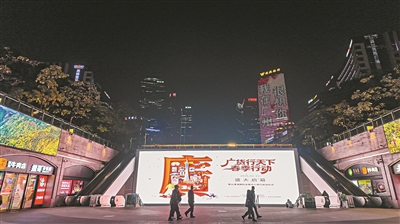
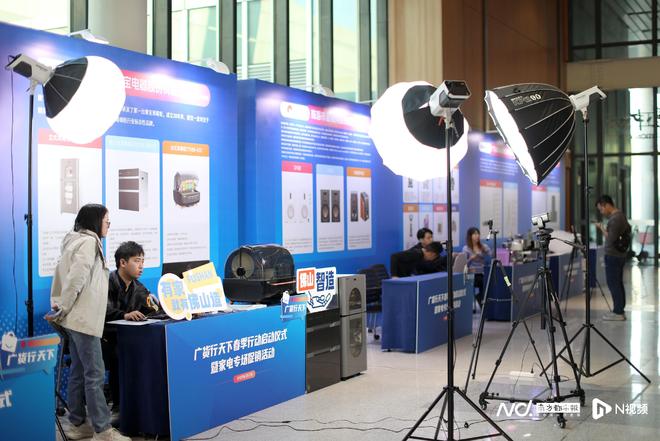
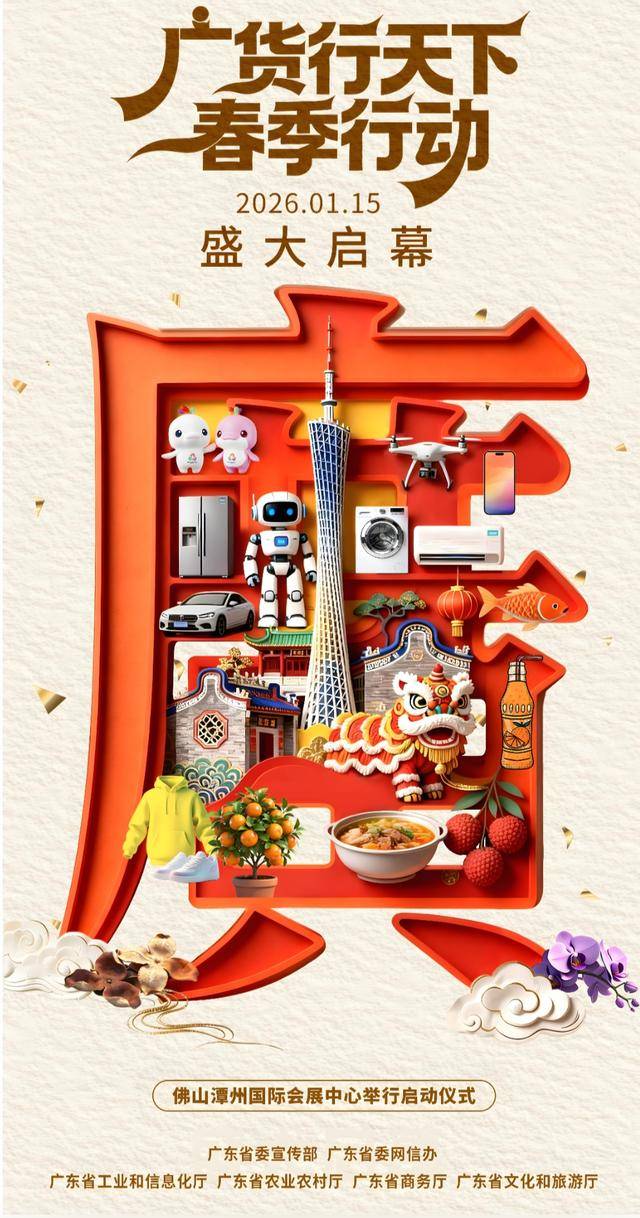
“广货行天下”春季行动在佛山启幕!家电专场“打头炮”
Nan Fang Du Shi Bao· 2026-01-15 01:19
Core Viewpoint - The "Guanghuo Goes Global" Spring Action, launched on January 15, 2026, in Foshan, Guangdong, aims to stimulate consumer demand and enhance the market presence of high-quality Guangdong products through a series of promotional activities involving over 6,000 enterprises and major commercial platforms [6][8][10]. Group 1: Event Overview - The event features nearly 30 key activities, with participation from over 10 large commercial platforms and approximately 6,000 enterprises across various sectors including home appliances, mobile phones, clothing, food, and more [8]. - The home appliance promotion event on the same day gathered more than 1,300 local home appliance companies, showcasing quality products and conducting live-stream sales [10]. Group 2: Economic Context - The initiative is part of a broader strategy to boost domestic demand and optimize supply in Guangdong, a major manufacturing and consumption province, to support economic recovery and industrial upgrading [6][8]. Group 3: Promotional Strategies - The promotional campaign employs a multi-layered discount structure involving government subsidies, enterprise discounts, and platform support, effectively stimulating consumer spending [11]. - Consumers can benefit from various discounts, including government "national subsidies" and brand-specific promotions, with some companies offering up to 15% off through trade-in programs [14]. Group 4: Consumer Engagement - The event includes additional incentives such as gifts, service upgrades, and exclusive discounts for consumers who use specific codes during purchases, enhancing the overall shopping experience [15]. - Companies are also implementing ongoing promotional activities throughout the first quarter, ensuring sustained consumer engagement and value [15].


Q4手机家电市场调研-华南
2026-01-15 01:06
Summary of Xiaomi's Q4 2025 Conference Call Company Overview - **Company**: Xiaomi - **Industry**: Mobile and Consumer Electronics Key Points Sales Performance - In Q4 2025, Xiaomi's overall sales increased by approximately 5% year-on-year, driven by mobile and AIoT products, excluding automotive sales [2] - The mobile segment's sales volume remained stable, but due to price increases, sales revenue grew by about 8% [2][6] - The home appliance segment achieved a GMV growth of approximately 50% for the year, but remained flat in Q4 [2][10] - Wearable devices maintained a stable market share of around 18%-20% [3][6] Product Performance - The Xiaomi 17 series saw explosive growth in October following its launch, but experienced a significant decline in November and December [4] - The Ultra series, launched in December 2025, had slightly lower sales than its predecessor, but received positive feedback for performance and quality, with a special edition priced at 8,999 yuan [7] - High-end models (priced above 3,500 yuan) increased their market share from 30% in 2025 to approximately 35% in 2026, attributed to improved sales of high-end models rather than reliance on subsidies [8] Market Dynamics - The normalization of national subsidy policies has led consumers to adopt a wait-and-see attitude, complicating transaction facilitation in retail stores [5] - Despite a projected 15% decline in terminal sales in 2026 due to a pessimistic economic outlook, sales revenue may only decrease by about 5% due to rising chip costs [9] Home Appliance Business - The home appliance segment's GMV remained flat in Q4 2026, with a 50% growth for the year. There is potential for improvement in categories like refrigerators and washing machines [10] - A new factory in Wuhan is expected to drive growth, with a focus on improving store displays and sales skills [10] Training and Management Adjustments - Xiaomi has initiated systematic training for store personnel, focusing on aligning operations and improving sales strategies [12][13] - Adjustments to store management have not yet resulted in significant growth, leading to a reevaluation of optimization strategies [11] Consumer Perception and Brand Recognition - Consumers have recognized improvements in the quality of Xiaomi's home appliances, contributing to increased purchases, especially with the aid of subsidies [15] - The brand's overall perception remains strong, although negative online commentary has impacted consumer decisions regarding automotive purchases [22] Automotive Sales - Automotive sales in Q4 2025 were disappointing, with a significant year-on-year decline. The average sales per store dropped by about 50% [21] - Initial production capacity issues were followed by negative public sentiment affecting consumer choices [21][22] Future Outlook - The new national subsidy policy is expected to continue until the end of 2026, primarily benefiting the home appliance sector [17] - Xiaomi aims for a sales growth target of at least 30% year-on-year for 2026, with a focus on optimizing existing stores rather than expanding [18] - The overall market environment for 2026 is anticipated to be challenging, but Xiaomi's brand strength and product strategy are expected to lead to gradual improvements [27]

12万笔以旧换新补贴撬动5亿元消费
Sou Hu Cai Jing· 2026-01-15 00:57
Core Insights - Chongqing has launched a new round of consumer subsidies for replacing old products with new ones, covering various sectors including home appliances and digital smart products, which has led to a significant increase in consumer enthusiasm and sales [1][2][3] Group 1: Home Appliances - As of January 11, the total number of transactions for home appliance replacements reached 60,870, with subsidies amounting to approximately 46 million yuan, directly driving sales of 324.6 million yuan [2][3] - The implementation of the policy has resulted in a 110% increase in foot traffic and sales at stores, with consumers shifting their purchasing mindset towards high-quality, energy-efficient products, which now account for 65% of sales [1][3] Group 2: Digital Smart Products - The total number of transactions for digital and smart product subsidies reached 61,990, with a total subsidy amount of about 25 million yuan, directly boosting sales by 206.7 million yuan [3][4] - The policy has stimulated demand for new smartphones and tablets, with many stores offering additional incentives such as trade-in bonuses and interest-free installment plans to lower the cost for consumers [2][3] Group 3: Market Trends and Future Plans - The sales data reflects a strong consumer demand for high-quality green smart products, prompting the local government to enhance policy promotion and encourage more businesses to participate [3] - The inclusion of smart glasses in the subsidy program has led to a doubling of sales for these products during the holiday period, indicating a growing interest in smart wearable devices [2]
【深圳特区报】“广货行天下”春季行动今日在佛山启幕 广货已备好 等您来采购
Sou Hu Cai Jing· 2026-01-15 00:11
Core Viewpoint - The article highlights the significant growth and transformation of Guangdong's manufacturing industry, particularly in the context of the upcoming Spring Festival, showcasing the region's products and innovations to global consumers [3][12]. Group 1: Overview of Guangdong's Manufacturing - Guangdong's industrial economy has evolved from small-scale operations to a leading position, with classic products like home appliances and textiles now complemented by high-tech goods such as drones and 5G smartphones [8][10]. - The "Guangdong Goods Going Global" initiative aims to promote local products through various online and offline activities, enhancing visibility and sales on major e-commerce platforms [8][9]. Group 2: Technological Advancements - Guangdong produces 70% of the world's consumer drones, 40% of smartphones, and significant portions of industrial robots and integrated circuits, indicating its strong manufacturing capabilities [9][10]. - Traditional industries in Guangdong are undergoing transformation through technological innovation, with companies like Gree and TCL achieving remarkable efficiency improvements [10][11]. Group 3: Focus on Foshan - Foshan, as the first stop for the "Guangdong Goods Going Global" campaign, exemplifies the region's manufacturing strength, contributing nearly 30% of Guangdong's revenue in the home appliance sector [12][13]. - The city is actively promoting the transformation of traditional industries and has seen an average production efficiency increase of 16% through digitalization [12].
超45万亿元 去年我国进出口总值创历史新高 工业机器人出口超进口 风力发电机组出口同比增长48.7%
Zhong Guo Zheng Quan Bao· 2026-01-14 22:55
Core Viewpoint - In 2025, China's foreign trade reached a record high of 45.47 trillion yuan, with exports growing by 6.1% and imports by 0.5%, maintaining its position as the world's largest goods trader [1][2] Trade Growth - China's imports and exports achieved a 3.8% growth in 2025, marking the ninth consecutive year of growth since joining the WTO [2] - In December 2025, monthly trade reached 4.26 trillion yuan, a 4.9% year-on-year increase, setting a new record [2] - High-tech product exports increased by 13.2%, contributing 2.4 percentage points to overall export growth [2] Sector Performance - Exports of specialized equipment, high-end machine tools, and industrial robots grew by 20.6%, 21.5%, and 48.7% respectively, with industrial robots becoming a net export product for China [2] - In the green energy sector, exports of lithium batteries and wind turbine generators rose by 26.2% and 48.7% respectively [2] - The artificial intelligence sector saw significant growth, with laser radar imports increasing by over 20% and exports of optical transceiver modules rising by nearly 60% [3] Market Diversification - In 2025, China engaged in trade with 249 countries and regions, with 14 exceeding a trade volume of 1 trillion yuan [4] - The concentration of trade partners decreased, with the top ten partners accounting for 47.7% of total trade, down from the previous year [4] Regional Trade Developments - Trade with ASEAN exceeded 1 trillion USD, and trade with Central Asian countries surpassed 100 billion USD [5] - Cooperation with Africa and Latin America deepened, with significant growth in exports of agricultural and engineering machinery [5] Import Trends - In 2025, imports reached 18.48 trillion yuan, marking a historical high and maintaining China's position as the second-largest import market globally [7] - The decline in international prices for major commodities impacted overall import growth, reducing it by 1.4 percentage points [7] Future Outlook - The external environment for foreign trade in 2026 is expected to remain challenging, with global trade growth projected to slow significantly [7][8] - China's institutional, market, industrial, and talent advantages are expected to enhance its resilience against risks, maintaining a solid foundation for foreign trade [8]

超45万亿元 去年我国进出口总值创历史新高
Zhong Guo Zheng Quan Bao· 2026-01-14 20:51
Core Insights - China's foreign trade achieved a record high of 45.47 trillion yuan in 2025, with a year-on-year growth of 3.8%, maintaining its position as the world's largest goods trader [1][6] - The export of high-tech products increased by 13.2%, contributing 2.4 percentage points to overall export growth [2] - The diversification of trade partners is evident, with trade relations established with 249 countries and regions, and a decrease in concentration among the top ten trading partners [4][5] Trade Performance - In 2025, exports reached 26.99 trillion yuan, growing by 6.1%, while imports totaled 18.48 trillion yuan, with a modest growth of 0.5% [1] - December 2025 saw a record monthly trade volume of 4.26 trillion yuan, marking a 4.9% year-on-year increase [1] - The import market remains robust, with China expected to be the world's second-largest import market for 17 consecutive years [5] High-Tech and Green Products - High-tech product exports, including specialized equipment and industrial robots, saw significant growth, with industrial robot exports increasing by 48.7% [2] - Green energy products, such as lithium batteries and wind turbines, also experienced substantial export growth, with increases of 26.2% and 48.7% respectively [2] Market Diversification - Trade with emerging markets is expanding, with notable growth in exports to ASEAN, Central Asia, and Africa [3][4] - The trade relationship with Europe remains strong, with over 50% of cosmetics and nearly 60% of automobiles imported from Europe, while exports of pharmaceuticals and industrial robots to Europe grew by over 20% [5] Future Outlook - The external environment for trade in 2026 is expected to be challenging, with global trade growth projected to slow down significantly [6] - Despite these challenges, China's institutional, market, and industrial advantages are expected to enhance its resilience in foreign trade [6]
中国外贸“含智量”凸显创新驱动成效
Xin Lang Cai Jing· 2026-01-14 19:42
Core Insights - China's foreign trade demonstrates remarkable resilience amidst a global slowdown, with exports reaching 26.99 trillion yuan, a year-on-year increase of 6.1% [1][2] - The country has transitioned from "Made in China" to "Intelligent Manufacturing in China," focusing on high-value, differentiated products [1][3] - Innovation is identified as the key driver for China's foreign trade, enabling the country to overcome uncertainties and enhance competitiveness [2][3] Export Performance - Exports of specialized equipment, high-end machine tools, and industrial robots grew by 20.6%, 21.5%, and 48.7% respectively, with industrial robots becoming a net export for the first time [1] - The export of smart robots and other high-tech products has seen significant growth, with some categories experiencing over 60% increase in exports [2] Market Adaptation - Chinese companies are successfully integrating traditional craftsmanship with modern innovation, as seen in the examples of ceramic decorations and desert air conditioners [2] - The shift in focus from quantity and price competition to intelligence and innovation reflects a strategic move towards higher value in the global supply chain [3] Economic Transition - China's economy is undergoing a critical phase of transformation, moving away from investment-driven growth towards innovation-driven development [3] - The emphasis on innovation is crucial for maintaining stable growth in foreign trade and accelerating economic transformation [3]