美妆护肤

Search documents
餐饮价格战加剧,恒天然调整相关业务丨消费参考
2 1 Shi Ji Jing Ji Bao Dao· 2025-07-17 23:45
Group 1 - Fonterra's Greater China region is undergoing a restructuring, merging its consumer brand team with its food service team to optimize operations and enhance synergies [1] - In the Chinese market, Fonterra's food service business significantly outperforms its consumer brand business, with food service revenue of NZD 2.377 billion (approximately RMB 10.133 billion) in FY2024, compared to consumer products revenue of NZD 394 million (approximately RMB 1.68 billion) [1] - The food service business is considered Fonterra's profit driver, generating a tax profit of NZD 299 million (approximately RMB 1.275 billion) in FY2024, while the consumer products segment reported a tax loss of NZD 15 million (approximately RMB 63.945 million) [1] Group 2 - Fonterra is facing intense competitive pressure, particularly from domestic brands like Miaokelando, which reported a 14% year-on-year revenue growth in its food service series, reaching RMB 1.31 billion in 2024 [2][3] - The ongoing price war in the food service sector is exerting downward pressure on prices, affecting Fonterra's profit margins in its food service business, which has already seen a decline in gross margin [4] - The adjustments being made by Fonterra may be just the beginning in response to market changes and competitive dynamics [5]
佳云科技(300242) - 300242佳云科技投资者关系管理信息20250717
2025-07-17 09:46
Group 1: Company Overview - Stock Code: 300242, Company Name: Jia Yun Technology [1] - Date of Investor Relations Activity: July 17, 2025 [2] Group 2: Investor Relations Activity - Type of Activity: Specific Object Research [2] - Participants: Representatives from various investment firms including Shenzhen Gudong Guanjia Technology Co., Ltd. and Shenzhen Rongxintai Private Securities Fund Management Co., Ltd. [2] Group 3: Key Questions and Answers - **Future Plans of Major Shareholder**: The major shareholder, Hainan Xinyu Hang Investment Co., Ltd., has no plans to change the main business or conduct significant asset transactions within the next 12 months [3] - **R&D Personnel Reduction**: The reduction of R&D personnel to zero in 2024 is due to the termination of diversified gaming business, which will not impact the main business in the short term [3] - **Beauty and Skincare Business Performance**: In 2024, the beauty and skincare business generated revenue of 98.93 million yuan, a year-on-year increase of 35.70% [3] - **Product Categories and Sales Channels**: The "Qiran" brand offers 94 product SKUs across eight major series, with sales conducted through both online platforms (e.g., Tmall, Douyin) and offline stores [4][5]

贝泰妮集团入选“中国品牌国际化标杆100”榜单
Zhong Guo Zhi Liang Xin Wen Wang· 2025-07-17 08:48
Group 1 - The core viewpoint of the article highlights the recognition of Beitaini Group as a leading brand in the international market, particularly through its inclusion in the "Top 100 Chinese Brands for Internationalization" list, showcasing its global influence and innovative capabilities [1][2] - The conference aimed to decode the successful path of Chinese brand internationalization, focusing on innovation, leadership, and brand value, thereby establishing a new image for Chinese brands on the global stage [1] - Beitaini Group has established research and development centers in Shanghai and Kunming, as well as advanced laboratories in Paris and Tokyo, to enhance international R&D collaboration [1] Group 2 - The company is set to launch its Southeast Asia headquarters in Bangkok in early 2024, further solidifying its global operational footprint [1] - Beitaini Group leverages its strong R&D capabilities and unique plant resources from Yunnan to market advanced skincare technologies, including sensitive skin and anti-aging products [1] - The core brand Winona has been recognized in the first batch of China's consumer brand list published by the Ministry of Industry and Information Technology, reflecting its brand value and market position [2]
华熙生物:润百颜夸迪销售额跌破10亿 85%存货为库存商品、护肤品存货周转天数466天
Xin Lang Zheng Quan· 2025-07-15 08:40
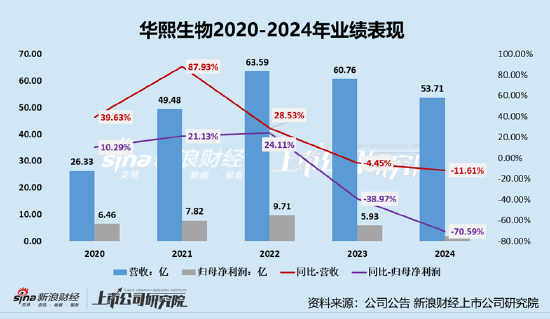
Core Viewpoint - Huaxi Biological's financial performance has significantly declined, with a notable drop in revenue and net profit for 2024, primarily due to poor sales in its skin science innovation transformation business [1][5][21] Financial Performance - In 2024, Huaxi Biological achieved operating revenue of 5.371 billion yuan, a year-on-year decrease of 11.61%, and a net profit attributable to shareholders of 174 million yuan, down 70.59% year-on-year [1][3] - Revenue from the skin science innovation transformation business fell by 31.62% in 2024, contributing to 47.92% of the company's main business revenue [5] Brand Performance - The sales of four core skincare brands have continuously declined over the past two years, with significant drops in revenue: - Runbaiyan: 2023 down 13.86%, 2024 down 22.63% - Kuaidi: 2023 down 18.64%, 2024 down 41.69% - Mibeier: 2023 down 29.75%, 2024 down 31.76% - BM Ji Huo: 2023 down 35.19%, 2024 down 52.06% [1][8][5] Operational Efficiency - The company's operational capabilities are concerning, with multiple operational efficiency indicators, such as total asset turnover and inventory turnover, declining in 2024 [2][10] - Total asset turnover rates from 2022 to 2024 were 0.79, 0.71, and 0.63, indicating a decrease in asset utilization efficiency [10][12] - Inventory turnover days increased from 196.69 days in 2021 to 307.93 days in 2024, reflecting a weakening inventory turnover capability [12] Inventory Management - As of the end of 2024, the inventory balance for functional skincare products was 479 million yuan, with an average inventory age of 465.6 days, indicating potential issues with product turnover [14][17] - The company has made provisions for inventory depreciation, with a total of 77 million yuan, of which 43 million yuan is for functional skincare products, the highest proportion [17][18] Future Outlook - In the first quarter of 2025, Huaxi Biological's performance continued to decline, with operating revenue of 1.078 billion yuan, down 20.77% year-on-year, and a net profit of 102 million yuan, down 58.13% year-on-year, primarily due to the ongoing decline in the skin science innovation transformation business [21]


林清轩冲刺“国货高端护肤第一股”:资本狂欢下,单品依赖症成致命伤?
Jin Rong Jie· 2025-07-14 08:23
Core Viewpoint - The article discusses Lin Qingxuan's upcoming IPO in Hong Kong, highlighting its ambition to become the "first high-end domestic skincare stock" while revealing underlying issues such as product dependency, high marketing costs, and weak R&D capabilities [1][2][6]. Capitalization and Market Dynamics - Lin Qingxuan's valuation has surged due to significant capital influx, with notable investments from various funds and companies, including a recent acquisition by a firm linked to JD.com [1][2]. - The market for facial essence oils is rapidly growing, with a projected increase from 900 million yuan in 2019 to 5.3 billion yuan in 2024, reflecting a compound annual growth rate of 42.8% [2]. Product Dependency and Market Limitations - Lin Qingxuan's revenue heavily relies on its camellia oil product, which accounted for 37% of total revenue by 2024, raising concerns about market saturation as the total market size is only 5.3 billion yuan [3][4]. - The company has attempted to diversify its product line with creams and sunscreens, but these efforts have not significantly impacted overall sales, with sunscreen contributing only 364 million yuan in 2024 [3][4]. Financial Performance and Marketing Strategy - The company boasts a high gross margin of 82.5% in 2024, approaching that of premium brands like Moutai, but its net profit margin has shown volatility, rising from -0.9% to 15.4% [4][5]. - Marketing expenses have been substantial, with over 50% of revenue allocated to sales and distribution costs, leading to concerns about the sustainability of this "burning money" marketing model [4][5]. Brand Trust and Market Perception - The founder's controversial marketing tactics have raised questions about the brand's credibility, with consumers increasingly associating the brand with hype rather than expertise [5][6]. - A McKinsey survey indicates that Chinese consumers have significantly lower trust in domestic high-end beauty brands compared to international counterparts, particularly in key areas like anti-aging and repair [5][6]. Path Forward for Lin Qingxuan - To succeed in the Hong Kong market, Lin Qingxuan must focus on product diversification, increase R&D investment to build technological barriers, and shift marketing strategies from a focus on traffic to brand-driven approaches [6]. - The company's journey reflects broader trends in the domestic beauty industry, where many brands struggle with a "heavy marketing, light R&D" approach, emphasizing the need for sustainable growth through innovation and product quality [6].
The Ordinary中国“首秀”,「成分党鼻祖」掀起功效护肤理性革命?
FBeauty未来迹· 2025-07-11 11:14
Core Viewpoint - The Ordinary is positioning itself as a scientific skincare brand in the Chinese market, emphasizing transparency, effective ingredients, and consumer education to counteract the prevalent marketing hype in the skincare industry [2][3][15]. Brand Launch and Market Strategy - The Ordinary held its first brand launch event in China on June 24, 2025, and is set to open its Tmall flagship store on July 11, 2025, marking a significant step in its market entry strategy [2][3]. - The brand aims to shift the focus of the skincare market from marketing competition back to scientific efficacy, establishing new value benchmarks in the industry [3][25]. Brand Philosophy and Development - Founded in 2016, The Ordinary emerged as a response to exaggerated marketing claims in the skincare industry, advocating for transparency in product formulation and pricing [9][7]. - The brand's products are named after their key active ingredients and concentrations, with a commitment to affordable pricing, exemplified by its best-selling Niacinamide 10% + Zinc 1% serum priced at 59 yuan for 30ml, significantly lower than competitors [9][10]. Scientific Approach and Consumer Engagement - The Ordinary emphasizes a science-driven approach, maintaining a dedicated research team of 160 experts and a commitment to clinical testing to ensure product safety and efficacy [11][18]. - The brand has built a strong community with over 5 million followers online and actively engages in consumer education to foster trust and loyalty [11][13]. Market Adaptation and Product Localization - The Ordinary is adapting its product offerings to meet the specific needs of Chinese consumers, including collaborations with local testing organizations to ensure compliance and safety [18][19]. - The brand has developed localized formulations, such as a modified glycolic acid toner, to cater to the preferences of Chinese consumers [19]. AI Integration and Retail Innovation - The launch of The Ordinary's Tmall flagship store incorporates AI technology to provide personalized shopping experiences, including tailored product recommendations based on individual skin concerns [21][22]. - This initiative reflects the brand's commitment to leveraging technology to enhance consumer engagement and education in the skincare space [21][22]. Industry Insights and Future Directions - The Ordinary's entry into the Chinese market is seen as timely, addressing the growing demand for effective skincare solutions amidst a backdrop of marketing saturation and consumer skepticism [35]. - The brand's focus on scientific communication and transparency is expected to resonate with increasingly discerning consumers, potentially reshaping the skincare industry's landscape in China [25][35].


酷暑催热多元清凉消费,分期乐商城助力激活夏日经济潜力
Xin Lang Zheng Quan· 2025-07-11 08:53
Group 1 - The extreme heat wave across various regions in China has led to a surge in demand for cooling appliances such as air conditioners and refrigerators, driving a "cooling economy" that boosts consumer spending [1][2] - Xiaomi reported a dramatic increase in air conditioner sales, with peak sales reaching 20 times that of the same period last year in Northeast and Inner Mongolia, highlighting the significant impact of high temperatures on the cooling appliance market [2] - The sales of alternative cooling products like evaporative coolers and electric fans have also surged, with cooler sales increasing by 3.5 times and fan sales by 54% [3] Group 2 - The demand for sun protection products and beauty care items has also seen explosive growth, with sunglasses sales doubling and women's purchases of sun protection products outpacing men's by more than four times [3] - The "Zhenpin Hui" and "Factory Store" retail models of Fenqile Mall have effectively catered to the diverse consumption needs of young consumers, providing a "light consumption" shopping experience through interest-free installments and discount coupons [3] - Fenqile Mall aims to continuously innovate consumption scenarios and deepen collaborations with brands and platforms to stimulate consumer spending and enhance the multi-category shopping experience for young consumers [3]


Z 世代妈妈消费观:为情绪价值买单
Sou Hu Cai Jing· 2025-07-11 05:26
Group 1 - The core viewpoint is that Generation Z mothers prioritize self-care alongside parenting, breaking traditional norms of self-sacrifice in motherhood [3][12][13] - Generation Z mothers are characterized by a strong individual consciousness, emphasizing the balance between caring for their children and themselves [3][11] - Emotional value is a significant factor in their consumption decisions, with a focus on products that enhance their quality of life and provide emotional satisfaction [4][12][13] Group 2 - Skincare and makeup have become essential parts of daily consumption for Generation Z mothers, with a preference for natural and safe products [4] - When selecting products for their children, these mothers exhibit a detailed approach, prioritizing health and ergonomic designs, such as lightweight backpacks that support spinal health [4][12] - The rise of social media platforms has transformed how Generation Z mothers seek parenting information and share experiences, creating a community for emotional support and product recommendations [11][12] Group 3 - Generation Z mothers are rational consumers who emphasize quality and safety over brand loyalty, often conducting thorough research before making purchases [12][13] - Over 70% of consumers prioritize safety and quality in their purchasing decisions, with significant attention given to product performance and reputation [12] - This unique consumer behavior is influencing the development trends in the maternal and infant market, prompting businesses to innovate and cater to the diverse needs of these mothers [13]

携手国际顶尖原料商:欧诗漫与奇华顿开启美妆研发范式
Zhong Guo Chan Ye Jing Ji Xin Xi Wang· 2025-07-09 01:31
Core Insights - The strategic partnership between Oushiman and Givaudan aims to integrate their strengths in the active ingredients sector, focusing on innovative development and application in cosmetics [1][2][6] - Oushiman has 58 years of experience in the Chinese market, with a strong emphasis on consumer-centered research and innovation, while Givaudan is recognized as an authority in active beauty ingredients and biotechnology innovation [2][4] - The collaboration is expected to enhance Oushiman's research capabilities and drive the internationalization of "pearl technology" and "precise solutions for Eastern skin" [2][6][7] Company Strengths - Oushiman has established a robust research framework, integrating data science, life sciences, and sustainable chemistry to drive innovation in pearl technology [4][5] - The company has developed a comprehensive research ecosystem, collaborating with top universities and research institutions, and has made significant contributions to industry standards and academic publications [5] - Oushiman's research achievements include 151 national invention patents and the establishment of the "Deqing Pearl System" as a global agricultural cultural heritage [5] Industry Trends - The beauty industry is undergoing a transformation driven by technology, with a focus on sustainable innovation and consumer safety [2][6] - The partnership signifies a convergence of Eastern and Western scientific approaches, aiming to redefine beauty industry standards and enhance the global research network for Eastern skin types [6][7] - The collaboration is positioned to create more effective, safe, and sustainable skincare solutions for global consumers, marking a new era in scientific advancements in the beauty sector [7]


中国公司收购「英国版lululemon」; 奢侈品行业或进一步恶化;胖东来上半年销售额超117亿|品牌周报
3 6 Ke· 2025-07-06 13:53
Group 1: Acquisition and Business Expansion - Baozun has completed the acquisition of the UK high-end yoga wear brand Sweaty Betty's business in China, marking its third international brand acquisition after Gap and Hunter [1] - Sweaty Betty, founded in 1998, is known for its stylish yoga pants and has a price range of 750 to 1180 RMB, slightly higher than some core products of lululemon [1] - The acquisition will be managed by the same team responsible for Gap and Hunter, indicating Baozun's strategy of leveraging local design and supply chain capabilities to restructure overseas brands' operations in China [1] Group 2: Financial Performance - Baozun's Q1 2025 revenue reached 284 million USD, reflecting a year-on-year increase of 3.27% [2] - Armani Group reported a 6% decline in annual revenue to 2.3 billion euros for 2024, with a significant drop in operating profit by nearly 69% to 67 million euros [4] - LVMH and Kering are dragging down the luxury sector, with a projected 3% decline in organic sales for Q2 2025, worsening from a 1% decline in Q1 [3] Group 3: Market Trends and New Products - The luxury goods market is facing increased pressure due to currency fluctuations and decreased purchasing power among tourists from China and the US [3] - Color Wow, a US haircare brand, has been acquired by L'Oréal, with its sales estimated to be slightly above 300 million USD [5][6] - HOKA ONE ONE launched the new Rocket X 3 racing shoes, featuring advanced materials for improved performance [10] Group 4: Brand Developments - The Chinese high-end fragrance brand Wenxian has launched its seventh season of products, focusing on traditional Chinese scents [7] - Emis has opened its third pop-up store in Hangzhou, following successful openings in Shenzhen and Chengdu, targeting a younger demographic [13] - Kappa's parent company, China Dongxiang, reported a revenue decline of 3.7% to 1.68 billion RMB but achieved profitability with a net profit of 207 million RMB [23]