通讯器材

Search documents
上半年,济南市社会消费品零售总额2640.7亿元
Qi Lu Wan Bao Wang· 2025-07-25 12:38
Core Insights - Jinan's consumer goods market has shown stable growth in the first half of 2025, with a total retail sales of 2640.7 billion yuan, reflecting a year-on-year increase of 4.4% [1][3] - The online consumption demand has significantly increased, with retail sales through public networks reaching 268.2 billion yuan, a year-on-year growth of 24.6%, accounting for 26.8% of the total retail sales of above-limit units, an increase of 4.7 percentage points compared to the previous year [1][3] Consumer Goods Performance - The "old for new" policy has positively impacted sales, with retail sales of home appliances, cultural office supplies, and communication equipment increasing by 6.7%, 40.5%, and 52.9% respectively, contributing 3.6 percentage points to the overall retail sales growth [3] - The sales of new energy vehicles have also seen rapid growth, with retail sales increasing by 13.6%, surpassing the overall retail sales growth rate by 11.7 percentage points, and accounting for 38.8% of the total retail sales of automotive products, an increase of 5.7 percentage points from the previous year [3]


上半年24省份经济“中考”交卷:区域增速分化 动能加速向“新”丨时报经济眼
证券时报· 2025-07-24 00:00
Core Viewpoint - The article highlights that as of July 23, 24 provinces in China have reported their economic performance, showing a stable economic growth with a shift towards new productive forces, while also indicating the need for further regional collaboration and ongoing attention to real estate risks [1]. Economic Growth Analysis - The national GDP grew by 5.3% year-on-year in the first half of the year, slightly above last year's 5.0% and better than the 2025 government target of around 5% [3]. - Among the provinces that have reported, 19 achieved GDP growth at or above the national average, indicating a generally positive economic trend across most regions [3]. - Eastern provinces showed steady growth, with Guangdong, Jiangsu, Shandong, and Zhejiang leading in total economic output, with GDP figures of 6.87 trillion, 6.70 trillion, 5 trillion, and 4.5 trillion yuan respectively, and growth rates of 4.2%, 5.7%, 5.6%, and 5.8% [4][3]. Regional Performance - The central provinces, except for Shanxi, exhibited GDP growth rates significantly above the national average, with Hubei at 6.2% and others like Henan, Hunan, and Anhui in the 5.6%-5.7% range [5]. - Western provinces showed a clear divergence in growth rates, with Tibet at 7.2% and Qinghai at 4.0% [6]. - The economic performance of major provinces has been crucial in stabilizing the national economy, with Jiangsu narrowing the gap with Guangdong in terms of economic output [6]. Quality of Economic Growth - There is a notable shift towards new economic drivers, with a focus on boosting consumption and investment efficiency as key tasks for 2025 [8]. - The "old for new" policy has significantly impacted consumption, with retail sales in categories like home appliances and communication devices increasing by over 30% in many provinces, and wearable smart device sales in Henan soaring by 95.3% [8][9]. - High-tech industry investments surged, with Beijing's high-tech sector growing by 72.9%, and other provinces like Henan, Anhui, and Jiangxi also showing double-digit growth in high-tech manufacturing investments [9]. Challenges Ahead - Despite a robust economic performance in the first half, challenges remain for the second half, including external tariff uncertainties and ongoing geopolitical conflicts [11]. - Key factors influencing the economic outlook include real estate, foreign trade, consumption, and prices, with a notable decline in real estate investment across most provinces [11]. - The need for quality land supply to stimulate the real estate market is emphasized, as declining investment could lead to reduced new supply [11][12].
杭州经济上半年“成绩单”出炉
Mei Ri Shang Bao· 2025-07-22 22:26
Economic Overview - Hangzhou's economy shows a stable and improving trend, with GDP reaching 11,303 billion yuan in the first half of 2025, a year-on-year increase of 5.5%, accelerating by 0.3 percentage points from the first quarter [1] - The primary industry added value was 157 billion yuan, growing by 2.8%; the secondary industry added value was 2,672 billion yuan, growing by 5.3%; and the tertiary industry added value was 8,474 billion yuan, growing by 5.7% [1] Agricultural Sector - The total output value of agriculture, forestry, animal husbandry, and fishery reached 261 billion yuan, a year-on-year increase of 3.2%, with vegetable production at 1.87 million tons, growing by 3.6% [1] Industrial Sector - The added value of above-scale industries was 2,252 billion yuan, with a year-on-year growth of 6.9%, driven by significant growth in the automotive manufacturing sector, which increased by 29.3% [2] - Investment in fixed assets grew by 4.4%, with notable increases in general equipment manufacturing (27.3%), electrical machinery and equipment manufacturing (22.7%), and automotive manufacturing (20.0%) [2] Consumer Market - The total retail sales of social consumer goods reached 4,585 billion yuan, with a year-on-year growth of 6.0%, supported by the implementation of the old-for-new policy [3] - Retail sales of home appliances and audio-visual equipment surged by 97.5%, while communication equipment sales grew by 40.9% [3] Service Sector - The service industry showed strong recovery, with above-scale service industry revenue reaching 8,898 billion yuan, a year-on-year increase of 8.0% [4] - The digital economy and high-tech service sectors grew by 12.3% and 11.2%, respectively, outpacing overall service industry growth [4] Trade and Exports - The total import and export value was 4,366 billion yuan, with exports growing by 12.5% to 3,098 billion yuan, while imports decreased by 4.2% to 1,268 billion yuan [4] - Private enterprises accounted for 76.8% of total exports, amounting to 2,380 billion yuan, with a growth of 13.4% [4] Income and Consumption - Per capita disposable income reached 44,709 yuan, a year-on-year increase of 4.7%, with rural income growth outpacing urban income by 0.7 percentage points [5] - Prices for other goods and services, clothing, housing, and education showed modest increases, indicating stable demand for essential goods [5]
透过数据看“十四五”答卷:多点开花 消费市场潜力持续释放
Zheng Quan Shi Bao· 2025-07-21 19:09
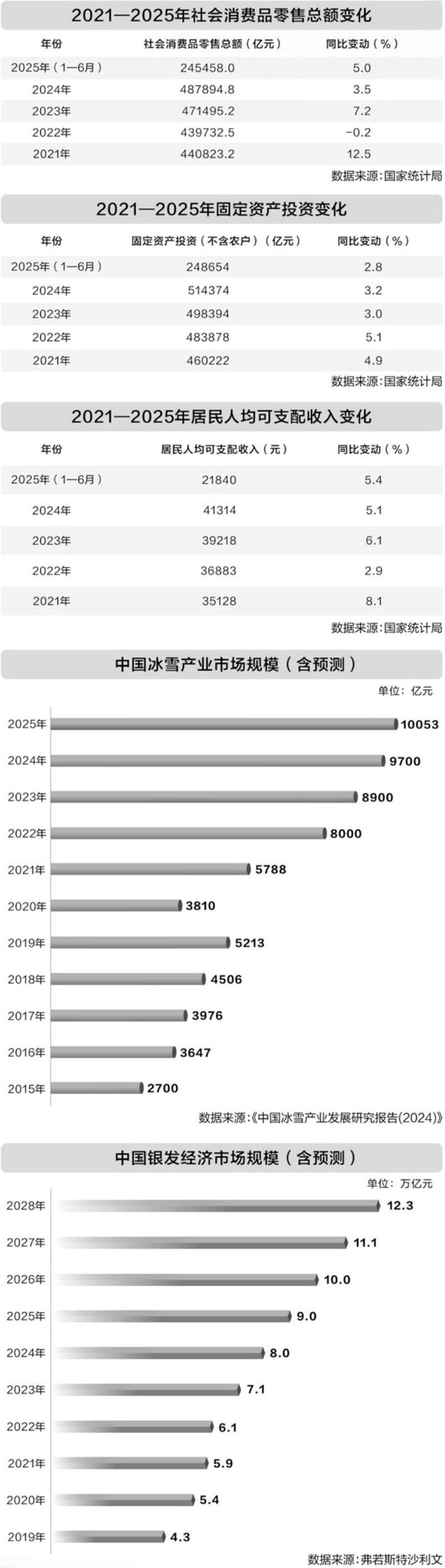
Group 1: Retail and Investment Trends - The total retail sales of consumer goods in China showed a significant increase, reaching 440823.2 billion yuan in 2021, with a year-on-year growth of 12.5%, the highest in nearly a decade [10] - In 2024, the retail sales are projected to reach 487894.8 billion yuan, reflecting a growth of 3.5% compared to the previous year [10] - Fixed asset investment (excluding rural households) has been steadily increasing, with a forecast of 514374 billion yuan in 2024, marking a 3.2% increase from the previous year [10] Group 2: Income Growth - The per capita disposable income of residents is expected to reach 41314 yuan in 2024, an increase of 9125 yuan or 28.35% from 2020 [11] - In the first half of 2025, the per capita disposable income is projected to be 21840 yuan, showing a nominal growth of 5.3% year-on-year [11] Group 3: Policy and Economic Strategy - The "14th Five-Year Plan" emphasizes the importance of expanding domestic demand and creating more consumption scenarios as a key task for China's economic work [8] - The National Development and Reform Commission (NDRC) is committed to implementing strategies to strengthen domestic circulation and stimulate internal demand [9] Group 4: Emerging Consumption Trends - The ice and snow industry is rapidly developing, with its market size expected to reach 10053 billion yuan in 2025, marking a significant growth from 8900 billion yuan in 2023 [14] - The silver economy is also emerging, with projections indicating that its market size could reach 12.3 trillion yuan by 2028, becoming a vital growth engine for the Chinese economy [14]
消费时评丨稳增长新篇章已然开启
Xiao Fei Ri Bao Wang· 2025-07-21 02:59
Group 1 - The contribution rate of consumption to economic growth is expected to exceed 50% in the first half of 2025, with a year-on-year increase of 5.0% in the total retail sales of social consumer goods, indicating a strong momentum for economic growth [1] - The policy of replacing old consumer goods has shown significant results, leading to substantial growth in retail sales of home appliances and communication equipment, thus creating new development opportunities for related industries [1] - The retail sales growth rate peaked in May due to the combination of e-commerce promotions and policy benefits, showcasing the robust vitality of the consumption market [1] Group 2 - The recovery in consumption not only supports economic growth but also plays a crucial role in improving livelihoods and promoting employment, creating numerous job opportunities [2] - The trend of consumption upgrading encourages enterprises to increase innovation investments, enhancing product quality and service levels, thereby providing consumers with more choices and better experiences [2] - Continuous optimization of consumption policies by the government is essential to consolidate and expand the results of the consumption recovery, ensuring a safe and reliable consumption environment [2]
【零售】大促前置影响6月表现,黄金零售短期承压——2025年6月社消零售数据点评(姜浩/梁丹辉)
光大证券研究· 2025-07-17 14:31
Core Viewpoint - The article discusses the performance of China's retail sector in June 2025, highlighting a slowdown in growth rates across various categories of consumer goods, influenced by high base effects from the previous year and changes in promotional cycles [2][8]. Retail Performance Summary - In June 2025, the total retail sales of consumer goods reached 4.23 trillion yuan, with a year-on-year growth of 4.8%, which is a decrease of 1.6 percentage points from May [2]. - For the first half of 2025, the total retail sales amounted to 24.55 trillion yuan, reflecting a year-on-year growth of 5.0%, an increase of 1.3 percentage points compared to the same period last year [2]. Category-Specific Insights - Supermarket sector saw a year-on-year increase of 8.7% in grain and oil products, but this was a decline of 5.9 percentage points from May [3]. - Beverage sales dropped by 4.4% year-on-year, with a decrease of 4.5 percentage points from the previous month [3]. - Daily necessities experienced a year-on-year growth of 7.8%, slightly down by 0.2 percentage points from May [3]. Apparel and Cosmetics - Textile and apparel retail sales grew by 1.9% year-on-year, down 2.1 percentage points from May [4]. - Cosmetic sales fell by 2.3% year-on-year, a significant drop of 6.7 percentage points compared to the previous month [4]. Jewelry and Electronics - The gold and jewelry sector reported a year-on-year growth of 6.1%, but this was a decline of 15.7 percentage points from May [5]. - Home appliances saw a substantial year-on-year increase of 32.4%, although this represented a decrease of 20.6 percentage points from the previous month [6]. Other Categories - Tobacco and alcohol retail sales decreased by 0.7% year-on-year, down 11.9 percentage points from May [7]. - Communication equipment sales grew by 13.9% year-on-year, but this was a decline of 19.1 percentage points from the previous month [7]. - Cultural and office supplies saw a year-on-year increase of 24.4%, down 6.1 percentage points from May [7]. Market Dynamics - The slowdown in retail sales growth in June is attributed to a high base effect from the previous year and the elongation of promotional cycles, leading to an earlier release of consumer demand [8]. - Essential goods experienced a decline in growth rates, with beverages and tobacco categories showing negative year-on-year growth [8]. - Optional goods, particularly in the gold and jewelry sector, faced demand suppression due to fluctuating gold prices, resulting in a decrease in growth rates [8].

国务院再部署做强国内大循环,充分释放内需潜力
Di Yi Cai Jing· 2025-07-17 04:02
Group 1 - The State Council emphasizes strengthening the domestic circulation as a strategic move to promote stable and sustainable economic growth [1] - The meeting proposed specific measures such as removing unreasonable restrictions on consumer spending, expanding investment in emerging service industries, and optimizing the old-for-new policy for consumer goods [1][3] - The contribution of domestic demand to GDP growth in the first half of the year was 68.8%, with final consumption expenditure contributing 52% [2] Group 2 - The old-for-new policy for consumer goods is identified as a key measure to expand domestic demand, with sales related to this policy exceeding 1.4 trillion yuan [3][4] - The government plans to issue the third batch of funds for the old-for-new policy in July, focusing on timely and balanced implementation [3] - Service consumption is highlighted as an important area for tapping into consumption potential, with service retail sales growing by 5.3% year-on-year in the first half of the year [5] Group 3 - The State Council calls for targeted actions to enhance policy precision and operability, aiming to address bottlenecks in domestic circulation [6] - There is potential for expanding the scope of the old-for-new policy to include more categories and support high-quality, green, and intelligent products [4][6] - The government has ample policy space to stimulate domestic demand, given its relatively low debt levels and inflation rates compared to other major economies [6]
经济数据点评(25Q2、6月):上半年经济缘何走强?能否持续?
Huafu Securities· 2025-07-15 13:05
Economic Performance - In Q2, the actual GDP grew by 5.2% year-on-year, supported by durable consumer goods subsidies contributing 2.7 percentage points and net exports contributing 1.2 percentage points[3] - The nominal GDP growth rate fell to 3.9%, down 0.7 percentage points from Q1, indicating insufficient domestic consumption and investment momentum[3] Consumer Trends - Retail sales in June showed a year-on-year increase of 4.8% and 5.5% for above-limit retail, both down from May by 1.6 and 2.7 percentage points respectively[4] - The decline in essential goods and dining revenues was attributed to adverse weather conditions, while durable goods related to real estate maintained high growth, with June showing a 10.2% increase[4] Investment Insights - Fixed asset investment in June fell by 0.1% year-on-year, marking the first monthly negative growth since 2022, with real estate development investment down by 12.9%[5] - Manufacturing and broad infrastructure investments decreased by 3.4% and 5.0% respectively, reflecting high base effects and strict control over local government debt[5] Real Estate Market - Residential sales area saw a significant year-on-year decline of 7.3%, with new and second-hand housing prices continuing to drop, indicating ongoing adjustments in the real estate market[5] - The price-to-income ratio in the real estate market remains high, with new and second-hand housing prices falling by 0.3% and 0.6% respectively in June[5] Industrial Output - Industrial value added rose by 1.0 percentage points to 6.8% in June, with manufacturing and mining sectors showing increases of 1.2 and 0.4 percentage points respectively[28] - Key manufacturing sectors such as textiles and chemicals showed significant recovery, while automotive manufacturing experienced a slight decline but remained in a high growth range[28] Future Outlook - The sustainability of high economic growth in the second half of the year is uncertain, with potential downward pressures on exports and consumption due to external factors and ongoing real estate market challenges[6] - Monetary and fiscal policies may need to be effectively timed to stimulate the economy, especially if export performance declines rapidly post-August[6] Risks - Risks include the possibility of fiscal expansion falling short of expectations and a greater-than-expected decline in exports[7]
政策效应加速显现 经济“半年报”显示中国消费热力攀升
Zhong Guo Xin Wen Wang· 2025-07-15 11:33
Group 1 - The core viewpoint of the articles highlights the significant recovery and growth of China's consumer market in the first half of the year, driven by effective policy measures and increased domestic demand [1][2][3] - China's total retail sales of consumer goods reached 24.5458 trillion yuan, marking a year-on-year growth of 5.0%, with a 0.4 percentage point acceleration compared to the first quarter [1] - Domestic demand contributed 68.8% to GDP growth, with final consumption expenditure accounting for 52% of this contribution, indicating that consumption is the main driver of economic growth [1] Group 2 - The "old for new" consumption policy has not only stimulated current consumption but also fostered new concepts such as green and smart consumption, promoting a positive interaction between industrial and consumption upgrades [2] - The Chinese government has been expanding its visa-free "circle" to boost international inbound tourism and consumption, while cities like Beijing and Shanghai are actively developing international consumption centers [2] - New consumer demands are emerging rapidly, with major cities witnessing increased market activity and innovative cultural and sports consumption scenarios being developed in lower-tier cities [2] Group 3 - The consumer market in China is expected to remain active in the second half of the year, supported by ongoing policies aimed at expanding domestic demand and stimulating consumption [3] - There is significant room for existing policies to continue supporting consumption and improving livelihoods, with 138 billion yuan in central funds set to be distributed in the latter half of the year to support the "old for new" consumption initiative [3] - The cumulative effect of the "old for new" policy and other consumption-promoting measures is anticipated to enhance market performance, leading to a potential upward trend in consumer activity [3]
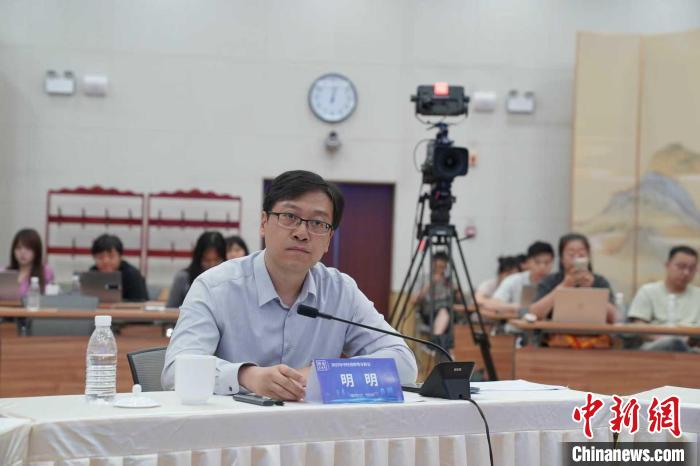
明明:财政、金融政策发力助上半年中国经济温和回升
Zhong Guo Xin Wen Wang· 2025-07-15 09:41
Core Viewpoint - The Chinese economy showed a moderate recovery in the first half of 2025, achieving a growth rate of 5.3%, supported by proactive fiscal and monetary policies [1][3]. Fiscal Policy - The fiscal policy has become more aggressive, with the issuance of special government bonds increasing from 1 trillion yuan to 1.3 trillion yuan, and the support for the trade-in program doubling from 150 billion yuan to 300 billion yuan [3]. - New special bonds amounting to 4.4 trillion yuan are expected to focus primarily on real estate acquisition [3]. - The government has maintained a high utilization rate of public fiscal deficits in the first quarter, indicating a continued expansion of fiscal spending [3]. Monetary Policy - Short-term interest rates have been lowered, with market interest rates declining more than benchmark rates since the second half of the first quarter [3]. - A series of financial support policies, including reserve requirement ratio cuts and interest rate reductions, have been implemented since May 7, which are expected to boost credit expansion and demand [3]. Consumption Sector - The consumption sector has seen a rebound in retail sales growth, driven by the trade-in policy, particularly in automobiles, home appliances, and digital products [4]. Manufacturing Sector - The industrial added value for large-scale enterprises grew by 6.4% year-on-year, with equipment manufacturing and high-tech manufacturing increasing by 10.2% and 9.5%, respectively [5]. - Manufacturing investment is projected to grow by approximately 8.4% in 2025, supported by policies aimed at enhancing new productive forces and equipment upgrades [5]. Future Outlook - The government is expected to implement expansionary policies in the second half of the year to support growth, particularly in weak areas such as real estate, services, and consumption [5]. - There is strong confidence in achieving a GDP growth rate of over 5% for the year, given the positive results from the first half [6].