金融

Search documents
南财早新闻|互联网平台定价迎强监管;摩尔线程发布“花港”架构
2 1 Shi Ji Jing Ji Bao Dao· 2025-12-20 23:13
Company Developments - On December 20, Moore Threads held the first "MUSA Developer Conference" in Beijing, officially launching the new GPU architecture "Huagang" along with two chips based on this architecture, "Huashan" and "Lushan" [5] - According to Zhituo Finance, ByteDance reported a net profit of approximately $40 billion for the first three quarters, with the annual profit expected to reach about $50 billion. However, insiders indicated that the figures reported by foreign media for both the first three quarters and the full year are inaccurate and significantly deviate from reality [5] - On December 20, Beijing Tongrentang issued an apology regarding recent public concerns over "Antarctic krill oil," expressing sincere regret for the damage caused to consumer rights [6] - On December 20, Mixue Ice City officially opened its first store in the United States, located at 6922 Hollywood Boulevard, Los Angeles [6] - Sequoia China announced the acquisition of a controlling stake in the global fashion leader Golden Goose Group, with Temasek and its wholly-owned asset management company, Dymon Capital, participating as minority shareholders. The original shareholder, Permira, will retain a minority stake [6] Industry Insights - The A-share IPO market is expected to see 114 companies complete listings in 2025, raising a total of 129.6 billion yuan, representing a 94% year-on-year increase. Notably, 104 new stocks did not experience any price drops, with an average first-day closing increase of 257%, marking the best performance in three years [3] - The ETF market is experiencing intense competition, with the A500 ETF dominating the trading charts. The total market size of the A500 ETF has reached 245.935 billion yuan, with a net inflow of 32.7 billion yuan in the past week, accounting for nearly 70% of the total net inflow into stock ETFs. The leading product, Huatai-PB A500 ETF, has reached a size of 41.2 billion yuan, becoming the first ETF tracking this index to exceed 40 billion yuan, achieving a 10 billion yuan increase in just one week [3] - In 2025, international investors are reassessing the allocation value of Chinese assets as China's industrial global competitiveness improves, with the long-term value reassessment of Chinese assets continuing [4]
基金研究周报:白银再创新高,债基企稳(12.15-12.19)
Wind万得· 2025-12-20 22:19
Market Overview - The A-share market exhibited a structurally differentiated pattern last week, with the Shanghai Composite Index slightly up by 0.03%. However, growth sectors faced significant pullbacks, with the ChiNext Index, STAR Market 50, and ChiNext 50 down by 2.26%, 2.99%, and 2.66% respectively, indicating pressure on high-growth tracks [2][10] - The market style continued to shift towards value, as evidenced by the CSI Dividend Index rising by 1.04%, while broad indices like CSI 300 and CSI 1000 also experienced slight declines [2] - The Wande Micro-Pan Index surged by 2.99%, reflecting a temporary preference for small-cap stocks [2] Industry Performance - The A-share market's primary sectors showed a split performance, with Consumer and Financial sectors leading gains, while Technology and Industrial sectors faced declines. Daily Consumer stocks rose by 2.26% and Financials by 2.06%, benefiting from policy expectations and high dividend attractiveness. Conversely, Information Technology fell by 2.08% and Industrial by 1.22%, impacted by valuation adjustments and overseas tech stock correlations [2][10] Fund Issuance - A total of 34 funds were issued last week, including 14 equity funds, 11 mixed funds, 6 bond funds, and 3 FOFs, with a total issuance volume of 18.321 billion units [15] Fund Performance - The Wande All-Fund Index decreased by 0.25% last week. The Wande Ordinary Equity Fund Index and the Wande Equity Mixed Fund Index both fell by 0.61%, while the Wande Bond Fund Index saw a slight increase of 0.09% [2]


紧扣关键领域推动湾区标准建设
Jing Ji Ri Bao· 2025-12-20 22:09
Core Viewpoint - The article emphasizes the importance of establishing a robust standard system in the Guangdong-Hong Kong-Macao Greater Bay Area to support high-quality development and enhance global competitiveness through regional collaboration and international standardization efforts [1][4]. Group 1: Standard System Development - The Greater Bay Area has jointly announced 262 "Bay Area Standards" covering 36 fields, including transportation, water conservancy, traditional Chinese medicine, green ecology, and elderly care, creating a positive ecosystem driven by government guidance, market leadership, and collaboration among the three regions [1]. - A focus on emerging industries and future sectors is essential to build a forward-looking standard system that guides industrial upgrades and provides regulatory support, particularly in artificial intelligence and digital economy sectors [2][3]. Group 2: Internationalization and Regional Collaboration - The article discusses the need for a dual empowerment mechanism of "standard internationalization + regional collaboration" to enhance global rule-making power, advocating for the integration of Bay Area standards with international standards [4][5]. - Strengthening regional collaboration and establishing a multi-level international cooperation network is crucial, including standard mutual recognition mechanisms with countries along the Belt and Road Initiative [5]. Group 3: Implementation and Governance - A "technology empowerment + governance innovation" framework is proposed to ensure effective implementation of standards, utilizing advanced technologies like big data and artificial intelligence for real-time monitoring and evaluation [6][7]. - The establishment of incentive mechanisms for enterprises adopting Bay Area standards is recommended, including tax benefits and funding support, to encourage compliance and participation in standard formulation [7].
高盛2026年全球股市展望:更广泛的牛市,更宽泛的AI受益者
华尔街见闻· 2025-12-20 15:09
Core Viewpoint - Goldman Sachs predicts that the global stock market will continue its bull market into 2026, but the index returns will be lower than in 2025, with a broader diversification in the market as AI benefits spread from core tech giants to a wider range of industries [1][2] Economic Environment - The global economy is expected to maintain a comprehensive expansion in 2026, supported by further moderate easing of monetary policy by the Federal Reserve, providing solid support for the stock market [2] Return Expectations - According to regional market capitalization weighting, the expected price return for the global stock market in 2026 is 13%, with a total return including dividends reaching 15%, primarily driven by earnings growth rather than valuation expansion [3][8] Market Cycle Stages - The stock market cycle is categorized into four stages: "Despair" (bear market), "Hope" (valuation-driven rebound), "Growth" (longest phase driven by earnings), and "Optimism" (increased investor confidence leading to valuation rises) [4] Market Trends - The report notes a significant broadening trend in the global stock market in 2025, which is expected to continue into 2026, breaking the previous highly concentrated market structure [9][10] Performance of Major Markets - In 2025, for the first time in nearly 15 years, U.S. stocks underperformed, with total returns in Europe, China, and Asia nearly double that of the U.S. market [10][11] Regional Performance Predictions - In 2026, U.S. stocks are expected to slightly underperform compared to global markets, with the MSCI Asia-Pacific (excluding Japan) and MSCI Emerging Markets indices projected to achieve total returns of 18%, surpassing the expected 15% for the S&P 500 [12] Investment Styles - The U.S. market remains dominated by growth stocks, while non-U.S. markets are seeing better performance from value stocks, indicating a shift from the past decade's growth stock dominance [13] Sector Performance - The trend of broadening returns is evident, with technology and finance leading in 2025, while real estate and healthcare lagged, reflecting the emergence of quality stocks within both growth and value sectors [14] Concentration of Earnings - The contribution of the top seven tech giants to the S&P 500's earnings is expected to decrease from 50% in 2025 to 46% in 2026, with the earnings growth of the remaining 493 companies increasing from 7% to 9%, indicating a further decline in industry concentration [15] AI Benefits Expansion - In 2026, the benefits of AI are expected to spread from core tech giants to a broader range of industries and companies, particularly those that can leverage AI and related technologies to enhance profitability and productivity [16][20] Market Dynamics - The current tech stock enthusiasm is not seen as a bubble, as today's tech giants possess stronger balance sheets and cash flows compared to the 2000 internet bubble [17] Investor Behavior - The correlation of stocks among the five major AI hyperscalers has dropped from 80% to 20%, indicating that investors are becoming more selective about which companies to invest in within the tech sector [18] Cross-Industry Growth - The spillover effects of tech capital expenditures are expected to drive growth in non-tech sectors such as industrials, materials, and finance, creating a cross-industry growth wave termed "AI + Industry" [21]

解锁2025中国经济关键密码
Sou Hu Cai Jing· 2025-12-20 14:10
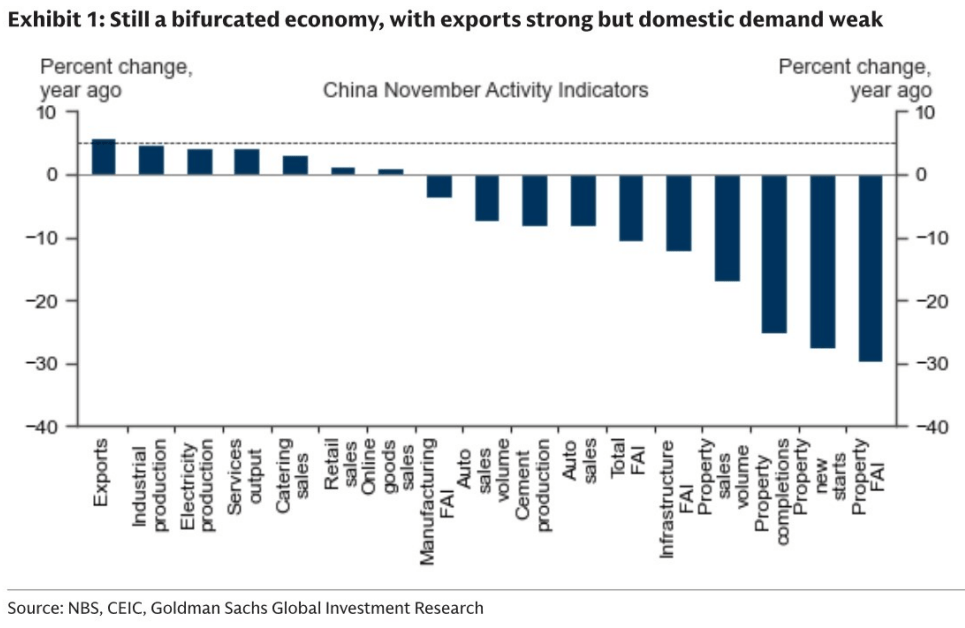
Group 1 - The core viewpoint is that China's economy in 2025 is characterized by a divergence, with strong export performance and weak domestic demand, contributing approximately half of the actual GDP growth despite increased tariffs from the US [5] - China's exports to the US have decreased by 20%-30%, but exports to other emerging markets have seen significant growth, indicating a diversification of China's export markets [10][7] - The actual effective exchange rate of the Renminbi has decreased by 20%, enhancing China's export competitiveness [13] Group 2 - China's goods trade surplus has exceeded $1 trillion for the first time in 2025, driven by structural growth in high-tech manufacturing exports [15] - The construction cycle has entered its fifth year, with new construction and sales indicators down by 50%-80% compared to the peaks of 2020-2021, indicating a lack of short-term recovery [21] - Employment pressure is high, with the unemployment rate reaching a new high of 18.9% in August 2025, reflecting the strain on the labor market amid weak domestic demand [26] Group 3 - The effectiveness of consumption stimulus policies is diminishing, with households showing a preference for saving rather than spending, leading to nearly 60 trillion RMB in "excess savings" [30][35] - The re-inflation process is slow due to a lack of strong demand-side stimulus, with supply-demand imbalances persisting despite government efforts [39] - Macro policies in China were notably loose in the first half of 2025, including accelerated government bond issuance and interest rate cuts, but the pace of easing slowed in the second half due to strong export performance [44] Group 4 - China ranks first globally in patent applications, accounting for 26% of the total, reflecting strong momentum in technology research and innovation [49] - The stock market performance shows a divergence between the technology sector, which is performing well, particularly in AI-related indices, and the real estate sector, which is underperforming [52] - The strategic focus of China's 15th Five-Year Plan (2026-2030) will be on technology, security, and livelihood, aiming to expand domestic demand and promote high-quality growth while facing challenges in transitioning growth drivers and enhancing consumer confidence [54]
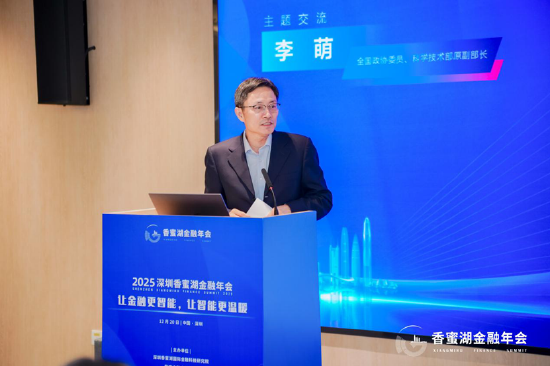
全国政协委员、科学技术部原副部长李萌:算力的短板就是中国AI产业的短板 呼吁“三大效率革命”破解困局
Xin Lang Cai Jing· 2025-12-20 13:29
Core Insights - The 2025 Shenzhen Xiangmi Lake Financial Annual Conference will be held on December 20-21, focusing on promoting a virtuous cycle of technology, industry, and finance in the Guangdong-Hong Kong-Macao Greater Bay Area [1][4] - Li Meng, a member of the National Committee of the Chinese People's Political Consultative Conference and former Vice Minister of Science and Technology, emphasized that computing power is a critical bottleneck for China's AI development and modernization [1][4] Group 1: Three Efficiency Revolutions - The "Three Efficiency Revolutions" driven by engineering and technological breakthroughs include: - Model Efficiency Revolution, which aims to reduce the training and usage costs of large models through technological innovation [3][6] - Computing Power Efficiency Revolution, which enhances resource utilization through new structural technologies like pooling and slicing [3][6] - Data Efficiency Revolution, which seeks to convert China's data scale advantage into an advantage for intelligent agents [3][6] - These three revolutions are fundamentally changing the logic of intelligence in industries such as finance [3][6] Group 2: Current State of Computing Power in China - Despite ranking second globally in total computing power, China faces significant structural issues, with intelligent computing (smart computing) only accounting for 30% of the total computing power [3][6] - Li Meng elevated the issue of computing power to a national strategic level, identifying it as a key development bottleneck [3][6] - The shortcomings in computing power are seen as limitations for China's AI capabilities and modernization efforts, with the computing power efficiency revolution viewed as a technical solution to bridge the substantial gap between supply and demand [3][6]
构建引才矩阵 第十六届“河北省高层次人才引进交流大会”举办
Xin Lang Cai Jing· 2025-12-20 12:58
Core Viewpoint - The 16th "Hebei High-level Talent Introduction and Exchange Conference" was held in Shijiazhuang, Hebei, focusing on attracting high-level talents and promoting the "Jicai" brand [1][3]. Group 1: Event Overview - The conference adopted a hybrid format combining online and offline activities, aiming to attract various high-level talents [3]. - The theme of the conference was "Hope for the New Era, Talents Gather at Golden Platform" [3]. Group 2: Participation and Engagement - A total of 513 enterprises and institutions from the Beijing-Tianjin-Hebei region participated in the talent recruitment event, including 115 educational and research institutions, 83 state-owned enterprises, and 315 large companies and specialized firms [3]. - The event attracted over 13,000 talents from 263 key universities to participate in job-seeking activities [3]. Group 3: Strategic Focus - The conference emphasized the "Beijing-Tianjin R&D, Hebei Transformation" strategy, organizing 25 quality technology projects for presentation [4]. - A structured approach was taken for project presentations, including a 7-minute project pitch, 3 minutes for technical guidance, and 1 hour for in-depth discussions [4]. - Financial institutions and venture capital firms were invited to observe and engage in discussions, enhancing collaboration opportunities in the electronic information and biomedicine sectors [4].

30美元一碗饭,美国年轻人为何放弃存钱?
Sou Hu Cai Jing· 2025-12-20 12:44
Group 1 - The core argument is that the traditional notion of "savings ethics" is being undermined in the U.S. due to structural economic changes, leading individuals to prioritize immediate gratification over long-term savings [2][3][13] - The pathway for savings to convert into significant assets, particularly housing, has narrowed, with the average home price now approximately 5.3 times the annual income, compared to 2.5 times half a century ago [6][7] - The stability of currency as a measure of value and a store of wealth has been shaken, with real wages stagnating since the 1970s while living costs continue to rise, eroding the purchasing power of savings [9][10] Group 2 - Future income expectations have become increasingly uncertain due to technological advancements, globalization, and the rise of the gig economy, making traditional career paths less reliable [11][12] - Young Americans are experiencing a shift in behavior, opting for immediate consumption over saving, as they perceive that their savings are being eroded by inflation and that long-term financial planning lacks a solid foundation [14][15] - A sense of financial nihilism is spreading among younger Americans, particularly those from lower socioeconomic backgrounds, who feel that traditional methods of earning and saving are no longer effective [17][21] Group 3 - The current economic landscape is characterized by a growing divide between asset owners and ordinary workers, with the former benefiting from rising asset prices while the latter face stagnant wages and increasing living costs [38][41] - The economy is increasingly driven by financial transactions and asset trading rather than manufacturing, with the manufacturing sector now comprising only about 10% of the economy [52][53] - The separation between asset and real economy pricing mechanisms has created a significant disparity in wealth creation, where asset holders benefit from market fluctuations while laborers rely solely on wages [60][63] Group 4 - Young people's consumption patterns are shifting towards immediate experiences, such as ordering takeout, as they prioritize time and social expression over traditional long-term investments like homeownership [77][81] - The perception of the future among young people is marked by uncertainty, leading them to focus on present enjoyment rather than long-term savings, as they view the future as fraught with risks [84][88] - Potential future scenarios for the U.S. economy include stagnation similar to Japan or severe social stratification akin to some Latin American countries, with a need for significant reforms to restore social mobility and address wealth inequality [89][91][96]

封关不是关门,中国甩出王炸,全球格局要变天
Sou Hu Cai Jing· 2025-12-20 11:10
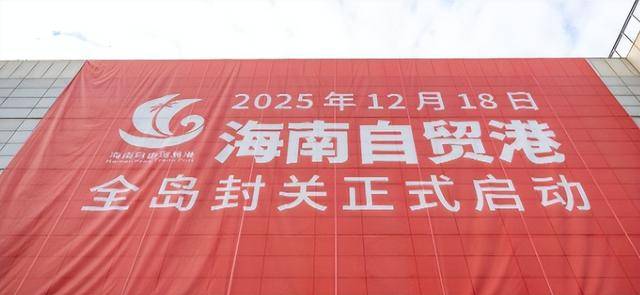
Core Viewpoint - Hainan's announcement of full island closure operation on December 18, 2025, represents a strategic move by China to counter global containment efforts, emphasizing openness rather than isolation [1][8][22] Group 1: Policy and Economic Implications - The concept of "closure" in Hainan does not imply isolation but rather a model of "open first, control second," allowing international access while regulating domestic channels [3][6] - Hainan will operate as a special zone with zero tariffs and simplified approvals for international goods, effectively becoming a "domestic outside" area in terms of trade rules [3][6] - The unique policy of "30% value-added processing for domestic sales exempt from tariffs" provides a significant competitive advantage for businesses, allowing them to import raw materials duty-free and sell processed goods to the mainland without tariffs [11][13] Group 2: Strategic Positioning - Hainan is not intended to replace Hong Kong or Singapore; instead, it aims to leverage its vast land and natural resources to focus on sectors like agriculture, deep-sea exploration, aerospace, and high-end manufacturing [15][17] - The region is positioned as a "testbed" for advanced medical devices and data flow, facilitating early access for domestic patients and exploring cross-border digital economy cooperation [19][21] Group 3: Global Context and Future Outlook - Hainan's closure is seen as a significant step comparable to China's WTO accession in 2001, marking a shift from product-level to institutional-level openness, allowing China to participate in international rule-making [22] - The initiative aims to attract global capital, talent, and technology to Hainan, countering efforts to isolate China and reinforcing the country's commitment to globalization [21][22]
宗良:企业做大做强后,要抓住全球市场的机遇并购
Xin Lang Cai Jing· 2025-12-20 08:07
Core Insights - The 2026 Financial Annual Conference and 2025 Global Wealth Management Forum will be held in Beijing from December 18-20, 2025, focusing on China's strategic positioning in finance, industry cultivation, and technological self-reliance as outlined in the 14th Five-Year Plan [2][5] Group 1: Technological Development - China needs to focus on breakthroughs in original innovation (0 to 1) and the transformation of results (1 to N), with a strong advantage in the latter but requiring enhancement in original innovation through collaboration between universities and large enterprises [2][5][6] Group 2: Industrial Growth - There is a need to cultivate small and medium-sized enterprises (SMEs) into large enterprises, creating a virtuous ecosystem where large enterprises continue to strengthen [6] Group 3: Financial Support System - A comprehensive support system throughout the business cycle is essential, starting with early-stage funding from national R&D and venture capital, transitioning to patent financing and technology financial products in the mid-stage, and utilizing diverse channels like IPOs and mergers for capital exit and enterprise expansion in the mature stage [6] Group 4: Global Market Opportunities - Once enterprises grow stronger, they should seize global market opportunities for mergers and acquisitions, with the potential to develop Chinese companies that can compete with top global tech firms, thereby enhancing Beijing's status as an international innovation center and boosting national competitiveness [3][6]