
钢铁

Search documents
【钢铁】以“煤”为鉴:探讨钢铝分红率增加的可能性——行业高股息系列报告之四(王招华/戴默)
光大证券研究· 2026-02-11 23:07
Core Viewpoint - The article discusses the increasing cash dividend ratio of China Shenhua and identifies five key reasons for this trend, highlighting the overall potential for dividend increases in the steel and electrolytic aluminum sectors [4]. Group 1: China Shenhua's Dividend Increase - From 2008 to 2016, the average cash dividend ratio was 39%, which surged to 151% in 2017, followed by an average of 74% from 2018 to 2024 [4]. - The five reasons for the increase in cash dividend ratio include: 1) Low debt-to-asset ratio compared to the industry 2) Reduced capital expenditure in recent years 3) Profit recovery with high retained earnings and low asset impairment relative to profit 4) High ownership ratio by major shareholders with potential for mergers and acquisitions 5) Supportive dividend policies [4]. Group 2: High Dividend Yield in Steel and Aluminum Sectors - As of February 6, 2026, only eight companies in the steel and electrolytic aluminum sectors have a dividend yield above 3%, with notable examples including Youfa Group (6.90%) and Baosteel (4.18%) [5]. - The article predicts that if the dividend ratio remains stable in 2025, the projected net profit for that year aligns with consensus estimates [5]. Group 3: Factors Supporting Dividend Potential in Steel and Aluminum - Three key factors are identified that may enhance the dividend potential for steel and electrolytic aluminum companies: 1) Inclusion of market value management in performance assessments for state-owned enterprises, encouraging higher cash dividends [6]. 2) Significant entry of insurance capital into the market, favoring high-dividend assets [6]. 3) Anticipated decline in capital expenditures in the steel and aluminum industries, which may lead to increased cash dividend ratios [6]. Group 4: Analysis of Dividend Capability - Companies with strong dividend potential are characterized by high retained earnings relative to market value, sufficient cash reserves, and a debt-to-asset ratio below 60% [7]. - As of February 6, 2026, only 14 companies in the steel and electrolytic aluminum sectors meet the criteria for strong dividend potential, with top scoring companies identified [7].


Luda Technology Group股价上涨4.96%,板块普涨与技术反弹成主因
Jing Ji Guan Cha Wang· 2026-02-11 22:58
Core Viewpoint - The stock price of Luda Technology Group Limited increased by 4.96% on February 11, 2026, driven by a general rise in the U.S. steel sector and technical rebound demand [1]. Sector Performance - On the same day, the U.S. steel sector experienced an overall increase of 1.81%, which likely contributed to the positive sentiment towards individual stocks [2]. Stock Price Situation - Historically, the stock has seen a cumulative decline of 13.40% over the 20 trading days leading up to February 11. The recent increase may be attributed to a technical rebound following this oversold condition. The stock exhibited a volatility of 2.11% on that day, with a trading volume of 1,624 shares and a transaction value of only $11,300, indicating low liquidity where small amounts of capital can influence stock price movements [3]. Institutional Holdings Analysis - As of the fourth quarter of 2025, institutional shareholder UBS Asset Management AG increased its holdings by 2,528 shares, raising its ownership stake to 0.01%. Although the increase is modest, it may signal some level of market interest [4].
焦虑工业落后中美,出台系列保护法案,欧盟加大对华限制遭六国联名警告
Xin Lang Cai Jing· 2026-02-11 22:53
Group 1 - The European Union (EU) is increasingly anxious about its industrial economy lagging behind the US and China, prompting the implementation of protectionist policies to revive local industries [1][2] - French President Macron has called for increased investment in key areas such as ecological transition, artificial intelligence, and quantum technology to prevent Europe from falling further behind [1] - The upcoming informal meeting of EU leaders will focus primarily on restoring European economic competitiveness, which has been a core agenda since the current EU Commission took office in mid-2024 [1][2] Group 2 - The EU's recent economic policies exhibit a clear protectionist trend, particularly against China, which has significantly impacted normal trade relations [2][3] - The proposed "Industrial Accelerator Act" will require foreign investments in the EU to form joint ventures with a maximum 49% foreign ownership and mandates the transfer of intellectual property [2] - Several EU member states have expressed opposition to protectionist measures, warning that prioritizing European goods and services could hinder access to leading global technologies and deter investment [3] Group 3 - Analysts suggest that the EU's protectionist approach reflects its anxiety about falling behind in emerging economic competition, and while the intent to revive industry is understandable, the methods may be misguided [3][4] - The EU's reliance on transatlantic alliances for security and deep integration into global supply chains complicates its position in the US-China rivalry, making it vulnerable to external pressures [4] - There remains significant potential for sustainable and mutually beneficial cooperation between the EU and China if the EU can provide a predictable business environment and transparent regulations [4]
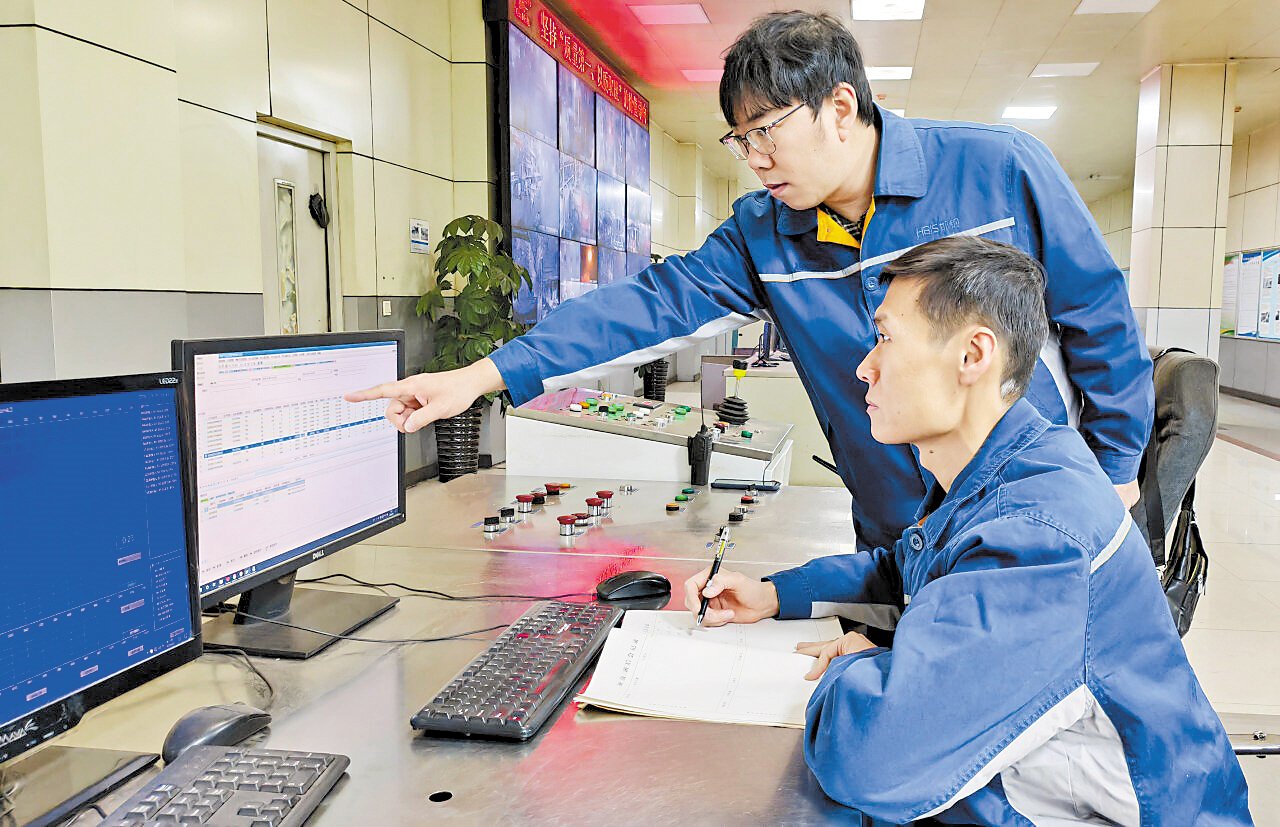
炼出更多高端钢精品钢争气钢
Xin Lang Cai Jing· 2026-02-11 22:53
(来源:河北日报) 转自:河北日报 河钢集团邯钢公司邯宝炼钢厂特档技术主管、转炉作业区副作业长唐笑宇 炼出更多高端钢精品钢争气钢 2月9日,唐笑宇(后)与同事一起查看生产计划。刘明婕摄 □本报记者 王璐丹 转炉平台上,火光耀眼、设备轰鸣。 "大家注意操作细节,特别是终点氧含量!"2月10日9时许,在河钢集团邯钢公司邯宝炼钢厂,唐笑宇站在操控台前,紧盯着电脑屏幕上的技术参数,下达指 令。 今年41岁的唐笑宇,是河钢集团邯钢公司邯宝炼钢厂特档技术主管、转炉作业区副作业长。2008年,他从北京科技大学冶金工程专业毕业,来到这里成为转 炉作业区的一名上料工。 刚开始,他也因书本和现实的巨大差异感到迷茫。一次,换转炉的氧枪时因操作不当,差点酿成事故;还有一次,在生产备料中高碳锰铁数量出现偏差,幸 亏师傅发现及时,否则会导致钢水成分超标…… "明明掌握了很多理论知识,但在现场又感觉什么都不会。"唐笑宇回忆。于是,他每天在炉台上向师傅请教炼钢技术,回到家把工作实践和书本知识放在一 起钻研琢磨。 因为爱学习、肯钻研,两年时间,唐笑宇就从上料工、合金工,成长为全厂最年轻的炼钢工和转炉炉长。 当炉长第一年,他就带领全班从工艺操作 ...
创业板指震荡调整 全市场超3200股飘绿
Mei Ri Shang Bao· 2026-02-11 22:19
Market Overview - The Shanghai Composite Index experienced a slight increase of 0.09%, closing at 4131.98 points, while the Shenzhen Component Index fell by 0.35% and the ChiNext Index dropped by 1.08% [1] - A total trading volume of approximately 2 trillion yuan was recorded, a decrease of over 120 billion yuan compared to the previous day [1] - Over 3200 stocks in the A-share market closed in the red, with sectors like short drama games and film stocks facing significant declines [1] Glass Fiber Industry - The glass fiber manufacturing sector saw a remarkable surge, with nearly all stocks hitting the daily limit up [2] - Major companies like International Composites and Changhai Co. experienced significant price increases, with International Composites reaching a 20% limit up shortly after market open [2] - Recent price hikes in electronic cloth by leading companies indicate a tightening supply, driven by increased demand from AI chip production [2][3] - The expected net profits for International Composites and Honghe Technology in 2025 are projected to be between 260 million to 350 million yuan and 193 million to 226 million yuan, respectively, reflecting a rise in glass fiber product prices [3] Nonferrous Metals and Steel - The nonferrous metals sector, particularly tungsten stocks, showed strong performance, with companies like Zhongtung High-tech and Xianglu Tungsten hitting the daily limit up [4] - Tungsten prices have seen significant increases, with black tungsten concentrate prices rising by 48.9% since the beginning of the year [4] - The steel sector also performed well, with companies like Baodi Mining and Dazhong Mining showing notable gains [5] - The National Market Supervision Administration is focusing on optimizing traditional industries, which may positively impact the steel and nonferrous metals sectors [5] Media Sector - The media sector, particularly film stocks, experienced a downturn, with companies like Huanxi Media and Huace Film falling over 10% [6] - Huanxi Media issued a risk warning regarding its stock price, which had surged over 100% in the previous 10 trading days, indicating potential market overheating [6] - The company has invested in several films for the upcoming Spring Festival, but the market performance remains uncertain due to low investment ratios and the nascent stage of its AI short drama business [6]



中国银河证券杨超:2026年A股行情将围绕两大主线展开
Zhong Guo Zheng Quan Bao· 2026-02-11 20:23
Group 1 - The A-share market is currently experiencing a clear risk-averse sentiment and structural differentiation, with funds favoring high-dividend, low-valuation, and defensive consumption sectors, while technology and cyclical sectors continue to adjust [1][2] - The market is showing significant structural differentiation, with defensive sectors acting as a "safe haven" for funds, leading to a notable decline in trading activity and a shift of capital from high-valuation technology and cyclical sectors to more stable assets [1][2] - The upcoming Chinese New Year is expected to influence market behavior, with historical trends indicating a preference for high-dividend and defensive sectors before the holiday, while post-holiday, the market may favor small-cap and growth styles [2][3] Group 2 - The current industry structure is transitioning from a traditional factor-driven growth model to a new productivity development model centered on technological innovation [2] - Investors are weighing the strategies of "holding stocks during the holiday" versus "holding cash for safety," with the former focusing on potential policy catalysts and liquidity, while the latter aims to avoid short-term volatility [3] - Post-holiday, the market is expected to shift focus back to growth sectors with industry catalysts and earnings certainty, driven by policy catalysts in February and earnings disclosures in March [3][4] Group 3 - Earnings forecasts indicate a shift in the logic of A-share market growth for 2026, with profitability expected to take precedence over valuation, highlighting structural opportunities in technology manufacturing and cyclical industries benefiting from price increases [4] - Two main investment themes are suggested: one focusing on the improvement of supply-demand dynamics and industry profitability, and the other on new productivity areas such as semiconductors, artificial intelligence, and renewable energy [4] - The overall market tone for 2026 is expected to remain bullish, with a focus on technological innovation and profitability recovery, supported by domestic consumption and overseas expansion as auxiliary themes [4]

巴西批准对华彩涂板的反倾销税,并减免对聚酯纤维、二氧化钛等进口关税
Shang Wu Bu Wang Zhan· 2026-02-11 17:36
Core Viewpoint - Brazil's Ministry of Industry and Foreign Trade has approved anti-dumping duties on color-coated steel plates imported from China and India for five years, while maintaining temporary anti-dumping measures on polyester fabric imports from China [1] Group 1: Anti-Dumping Measures - Brazil will impose a five-year anti-dumping tax on color-coated steel plates imported from China and India [1] - The temporary anti-dumping measures on polyester fabric imports from China will not be lifted [1] Group 2: Tariff Adjustments - Import tariffs on hydrochloric acid chloramine solution and integrated nasal spray devices have been reduced from 7.2% to 0% [1] - Import tariffs on various medications, including Amprenavir, have also been reduced to 0% [1] - Tariffs on polyester fiber yarn and titanium dioxide have been set to 0% due to supply shortages, with quotas of 4,000 tons and 5,000 tons respectively [1]
山西锚定转型航向能源革命与产业升级协同提速
Xin Lang Cai Jing· 2026-02-11 16:40
Core Viewpoint - Shanxi Province is focusing on energy revolution and industrial upgrading as part of its strategic plan to transition from a coal-dominated economy to a modern industrial system, aiming for a green and low-carbon energy transformation while ensuring energy security [1][4][8]. Energy Revolution - Shanxi will implement nine key paths for energy transformation, including intelligent and green coal mining, large-scale development of renewable energy, and the establishment of a new power system [3][4]. - In the past year, Shanxi's coal production reached 1.305 billion tons, a 2.1% increase year-on-year, while renewable and clean energy installed capacity reached 90.48 million kilowatts, accounting for 55.1% of the total, marking a historic shift in energy structure [2][3]. Industrial Upgrading - The province aims to optimize traditional industries and promote emerging sectors, focusing on high-end, intelligent, and green development [5][6]. - Shanxi will enhance traditional industries like steel and cement through low-carbon transformations and develop new materials and advanced manufacturing sectors, targeting the creation of billion-level industrial clusters [5][6]. Project Support and Technological Innovation - The province plans to launch a "Major Project Construction Year" with 629 key projects totaling over 2.4 trillion yuan in investment, including 309 energy transition projects with planned investments of 109.04 billion yuan [7]. - Shanxi will strengthen its technological innovation capabilities by establishing new laboratories and focusing on over 100 key research tasks in energy technology [7]. Mission and Strategic Focus - Shanxi is at a critical juncture for resource-based economic transformation, with a focus on energy technology innovation and industrial cluster development to support its transition [8]. - The province aims to balance development and security while contributing to national energy security and high-quality development in resource-based regions [8].
双碳-政策专家电话会
2026-02-11 15:40
Summary of Key Points from the Conference Call on Carbon Neutrality Policies Industry Overview - The conference focused on China's carbon neutrality policies, particularly the chemical and petrochemical industries, and their implications during the 14th Five-Year Plan (2021-2025) period [1][2]. Core Points and Arguments 1. **Carbon Peak and Neutrality Goals**: China aims to peak carbon emissions around 2028 and achieve a 7%-10% reduction in emissions by 2035 after reaching the peak. The long-term goal is carbon neutrality by 2060 [2][10]. 2. **Strict Control Measures**: The chemical and petrochemical industries will face stringent controls, including local carbon budget assessments, inclusion in carbon markets, and enhanced carbon management practices [1][2]. 3. **New Mechanisms for Energy Consumption Control**: A dual control mechanism for energy consumption will be implemented, focusing on total volume control rather than just intensity, with strict evaluations at the local government level [6][5]. 4. **Expansion of Carbon Market**: By 2027, eight high-energy-consuming industries will be included in the national carbon market, with a combination of free and paid quota distribution methods to enhance emission reductions [1][9]. 5. **Challenges from Climate Change**: The chemical industry faces challenges from climate change and extreme weather, necessitating a shift from coal to renewable resources and the adoption of technologies like Carbon Capture, Utilization, and Storage (CCUS) [1][10]. 6. **Carbon Market Development**: The national carbon market has been steadily advancing since its establishment in 2021, with plans to tighten quota issuance requirements starting in 2027 [1][11]. 7. **Support for Enterprises**: The government will provide multi-dimensional support for enterprises to reduce emissions, including financial subsidies, green loans, and trading profits from carbon credits [25][26][27]. Additional Important Content 1. **New Project Approval**: New capacity additions require approval from the National Development and Reform Commission (NDRC), ensuring that total emissions do not exceed provincial limits [3][14]. 2. **Carbon Footprint Accounting**: A carbon footprint accounting system will be established for products to comply with international standards, such as the Carbon Border Adjustment Mechanism (CBAM) [5][10]. 3. **Monitoring and Data Collection**: Real-time monitoring of carbon emissions data is being improved, with expectations for more accurate data collection by 2027 [23][29]. 4. **Market Mechanisms for Emission Reduction**: The government will implement market mechanisms to encourage emission reductions, including voluntary reduction projects and the ability for non-regulated enterprises to participate in the carbon market [8][9]. 5. **Long-term Industry Transition**: The chemical industry, heavily reliant on coal, is expected to gradually reduce its coal usage from over 56% to lower levels, with a focus on sustainable development through carbon cost integration [19][20]. This summary encapsulates the critical insights and implications of the conference call regarding China's carbon neutrality policies and their impact on the chemical and petrochemical industries.
“双碳”政策专家电话会
2026-02-11 15:40
Summary of Conference Call on Carbon Neutrality and Chemical Industry Industry Overview - The conference focused on the chemical industry in the context of China's dual carbon goals, specifically the 14th Five-Year Plan (14th FYP) and the transition towards carbon neutrality by 2060 [1][2]. Key Points and Arguments 1. **Carbon Peak and Neutrality Goals**: - China aims to reach carbon peak by 2030 and achieve carbon neutrality by 2060, with a specific target of reducing total carbon emissions by 7% to 10% after reaching the peak [2][4]. - The transition from intensity-based targets to total emission reduction is a significant shift in policy [4][6]. 2. **Policy Implementation**: - The 14th FYP emphasizes a comprehensive green transformation across all industries, moving from energy consumption control to carbon emission control [5][6]. - A carbon emission budget mechanism will be established at provincial and municipal levels, with specific targets allocated to each region [6][7]. 3. **Inclusion of Industries in Carbon Market**: - Currently, eight major industries, including power, cement, aluminum, and steel, are included in the carbon market, which accounts for 65% of national carbon emissions [7][8]. - By 2027, additional sectors such as petrochemicals, chemicals, paper, and construction materials will be integrated into the carbon market [7][8]. 4. **Carbon Management and Monitoring**: - Companies will be required to incorporate carbon management into their operational frameworks, with carbon emissions data becoming a prerequisite for project approvals [8][9]. - A product carbon footprint database will be established to track and certify carbon emissions associated with products [9][10]. 5. **Development of Zero-Carbon Facilities**: - The government plans to establish 100 national-level zero-carbon parks by 2030, with ongoing efforts to create zero-carbon factories in high-emission industries [9][10]. 6. **Market Mechanisms and Cost Implications**: - The introduction of paid carbon allowances is anticipated, with a gradual shift from free allocation to auction-based distribution [11][12]. - The carbon market will also facilitate voluntary emission reduction projects, allowing non-regulated companies to participate [12][13]. 7. **Impact on Chemical Industry**: - The chemical industry faces significant pressure due to its reliance on coal, which constitutes over 40% of its emissions [16][17]. - The projected carbon emissions from the chemical sector are expected to increase slightly, posing challenges for compliance with future carbon reduction targets [16][17]. 8. **Technological Innovations**: - The industry is encouraged to adopt renewable resources and improve production processes to reduce carbon emissions, including the use of Carbon Capture, Utilization, and Storage (CCUS) technologies [17][18]. Additional Important Content - The transition to a carbon-neutral economy will require a comprehensive understanding of the carbon footprint across various production processes, particularly in the chemical sector [17][18]. - The government is expected to monitor and adjust carbon emission allowances based on real-time data, although the current monitoring system is still under development [45][46]. - The dual carbon goals will necessitate a balance between maintaining industrial competitiveness and achieving environmental sustainability, particularly in coal-dependent sectors [38][39]. This summary encapsulates the critical discussions and insights from the conference call regarding the implications of China's carbon neutrality goals on the chemical industry and related sectors.