
生猪养殖

Search documents
天域生物科技股份有限公司关于2025年半年度业绩说明会召开情况的公告
Shang Hai Zheng Quan Bao· 2025-09-10 18:46
Core Viewpoint - The company held a half-year performance briefing on September 10, 2025, to discuss its operational performance and future growth drivers with investors [1][2]. Group 1: Meeting Details - The performance briefing was attended by key executives including the Chairman and acting CEO, independent directors, and the CFO, who engaged with investors on various concerns [2]. - The meeting was conducted via an online interactive platform, allowing for direct communication between the company and investors [1]. Group 2: Investor Questions and Company Responses - The company identified key drivers for future profit growth, including the efficiency of accounts receivable collection, sales in the pig market, cost control, and the advancement of smart agriculture initiatives [3]. - The company highlighted its technological advantages in the current market, mentioning the establishment of a core breeding base in Hubei Province and collaboration with Huazhong Agricultural University for genetic breeding research, which aims to enhance breeding efficiency and reduce costs [3]. - Regarding future dividend plans, the company referred investors to a previously released announcement detailing its shareholder return plan for 2025-2027 [3].

2025年首富变迁录:多个省份首富换人 释放什么信号?
Mei Ri Jing Ji Xin Wen· 2025-09-10 14:47
Group 1 - Sichuan-listed company Baili Tianheng's stock price reached a historical high of 414.02 CNY per share, leading to its actual controller Zhu Yi becoming the new richest person in Sichuan with a net worth of 15.3 billion USD (approximately 108.95 billion CNY) [1][5][6] - The emergence of new billionaires in various provinces, including Sichuan, Henan, Jiangxi, and Shaanxi, reflects a shift in wealth dynamics, with industries such as artificial intelligence, trendy toys, and biomedicine gaining prominence [3][5][14] - The significant increase in Baili Tianheng's stock price, which has risen by 78.90% year-to-date, is attributed to favorable policies supporting the innovative drug industry in China [6][16] Group 2 - The new richest individuals, including Wang Ning of Pop Mart and Chen Tian Shi of Cambrian, have seen substantial increases in their wealth, with Wang's family net worth reaching 23.8 billion USD (approximately 169.48 billion CNY) [3][5][9] - The wealth of these new billionaires is closely tied to their companies' performance, with Pop Mart's stock price increasing over 210% year-to-date and Cambrian's revenue growing significantly [8][16] - The rise of these new billionaires signifies a broader trend of economic transformation in China, moving from traditional industries to high-tech and innovative sectors [14][18] Group 3 - The companies associated with the new billionaires, such as Baili Tianheng, Pop Mart, Cambrian, and Giant Bio, are characterized by their innovative technologies and business models that align with the demands of the younger generation [14][18][20] - The overall economic landscape is shifting towards new industries, with a focus on high-tech innovation and core technology self-reliance, indicating a significant change in China's economic structure [17][18] - The capital markets in China are effectively discovering value in emerging and high-growth industries, contributing to the structural bull market observed in A-shares and Hong Kong stocks [20]





生猪市场供需形势与价格展望
2025-09-10 14:35
摘要 生猪市场供需形势与价格展望 20250910 2025 年猪价预计不会明显上涨,因能繁母猪存栏量维持高位,新生仔 猪数量持续增长,供应趋势惯性增长,疫情影响较小。 产能调控措施如降体重、限二育等短期内压制猪价,牧原等头部企业体 重下降明显,但长期效果需持续观察。 8 月份猪价不及预期引发市场恐慌,养殖场户急于出栏,进一步压制价 格,短期内生猪价格难以明显上涨。 当前生猪行业产能调控效果不理想,母猪存栏量维持高位,未来供应可 能继续保持高水平甚至增长。 生猪价格对不同养殖主体影响差异大,头部企业仍有盈利,中小养殖户 面临亏损,可能被迫减少产能。 头部企业在产能调控中作用关键,但多数企业去产能动作不明显,需更 强有力的政策干预。 未来政策可能采取更明确的减产目标和信贷约束等措施,以实现 3,900 万正常保有量目标,平衡市场供应。 Q&A 当前生猪市场的供需情况如何,为什么猪价表现不及预期? 当前生猪市场的供需情况总体上与预期差异不大。许多人对 8 月份前后的所谓 断档期抱有一定希望,但实际上 2025 年并不存在断档期。农业农村部的数据 表明,能繁母猪存栏量在去年下半年增加后,今年以来保持高位水平,新生仔 ...
天康生物8月生猪销量同比环比双增长,成本控制助力穿越周期,三年养殖成本下降逾30%
Zheng Quan Shi Bao Wang· 2025-09-10 12:39
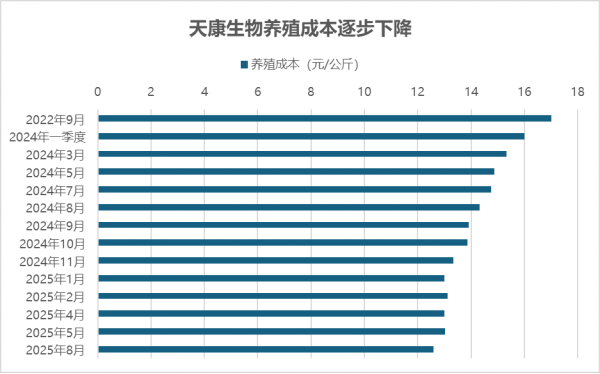
Core Viewpoint - TianKang Biological has shown significant growth in pig sales and revenue, while emphasizing cost control measures to enhance competitiveness in a challenging market environment [1][2][4] Company Performance - In August 2025, TianKang Biological sold 263,800 pigs, representing a month-on-month increase of 18.03% and a year-on-year increase of 10.15%, with sales revenue reaching 380 million yuan, up 13.43% from the previous month [1] - From January to August 2025, the company sold a total of 2.0155 million pigs, an increase of 8.24% compared to the same period last year [1] Cost Control Measures - The company has successfully reduced pig farming costs to 12.6 yuan/kg in August 2025, with self-bred and self-raised pig costs dropping to 11.8 yuan/kg [1][2] - The cost of pig farming has decreased significantly from approximately 17 yuan/kg in September 2022 to 12.6 yuan/kg in August 2025, reflecting a reduction of over 30% in three years [2] Market Environment - The average pig-to-grain price ratio in China fell below 6:1, indicating a downward trend in pig prices, which has led to the importance of cost control becoming more pronounced [1][4] - The pig farming industry is experiencing new characteristics, including shorter cycles and increased short-term volatility, which necessitates strong cost control capabilities for survival and growth [4] Competitive Strategy - TianKang Biological is enhancing its competitiveness and risk resistance through refined breeding management, improved production efficiency, and cost control measures, including the use of hedging tools to manage market price fluctuations [2][4] - The company anticipates further cost reduction potential as the prices of purchased piglets decline, indicating room for continued improvement in cost management [4]

8月物价数据解读:CPI低位承压 PPI低点已过
Yin He Zheng Quan· 2025-09-10 11:19
Group 1: CPI Analysis - In August, the CPI remained flat month-on-month (previous value 0.4%) and decreased year-on-year to -0.4%, compared to a five-year average of 0.3% for the same period[2] - Food prices increased by 0.5% month-on-month (previous value -0.2%) but decreased by 4.3% year-on-year, with the decline expanding by 2.7 percentage points from the previous month[4] - Core CPI remained flat month-on-month and increased by 0.9% year-on-year, marking the fourth consecutive month of growth[4] Group 2: PPI Insights - The PPI turned flat month-on-month (previous value -0.2%), ending an eight-month downward trend, with the year-on-year decline narrowing to -2.9% (previous value -3.6%) for the first time since March[20] - Production demand improvements supported price increases in some energy and raw material sectors, with the PMI production index rising to 50.8% (previous value 50.5%) in August[21] - The prices of coal processing rose by 9.7% month-on-month, while black metal smelting prices increased by 1.9%[21] Group 3: Food Price Trends - Pork prices decreased by 0.5% month-on-month (previous value 0.9%), significantly lower than the five-year average increase of 4.1%[7] - Egg prices rose by 1.5% month-on-month (previous value -0.3%), below the seasonal average increase of 5.9% over the past five years[7] - Fresh vegetable prices increased by 8.5% month-on-month (previous value 1.3%), while fresh fruit prices decreased by 2.8%[7] Group 4: Consumer Behavior and Market Outlook - Consumer confidence remains weak, with limited recovery potential for core CPI, as internal consumption dynamics are sluggish[26] - The agricultural sector is expected to stabilize pork prices, but supply pressures remain significant due to ongoing production adjustments[26] - Risks include potential delays in policy implementation and slower-than-expected recovery in consumer confidence[33]
9.10犀牛财经晚报:业内首只浮动管理费医疗QDII基金发行 多名滥用减重处方药者出现副作用
Xi Niu Cai Jing· 2025-09-10 10:38
Group 1: Fund and Investment - The first floating management fee medical QDII fund, Dongfanghong Medical Innovation Mixed Securities Investment Fund, was officially launched on September 10, with expected strong performance from fund managers Jiang Qi and Gao Yi [1] - Jiang Qi's managed fund achieved a year-to-date return of 84.26% and a one-year return of 102.43% as of September 8 [1] Group 2: Agriculture and Livestock - The Ministry of Agriculture and Rural Affairs plans to hold a meeting on September 16 with 25 leading companies to discuss pig production capacity regulation measures [1] - The meeting aims to analyze the current pig production situation and share measures and results from pig farming enterprises [1] Group 3: Data and Technology - IDC forecasts that China's big data IT spending will reach approximately $73.02 billion by 2029, accounting for about 10% of the global market [1] - The five-year compound annual growth rate (CAGR) for China's big data IT spending is expected to be around 20.5%, the highest globally [1] Group 4: Wearable Devices - Canalys reported that the wearable wristband device market in mainland China reached a record high with shipments of 33.9 million units in the first half of 2025, a year-on-year increase of 36% [2] - The basic wristband category saw an 80% growth rate, driving the strong performance of the market [2] - Huawei led the market with 12 million units shipped, capturing 36% market share, followed by Xiaomi with 11 million units and 32% market share [2] Group 5: Tire Exports - In July, China's semi-steel tire exports reached a record high of 325,900 tons, with a month-on-month increase of 16.78% and a year-on-year increase of 7.21% [3] - The strong export performance is expected to continue in August due to the EU tariff window period and ongoing growth in markets like Africa and South America [3] Group 6: Automotive Industry - Guohui Automotive and its legal representative have been restricted from consumption due to a financial loan contract dispute, with a previous execution amount of over 35.17 million yuan [4] - Guohui Automotive was established in July 1999 and has a registered capital of approximately 8.3 billion yuan [4] Group 7: Corporate Announcements - Dematech announced winning a $1.3 billion overseas smart logistics project [6] - Kang En Bei received approval for the registration of short-term financing bonds and medium-term notes, each amounting to 1 billion yuan [7] - Fuliwang plans to invest 500 million yuan in a high-end wire material project [8] - Yinlong Co. signed a steel purchase contract worth 165 million yuan [9] - Shaanxi Construction won multiple major projects totaling 4.506 billion yuan [10] - Lin Yang Energy won a 244 million yuan metering equipment project from Southern Power Grid [11] - Juhua Technology secured a 166 million yuan metering equipment project from Southern Power Grid [12] - Mengcao Ecology's subsidiary won a 225 million yuan integrated protection and restoration project [13] - Xiantan Co. reported chicken product sales revenue of 516 million yuan in August, with significant year-on-year growth [14] Group 8: Market Performance - The ChiNext Index rebounded by 1.27% amid market fluctuations, with total trading volume in the Shanghai and Shenzhen markets falling below 2 trillion yuan [15] - Key sectors showing strong performance included oil and gas, film and television, and computing hardware, while battery and non-ferrous metals sectors faced declines [15]
9月10日晚间重要公告一览
Xi Niu Cai Jing· 2025-09-10 10:38
Group 1 - Dematech won a 900 million yuan overseas smart logistics project from a well-known e-commerce giant in Latin America, focusing on intelligent logistics cross-belt sorting systems and related services [1] - Kang En Bei received approval for the registration of short-term financing bonds and medium-term notes, with a total registration amount of 1 billion yuan, valid for two years [1][2] - Zhi Xiang Jin Tai's GR1803 injection for systemic lupus erythematosus clinical trial has been approved by the National Medical Products Administration [2] Group 2 - Jin Da Wei's subsidiary received approval for a veterinary drug product, pyridone, valid from September 3, 2025, to September 2, 2030 [4] - Fu Li Wang's subsidiary plans to invest 500 million yuan in a high-end wire material project, focusing on high-strength prestressed steel strands for various applications [5] - He Li Biological's subsidiary's Class III medical device registration application has been accepted, focusing on natural bone repair materials [12] Group 3 - Lin Yang Energy won a 244 million yuan metering equipment project from Southern Power Grid, expected to positively impact its 2025 and 2026 performance [20] - Sanxia Water plans to absorb its wholly-owned subsidiary, Chongqing Changdian United Energy, with all assets and liabilities to be inherited by Sanxia Water [13] - Tian Cheng Technology canceled the use of 91 million yuan of raised funds for permanent working capital, ensuring no impact on the normal operation of investment projects [24] Group 4 - Baosteel received approval to publicly issue bonds totaling 20 billion yuan to professional investors, valid for 24 months [52] - Tian Kang Biological reported a 10.15% year-on-year increase in pig sales in August, with a total of 263,800 pigs sold [53] - Xinjiang Construction won multiple major projects totaling 4.506 billion yuan, including a 2.4 billion yuan photovoltaic hydrogen synthesis project [18]


8月物价数据解读:CPI低位承压,PPI低点已过
Yin He Zheng Quan· 2025-09-10 09:35
Group 1: CPI Analysis - In August, the CPI remained flat month-on-month (previous value 0.4%) and decreased year-on-year to -0.4%, compared to a five-year average of 0.3% for the same period[2] - Food prices increased by 0.5% month-on-month (previous value -0.2%) but decreased by 4.3% year-on-year, with a drop impact on CPI increasing by approximately 0.51 percentage points[4] - Core CPI rose by 0.9% year-on-year, marking a 0.1 percentage point increase from the previous month, with jewelry prices significantly contributing to this rise[12] Group 2: PPI Insights - The PPI turned flat month-on-month (previous value -0.2%) after eight consecutive months of decline, with the year-on-year drop narrowing to -2.9% from -3.6%[20] - Production demand improvements supported price increases in some energy and raw material sectors, with the PMI production index at 50.8%[21] - M1 growth has been rising, which is expected to support PPI improvements, although the real estate market remains weak, impacting overall investment[28] Group 3: Food Price Trends - Pork prices decreased by 0.5% month-on-month (previous value 0.9%), significantly lower than the five-year average increase of 4.1%[7] - Egg prices increased by 1.5% month-on-month (previous value -0.3%), but this is below the seasonal average increase of 5.9%[7] - Fresh vegetable prices rose by 8.5% month-on-month (previous value 1.3%) due to seasonal factors, while fresh fruit prices fell by 2.8%[8] Group 4: Consumer Behavior and Market Outlook - Consumer confidence remains weak, impacting core CPI recovery potential, with challenges from oversupply and weak demand growth[26] - The government's efforts to regulate low-price competition are expected to help PPI rebound, but the transmission effect to CPI remains uncertain[28] - Risks include potential delays in policy implementation and slower-than-expected recovery in consumer confidence[33]
最低跌破13元/公斤,9月的猪价要危险?
Sou Hu Cai Jing· 2025-09-10 07:50
Core Viewpoint - The pork price is experiencing a downward trend, reaching new lows, with concerns about potentially falling below 13 yuan/kg. However, there is a belief that prices may stabilize by the end of September if the market can withstand the mid-month pressures [2]. Group 1: Supply Risks - The official target is to reduce the breeding pig capacity to below 39 million heads by the end of the year, while the breeding sow capacity was still at 40.42 million heads as of the end of July, indicating a tight timeline for adjustments [4]. - The concentration of the pig farming industry has increased significantly after previous capacity reductions, making the actions of leading companies more impactful on the market. Typically, there is a tightening of supply at the beginning and end of the month, with increased supply expected mid-month, leading to potential price declines [5]. - There is a risk of supply pressure due to the ongoing production capacity adjustments and the need to manage the market effectively [2]. Group 2: Demand Dynamics - Although there has been a slight improvement in pork consumption with the cooling weather, it is still far from the expected peak consumption season, indicating that demand has not significantly rebounded [6]. - The increase in supply from large enterprises, coupled with sluggish demand, poses a significant challenge for small and medium-sized farmers, potentially pushing some out of the market [6]. - The upcoming double festival at the end of the month is expected to provide a temporary boost to market consumption, which may influence market sentiment positively [6]. Group 3: Market Adjustments - The pace of reducing the weight of pigs for slaughter is slowing down, which means that the market supply of pork may decrease, alleviating some supply pressure [8]. - There has been a rise in secondary fattening practices, which, despite official controls, are expected to increase as the consumption season approaches, further tightening the supply pressure [9]. - With a reduction in supply and an anticipated increase in demand, there is a possibility for pork prices to stabilize or even see a slight increase, especially as the peak consumption season approaches in October [11].
生猪养殖板块持续走强,养殖ETF(516760)盘中拉升,现溢价0.14%
Xin Lang Cai Jing· 2025-09-10 06:00
Group 1 - The core viewpoint is that the pig farming sector is experiencing a strong performance, with a focus on the upcoming meeting to discuss production capacity regulation among major companies [1][2] - The Agricultural and Rural Affairs Department, along with the National Development and Reform Commission, will hold a meeting on September 16 to analyze the current pig production situation and discuss capacity regulation measures with 25 participating companies [1] - Major companies like Muyuan, Wens, and New Hope are expected to share their experiences and strategies regarding capacity control during the meeting [1] Group 2 - Guojin Securities states that after a period of adjustment, the valuations of pig farming companies are at a bottom range, with leading companies still achieving good profitability [2] - The industry is expected to stabilize at the bottom of the economic cycle, with a potential for supply-side contraction leading to improved profitability for top-tier companies [2] - The latest price-to-earnings ratio (PE-TTM) for the livestock farming index tracked by the breeding ETF is 14.11 times, indicating it is at a historical low compared to the past three years [2]
