
银行

Search documents
金价高位博弈,银行贵金属业务风控从“静态提门槛”到“动态限额度”
第一财经· 2026-03-04 13:15
Core Viewpoint - The article discusses the shift of commercial banks in China from static risk management to dynamic risk management in their precious metals business due to increased gold price volatility and speculative trading behavior among investors [3][5][11]. Group 1: Dynamic Risk Management Implementation - China Construction Bank announced the implementation of dynamic trading limits for its "Jianxing Gold" business starting March 4, 2026, in response to rising physical gold purchase volumes [5][10]. - This dynamic limit will be adjusted daily based on market conditions, allowing for more flexibility compared to previous static risk management methods [5][9]. - Other banks, such as Agricultural Bank of China and Zhejiang Commercial Bank, have also begun exploring dynamic control mechanisms to better manage risks associated with fluctuating gold prices [3][10]. Group 2: Market Volatility and Speculative Behavior - The gold market has experienced significant volatility, with prices fluctuating dramatically, such as a rise from approximately $5100 to $5419 per ounce within a few days [12]. - Many new investors, often lacking a deep understanding of gold trading, have entered the market, leading to increased speculative trading and subsequent losses [11][14]. - The article highlights individual cases of investors who faced substantial losses due to short-term trading strategies, which were not aligned with the intended long-term investment nature of gold accumulation products [13][14]. Group 3: Adjustments in Risk Management Standards - Banks are raising the risk tolerance levels for investors engaging in precious metals trading, with some banks requiring a minimum risk assessment rating of C3 (balanced) or higher [15][16]. - There is a trend towards tightening the rules for precious metals agency business, with many banks suspending new trades or limiting purchases [15][16]. - The article notes that banks are increasingly integrating compliance and risk management, emphasizing the importance of investor suitability and regular risk warnings [16].



U11:大华银行:管理层会议-20260304
citic securities· 2026-03-04 12:54
Investment Rating - The report does not explicitly provide an investment rating for UOB [5]. Core Insights - UOB management expressed confidence in asset quality, highlighting strong provisioning coverage and improving trends in the US, while noting ongoing weakness in Greater China [5][6]. - The Common Equity Tier 1 (CET1) capital ratio stands at 15.1%, above the target range of 14.0%-14.5%, with management open to increasing dividends [7]. - Retail business momentum benefits from the acquisition of Citibank, with a focus on digital wealth penetration [5][8]. - The mid-term goal is to enhance ROE to approximately 14%, with increased investments in technology and AI, particularly in wealth management and private banking [5][9]. Summary by Relevant Sections Asset Quality - Management is confident in asset quality, with enhanced provisioning coverage expected by 2025. Credit trends in the US are improving, while pressures in Greater China are manageable [6]. Capital Flexibility - The CET1 capital ratio is at 15.1%, indicating strong capital levels. Management reiterated a 50% dividend payout framework and a S$3 billion capital return plan, with flexibility to adjust the dividend-buyback mix [7]. Wealth Management Development - Wealth management remains a core growth driver, with AUM growth and an investment ratio target of 50%-60%. Digitalization is key, with UOB's TMRW platform expanding private banking functions to retail clients [8]. Digital Vision - A technology-driven transformation plan is in place, focusing on AI and digital infrastructure. Generative AI is seen as a critical tool for enhancing productivity and personalized consulting in wealth management [9]. Catalysts - Growth in SME loan portfolios and successful integration of Citibank's retail assets in four ASEAN countries are expected to contribute positively to group net profit [10].
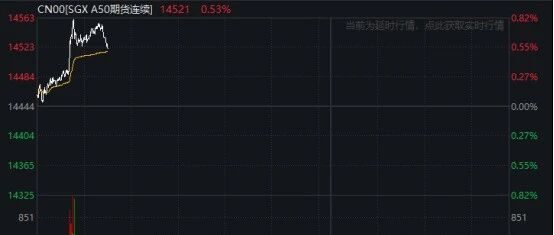
刚刚!A50,直线拉升!重要调整,20日生效→
证券时报· 2026-03-04 12:48
Core Viewpoint - FTSE Russell announced adjustments to the FTSE China Index Series, effective after market close on March 20, 2026, which reflects changes in the composition of the FTSE China A50 Index and other indices, potentially attracting passive investment funds and increasing overseas interest in Chinese assets [2][21]. Group 1: FTSE China A50 Index Adjustments - The FTSE China A50 Index will include China Shipbuilding, Tianfu Communication, and Wanhua Chemical, while excluding Everbright Bank, CRRC, and Shanxi Fenjiu [5][6]. - The index is composed of the 50 largest stocks by market capitalization from the Shanghai and Shenzhen stock exchanges, serving as a key indicator for international investors assessing the Chinese market [5][21]. Group 2: Other Index Adjustments - The FTSE China 50 Index will add Xinhua Insurance and Weichai Power, while removing Minsheng Bank and ZTE Corporation [8][9]. - The FTSE China A150 Index will incorporate 19 stocks including Sanhuan Group and China Giant Glass, while excluding Gujing Distillery and WanTai Biology [10][11]. - The FTSE China A200 Index will add 16 stocks including Sanhuan Group and China Giant Glass, while removing Gujing Distillery and WanTai Biology [13][14]. - The FTSE China A400 Index will include 54 stocks such as Aerospace Development and Guangku Technology, while excluding Aima Technology and Sanhuan Group [16][17]. Group 3: Market Implications - The adjustments are expected to attract passive investment funds, enhancing the appeal of Chinese assets amid increasing global economic uncertainty [21][22]. - Analysts indicate that the ongoing restructuring of international order and domestic industrial innovation trends are key drivers for the current A-share market rally and the revaluation of Chinese assets [22].
【4日资金路线图】国防军工板块净流入超67亿元居首 龙虎榜机构抢筹多股
证券时报· 2026-03-04 12:48
Market Overview - The A-share market experienced an overall decline on March 4, with the Shanghai Composite Index closing at 4082.47 points, down 0.98%, the Shenzhen Component Index at 13917.75 points, down 0.75%, and the ChiNext Index at 3164.37 points, down 1.41% [1] - The total trading volume for both markets was 23657.54 billion yuan, a decrease of 7637.56 billion yuan compared to the previous trading day [1] Capital Flow - The net outflow of main funds from the Shanghai and Shenzhen markets reached nearly 500 billion yuan, with an opening net outflow of 198.53 billion yuan and a closing net outflow of 38.18 billion yuan, totaling 499.6 billion yuan for the day [2] - The net outflow for the CSI 300 index was 141.69 billion yuan, while the ChiNext saw a net outflow of 217.14 billion yuan [4] Sector Performance - The defense and military industry saw a net inflow of 67.61 billion yuan, with a growth of 1.29%, driven by stocks like China Shipbuilding [6][7] - The power equipment sector had a net inflow of 64.39 billion yuan, increasing by 1.12%, led by TBEA [7] - Other sectors with net inflows included agriculture, forestry, animal husbandry, and fishery (30.44 billion yuan, up 0.86%) and non-ferrous metals (29.60 billion yuan, up 0.11%) [7] - Conversely, the non-bank financial sector experienced a net outflow of 72.15 billion yuan, down 1.87%, with stocks like Dongfang Caifu leading the outflow [7] Institutional Activity - Notable institutional buying included stocks such as Sinopec Oilfield Service, which saw a net purchase of 21423.45 million yuan, and CNOOC Services with 15754.82 million yuan [10] - The top 20 stocks by net inflow included various companies, indicating a selective interest from institutional investors [8] Analyst Recommendations - Analysts have recently rated several stocks with potential upside, including Xiangdian Co. with a target price of 20.4 yuan, representing a 44.58% upside from its latest closing price [12] - Other stocks highlighted include Bawei Storage and Neway Valve, with target prices indicating significant potential returns [12]

量化点评报告:三月配置建议:关注顺周期主线
GOLDEN SUN SECURITIES· 2026-03-04 11:57
- The "Six-Cycle Model" identifies economic phases using the three-month difference in medium- and long-term loan pulses (TTM YoY). As of January, the model entered Phase 6, "Monetary Expansion," indicating a defensive allocation strategy[7][11] - The "Analyst Industry Prosperity Index" evaluates industry performance expectations. The index shows that the cyclical and growth sectors are in an expansion phase, with the cyclical sector entering this phase in January 2025[12][13] - The "Industry Relative Strength Index (RS)" ranks industries based on cross-sectional returns. Industries with RS > 90% by April are likely to lead the market. As of February 2026, seven industries, including non-ferrous metals and petrochemicals, showed RS > 90% signals[15][16] - The "Style Factor Analysis" evaluates factors like small-cap, value, quality, and growth based on three metrics: odds, trend, and crowding. Small-cap and value factors scored highest, while growth and quality factors showed weaker trends[30][32][36][39] - The "Industry Configuration Model" uses two approaches: the "Industry Prosperity Model" (high prosperity + strong trend, avoiding high crowding) and the "Industry Trend Model" (strong trend + low crowding, avoiding low prosperity). March recommendations include cyclical sectors like chemicals and coal[46][48][50] - The "Inventory Cycle Reversal Model" identifies industries in recovery phases with low inventory pressure. Current recommendations include oil services, coal chemicals, and rare metals. Historical backtests show strong absolute and excess returns[55][56][57] - The "Odds and Win Rate Strategies" include three models: "Odds-Enhanced," "Win Rate-Enhanced," and "Odds + Win Rate." These models optimize asset allocation based on risk budgets. Historical performance shows annualized returns of 6.7%-7.9% with low drawdowns[58][61][64]
【岗位招聘】招商银行研究院宏观研究岗招聘启事!(深圳)
招商银行研究· 2026-03-04 11:52
Group 1 - The article announces a recruitment opportunity for a macroeconomic research position at China Merchants Bank Research Institute, located in Shenzhen [7] - The role involves in-depth research on the domestic real economy and macro policies, providing forward-looking assessments and writing macro research reports [4] - Responsibilities include updating analysis frameworks, conducting internal and external research projects, and providing research services to clients [4] Group 2 - The position requires a master's degree or higher in economics or finance, with a preference for candidates holding a PhD [6] - Candidates should have at least three years of macro research experience, strong English communication skills, and a systematic understanding of macroeconomic research frameworks [6] - Desired qualities include a passion for macro research, strong logical thinking, teamwork spirit, and the ability to work under pressure [6]


交通银行:高级管理人员离任公告
Zheng Quan Ri Bao· 2026-03-04 11:46
(文章来源:证券日报) 证券日报网讯 3月4日,交通银行发布公告称,涂宏先生因到退休年龄,日前已向本行董事会提交书面 报告,辞去本行业务总监(同业与市场业务)职务,辞任自2026年3月4日起生效。 ...

2月金融数据预测:信贷季节性回落
CMS· 2026-03-04 11:34
Investment Rating - The industry is rated as "Recommended," indicating a positive outlook for the industry fundamentals and an expectation that the industry index will outperform the benchmark index [7]. Core Insights - The report predicts a seasonal decline in credit, with February's financial data forecasted to show a significant drop in new loans and credit growth rates [5][10]. - The total social financing (社融) is expected to be around 2 trillion yuan in February, with a growth rate of 8.1%, down from approximately 2.2 trillion yuan in the same month last year [10]. - New loans in February are projected to be about 800 billion yuan, reflecting a growth rate of 6.0%, influenced by seasonal factors such as the Spring Festival [6][10]. Industry Scale - The industry comprises 41 stocks, with a total market capitalization of 10,243.2 billion yuan, accounting for 9.1% of the overall market [1]. - The circulating market value stands at 9,635.5 billion yuan, representing 9.5% of the total market [1]. Financial Data Forecast - In February, new social financing is expected to be around 2 trillion yuan, with a year-on-year decrease in new loans anticipated [10]. - The growth rate of M2 is projected to be approximately 8.9%, with an increase in the M2 balance of about 2.4 trillion yuan [13]. - The report highlights a significant seasonal impact on the real estate market, with new residential property transactions in 50 key cities dropping by 26% month-on-month and 28% year-on-year [5].
富时中国50指数调整:纳入新华保险、潍柴动力,剔除民生银行、中兴通讯
Zhi Tong Cai Jing· 2026-03-04 10:48
Group 1 - FTSE Russell announced changes to the FTSE China Index Series during its quarterly review, with adjustments effective after market close on March 20, 2026 [1] - The FTSE China 50 Index will include new constituent stocks and remove certain Hong Kong stocks [1] - A new list of candidate stocks for the upcoming season of the FTSE China 50 Index has been published, featuring several Hong Kong companies [1]

可转债周报20260228:地缘冲突后转债市场如何演进?-20260304
Changjiang Securities· 2026-03-04 10:30
1. Report Industry Investment Rating - No industry investment rating is provided in the report. 2. Core Views of the Report - After reviewing the two high - intensity geopolitical conflicts in the past five years, the short - to - medium - term performance of convertible bonds may be weak. In the current situation, it is recommended to focus on pro - cyclical sectors such as petroleum and petrochemicals. Considering the convergence of the stock index futures basis, convertible bonds may face short - term correction risks. [2][4][7] - The A - share market strengthened during the week, with the small - and medium - cap and pro - cyclical manufacturing sectors outperforming, and the trading volume slightly expanding. [2][4][7] - The convertible bond market oscillated weakly, the medium - cap convertible bonds were relatively strong, and the trading volume converged. The overall valuation was compressed, especially in the high - parity and high - market - value ranges. The implied volatility declined but remained at a high level, and the median market value slightly increased. [2][4][7] - Structurally, cyclical sectors such as steel and non - ferrous metals were relatively good, and some of the top - performing targets showed negative premiums. The primary issuance was stable. In terms of terms, the willingness to downward - revise was weak, while the probability of non - call increased. It is recommended to pay attention to the performance of new bonds and the disturbances of term games. [2][4][7] 3. Summary According to the Directory 3.1 Geopolitical Conflicts and the Convertible Bond Market - In the two high - intensity geopolitical conflicts in the past five years (the Russia - Ukraine conflict in late February 2022 and the escalation of the Palestine - Israel conflict in early October 2023), the short - to - medium - term performance of CSI Convertible Bond Index was weak. The Wande Convertible Bond Equal - Weighted Index performed relatively well in the short term after the Russia - Ukraine conflict. [11] - In the Russia - Ukraine conflict, the petroleum and petrochemical industry performed well in the short term, while in the Palestine - Israel conflict, the social service industry performed well in the short term. Given the current situation is more similar to the energy - power game during the Russia - Ukraine conflict, attention can be paid to energy and cyclical industries such as petroleum and petrochemicals. [11][12] - From a futures perspective, there may be short - term correction risks. When the annualized yield of the next - month continuous basis of CSI 500 futures approaches zero, the convertible bond market often faces short - term correction pressure. The high correlation between the CSI Convertible Bond Index and the CSI 500 Index (97.9% from the beginning of 2025 to the current Friday) indicates that this futures sentiment indicator can also reflect the sentiment changes of convertible bond market investors. [12] 3.2 Market Theme Weekly Review - From February 24 to February 28, 2026, the equity market strengthened overall, and the pro - cyclical direction performed well. Among them, metal zinc, metal lead, phosphate chemicals, small - metal concepts, and metal copper in the non - ferrous metal direction were good, while AI corpus, Xiaohongshu concept, Kuaishou concept, short - drama games, and Sora concept (text - to - video) in the AI Internet direction were under pressure. [16] 3.3 Market Weekly Tracking 3.3.1 Main Stock Indexes Strengthened, with Medium - and Small - Cap Indexes Performing Strongly - The main A - share stock indexes strengthened overall during the week. The Shenzhen Component Index performed well, while the ChiNext Index was relatively weak. In terms of style, medium - and small - cap indexes were relatively strong, while the science - innovation and large - cap indexes were relatively weak. [16] - In terms of funds, the net outflow of market main funds converged during the week. The average daily trading volume expanded, and the net outflow of main funds slightly decreased. [17] - The cyclical manufacturing sectors in the A - share market were strong during the week. Sectors such as metal materials and mining, environmental protection, national defense and military industry, and chemicals led the gains, while sectors such as social services, insurance, and media Internet were relatively weak. [21] - In terms of trading volume, the electronics, metal materials and mining, and power and new energy equipment sectors were the focus of trading during the week. The trading volume of most sectors rebounded compared with last week, and the average daily trading volume of the public utilities sector increased by more than 62% week - on - week. [22] - The congestion degree of market sectors still differed significantly during the week. The congestion degree of cyclical directions such as petroleum and petrochemicals, basic chemicals, and steel increased, while that of sectors such as commercial retail, media, and transportation decreased. [24] 3.3.2 Convertible Bond Market Oscillated Weakly, with the Large - Cap Index Performing Weakly - From February 24 to February 28, 2026, the convertible bond market oscillated slightly weakly. The CSI Convertible Bond Index oscillated weakly, with the large - cap convertible bond index performing relatively weakly and the medium - cap convertible bond index performing relatively strongly. The trading volume converged slightly. [28] - In terms of valuation, when divided by the parity range, the overall valuation of the convertible bond market was compressed, except for a slight increase in the 120 - 130 yuan parity range, and the conversion premium rate in the 140 - yuan - and - above parity range was significantly compressed. When divided by the market value range, the overall valuation was also compressed, except for a slight increase in the 110 - 120 yuan market value range, and the conversion premium rate in the 150 - yuan - and - above market value range was significantly compressed. [32] - The weighted implied volatility of the convertible bond market balance oscillated weakly during the week, still at a historical high. The median market value of convertible bonds oscillated and slightly increased, remaining higher than the high point in August 2025. [36] - Convertible bonds in cyclical sectors performed relatively well. Sectors such as steel, non - ferrous metals, public utilities, and basic chemicals led the gains. In terms of trading volume, the trading was mainly concentrated in the power equipment, basic chemicals, and electronics sectors, with the combined trading volume of these three sectors accounting for more than 35%. [39] - Most individual convertible bonds weakened during the week. Only 143 convertible bonds had a range increase greater than or equal to 0, accounting for 37.0% of the total number of outstanding convertible bonds in the market. Among the convertible bonds in the conversion period, the top five in terms of weekly increase were Youcai Convertible Bond, Dazhong Convertible Bond, Guanglian Convertible Bond, Yitian Convertible Bond, and Huaya Convertible Bond, while the top five in terms of weekly decrease were Fuxin Convertible Bond, Hengshuai Convertible Bond, Ruichuang Convertible Bond, Huicheng Convertible Bond, and Xinfu Convertible Bond. Some of the top - five - increasing individual bonds had negative premiums. [44] 3.4 Convertible Bond Issuance and Term Tracking 3.4.1 Primary - Market Pre - issuance Situation - One convertible bond, Aiwei Convertible Bond, was listed during the week from February 24 to February 28, 2026. [47] - Five listed companies updated their convertible bond issuance plans in the primary market during the week, with two in the exchange - acceptance stage and three having passed the general meeting of shareholders. [48] - The total disclosed scale of ongoing projects at the exchange - acceptance stage and later was 8.302 billion yuan. There were 5 companies approved by the CSRC with a planned issuance scale of 439 million yuan, 7 companies having passed the listing committee meeting with a planned issuance scale of 697 million yuan, and 44 companies in the exchange - acceptance stage with a planned issuance scale of 6.989 billion yuan. [49][52] 3.4.2 Downward - Revision - Related Announcement Summary - No convertible bonds were expected to trigger downward revision during the week. Three convertible bonds announced not to downward - revise, with a market - value - weighted average PB of the underlying stocks of 2.5. Two convertible bonds proposed downward revision, with a market - value - weighted average PB of the underlying stocks of 1.6. [53][58] 3.4.3 Redemption - Related Announcement Summary - Two convertible bonds were expected to trigger redemption during the week. Seven convertible bonds announced not to redeem in advance, and four convertible bonds announced early redemption. [59]