
家电

Search documents
惊!硬装结束雷军进场,米家净烟机Pro让厨房油烟“消失术”成真!深度评测:米家净烟机PRO,是否值得入手
Sou Hu Cai Jing· 2026-01-13 11:02
"硬装结束,雷军进场"现在不仅仅是一个网络热门梗。也是广大的年轻人对于居家生活的一种态度。更 加智能化的产品是大家在硬装结束后首先考虑的首选方向之一。没想到在我刚刚硬装结束以后就到了一 件非常棒的大件产品,那就是我们的米家净烟机Pro。 在家居生活中,厨房电器的性能直接影响着烹饪体验和生活品质。作为厨房的"空气卫士",烟机的净烟 效果、功能设计以及使用便捷性一直是大家关注的重点。米家净烟机PRO作为一款备受瞩目的产品,宣 称在净烟性能、智能功能等方面有显著提升。本文将从外观设计、功能特点、实际使用体验等多个维度 对这款产品进行全面评测,为消费者提供参考。 ...


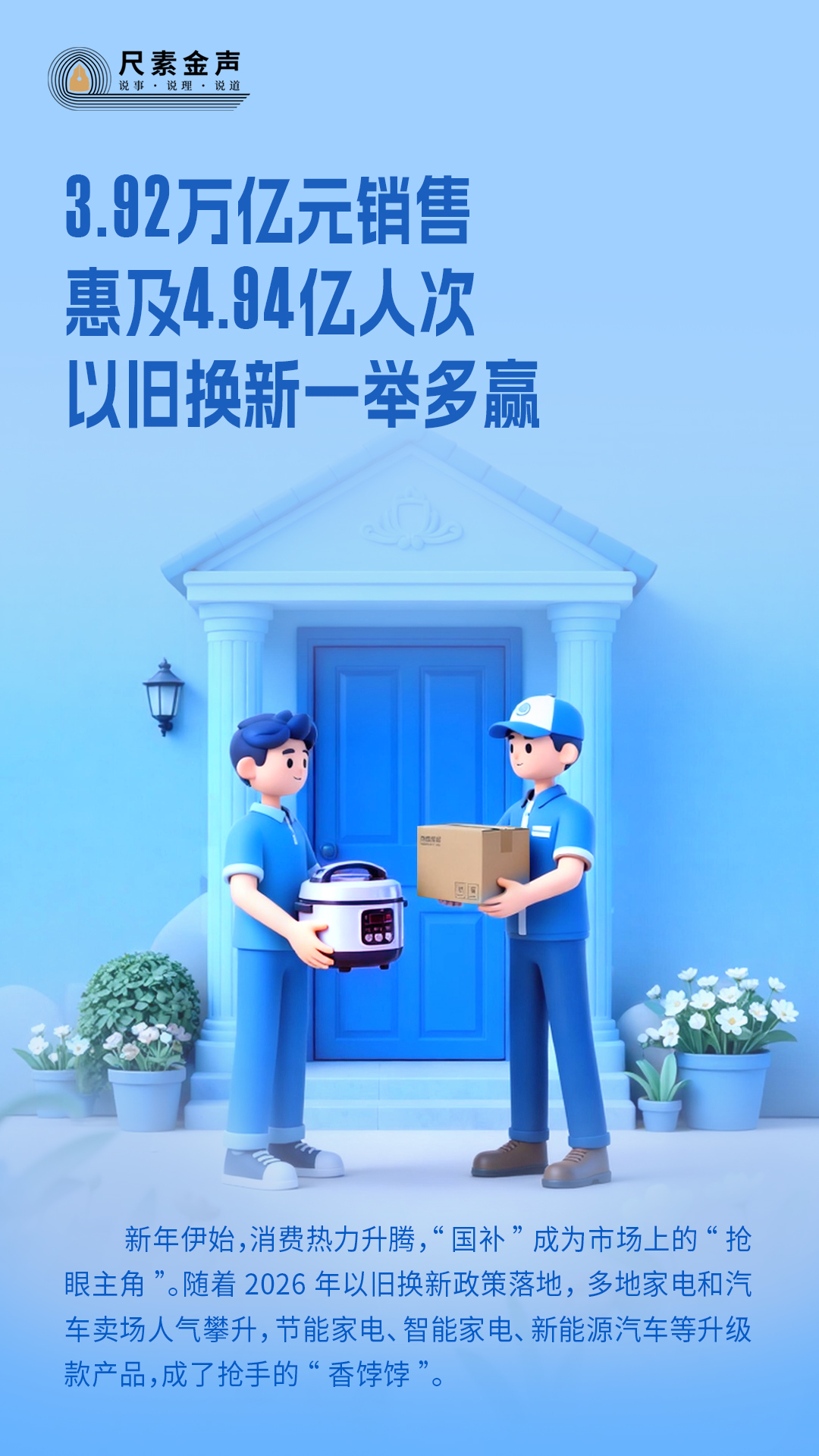
3.92万亿元销售、惠及4.94亿人次,以旧换新一举多赢
Xin Lang Cai Jing· 2026-01-13 10:28
Core Insights - The "old-for-new" policy has become a significant driver of consumer demand, particularly in the appliance and automotive sectors, as it aligns with the government's push to stimulate domestic consumption and economic growth [1][3]. Group 1: Policy Impact on Sales - From January 1 to 2, 2024, Hebei Province recorded 133,600 sales transactions in home appliances and digital products, totaling 590 million yuan [1]. - The "old-for-new" policy has led to a total sales volume of 3.92 trillion yuan, benefiting 494 million people, with over 18.3 million vehicles and 192 million home appliances exchanged [3]. - The retail sales of home appliances have surpassed 1 trillion yuan, achieving a historical high, driven by the "old-for-new" initiative [3]. Group 2: Product Trends and Consumer Behavior - The "old-for-new" initiative is not merely a product exchange but serves as a key link in promoting economic circulation and innovation [3]. - In 2025, nearly 60% of vehicles exchanged under the program were new energy vehicles, with the retail market share of new energy passenger cars exceeding 50% for nine consecutive months [4]. - Over 90% of exchanged home appliances were first-level energy efficiency products, indicating a shift towards greener consumer choices [4]. Group 3: Policy Adjustments and Future Outlook - The 2026 "old-for-new" policy will undergo optimization, focusing on stable subsidies for key appliances and expanding support to new smart devices [6]. - Local governments are encouraged to implement tailored subsidy policies within the framework of the national program, enhancing the effectiveness of the "old-for-new" initiative [6]. - The policy aims to transform from a temporary measure to a long-term institutional support, fostering a dynamic balance between supply and demand for high-quality development [6].
天猫「扶优」一年,新品牌迎来黄金时代
36氪· 2026-01-13 10:14
Core Insights - The article highlights a significant growth in the consumer market, with 150,000 new merchants entering the market and 276 new brands achieving over 100 million in sales in 2025, contrary to the prevailing narrative of consumption downgrade [3][10][15] - The report indicates that the number of brands achieving over 100 million in sales within three years of opening has reached a historical high, with a year-on-year increase of over 40% for brands that achieved this milestone in their opening year [3][10] Group 1: New Brand Growth - In 2025, there were 15,000 high-quality merchants entering the market, marking a historical high for new brand creation on Tmall [4][10] - A total of 5,026 new brands achieved over 10 million in sales in 2025, showcasing a broad industry explosion rather than a singular focus on specific sectors [21][22] - The apparel sector led with 22% of new brands, followed by home appliances, home improvement, 3C digital products, and health sectors, each contributing nearly 400 new brands [22] Group 2: Market Dynamics - The report emphasizes a shift in the "profit-making logic," moving away from reliance on low prices and high-volume sales to a focus on product quality and brand differentiation [15][19] - The success of brands like Xu Cuihua and Tongpin illustrates the importance of product quality and consumer engagement, as they have thrived by addressing specific consumer pain points rather than competing on price [28][29] - The article notes that the consumer market is not "cooling down," but rather becoming more selective, rewarding brands that can meet evolving consumer demands [19][38] Group 3: Future Opportunities - The report outlines potential opportunities for 2026, including advancements in AI hardware, smart jewelry, and technology-driven home appliances, indicating a shift towards products that enhance emotional and practical value [40][43] - The demand for quality products continues to rise, with consumer quality indices showing consistent growth over the past ten quarters, suggesting a robust market for innovative brands that cater to young consumers [43][44] - The article concludes that the future will favor brands that adhere to long-term strategies and respond to consumer needs with solid innovation [44]

重磅|从世界工厂到全球心智占领——中国品牌出海路径解析
科尔尼管理咨询· 2026-01-13 09:59
Core Insights - The article highlights the global success of Chinese brands, particularly through the example of Pop Mart's IPs, which have gained significant traction in international markets, with overseas revenue reaching 1.4 billion yuan in the first half of 2024, accounting for 30% of total revenue, a nearly threefold increase compared to the same period in 2021 [1] Group 1: Brand Globalization Acceleration - The process of establishing brand recognition overseas has been significantly shortened from ten years to approximately 3-5 years, marking a shift from a prolonged battle to a rapid engagement strategy [8] - This acceleration is supported by improved infrastructure, including cross-border e-commerce platforms, social media for targeted marketing, and robust supply chain systems [9] Group 2: Transformation of Export Categories - The scope of Chinese exports is evolving from physical products to cultural IP and services, with IP product exports growing at 8%, surpassing the average growth rate of consumer goods exports [10] - This shift indicates a transition from being mere suppliers in the global supply chain to becoming value co-creators through deeper user engagement [10] Group 3: Deepening Export Models - Chinese brands are transitioning from a trade-based export model to a global supply chain layout, enhancing their market competitiveness and integrating more deeply into local economies [11] Group 4: Upgrading Consumer Connection Channels - Brands are moving away from reliance on platforms like Amazon to a diversified omnichannel operation, which includes direct-to-consumer (DTC) models and multi-channel strategies to better engage local consumers [12] Group 5: Regional Market Variations - The Asia-Pacific market is characterized by rapid demand growth and an expanding middle class, with consumers prioritizing quality and individual expression, benefiting culturally adaptable consumer goods [17] - In North America and Europe, despite slower overall growth, consumers are highly sensitive to product value, favoring categories with technological barriers and sustainable attributes [18] - Emerging markets like Latin America present unique opportunities for high-value, practical products, while the Middle East and Africa focus on meeting basic needs with cost-effective solutions [19] Group 6: Category Differentiation Strategies - Chinese companies must focus on their resource endowments and strategic priorities to maximize export efficiency, categorizing consumer goods into three types based on market share and growth potential [20] - For durable goods, the challenge lies in breaking through competitive saturation while enhancing profit margins through brand premium and supply chain resilience [25][26] - Fashion and cultural products must build deep emotional connections with consumers to transition from short-term popularity to long-term loyalty [29] Group 7: Case Studies of Successful Brands - Haier exemplifies successful globalization with a revenue of 285.98 billion yuan in 2024, where overseas income surpassed domestic for the first time, showcasing a robust local operational system [27][28] - Miniso's global strategy emphasizes emotional connection with consumers, achieving a revenue of 17 billion yuan in 2024, with overseas revenue growing by 41.9% [30][31] - Huaxizi, a beauty brand, has effectively penetrated international markets by leveraging unique cultural narratives and products, achieving significant sales in Japan and expanding into Europe [32][33]



金鹰基金:天量遭遇主线暂歇 春躁行情踏浪前行
Xin Lang Cai Jing· 2026-01-13 09:38
Market Overview - All three major indices closed lower, with the ChiNext index experiencing a significant decline of 1.96%, while the Shanghai Composite Index fell by 0.64% to 4138 points. The Hong Kong Hang Seng Index opened high but closed lower. Trading volume in both markets increased, approaching 3.7 trillion yuan [1][8]. Sector Performance - The commercial aerospace sector saw a substantial drop, leading to a decline in market sentiment. According to WIND data, most of the 31 primary industries tracked by Shenwan experienced declines, with notable gains in oil and petrochemicals (1.62%), pharmaceuticals (1.21%), non-ferrous metals (0.91%), and media (0.67%). In contrast, sectors such as defense, electronics, communications, and computers lagged behind. Out of over 5300 stocks in the market, 3726 saw declines, indicating poor profitability [1][9]. Reasons for Market Correction - The primary reason for the market correction was the cooling off of previously popular speculative themes, particularly in commercial aerospace and controllable nuclear fusion sectors. The commercial aerospace concept stocks notably weakened after several companies issued risk warnings on January 12. This decline raised concerns among investors regarding high-volatility sectors, prompting some to quickly realize profits, which led to concentrated selling pressure [2][9]. Short-term Outlook - The current short-term fluctuations may present a good opportunity for allocation. Historical data from the past two decades indicates that spring market rallies typically occur, although the timing and magnitude can vary. Compared to historical trends, the current bull market has not yet reached its peak, and market sentiment remains subdued. The influx of absolute return funds from insurance, private equity, and retail investors suggests that the spring rally in A-shares has already begun [2][10]. Future Market Dynamics - As the annual performance forecast disclosure window opens for listed companies, the market logic is expected to shift from valuation recovery to profit growth. The current spring market is anticipated to be characterized by a more tradable and significant upward trend after digesting market sentiment [3][10]. Sector Allocation Recommendations - The importance of performance realization is expected to increase, focusing on core technology and manufacturing sectors. Key areas to prioritize include overseas computing power, storage, consumer electronics, and wind energy storage, which currently have low trading congestion and still present buying opportunities. Additionally, sectors like innovative pharmaceuticals and gaming, which may see fundamental improvements in Q1, are also expected to rotate into focus [4][11]. Commercial Aerospace Sector Outlook - Despite the recent adjustments and the need to digest short-term overheating sentiment, the commercial aerospace sector may still hold strong investment appeal. The ongoing developments with SpaceX and robust policy support, along with significant industry catalysts, suggest that the sector could remain active with participation opportunities [5][12].
炸屏!董明珠再封神!格力第三代芯片上央视,十年磨剑打破垄断
Sou Hu Cai Jing· 2026-01-13 09:21
Core Viewpoint - Gree's third-generation semiconductor chip, made from silicon carbide, significantly reduces air conditioning energy consumption by 30% and marks a major step in China's manufacturing independence from foreign technology [1][2]. Group 1: Chip Development and Production - Gree's third-generation chip has been fully integrated into its entire range of air conditioning products, with over 1 million units installed [1]. - The chip factory in Zhuhai operates with over 70% domestic equipment and can complete the entire production process with fewer than 40 staff members [1]. - Gree has invested nearly 10 billion yuan to establish its semiconductor factory, which was completed in just 388 days, setting a new industry record [5]. Group 2: Market Impact and Competitive Position - The new chip breaks the monopoly of international giants like Infineon and ON Semiconductor, allowing Gree to control its supply chain and reduce reliance on imports [2]. - Gree's successful chip development is seen as a model for China's manufacturing transformation and has garnered attention for its potential to enhance competitiveness in high-end manufacturing [5][9]. Group 3: Future Expansion and Applications - Gree plans to expand the application of its chips beyond air conditioning to include photovoltaic inverters and electric vehicle charging stations, with a goal to enter the electric vehicle market by 2025 [7]. - The company aims to achieve automotive-grade certification for its chips, which could disrupt the automotive power device market and lower costs for domestic car manufacturers [7]. Group 4: Industry Ecosystem Development - The establishment of Gree's chip factory has stimulated the development of upstream and downstream industries, contributing to a self-sustaining semiconductor ecosystem in China [9]. - Gree's commitment to chip production is part of a broader strategy to strengthen the core technological foundation of Chinese manufacturing [9].


西南证券:26年家电行业仍将处于恢复期 建议关注三大主线
Zhi Tong Cai Jing· 2026-01-13 09:13
Core Viewpoint - The home appliance industry in China is expected to remain in a recovery phase in 2026, influenced by high base effects and demand being pre-consumed, while facing a new normal due to "national subsidies" and "tariffs" [1][4] Group 1: 2025 Review - The Shenwan Home Appliance Index rose by 9.1% in 2025, ranking 24th among Shenwan industries [1] - In the first half of 2025, the national subsidy policy was seamlessly extended, enhancing convenience in the online market, leading to a performance alignment with the CSI 300 [1] - In the second half of 2025, the home appliance index lagged behind the market due to a decline in domestic subsidies and uncertainties regarding export tariffs [2] Group 2: 2026 Outlook - Domestic demand is expected to be impacted by high base effects until mid-2026, but a turning point may emerge later [3] - Export-oriented home appliance companies are likely to experience valuation recovery despite uncertainties in Sino-U.S. trade relations [3] - The supply side remains stable, but overseas capacity construction may pressure domestic capacity utilization, leading to potential oversupply in 2026 [3] Group 3: Investment Themes - **Theme One: Focus on Leading Companies** Leading companies are expected to demonstrate resilience in adversity, with high dividend yields becoming attractive as competition intensifies [5][6] - **Theme Two: Focus on Overseas Expansion** Chinese home appliance companies are enhancing their global presence, with traditional markets becoming less sensitive to tariff impacts and emerging markets offering significant growth potential [7] - **Theme Three: Long-term Consumption Upgrade** The trend of consumption upgrade continues, with a focus on innovative product categories and enhanced consumer experiences, despite a temporary slowdown in economic growth [8]

江门今年力争引进600个亿元以上产业项目
Nan Fang Ri Bao Wang Luo Ban· 2026-01-13 09:06
Group 1 - The core message of the meeting is to innovate strategies for attracting investment and promoting development in Jiangmen, aiming to introduce over 600 industrial projects with investments exceeding 200 billion yuan in 2023, with over 70% in manufacturing [1] - Jiangmen plans to enhance its participation in the Greater Bay Area by 2026, focusing on collaboration with Hong Kong and Macau in sectors such as marine economy, health, energy conservation, and cultural tourism [1] - The city aims to establish a modern industrial system targeting a trillion-yuan industrial economy, emphasizing smart, green, and integrated development across eight key industrial clusters [1] Group 2 - To strengthen industrial platform capacity, Jiangmen will invest over 10 billion yuan in infrastructure and develop a batch of mature industrial land, enhancing the efficiency of its high-tech zone and seven provincial industrial parks [2]
政策聚力活力涌,消费蓝海起新潮
Xin Lang Cai Jing· 2026-01-13 08:23
Group 1 - The core viewpoint of the articles emphasizes the transformative impact of the "National Subsidy" policy on consumer behavior and market dynamics, shifting from traditional consumption to a more experience-driven and value-oriented approach [1][2][3] - The "National Subsidy" policy targets major consumer sectors such as automobiles and home appliances, while also extending to new markets like smart wearables and products for the elderly, facilitating access to high-quality goods at more affordable prices [2] - The policy is designed to create a virtuous cycle where demand drives supply and vice versa, encouraging companies to innovate in green technology and smart products while making it easier for consumers to upgrade their goods [2][3] Group 2 - The integration of various sectors such as culture, tourism, sports, and technology is reshaping the consumer landscape, leading to a more immersive and comprehensive shopping experience [3] - The "National Subsidy" policy is seen as a catalyst for unlocking consumer potential, which in turn stimulates economic growth by enhancing the domestic circulation of goods and services [3] - The combination of policy incentives and market innovations is expected to ignite a significant surge in consumer activity, contributing to high-quality economic development in China [3]
【好评中国】政策聚力活力涌,消费蓝海起新潮
Xin Lang Cai Jing· 2026-01-13 08:23
Group 1 - The core viewpoint of the articles emphasizes the transformative impact of the "National Subsidy" policy on consumer behavior and market dynamics, shifting from traditional consumption to a more experience-driven and value-oriented approach [1][2][3] - The "National Subsidy" policy targets major consumer sectors such as automobiles and home appliances, while also extending to new markets like smart wearables and products for the elderly, facilitating access to high-quality goods at more affordable prices [2] - The policy is designed to create a virtuous cycle where demand drives supply and vice versa, encouraging companies to innovate in green technology and smart products while making it easier for consumers to upgrade their goods [2][3] Group 2 - The integration of various sectors, such as "consumption + culture and tourism" and "consumption + technology," is reshaping the consumer landscape, allowing for deeper cultural experiences and making smart home devices more accessible [3] - The "National Subsidy" policy is seen as a catalyst for unlocking consumer potential, which in turn stimulates economic growth by connecting production, distribution, and consumption [3] - The combination of policy incentives and market innovations is expected to ignite a significant surge in consumer activity, contributing to high-quality economic development in China [3]