脑机接口

Search documents
“十五五”规划建议点名,马斯克、奥特曼纷纷押注,脑机接口为什么火?
Sou Hu Cai Jing· 2025-11-10 09:09
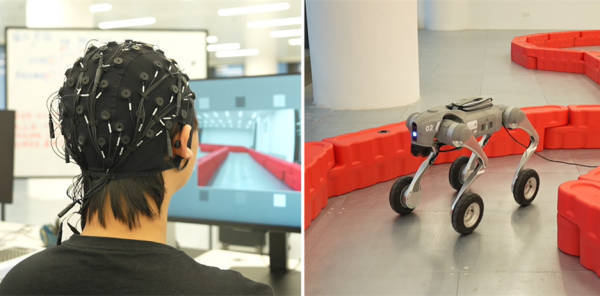
Core Insights - Brain-computer interfaces (BCIs) are emerging technologies that allow for direct communication between the brain and external devices, gaining significant attention from both domestic and international tech giants [1][2][4] - The development of BCIs is seen as a crucial step towards human-machine integration, with potential applications in gaming, communication, and rehabilitation [1][4][49] Industry Overview - The BCI industry is characterized by a mix of hardware and software companies, with a trend towards full-chain solutions, although specialization is expected to emerge as the industry matures [5][6][8] - Current BCI companies can be categorized based on their academic and technical backgrounds, influencing their focus areas such as materials, communication, or robotics [5][6] Technological Development - Understanding of the brain remains rudimentary, with ongoing efforts to decode brain signals and improve communication systems [4][19] - The BCI field is heavily reliant on high-quality data, particularly intracranial data, which is challenging to obtain but essential for training effective models [15][19][20] Data and Model Training - The success of BCI applications hinges on the volume, signal-to-noise ratio, and usability of the data collected [19][20] - The company aims to create a foundational algorithm that can empower various applications within the BCI ecosystem, similar to how OpenAI's models function in AI [11][14] Market Challenges - The lack of consumer-ready BCI products is attributed to the nascent stage of the industry and regulatory hurdles for invasive devices [48][49] - Non-invasive products have not yet achieved widespread acceptance due to performance limitations, necessitating improvements in functionality to increase market penetration [48][49] Future Prospects - The BCI industry is expected to see significant advancements in the next 3 to 5 years, with a growing number of practical applications becoming available to consumers [49][50] - China is positioned to accelerate its BCI development, leveraging its vast clinical resources and data advantages compared to Western counterparts [55][56]

“十五五”规划点名,科技巨头押注,脑机接口为啥火?
Guan Cha Zhe Wang· 2025-11-10 08:41
Core Insights - Brain-computer interfaces (BCIs) are emerging technologies that allow for direct communication between the brain and external devices, gaining significant attention from both domestic and international tech giants [1][3]. Industry Overview - The BCI industry is recognized in China's "14th Five-Year Plan" and is attracting investments from major players like Elon Musk and others [1]. - BCIs can be categorized into invasive, semi-invasive, and non-invasive types, each with its own advantages and disadvantages [30][31]. Current State of Research - Current understanding of the brain is still rudimentary, with researchers likening the process of decoding brain signals to deciphering ancient scripts [5][6]. - The development of BCIs is seen as a cyclical process where advancements in technology lead to better understanding of the brain, which in turn enhances BCI systems [6][7]. Company Positioning - Companies in the BCI space can be classified based on their focus on hardware, software, or a full-chain approach, with each having its own academic and technical roots [7][9]. - The company 岩思类脑 aims to develop core algorithms that serve as a foundational layer for the BCI industry, similar to how OpenAI operates in the AI space [10][11]. Data and Model Training - The company emphasizes the importance of large datasets for training AI models in the BCI field, noting that China has a significant advantage in data availability compared to other countries [14][22]. - High-quality data is crucial for effective model training, with a focus on signal-to-noise ratio and data diversity [18][19]. Technological Advancements - Recent advancements include the ability to decode speech from brain signals in patients with epilepsy, showcasing the potential for practical applications of BCIs [35][36]. - The company has also developed a non-invasive BCI application for gaming, demonstrating the technology's versatility and potential for consumer engagement [44][48]. Market Challenges - The BCI market faces challenges in product commercialization, particularly for invasive devices that require medical certification before they can be widely used [48][49]. - Non-invasive products have yet to achieve a level of functionality that encourages consumer adoption, necessitating improvements in usability [48][49]. Future Outlook - The BCI industry is expected to see significant growth in the next 3 to 5 years, with the potential for widespread consumer adoption of effective BCI devices [50]. - The competitive landscape is characterized by rapid advancements in technology and increasing investment, positioning BCIs as a critical area of focus in global tech competition [57][64].

中国经济信心说丨加快场景培育和开放 尽快把“试验田”变成“高产田”
Yang Shi Xin Wen Ke Hu Duan· 2025-11-10 03:06
Core Viewpoint - The Chinese government emphasizes the importance of creating application scenarios to accelerate the commercialization of "black technology" and enhance new productive forces, ultimately supporting high-quality economic and social development [1][2]. Group 1: Importance of Scenarios - Scenarios are likened to "experimental fields" for testing new technologies, which are essential for transforming "black technology" into new productive forces [1]. - The government aims to build various types of scenarios, including comprehensive major scenarios and high-value niche scenarios, to facilitate the rapid application of new technologies and products [1][2]. Group 2: Challenges and Solutions - Despite the potential of "black technology," large-scale commercial applications face challenges, such as the need for policy adjustments and technological upgrades [2]. - The approach of "testing in small areas" is suggested to address development issues, allowing for gradual exploration and problem-solving [2][3]. Group 3: Role of Government and Market - The government is tasked with expanding the supply of production, work, and living scenarios to encourage social capital investment and facilitate the transformation of technological achievements into productive forces [3]. - Opening up scenario resources is expected to stimulate market competition, enabling companies to benefit from technological advancements and efficiency improvements [3]. Group 4: Future Growth Areas - The "14th Five-Year Plan" suggests promoting emerging industries such as quantum technology, biomanufacturing, hydrogen energy, and brain-computer interfaces as new economic growth points [3]. - Establishing typical application scenarios for these future industries, along with innovative regulatory approaches, is crucial for fostering the development of small and medium-sized enterprises and nurturing unicorn companies [3].
热潮再起 抢占潮头正当时
Si Chuan Ri Bao· 2025-11-09 22:32
Core Insights - Sichuan is accelerating the development of frontier technologies such as the metaverse and brain-computer interfaces, establishing a favorable industrial development trend in smart manufacturing and cultural tourism [1] - The metaverse concept is experiencing a resurgence due to technological breakthroughs and policy support, with brain-computer interfaces transitioning from laboratory settings to market applications [1] Industry Overview - Key technologies in the metaverse are rapidly advancing, including interaction technologies represented by brain-computer interfaces, spatial computing, and artificial intelligence [1] - The global metaverse market is projected to grow at a compound annual growth rate (CAGR) of 50.74% from 2022 to 2030, with the domestic market expected to exceed 2.4 trillion yuan by 2026 and potentially surpass 5.8 trillion yuan by 2030 [1][1] Sichuan's Strategic Initiatives - Sichuan has launched the "Action Plan for Breakthroughs in Brain-Computer Interface and Human-Computer Interaction Industry (2025-2030)," focusing on innovation, product development, application scenarios, and ecosystem construction [1] - The "Western Brain Valley" in Chengdu has been established, leveraging clinical resources from Sichuan University to create a multifunctional ecosystem for brain-computer interface research and development [1] Challenges and Recommendations - Despite early development and initial industry chain formation, Sichuan faces challenges in financing and patent acquisition, with local companies taking longer to obtain patent authorization compared to the national average [1] - Experts suggest leveraging AI technology to enhance evaluation and decision-making efficiency, and encourage participation in standard formulation and core technology breakthroughs [1]
【西街观察】乌镇里的中国科技新叙事
Bei Jing Shang Bao· 2025-11-09 12:55
Core Insights - The emergence of the "Six Little Dragons" during the World Internet Conference in Wuzhen highlights the innovative narratives in China's technology sector, particularly in robotics, brain-computer interfaces, and AI [1][2][4] - The shift from traditional internet services to AI-driven solutions signifies a new era of cross-industry integration and the rise of startups in the AI landscape [2][3] Group 1: Industry Trends - The transition from "Internet+" to "AI+" reflects a significant evolution in global technology, showcasing the deepening penetration of the internet into various sectors [2][3] - The AI era is fostering numerous entrepreneurial opportunities, with startups leveraging unique technologies and insights to reshape everyday life [2][3] Group 2: Company Developments - Companies like Yushu Technology and Qunhe Technology are making strides in their respective fields, with Yushu focusing on cost-effective and high-performance robotics [1][3] - The IPO activities of companies such as Qunhe Technology and Yushu Technology indicate a growing interaction between technology and capital markets, validating the value of emerging players [3] Group 3: Ecosystem Importance - A robust ecosystem comprising foundational research, application technologies, and financial support is crucial for the success of new tech ventures [3] - The rise of smaller companies, referred to as "Little Dragons" and "Little Tigers," signifies a diversification of innovation and investment opportunities within the tech landscape [3][5]
机械设备:意念赋能新生活,脑机接口启新篇
Huafu Securities· 2025-11-09 07:46
Investment Rating - The industry rating is "Outperform the Market" [8] Core Insights - The first Neuralink brain-computer interface (BCI) implant recipient, Nolan Abbot, has regained significant abilities, such as typing and playing games using thoughts, and is pursuing a degree in neuroscience [3] - Abbot's device, named "Eve," has shown promising results, with plans for a major announcement in early 2026, marking two years since the implant [5] - The BCI market is projected to grow rapidly, with a global market size expected to reach approximately $2.62 billion in 2024, $2.94 billion in 2025, and $12.4 billion by 2034, reflecting a compound annual growth rate (CAGR) of 17.35% over ten years [6] Summary by Sections - **Market Growth Potential**: The BCI market is anticipated to expand significantly, with China's market expected to grow from 3.2 billion yuan in 2024 to 6.14 billion yuan by 2028, supported by national strategic initiatives [6] - **Clinical Trials and Applications**: As more individuals participate in clinical trials, Neuralink's technology is expected to continue to evolve, aiding patients in regaining normalcy and showcasing broad potential across various applications [5] - **Investment Opportunities**: Companies to watch include Yanshan Technology, Hanwei Technology, Sanbo Brain Science, Innovation Medical, Dongfang Zhongke, Xiangyu Medical, Entropy Technology, Chengyitong, Weisi Medical, Mcland, Aipeng Medical, and Beiyikang [7]
一批前瞻性引领性企业与项目接连落地 “热带雨林式”创新创业大生态蓬勃生长 “站位”闵行积蓄“长期领跑”强动能
Jie Fang Ri Bao· 2025-11-09 02:33
Core Insights - Minhang District has achieved significant economic milestones, with a GDP surpassing 400 billion yuan and total fiscal revenue exceeding 90 billion yuan, ranking second in Shanghai [1] - The district's leadership emphasizes its strategic location as a vital hub connecting the Yangtze River Delta and the global market [1] Economic Development - Minhang has maintained a research and development expenditure of approximately 8% of its GDP, leading the city in this regard, reflecting a long-term commitment to investment in innovation [3] - The district has received 13 national science and technology awards and 210 municipal awards during the 14th Five-Year Plan period, showcasing its focus on fostering specialized and innovative enterprises [3] - The establishment of the "Haijuyingcai" entrepreneurship park aims to support talent and innovation through various zero-cost and zero-burden initiatives [3] Industrial Growth - Minhang is actively developing three major industrial clusters: advanced energy equipment and green low-carbon, aerospace, and biomedicine [3] - The "Brain-Intelligence World" industrial park, dedicated to brain-computer interface technology, is under construction, covering an area of 100,000 square meters and attracting 10 companies in the sector [3][4] Strategic Initiatives - The "Greater Hongqiao" initiative has positioned Minhang as a key player in internationalization and dual circulation, with significant growth in the Hongqiao International Central Business District [5][6] - The district has seen the establishment of 28,000 enterprises, including 275 headquarters, with tax revenues exceeding 10 billion yuan for two consecutive years [5] Innovation and Collaboration - Minhang aims to create a world-class innovation bay area, with the establishment of a 10 billion yuan "Dalinghao Bay Technology Innovation Fund" to support technological advancements [7] - Collaboration with local universities has led to the establishment of nearly 200 companies focused on compliance entrepreneurship, enhancing the region's innovation ecosystem [7] Future Vision - Minhang's future goals include becoming an international open hub, a source of technological innovation, a highland for new industrial chains, and a model for urban living [7]

浦东构建“大城养老”样板,加速释放万亿元级市场空间
Di Yi Cai Jing Zi Xun· 2025-11-08 11:49
Core Viewpoint - Pudong aims to attract more investment in the elderly care sector, establishing itself as a new highland for the silver economy in China [1] Group 1: Policy and Planning - Pudong will incorporate "promoting the development of the silver economy" into its 14th Five-Year Plan and elderly care service support policies [2] - The district has the largest elderly population in Shanghai, with 1.13 million registered elderly residents and an aging rate of 33.47% by 2024 [2] - A significant market potential of over one trillion yuan is being released as the elderly population becomes the primary demand group [2] Group 2: Infrastructure and Services - Pudong has established a comprehensive elderly care service network with 182 care institutions, over 36,000 beds, and more than 2,000 community care facilities [2] - The district has implemented innovative medical and elderly care integration practices, with 60 institutions having internal medical facilities [2] - Smart healthcare platforms have benefited over 3,600 elderly individuals, showcasing a leading model of integrated medical and elderly care [2] Group 3: Industry and Innovation - Pudong has formed a robust industrial foundation and innovative ecosystem for elderly care, supported by key industries like integrated circuits, biomedicine, and artificial intelligence [3] - Local chip companies are addressing challenges in smart elderly care products, enhancing the technological capabilities of the sector [3] - The district is home to pioneering health management products and companies that cater to chronic diseases and rehabilitation needs of the elderly [3] Group 4: Economic Development and Collaboration - Pudong has established the Zhangjiang Smart Elderly Care Industrial Park, gathering nearly 80 innovative companies to create a full-chain ecosystem [4] - The district has launched a recommended directory for age-friendly products, enhancing market recognition and accessibility [4] - Financial cooperation is being deepened to empower the entire elderly care industry chain, with strategic partnerships aimed at providing financial support and innovative insurance solutions [5]
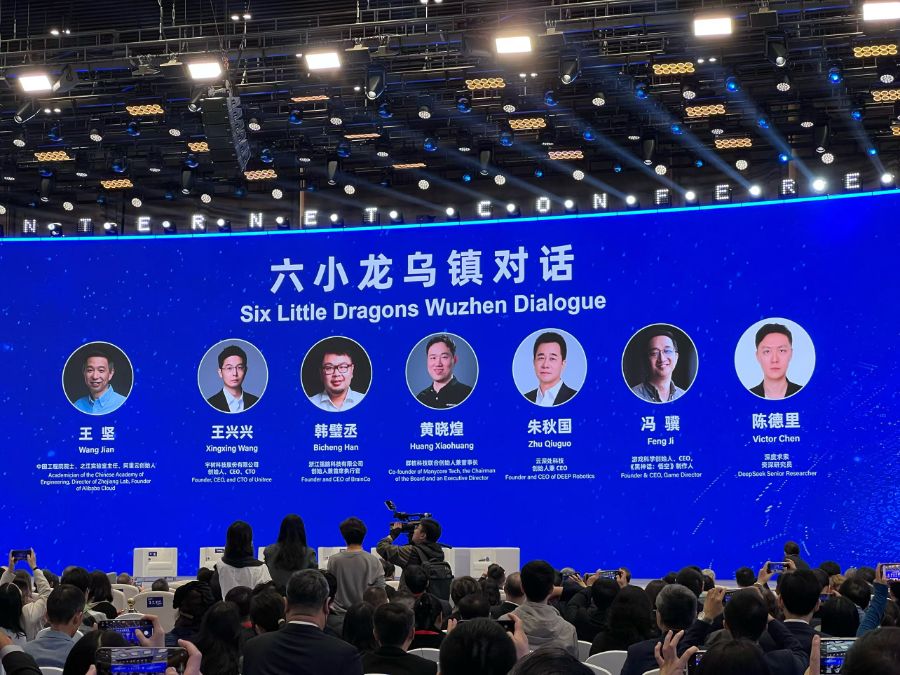
“杭州六小龙”聚首,梁文锋缺席
财联社· 2025-11-08 07:40
Core Insights - The "Six Little Dragons of Hangzhou" are leading advancements in various cutting-edge fields such as brain-computer interfaces, robotics, spatial intelligence, game technology, and open-source AI, showcasing China's transformation from a follower to a leader in technology [3][4][7]. Group 1: Industry Trends - The brain-computer interface sector has experienced significant growth over the past decade, transitioning from a niche interest to practical applications, driven by supportive policies [7]. - The rapid development of the robotics industry is attributed to China's strong manufacturing capabilities and core component integration technologies, enabling the creation of cost-effective and high-performance robots [9]. - The gaming industry in China has seen substantial growth, with local teams producing high-quality content that resonates with domestic users, as evidenced by the success of titles like "Black Myth: Wukong" [8]. Group 2: Technological Challenges - The lack of unified data standards in the field of embodied intelligence poses challenges for the development and integration of robotic systems [11]. - The complexity of human brain signal interpretation in brain-computer interfaces presents significant technical hurdles, particularly in applications like prosthetics [12]. - The robotics sector faces dual challenges of computational power and scene adaptability, necessitating innovative approaches to reduce data and computational requirements [14]. Group 3: Strategic Shifts - Companies are shifting their business models from serving human clients to focusing on machine clients, anticipating a future where the number of machines may exceed that of humans [13]. - The introduction of Spatial AI and digital twin products aims to address market needs in industrial robotics, reflecting a strategic pivot towards advanced technological solutions [14]. - The emphasis on open-source models in AI development is seen as a way to democratize access to technology and mitigate risks associated with monopolistic practices [14].

杭州六小龙,乌镇大会首次同框
2 1 Shi Ji Jing Ji Bao Dao· 2025-11-08 04:28
Core Insights - The "Six Little Dragons" of Hangzhou showcased their advancements and challenges in various tech sectors during the Wuzhen Internet Conference, highlighting the rapid development of AI and its implications for their industries [1][3]. Group 1: Industry Developments - Yushutech's CEO Wang Xingxing noted that AI is accelerating the development of the robotics industry, particularly in humanoid robots, which are relatively easier to advance compared to other cutting-edge technologies [3]. - Qiangnao Technology's founder Han Bicheng emphasized that brain-computer interfaces have transitioned from laboratory concepts to impactful products, such as aiding the visually impaired, with their second-generation sleep product aimed at improving sleep for those with insomnia [3]. - Qunke Technology's founder Huang Xiaohuang identified spatial intelligence as a significant field following large language models, applicable in robotics and video generation [3]. - Yundongchu Technology's CEO Zhu Qiuguo stated that robots will ultimately assist humans in addressing dangerous tasks in the workplace [3]. - Game Science's Feng Ji highlighted that China's gaming industry has the largest user base and market size globally, having developed significantly over the past decade [3]. Group 2: Challenges and Risks - The "Six Little Dragons" expressed concerns about the challenges posed by AI development. Wang Xingxing pointed out that while large language models have made significant progress, the training data for robotics cannot be decoupled from the robots themselves, leading to a lack of standardization [4]. - Han Bicheng mentioned that serious brain diseases like Alzheimer's and autism currently lack effective treatments, but AI could aid in data collection and analysis [4]. - Huang Xiaohuang warned that the rise of AI could lead to the replacement of traditionally stable creative jobs [4]. - Zhu Qiuguo noted that robotics faces power supply bottlenecks, and dexterous hands struggle with complex tasks in uncertain environments [4]. - Feng Ji raised concerns about the potential monopolization of technological advantages by fewer individuals and companies due to AI advancements, posing a significant risk [5]. - Chen Deli from Deep Exploration emphasized the need for effective and stable algorithms for AI, advocating for continuous learning in real-world environments [6].