
脑机接口

Search documents
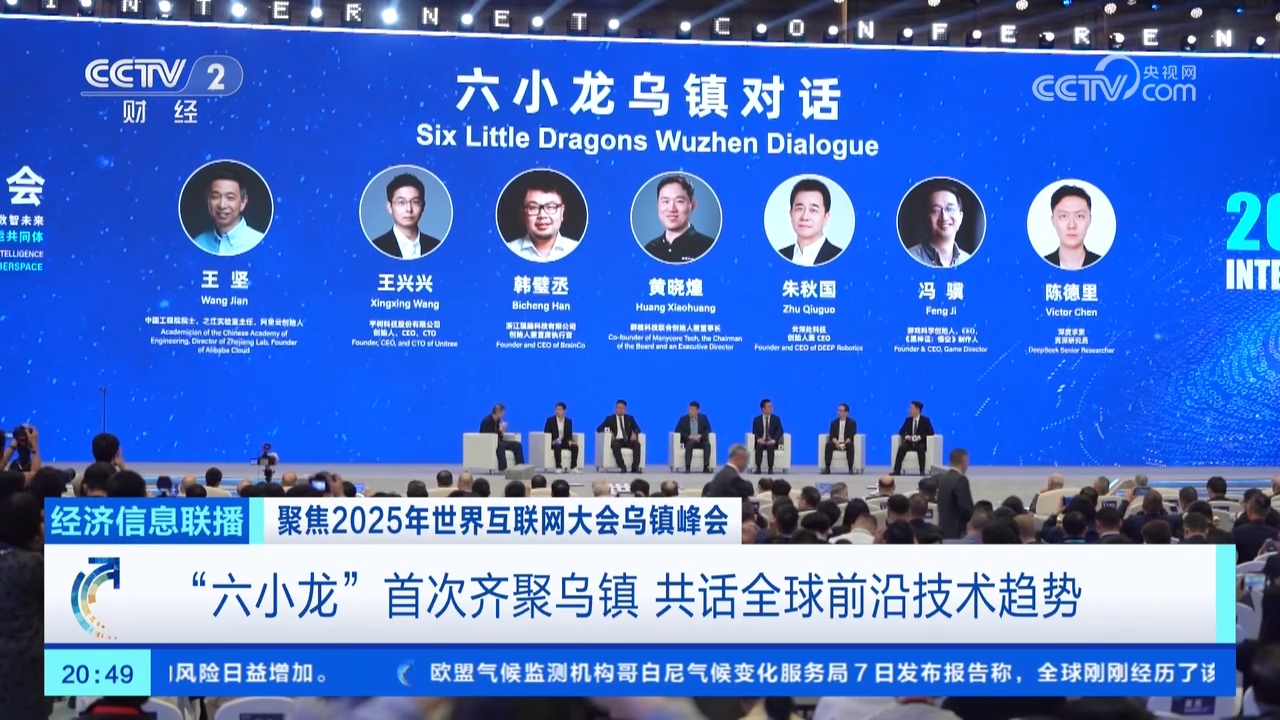
“六小龙”首次齐聚乌镇 他们都谈了些什么?记者探访
Yang Shi Wang· 2025-11-07 17:23
Core Insights - The "Six Little Dragons" of Hangzhou, representing cutting-edge industries like artificial intelligence and brain-computer interfaces, gained prominence at the World Internet Conference in Wuzhen [1][3] - The emergence of innovative companies like the "Six Little Dragons" is attributed to the integration and expansion of China's internet and various technologies and industrial ecosystems [3] Group 1: Company Perspectives - Huang Xiaohuang, co-founder and chairman of Qunke Technology, noted that the company's growth parallels the dynamic evolution of China's internet, marking a transition from the internet era to the AI era [3] - Feng Ji, founder and CEO of Game Science, highlighted that China's gaming industry has the largest user base and market size globally, fostering talent and innovation [3] - Wang Xingxing, founder and CEO of Yushu Technology, expressed optimism about the rapid advancement of embodied intelligence, which is supported by China's strong manufacturing capabilities and favorable entrepreneurial environment [3] Group 2: Industry Trends - Chen Deli, a senior researcher at Deep Exploration, emphasized the importance of open cooperation and shared technology as a core advantage for company development [4] - Han Bicheng, founder and CEO of Qiangnao Technology, pointed out that brain-computer interfaces have been included in China's 14th Five-Year Plan as a key area for future industrial development [4] - Zhu Qiuguo, founder and CEO of Yunshe Technology, mentioned that robots are increasingly applicable in various scenarios, with aspirations for quadruped robotic dogs to reach any land area in the future [4]

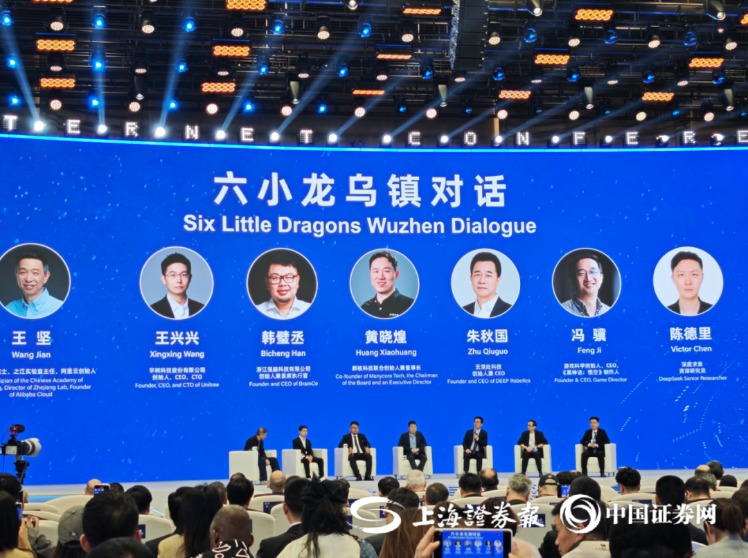
“杭州六小龙” 乌镇同台
Shang Hai Zheng Quan Bao· 2025-11-07 15:08
Core Insights - The "Six Little Dragons of Hangzhou" gathered at the World Internet Conference in Wuzhen, showcasing their growth and innovation in the tech industry, highlighting the supportive ecosystem fostered by the conference [1][2][3] Company Highlights - Yushut Technology has grown from three employees in 2016 to over 1,000, attributing its success to the support from Hangzhou for startups [2] - Qiangnao Technology moved its headquarters back to Hangzhou in 2018, experiencing rapid development in the brain-computer interface sector, which is now recognized as a key technology in China's 14th Five-Year Plan [3] - Qunke Technology transitioned from an internet company to a spatial intelligence company, reflecting the broader trends in China's internet development [3] - Yundong Technology has successfully developed quadruped robots that can operate in various environments, aiming to make them capable of reaching any land area [3] - Game Science, known for its game "Black Myth: Wukong," emphasizes the potential of Chinese teams to compete with international standards, benefiting from a large user base and talent pool [4] Industry Trends - The robotics industry is experiencing accelerated growth due to advancements in AI, with expectations for significant developments in the coming years [5][6] - Brain-computer interface technology is evolving from experimental stages to products that can impact daily life, with a focus on helping those in need before expanding to general consumers [6] - The future is envisioned as a world filled with robots, necessitating advancements in spatial intelligence to manage and coordinate these machines effectively [6][7] Technical Challenges - The robotics sector faces challenges related to the inadequacy of embodied intelligence AI models, including data discrepancies and the need for unified data collection methods [12] - Brain-computer interfaces encounter difficulties in data collection and analysis, requiring AI models to learn neural control logic [12][13] - The industry is urged to innovate to reduce reliance on computational power and data, facilitating the integration of robots into factories and homes [13]
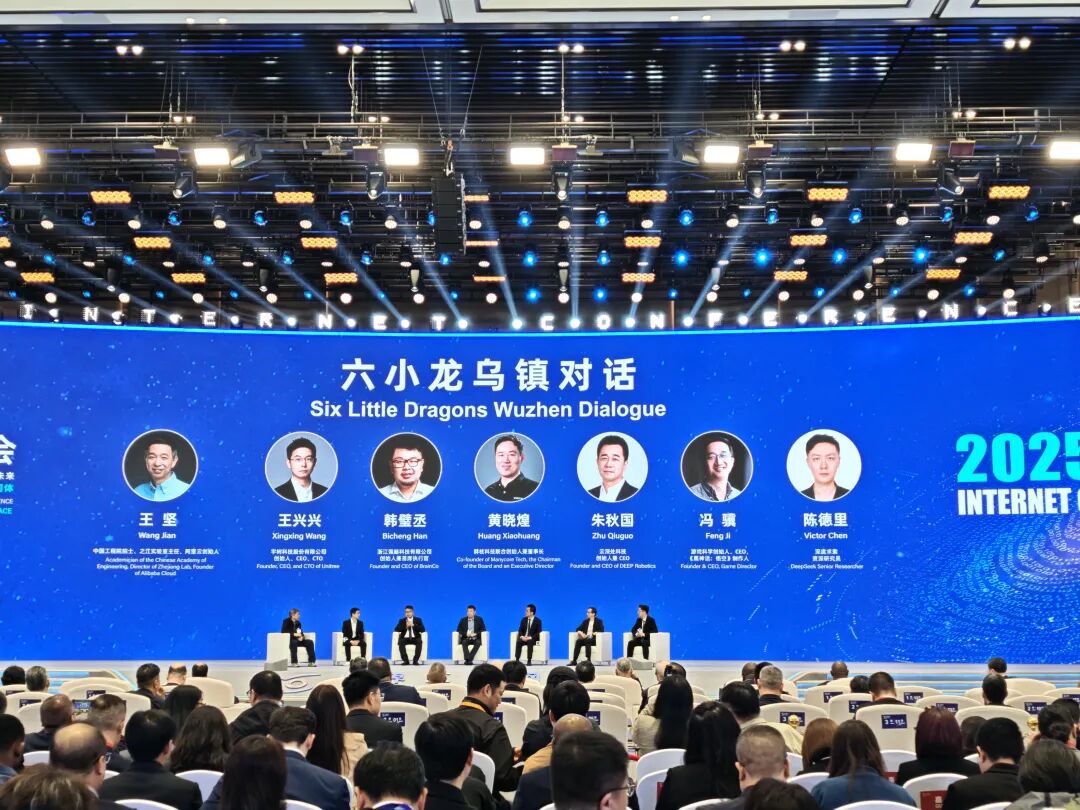
“杭州六小龙”乌镇论道:AI创业十年路与未来破局点
Zhong Guo Zheng Quan Bao· 2025-11-07 14:56
Core Insights - The emergence of the "Hangzhou Six Little Dragons" has drawn global attention to China's AI innovation capabilities and has prompted exploration of the underlying innovation patterns [1] - The dialogue at the World Internet Conference highlighted the entrepreneurial experiences and governance of AI development among these six companies [1][3] Group 1: Past Achievements - The founding of the "Hangzhou Six Little Dragons" primarily occurred within the last decade, coinciding with rapid growth in China's internet and technology sectors [3] - Wang Xingxing from Yushu Technology noted significant advancements in embodied intelligence, stating that recent developments in robotics have made previously sci-fi concepts a reality [4] - Han Bicheng, founder of Qiangnao Technology, emphasized the commercialization of brain-computer interface technology, which has gained momentum in recent years [4] - Huang Xiaohuang of Qunhe Technology discussed the transformation from internet-focused initiatives to AI-driven solutions, reflecting the broader shift from the internet era to the AI era [5] - Zhu Qiuguo expressed optimism about the future of intelligent robotics, aiming for widespread application across various scenarios [5] - Feng Ji highlighted the importance of the gaming industry in showcasing technological advancements and the growing trust in domestic teams [6] Group 2: Future Challenges and Responsibilities - Wang Xingxing identified the main challenge in embodied intelligence as the lack of unified standards and sufficient model structures and data [7] - Zhu Qiuguo mentioned the need for innovation to reduce computational and data requirements for robotics [7] - Han Bicheng pointed out the challenges in data collection and analysis in the brain-computer interface field, emphasizing the need for AI to enhance brain science research [7] - Chen Deli from DeepSeek stated that the AI revolution is still in its early stages, urging tech companies to promote technology accessibility while being aware of potential risks [8] - Feng Ji raised concerns about the concentration of AI technology within a few companies and advocated for embracing advanced AI technologies to enhance human capabilities [8]

特斯拉,大消息!通过
Xin Lang Cai Jing· 2025-11-07 14:04
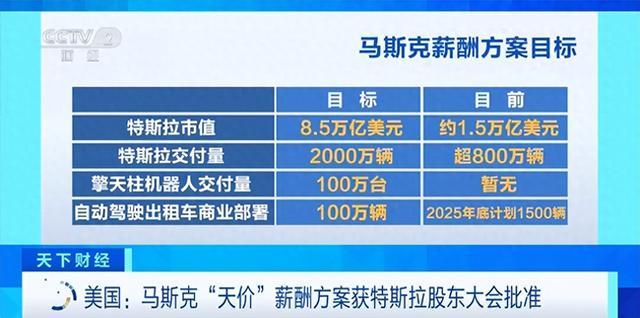
Core Points - Tesla's annual shareholder meeting approved CEO Elon Musk's ambitious compensation plan, which could potentially yield nearly $1 trillion in stock options over the next decade if specific performance targets are met [1][2] - The approval came with 75% of voting shareholders in favor, despite some opposition from major shareholders like the Norwegian sovereign wealth fund [2][4] Summary by Category Compensation Plan - Musk's compensation plan requires achieving several milestones, including increasing Tesla's market value to $8.5 trillion from approximately $1.5 trillion, and delivering 20 million vehicles compared to over 8 million currently [2] - Additional targets include deploying 1 million autonomous taxis and delivering 1 million Optimus humanoid robots, with no prior deliveries of the latter [2] Market Reaction - Following the announcement of the approval, Tesla's stock price rose approximately 2% in after-hours trading on the same day [1] Musk's Position - Musk had previously threatened to leave Tesla if the compensation plan was rejected, indicating a potential shift of focus to his other ventures, including xAI, SpaceX, and Neuralink [4]

强脑科技创始人韩璧丞:把脑机接口技术变成真实产品
2 1 Shi Ji Jing Ji Bao Dao· 2025-11-07 12:05
Core Viewpoint - The company is focused on developing non-invasive brain-computer interface technology aimed at creating real-world products to assist individuals with disabilities, particularly those without limbs, enabling them to lead normal lives [1] Group 1: Technology Development - The company is pursuing a technology roadmap that emphasizes addressing urgent needs first, referred to as "from pain to large" [1] - The CEO highlighted the potential of non-invasive brain-computer interfaces to create products that allow individuals to control prosthetic limbs through thought [1] Group 2: Product Expansion - The company plans to expand its product offerings, with a second-generation sleep product expected to launch next year aimed at helping individuals with sleep issues [1] - A weight management product is also in development, scheduled for release in the following year, continuing the focus on solving everyday problems through brain-computer interface technology [1]
“读懂大脑”!前沿科技亮相进博,脑机接口露锋芒
2 1 Shi Ji Jing Ji Bao Dao· 2025-11-07 08:41
Core Insights - Brain-computer interface (BCI) technology is revolutionizing treatment for patients with conditions previously deemed untreatable, such as paralysis, Parkinson's disease, and blindness, by establishing new neural pathways between the brain and external devices [1] - The Chinese government has released supportive policies aimed at enhancing the BCI industry, with a goal to cultivate 2 to 3 globally influential leading companies and a number of specialized small and medium enterprises by 2030 [1] - The 2025 China International Import Expo showcased several leading global companies presenting cutting-edge BCI innovations, indicating strong momentum in the industry [1] Industry Developments - The precision of electrode placement in the brain is critical for BCI technology, as any minor deviation during surgery can lead to permanent damage to patients' language, movement, or cognitive functions [2] - Siemens Healthineers introduced a comprehensive BCI solution at the expo, which integrates advanced imaging technologies for preoperative planning, intraoperative navigation, and postoperative assessment, facilitating the transition of BCI from research to clinical application [2] - Key imaging devices showcased include the MAGNETOM Cima.X MRI, NAEOTOM Alpha CT, and ARTIS icono ceiling Xpand, which provide a robust imaging platform for BCI surgeries [2] Product Innovations - The devices presented have been successfully utilized in Neuralink's clinical trials, enhancing the precision and safety of invasive BCI surgeries [3] - Medtronic's Percept RC, a rechargeable and sensing closed-loop brain stimulator, represents a significant advancement in the field, enabling real-time analysis of brain activity for personalized treatment [3] - The Percept RC made its debut in China at the expo, promising to offer advanced treatment options for patients with Parkinson's disease and other neurological disorders, marking a new era in neuroregulation and BCI technology [3]
收评:沪指震荡调整微跌0.25%,电池材料、有机硅方向集体走强
Xin Lang Cai Jing· 2025-11-07 07:10
板块题材上,有机硅、化工、能源金属、海南自贸区、光伏设备、港口航运板块涨幅居前;AI语料、量子科技、人形机器 人、云计算、脑机接口板块跌幅居前。盘面上,磷化工、电池上游材料板块集体爆发,天际股份、丰元股份、澄星股份、金浦 钛业、清水源等股涨停。海南自贸区板块再度活跃,海马汽车、海南矿业双双封板。光伏设备板块同样表现积极,弘元绿能、 亿晶光电双双涨停。此外,CPO、能源金属、港口航运板块盘中均有所异动。另一方面,人形机器人概念股多股下挫,恒帅股 份、力星股份盘中跌超10%,浙江荣泰、斯菱股份、安培龙跟跌。AI应用方向同样表现不佳,当虹科技、三六零、海天瑞声等 股下挫。 A股三大指数今日集体调整,截至收盘,上证指数跌0.25%,深证成指跌0.36%,创业板指跌0.51%,北证50涨0.19%。沪深 京三市全天成交额20202亿元,较上日缩量557亿元。全市场超3100只个股下跌。 ...
高新区(滨江):“两新”融合再启新程
Hang Zhou Ri Bao· 2025-11-07 03:19
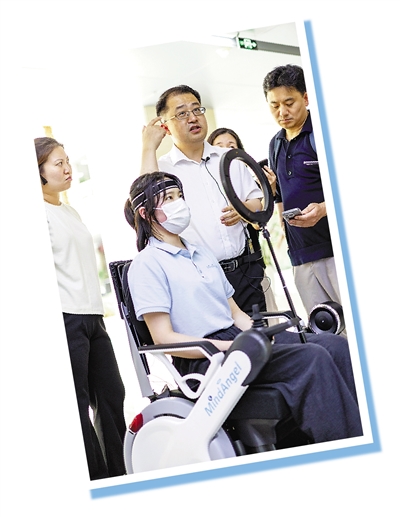
Core Insights - The article highlights the advancements in brain-computer interface technology by Manan Intelligent Technology, showcasing its potential in rehabilitation for patients with severe motor impairments [6][7] - The High-tech Zone (Binjiang) is positioned as a leader in digital economy and high-quality manufacturing, with significant growth in industrial output and a focus on innovation [8][11] Company Insights - Manan Intelligent has been deeply involved in the brain-computer interface field for over a decade, successfully developing a complete set of proprietary systems that fill a domestic technology gap [7] - The company's brain-controlled wheelchair system allows users to operate it solely through brain activity, providing hope for stroke patients and those with severe movement disorders [6][7] - Manan Intelligent has achieved small-scale production of its products and showcased them at the World Internet Conference [6] Industry Insights - The High-tech Zone (Binjiang) reported an industrial output value of 699.8 billion yuan from January to September, maintaining double-digit growth for eight consecutive months [8] - The core value added of the digital economy reached 1,605.1 billion yuan, accounting for 70% of the GDP [8] - The region is actively fostering industrial clusters in smart IoT, integrated circuits, artificial intelligence, and high-end software, with significant revenue growth in advanced manufacturing clusters [8][10] - The area is embracing future industries such as quantum technology, biomanufacturing, and brain-computer interfaces as part of its strategic development [9][10]
“十五五”新风口,专访五年规划深度参与者董煜:锚定4大新兴产业和6大未来产业
3 6 Ke· 2025-11-07 00:05
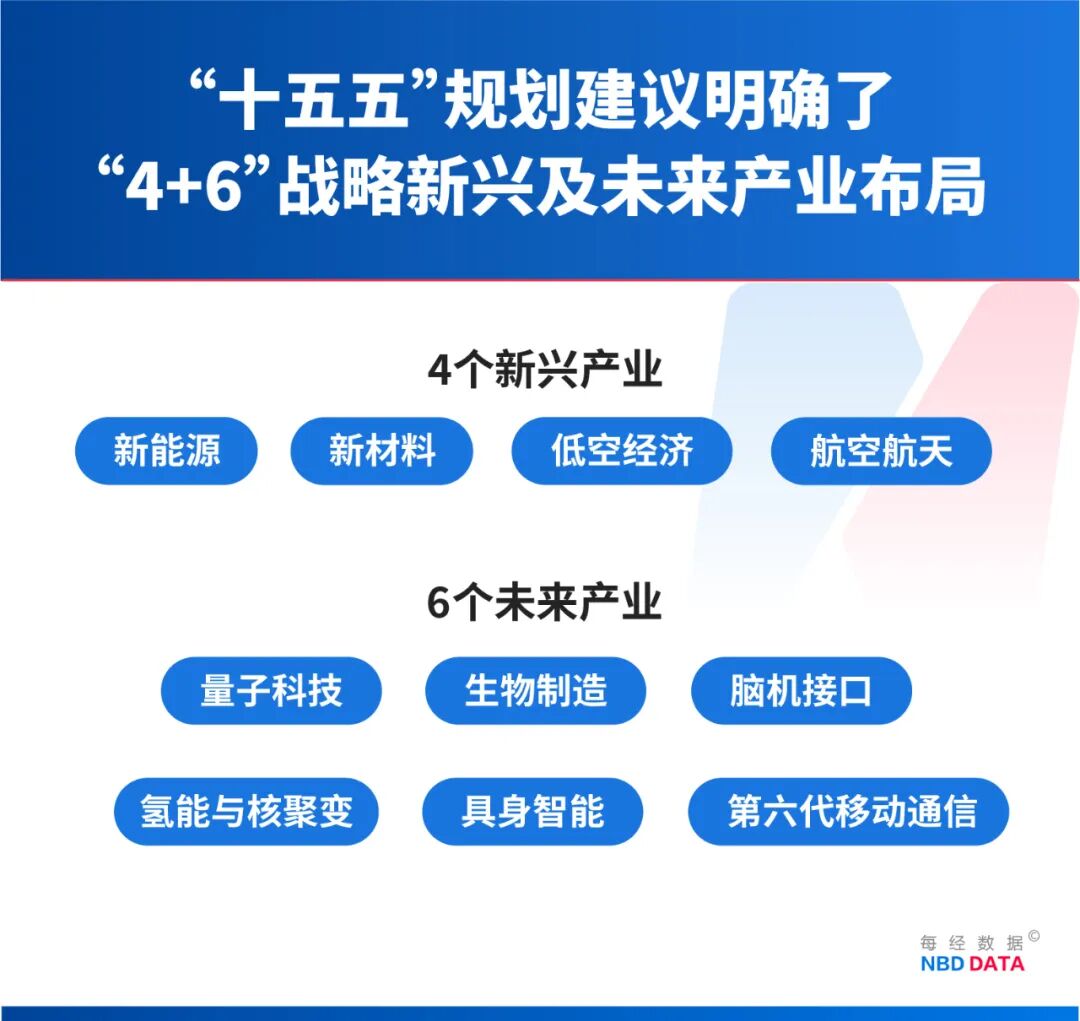
Group 1: Economic and Industrial Development - The "15th Five-Year Plan" emphasizes the construction of a modern industrial system as a foundation for economic modernization, highlighting the importance of strengthening the real economy and core competitiveness in response to external changes [2][4]. - The plan identifies "4+6" strategic emerging and future industries, with four emerging industries (new energy, new materials, low-altitude economy, and aerospace) expected to become pillar industries, while six future industries (quantum technology, biomanufacturing, brain-computer interfaces, hydrogen energy and nuclear fusion, embodied intelligence, and sixth-generation mobile communication) are recognized for their potential growth [7][4]. - The plan aims to enhance traditional industries and foster new and future industries, positioning new quality productivity as a priority for development [4][7]. Group 2: Social and Employment Policies - The plan places significant emphasis on improving people's livelihoods, focusing on three high-quality aspects: full employment, high-quality real estate development, and high-quality population development [11][12]. - It aims to address employment issues by ensuring sufficient job opportunities while enhancing job quality and sustainability, directly impacting household income [11]. - The plan proposes comprehensive support for family planning and child-rearing, aiming to create a family-friendly society and alleviate the burdens of child-rearing, thereby enhancing overall happiness [12]. Group 3: Market and Regulatory Framework - The plan stresses the need to eliminate barriers to building a unified national market, providing clear guidance for market participants and enhancing the efficiency of market operations [13][16]. - It emphasizes the establishment of six foundational market institutions, including property rights protection and market access, to reduce transaction costs and uncertainties in the market [13][16]. - The plan aims to create a favorable market environment by regulating competition and ensuring fair practices among market entities [16].
开展脑机接口技术“体系化攻关”(迈向“十五五”的创新图景)
Ren Min Ri Bao· 2025-11-06 22:11
Core Insights - Brain-computer interface (BCI) technology is a cutting-edge human-machine interaction technology that enables direct communication between the brain and external devices, allowing for the realization of human intentions through brain wave recognition [1][4]. Group 1: Technological Developments - The Tianjin University neuroengineering team has made significant advancements in non-invasive BCI technology, including the development of the "Shengong" robot, which allows disabled individuals to regain grasping ability through brain signal control [1]. - The "Shengong" series of technologies have various applications, such as non-invasive intracranial pressure measurement, rapid diagnosis of hydrocephalus, objective diagnosis of mental illnesses like depression, and personalized treatment plans for neurological diseases [2][4]. Group 2: Clinical Applications and Future Directions - The establishment of the first comprehensive clinical trial area for BCI in China and the initiation of a multi-center clinical trial for neurocritical care mark significant milestones in the application of BCI technology beyond traditional motor and cognitive function recovery [2]. - The focus for the upcoming "15th Five-Year Plan" includes systematic research on BCI technology, from foundational chips and electrodes to core algorithms and system integration, aiming to enhance interdisciplinary talent cultivation and contribute to public health [2][3]. Group 3: Challenges in Brain Disease Treatment - The complexity of the human brain and the presence of the blood-brain barrier pose significant challenges for monitoring and treating brain diseases, leading to limited understanding and treatment options [3][4]. - BCI technology offers new avenues for diagnosing and treating brain diseases by enabling precise decoding of neural signals and overcoming the limitations of traditional drug delivery methods [4][5].