
农业

Search documents
专访品牌南非姆普法内:非洲首届G20峰会为中资提供历史性机遇
2 1 Shi Ji Jing Ji Bao Dao· 2025-11-11 23:37
Core Insights - South Africa is signaling new cooperation opportunities to global investors, particularly from China, in the context of global green transition and supply chain restructuring [1][2] - The South African Investment Conference held in Beijing emphasized the potential for collaboration in renewable energy, fintech, and agri-tech, highlighting the urgency for early participation [1][5] Renewable Energy - South Africa is actively promoting investments in renewable energy, including hydrogen, solar, and wind energy projects, creating ample opportunities for external investors [4][5] - The urgency for investment in renewable energy is underscored, with the potential for significant mutual benefits for both South Africa and China [5] Financial Services - The financial services sector in South Africa is mature and well-developed, presenting new growth opportunities, particularly in fintech [5] - South Africa encourages Chinese enterprises to engage in digital banking, payments, credit, and blockchain collaborations [5] Agriculture - Agriculture remains a crucial economic pillar for South Africa, with increasing opportunities for investment and collaboration in agri-tech [5] - The opening of the Chinese market has facilitated the entry of more South African products, enhancing bilateral agricultural cooperation [5] Key Mineral Resources - South Africa possesses abundant "critical minerals" essential for battery and renewable energy industries, ranking fifth globally in mining GDP contribution [2][8] - The country produces nearly 60% of the world's platinum group metals, providing a significant resource base for potential investors [2] Strategic Positioning - South Africa serves as a strategic gateway for Chinese investors looking to enter the African market, leveraging its industrialization and financial infrastructure [2][7] - The upcoming G20 summit in South Africa is expected to enhance the country's role in attracting high-quality investments and promoting sustainable development [2][6] Youth and Talent - South Africa has a relatively young population, which is adaptable to new technologies, providing a dynamic labor force for future industries [9] - The country’s industrial base and financial services support innovation, creating a conducive environment for technology-driven investments [9]
阿塞拜疆与白俄罗斯举行政府间经济合作委员会第十五次会议
Shang Wu Bu Wang Zhan· 2025-11-11 15:59
Core Insights - Azerbaijan and Belarus have signed an agreement to expand economic cooperation, focusing on joint project implementation and coordination of working groups [1] Economic Cooperation - The 15th meeting of the Azerbaijan-Belarus Intergovernmental Economic Cooperation Commission was held, leading to the signing of documents aimed at enhancing economic collaboration [1] - Azerbaijan's Vice Prime Minister stated that the trade volume between Azerbaijan and Belarus is expected to reach $510 million in 2024, representing a 42% year-on-year increase [1] Sectoral Developments - Both countries have achieved practical results in various sectors, including agriculture, machinery manufacturing, municipal services, pharmaceuticals, logistics, and trade investment [1] - The joint venture "Azerbaijan-Belarus" will continue to assemble agricultural machinery, while Belarus will expand its cooperation with the Mogilev Elevator Plant to increase elevator production in Azerbaijan, having already renovated and installed 200 elevators this year [1] - Belarusian construction companies are interested in participating in reconstruction projects in the liberated areas of Azerbaijan and establishing a joint venture for building materials production in those regions [1]
惠农“税费通”|支持乡村振兴系列税费优惠政策(42)购进农民专业合作社销售的免税农产品可以抵扣进项税额
蓝色柳林财税室· 2025-11-11 14:08
Core Viewpoint - The article discusses the eligibility and calculation methods for input tax deductions on tax-exempt agricultural products purchased from farmers' cooperatives by general VAT taxpayers [4][5]. Group 1: Eligibility for Input Tax Deductions - General VAT taxpayers can deduct input tax when purchasing tax-exempt agricultural products from registered farmers' cooperatives [2][5]. - The agricultural products must be listed in the "Scope of Agricultural Products Taxation" as per the relevant notification [5][6]. Group 2: Calculation of Input Tax Deductions - Input tax deductions can be calculated based on the purchase price of agricultural products as stated on the invoices, with a deduction rate of 9% for general agricultural products [4]. - For agricultural products used in the production or processing of goods with a 13% tax rate, the deduction rate is 10% [4].


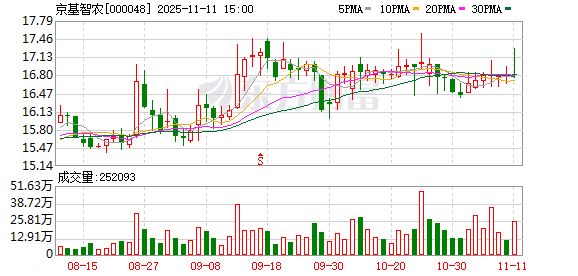
京基智农:股东股份解除质押公告
Zheng Quan Ri Bao· 2025-11-11 10:08
Core Viewpoint - Jingji Zhino announced the release of share pledges by its controlling shareholder, Jingji Group, indicating a positive development for the company's stock liquidity and potential investor confidence [2] Summary by Relevant Sections - **Share Pledge Release** - Jingji Group has released a total of 6,500,000 shares from pledge, which accounts for 5.44% of its holdings in Jingji Zhino and 1.23% of the company's total share capital [2] - **Implications for Investors** - The release of shares from pledge may enhance market perception and investor confidence in Jingji Zhino, potentially leading to increased trading activity [2] - **Ownership Structure** - Following the release, Jingji Group's ownership in Jingji Zhino remains significant, which may provide stability in the company's governance and strategic direction [2]

《佛山市环西江—北江区镇村高质量发展先行区总体规划》印发实施
Nan Fang Ri Bao Wang Luo Ban· 2025-11-11 09:25
Core Insights - The "Foshan Ring Xijiang - Beijiang District Town and Village High-Quality Development Pilot Zone Overall Plan" was officially implemented on November 10, outlining strategic goals for the region [1] - The plan aims to establish the area as a leading zone for cultural tourism integration, a hub for strategic emerging industries, and a showcase for "Colorful Foshan" by the end of 2030 [1] - By 2035, the plan envisions a comprehensive formation of high-quality urban-rural integration and the realization of socialist modernization [1] Group 1 - The strategic positioning of the Ring Xijiang - Beijiang Pilot Zone includes three key areas: urban-rural coordinated development, green economic growth, and high-quality tourism [1] - The plan identifies six core towns and six surrounding towns for development, aiming to create a new regional development pattern with eastern leadership, central rise, and western and northern catch-up [1][2] - The future spatial layout will consist of "one core, one circle, two corridors, three districts, and four groups," focusing on a comprehensive development nucleus centered around Xiqiao Mountain [2] Group 2 - The plan emphasizes six key areas for systematic advancement, including the establishment of a modern industrial system, the creation of a cultural tourism integration framework, and the enhancement of transportation and public service facilities [2] - The development will focus on four new urban town groups: Southwest, Danzao - Bainai, Xiqiao, and Jiujing - Longjiang [2] - The initiative aims to integrate agricultural, industrial, and cultural tourism sectors into the development strategy [2]
西南期货早间评论-20251111
Xi Nan Qi Huo· 2025-11-11 07:38
Report Summary Investment Ratings The report does not mention any industry investment ratings. Core Views - **Treasury Bonds**: Difficult to have a trending market, maintain caution [6][7] - **Stock Index Futures**: Low risk of significant decline, consider going long at an appropriate time [9][10] - **Precious Metals**: Short - term pricing is relatively full, take profit on previous long positions and then wait and see [11][12] - **Rebar and Hot - Rolled Coils**: Prices may remain weak in the medium term, look for short - selling opportunities at high levels during rebounds [13] - **Iron Ore**: Market supply - demand pattern weakens, short - term may continue to be weak, look for short - selling opportunities at high levels [15] - **Coking Coal and Coke**: Look for buying opportunities on pullbacks [17] - **Ferroalloys**: May continue to have oversupply in the short term, consider long positions at low levels when spot falls into the loss range [19][20] - **Crude Oil**: Temporarily wait and see [22][23] - **Fuel Oil**: Look for short - selling opportunities [25][26] - **Polyolefins**: Look for long - buying opportunities [27][28] - **Synthetic Rubber**: Oscillate [29][30] - **Natural Rubber**: Look for long - buying opportunities [31][32] - **PVC**: Pay attention to supply - side changes [33][34] - **Urea**: Limited downside space [35][36] - **PX**: May oscillate and adjust, consider trading within the range [37][38] - **PTA**: May oscillate, be cautious and control risks [39] - **Ethylene Glycol**: May be under pressure in the short term, pay attention to port inventory and supply changes [40][41] - **Short - Fiber**: May oscillate following costs, control risks [42] - **Bottle Chips**: May oscillate following the cost side, control risks [43] - **Lithium Carbonate**: Pay attention to consumption sustainability [44] - **Copper**: High - level oscillation, beware of phased corrections [45][46] - **Aluminum**: Run at a high level, beware of phased corrections [47][48][49] - **Zinc**: Oscillate within a range, high - sell and low - buy [50][51] - **Lead**: Oscillate and adjust [52][53][54] - **Tin**: May oscillate and strengthen [55] - **Nickel**: May oscillate [56] - **Soybean Oil and Meal**: Consider exiting long positions on soybean meal rallies; look for long - buying opportunities for soybean oil at low - cost support levels [57][58][59] - **Palm Oil**: Consider buying on pullbacks [60][61][62] - **Rapeseed Meal and Oil**: Consider buying near - term contracts and selling far - term contracts for rapeseed meal [63][64] - **Cotton**: Expected to be weak, there is pressure above [65][66] - **Sugar**: Oscillate [67][68][70] - **Apples**: Run strongly [71][72][73] - **Hogs**: Consider short - selling on rebounds [74][75] - **Eggs**: Consider adding short positions on rebounds [76][77] - **Corn and Starch**: Corn may face supply pressure, wait and see; corn starch may follow corn's trend [78][79][80] Summary by Category Treasury Bonds - **Market Performance**: Most Treasury bond futures rose in the previous trading session. The 30 - year main contract rose 0.22% to 116.280 yuan, the 10 - year main contract rose 0.01% to 108.485 yuan, the 5 - year main contract rose 0.02% to 105.940 yuan, and the 2 - year main contract remained flat at 102.468 yuan [5] - **Open Market Operations**: On November 10, the central bank conducted 119.9 billion yuan of 7 - day reverse repurchase operations, with a net investment of 41.6 billion yuan [5] - **Policy and Outlook**: The State Council issued measures to promote private investment. The macro - economic recovery momentum needs to be strengthened, and monetary policy is expected to remain loose. Treasury bond futures are expected to have no trending market [6] Stock Index Futures - **Market Performance**: Stock index futures showed mixed results in the previous trading session. The CSI 300 (IF) main contract rose 0.28%, the SSE 50 (IH) main contract rose 0.45%, the CSI 500 (IC) main contract rose 0.07%, and the CSI 1000 (IM) main contract rose 0.13% [8][9] - **Policy and Outlook**: The Asset Management Association of China drafted a guideline to regulate theme - investment funds. The domestic economy is stable but the recovery momentum is weak. Stock index futures are expected to have a low risk of significant decline [9] Precious Metals - **Market Performance**: In the previous trading session, the gold main contract closed at 935.98, up 1.60%, and the silver main contract closed at 11,719, up 2.05% [11] - **Industry Data**: In the first three quarters of 2025, domestic gold ETFs increased their positions by 79.015 tons, a year - on - year increase of 164.03%. By the end of September, the domestic gold ETF position was 193.749 tons [11] - **Outlook**: The global trade and financial environment is complex, which is beneficial for gold. However, the recent increase is large, and it is recommended to take profit on long positions and wait and see [11] Rebar and Hot - Rolled Coils - **Market Performance**: Rebar and hot - rolled coil futures showed weak oscillations in the previous trading session. Tangshan billet was priced at 2950 yuan/ton, Shanghai rebar was priced at 3060 - 3200 yuan/ton, and Shanghai hot - rolled coil was priced at 3250 - 3270 yuan/ton [13] - **Supply - Demand Analysis**: Rebar demand is still declining year - on - year, but there is a slight improvement in the medium - term. Supply is in an over - capacity situation, and inventory is higher than last year. Hot - rolled coils may follow a similar trend [13] - **Strategy**: Look for short - selling opportunities at high levels during rebounds [13] Iron Ore - **Market Performance**: Iron ore futures fell slightly in the previous trading session. PB powder was priced at 775 yuan/ton, and Super Special powder was priced at 675 yuan/ton [15] - **Supply - Demand Analysis**: Iron ore demand is falling, supply is increasing, and port inventory is rising. The supply - demand pattern is weakening [15] - **Strategy**: Look for short - selling opportunities at high levels [15] Coking Coal and Coke - **Market Performance**: Coking coal and coke futures pulled back slightly in the previous trading session [17] - **Supply - Demand Analysis**: Coking coal supply is slightly tight, and demand is improving. Coke supply is decreasing, and downstream acceptance of price increases is decreasing [17] - **Strategy**: Look for buying opportunities on pullbacks [17] Ferroalloys - **Market Performance**: Manganese silicon and silicon iron main contracts rose in the previous trading session [19] - **Supply - Demand Analysis**: Manganese ore supply is increasing, and iron alloy demand is weak. Supply is in a short - term over - supply situation [19] - **Strategy**: Consider long positions at low levels when spot falls into the loss range [19][20] Crude Oil - **Market Performance**: INE crude oil oscillated slightly in the previous trading session, closing below the 5 - day moving average [21] - **Industry News**: The number of US oil and gas rigs increased. An Indian company will comply with sanctions on Russia. OPEC will suspend production increases next year [21][22] - **Outlook and Strategy**: The increase in US crude oil production is difficult. Sanctions on Russia and OPEC's decision are beneficial for oil prices. Temporarily wait and see [22][23] Fuel Oil - **Market Performance**: Fuel oil oscillated slightly in the previous trading session, closing below the moving average [24] - **Supply - Demand Analysis**: Supply is sufficient, which is negative for prices. Sanctions on Russia and reduced Sino - US trade frictions are positive [25] - **Strategy**: Look for short - selling opportunities [26] Polyolefins - **Market Performance**: The Hangzhou PP market declined, and the Yuyao LLDPE market had partial price drops [27] - **Supply - Demand Analysis**: November maintenance will affect 41.6 tons. Social and factory inventories are low, but demand in the peak season is weak [27] - **Strategy**: Look for long - buying opportunities [28] Synthetic Rubber - **Market Performance**: The synthetic rubber main contract rose in the previous trading session [29] - **Supply - Demand Analysis**: Raw material prices fell, supply was tight in some areas, and demand and inventory improved [29] - **Outlook**: Oscillate [30] Natural Rubber - **Market Performance**: The natural rubber main contract rose in the previous trading session [31] - **Supply - Demand Analysis**: Typhoons affected production, but demand improved slightly. Inventory decreased, and Thai exports declined [31] - **Strategy**: Look for long - buying opportunities [32] PVC - **Market Performance**: The PVC main contract fell in the previous trading session, and the spot price decreased [33] - **Supply - Demand Analysis**: Supply is in an over - supply situation, and inventory is increasing. Demand is improving slightly [33][34] - **Strategy**: Pay attention to supply - side changes [34] Urea - **Market Performance**: The urea main contract fell in the previous trading session [35] - **Supply - Demand Analysis**: Supply is gradually recovering, demand is affected by environmental protection, and inventory is higher than expected [35] - **Outlook**: Limited downside space [36] PX - **Market Performance**: The PX main contract rose in the previous trading session [37] - **Supply - Demand Analysis**: PX load increased, and imports decreased. Supply is slightly reduced, and the PXN spread is strong [37][38] - **Outlook**: May oscillate and adjust, consider trading within the range [38] PTA - **Market Performance**: The PTA2601 main contract rose in the previous trading session [39] - **Supply - Demand Analysis**: PTA load adjusted, polyester load was stable, and processing fees decreased [39] - **Outlook**: May oscillate, be cautious and control risks [39] Ethylene Glycol - **Market Performance**: The ethylene glycol main contract rose in the previous trading session [40] - **Supply - Demand Analysis**: Supply decreased slightly, port inventory increased, and demand support was limited [40][41] - **Outlook**: May be under pressure in the short term, pay attention to inventory and supply changes [41] Short - Fiber - **Market Performance**: The short - fiber 2512 main contract rose in the previous trading session [42] - **Supply - Demand Analysis**: Short - fiber load increased, downstream demand was weak, and processing fees adjusted [42] - **Outlook**: May oscillate following costs, control risks [42] Bottle Chips - **Market Performance**: The bottle chips 2601 main contract rose in the previous trading session [43] - **Supply - Demand Analysis**: Bottle chips load decreased, export growth slowed, and processing fees adjusted [43] - **Outlook**: May oscillate following the cost side, control risks [43] Lithium Carbonate - **Market Performance**: The main contract rose 7.35% to 87,240 yuan/ton in the previous trading session [44] - **Supply - Demand Analysis**: Supply is at a high level, demand in the energy - storage and power - battery sectors is improving, and inventory is decreasing [44] - **Outlook**: Pay attention to consumption sustainability [44] Base Metals - **Copper**: The Shanghai copper main contract rose 0.2% to 86,500 yuan/ton. Supply is tight, demand is weak, and inventory increased. Be cautious of phased corrections [45] - **Aluminum**: The Shanghai aluminum main contract rose 0.12% to 21,675 yuan/ton. Supply is tight in the short term, demand is differentiated, and inventory increased slightly. Run at a high level, beware of corrections [47][48][49] - **Zinc**: The Shanghai zinc main contract rose 0.46% to 22,720 yuan/ton. Supply is under pressure, demand is weak, and inventory decreased. Oscillate within a range [50][51] - **Lead**: The Shanghai lead main contract rose 0.2% to 17,525 yuan/ton. Supply may be affected, demand is weak, and inventory increased. Oscillate and adjust [52][53][54] - **Tin**: The main contract rose 0.31% to 286,690 yuan/ton. Supply is tight, demand has some support, and inventory decreased. May oscillate and strengthen [55] - **Nickel**: The main contract was at 119,490 yuan/ton. Supply may be affected, demand is weak, and inventory is high. May oscillate [56] Agricultural Products - **Soybean Oil and Meal**: Soybean meal and oil main contracts rose in the previous trading session. Supply is abundant, demand has different trends. Consider different trading strategies for each [57][58][59] - **Palm Oil**: Malaysian palm oil was stable. Supply and demand factors are mixed. Consider buying on pullbacks [60][61][62] - **Rapeseed Meal and Oil**: Canola futures rose. Supply and demand and inventory vary. Consider buying near - term and selling far - term for rapeseed meal [63][64] - **Cotton**: Domestic cotton oscillated, and international cotton rose. Supply is under pressure, and demand is weak. Cotton prices are expected to be weak [65][66] - **Sugar**: Zhengzhou sugar rebounded, and international sugar rose. Supply is expected to increase, and prices may oscillate [67][68][70] - **Apples**: Apple futures rebounded. Inventory is lower than last year, but quality is poor. Prices may run strongly [71][72][73] - **Hogs**: Hog prices had mixed trends. Supply is increasing, and demand has limited growth. Consider short - selling on rebounds [74][75] - **Eggs**: Egg prices rose slightly. Supply is high, but may improve. Consider adding short positions on rebounds [76][77] - **Corn and Starch**: Corn and starch main contracts rose. Supply is under pressure, and demand has a slight increase. Corn may wait and see, and starch may follow corn [78][79][80]
收评:创业板指跌1.4%,半导体等板块走低,钙钛矿电池概念等活跃
Zheng Quan Shi Bao Wang· 2025-11-11 07:35
Market Overview - The stock indices in the two markets experienced a downward trend, with the Shanghai Composite Index barely holding above 3400 points, while the Shenzhen Component Index and ChiNext Index fell over 1% [1] - As of the market close, the Shanghai Composite Index decreased by 0.39% to 4002.76 points, the Shenzhen Component Index fell by 1.03% to 13289 points, and the ChiNext Index dropped by 1.4% to 3134.32 points, with the STAR 50 Index down by 1.42% [1] - The total trading volume in the Shanghai and Shenzhen markets reached 20,141 billion yuan [1] Sector Performance - Sectors such as insurance, brokerage, and semiconductors saw declines, while food and beverage, retail, real estate, agriculture, and pharmaceuticals showed strength [1] - Concepts related to cultivated diamonds, perovskite batteries, and lithium batteries were active in the market [1] Investment Outlook - According to Starstone Investment, the domestic market is entering a period of performance, policy, and macro event lull, with stable expectations for economic performance for the year [1] - As the year-end approaches, some funds may seek to preserve returns, leading to an overall market that may remain volatile, with fundamental factors potentially having a reduced impact on market structure [1] - In the medium to long term, the current market risk premium is at a historical median level, and equity asset valuations remain within a reasonable range [1] - Corporate profit bottoms have been confirmed, and with policy support driving economic stabilization, the expected profit-driven growth is likely to strengthen, transitioning the market from valuation-driven to fundamental-driven, thus opening further upside potential [1]

饮料市场 销售下滑丨消费参考
2 1 Shi Ji Jing Ji Bao Dao· 2025-11-11 05:07
Group 1: Beverage Market Overview - The beverage market has entered a contraction phase, with overall sales down 9% year-on-year in September, and offline sales down 10.4% [1] - Uni-President China reported that its beverage business saw a low single-digit decline in revenue for Q3, while food business revenue grew in the mid to low single digits [1] - The decline in beverage revenue is attributed to price wars on delivery platforms and industry competition, with specific categories like juice facing significant pressure [1] Group 2: Dairy Industry Impact - The dairy market is also facing challenges, with Yili noting that ready-to-drink tea is substituting liquid milk products, particularly impacting packaged liquid milk sales [2] Group 3: Production Trends - National Bureau of Statistics data indicates a weakening trend in beverage production in Q3 compared to the first half of the year, with soft drink production declining by 0.17%, 6.79%, and 10.12% year-on-year in July, August, and September respectively [3] Group 4: External Factors - Adverse weather conditions, including typhoons and heavy rain, may have also impacted beverage sales during Q3 [4] Group 5: Market Recovery Signals - There are signs that the delivery platform price wars are becoming more manageable, which could be a positive development for the beverage market [5][6][7]
10年33项首创!中新合作打造互联互通“金名片”
Xin Hua She· 2025-11-11 04:20
Core Insights - The Chongqing Connectivity Initiative (CCI) has achieved significant milestones over the past decade, including 347 government and commercial cooperation projects worth $26 billion and cross-border financing totaling $21.7 billion, resulting in 33 innovative institutional outcomes [1][5] Group 1: Project Achievements - The CCI has established itself as a key platform for China-Singapore cooperation, particularly in the context of the Belt and Road Initiative, facilitating high-level openness and development in western China [1][3] - Notable projects include the Raffles Hospital, the Chongqing Hanhai Ocean Park, and the Chongqing Multi-Modal Transport Demonstration Base, showcasing successful bilateral investment and cooperation [2][3] Group 2: Financial Innovations - The initiative has pioneered new financial models, such as the first real estate investment trust in Asia and green cross-border bonds, enhancing cost efficiency for over 100 western enterprises [3] - The Chongqing-New Singapore air corridor has expanded flight frequency from 5 to 24 weekly, with over 1,900 flights recorded from January to October, marking a 20.2% year-on-year increase [3] Group 3: Data and Connectivity - The establishment of the Chongqing International Internet Data Dedicated Channel has tripled the efficiency of cross-border data transmission, facilitating data sharing across multiple provinces [3][5] - The "Land-Sea New Corridor" has successfully shipped over 1 million standard containers to 581 ports in 127 countries and regions, enhancing international trade [3] Group 4: Educational and Research Initiatives - The National University of Singapore has set up a research institute in Chongqing, fostering innovation and education by incubating 45 tech companies and training 103 PhD students [5] - Regular events such as the "Singapore-Chongqing Week" and the "Chongqing-Singapore Experience Week" have been established to promote cultural and economic exchanges [5]
1-9月阿塞拜疆财政支出25亿美元用于经济活动
Shang Wu Bu Wang Zhan· 2025-11-11 03:14
Core Insights - Azerbaijan's fiscal spending for economic activities in the first nine months of the year amounted to 4.25 billion manats (2.5 billion USD), reflecting a year-on-year decrease of 1.35 billion manats (790 million USD), a decline of 24.1% [1] Summary by Category Agriculture - Spending in the agriculture sector reached 770 million manats (450 million USD), showing a year-on-year increase of 110 million manats (64.7 million USD), with a growth rate of 16.2% [1] Social Security and Welfare - Expenditure on social security and welfare was 3.36 billion manats (1.98 billion USD), which is an increase of 270 million manats (160 million USD) compared to the previous year, representing a growth of 8.9% [1] Healthcare - Healthcare spending totaled 890 million manats (520 million USD), which is a decrease of 520 million manats (300 million USD) year-on-year, marking a decline of 36.7% [1]