
军工制造

Search documents
龙虎榜复盘 | 商业航天爆发,军工午后再度大涨
Xuan Gu Bao· 2025-11-24 11:03
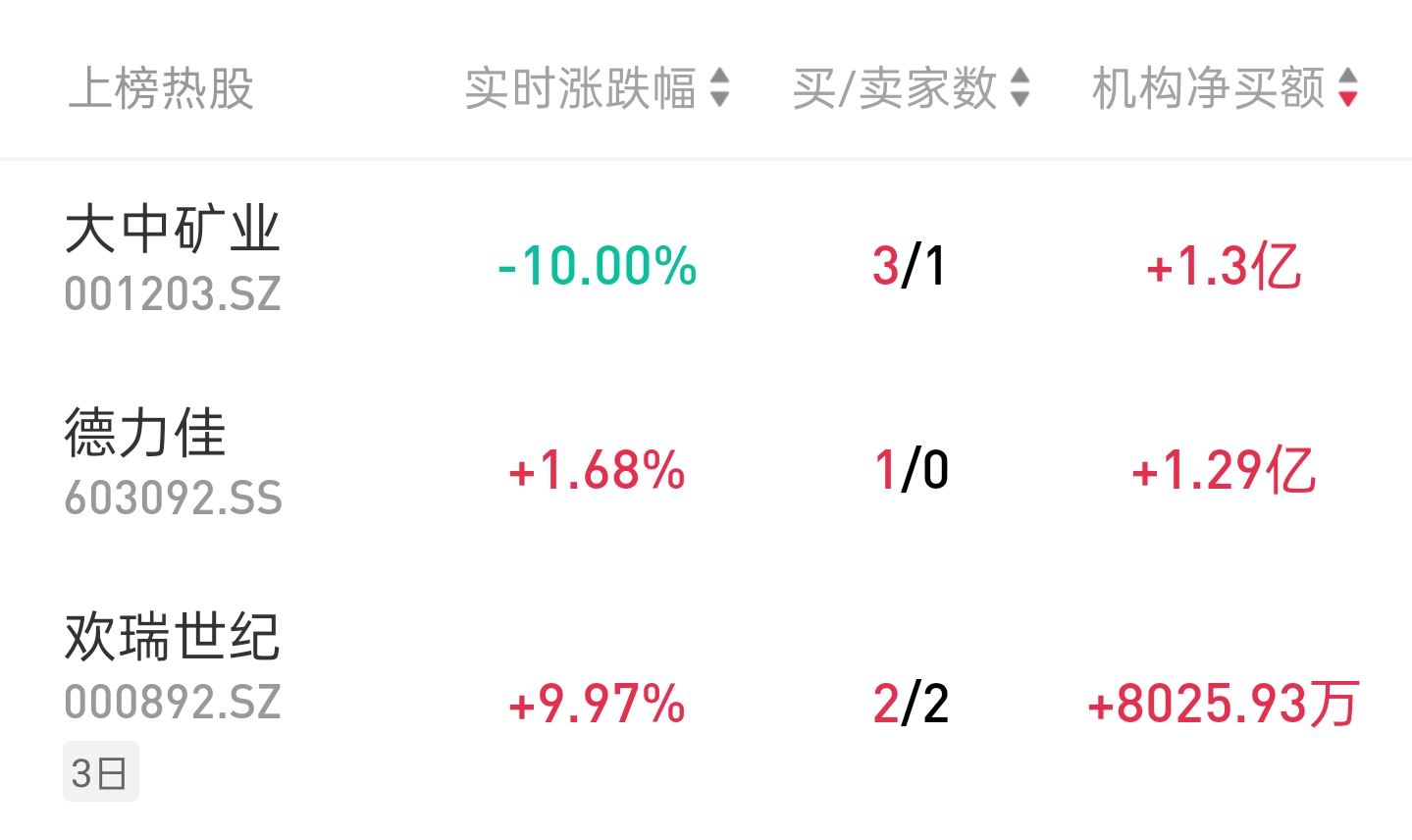
Group 1: Stock Market Activity - On the institutional trading list, 32 stocks were featured, with 14 experiencing net buying and 18 facing net selling [1] - The top three stocks with the highest institutional buying were: Dazhong Mining (130 million), Delijia (129 million), and Huanrui Century (80.25 million) [1] - Huanrui Century entered a strategic partnership with Shanghai Jieyue Xingchen Intelligent Technology Co., aiming to establish the "Linyue" AI Joint Laboratory, integrating AI models for film content production [1] Group 2: Aerospace and Defense Industry - The commercial aerospace sector is witnessing a significant shift with the upcoming first flights of several reusable rockets, including Zhuque-3 and others, expected between late 2025 and early 2026 [4] - The Chinese government has initiated the commercial satellite IoT business trial, marking a step forward in the satellite internet sector [2] - The military industry is seeing companies like Jianglong Shipbuilding and Beifang Changlong gaining qualifications for producing military vessels and equipment, indicating growth in defense capabilities [4]


港股速报|港股强势反弹 最大看点在这里
Mei Ri Jing Ji Xin Wen· 2025-11-24 09:28
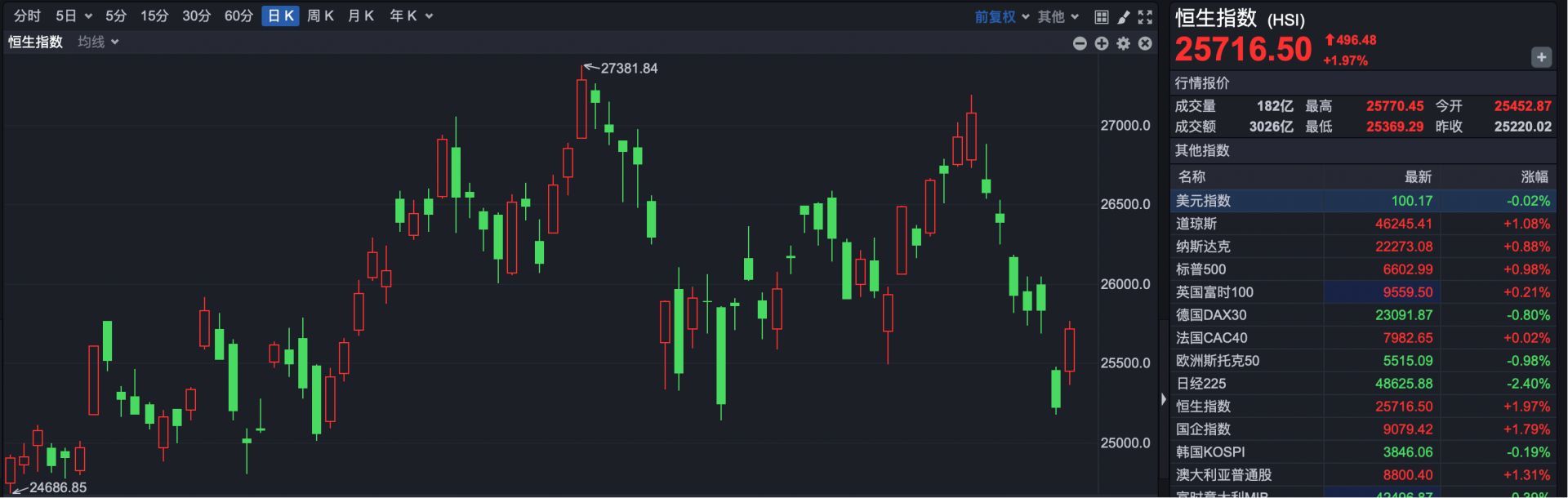
Market Overview - The Hong Kong stock market experienced a strong rebound, with the Hang Seng Index closing at 25,716.50 points, up 496.48 points, a rise of 1.97% [1] - The Hang Seng Tech Index closed at 5,545.56 points, increasing by 150.07 points, a gain of 2.78% [4] Alibaba's Performance - Alibaba (HK09988) saw a significant recovery after a previous decline of nearly 20%, with a maximum intraday increase of nearly 6% and a final closing rise of 4.67% [3] - The AI assistant app, Qianwen, launched by Alibaba, achieved over 10 million downloads within a week, surpassing competitors like ChatGPT and Sora, marking it as the fastest-growing AI application in history [6] Analyst Insights - Dongfang Securities highlighted Alibaba's strengthened AI application layout through Qianwen, predicting enhanced full-stack AI advantages and potential for multi-directional growth within Alibaba's business ecosystem. They maintained a target price of HKD 206.11 and a "buy" rating [6] - CMB International emphasized Alibaba's ambition in C-end AI applications, reaffirming its leadership position as a full-stack AI provider and predicting accelerated profitability and valuation recovery. They maintained a target price of USD 204 for Alibaba's US stock [6] Sector Performance - The technology sector saw widespread gains, with notable increases in stocks such as Kuaishou (over 7%), NetEase (over 5%), and Baidu (over 4%) [7] - Other sectors also performed well, including innovative pharmaceuticals and automotive stocks, with GAC Group rising over 12% [7] Future Outlook - Goldman Sachs' chief strategist for Chinese stocks, Liu Jinjun, stated that the current AI-driven market rally is not a bubble, as local tech companies still have room for growth in valuation and profitability [9] - The firm forecasts a 12% to 13% profit growth for Chinese companies next year, significantly higher than the expected 2% to 3% for this year, with an overall market upside of about 30% by 2027 [9]

AI应用+军工双爆发!硬件退潮、热点转向
Jiang Nan Shi Bao· 2025-11-24 09:02
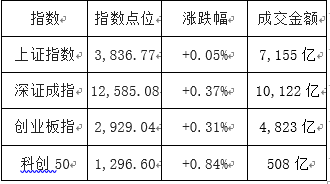
Market Overview - The A-share market experienced a "downward inertia, bottoming rebound, and volume contraction with broad gains" after last week's significant drop, indicating a technical rebound in market sentiment [1] - As of the close on November 24, the Shanghai Composite Index rose by 0.05% to 3,836.77 points, the Shenzhen Component Index increased by 0.37% to 12,585.08 points, and the ChiNext Index gained 0.31% to 2,929.04 points, with total trading volume at 1.7 trillion yuan, a decrease of 243.3 billion yuan from the previous Friday [2][3] Technical Analysis - The Shanghai Composite Index formed a small bullish candlestick above the 3,800-point level, indicating a typical technical resistance after a sharp decline [3] - Despite the broad gains in individual stocks, heavyweight stocks showed weak performance, and the lack of volume support suggests that the rebound may not be solid [3] - Key observations include whether the volume-contracted rebound can continue, if AI applications can take over from hardware as the new mainline, and whether the 3,865-point resistance can be broken [3] Industry and Hotspot Capture - A significant style switch occurred in the market, with funds abandoning lithium battery resources and computing hardware in favor of AI applications and military aerospace, marking a shift from supply-side speculation to demand-side investment [4] - AI applications saw a collective surge, with companies like BlueFocus, Shengrui, and others experiencing significant gains, driven by Alibaba's "Qianwen" app surpassing 10 million downloads and strong performance in US AI application stocks [5][6] - The military and commercial aerospace sectors also saw strong performance, driven by geopolitical tensions and policy expectations, with companies like Jianglong Shipbuilding and others benefiting from these trends [7] Forward Strategy - The current market shows a technical rebound after a sharp decline, with a focus on two signals: whether the 3,865-point resistance can be broken and if the AI application sector can maintain its momentum [8] - Mid-term strategies should focus on new mainlines such as AI applications and military aerospace while avoiding high-position hardware and pure resource themes [9] - Short-term strategies should consider low-position sectors with event-driven catalysts, employing a strategy of "mainline rotation, high-low switching, and rhythm management" to navigate the volatile market [10][11]
港股收盘 | 恒指收涨1.97% 科技股表现强势 快手-W劲升逾7%
Zhi Tong Cai Jing· 2025-11-24 09:01
多位美联储高级官员"放鸽",12月降息预期再次升温。港股三大指数今日集体走高,恒指盘中涨超 2%,恒科指数一度涨超3%。截止收盘,恒生指数涨1.97%或496.48点,报25716.5点,全日成交额为 3026.42亿港元;恒生国企指数涨1.79%,报9079.42点;恒生科技指数涨2.78%,报5545.56点。 华泰证券认为,近期市场波动率上升,流动性、情绪和风险偏好是主要原因。在市场波动放大的情况下 部分投资者再度担忧转弱的经济数据与股市之间"背离"问题,该行对此并不悲观。国内资产重估主线脉 络未变,资金寻找核心资产的诉求也未变,但估值向盈利的切换和内外资的重新平衡要求配置思路需要 更加去伪存真。港股本轮调整相对 A 股更早、跌幅也更深,当前位置已经开始具备性价比。 蓝筹股表现 阿里巴巴-W(09988)表现亮眼。截至收盘,涨4.67%,报154.5港元,成交额307.21亿港元,贡献恒指 104.44点。阿里巴巴微信公众号今早发消息称,公测一周,千问APP下载量突破1000万。据悉,该应用 超越ChatGPT、Sora、DeepSeek,成为史上增长最快的AI应用。 其他蓝筹股方面,快手-W(0102 ...

港股速报 | 港股强势反弹 最大看点在这里!
Mei Ri Jing Ji Xin Wen· 2025-11-24 08:53
今天,港股市场的最大看点来自阿里巴巴(HK09988),在前期累计跌幅近20%之后,阿里今日最大涨 幅一度接近6%,最终收涨4.67%。 今日(11月24日),港股市场终于迎来强势反弹。 截至收盘,恒生指数报收于25716.50点,上涨496.48点,涨幅1.97%。 恒生科技指数报收于5545.56点,上涨150.07点,涨幅2.78%。 消息面,有报道称阿里旗下的AI助手千问App公测一周,下载量已突破1000万次,超越ChatGPT、 Sora、DeepSeek等,成为史上增长最快的AI应用。报道显示,千问App上线后仅三天,就冲入苹果App Store免费总榜前三,一周便突破1000万下载量。"千问恐慌"也成为海外社交媒体讨论的热词。 东方证券最新研报指出,阿里通过千问APP加大AI应用布局力度,看好AI应用布局完善后阿里的全栈AI 优势强化,且千问APP可与集团其他生活服务双向赋能,实现流量共享与收入提速,看好千问APP在阿 里业务内的多方向增长潜力。东方证券维持上次估值及目标价206.11港元,维持"买入"评级。 招商证券(香港)则认为,千问APP的发布,彰显阿里C端AI原生应用的野心。阿里作为全 ...
港股收评:恒指涨1.97%,科技股回暖,医药股走强
Ge Long Hui· 2025-11-24 08:47
Market Overview - The Hong Kong stock market showed a rebound with the Hang Seng Index rising by 1.97% to close at 25,716 points, the Hang Seng China Enterprises Index increasing by 1.79% to 9,079 points, and the Hang Seng Tech Index climbing by 2.78% to 5,545 points, ending a streak of declines [1][2]. Sector Performance - Major technology stocks experienced a collective recovery, with Kuaishou rising over 7%, NetEase and Bilibili increasing over 5%, and Alibaba, Baidu, Meituan, Tencent, JD.com, and Xiaomi all showing gains [4][5]. - The defense sector saw significant gains, with China Shipbuilding Industry Corporation surging nearly 13%, and other defense stocks like AVIC and Aerospace Holdings also rising [6][7]. - The biopharmaceutical sector performed well, with notable increases in companies such as Innovent Biologics and Hengrui Medicine, reflecting a growing interest in quality Chinese biotech firms [5][6]. Investment Insights - Analysts from Guotai Junan Securities noted that the AI wave is not over, and the inflow of new capital along with the gathering of quality assets may continue to support a bullish trend in the Hong Kong stock market [4]. - The real estate sector showed strength, with companies like Country Garden and China Overseas Development rising over 2%, as analysts remain optimistic about the recovery of core cities and the potential for value reassessment in commercial properties [7][8]. International Influences - Semiconductor and chip stocks faced downward pressure, particularly after news that the U.S. may allow the sale of Nvidia's H200 chips to China, impacting companies like Hua Hong Semiconductor and SMIC [9][10]. - Oil stocks declined as international crude oil prices continued to fall, with major oil companies like CNOOC and PetroChina seeing losses due to ongoing market assessments of geopolitical developments [8][9]. Capital Flows - Southbound capital saw a net inflow of HKD 2.604 billion, indicating continued interest from mainland investors in Hong Kong stocks [10]. Future Outlook - China Galaxy Securities suggested that investor sentiment is heavily influenced by expectations of U.S. Federal Reserve interest rate cuts and geopolitical tensions, with a potential for continued volatility in the market [12].

港股收评:恒指涨1.97%、科指涨2.78%,科网股、军工股及创新药概念股走高,锂电及芯片股走低
Sou Hu Cai Jing· 2025-11-24 08:36
Market Performance - The Hong Kong stock market saw significant gains on November 24, with the Hang Seng Index rising by 1.97% to 25,716.5 points, the Hang Seng Tech Index increasing by 2.78% to 5,545.56 points, and the National Enterprises Index up by 1.79% to 9,079.42 points [1] - Major technology stocks performed well, with Alibaba up 4.67%, Tencent Holdings up 2.38%, JD Group up 1.9%, Xiaomi up 1.52%, NetEase up 5.87%, Meituan up 2.72%, Kuaishou up 7.11%, and Bilibili up 5.67% [1] - Defense stocks showed strong performance, with China Shipbuilding Industry Corporation rising over 13% [1] - Gold stocks saw a late surge, with Tongguan Gold increasing over 5% [1] - Innovative drug concepts gained traction, with WuXi AppTec rising over 5% [1] - Lithium battery stocks led the decline, with Ganfeng Lithium down over 5%, and semiconductor stocks also fell, with Hua Hong Semiconductor down nearly 5% and SMIC down over 1% [1] Company News - Huya Technology reported Q3 revenue of $532 million, a year-on-year increase of 27.6%, with adjusted EBITDA reaching $47.05 million, up 37.3% [2] - Changjiang Garment announced a mid-term performance report for the six months ending September 30, 2025, with revenue of HKD 85.59 million, a 13.67% increase, but a loss of HKD 53.31 million, widening by 67.8% year-on-year [2] - Maple Leaf Education expects a net profit of no less than RMB 300 million for the fiscal year ending August 31, 2025 [3] - Nanxuan Holdings reported revenue of approximately HKD 2.8305 billion for the six months ending September 30, 2025, a 1.6% increase, with a net profit of HKD 336 million, up 12.7% [3] Corporate Actions - Tencent Holdings repurchased 1.042 million shares for HKD 636 million at prices between HKD 606.5 and HKD 614.5 [8] - Xiaomi Group repurchased 8 million shares for HKD 303 million at prices between HKD 37.64 and HKD 38.04 [8] - China Feihe repurchased 12.3 million shares for HKD 51.4 million at prices between HKD 4.14 and HKD 4.2 [8] - Various companies, including China Petroleum & Chemical Corporation and CNOOC, also engaged in share repurchases, indicating a trend of companies returning capital to shareholders [9][10] Institutional Insights - Guotai Junan noted that the Hong Kong stock market has entered a correction phase due to previous gains and tightening dollar liquidity, but the bull market is expected to continue with inflows of new capital and quality assets [11] - Huatai Securities suggested that the Hong Kong market is entering a phase for positioning, with left-side investors gradually building positions despite increased volatility [12] - CITIC Securities highlighted that the volatility in global risk assets is primarily due to liquidity issues, with concerns about the sustainability of AI infrastructure in North America exacerbating market corrections [12] - Dongwu Securities indicated that while short-term fluctuations are expected, the current positioning in the Hong Kong market is attractive for long-term investments [12]


港股收评:恒指涨约2% 科技股集体反弹 军工股尾盘加速上涨
Ge Long Hui· 2025-11-24 08:25
市场情绪回升,港股今日高开高走,且午后涨幅进一步扩大。截止收盘,恒生指数涨1.97%报25716 点,国企指数涨1.79%,恒生科技指数涨2.78%,三者均止步连跌行情。盘面上,连续走低的大型科技 股集体回暖,其中,快手涨超7%,网易涨超6%,百度、小米、美团、阿里巴巴、京东皆上涨;受地缘 政治影响,军工股尾盘加速上涨,中船防务大涨近13%大幅领先表现十分抢眼;生物医药股、黄金股、 濠赌股、家电股、内房股、苹果概念股、餐饮股等纷纷上涨。另一方面,美国拟允许英伟达H200芯片 对华销售,芯片半导体股逆势下跌,龙头中芯国际跌超1%,12条中日航线取消全部航班,航空股低 迷,国际原油延续跌势,三桶油集体走低。(格隆汇) ...
收评:创业板指探底回升涨0.31% 军工股集体活跃
Xin Hua Cai Jing· 2025-11-24 07:44
Market Overview - On Monday, A-shares saw a rebound with all three major indices closing in the green. The Shanghai Composite Index closed at 3836.77 points, up 0.05%, with a trading volume of 715.5 billion yuan. The Shenzhen Component Index rose 0.37% to 12585.08 points, with a trading volume of 1012.2 billion yuan. The ChiNext Index increased by 0.31% to 2929.04 points, with a trading volume of 482.3 billion yuan. The total trading volume for both markets was 1.73 trillion yuan, a decrease of 237.9 billion yuan from the previous trading day [1]. Sector Performance - The commercial aerospace sector saw significant gains, with ten stocks hitting the daily limit. The military industry also performed well, with China Shipbuilding Defense rising for four consecutive days. AI application stocks surged, with several stocks like Jiuxi Software and Shenguang Group hitting the daily limit. Conversely, lithium mining stocks fell sharply, with Shengxin Lithium Energy hitting the daily limit down. The computing hardware sector weakened, with major player Industrial Fulian also hitting the daily limit down [2]. Institutional Insights - According to Jifeng Investment Advisory, the market showed resilience with the China Shipbuilding sector leading gains. The overall upward trend is expected to remain stable due to sustained long-term capital support and controlled leverage, reducing the likelihood of significant declines. With policy stimulus, A-shares are anticipated to align with economic recovery. Investment opportunities are recommended in high-growth sectors such as semiconductors, consumer electronics, AI, robotics, and low-altitude economy [3]. - Citic Securities noted that the volatility in global risk assets is primarily a liquidity issue, with an over-reliance on AI narratives. If the pace of industrial development does not match market expectations, appropriate valuation corrections may occur. The release of U.S. non-farm payroll data and the adjustment of interest rate cut expectations have triggered corrections in high-valued assets, amplifying concerns about the sustainability of AI infrastructure in North America [4]. Company News - Industrial Fulian stated that it has not lowered its profit target for the fourth quarter. The company confirmed that its overall operations, including the shipment of products like GB200 and GB300, are proceeding as planned, with strong customer demand and normal production and shipment processes [5]. - Alibaba's AI assistant app, Qianwen, achieved over 10 million downloads within the first week of its public testing, indicating strong market interest and engagement [6]. Scientific Developments - China has officially launched an international scientific program in the field of fusion energy, with the BEST experimental device research plan being globally announced. This initiative aims to advance fusion energy research, often referred to as the "artificial sun," with participation from scientists from over ten countries [7].

港股午评:恒指涨1.42%、科指涨1.65%,科技股回暖,军工、汽车及生物医药股走高,芯片及航空股低迷
Sou Hu Cai Jing· 2025-11-24 04:28
Market Overview - The Hong Kong stock market showed strong performance with the Hang Seng Index rising by 1.42% to 25,578.88 points, the Hang Seng Tech Index increasing by 1.65% to 5,484.46 points, and the National Enterprises Index up by 1.22% to 9,028.24 points [1] - Major technology stocks experienced gains, with Alibaba up 4.13%, Tencent up 2.13%, JD.com up 1.45%, and NetEase up 5.67% [1] - The defense sector saw active trading, with China Shipbuilding Industry Corporation rising nearly 7% and AVIC Industry Company up over 3% [1] - Biopharmaceutical stocks also rose, with Hengrui Medicine up over 6% and 3SBio up over 5% [1] - Automotive stocks surged, led by GAC Group which increased by over 13% [1] - Semiconductor stocks declined, with Hua Hong Semiconductor down over 9% and SMIC down over 5% [1] - The "three barrels of oil" collectively fell, with CNOOC down over 2% and PetroChina down over 1% [1] - Airline stocks were weak due to the cancellation of all flights on 12 Japan-China routes [1] Company News - Huimai Technology reported Q3 revenue of $532 million, a year-on-year increase of 27.6%, with adjusted EBITDA reaching $47.05 million, up 37.3% [2] - Changjiang Garment announced a mid-term revenue of HKD 85.593 million, a 13.67% increase, but reported a loss of HKD 53.314 million, widening by 67.8% year-on-year [2] - Virginie expects a comprehensive profit increase of no less than 100% for the six months ending September 30, 2025 [3] - Maple Leaf Education anticipates a net profit of no less than RMB 300 million for the fiscal year ending August 31, 2025 [4] - Nanshu Holdings reported revenue of approximately HKD 2.8305 billion for the six months ending September 30, 2025, a 1.6% increase, with a net profit of HKD 336 million, up 12.7% [4] - Yongyi International expects a significant reduction in mid-term net loss to no more than HKD 110 million [5] - China Aluminum announced a total cash or asset capital increase of HKD 906 million for Yunnan Aluminum Foil [6] - Hisense Home Appliances subscribed to insurance financial products worth HKD 1.738 billion [7] Stock Buybacks - Tencent repurchased 1.042 million shares for HKD 636 million at prices between HKD 606.5 and HKD 614.5 [9] - Xiaomi repurchased 8 million shares for HKD 303 million at prices between HKD 37.64 and HKD 38.04 [10] - China Feihe repurchased 12.3 million shares for HKD 51.404 million at prices between HKD 4.14 and HKD 4.2 [11] - Techtronic Industries repurchased 500,000 shares for HKD 43.0814 million at prices between HKD 85.2 and HKD 87.25 [12] - COSCO Shipping Holdings repurchased 3 million shares for HKD 40.5895 million at prices between HKD 13.43 and HKD 13.63 [13] - Sinopec repurchased 825,000 shares for HKD 36.7777 million at prices between HKD 4.42 and HKD 4.56 [14]