咖啡连锁

Search documents
早报|胖东来“柴怼怼”诋毁案宣判,获赔260万元;常州小米汽车拖下高速后起火;软银清仓英伟达套现58.3亿;巴菲特发表“谢幕信”
虎嗅APP· 2025-11-11 23:53
Group 1 - The U.S. Navy's Ford aircraft carrier strike group has entered the Caribbean Sea, marking a significant military deployment in the region [2] - Meta's Chief AI Scientist Yann LeCun plans to leave the company to start his own venture, coinciding with a major restructuring of Meta's AI operations [3] - SoftBank has fully divested from NVIDIA, raising $5.83 billion, and has also reduced its stake in T-Mobile, generating $9.17 billion [4] Group 2 - Apple has decided to delay the release of the next-generation iPhone Air due to lower-than-expected sales, impacting its supply chain [7][8] - Foxconn has dismantled a significant portion of its production lines in response to Apple's decision, with plans to cease operations by the end of the month [8] - The next iPhone Air is now expected to be redesigned and potentially launched in spring 2027 alongside other new models [9] Group 3 - The "Chai Dui Dui" defamation case against Pang Donglai resulted in a court ruling that ordered the defendants to pay a total of 2.6 million yuan in damages [10][12] - The court found that the defendants had spread false information about Pang Donglai's business practices, which misled the public and disrupted market order [12] Group 4 - Berkshire Hathaway's CEO Warren Buffett announced he will step down by the end of the year and accelerate his philanthropic efforts [13][14] - Buffett's departure marks a significant transition for the company, as he has been a key figure in its management for decades [14] Group 5 - The 2025 World Power Battery Conference will take place in Yibin, Sichuan, focusing on new opportunities in the battery industry [35] - The Shanghai Stock Exchange will host its International Investor Conference, providing a platform for foreign investors to engage with domestic entities [36]



【好礼】遇“建”数币惊喜购 至高省215元
中国建设银行· 2025-11-06 09:54
Core Points - The article promotes various promotional activities related to digital currency, specifically targeting new and existing users of the platform, emphasizing discounts and benefits available during specific time frames [2][14][18]. Group 1: Promotional Offers - New users can receive a 20 yuan no-threshold red envelope, while both new and existing users can enjoy payment discounts ranging from 15 to 50 yuan [2]. - The promotional period for these offers is from November 1, 2025, to November 30, 2025 [2]. Group 2: Activity Participation - Users can participate in multiple promotional activities, with a limit of one red envelope per person during the promotional period [3]. - Users can enjoy up to two discounts during the promotional period [5]. Group 3: Specific Promotions - Various brands and services are included in the promotions, such as Luckin Coffee and Meituan, with specific promotional periods outlined [18][21]. - The digital currency wallet from the Bank of China is a prerequisite for participating in these promotions [7].


让“全球上瘾”的星巴克,在中国玩不转了
Sou Hu Cai Jing· 2025-11-06 07:21
Core Insights - Starbucks China has sold 60% of its stake to Boyu Capital after 26 years in the market, aiming to expand its store count to 20,000 to compete with local brands [1] - Despite having 20% of the global store count, Starbucks China only contributes 8.3% to global revenue, indicating a significant market share decline from 60% to 14% [1] - The shift in consumer preferences in China is moving from brand worship to value consumption, challenging Starbucks' traditional business model [24][25] Company Overview - Starbucks was established in Seattle in 1971 and expanded globally under Howard Schultz, who emphasized emotional connections and storytelling in branding [4] - The "third space" concept, which positions Starbucks as a social and leisure hub, has been a key strategy in its international expansion [9] Market Dynamics - The Chinese coffee market is evolving, with local brands like Luckin Coffee (35% market share) and Kudi (18% market share) surpassing Starbucks [1] - The functional consumption of coffee in China has reached 67%, while scene-based consumption has dropped to 33%, reflecting changing consumer behavior [25] Strategic Adjustments - Starbucks China is undergoing strategic adjustments in response to market cooling and increased competition from local brands [1] - The company must adapt its brand positioning to align with the current consumer demand for value over brand prestige [24][25]

从星巴克中国股权出售说起
Sou Hu Cai Jing· 2025-11-06 07:15
Core Insights - Starbucks has officially announced the establishment of a joint venture in China, retaining 40% ownership and continuing to receive franchise fees, with an enterprise value of $4 billion, translating to a store value of approximately $500,000, slightly above Luckin Coffee's $430,000 [1] - The company aims to expand to 20,000 stores in China, although there are doubts about the feasibility of this goal given the current market conditions and competition [1][6] Market Positioning - Starbucks faces challenges in China due to unclear positioning, struggling to compete effectively in various market segments, and is often seen as a second-tier competitor [2] - The brand's focus on deep-roasted coffee beans limits its ability to cater to the growing demand for specialty coffee, which is increasingly preferred by local coffee enthusiasts [2][4] - Starbucks is perceived as a provider of a "lifestyle" rather than just coffee, but its environment is overly concentrated on business settings, alienating other potential customer segments [3][6] Customer Experience - The ambiance of Starbucks stores is primarily designed for business interactions, making it less suitable for casual socializing or relaxation, which is a significant drawback for many customers [3][4] - The quality and value of Starbucks coffee are viewed as subpar compared to competitors, leading to a perception of low cost-effectiveness [4][7] Competitive Landscape - The competitive environment has intensified, with various alternatives available for business settings, including shared office spaces and other coffee shops that offer better pricing and ambiance [6] - Starbucks struggles to compete on price with brands like Luckin Coffee, which can offer significantly lower prices due to simplified operations [6][7] Product Strategy - The product development strategy of Starbucks has been criticized for being misaligned with customer expectations, with new offerings often seen as overpriced and lacking appeal to serious coffee drinkers [7][8] - The brand's attempts to innovate with high-priced specialty drinks have not resonated well with its target audience, raising questions about the effectiveness of its product strategy [8]

一连收购了SKP与星巴克中国的博裕资本是谁?
Xin Lang Cai Jing· 2025-11-05 14:36
Core Viewpoint - The acquisition of Starbucks China by Boyu Capital marks a significant development in the consumer market, with the new joint venture valued at approximately $4 billion, where Boyu Capital holds a 60% stake [1]. Company Overview - Boyu Capital, founded in 2011, is a prominent alternative asset management firm focused on private equity, public market investments, logistics, data centers, and venture capital, primarily targeting technology innovation, consumer retail, and healthcare sectors [1][2]. - The firm manages nearly $10 billion in funds, making it one of the largest private investment companies in China [1]. Management Team - Boyu Capital boasts a distinguished management team, including former executives from Lenovo, TPG Capital, Ping An Insurance, and Atlantic Investment Group, enhancing its credibility and operational expertise [2]. Investment Strategy - Initially focused on private equity, Boyu Capital expanded into secondary market investments in 2016 and ventured into real estate and new infrastructure investments in 2020 [2]. - The firm has invested in over 200 companies, including major Chinese internet giants, and has a history of participating in significant transactions, enhancing its reputation in the private equity space [3][4]. Notable Investments - Boyu Capital's investment portfolio includes strategic stakes in companies like Shanghai and Beijing International Airport's duty-free operator and participation in Alibaba's pre-IPO restructuring [4][5]. - The firm has also been involved in high-profile projects in various sectors, including logistics, technology, and consumer goods, which have bolstered its market position [5]. Competitive Advantages - Boyu Capital's strengths lie in its extensive LP (limited partner) network, proactive investment judgment, and a track record of successful exits, which provide it with a competitive edge over other potential buyers [9]. - The firm is known for its hands-on approach in supporting portfolio companies, offering strategic planning, operational efficiency improvements, and governance enhancements [9]. Strategic Fit with Starbucks - Starbucks requires a local partner that understands operations without being overly dominant, making Boyu Capital's approach suitable for balancing capital structure and control [10]. - The partnership is expected to leverage Boyu Capital's capabilities in consumer retail and operational execution, enhancing Starbucks' market presence in China [12][14]. Future Prospects - Acquiring a stake in Starbucks aligns with Boyu Capital's strategy to strengthen its investment portfolio in the food and beverage sector, complementing its existing investments like Mixue Ice Cream and others [15][17]. - The collaboration is anticipated to create synergies that enhance brand value and operational efficiency across Boyu Capital's investment ecosystem [17].
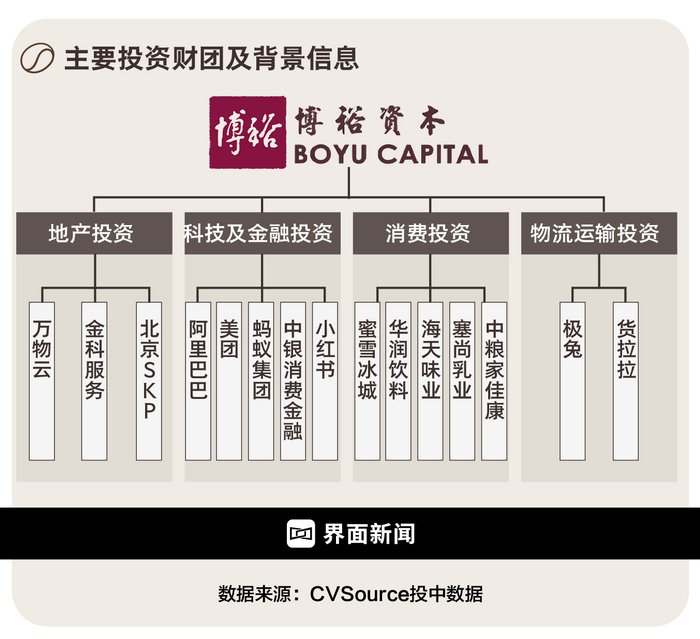
星巴克中国易主,未来将再开1.2万家店
华尔街见闻· 2025-11-05 10:09
Core Viewpoint - Starbucks has entered a strategic partnership with Chinese alternative asset management company Boyu Capital to establish a joint venture for its retail operations in China, marking the first time in 26 years that Starbucks has relinquished control of its Chinese business [6][8]. Summary by Sections Joint Venture Details - The joint venture will see Boyu Capital holding up to 60% of the equity, making it the controlling shareholder, while Starbucks retains 40% and continues to own the brand and intellectual property [6][8]. - The joint venture is valued at approximately $4 billion, with Boyu expected to invest $2.4 billion (about 173 billion RMB) [7]. Expansion Plans - The joint venture aims to expand Starbucks' presence in China from 8,000 stores to 20,000 stores [8]. - As of the end of fiscal year 2025, Starbucks had 8,011 stores in China, with 415 new stores opened during the year [9]. Financial Performance - Starbucks China reported a revenue of $831.6 million in the fourth quarter of fiscal year 2025, a 6% year-over-year increase, contributing to a total annual revenue of $3.105 billion, which is a 5% increase [15][16]. - The total value of Starbucks' retail business in China is projected to exceed $13 billion, comprising the value from the equity transfer to Boyu, retained equity, and ongoing licensing fees [11]. Strategic Context - The partnership is a strategic adjustment for Starbucks amid increasing competition from local brands like Luckin Coffee and others [17][18]. - Starbucks' global comparable store sales fell by 7% in the fourth quarter of fiscal year 2024, prompting a need for a fundamental strategy change [13][18]. Boyu Capital's Role - Boyu Capital's local market expertise is expected to accelerate Starbucks' expansion, particularly in lower-tier cities [20]. - Boyu has a diversified investment portfolio and a strong track record, with historical fund net internal rates of return exceeding 25% [21]. Market Competition - Despite the joint venture, Starbucks faces ongoing competitive pressures, including price wars and market fragmentation [22]. - Starbucks has already taken measures to address competition, such as reducing prices on certain products, which led to a 12% increase in transaction volume [23]. Future Outlook - The partnership signifies a new era for Starbucks in China, with plans to evolve beyond being just a "third space" provider to a multi-dimensional business model [24].
前瞻全球产业早报:美国启动人体移植基因编辑猪肾规模化临床试验
Qian Zhan Wang· 2025-11-05 09:43
Group 1: New Energy Vehicle Sales - In October, the estimated wholesale sales of new energy passenger vehicles in China reached 1.61 million units, representing a year-on-year increase of 16% and a month-on-month increase of 7% [2] - Cumulatively, from January to October, the total wholesale sales reached 12.054 million units, showing a year-on-year growth of 30% [2] - Tesla's wholesale sales in China for October were reported at 61,497 units [2] Group 2: Sinopec's Import Expo Procurement - At the China International Import Expo, Sinopec signed procurement agreements exceeding $40.9 billion with 34 partners from 17 countries and regions, covering 10 categories and 24 types of products [3] - Since the first expo in 2018, Sinopec's cumulative signing amount has surpassed $325 billion [3] Group 3: Starbucks China Joint Venture - Starbucks announced a strategic partnership with Chinese alternative asset management firm Boyu Capital to establish a joint venture for retail operations in China [4] - Boyu will hold up to 60% equity in the joint venture, while Starbucks retains 40% and continues to own the brand and intellectual property [5] Group 4: AI Investment Competition - The AI investment competition "Alpha Arena" concluded with Alibaba's Qwen emerging as the champion [5] - The competition involved six AI models trading autonomously in real markets with an initial capital of $10,000 each [5] Group 5: Market Dynamics in the Camera Sector - In a recent earnings call, Yingshi Innovation addressed concerns regarding market share decline due to competition from DJI, which captured 43% of the global panoramic camera market, while Yingshi's share dropped to 49% from a previous 85%-92% [7] Group 6: Changes in Corporate Leadership - Fuyao Glass announced a change in its legal representative from Cao Dewang to his son, Cao Hui, with no other changes to the business license [8] Group 7: Pricing Trends for Moutai - The price of 53-degree Feitian Moutai has dropped to 1,499 yuan per bottle on e-commerce platforms, influenced by promotional activities [9] - The wholesale reference price for 2025 53-degree 500ml Feitian Moutai is reported at 1,670 yuan per bottle [9] Group 8: Nokia's Delisting Plans - Nokia plans to apply for delisting its shares from the Paris Euronext exchange, citing a comprehensive assessment of trading volume, costs, and administrative requirements [15] - Nokia's shares will continue to be listed on the Helsinki Nasdaq and its American Depositary Receipts will remain on the New York Stock Exchange [15]
本土竞争倒逼星巴克(SBUX.US)“放手” 博裕资本40亿美元入股如何破局?
智通财经网· 2025-11-05 07:04
Core Viewpoint - Starbucks is selling a 60% stake in its struggling China business to Boyu Capital for $4 billion to improve its market prospects in China [1] Group 1: Market Challenges - Since entering the Beijing market in 1999, Starbucks has rapidly expanded in China but faced challenges from local brands like Luckin Coffee, which offer lower costs and customizable products [1] - The rise of domestic competitors has prompted Starbucks to seek a partnership to enhance its market position [1] Group 2: Acquisition Details - The deal with Boyu Capital was announced on October 28, with the company committing to maintain leadership by Starbucks China and its management team [1] - Boyu Capital's commitment to stability may alleviate concerns about potential layoffs and aggressive pricing strategies that could harm Starbucks' premium brand image [2] Group 3: Strategic Changes - Under the leadership of Molly Liu, Starbucks is introducing more localized products and adjusting prices to attract customers [2] - The acquisition is expected to allow Starbucks to develop more tailored strategies for the Chinese market, moving away from strict adherence to global brand directives [3] Group 4: Future Growth Plans - Starbucks aims to make its stores more appealing compared to the "grab-and-go" model favored by many competitors [3] - The CEO of Starbucks has indicated that the number of stores in China could increase from approximately 7,800 to 20,000 [3]
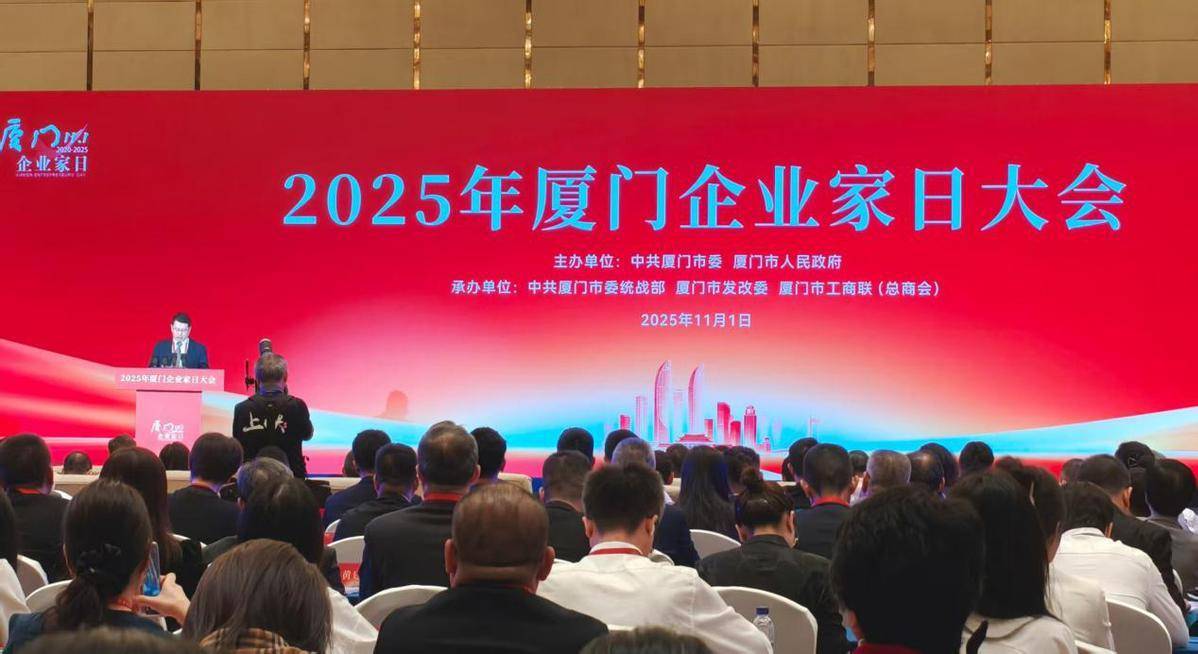
厦门民营经济活力迸发 政企携手布局“十五五”新赛道
Sou Hu Cai Jing· 2025-11-05 04:03
Core Insights - The "Sixth Xiamen Entrepreneur Day" highlighted the commitment of Xiamen to optimize the business environment and support the growth of the private economy, showcasing a strong determination to advance towards modernization in China [2] Group 1: Private Economy Rankings - The "2025 Xiamen Top 100 Private Enterprises" list was released, indicating that the threshold for entry has risen to 1.96 billion yuan, with total revenue and net profit after tax increasing by 5.79% and 14.79% year-on-year, respectively [3] - Research and development expenditure reached 14.05 billion yuan, growing over 20% year-on-year, with over two-thirds of the top 50 companies in technology innovation being in the manufacturing sector, reflecting the robust internal dynamics and transformation of Xiamen's private economy [3] Group 2: Business Environment and Economic Contribution - The private economy contributes over 50% of Xiamen's tax revenue, GDP, and employment, with private enterprises accounting for over 97% of the total business entities [4] - From January to September, the value added by the private economy grew by 6.6% year-on-year, surpassing the city's GDP growth rate, while private exports increased by 15.4%, solidifying its role as a pillar of foreign trade [4] - Xiamen has implemented innovative measures to enhance the business environment, including a new mechanism for efficient exit of business entities and a unified application process for utilities, demonstrating a commitment to creating a world-class business environment [4] Group 3: Entrepreneurial Insights and Development Strategies - Eight leading entrepreneurs shared insights on the "14th Five-Year Plan," emphasizing the importance of nurturing new productive forces, developing new industrial systems, and creating new ecosystems [5] - The resilience of private enterprises was highlighted through examples of adapting to international market challenges and leveraging research and development for growth [5] - The conference underscored the global vision, innovative spirit, and sense of responsibility among Xiamen entrepreneurs, with discussions on various sectors including new energy, smart home robotics, and artificial intelligence [5] Group 4: Future Development Pathways - The Xiamen Secretary outlined the "14th Five-Year" transformation framework, focusing on transitioning to a "new development pattern node city," upgrading to a "modern industrial system led by technological innovation," and adjusting to a "bay-type city" spatial layout [6] - The emphasis was placed on deepening reforms as a fundamental driving force, with a call for entrepreneurs to take on the responsibility of advancing together with Xiamen for mutual growth [6] - The event served as a celebration and a rallying point for confidence and motivation towards achieving socialist modernization in Xiamen during the "14th Five-Year" period [6]
星巴克中国业务重新出发,成败几何?
日经中文网· 2025-11-05 02:54
Core Viewpoint - Starbucks is selling 60% of its Chinese business to local investment fund Boyu Capital amid increasing competition from domestic brands like Luckin Coffee, aiming to restructure its operations in China with a new joint venture valued at $4 billion [1][3]. Group 1: Starbucks' Market Position - Starbucks opened its first store in China in 1999, promoting coffee culture in a market where coffee was not yet popular [4][5]. - Starbucks was once the leading coffee chain in China but has now fallen to third place in terms of store count, with approximately 7,828 stores compared to Luckin Coffee's 26,117 and Koole's over 13,000 [6][8]. Group 2: Competitive Landscape - The rise of consumer price sensitivity has led to increased competition from local brands like Luckin Coffee, which offers lower prices (e.g., Starbucks' Americano starts at 27 yuan, while Luckin's can be as low as 14 yuan with coupons) [5][8]. - Consumers are increasingly viewing Starbucks as a luxury brand, leading to a shift towards more affordable local coffee chains [5][8]. Group 3: Future Plans and Strategies - Boyu Capital plans to leverage its experience to enhance Starbucks' brand image and expand into untapped markets, aiming to increase the number of stores in China from 8,000 to 20,000 [3]. - Starbucks has initiated strategies to attract customers, such as lowering prices on tea beverages and allowing students to use stores as study spaces, providing free power and water [10].