
硬件设备

Search documents
股市周评:8月完美收官,9月迎来政策和事件双轮驱动
Sou Hu Cai Jing· 2025-08-31 17:51
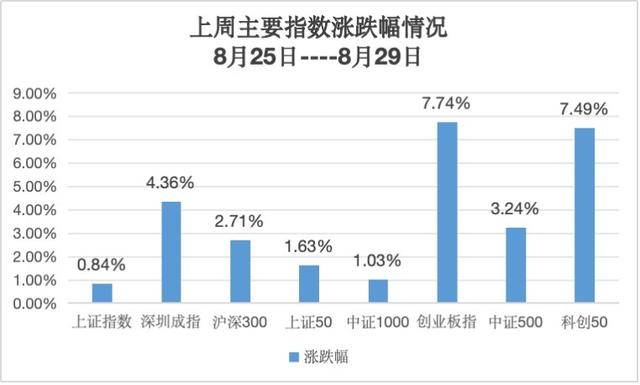
Market Performance - The A-share market experienced an upward trend last week, with major indices rising, particularly the ChiNext Index and the Sci-Tech Innovation 50, which increased by 7.74% and 7.49% respectively, indicating a strong focus on the technology sector [1] - The CSI 500 outperformed the CSI 1000 and the Shanghai and Shenzhen 300, suggesting that mid-cap stocks performed better than large-cap and small-cap stocks [1] Sector Analysis - In terms of sector performance, semiconductors, hardware equipment, non-ferrous metals, software services, and military industry saw significant gains, while coal, banking, and transportation sectors experienced declines [3] - The non-ferrous metals sector is expected to continue its strong performance, with 72 out of 116 listed companies reporting year-on-year profit growth in the first half of 2025, and 18 companies seeing profit growth exceeding 100% [4] - The average domestic copper price was 77,600 yuan/ton, up 4.2% year-on-year, while aluminum and gold prices also saw increases of 2.6% and 46.8% respectively [4] Future Outlook - The market is expected to maintain a volatile upward trend, with the Shanghai Composite Index recently closing at a 10-year high of around 3,888 points, and potential movement towards the 4,000-point mark if trading volume remains around 3 trillion yuan [5] - Economic indicators show a slight recovery in manufacturing and non-manufacturing sectors, with the manufacturing PMI at 49.4% and the non-manufacturing PMI at 50.3% for August [5] - Central Huijin's significant increase in ETF holdings, reaching a market value of 1.28 trillion yuan, has bolstered market confidence [8] Investment Opportunities - Focus on technology sectors such as robotics, semiconductors, and AI applications, which are becoming more cost-effective [8] - Consider cyclical industries like non-ferrous metals, which are showing signs of profit improvement [8]

多重利好驱动下,恒生科技逆势上扬
Yin He Zheng Quan· 2025-08-31 03:10
Group 1 - The report highlights that the Hang Seng Technology Index has risen by 0.47% while the Hang Seng Index has decreased by 1.03% during the week from August 25 to August 29, 2025 [2][4] - Among the sectors, materials, consumer staples, and information technology showed the highest gains, with increases of 7.22%, 1.29%, and 1.21% respectively [5][12] - The average daily turnover on the Hong Kong Stock Exchange increased to HKD 357.38 billion, up by HKD 76.92 billion from the previous week [12][18] Group 2 - As of August 29, 2025, the price-to-earnings (PE) ratio of the Hang Seng Index is 11.35, and the price-to-book (PB) ratio is 1.16, indicating a decline of 1.68% and 2.86% respectively from the previous week [18][24] - The Hang Seng Technology Index's PE and PB ratios are 21.23 and 3.12, respectively, placing them at the 18% and 66% percentile levels since 2019 [18][27] - The report suggests that sectors with better-than-expected interim results, such as the AI industry chain and consumer sectors, are likely to see a rebound [39][40]





加速入市,险资二季度A股布局揭晓
Huan Qiu Wang· 2025-08-31 01:56
Group 1 - Insurance capital has been actively investing in A-share companies, with 368 companies appearing in the top ten circulating shareholders list by the end of Q2 [1][3] - China Life Insurance increased its holdings in CITIC Bank and China Telecom by 259 million shares and 205 million shares respectively, and also added over 150 million shares in China State Construction [1][3] - The insurance sector's investment strategy focuses on long-term value, emphasizing factors such as long-term competitiveness, sustainable profitability, and shareholder return capabilities [3][4] Group 2 - The total stock balance of life and property insurance companies reached 3.07 trillion yuan by the end of Q2, with a net increase of 640.6 billion yuan in the first half of the year [4] - The net increase in Q2 alone was 251.3 billion yuan, marking a record high with an 8.8% increase [4] - The acceleration of insurance capital entering the market is driven by favorable policies and the internal demand for long-term investments amid low interest rates and an "asset shortage" environment [4]




2025年上半年 钢铁、软件与服务、建材三大行业归母净利润同比增速居前
Di Yi Cai Jing· 2025-08-30 04:46
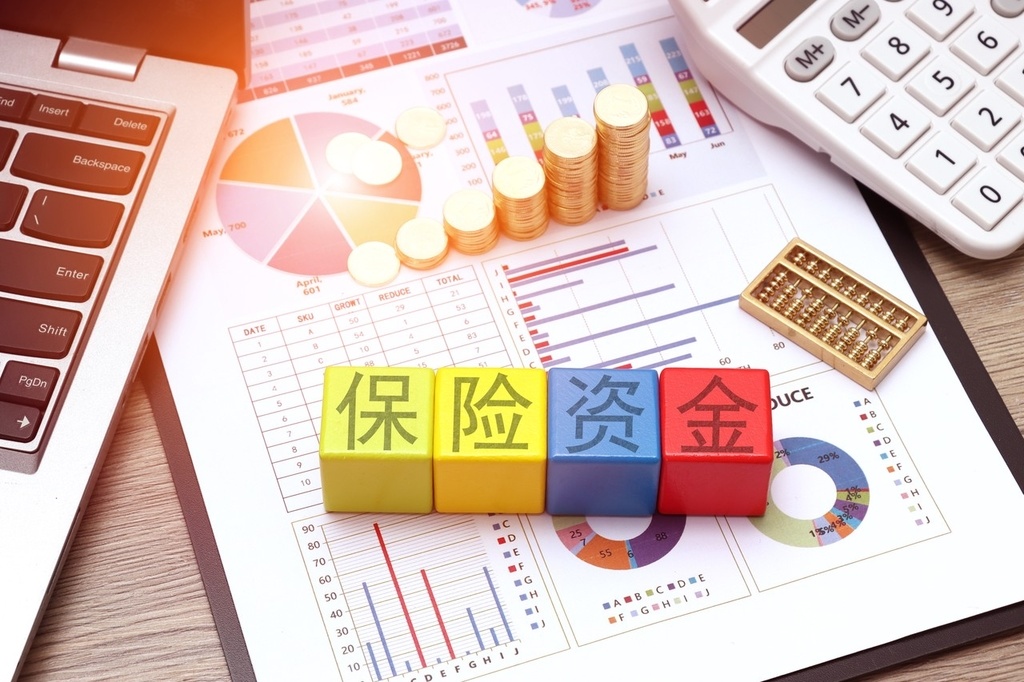
Core Insights - The semiconductor and hardware equipment industries are projected to have the fastest revenue growth rates in the first half of 2025, at 19.88% and 17.08% respectively, with several other industries also showing growth above 5% [1] - In terms of net profit, the steel, software and services, and building materials industries are expected to see significant year-on-year growth rates of 263.77%, 176.19%, and 75.49% respectively, with other sectors like media, semiconductors, and non-ferrous metals also performing well [1] Revenue Growth Summary - Semiconductor industry: 19.88% growth in H1 2025, stable compared to H1 2024 [1] - Hardware equipment industry: 17.08% growth in H1 2025, an increase from H1 2024 [1] - Other industries with over 5% growth include automotive and parts, home appliances, non-bank financials, and machinery [1] Net Profit Growth Summary - Steel industry: 263.77% growth in net profit in H1 2025, a significant improvement from previous years [1] - Software and services: 176.19% growth in net profit in H1 2025, recovering from previous declines [1] - Building materials: 75.49% growth in net profit in H1 2025, showing a strong recovery [1] - Other industries with over 20% net profit growth include media, semiconductors, non-ferrous metals, technology hardware and equipment, and machinery [1]
险资二季度加仓超270股
财联社· 2025-08-30 04:16
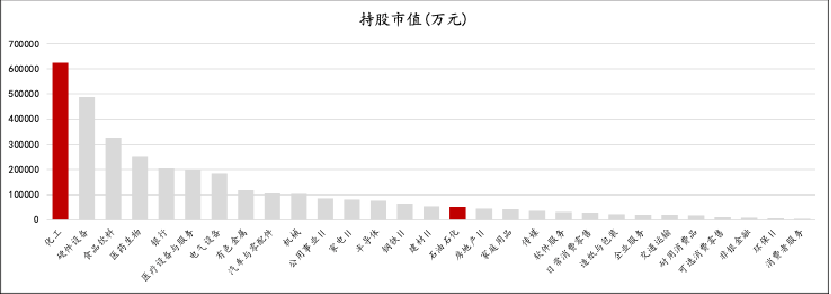
Core Viewpoint - Insurance funds have significantly increased their holdings in A-shares, focusing on long-term investments and high-dividend stocks to enhance portfolio returns and support the real economy [1][5][7]. Group 1: Investment Trends - As of the end of Q2, insurance funds appeared in the top ten shareholders of over 1,000 A-share companies, with a total holding of 926.7 billion shares valued at 1.57 trillion yuan [2][3]. - More than 270 stocks were increased in holdings by insurance funds during Q2, with notable increases in companies like CITIC Bank and China Telecom [2][4]. - Insurance companies are actively entering new positions, with 288 new entries in the top ten shareholders list of various A-share companies [2]. Group 2: Sector Focus - The sectors where insurance funds are increasing their investments include hardware equipment, electrical equipment, software services, pharmaceutical biology, and banking [3][6]. - High-dividend stocks are particularly favored due to their stable returns, especially in a declining interest rate environment [5][6]. Group 3: Strategic Insights - Insurance companies emphasize a strategy of long-term, stable, and value-oriented investments, dynamically adjusting their holdings based on risk and return profiles [5][7]. - The total investment in stocks by insurance funds reached 3.07 trillion yuan by the end of Q2, reflecting a net purchase of approximately 640 billion yuan in the first half of the year [5][6]. - Companies like China Life and PICC have significantly increased their equity investment allocations, with China Life's stock allocation rising from 12.18% to 13.60% [6][7].


汇金+社保基金都看好化工板块,化工ETF(159870)规模突破120亿
Sou Hu Cai Jing· 2025-08-28 08:57
Group 1 - The central government has increased its holdings in the chemical ETF, with the largest holder owning 248 million shares, accounting for 10.02% of the ETF's total shares [1] - The social security fund holds over 6 billion in the chemical sector, leading the industry, with a total market value of 33.2 billion across 129 stocks [2] - The chemical sector is experiencing a resurgence, with expectations of improved conditions due to the reduction of excessive competition and capacity in certain sub-industries [4] Group 2 - The chemical ETF has seen significant growth in scale, increasing from 1.8 billion to 12 billion since mid-July, indicating a strong investment preference for this sector [5] - The chemical industry is at a critical point for inventory cycles, with potential demand recovery expected to impact production rates positively [4] - The current market conditions suggest that the chemical sector may outperform the broader market, particularly as PPI trends show signs of recovery [4]

147只券商二季度重仓股出炉
Zheng Quan Ri Bao· 2025-08-26 16:51
Core Viewpoint - The report highlights the significant presence of brokerages in the stock market, with a focus on their investment strategies and the sectors they are targeting, particularly emphasizing high-dividend blue-chip stocks and high-growth potential stocks in technology and biomedicine [2][4]. Group 1: Brokerage Holdings - As of the end of June, brokerages collectively held 147 heavily weighted stocks, with 30 brokerages involved, totaling 2.261 billion shares and a market value of 29.492 billion yuan [2][3]. - Among the 147 stocks, 18 were held by two or more brokerages, with notable mentions including Fuan Energy, Ruida Futures, and Zhejiang Huaye, each held by three brokerages [2][3]. - The industry distribution of these stocks includes 24 in hardware equipment, 17 in chemicals, 15 in both non-ferrous metals and machinery, and 13 in pharmaceuticals and biotechnology [2]. Group 2: Investment Strategies - Brokerages are increasingly focusing on high-dividend blue-chip stocks while also investing in high-growth sectors such as technology, biomedicine, and national defense, aligning with the trends of high-quality economic development and industrial restructuring [2][4]. - The top brokerages, such as CITIC Securities and CICC, have a significant number of holdings, with CITIC holding 26 stocks and CICC holding 30 stocks, indicating a preference for stability and diversification in their investment strategies [4]. - Several brokerages have disclosed their investment strategies, emphasizing a cautious approach with a focus on low-risk, low-volatility, and steady dividend stocks, as well as flexible and balanced strategies that prioritize sectors benefiting from liquidity improvements and policy support [4].



8月W3港股资金:南向流入非银软件,外资流
Changjiang Securities· 2025-08-25 09:17
Core Insights - The report highlights a net inflow of 306.13 billion HKD from southbound funds between August 18 and 21, 2025, primarily into non-bank financials, software services, and consumer discretionary sectors [2][7][34] - The top five sectors receiving inflows accounted for a total of 238.11 billion HKD, with non-bank financials leading at 85.1 billion HKD [2][7][34] - In contrast, foreign capital saw a net outflow of 145.99 billion HKD during the same period, with significant withdrawals from non-bank financials and consumer discretionary sectors [7][40] Sector Summaries Southbound Fund Inflows - Non-bank financials received the highest inflow of 85.1 billion HKD, followed by software services at 62.8 billion HKD, and consumer discretionary retail at 30.69 billion HKD [2][7][34] - Other notable inflows included pharmaceuticals and hardware equipment, each receiving 30.69 billion HKD and 28.85 billion HKD respectively [2][7][34] Foreign Capital Outflows - Foreign capital saw significant outflows from non-bank financials (-61.11 billion HKD), consumer discretionary retail (-47.58 billion HKD), and banking sectors [7][40] - The top sectors for foreign inflows included daily consumer retail (73.52 billion HKD) and medical equipment and services (31.31 billion HKD) [7][40] Market Performance - The Hang Seng Index increased by 0.27% and the Hang Seng Tech Index rose by 1.89% during the period from August 18 to 22, 2025 [6][12] - Key drivers for market performance included technological breakthroughs in semiconductor design and strong earnings reports from leading companies [6][12] Comparative Analysis - The report notes a divergence in fund flows, with southbound funds showing net inflows while foreign capital exhibited net outflows during the same timeframe [7][40] - The report also indicates that the southbound funds have been increasingly directed towards sectors like non-bank financials and software services, contrasting with the foreign capital's focus on consumer retail and medical sectors [7][40]
外资最新持仓曝光:QFII新进118股,韩国股民扫货这些中国股票
Xin Lang Cai Jing· 2025-08-22 04:38
Group 1 - As of August 22, 2025, QFII has disclosed holdings in 223 companies, with a total of 1.466 billion shares valued at 28.02 billion yuan [2] - QFII's new favorites include 118 stocks in the second quarter of 2025, indicating a significant interest in these companies [2][4] - The top sectors for QFII investments include basic chemicals, pharmaceuticals, machinery, and power equipment, with 24, 22, 21, and 21 stocks held respectively [3] Group 2 - Among the new stocks, Jinpu Titanium (000545) is the most notable, with 32.22 million shares purchased by foreign institutions, making it a top shareholder [4][5] - Other significant new holdings include Yuyin Co. (002177.SZ), Rongfa Nuclear Power (002366.SZ), and Senma Apparel (002563.SZ), each with substantial foreign investment [4][5] - The top ten stocks by market value among QFII's new holdings include Changdian Technology (600584.SH) and Yinzhijie (300085.SZ), indicating strong foreign interest in these companies [5][6] Group 3 - QFII increased holdings in 51 stocks in the second quarter, with Alloy Investment (000633) and New Power Finance seeing the most significant increases [9] - Three companies, including Shengyi Technology (600183), Jiuhua Company (689009), and Dongfang Yuhong (002271), have QFII holdings exceeding 1 billion yuan [9][10] - Barclays Bank and UBS Group are among the foreign institutions holding over 10 stocks, with Barclays leading with 123 stocks [11]


港股午评:恒生科技指数涨1.61% 名创优品涨超18%
Zheng Quan Shi Bao Wang· 2025-08-22 04:13
Group 1 - The Hang Seng Index increased by 0.32% and the Hang Seng Tech Index rose by 1.61% as of midday close [1] - The semiconductor and hardware equipment sectors showed significant gains, with Hua Hong Semiconductor rising over 11% and SMIC increasing by over 6% [1] - Notable individual stocks included ZTE Corporation and Xpeng Motors, both rising over 10%, while Miniso surged over 18% [1]