
国防军工

Search documents
午评:沪指涨0.10% 两市成交额缩量近4000亿元
Zhong Guo Jin Rong Xin Xi Wang· 2025-10-15 04:03
Market Overview - The three major indices opened slightly higher, with the Shanghai Composite Index at 3869.25 points, up 0.10%, and a trading volume of 598 billion [1] - The Shenzhen Component Index closed flat at 12895.25 points with a trading volume of 672 billion, while the ChiNext Index rose 0.22% to 2962.56 points with a trading volume of 297 billion [1] - Total trading volume in the Shanghai and Shenzhen markets was 1.27 trillion, a decrease of 398.5 billion compared to the previous trading day [1] Sector Performance - The consumer sector showed strong activity, with stocks like Guoguang Chain achieving three consecutive trading limits [2] - Domestic software concept stocks rebounded, with Jiuqi Software and Rongji Software both hitting trading limits [2] - The innovative drug sector was active, with stocks such as Guangshengtang and Anglikang reaching trading limits, and Apac Pharmaceutical achieving two consecutive trading limits [2] - Conversely, the military industry sector weakened collectively, with Beifang Changlong dropping over 10% [2] - The semiconductor sector exhibited significant divergence, with Zhichun Technology hitting the trading limit down [2] Institutional Insights - Jin Xin Fund suggests that pullbacks in high-position stocks should not be overly concerning, as tactical trade upgrades may lead to dynamic stabilization [3] - Short-term capital may flow into defensive sectors like finance due to risk aversion, while long-term focus remains on rare earths, domestic substitution, and military industries [3] - Huatai Securities notes that the capital market is undergoing profound reforms, with a low interest rate environment accelerating the flow of institutional and retail funds into equity markets [3] - The firm emphasizes that now is a critical period to seize strategic recovery opportunities in the brokerage sector, focusing on Hong Kong stocks with better valuations and A-share leaders with cost-effectiveness [3] Economic Indicators - The National Bureau of Statistics reported a 0.3% year-on-year decline in consumer prices for September, with food prices down 4.4% and non-food prices up 0.7% [5] - In the first nine months, the average consumer price index decreased by 0.1% compared to the same period last year [5] - The National Taxation Administration revealed that the manufacturing sector benefited from tax reductions and refunds totaling approximately 1.3 trillion in the first eight months of the year [6] - Manufacturing sales revenue increased by 4.7% year-on-year, accounting for 29.8% of total corporate sales revenue [6] Company Developments - New Kailai's subsidiary, Qiyunfang, launched two EDA design software products with complete independent intellectual property rights at the Bay Area Semiconductor Industry Ecological Expo [7] - The EDA design software reportedly achieves industry-leading performance metrics, with a 30% improvement over industry benchmarks and a 40% reduction in hardware development cycles [7]
10月14日有色金属、钢铁、电子等行业融资净买入额居前
Zheng Quan Shi Bao Wang· 2025-10-15 02:20
Core Insights - As of October 14, the market's latest financing balance reached 24,302.33 billion yuan, an increase of 23.35 billion yuan compared to the previous trading day [1] Industry Summary - The financing balance increased in 15 out of 31 industries, with the non-ferrous metals industry showing the largest increase of 19.37 billion yuan [1] - Other industries with notable increases include steel (7.32 billion yuan), electronics (6.87 billion yuan), and national defense and military industry (5.52 billion yuan) [1] - Conversely, 16 industries experienced a decrease in financing balance, with telecommunications, automotive, and home appliances seeing the largest declines of 13.65 billion yuan, 6.17 billion yuan, and 5.10 billion yuan respectively [1][2] Financing Balance Changes - The steel industry had the highest growth rate in financing balance, with a latest balance of 175.03 billion yuan, reflecting a 4.36% increase [1] - The non-ferrous metals, environmental protection, and national defense industries followed with growth rates of 1.65%, 1.46%, and 0.72% respectively [1] - Industries with the most significant declines in financing balance include home appliances (1.35% decrease), telecommunications (1.27% decrease), and real estate (0.68% decrease) [1][2]
引力一号实现一箭三星,多国海军加速推进无人化转型
GUOTAI HAITONG SECURITIES· 2025-10-14 14:05
Investment Rating - The report assigns an "Overweight" rating for the defense industry [9]. Core Viewpoints - The report highlights the successful launch of the "Yinli No. 1" rocket, which deployed three satellites, and notes the acceleration of unmanned transformation in multiple navies [2][7]. - It emphasizes that the intensification of great power competition is a long-term trend, suggesting that defense spending will increase as nations seek to ensure peace and security [8][9]. Summary by Sections Investment Highlights - Recommended stocks include: 1) Assembly: AVIC Shenyang Aircraft (600760.SH), Aerospace South Lake (688552.SH), AVIC Xi'an Aircraft (000768.SZ) 2) Components: AVIC Optoelectronics (002179.SZ), Guobo Electronics (688375.SH), Ruichuang Micro-Nano (688002.SH) 3) Subsystems: Aero Engine Corporation of China (600893.SH), AVIC Avionics (600372.SH), Northern Navigation (600435.SH) 4) Materials and Processing: Feilihua (300395.SZ), Guangwei Composite (300699.SZ), Huayin Technology (688281.SH) [9][10]. Market Review - The defense industry index rose by 0.24% last week, underperforming the broader market by 0.13 percentage points, ranking 16th out of 29 sectors [11][12]. - The report notes that the materials and processing sector performed particularly well during this period [11][12]. Major News in the Defense Industry - Domestic news includes the deployment of a naval escort fleet to the Gulf of Aden and the upcoming "Peace and Friendship-2025" joint exercise between China and Malaysia [21][25]. - Internationally, several navies, including those of the UK, France, the US, and South Korea, are advancing unmanned capabilities and enhancing collaborative operations between manned and unmanned systems [27][28].


这只“量化”基金,连亏5年...
Sou Hu Cai Jing· 2025-10-14 10:25
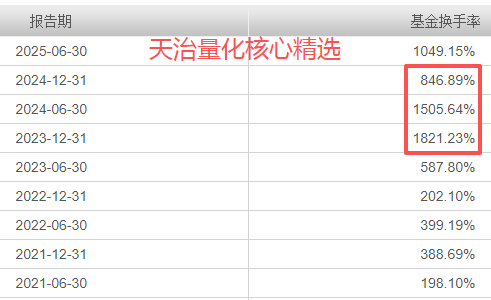
Core Viewpoint - The "Tian Zhi Quantitative Core Selection" fund has experienced significant losses, with a reported decline of 13.39% this year, marking a trend of consecutive annual losses over the past four years, each exceeding double digits [5][27]. Fund Performance - The fund's turnover rate has been exceptionally high, reaching over 1000% since August 2023, indicating frequent trading of its top holdings [14]. - The fund's net asset value has fluctuated significantly, with a reported net asset change rate of 374.38% as of June 30, 2025, despite the overall decline in performance [8]. Fund Management - The fund has undergone management changes, with five different fund managers, each contributing to poor performance rankings [19]. - The previous manager, Xu Jiahan, is noted for making high-risk investments, leading to substantial losses during his tenure [11][23]. Investment Strategy - The fund's investment strategy has been criticized for chasing high-performing stocks, particularly during periods of market volatility, which has exacerbated losses [16][27]. - The current manager, Li Shen, has shifted the fund's focus towards value stocks, particularly in the financial and public utility sectors, but has struggled to capitalize on market rebounds [25][27]. Market Context - The fund's performance is set against a backdrop of broader market trends, with significant fluctuations in growth and value sectors, impacting overall investment strategies [30][34]. - Despite the fund's poor performance, there has been an influx of retail investor interest, leading to an increase in the fund's C share scale from 2 million to 7 million [28].


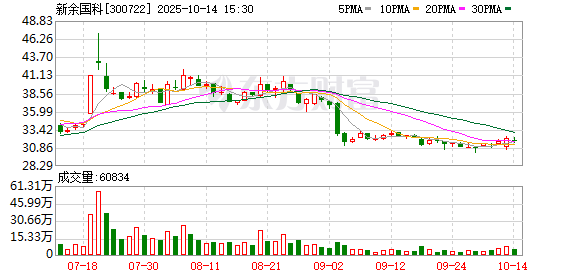
新余国科:截至2025年10月10日公司股东持有人数(已合并)为30587户
Zheng Quan Ri Bao· 2025-10-14 08:05
证券日报网讯新余国科10月14日在互动平台回答投资者提问时表示,截至2025年10月10日,公司股东持 有人数(已合并)为30587户。 (文章来源:证券日报) ...

西部超导股价创新高,融资客抢先加仓
Zheng Quan Shi Bao Wang· 2025-10-14 03:14
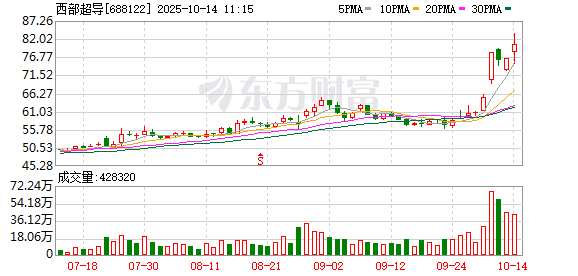
Group 1 - The stock price of Western Superconducting Technologies reached a historical high, increasing by 8.66% to 82.96 yuan, with a trading volume of 37.01 million shares and a transaction amount of 2.893 billion yuan, resulting in a turnover rate of 5.70% [2] - The total market capitalization of the company in A-shares is 53.896 billion yuan, with the same amount for the circulating market capitalization [2] - In the defense and military industry, the overall decline is 0.22%, with 47 stocks rising, including three stocks hitting the daily limit, while 89 stocks are declining, with the largest declines seen in Jieqiang Equipment, LIGONG Navigation, and Jiachih Technology, with declines of 5.68%, 4.59%, and 3.99% respectively [2] Group 2 - As of October 13, the latest margin trading balance for the company is 1.341 billion yuan, with a financing balance of 1.325 billion yuan, which has increased by 515 million yuan over the past 10 days, representing a growth of 63.49% [2] - The company's semi-annual report indicates that it achieved an operating income of 2.723 billion yuan in the first half of the year, a year-on-year increase of 34.76%, and a net profit of 546 million yuan, a year-on-year increase of 56.72%, with basic earnings per share of 0.8407 yuan and a weighted average return on equity of 7.85% [2]

点评报告:1013A股日评:自主可控,不惧波动-20251014
Changjiang Securities· 2025-10-14 02:45
Core Insights - The A-share market showed resilience today with a low open and a high close, despite slight declines in the three major indices. The Sci-Tech 50 index turned positive in the afternoon, indicating market strength. The Shanghai Composite Index fell by 0.19%, the Shenzhen Component by 0.93%, and the ChiNext by 1.11% [5][8] - The market capitalization reached 2.37 trillion yuan, with 1,682 stocks rising across the market [8][19] Market Performance - The A-share market experienced a mixed performance with the following index changes: Shanghai Composite Index down 0.19%, Shenzhen Component down 0.93%, ChiNext down 1.11%, Shanghai 50 down 0.26%, and CSI 300 down 0.50%. In contrast, the Sci-Tech 50 index rose by 1.40% [8][10] - In terms of sector performance, the top gainers included Metal Materials and Mining (+3.13%), Environmental Protection (+1.36%), and National Defense and Military Industry (+1.29%). Conversely, the Automotive sector (-2.27%), Home Appliances Manufacturing (-1.71%), and Media Internet (-1.57%) were among the laggards [8][10] Conceptual Trends - The rare earth sector led the market with significant gains, driven by recent government policies reinforcing export controls and price increases announced by major rare earth companies. The rare earth concept stocks surged, with rare earths up by 9.49% and rare earth permanent magnets up by 8.09% [8][10] - The self-sufficient industrial chain showed strength, particularly in semiconductors and military industries, influenced by geopolitical tensions and trade negotiations between China and the U.S. [8][10] Future Outlook - The report maintains a bullish outlook on the Chinese stock market, particularly for October, anticipating supportive policies from the upcoming 20th Central Committee meeting. The macroeconomic environment is expected to improve, with liquidity remaining ample [8][10] - Investment strategies should focus on technology sectors and value-oriented industries that are showing signs of recovery. Key areas of interest include lithium batteries, military technology, and sectors with improving revenue growth and profit margins such as fiberglass, cement, and medical services [8][10]
两融余额小幅上升 较前一交易日增加25.94亿元
Zheng Quan Shi Bao Wang· 2025-10-14 02:24
Market Overview - On October 13, the Shanghai Composite Index fell by 0.19%, with the total margin trading balance reaching 24,443.70 billion yuan, an increase of 25.94 billion yuan compared to the previous trading day [1] - The margin trading balance in the Shanghai market was 12,450.50 billion yuan, up by 32.91 billion yuan; in the Shenzhen market, it was 11,918.09 billion yuan, down by 7.34 billion yuan; and in the Beijing Stock Exchange, it was 75.10 billion yuan, up by 0.37 billion yuan [1] Industry Analysis - Among the industries tracked by Shenwan, 20 sectors saw an increase in margin trading balances, with the largest increase in the non-ferrous metals sector, which rose by 37.52 billion yuan. The pharmaceutical and steel industries followed, with increases of 6.05 billion yuan and 5.11 billion yuan, respectively [1] Stock Performance - A total of 1,844 stocks experienced an increase in margin trading balances, accounting for 49.49% of the total. Among these, 319 stocks had an increase of over 5% in their margin balances [1] - The stock with the highest increase in margin balance was Wuxi Dingbang, which saw a margin balance of 3.3347 million yuan, an increase of 67.53%, although its stock price fell by 1.19% on the same day [1] - Other notable stocks with significant increases in margin balances included Changcheng Military Industry and Wantong Hydraulic, with increases of 60.44% and 52.22%, respectively [1] Top Gainers and Losers - Among the top 20 stocks with the largest increases in margin balances, the average increase in stock prices was 4.93%. Leading the gains were Litong Technology, Huahong Company, and Science, with increases of 22.69%, 20.00%, and 19.85%, respectively [2] - Conversely, the stocks with the largest declines included Guanzhong Ecology, Haocreat Technology, and Jixin Technology, with declines of 15.85%, 6.85%, and 4.37%, respectively [2] Margin Balance Changes - The top 20 stocks with the largest increases in margin balances included Wuxi Dingbang, Changcheng Military Industry, and Wantong Hydraulic, with margin balances of 3.3347 million yuan, 84.6825 million yuan, and 4.2138 million yuan, respectively [3] - The stocks with the largest decreases in margin balances included Zhongfu Circuit, which saw a decline of 27.68%, and Taihu Snow and Nanmo Biology, with declines of 22.52% and 22.03%, respectively [5]
国新证券每日晨报-20251014
Guoxin Securities Co., Ltd· 2025-10-14 02:06
Domestic Market Overview - The domestic market experienced a slight decline on October 13, with the Shanghai Composite Index closing at 3889.5 points, down 0.19%, and the Shenzhen Component Index at 13231.47 points, down 0.93% [1][4] - The ChiNext Index fell by 1.11%, while the STAR 50 Index rose by 1.4%. The total trading volume of the A-share market was 237.42 billion yuan, a decrease from the previous day [1][4] - Among the 30 sectors tracked, 7 sectors saw gains, with non-ferrous metals, defense, and steel leading the increases, while automotive, media, and pharmaceuticals experienced significant declines [1][4] Overseas Market Overview - On the same day, all three major U.S. stock indices closed higher, with the Dow Jones up 1.29%, the S&P 500 up 1.56%, and the Nasdaq up 2.21%. Notably, Tesla's stock rose over 5% [2][4] - The U.S. technology sector also performed well, with the index for the seven major tech companies rising by 2.02% [2][4] Trade Data Insights - In the first three quarters of the year, China's total goods trade reached 33.61 trillion yuan, a year-on-year increase of 4%. Exports were 19.95 trillion yuan, up 7.1%, while imports were 13.66 trillion yuan, down 0.2% [11][12] - In September alone, trade volume was 4.04 trillion yuan, reflecting an 8% increase year-on-year. This marks the eighth consecutive quarter of year-on-year growth in trade [11][12] - The export of rare earths in September was 4000.3 tons, continuing a downward trend for the third consecutive month [18] Industry Developments - The report highlights the ongoing diversification of markets, with trade with countries involved in the Belt and Road Initiative reaching 17.37 trillion yuan, accounting for 51.7% of total trade [11][12] - The export of mechanical and electrical products reached 12.07 trillion yuan, making up 60.5% of total exports, with significant growth in high-tech products [12][13] - The report also notes a gradual recovery in imports, with a 4.7% increase in the third quarter, driven by domestic demand [12][13] Regulatory Updates - The National Development and Reform Commission and the National Energy Administration issued a new management method for cross-provincial and cross-regional power emergency dispatching, aimed at enhancing the efficiency and safety of power supply [14] - The customs authority responded to issues regarding port fees, emphasizing the need for fair competition in international shipping [15] Economic Indicators - The report mentions the release of significant global economic data, which may impact market sentiment and investment decisions [17] - The performance of the Chinese stock market and trade data is expected to influence investor confidence and market dynamics in the near term [9][11]
晨会报告:基础化工2025年Q3业绩前瞻:Q3淡季叠加成本走高,周期品价差回落,化工盈利季节性承压-20251014
Shenwan Hongyuan Securities· 2025-10-14 01:00
Core Insights - The report highlights that the chemical industry is facing seasonal pressure on profitability due to the traditional off-peak season in Q3 2025, coupled with rising costs and a decline in price differentials for cyclical products [5][12][6] - Despite the challenges, certain sub-sectors such as agricultural chemicals, phosphates, and potassium fertilizers are expected to see significant year-on-year profit growth due to strong demand [5][12][6] Summary by Sections Industry Overview - Q3 2025 is characterized as a traditional off-peak season for the chemical industry, with a decrease in downstream operating rates and a general state of inventory reduction [5][12] - The average price of Brent crude oil is projected at $69.29 per barrel, reflecting a year-on-year decrease of 14% but a slight increase of 2% compared to the previous quarter [5][12] - The NYMEX natural gas futures price is expected to be $3.08 per million British thermal units, showing a year-on-year increase of 38% but a quarter-on-quarter decrease of 12% [5][12] - The average price of 5500 kcal thermal coal at Qinhuangdao port is anticipated to be 673 RMB per ton, indicating a year-on-year decline of 21% but a quarter-on-quarter increase of 5% [5][12] Profit Forecasts - The report forecasts that the weighted average EPS for Q3 2025 will be 0.25 RMB, representing a year-on-year increase of 24.93% but a slight quarter-on-quarter decline [12][6] - Key sub-sectors expected to see significant year-on-year profit growth include agricultural chemicals, phosphates, potassium fertilizers, fluorochemicals, and semiconductor materials [5][12][6] Investment Recommendations - The report suggests focusing on four main areas for investment: agricultural chemicals, textile and apparel chains, export-related chemicals, and sectors benefiting from "anti-involution" policies [6][12] - Specific companies to watch include Hualu Chemical and Baofeng Energy in the nitrogen fertilizer sector, Yuntianhua and Xingfa Group in the phosphate sector, and companies like Juhua Co. and Sanmei Co. in the fluorochemical sector [6][12] Key Assumptions - The report identifies potential risks, including slower-than-expected progress on new industry projects and export disruptions leading to significant price declines for certain chemical products [6][12]