
金融服务

Search documents
天府系列产业贷首场对接活动聚焦“天府服保贷”
Xin Lang Cai Jing· 2026-01-11 22:26
Core Insights - The "Tianfu Service Guarantee Loan" product aims to support small and micro enterprises in Sichuan by providing low-threshold and low-cost credit options to alleviate financing challenges [1][2] Group 1: Loan Product Overview - The Sichuan provincial government has established a loan risk compensation fund pool of approximately 1.3 billion yuan to support the "Tianfu series industrial loans" [1] - The "Tianfu Service Guarantee Loan" has been implemented since March of last year, with the first loan disbursed in April, and by the end of last year, 1,134 enterprises had been approved for a total of 4.777 billion yuan [1] Group 2: Application Process - Eligible enterprises include small and micro non-state service industry businesses in Sichuan, covering sectors such as wholesale and retail, accommodation and catering, transportation, and software services [2] - The maximum loan amount is 20 million yuan per enterprise, with a maximum term of 2 years, and options for renewal and non-repayment renewal to ease cash flow pressures [2] - The application process involves submitting an application form on the "Tianfu Industrial Loan" service platform, with initial review completed within 5 working days, followed by bank recommendations and approvals [2]
首席经济学家热议2026资本市场新机遇
Xin Lang Cai Jing· 2026-01-11 21:22
Group 1 - The AI and related industries are the most anticipated sectors for investment opportunities in 2026, with a focus on application implementation to drive sustained capital expenditure [1][2] - The "domestic substitution" trend is expected to be a significant investment theme for the next five years, leveraging China's core advantage in efficiently transforming technology into productivity [1][2] - The chemical industry is viewed positively due to its healthy competitive landscape, featuring both quality state-owned and private enterprises, as well as international chemical giants focused on the Chinese market [3] Group 2 - The energy storage sector is gaining attention, with expectations of recovery starting from the third or fourth quarter of 2025, alongside a favorable outlook for hydrogen energy, where China holds a leading position in production [2] - The aerospace sector is identified as a critical area for future competition, with numerous commercial opportunities in the Chinese market [2] - The ongoing "anti-involution" policies are anticipated to create new market opportunities, particularly in industries facing price pressures, such as construction, new energy, and electronics [2][3] Group 3 - The "14th Five-Year Plan" period is crucial for achieving carbon peak targets by 2030, necessitating clear carbon accounting standards to facilitate effective international trade coordination [3] - The expansion of carbon markets and the differentiation of electricity markets, with a clear value distinction between green and non-green electricity, are expected to drive the marketization and application of green energy [3]
黄金首超美债,中国连续14次出手,特朗普施压,美元出大问题?
Sou Hu Cai Jing· 2026-01-11 20:19
Core Viewpoint - In 2025, global central banks made a significant shift by prioritizing gold over U.S. Treasury bonds as their primary reserve asset, marking the first time since 1996 that gold surpassed U.S. debt in global central bank reserves, with gold valued at approximately $3.93 trillion compared to $3.88 trillion in U.S. Treasury bonds [1][3]. Group 1: Central Bank Behavior - Central banks have been purchasing gold at record levels, with net purchases exceeding 1,000 tons annually for the past three years, nearly double the average of the previous decade [3]. - As of June 2025, 95% of surveyed central banks indicated plans to continue increasing their gold reserves, the highest percentage since the survey began in 2019 [3]. - Emerging economies, particularly Russia and China, have significantly increased their gold holdings, with Russia accumulating 915 tons and China 544 tons over the past decade [5]. Group 2: Dollar Credibility and Economic Context - The safety of dollar assets has come under scrutiny, especially after the U.S. imposed sanctions on Russia, leading to a realization that dollar reserves could also be "weaponized," undermining the long-standing consensus on the safety of the dollar as a reserve asset [5]. - As of 2025, the U.S. national debt exceeded $37 trillion, with annual interest payments surpassing $1 trillion, raising concerns about the sustainability of U.S. debt [5]. - The dollar's share in global foreign exchange reserves has dropped to 42%, with the International Monetary Fund reporting a decline to 56.32% in mid-2025, the lowest since 1995 [15]. Group 3: Gold Price Dynamics - Gold prices have surged from $1,618 per ounce before the Fed's rate hike cycle began in 2022 to $4,584 per ounce by the end of 2025, reflecting a cumulative increase of nearly 180% [10]. - Analysts predict continued bullish trends for gold, with Goldman Sachs raising its price target to $3,700 per ounce by the end of 2025 and suggesting potential spikes to $4,500 or even $5,000 per ounce under certain conditions [16]. - The trading volume in the gold market reached a historical high in October 2025, with daily trading averaging $561 billion, a 45% increase from previous levels [18].


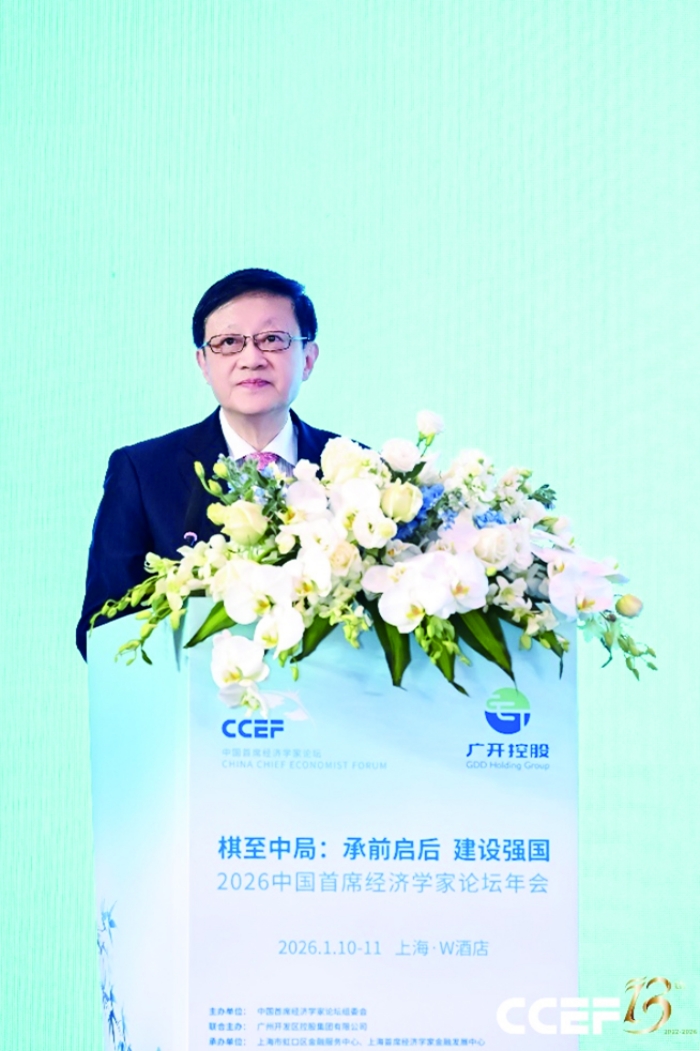
广开首席产业研究院院长连平:中国金融结构正发生深刻变化
Shang Hai Zheng Quan Bao· 2026-01-11 18:51
Core Insights - The current financial structure in China is undergoing profound changes, primarily characterized by a historical adjustment in the relationship between direct and indirect financing [2][3] - Direct financing has seen a steady increase in its share, while the proportion of indirect financing has been declining, marking a significant shift not observed in the past several decades [2][3] Group 1: Financial Structure Changes - As of January to November 2025, the share of indirect financing dropped to 45.7%, while direct financing rose to 47.4%, indicating a trend where direct financing outpaces indirect financing [2] - The growth rate of credit demand has significantly decreased, with the credit balance growth rate falling from 12.8% in 2020 to 6.4% currently [2] Group 2: Factors Driving Direct Financing - The demand for direct financing is driven by the need to bypass traditional bank credit channels, reflecting a more market-oriented allocation of funds that aligns well with emerging economic sectors [3] - The development of multi-tiered capital markets, including platforms like the Sci-Tech Innovation Board and the Beijing Stock Exchange, has effectively promoted the expansion of direct financing [3] Group 3: Future Outlook - The future trend indicates a more proactive policy stance, with fiscal financing needs expected to provide substantial support to the market [4] - Traditional sectors such as real estate and infrastructure are anticipated to stabilize and gradually improve after 2026, leading to a recovery in related financing demands [4] - The development of capital markets is crucial, with sustained demand from the real economy for capital market support, alongside unprecedented policy backing for the stock market [4] - The optimization of China's financial structure is entering a critical phase, with direct financing expected to surpass indirect financing, which will have multiple positive implications for economic development [4]
机制创新破堵点 营商提质激活力
Xin Lang Cai Jing· 2026-01-11 18:13
Group 1: Project Approval and Mechanism Innovation - The time for obtaining land pre-approval and site selection for wind power projects has been reduced from 5 working days to 2, significantly benefiting project initiation [1] - A cross-departmental special working group has been established to facilitate "one-stop" processing of preliminary procedures for major projects, enhancing efficiency [1] - Since the implementation of the new mechanism, 128 new projects planned for 2026 have been assessed, leading to expedited approvals and addressing initial project implementation challenges [1] Group 2: Financial Support and Collaboration - A recent meeting in Zhalaihe Banner brought together nearly 20 financial institutions and over 40 enterprises, resulting in 10 financial institutions signing agreements with 11 enterprises to support the real economy [2] - The timely financial support has been crucial for local businesses, such as Jinbaisui Grain and Oil Trade Co., which highlighted the importance of new credit for grain procurement and business development [2] - In Tuquan County, proactive visits by bank staff to small and micro enterprises have facilitated quick loan approvals, addressing financing challenges effectively [2] Group 3: Legal Services and Risk Management - The establishment of a legal service area in the government service center has provided continuous legal assistance, with over 5,700 cases handled and legal consultations accounting for over 15% [3] - The legal service model focuses on proactive risk management, helping enterprises identify and mitigate potential risks in areas such as intellectual property and contract management [3] - A collaborative legal health check for specialized small and medium enterprises has been conducted, resulting in personalized reports and corrective action plans to enhance compliance capabilities [3] Group 4: Credit Repair Mechanism - The "Qibaixing" cross-regional credit repair collaboration mechanism has been implemented, allowing enterprises to submit materials online without needing to travel to the location of penalties [4] - This mechanism has streamlined the credit repair process, enabling efficient resolution of previously cumbersome tasks [4] - Since the beginning of the year, 14 enterprises have benefited from this cross-regional credit repair initiative, enhancing market confidence and vitality [5] Group 5: Continuous Improvement of Business Environment - The ongoing optimization of the business environment is emphasized, with a focus on institutional innovation and precise services to enhance service quality and development efficiency [5] - The efforts aim to create a supportive environment for enterprises to thrive and grow in the region [5]
美元要“失宠”?全球央行狂买黄金,背后真相惊人!
Sou Hu Cai Jing· 2026-01-11 16:35
Group 1 - Central banks globally are increasingly accumulating gold, with nearly half planning to continue purchasing in the next year, indicating a significant shift in investment strategy [1][7] - The global central bank gold holdings are projected to surpass U.S. Treasury holdings by mid-2025 for the first time since 1996, reflecting a growing preference for gold over U.S. debt [3][5] - Over 90% of central banks believe the current "gold rush" will persist, with no central bank planning to reduce their gold holdings, showcasing a strong consensus among these institutions [7] Group 2 - The U.S. dollar's share of global foreign exchange reserves has dropped from 72% to 57.8%, indicating a decline in confidence in the dollar [9] - The U.S. government's financial pressures, including significant interest payments on debt, are causing concerns among other nations about the reliability of the dollar as a reserve currency [11] - A notable trend is the repatriation of gold by central banks, with 59% choosing to store their gold domestically by 2025, a significant increase from previous years [11] Group 3 - Emerging economies are actively increasing their gold reserves, viewing it as both an investment and a symbol of national status, similar to how individuals save for property [11] - The cross-border use of the Chinese yuan has surged, with a 35% increase in transactions with ASEAN, and the yuan's acceptance is expanding into Africa and the Middle East [12] - China's gold reserves currently represent only 4.2% of its foreign exchange reserves, indicating substantial potential for growth in gold purchases to reach G20 averages [14] Group 4 - The World Bank predicts that gold's share in global reserve assets could rise from 13% to 22% by 2030, suggesting a potential resurgence of gold as a key component of the monetary system [14] - The Shanghai Gold Exchange has seen a 47% year-on-year increase in trading volume, reflecting heightened domestic interest in gold investments [14]

2 Top Dividend Stocks I'd Own Over the Next Decade
Yahoo Finance· 2026-01-11 16:07
Group 1: Visa - Visa processed 258 billion transactions and $14 trillion in payment volume in fiscal 2025, connecting approximately 12 billion endpoints globally [2] - The company operates an asset-light model that generates steady cash flow, with value-added services now representing 27% of total revenue, growing at a low-to-mid 20% rate [3] - Visa supports four different stablecoins across multiple blockchains, with settlement volume reaching a $2.5 billion annual run rate, increasing over 100% recently [4] - The Visa Intelligent Commerce platform is being developed to facilitate secure transactions made by AI-powered agents [5] Group 2: Coca-Cola - Coca-Cola owns 30 billion-dollar brands, which is about double its nearest competitor and represents 25% of all billion-dollar brands in the global beverage industry [6] - CEO James Quincey emphasizes the need for continuous evolution to maintain market dominance, referencing past challenges despite previous successes [7] - The company is expanding into premium dairy with Fairlife, which has seen a tenfold growth in Mexico since acquisition, with new capacity expected to increase production by 30% in 2026 [8]


微医控股有限公司(H0044) - 整体协调人公告-退任
2026-01-11 16:00
香港聯合交易所有限公司與證券及期貨事務監察委員會對本公告的內容概不負責,對其準確 性或完整性亦不發表任何聲明,並明確表示概不就因本公告全部或任何部分內容而產生或因 倚賴該等內容而引致的任何損失承擔任何責任。 本公司招股章程根據香港法例第32章公司(清盤及雜項條文)條例送呈香港公 司註冊處處長登記前,不會向香港公眾人士提出要約或邀請。倘於適當時候向 香港公眾人士提出要約或邀請,有意投資者務請僅依據與香港公司註冊處處 長登記的本公司招股章程作出投資決定,招股章程副本將於發售期內向公眾 人士提供。 We Doctor Holdings Limited 微醫控股有限公司 (於英屬維爾京群島註冊成立的有限公司並以存續方式於開曼群島註冊) 警告 本公告乃根據香港聯合交易所有限公司(「聯交所」)與證券及期貨事務監察委 員會(「證監會」)的要求而刊發,僅用作向香港公眾人士提供資料。 閣下閱覽本公告,即表示 閣下知悉、接納並向微醫控股有限公司(「本公司」)、 其保薦人、整體協調人、顧問或包銷團成員表示同意: – 2 – (e) 本公告(及其所載資料)僅供參考,並不構成或組成在美國(包括其領土及 屬地、美國任何州及哥倫比亞特區) ...
信用分析周报(2026/1/5-2026/1/11):关注边际修复行业的配置机会-20260111
Hua Yuan Zheng Quan· 2026-01-11 13:56
1. Report Industry Investment Rating No relevant content provided. 2. Core Viewpoints of the Report - Since the second half of 2025, the "anti-involution" policy has catalyzed the stabilization and recovery of commodity prices, and the fundamentals of some industries have shown signs of repair. For example, the non-ferrous metals industry has seen an upward shift in the price center of major metals under the multiple positive factors of continuous increase in policy support for stable growth, rapid expansion of downstream emerging industry demand, and steady improvement in domestic resource security capabilities. The profitability, operational capacity, and solvency of issuing entities have been enhanced. In 2026, the excess returns in the credit bond market may come from the value discovery of industries with fundamental repair. For the non-ferrous metals industry with fundamental repair, it is recommended to focus on allocating AA+/AAA-level central enterprises and regional leading state-owned enterprises and appropriately extend the duration, while also paying attention to avoiding the credit risks of bonds issued by small and medium-sized smelting and processing enterprises with low resource self-sufficiency rates and single industrial chain layouts [5][7][48] - Overall, this week, the credit spreads of most industries and ratings were compressed by less than 10BP, while the AA+ credit spread of the non-bank financial sector widened significantly by 20BP. In terms of urban investment bonds, the credit spreads of urban investment bonds with different maturities were compressed by 1-4BP compared with last week. In terms of industrial bonds, the short-term (1Y) credit spreads of industrial bonds widened significantly, while those above 1Y were mostly compressed to varying degrees. In terms of bank capital bonds, the short-term (within 1Y) spreads of bank perpetual and secondary capital bonds widened slightly, the 3Y spreads were significantly compressed, and the medium- and long-term (5-10Y) spreads were slightly compressed [6][47][48] 3. Summary According to the Directory 3.1 This Week's Credit Hot Events - On January 9th, the National Association of Financial Market Institutional Investors (NAFMII) issued a business reminder on further standardizing the issuance of debt financing instruments, emphasizing five aspects: distribution information entry, withdrawal reporting, subscription record-keeping, lead underwriting syndicate mechanism, and information disclosure quality. It is expected that in the short term (Q1 2026), the issuance efficiency of inter-bank bonds may decline, and the issuance difficulty of some weakly qualified issuers may increase. In the long term, the inter-bank bond issuance market will become more standardized and transparent, which is conducive to improving market liquidity and pricing efficiency [11][12][13] - On January 9th, the Guizhou Provincial People's Government issued policies to support the integrated development of industry, county prosperity, and people's well-being. In the short term, the policies will directly support county-level "Three Guarantees" and debt risk mitigation. In the long term, they will support the continuous improvement of local debts through industrial upgrading and fiscal revenue growth. For the existing platform debts in Guizhou, the policies strengthen the financing support for high-quality projects and force county-level platforms to transform into operating entities, which may further intensify regional credit differentiation [14][15] 3.2 Primary Market 3.2.1 Net Financing Scale - This week, the net financing of credit bonds (excluding asset-backed securities) was 115.3 billion yuan, an increase of 191.6 billion yuan compared with last week. The total issuance was 285.5 billion yuan, an increase of 209.2 billion yuan, and the total repayment was 170.3 billion yuan, an increase of 17.6 billion yuan. The net financing of asset-backed securities was 14.7 billion yuan, an increase of 15 billion yuan [16] - By product type, the net financing of urban investment bonds was 30.9 billion yuan, an increase of 37.5 billion yuan; the net financing of industrial bonds was 89.7 billion yuan, an increase of 144.5 billion yuan; and the net financing of financial bonds was -5.4 billion yuan, an increase of 9.6 billion yuan [16] 3.2.2 Issuance Cost - This week, the issuance volume of urban investment bonds and industrial bonds increased significantly, and the issuance rates of AA and AA+ decreased significantly compared with last week. Specifically, the average issuance rates of AA urban investment bonds and industrial bonds were in the range of 2.6-2.8%, the average issuance rates of AA+ urban investment bonds and industrial bonds were in the range of 2.2-2.3%, and the issuance rates of AAA-level bonds of different varieties were all below 2.3% [23] 3.3 Secondary Market 3.3.1 Transaction Volume - In terms of trading volume, the trading volume of credit bonds (excluding asset-backed securities) increased by 554.6 billion yuan compared with last week. Among them, the trading volume of urban investment bonds was 246 billion yuan, an increase of 139.5 billion yuan; the trading volume of industrial bonds was 329.6 billion yuan, an increase of 172.8 billion yuan; the trading volume of financial bonds was 498.8 billion yuan, an increase of 242.3 billion yuan. The trading volume of asset-backed securities was 16.2 billion yuan, an increase of 4.8 billion yuan [24] - In terms of turnover rate, the overall turnover rate of credit bonds increased compared with last week. Specifically, the turnover rate of urban investment bonds was 1.58%, an increase of 0.89 percentage points; the turnover rate of industrial bonds was 1.7%, an increase of 0.89 percentage points; the turnover rate of financial bonds was 3.21%, an increase of 1.56 percentage points. The turnover rate of asset-backed securities was 0.44%, an increase of 0.13 percentage points [25] 3.3.2 Yield - This week, the yields of 5Y credit bonds of different ratings widened slightly, while the yields of credit bonds of other ratings and maturities fluctuated by no more than 3BP compared with last week. Taking AA+ 5Y bonds of each variety as an example, the yields of different varieties all increased to varying degrees [27][28] 3.3.3 Credit Spread - Overall, the credit spreads of most industries and ratings were compressed by less than 10BP this week, while the AA+ credit spread of the non-bank financial sector widened significantly by 20BP. Specifically, the credit spreads of AA media, mining, commercial trade, and transportation industries were compressed by 7BP, 6BP, 7BP, and 6BP respectively; the credit spreads of AA+ building materials and machinery industries were compressed by 8BP and 10BP respectively; the credit spread of the AAA computer industry was compressed by 7BP. The credit spreads of other industries and ratings fluctuated by no more than 5BP [31] - **Urban Investment Bonds**: In terms of maturity, the credit spreads of urban investment bonds of different maturities were compressed by 1-4BP compared with last week. In terms of regions, the credit spreads of urban investment bonds in different regions were compressed to varying degrees [36][37] - **Industrial Bonds**: This week, the short-term (1Y) credit spreads of industrial bonds widened significantly, while those above 1Y were mostly compressed to varying degrees [40] - **Bank Capital Bonds**: This week, the short-term (within 1Y) spreads of bank perpetual and secondary capital bonds widened slightly, the 3Y spreads were significantly compressed, and the medium- and long-term (5-10Y) spreads were slightly compressed [43] 3.4 This Week's Bond Market Sentiment - This week, the implied ratings of 41 bond issues of 8 entities were downgraded, including 16 issues of AVIC Industry Finance Holdings Co., Ltd. and 10 issues of New Hope Wuxin Industrial Group Co., Ltd. The "21 Wantong 02" issued by Guangxi Wantong Real Estate Co., Ltd. was extended; the "H20 Zhengrong 2" issued by Zhengrong Real Estate Holdings Co., Ltd. defaulted substantially; Shandong Zhangqiu Blower Co., Ltd. was placed on the watch list, and its "Zhanggu Convertible Bond" was also placed on the watch list [4][45] 3.5 Investment Recommendations - This week, a total of 1,323.6 billion yuan of reverse repurchases matured in the open market, and the central bank conducted a total of 102.2 billion yuan of reverse repurchase operations, resulting in a net withdrawal of 1,221.4 billion yuan for the whole week. As of the close on Friday, DR001 closed at 1.28% [6] - For the non-ferrous metals industry with fundamental repair, it is recommended to focus on allocating AA+/AAA-level central enterprises and regional leading state-owned enterprises and appropriately extend the duration, while also paying attention to avoiding the credit risks of bonds issued by small and medium-sized smelting and processing enterprises with low resource self-sufficiency rates and single industrial chain layouts [7][48]
坚持半导体主线,积极参与春季行情
Haitong Securities International· 2026-01-11 13:03
Investment Focus - The semiconductor theme remains central, with global semiconductor stocks strengthening, particularly following CES, and the A-share semiconductor equipment index rising by 17% weekly. The semiconductor rally is expected to continue, with recommendations to add positions when semiconductor equipment stocks pull back to key moving averages [1][7]. - The A-share STAR Market chip names are still at relatively low levels, presenting attractive allocation value. The Hang Seng Tech Index has corrected significantly, suggesting potential for catch-up gains as capital expenditure expectations for leading internet platforms are revised upward [1][7]. Market Overview - A-share market liquidity has strengthened significantly, with average daily turnover rising to RMB 2.9 trillion, and Friday's turnover reaching RMB 3.15 trillion, marking the fifth-highest single-day volume on record. Margin financing inflows surged to RMB 790 billion, nearing previous highs [3][11][13]. - In Hong Kong, southbound capital flows rebounded to HKD 327 billion, with funds rotating back into internet stocks and continuing to add to financials. Notably, Alibaba experienced modest net outflows despite a price increase, while Tencent saw net inflows of HKD 25 billion [3][14]. Investment Strategy - Following a strong rally, some consolidation is anticipated, providing a favorable window for continued positioning in the spring rally. The sentiment for the spring rally is anchored on A-share liquidity themes, with the rally expanding from commercial space into AI applications, nuclear fusion, and robotics [4][15][17]. - The market has entered a main upswing phase led by semiconductor equipment, with expectations for the rally to broaden towards domestic AI chips, AIDC infrastructure, and internet platform stocks as IPOs continue to advance [4][15][17].