消费电子

Search documents
爆款“广东造”:“AI时代的新广货”全球进击
2 1 Shi Ji Jing Ji Bao Dao· 2026-01-13 13:22
Group 1 - Guangdong products, known as "广货," have been popular for over 40 years, with significant growth in cross-border e-commerce, expanding 66 times in 9 years and accounting for over one-third of the national total [1] - Guangdong produces 1 out of every 4 express deliveries in China and holds over 70% of the global consumer drone market share through companies like DJI [1][7] - The "广货行天下" spring campaign will kick off in Foshan on January 15, 2026, featuring nearly 30 key events and participation from around 6,000 enterprises [1] Group 2 - Guangdong established its manufacturing advantage through "三来一补" and has evolved to produce products that align with global trends, leading to the popular saying "远看是洋货,近看是广货" [2] - The region's rich labor resources and low operating costs were crucial for the success of local enterprises, such as the Taiping Handbag Factory [2] - Guangdong's local brands have gained national recognition, with products like "珠江水," "岭南衣," and "广东粮" becoming staples [2] Group 3 - Midea, a representative of Guangdong's industrial growth, has transformed from a small plastic production group to a Fortune Global 500 company, expanding its product range significantly [3] - Guangdong has become a global manufacturing hub, especially for consumer electronics, smart home appliances, and new energy vehicles, with companies like Huawei and OPPO contributing to significant global market shares [3][6] - The evolution of Guangdong's manufacturing is marked by a shift from "land and population dividends" to "engineer and innovation dividends," driving high-quality development [3] Group 4 - The rise of the AI era presents new opportunities for Guangdong's manufacturing sector, with a focus on technological innovation [4] - Guangdong leads the smart glasses manufacturing industry, accounting for 40% of the national market, with companies like 雷鸟创新技术 achieving significant sales growth [5][6] - The emergence of embodied intelligent robots, such as Atom, showcases Guangdong's advancements in automation and AI integration in various sectors [6] Group 5 - Guangdong produces 70% of the world's consumer drones, 40% of smartphones, and a significant share of industrial and service robots, highlighting its manufacturing dominance [7] - The region's industrial output includes 44 products with over 10% national market share and 23 products exceeding 20% [7]
弃Vision Pro转战AI眼镜?Apple Glasses预计今年发布
Shen Zhen Shang Bao· 2026-01-13 13:18
Group 1 - Apple has reportedly paused maintenance for the Vision Pro in the industrial sector and reduced the production of headsets significantly, indicating a shift in strategy from initial strong promotion to reduced investment due to underwhelming market performance [1] - IDC forecasts that Apple will ship 390,000 units of Vision Pro in 2024, with a drastic drop to 45,000 units in the last quarter of 2025 [1] - Sensor Tower's report reveals that Apple has cut digital advertising spending for Vision Pro by over 95% in key markets like the US and UK over the past year [1] Group 2 - In response to the disappointment with Vision Pro, Apple is shifting focus to the more lightweight AI smart glasses, with the first product, Apple Glasses, expected to launch this year [2] - Apple has entered a multi-year partnership with Google to utilize Google's Gemini model and cloud technology for its next-generation AI models, aiming to enhance its AI capabilities, including a more personalized Siri [2] - IDC predicts that global shipments of smart glasses will exceed 23.687 million units by 2026, with the Chinese market alone expected to surpass 4.915 million units, indicating a move towards scaled growth in the smart glasses market [2]

统联精密:公司积极布局新型智能终端精密零部件业务
Zheng Quan Ri Bao· 2026-01-13 13:13
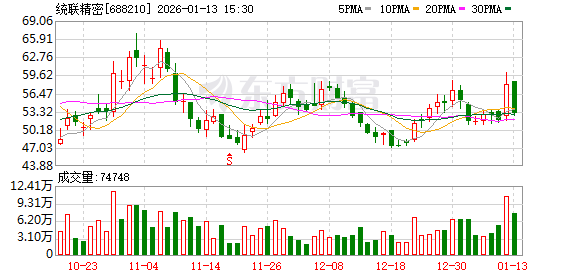
证券日报网1月13日讯 ,统联精密在接受调研者提问时表示,随着人工智能技术的发展,消费电子行业 正处于快速变革和创新的关键时期,终端产品将在软件、硬件、产品形态与版本方面持续迭代,新技术 和新应用将会带来大量购买需求,带动轻量化、高精度、高可靠性的精密零部件需求呈爆发式增长。基 于此,公司积极布局新型智能终端精密零部件业务,快速响应终端客户对精密零部件轻量化、高性能迭 代需求,加大对钛合金、镁合金、铝合金、碳纤维等轻质材料产业化应用方向的投入,储备半固态压 铸、3D打印为代表的先进制造工艺技术及相关配套产能。 (文章来源:证券日报) ...


统联精密:公司产品目前主要应用于新型消费电子领域
Zheng Quan Ri Bao· 2026-01-13 13:13
Core Viewpoint - The company, Tonglian Precision, is focusing on expanding its product applications in the new consumer electronics sector, particularly in areas influenced by artificial intelligence technology [2]. Group 1: Revenue Structure - The company's products are primarily used in new consumer electronics, including foldable smartphones, tablets, laptops, desktop computers, smart touch capacitive pens, smart wearable devices, aerial drones, and action cameras [2]. - The company is actively exploring new application areas such as components for smart wearables, communication products, and portable smart terminal components, targeting products like smart glasses, signal receivers, and AIPC [2].
从“经典广货”到“科技广货”,解码“广货行天下”新路径
Nan Fang Du Shi Bao· 2026-01-13 13:04
Core Viewpoint - Guangdong is transforming its traditional manufacturing into high-tech "Guangdong goods," leveraging technological innovation to enhance competitiveness and drive high-quality development in the global value chain [1][4]. Group 1: High-Tech Manufacturing - Guangdong accounts for 40% of the country's industrial robots, 80% of service robots, and 18% of integrated circuits, showcasing its significant role in high-tech manufacturing [2]. - The province is a major hub for smartphone production, with one in three smartphones sold globally being manufactured by Guangdong enterprises, highlighting its dominance in the industry [3]. - Key technological advancements in the smartphone sector include breakthroughs in chip technology by Huawei and innovations in fast charging and foldable screens by various local brands [3][4]. Group 2: Traditional Industry Transformation - Guangdong's textile and apparel industry is the largest in China, with 4,240 registered enterprises, representing 18.34% of the national total [5][6]. - The integration of digital technologies in traditional industries is enhancing productivity, with companies achieving significant efficiency gains through smart manufacturing processes [6][7]. - Companies like Yida Textile are innovating in functional fabrics, meeting market demands and expanding their reach to 137 countries, with notable sales growth in outdoor functional clothing [6][7]. Group 3: Export and Market Expansion - Guangdong's exports of high-tech products increased by 13.3% in the first half of 2025, reflecting the province's strong export capabilities in innovative manufacturing [8]. - The "Guangdong Goods Going Global" initiative aims to enhance market access and brand recognition for local products through coordinated promotional activities and partnerships with major e-commerce platforms [9]. - A series of promotional events will be held in early 2026 to showcase Guangdong's industrial products, emphasizing the transition from traditional to high-tech goods [9].
比iPhone更疯狂,乔布斯去世15年后,「最像他的人」操刀首款AI硬件
3 6 Ke· 2026-01-13 12:50
Core Insights - Jony Ive, known as Steve Jobs' "soulmate," returns to the tech scene in 2026 with a new AI device called "Sweetpea," developed in partnership with OpenAI, marking a significant shift from his previous work at Apple [1][6][67] - The device is designed to replace traditional smartphones, focusing on audio interaction rather than visual screens, aiming to reduce digital anxiety associated with smartphones [14][50][78] Company Developments - OpenAI's first hardware, "Sweetpea," is set to launch in September 2026, featuring a unique design resembling a "eggrock" with two pill-shaped devices for behind-the-ear use [1][13] - The manufacturing goal for the first year is between 40 million to 50 million units, significantly higher than the initial sales of AirPods, which took five years to reach similar numbers [3][19] Design Philosophy - The design philosophy behind Sweetpea emphasizes "Calm Technology," which aims to minimize user attention demands, contrasting sharply with the intrusive nature of smartphones [42][46] - Jony Ive's approach seeks to create technology that blends seamlessly into daily life, allowing users to interact with AI without the distractions of screens and notifications [55][78] Technological Specifications - Sweetpea is equipped with a 2nm chip, making it one of the most advanced devices in terms of processing power, with production costs comparable to a smartphone [15][17] - The expected retail price is projected to be between $500 and $800, reflecting its high-end specifications and positioning in the market [17][19] Historical Context - The narrative draws parallels between the acquisition of io Products by OpenAI for $6.5 billion and past significant tech acquisitions, highlighting the importance of talent over products in the tech industry [7][8] - Jony Ive's return to the tech landscape is seen as a potential turning point, reminiscent of his earlier contributions to Apple's revival in the late 1990s [62][67]
盈趣科技多项财务指标下滑 回应监管问询称不利因素已改善
Xin Lang Cai Jing· 2026-01-13 12:33
Core Viewpoint - 盈趣科技's financial performance has shown a downward trend in key metrics such as revenue, net profit, and gross margin, but the company claims that the adverse factors have significantly improved [1]. Financial Performance - During the reporting period, 盈趣科技's revenue was 4.35 billion, 3.86 billion, 3.57 billion, and 2.88 billion respectively, with net profit attributable to the parent company being 616.84 million, 386.67 million, 238.09 million, and 167.88 million. The gross margins were 30.43%, 30.70%, 28.36%, and 27.11%, all showing a declining trend [2]. - The company attributes the performance fluctuations to product structure adjustments, intensified market competition, and changes in customer demand. Notably, revenue from innovative consumer electronics is expected to decline significantly in 2023 and 2024 due to product transitions and inventory reductions [2]. International Business and Trade Policy Impact - 盈趣科技's overseas revenue accounted for 85.92%, 78.16%, 75.58%, and 73.29% during the reporting period, with a significant portion of sales directed to North America and Europe. Sales to the U.S. decreased from 37.92% in 2022 to 22.34% in the first nine months of 2025 [3]. - The company has established overseas production bases in Malaysia, Hungary, and Mexico to mitigate trade friction risks, and the impact of U.S. tariffs on Chinese goods is limited due to the majority of products being produced overseas [3]. Customer Concentration and Dependency Risk - The sales to the top five customers represented 63.03%, 48.52%, 43.82%, and 37.91% of total revenue during the reporting period, indicating a decreasing trend in customer concentration [4]. - Despite the high customer concentration, the company emphasizes strong historical relationships and high customization levels with major clients, which include well-known international and technology companies across various sectors [4]. Capacity Utilization and Fixed Asset Impairment - The capacity utilization rates were 91.74%, 84.31%, 78.40%, and 71.64%, showing a downward trend attributed to fluctuations in downstream market demand [5]. - The company reports no idle or obsolete fixed assets, and the management of fixed assets is deemed compliant and efficient, with no impairment provisions required [5]. Accounts Receivable and Inventory Management - The accounts receivable values were 1.09 billion, 1.11 billion, 1.19 billion, and 1.24 billion, showing an upward trend, with over 90% of accounts receivable aged within one year [6]. - Inventory values were 863 million, 788 million, 758 million, and 892 million, with a majority of inventory aged within one year, and the company maintains a cautious approach to inventory impairment provisions [6]. Fundraising Project Rationality and Capacity Digestion - The company plans to raise no more than 776.9 million for the expansion of its manufacturing bases in Malaysia and Mexico, as well as for health environment product expansion and R&D center upgrades [8]. - Despite low current capacity utilization, the company believes the fundraising projects are strategically sound based on global capacity layout and anticipated market recovery, expecting an additional annual revenue of approximately 2.19 billion and net profit of about 218 million post-project completion [8]. Goodwill Impairment Risk - As of September 2025, the goodwill value was 286.91 million, primarily from previous acquisitions, with no signs of impairment noted [9]. - The company anticipates a revenue growth of 13%-18% for 2025, continuing to optimize its global layout and product structure to enhance core competitiveness [9].

李东生与TCL的45年:为什么他们没错过时代?
远川研究所· 2026-01-13 12:30
Core Viewpoint - TCL has evolved from a traditional television manufacturer to a global technology leader, emphasizing innovation in display technology and strategic restructuring to enhance its market position and technological capabilities [5][11][22]. Group 1: Historical Context and Evolution - TCL first participated in CES in 1991, marking its entry into the global consumer electronics arena, and has since become a significant player with a 2453 square meter booth in 2026, showcasing advanced technologies like SQD-Mini LED and printed OLED displays [3][5]. - The company faced significant challenges in the early 2000s, including losses from overseas acquisitions, which led to a strategic pivot towards global integration and technology ownership [6][7]. Group 2: Strategic Decisions and Restructuring - After experiencing setbacks, TCL focused on vertical integration by establishing its own LCD panel production, investing over 300 billion yuan since 2009, which was crucial for maintaining pricing power in the television market [10][11]. - In 2017, TCL initiated a "twin restructuring" to streamline operations, selling off non-core businesses and focusing on high-value sectors like semiconductor displays and smart terminals, resulting in a doubling of revenue from approximately 75 billion yuan in 2019 to an estimated 165 billion yuan in 2024 [12][14]. Group 3: Technological Innovations - TCL has been a pioneer in display technology, launching the world's first Mini LED television in 2019 and developing printed OLED technology, which significantly improves material utilization and production efficiency [15][16]. - The company is set to lead in the printed OLED market with the establishment of the world's first high-generation printed OLED production line in Guangzhou, marking a significant advancement in display technology [17][21]. Group 4: Leadership and Vision - CEO Li Dongsheng's leadership reflects a commitment to "real economy" and a deep understanding of the challenges faced by Chinese manufacturers in a global context, emphasizing the importance of continuous innovation and adaptation [21][22]. - The company's journey illustrates the broader narrative of Chinese manufacturing's integration into the global market, with TCL serving as a case study of resilience and strategic foresight in overcoming industry challenges [22][24].


目标取代AirPods,OpenAI新硬件正式曝光
3 6 Ke· 2026-01-13 12:09
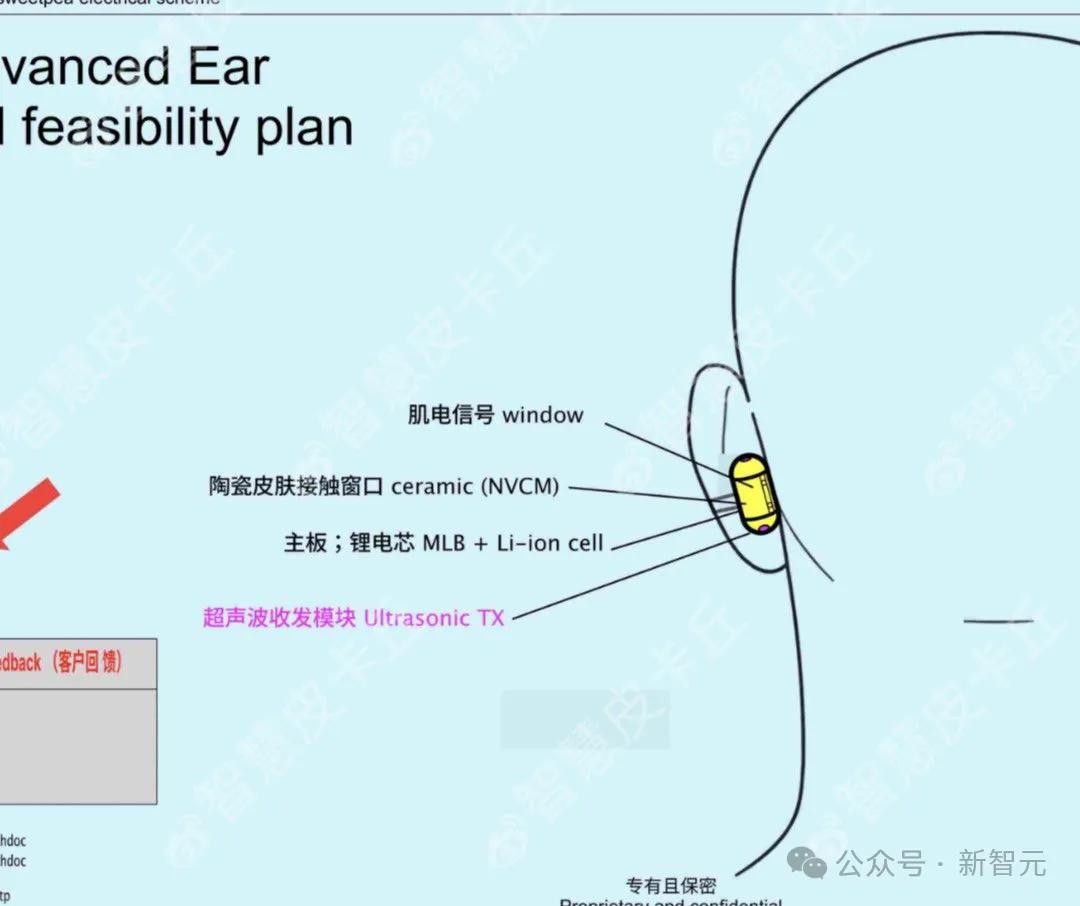
Core Insights - OpenAI is developing an AI headset codenamed "Sweetpea," which is designed to replace AirPods and redefine personal interaction in the AI era [2][4] - The headset will feature a unique pebble-shaped design made of metal, housing advanced technology for AI computations, including a 2nm chip for local AI processing [4][6] - OpenAI aims to ship 40-50 million units in the first year post-launch, indicating strong confidence in market potential [4][6] Product Development - The "Sweetpea" headset is being designed by Jony Ive, former Chief Design Officer at Apple, and is intended to provide a new form of interaction without relying on screens [4][6] - The device will utilize built-in microphones and cameras for environmental awareness, aiming to offer proactive AI services rather than reactive responses [6][7] Market Context - The AI headset market is experiencing rapid growth, with a projected increase in global market size from $217 million in 2025 to $680 million by 2031, reflecting a compound annual growth rate of 20.99% [6] - In Q1 2025, online sales of AI headsets in China are expected to surge by 960.4% year-over-year, surpassing total sales for 2024 [6] Competitive Landscape - The AI headset market has three main camps: innovative design-focused companies, established hardware manufacturers like Huawei and Apple, and traditional acoustic firms enhancing their products with AI capabilities [7] - The key competitive advantage in the AI headset market is the ability to provide "active intelligence," moving beyond passive command-response systems [7][8] Challenges - Privacy concerns are a significant challenge due to continuous environmental sensing and data collection, necessitating a balance between user experience and privacy protection [8] - Technical challenges include achieving a balance between battery life and performance, ensuring smooth multi-device collaboration, and maintaining interaction accuracy in noisy environments [8] - OpenAI faces supply chain integration challenges, particularly in scaling production to meet its ambitious shipping targets, despite partnering with Foxconn for capacity assurance [8][9]

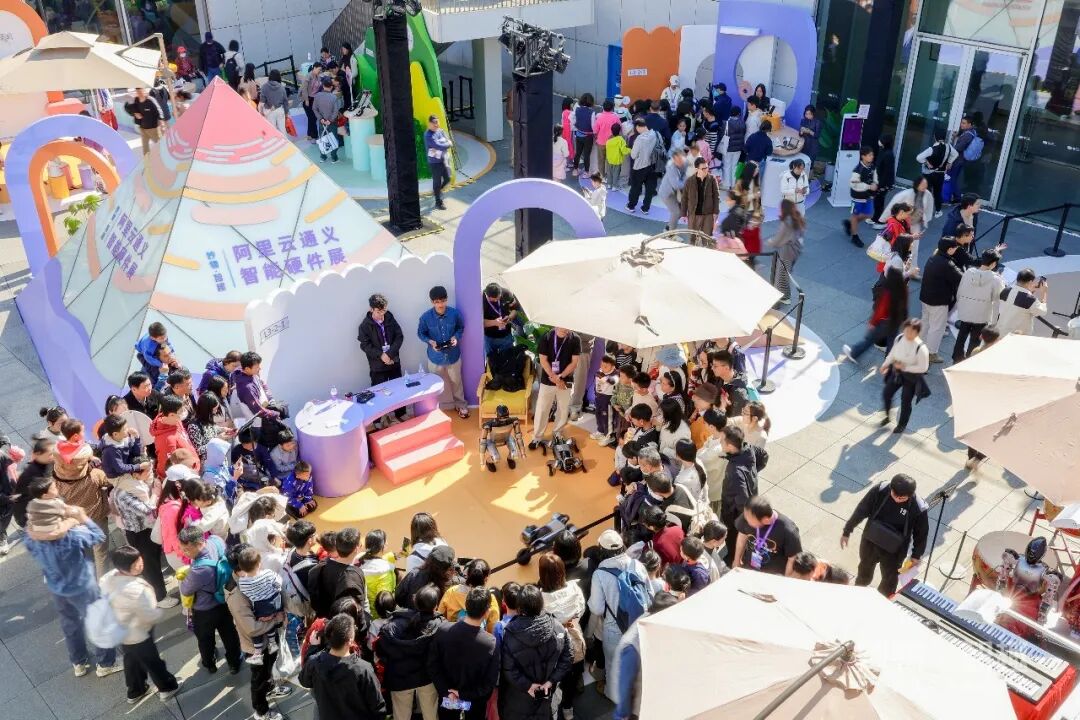
中国版“CES展”背后的惊喜
Xin Lang Cai Jing· 2026-01-13 11:32
Core Viewpoint - The future of AI hardware is firmly rooted in China, as evidenced by the recent intelligent hardware exhibition hosted by Alibaba Cloud, which is being compared to CES in the U.S. [1][10] Group 1: Exhibition Overview - The exhibition covered over 5,000 square meters and showcased more than 1,500 new AI hardware products, with 180 items debuting simultaneously at CES in the U.S. [2] - The exhibition featured a diverse range of products across various consumer sectors, including 3C digital products, home appliances, toys, fitness equipment, and more [2][4]. Group 2: AI Hardware Trends - The terms "emergence" and "generalization" were used to describe the rapid proliferation of AI products across industries, indicating a significant transformation in the application of AI technology [7]. - The exhibition highlighted the integration of AI into traditional industries, suggesting a profound industrial restructuring that surpasses the previous mobile app revolution [10]. Group 3: Future AI Development - A second wave of AI development is anticipated by 2026, characterized by accelerated technological iterations and a shift in application timelines from 5-10 years to 2-3 years [11]. - The concept of "physical AI" is emerging, with applications expected to extend beyond consumer devices to include automobiles, robotics, and various industrial terminals [13][14]. Group 4: Economic Impact - The potential economic impact of AI on global GDP could be a growth of 10%, representing a value reconstruction space of up to $11 trillion [14]. - By 2026, it is projected that 80% of the AI market will be driven by new incremental markets, emphasizing the importance of future market capture over current market share [14]. Group 5: Competitive Landscape - The competition in China is dual-tracked, with traditional industries leveraging AI for transformation while "AI-native companies" explore new business models [15][16]. - AI applications in China are focusing on traditional manufacturing, new energy vehicles, and agriculture, utilizing cloud services to enhance efficiency [16][18]. Group 6: Infrastructure and Global Expansion - The foundational infrastructure for AI is evolving from a "Token factory" to an "AI super factory," indicating a shift towards comprehensive AI cloud services [25][27]. - Alibaba Cloud is expanding its global infrastructure to support Chinese enterprises' internationalization, with plans to establish facilities in 29 regions and 92 availability zones by 2025 [29]. Group 7: Conclusion - The intelligent hardware exhibition signifies a pivotal moment for China's AI industry, with the potential to lead in global AI advancements and redefine the landscape of consumer electronics [30][32].