钢铁

Search documents
山东钢铁发预盈,预计2025年归母净利润1亿元,扭亏为盈
Zhi Tong Cai Jing· 2026-01-28 12:31
山东钢铁(600022)(600022.SH)发布公告,公司预计2025年实现归属于母公司所有者的净利润1亿元左 右,与上年同期-28.91亿元(追溯调整后)相比,扭亏为盈,同比增利29.91亿元左右。 ...

热卷日报:震荡偏弱-20260128
Guan Tong Qi Huo· 2026-01-28 12:23
1. Report Industry Investment Rating - The report maintains a bullish view on hot-rolled coils [5] 2. Core View of the Report - Currently, the supply of hot-rolled coils is contracting while demand is resilient, resulting in an overall tight balance between supply and demand. Pre-holiday winter stocking is an important support for current demand. The social inventory of total inventory has decreased month-on-month, and the pressure on mill inventory is controllable, with the overall inventory risk improving marginally but still relatively high year-on-year. Attention should be paid to the impact of the post-holiday resumption of work and production on supply and demand. In summary, the tight balance between supply and demand and inventory reduction support prices, and subsequent attention should be paid to raw material costs and the strength of post-holiday demand recovery. Currently, the market sentiment is cautious with low volatility due to the tug-of-war between macro loose expectations and pre-holiday weak demand [5] 3. Summary by Relevant Catalogs Market行情回顾 - **Futures Price**: On Wednesday, the open interest of the main hot-rolled coil futures contract increased by 9,222 lots, with a trading volume of 283,776 lots, which was lower than the previous trading day. The intraday low was 3,275 yuan, and the high was 3,290 yuan. It showed a weak intraday oscillation, breaking below the 5-day moving average in the short term and closing at 3,280 yuan/ton near the 30-day moving average, a decrease of 13 yuan or 0.39% [1] - **Spot Price**: The price of hot-rolled coils in Shanghai, a major region, was reported at 3,280 yuan/ton, a decrease of 10 yuan from the previous trading day [2] - **Basis**: The basis between futures and spot was 0 yuan, basically at par [3] Fundamental Data - **Supply**: As of January 22nd, the weekly output of hot-rolled coils decreased by 29,500 tons month-on-month to 3.0541 million tons, and decreased by 172,300 tons year-on-year. The output decline may be affected by factors such as maintenance arrangements and profit fluctuations, which supports prices [3] - **Demand**: As of January 22nd, the weekly apparent consumption decreased by 42,000 tons month-on-month to 3.0996 million tons, and increased by 73,900 tons year-on-year. Although demand declined slightly month-on-month, it maintained year-on-year growth. Pre-holiday stocking supported demand, indicating strong overall demand resilience [3] - **Inventory**: As of January 22nd, the total inventory decreased by 45,500 tons week-on-week to 3.5778 million tons (social inventory decreased by 46,600 tons week-on-week, and mill inventory increased by 1,100 tons). Year-on-year, the total inventory increased by 212,700 tons (social inventory increased by 241,800 tons year-on-year, and mill inventory decreased by 29,100 tons year-on-year). The month-on-month decrease in total inventory alleviated inventory pressure marginally, while the year-on-year increase indicated that the inventory accumulation rate this year was slightly faster than last year, but the overall risk was controllable [3] - **Policy**: The new regulations on the management of steel export licenses will cause short-term export fluctuations, increase supply, and put downward pressure on prices. In the long term, they will promote industrial upgrading, structural optimization, and competitiveness improvement. The Central Economic Work Conference in December proposed a positive fiscal policy and a moderately loose monetary policy in the macro aspect, and listed in - depth rectification of involution - type competition as a key task for 2026, which is beneficial to prices and industry profitability. Efforts are also being made to stabilize the real estate market and expand domestic demand [4] Market Driving Factor Analysis - **Bullish Factors**: Decrease in supply output, expectation of winter storage demand start, export rush, policy support ("15th Five-Year Plan", infrastructure investment), and strong iron ore as a furnace charge [5] - **Bearish Factors**: Unexpected resumption of production by steel mills in January, seasonal weakening of demand, insufficient manufacturing orders, and inventory accumulation suppressing prices [5]
资源股强势大涨
Tebon Securities· 2026-01-28 12:23
Market Overview - The A-share market experienced a volatile upward trend, with the Shanghai Composite Index closing at 4151.24 points, up 0.27%, while the Shenzhen Component Index rose slightly by 0.09% to 14342.89 points, and the ChiNext Index fell by 0.57% to 3323.56 points, indicating a cooling risk appetite for growth stocks [6][9] - Resource stocks led the market rally, with significant gains in sectors such as non-ferrous metals (up 6.02%), coal (up 3.29%), and oil & petrochemicals (up 3.26%), contributing to a 2.54% increase in the resource stock index, reaching a new high for the year [6][9] Sector Analysis - The report highlights a strong performance in resource stocks, particularly precious metals like gold and silver, which saw substantial price increases due to international market dynamics, including gold surpassing 5200 USD/ounce [6][9] - The report suggests a shift in investment focus from technology growth stocks to cyclical stocks, with an emphasis on sectors such as non-ferrous metals, oil & petrochemicals, and basic chemicals, which are expected to show high earnings growth [7][14] Commodity Market - The commodity index continued its strong upward trend, with the South China commodity index closing at 2866.28 points, up 1.49%, marking a new high for the year, driven by significant gains in aluminum and other commodities [9][11] - The report notes that aluminum prices surged by 5.75%, driven by economic recovery expectations and increased demand from downstream processing enterprises [15] Investment Themes - The report identifies key investment themes, including a focus on photovoltaic technology, commercial aerospace, and precious metals, as sectors likely to benefit from macroeconomic recovery and policy support [7][14] - The report emphasizes the importance of monitoring the performance of growth stocks and thematic stocks, which may face valuation pressures if annual report earnings do not meet expectations [7][14] Bond Market - The bond market showed slight increases, with the 2-year, 5-year, and 10-year treasury futures contracts experiencing minor gains, reflecting a stable liquidity environment supported by central bank operations [11][14] - The report indicates that the central bank's net injection of 140 billion yuan and the decline in short-term interest rates suggest a continued easing of monetary conditions [11][14]





退市警报拉响!多家A股公司公告
Xin Lang Cai Jing· 2026-01-28 11:59
Core Viewpoint - The A-share market is undergoing a new wave of "delisting risk inspection" as companies disclose their 2025 annual performance forecasts, with over 20 companies already indicating potential delisting risk warnings due to financial indicators not meeting standards, major violations, or abnormal audit opinions [1][9]. Financial Indicators Not Meeting Standards - According to the latest rules from the Shanghai and Shenzhen Stock Exchanges, main board companies will trigger financial delisting risk warnings if their "net profit for the most recent accounting year is negative and operating revenue is below 300 million yuan" or if "net assets at the end of the period are negative" [2][10]. - Companies such as Bayi Steel, Shuaifeng Electric, Tianjian Technology, Yijing Optoelectronics, and Huaxia Happiness have announced that their stocks may face delisting risk warnings due to financial issues [2][10]. Specific Company Financial Issues - Bayi Steel expects its net assets to be between -1.76 billion yuan and -1.95 billion yuan by the end of 2025, which will trigger delisting risk warnings [3][11]. - Yijing Optoelectronics anticipates a net asset of -68 million to -130 million yuan for 2025, also leading to potential delisting risk warnings [3][11]. - Huaxia Happiness is expected to have negative net assets by the end of 2025, which may result in delisting risk warnings [3][11]. Revenue and Profit Shortfalls - Shuaifeng Electric forecasts a total profit loss of between -57 million and -38 million yuan for 2025, with a net profit loss of -62 million to -43 million yuan, and operating revenue expected to be between 21 million and 25 million yuan, below the 300 million yuan threshold [4][12]. - Tianjian Technology projects a total profit loss of between -170 million and -242 million yuan for 2025, with a net profit loss of -176 million to -250 million yuan, and negative operating revenue expected [4][12]. Internal Control Issues - Companies like Digital People and Tianye Co. face potential delisting risk warnings due to unresolved internal control issues highlighted in their audit reports for 2024 [5][13][14]. - Digital People received a negative opinion on its internal controls, which could lead to delisting risk warnings if similar issues persist in 2025 [5][13]. Importance of 2025 Audit Opinions - For companies already under delisting risk warnings, the audit opinions for 2025 will be critical. For instance, *ST Panda has indicated that unresolved non-standard audit opinions may lead to further delisting risks if not addressed [7][15]. - *ST Zhengping has also warned that unresolved audit issues could result in termination of listing if not rectified by the 2025 audit report [7][16].





退市警报拉响!多家A股公司公告
证券时报· 2026-01-28 11:48
Core Viewpoint - The A-share market is undergoing a new wave of "delisting risk inspection" as companies disclose their 2025 annual performance forecasts, with over 20 companies already warning of potential delisting risks due to financial indicators not meeting standards, major violations, or abnormal audit opinions [1] Group 1: Financial Indicators - Several companies have announced that they may face delisting risk warnings due to failing to meet financial indicators, including Ba Yi Steel, Shuaifeng Electric, Tianjian Technology, Yijing Optoelectronics, and Huaxia Happiness [3][4][5] - Ba Yi Steel expects its net assets to be between -1.76 billion and -1.95 billion yuan by the end of 2025, triggering delisting risk warnings under the Shanghai Stock Exchange rules [3] - Yijing Optoelectronics anticipates a negative net asset of between -6.8 million and -13 million yuan for 2025, which also falls under the delisting risk warning criteria [4] - Huaxia Happiness is expected to have negative net assets by the end of 2025, leading to potential delisting risk warnings [4] - Shuaifeng Electric forecasts a total profit loss of between -57 million and -38 million yuan for 2025, with expected revenue between 21 million and 25 million yuan, below the 300 million yuan threshold [5] - Tianjian Technology predicts a total profit loss of between -170 million and -242 million yuan for 2025, with negative revenue projections [5] Group 2: Internal Control Issues - Some companies may face delisting risk warnings due to unresolved internal control issues, such as Digital People and Tianye Co., which received negative audit opinions on their internal controls for 2024 [6][8] - Digital People is at risk of delisting if it receives negative audit opinions for two consecutive years, as per the Beijing Stock Exchange rules [8] - Tianye Co. has also announced potential delisting risks due to similar internal control audit issues [8] Group 3: Audit Opinions - For companies already under the *ST designation, the audit opinion for the 2025 financial statements is critical, as non-standard opinions could lead to further delisting risks [9][10] - *ST Panda has indicated that unresolved issues may lead to non-standard audit opinions for 2025, which would trigger delisting risks [10] - *ST Zhengping has been warned of delisting due to unresolved non-standard audit opinions and internal control issues, with significant uncertainties regarding its continued operation [10]


凌钢股份:公司暂未自主搭建财务共享中心
Zheng Quan Ri Bao Wang· 2026-01-28 11:43
Group 1 - The company, Lingang Co., Ltd. (600231), has not yet established its own financial shared service center [1] - Starting from April 2025, the company will officially implement the financial shared service system of Ansteel Group, relying on its shared center for financial operations [1]

八一钢铁预亏超18亿元 或被实施退市风险警示
Zhong Guo Jing Ying Bao· 2026-01-28 11:27
中经记者 陈家运 北京报道 财务数据显示,2022年至2024年,八一钢铁的归母净利润分别亏损13.62亿元、11.63亿元、17.52亿元, 亏损规模呈现扩大趋势。 2025年前三季度,八一钢铁曾出现阶段性减亏迹象。当期,其实现营业收入146.17亿元,同比下降 1.39%,归母净利润亏损5.72亿元,同比增长60.43%,扣非归母净利润亏损6.06亿元,同比增长 58.27%。 然而,在2025年第四季度八一钢铁业绩却大幅亏损。根据业绩预告测算,八一钢铁第四季度归母净利润 亏损额高达12.78亿元至14.78亿元,远超前三季度亏损总和。 2026年1月25日,八一钢铁(600581.SH)公告披露,预计2025年归母净利润亏损18.50亿元至20.50亿 元,扣非归母净利润亏损19亿元至21亿元。这已是八一钢铁连续第四年亏损。并且,其预计2025年末净 资产为-17.60亿元至-19.50亿元,触及《上海证券交易所股票上市规则》第9.3.2条规定的退市风险警示 情形。 八一钢铁方面表示,当前钢铁行业处于"减量发展、存量优化"的深度调整期,"供需双弱"叠加环保政策 收紧、原燃料与钢材价格"剪刀差"、产能过剩 ...
华菱钢铁:投资者质疑信息披露违规,董秘称公告符合规定
Xin Lang Cai Jing· 2026-01-28 11:27
Core Viewpoint - The company has included a tax payment of 224 million yuan in its Q3 2025 report, but there are concerns regarding the disclosure of significant tax risks related to its controlling subsidiaries [1] Group 1 - The company confirmed that its announcements comply with relevant information disclosure regulations [1] - There are allegations from investors suggesting potential concealment of negative information by the company [1] - Questions have been raised about the company's responsibility for losses incurred by minority shareholders due to the lack of disclosure [1]

方大特钢预计2025年净利8.35亿—9.98亿元
Bei Jing Shang Bao· 2026-01-28 11:20
方大特钢表示,上游主要原燃料价格显著回落,钢材利润得到一定修复。在生产端,公司持续推进精细 化管理,大力降本增效;建设两套65MW超高温亚临界发电项目,提升能源利用效率。在销售端,公司 抢抓市场机遇,通过优化品种结构,提高高效益产品产销量,有力推动了业绩增长。此外,2025年,公 司非经常性损益金额约为1.3亿元,主要原因是受资本市场整体上涨影响,公司投资的信托产品等公允 价值变动收益增加。 北京商报讯(记者马换换李佳雪)1月28日晚间,方大特钢(600507)披露公告称,公司预计2025年度实 现归属净利润为8.35亿元到9.98亿元,同比增加236.9%到302.67%。 ...

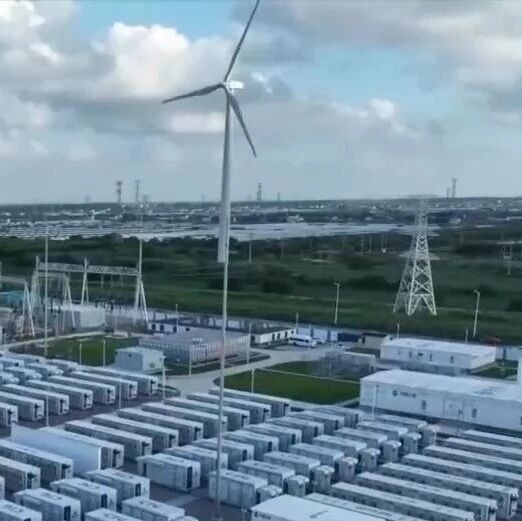
“十四五”期间,我国建成全球规模最大清洁电力供应体系
中国能源报· 2026-01-28 10:53
Core Viewpoint - During the "14th Five-Year Plan" period, China has established the world's largest clean electricity supply system and clean steel production system, along with the largest carbon emission trading market globally [1][3]. Group 1 - China has achieved a penetration rate of over 50% for new energy vehicles during the "14th Five-Year Plan" period [3]. - The clean transportation ratio in key regions and industries has reached 78% [3]. - By the end of 2025, the cumulative transaction volume of carbon emission quotas is expected to reach 865 million tons, with a transaction value of 57.663 billion yuan [3]. Group 2 - A national voluntary greenhouse gas emission reduction trading market has been initiated [3]. - The country is leading the establishment of a product carbon footprint management system [3]. - The implementation of the "National Climate Change Adaptation Strategy 2035" has been issued to continuously enhance climate resilience in key areas and sectors [3].