
批发和零售业

Search documents
新高、活跃、韧性,5.9%、48.5%……透过“关键词+数据”看经济繁荣发展活力
Yang Shi Wang· 2025-07-23 03:49
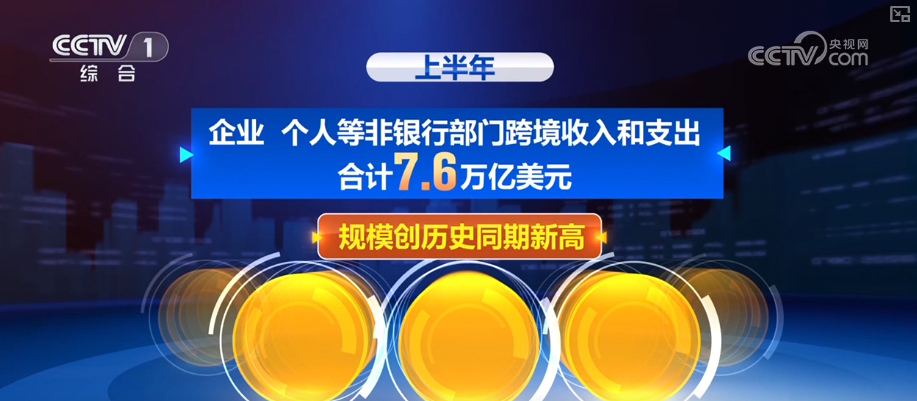
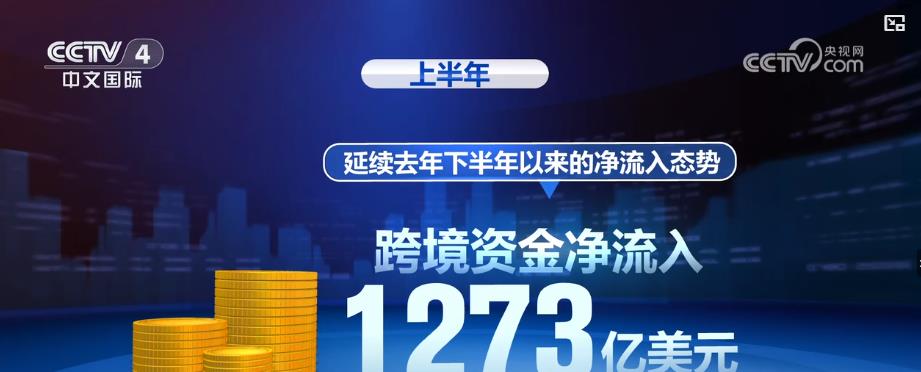
Economic Overview - In the first half of 2025, non-bank sector cross-border income and expenditure reached a record high of $7.6 trillion, marking a year-on-year increase of 10.4% [3][11] - The net inflow of cross-border funds was $127.3 billion, continuing the trend of net inflows since the second half of 2024 [3] - The total trading volume in the domestic foreign exchange market was $21 trillion, reflecting a year-on-year growth of 10.2% [3] Employment and Social Security - A total of 6.95 million new urban jobs were created in the first half of 2025, achieving 58% of the annual target [6][8] - The cumulative balance of three social insurance funds reached ¥9.83 trillion, with social security card coverage at 98.9% of the population [10] Retail and Wholesale Sector - The value added of the wholesale and retail industry was ¥6.8 trillion in the first half of 2025, with a year-on-year growth of 5.9%, accounting for 10.3% of GDP [5] Aviation Industry - The civil aviation sector achieved a total transport turnover of 783.5 billion ton-kilometers and a passenger transport volume of 370 million in the first half of 2025, with respective year-on-year growth rates of 11.4% and 6% [12][14] - The average daily aircraft utilization rate improved to 9 hours, and the on-time flight rate reached 91.7% [14] Financial Sector - New RMB loans totaled ¥12.92 trillion in the first half of 2025, indicating strong credit support for the real economy [21][23] - The balance of inclusive small and micro loans reached ¥35.57 trillion, with a year-on-year growth of 12.3% [27] Foreign Investment - Direct investment net inflow into China from January to May 2025 was $31.1 billion, a year-on-year increase of 16% [35] - Securities investment net inflow was approximately $33 billion, reversing the net outflow trend from the second half of 2024 [35] Telecommunications Sector - The total revenue from telecommunications services reached ¥905.5 billion in the first half of 2025, with a year-on-year growth of 1% [37] - The number of 5G base stations reached 4.549 million, accounting for 35.7% of all mobile base stations [39] Transportation Infrastructure - The completion rate of the main framework of the national comprehensive transportation network exceeded 90% [40][42] - An average of 1.8 billion people traveled across regions daily, highlighting the efficiency of the transportation network [42]

多领域发展数据亮眼:中国经济稳中有进 跃动强劲脉搏
Yang Shi Wang· 2025-07-23 02:34
Economic Overview - China's economy is showing steady progress, with multiple departments releasing the latest data indicating positive developments [1] Foreign Exchange Reserves - As of the end of June, China's foreign exchange reserves stood at $3.3174 trillion, an increase of $115.1 billion compared to the end of 2024 [2] Cross-Border Income and Expenditure - In the first half of the year, non-bank sectors' cross-border income and expenditure reached a record high of $7.6 trillion, marking a year-on-year growth of 10.4% [5] - The net inflow of cross-border funds was $127.3 billion, continuing the net inflow trend observed since the second half of last year [5] - The total trading volume in the domestic foreign exchange market was $21 trillion, reflecting a year-on-year increase of 10.2% [5] Wholesale and Retail Sector - The value added by the wholesale and retail sector in the first half of the year was ¥6.8 trillion, with a year-on-year growth of 5.9%, accounting for 10.3% of GDP [6][8] Employment Statistics - In the first half of the year, 6.95 million new urban jobs were created, achieving 58% of the annual target [9][11] - The urban unemployment rate in June was 5.0%, unchanged from the same period last year [11] Social Insurance Funds - By the end of June, the cumulative balance of the three social insurance funds was ¥9.83 trillion, indicating overall stable fund operations [12][14] - The number of social security cardholders reached 1.39 billion, covering 98.9% of the population, with 1.097 billion using electronic social security cards [14]
首次超500亿千瓦时 杭州上半年用电量同比增长6.2%
Hang Zhou Ri Bao· 2025-07-22 03:00
Economic Overview - In the first half of 2025, Hangzhou's total electricity consumption exceeded 50.3 billion kilowatt-hours, marking a year-on-year increase of 6.2%, indicating overall economic growth across all three major industries: agriculture, industry, and services [1] - The electricity consumption pattern in Hangzhou reflects strong resilience and internal momentum in the economy, with a rapid increase in consumption during the first three months, followed by a slowdown in April due to international factors, and a significant recovery in May and June driven by effective economic policies [1] Digital Economy - The digital economy in Hangzhou is thriving, with service sector electricity consumption reaching 17.89 billion kilowatt-hours, a year-on-year increase of 9.9%, continuing to be the main engine of economic growth [1] - The information transmission, software, and IT services sectors led the growth with a 15.7% increase in electricity consumption, while the internet services sector saw a remarkable growth rate of 237.7% [1] Industrial Transformation - Hangzhou's industrial electricity consumption totaled 21.71 billion kilowatt-hours in the first half of the year, reflecting a year-on-year growth of 2.6%, with improvements noted in industrial operations [2] - High-tech manufacturing sectors such as instrument manufacturing, computer, communication, and other electronic equipment manufacturing, and biopharmaceuticals showed significant growth rates of 21.4%, 12.6%, and 12.0% respectively, while traditional chemical industries experienced a decline of 8.7% [2] - The consumption data indicates a strong recovery in the consumer market, with wholesale and retail, as well as real estate sectors, achieving double-digit growth rates of 13.1% and 11.8% respectively [2]
工信部拟制定移动电源强制国家标准
起点锂电· 2025-07-18 10:18
Group 1 - The Ministry of Industry and Information Technology is soliciting opinions on the revision of the "Safety Technical Specifications for Mobile Power Supplies," which will impose stricter technical standards on mobile power supplies, including power banks [2] - The new standards are expected to improve the overall development of the industry and address safety issues caused by disordered competition, potentially reshaping the market landscape [2] - The Civil Aviation Administration of China has mandated that starting June 28, 2025, passengers will be prohibited from carrying power banks that lack mandatory product certification (3C certification) or fall within the recall range, leading to a surge in demand for compliant products [2] Group 2 - Recent reports from Shenzhen Huaqiangbei indicate a 200% month-on-month increase in orders for compliant products [3] - There are currently 29,900 registered companies related to power banks in China, with 46.82% of them established between 5 to 10 years ago [3] - In 2024, a total of 139 new companies related to power banks were registered, with 23 registered so far this year [3] - The majority of power bank companies (29.31%) have registered capital of less than 1 million yuan, and 45.38% of these companies belong to the wholesale and retail industry [3]

郑学工:上半年经济稳步前行 向新向好
Guo Jia Tong Ji Ju· 2025-07-16 02:04
Economic Overview - In the first half of the year, China's GDP reached 66,053.6 billion yuan, with a year-on-year growth of 5.3% [2] - The contribution rates of the three industries to economic growth were 3.6% for the primary industry, 36.2% for the secondary industry, and 60.2% for the tertiary industry [2] Industry Performance - The industrial production showed a robust growth with an industrial added value increase of 6.2% year-on-year, contributing 1.9 percentage points to economic growth [3][4] - The manufacturing sector's added value grew by 6.6%, contributing 1.7 percentage points to economic growth [3] - The service sector, particularly information transmission, software, and IT services, saw significant growth with added values increasing by 11.1% and 9.6% respectively, contributing a total of 1.0 percentage point to economic growth [3] Domestic Demand - Final consumption expenditure contributed 52.0% to economic growth in the first half, driving GDP growth by 2.8 percentage points [5] - Investment demand showed a steady increase, with total capital formation contributing 16.8% to economic growth, adding 0.9 percentage points to GDP [5] - Net exports maintained a stable growth trend, contributing 31.2% to economic growth, which added 1.7 percentage points to GDP [5] New Economic Drivers - The digital economy is gaining momentum, with the revenue of large-scale information transmission, software, and IT service enterprises growing by 11.4% from January to May, outperforming the overall service sector by 3.3 percentage points [6] - The equipment manufacturing and high-tech manufacturing sectors saw added value growth of 10.2% and 9.5% respectively, exceeding the overall industrial growth rates [7] - High-quality investments in equipment manufacturing and high-tech services increased by 7.5% and 8.6% respectively, indicating a focus on optimizing and upgrading industries [7]
经济运行向新向好
Sou Hu Cai Jing· 2025-07-15 22:43
Economic Overview - In the first half of the year, China's GDP reached 66,053.6 billion yuan, with a year-on-year growth of 5.3% [2] - The GDP for the second quarter was 34,177.8 billion yuan, showing a year-on-year growth of 5.2% [2] Industry Performance - The primary industry added value was 31.17 billion yuan, growing by 3.7%; the secondary industry added value was 239.05 billion yuan, growing by 5.3%; and the tertiary industry added value was 390.31 billion yuan, growing by 5.5% [2] - Industrial production increased by 6.2% year-on-year, with manufacturing growing by 6.6% [4] - The information transmission, software, and IT services sectors saw an increase of 11.1%, while leasing and business services grew by 9.6% [4] Domestic Demand and Consumption - Final consumption expenditure contributed 52.0% to economic growth in the first half, with a contribution of 52.3% in the second quarter [5] - Capital formation contributed 16.8% to economic growth in the first half, with a contribution of 24.7% in the second quarter [5] - Net exports contributed 31.2% to economic growth in the first half, with a contribution of 23.0% in the second quarter [5] New Economic Drivers - The information transmission, software, and IT services sector saw a revenue growth of 11.4% from January to May [6] - The added value of equipment manufacturing and high-tech manufacturing increased by 10.2% and 9.5% respectively in the first half [6] - Investment in equipment manufacturing grew by 7.5%, while high-tech service industry investment increased by 8.6% [6]
工业发展稳中有进 数字经济充满活力 深圳上半年全社会用电量同比上升4.8%
Shen Zhen Shang Bao· 2025-07-15 17:04
Core Insights - Shenzhen's total electricity consumption from January to June 2025 reached 56.93 billion kWh, marking a year-on-year increase of 4.8% [1] - The electricity consumption in the secondary industry was 26.99 billion kWh, up 2.5% year-on-year, while the tertiary industry consumed 20.95 billion kWh, reflecting a growth of 6.8% [1] - Residential electricity usage was 8.96 billion kWh, showing a significant increase of 7.6% year-on-year [1] Industry Performance - Industrial electricity consumption in Shenzhen totaled 26.01 billion kWh, with a year-on-year growth of 3.0%, indicating steady industrial development and ongoing transformation [1] - The manufacturing sector accounted for 21.09 billion kWh of electricity consumption, also growing by 3.0% year-on-year [1] - Notable growth in specific manufacturing sectors included automotive manufacturing (24.5%), computer, communication, and other electronic equipment manufacturing (11.4%), instrument manufacturing (8.1%), and pharmaceutical manufacturing (6.6%) [1] Tertiary Sector Dynamics - The service sector exhibited robust performance, with the top three sub-industries in electricity consumption growth being wholesale and retail (19.8%), information transmission, software, and IT services (19.8%), and leasing and business services (9.4%) [1] - The electricity consumption in the information transmission, software, and IT services sector reflects the vitality of the digital economy [1] Data Center and AI Development - Shenzhen is accelerating its development as a leading city in artificial intelligence, with data center electricity consumption growing rapidly [2] - The electricity demand from internet and related services surged by 38.2% year-on-year, with internet data services alone increasing by 42.8% [2] - The Shenzhen Power Supply Bureau is actively engaging with customers for energy-saving renovations and enhancing the green electricity share for data centers [2]
国家统计局:上半年服务业增加值同比增长5.5%,比一季度加快0.2个百分点
news flash· 2025-07-15 02:25
Core Insights - The service sector's value added grew by 5.5% year-on-year in the first half of the year, accelerating by 0.2 percentage points compared to the first quarter [1] - In June, the national service production index increased by 6.0% year-on-year, with significant growth in information transmission, software, and IT services at 11.6% [1] Service Sector Performance - The value added in the information transmission, software, and IT services sector grew by 11.1%, while leasing and business services increased by 9.6% [1] - The transportation, warehousing, and postal services sector saw a value added growth of 6.4%, and wholesale and retail trade grew by 5.9% [1] Revenue and Business Activity - From January to May, the revenue of large-scale service enterprises increased by 8.1% year-on-year [1] - The service business activity index stood at 50.1 in June, indicating a slight expansion, while the business activity expectation index was at 56.0, suggesting positive future outlook [1] Sector-Specific Insights - Industries such as postal, telecommunications, broadcasting, satellite transmission services, internet software and IT services, monetary financial services, capital market services, and insurance all reported business activity indices above 55.0, indicating a high level of prosperity [1]
加薪+工时增长双驱动,加拿大6月劳动力市场释放强劲动能
Xin Hua Cai Jing· 2025-07-11 13:54
Core Insights - The Canadian labor market showed positive changes in June 2025, with employment increasing by 83,000 (+0.4%), leading to an employment rate of 60.9% and a decrease in the unemployment rate to 6.9% [1] - The growth in employment was primarily driven by the core age group of 25-54 years, with male employment rising by 62,000 (+0.8%) and female employment by 29,000 (+0.4%) [1] - The youth and 55+ age groups showed little change in employment, indicating stable employment willingness and market demand in these demographics [1] Industry Analysis - The wholesale and retail sector saw a significant increase in employment by 34,000 (+1.1%), reflecting a vibrant consumer market and strong growth potential for related companies [2] - The healthcare and social assistance sector added 17,000 jobs (+0.6%), driven by aging population trends and increased health awareness, indicating long-term investment potential [2] - Conversely, agricultural employment decreased by 6,000 (-2.6%), suggesting potential challenges in the sector that investors should monitor [2] Regional Employment Trends - Employment growth was uneven across regions, with Alberta leading with an increase of 30,000 jobs (+1.2%), followed by Quebec (+23,000, +0.5%), Ontario (+21,000, +0.3%), and Manitoba (+8,500, +1.2%) [2] - The employment growth in these provinces is expected to boost local economic activity, consumption, and investment opportunities [2] Wage and Hour Trends - Total hours worked in June increased by 0.5%, with a year-on-year growth of 1.6%, indicating rising production demand and active business operations [3] - The average hourly wage rose by 3.2% to CAD 36.01, enhancing consumer purchasing power and reflecting a balanced labor supply-demand relationship [3] - Compared to the U.S., Canada has a higher employment rate, suggesting a more favorable environment for labor market participation, which could attract international investment [3]
中电联:用电数据显示数字经济等新兴服务业迅猛发展
Xin Hua Cai Jing· 2025-07-11 02:43
Group 1 - The core viewpoint is that electricity consumption in China is growing at a rate higher than GDP growth, with an electricity elasticity coefficient around 1.2, indicating a strong relationship between electricity consumption and economic growth [1] - From 2018 to 2024, the electricity consumption growth rate in high-tech and equipment manufacturing industries is significantly higher than the average level of the manufacturing industry, with an annual growth rate of 8.0%, driven by the expansion of high-end manufacturing sectors [1] - The rapid expansion of high-end manufacturing, including new energy equipment, new energy vehicles, semiconductors, and advanced materials, is creating a new driving force for electricity consumption [1] Group 2 - From 2018 to 2024, the electricity consumption in the internet and related data services industry is growing at an annual rate of 19.2%, highlighting the rapid development of the digital economy [2] - The digital economy, represented by the internet, big data, cloud computing, and artificial intelligence, is becoming a significant driver of growth in the tertiary industry, with data centers and computing centers requiring substantial electricity [2] Group 3 - The electricity consumption in the charging and swapping service industry is growing at an annual rate of 74.3% from 2018 to 2024, which in turn drives an 11.8% annual growth in the wholesale and retail industry [3] - The growth in electricity consumption in the charging and swapping services is attributed to the increasing ownership of new energy vehicles, which is also accelerating the development of related service industries [3] - The ongoing push for carbon peak and carbon neutrality is leading to a gradual reduction in energy consumption per unit of GDP, with a cumulative decrease of 11.6% in energy intensity over the first four years of the 14th Five-Year Plan [3]