超市零售

Search documents
山姆事件背后:中国供应链正从“规模优势”向“标准输出”进阶
智通财经网· 2025-07-22 04:09
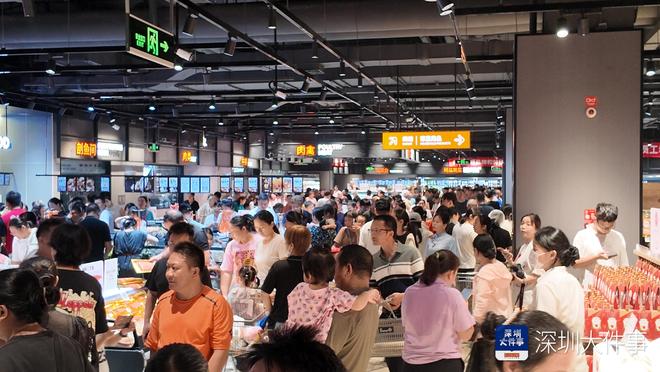
Core Viewpoint - Sam's Club is facing criticism over its product selection strategy, with concerns about the introduction of mass-market brands and the removal of high-repurchase-rate items, leading to questions about the perceived decline in quality [1] Group 1: Product Selection and Supply Chain Logic - Sam's Club's product selection is based on a differentiated value creation logic centered around member needs, rather than a simple evaluation of brand prestige [1][4] - The company has a stringent supplier admission system, requiring products to meet high-quality sourcing standards, such as specific beef cuts and traceable cold-chain logistics [2] - Sam's Club emphasizes understanding member needs and trends, often leading the demand by half a step, which translates into high standards for brands regarding product quality and innovation [4][7] Group 2: Customization and Brand Collaboration - The customization process at Sam's Club involves deep supply chain engagement, where products are developed based on member insights and data analysis, pushing suppliers to upgrade their production systems [4][10] - Brands entering Sam's Club must maintain their identity and innovation capabilities, creating a mutually beneficial relationship rather than merely acting as private label producers [7][10] - The successful collaboration with brands like Wei Long demonstrates that market acceptance is driven by the combination of "Sam's standards + brand characteristics," rather than just brand recognition [10][12] Group 3: Consumer Perception and Quality Consensus - The controversy surrounding Sam's Club reflects a shift in consumer understanding of the relationship between customization and quality, indicating that true customized supply chains enhance standards through precise demand matching and rigorous process control [12] - The ability of domestic brands like Wei Long to maintain independence and achieve value output in international retail systems showcases the evolution of Chinese supply chains from scale advantages to standard outputs [12]

90后夫妻砸千万,开马来西亚最大的中国超市
Hu Xiu· 2025-07-21 11:31
Core Insights - The article discusses the establishment of a large Chinese supermarket named "He Ma Sheng Xian" in Malaysia by a couple, highlighting the business opportunities in the local market due to the lack of large-scale Chinese supermarkets [2][5][18]. Business Environment - Malaysia's retail sector is still primarily offline, with a significant gap in large-scale shopping options for the Chinese community [6][8]. - The population structure in Malaysia, consisting of diverse ethnic groups, allows for focused marketing strategies targeting specific communities [7][18]. Market Opportunity - Prior to the opening of "He Ma Sheng Xian," there were few shopping venues catering to the Chinese demographic, with most existing stores being small convenience shops [8]. - The couple identified a market gap in live seafood sales, which is avoided by local supermarkets due to cultural practices [9]. Investment and Financials - The couple invested a significant amount, reaching eight figures in RMB, and the supermarket has achieved monthly revenues in the millions, with total revenue reaching tens of millions [5]. - The initial capital requirement for their business was 25 million MYR (approximately 42.32 million RMB) [22]. Regulatory Environment - Malaysia's government is supportive of foreign investment, with a relatively stable policy environment compared to neighboring countries like Indonesia [10][11]. - The couple successfully navigated the regulatory landscape, obtaining necessary licenses and approvals for their business operations [23][13]. Supply Chain and Operations - The supermarket offers over 8,000 product types, focusing on fast turnover and fresh products to mitigate risks associated with long-distance shipping [27][28]. - Most suppliers are based in Guangdong, China, due to their quick delivery capabilities [29]. Marketing Strategy - Online marketing has proven to be the most effective method for promoting the supermarket, with significant engagement on platforms like Xiaohongshu and Facebook [40][41]. - Initial marketing efforts led to overwhelming customer turnout, which caused supply chain challenges that were later addressed [42][44]. Customer Demographics - The primary customer base has shifted from mainly Chinese expatriates to include a significant number of local Malaysians, particularly from the Chinese community [55][56]. - The supermarket plans to open a second location in a high-traffic area, focusing on mid to high-end products to cater to the local demographic [60][62]. Employment Practices - The company employs over 80% local staff, which is a requirement for foreign-owned businesses in Malaysia [32]. - Recruitment strategies vary by position, with management roles being filled internally and other positions sourced through local job platforms [34][36].
快乐猴超市进击硬折扣,美团放不下“大超市”的梦想
东京烘焙职业人· 2025-07-21 08:30
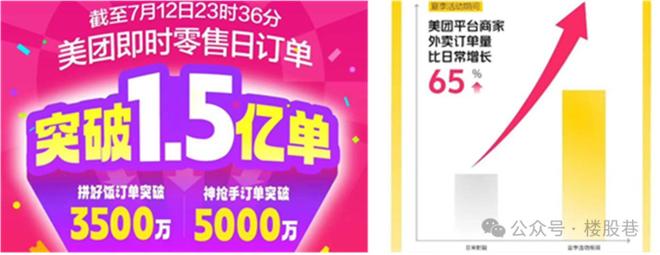
Core Viewpoint - Meituan is re-entering the offline retail market with its new hard discount supermarket project "Happy Monkey," aiming to leverage synergies with its existing businesses and align with its long-term strategy in grocery retail [3][4][6]. Group 1: Project Launch and Strategy - The "Happy Monkey" supermarket is set to officially open by the end of August this year, with a target of 20 stores in 2023 and 200 stores in 2024, starting in Beijing and Hangzhou [4]. - The store size will range from 800 to 1000 square meters, with over 50% of the space dedicated to fresh produce and a total of 1200 SKUs [4][12]. - The project is positioned to compete with Hema NB, focusing on high-quality products at competitive prices through optimized supply chains and reduced operational costs [12][16]. Group 2: Market Context and Consumer Trends - The discount retail market in China is rapidly growing, with an estimated market size of approximately 1.79 trillion yuan in 2023, accounting for about 3.8% of total social retail sales [15]. - A significant portion of consumers (33%) are concerned about rising food prices, indicating a demand for high-quality yet affordable products [15]. - The hard discount model is particularly appealing in the context of consumer trends towards quality and value amidst economic pressures [13][15]. Group 3: Competitive Landscape and Supply Chain - Competitors like Aldi and Hema NB have successfully established themselves in the hard discount sector, with Aldi reporting over 500 low-priced products and Hema NB undergoing a brand upgrade [12][13]. - Meituan's strategy includes leveraging its existing supply chain from previous projects like Meituan Preferred and integrating suppliers from its past ventures [18][20]. - The focus on self-operated products will be crucial for maintaining competitive pricing and quality, with Meituan already having a significant number of self-branded products [20][21]. Group 4: Synergies with Existing Operations - The "Happy Monkey" project is expected to enhance Meituan's existing instant retail operations, which currently boast a peak daily order volume of 150 million [23]. - The integration of offline stores will provide a more comprehensive local retail experience, addressing the limitations of purely online models [27][28]. - Meituan aims to create a "big supermarket" model by connecting local demand, supply, and logistics, thereby enhancing its market presence and consumer engagement [27][28].
被动接招线上外卖大战的美团,这次通过“快乐猴”主动奇袭线下零售
Tai Mei Ti A P P· 2025-07-20 10:01
Core Insights - Meituan is making a significant return to offline retail with the launch of its new discount supermarket chain "Happy Monkey," marking its third attempt in this sector [1][2][3] - The Chinese retail market is currently experiencing intense competition, with major players like Alibaba, Meituan, and JD.com investing over 100 billion yuan in subsidies [1][4][6] Group 1: Meituan's Retail Strategy - Meituan's previous venture, "Little Elephant Fresh," faced challenges leading to its closure, but the company has pivoted to new strategies, including the launch of "Meituan Grocery" and "Meituan Preferred" [2][3] - The new "Happy Monkey" stores aim to leverage insights from past failures and are designed to operate with high efficiency, utilizing direct supplier connections and automated processes [7][8] - The company plans to open approximately 1,000 "Happy Monkey" stores, with several already under construction in key markets like Hangzhou and Beijing [6][10] Group 2: Competitive Landscape - The hard discount supermarket sector is highly competitive, with established players like Hema and Aldi dominating the market, necessitating a focus on low margins and high turnover [8][9] - Meituan's "Happy Monkey" will compete directly with Hema's existing stores in Hangzhou, which already has a significant presence [9][10] - The company is also developing a network of over 5,500 satellite stores to enhance its delivery capabilities, with plans to expand this to 10,000 by the end of 2025 [10][11] Group 3: Market Dynamics - The instant retail market is evolving, with Meituan capturing over 70% of the market share in daily orders, while competitors like Alibaba and JD.com are also ramping up their efforts [12][13] - The shift in consumer behavior towards non-food categories is evident, with non-food orders increasing from 28% in 2023 to 41% in the first half of 2025 [12][13] - Meituan's strategy includes integrating its membership system across various services to enhance customer retention and engagement [12][13] Group 4: Future Outlook - The success of "Happy Monkey" will depend on Meituan's ability to optimize its supply chain and establish strong partnerships with suppliers, as well as its capacity to adapt to the complexities of offline retail [14][15] - The competitive landscape will continue to evolve, with Meituan needing to differentiate itself through unique value propositions and operational efficiencies [14][15] - The upcoming launch of "Happy Monkey" is seen as a critical move for Meituan's long-term strategy in reshaping its retail presence and addressing market challenges [15][16]

山姆,给中产丢脸了
盐财经· 2025-07-20 09:39
Core Viewpoint - The article discusses the recent backlash from Sam's Club members regarding changes in product selection, which has led to concerns about quality and brand trust among its members [2][4][9]. Group 1: Membership and Sales Performance - Sam's Club has over 5 million active members in China, generating annual membership revenue exceeding 1.3 billion yuan, with a high renewal rate of 92% for premium members [6][8]. - Walmart's Q1 report indicated that Sam's Club and e-commerce are significant growth drivers, contributing two-thirds of Walmart China's performance, with net sales reaching $6.7 billion, a 22.5% year-on-year increase [6][9]. Group 2: Product Selection Controversy - Members have expressed dissatisfaction over the replacement of popular products with mainstream brands, perceiving it as a decline in quality [4][12]. - The introduction of products like "减糖·好丽友派" faced criticism for not meeting quality expectations, leading to its temporary removal from shelves [14][20]. - Consumers feel that the new product offerings do not align with their expectations of premium quality, leading to a loss of trust in the brand [18][39]. Group 3: Management and Strategic Changes - The article highlights a management transition at Walmart China, with Jane Ewing taking over as acting president of Sam's Club, emphasizing supply chain efficiency [27][31]. - The rapid expansion of Sam's Club, with plans to open 6 new stores in 2024, has raised concerns about maintaining product quality and supply chain management [35][37]. - Analysts suggest that the quality issues may be linked to the accelerated growth and the need for a more robust logistics and quality control system [37][46]. Group 4: Consumer Sentiment and Future Outlook - Long-time members are reconsidering their membership due to perceived declines in product quality and benefits, with some opting to downgrade their membership [18][21]. - The article concludes that while Sam's Club has made adjustments in response to member feedback, the long-term impact on brand perception and member loyalty remains uncertain [47][48].


沃尔玛副总裁公布山姆会员店选品标准 已建立食品捐赠网络 链博会
Zhong Guo Jing Ying Bao· 2025-07-19 08:11
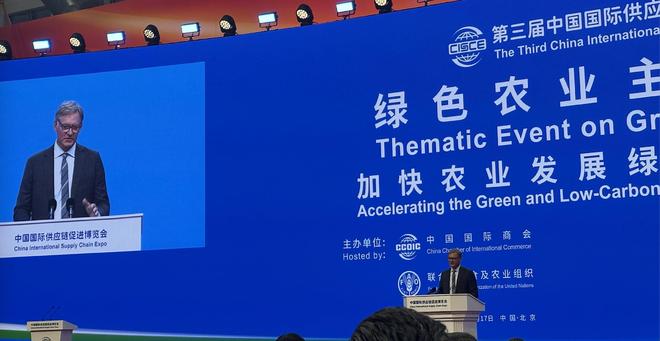
Core Insights - Walmart emphasizes the importance of sustainable agriculture and green supply chains, highlighting its commitment to working closely with suppliers to provide quality products at reasonable prices [2] - Sam's Club, a high-end membership retail brand under Walmart, has set annual membership fees of 260 yuan for regular members and 680 yuan for premium members in the Chinese market [2] Group 1: Sustainable Practices - Walmart has established strict "zero deforestation" standards for key commodities such as palm oil, beef, soybeans, and timber, promoting sustainable practices in various regions [3] - The company has protected and restored over 33 million acres of land and marine ecosystems through its sustainability initiatives, contributing to the recovery and management of these ecosystems [3] Group 2: Environmental Management - Walmart has implemented smart energy management systems in its stores, optimizing the efficiency of lighting, air conditioning, and refrigeration to enhance environmental performance [3] - The company is accelerating the adoption of rooftop solar systems in its distribution centers to produce clean energy and reduce carbon emissions [3] Group 3: Food Waste Reduction - Walmart China has established a regular food donation network to effectively reduce food waste in the retail sector, contributing to green consumption and social welfare [3]
山姆突然“暴雷”,3亿中产彻底怒了
Xin Lang Cai Jing· 2025-07-19 02:24
Core Viewpoint - The recent controversy surrounding Sam's Club and the introduction of the "low-sugar Holi-Ryu pie" has sparked discussions about the brand's commitment to providing a differentiated shopping experience for its middle-class members, which has been compromised by the influx of common products and the removal of high-quality items [1][5][7] Group 1: Product Strategy and Consumer Reaction - Sam's Club has traditionally focused on high-end, unique products to attract middle-class consumers willing to pay membership fees for a premium shopping experience [1][14] - The introduction of the "low-sugar Holi-Ryu pie" has received over 300 negative reviews from consumers, primarily due to concerns about its actual sweetness and the presence of trans fats [5][8] - The removal of popular, high-repurchase items like sun cakes and low-sugar egg yolk pastries in favor of more common brands has led to consumer dissatisfaction, questioning the value of the membership [7][9] Group 2: Quality Control Issues - Sam's Club has faced multiple quality control issues in 2025, including reports of foreign objects in food products, which have contributed to a growing distrust among consumers [8][9] - Complaints regarding food safety have surged, with over 8,000 complaints reported in 2024, 40% of which were related to food safety concerns [8][9] Group 3: Business Expansion and Challenges - Rapid expansion has led to challenges in maintaining quality control, with plans to open 10 new stores in 2025, bringing the total to nearly 60 [10][12] - The company's local sourcing rate exceeds 70%, which has complicated quality management as the scale of operations grows [10][12] - Financially, while Sam's Club reported a sales figure of 100 billion yuan and 2 billion yuan in membership fees in 2024, there are concerns about slowing sales growth, which has dropped from 15% to single digits [12][10] Group 4: Competitive Landscape - Competitors like Hema and Costco are intensifying pressure on Sam's Club by innovating their product offerings and enhancing customer engagement [12][10] - The retail industry is evolving, and consumers are increasingly prioritizing product quality and uniqueness over mere brand prestige [16][14]

奥乐齐无锡线上配送持续火爆,多款商品买即返购物金
Jiang Nan Shi Bao· 2025-07-18 12:24
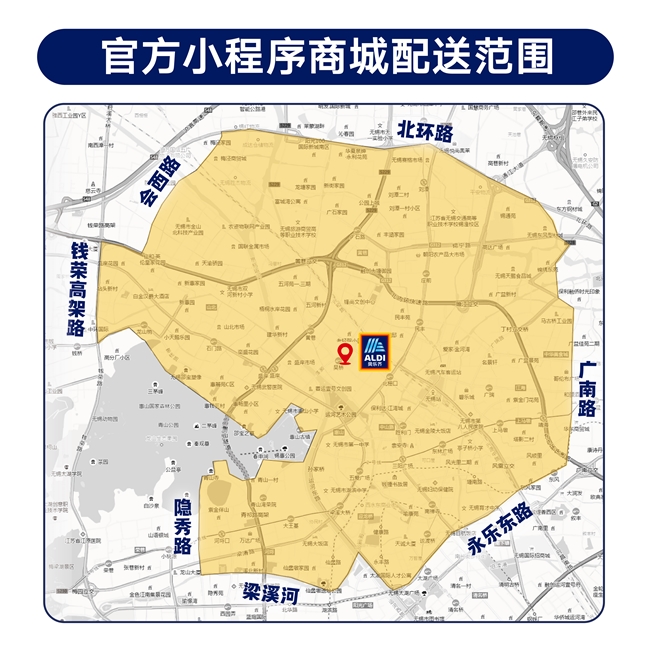
Core Insights - ALDI has successfully attracted a large number of consumers in Wuxi since opening its first store in April 2025, leading to phenomena such as "hot product rush" and "essential stockpiling" [1] - The company launched online delivery services in Wuxi on June 28, 2025, aiming to meet consumer demand and enhance local service pathways [1][2] - ALDI operates over 13,000 stores globally and has expanded to 74 stores in China since entering the market in 2019, maintaining its brand philosophy of "good quality, low price" [1][4] Online Delivery Service - The online delivery service allows consumers to order through the official mini-program and third-party delivery platforms, covering specific areas in Wuxi [2] - Consumers can enjoy zero membership fees and low-priced products, including small packaging options [2] Promotions and Discounts - ALDI is running a four-week promotional campaign alongside the launch of online delivery, featuring discounts on various product categories [1][5] - Specific promotions include 8.8% off on grains, snacks, and desserts from July 14 to July 20, and personal care, household cleaning, and frozen products from July 21 to July 27 [1][5] Private Label Products - ALDI has developed 13 private label brands, achieving a 90% share of private label products, earning the title of "private label pioneer" [4] - The promotional activities include various private label products, such as fresh produce and frozen items, which are popular among consumers in Jiangsu [4][5] Health-Conscious Offerings - The company offers health-focused products, including organic items and snacks, through its online delivery service [5] - ALDI's strategy in Wuxi reflects a commitment to responding to consumer needs and optimizing its "high quality, low price" service network [5]
山姆,泯然众人矣?
凤凰网财经· 2025-07-18 11:32
Core Viewpoint - The article discusses the challenges faced by Sam's Club in China, particularly regarding its product selection and membership value proposition, as consumer expectations rise amidst increasing competition and rapid expansion [2][5][12]. Group 1: Membership and Market Positioning - Sam's Club was the first to introduce the "paid membership warehouse supermarket" concept in China, targeting middle-class families with a focus on premium products and services [2][3]. - Membership fees of 260 yuan and 680 yuan serve as a barrier to entry, creating a sense of exclusivity for members [2][3]. - The club's strategy of offering a limited selection of high-quality products (with only 1/5 of the SKUs compared to traditional supermarkets) has been a key selling point [2][3]. Group 2: Product Selection Issues - Recent controversies surrounding product quality, such as reports of worms in fruit and issues with dairy products, have led to a significant increase in consumer complaints [5][6]. - The promise of high-quality, differentiated products is being questioned by members, who feel that they should not have to pay a premium for items available at local stores [6][12]. - The rapid expansion of Sam's Club has strained its supply chain, leading to quality control issues as the company attempts to balance cost and quality [8][10]. Group 3: Competitive Landscape - Sam's Club faces increasing competition from other retailers, including Costco and local supermarkets like Yonghui and Hema, intensifying the pressure to maintain its market position [10][11]. - The emergence of discussions comparing Sam's Club with Costco on social media indicates a growing rivalry that could lead to a "customer acquisition war" [11]. Group 4: Strategic Reflections - The article suggests that Sam's Club needs to reassess its growth strategy, particularly in aligning store expansion with supply chain management to ensure product quality [12][13]. - There is a call for Sam's Club to balance its global supply chain advantages with the need for local brand integration, maintaining quality standards while expanding its product offerings [13][14]. - The founder's emphasis on "quality over sales" is highlighted as a guiding principle that should be revisited to ensure long-term success [14][15].
深圳第六家“胖永辉”落子光明科学城,打造一刻钟便民生活圈
Nan Fang Du Shi Bao· 2025-07-18 06:55
Core Insights - Guangming District is emerging as a significant growth area for regional consumption upgrades, supported by its dual positioning as a science city and an industrial new town [1] - Yonghui Supermarket has opened its sixth modified store in Shenzhen, marking a strategic expansion in the Guangdong-Hong Kong-Macao Greater Bay Area [1][10] Product Structure Reconstruction - The store underwent a two-month transformation, resulting in a total of 9,772 products, including 57 private label bestsellers from the "Fat Donglai" brand and 15.1% imported premium products [3] - The fresh produce section has been enhanced with high-end items such as salmon sashimi and imported Wagyu beef gift boxes, achieving over 80% alignment with the product structure of "Fat Donglai" [3] Fresh Produce and Vegetables - The vegetable section now features organic vegetables, highland-grown varieties, and a series of purple vegetables, adhering to "zero fertilizer, zero chemical pesticide, zero hormone" standards [5] - The seafood section has been upgraded to focus on quality and service, introducing the "Green Starry Fish" series, which meets national green food standards [5] Store Environment and Customer Experience - The store layout has been redesigned to enhance customer comfort, with wider aisles and lower shelving for better visibility [7] - Additional customer service features include magnifying glasses for reading labels, health measurement stations, and a pet area, creating a "15-minute convenient living circle" [8] Marketing and Strategic Goals - The opening coincided with Yonghui's annual brand festival, "717 Good Food Festival," which features over 100 renovated stores and new product offerings [10] - The establishment of the Guangming Daqianli store strengthens Yonghui's regional presence, with plans to accelerate the renovation of stores nationwide, targeting 200 modified stores by September 30 [10]