商业航天

Search documents
中国商业航天如何实现“千帆竞发”
Xin Lang Cai Jing· 2026-01-21 19:34
(本文来自第一财经) 新年开局,中国商业航天直接"放大招"。这场藏在太空里的产业升级,太燃了!3个关键字带你看中国 商业航天如何实现"千帆竞发"。关键字一:多!应用场景落地多。出门打车靠北斗定位,手机通话有卫 星服务,旅游攻略用遥感三维实景,看4K电影离不开"小蜘蛛网星座"的高速传输。全球最大的亚米级 商用高分辨率遥感卫星星座"吉林一号",既能完成国土调查等常规任务,又吸引了商业合作。关键字 二:新!创新突破,商业航天"千帆竞发"。技术上,卫星生产告别"手搓"。卫星工厂引入自动化设备, 成本直降三分之一;新一代"翼阵合一"卫星宛如"太空飞毯",面积大、发电多,服务能力更强。产能 上,银河航天将卫星生产周期压缩至5天;安徽池州基地剑指2030年百亿规模。关键字三:快!商业航 天昂首迈入发展"快车道"。最新数据显示,我国商业航天产值已超2.5万亿元,年均增速20%,企业超 600家,正昂首迈入发展"快车道"。中国商业航天正演变为深入各行各业的新型基础设施,一个市场驱 动、技术牵引的"太空经济"生态正在加速成型。(央视新闻) ...
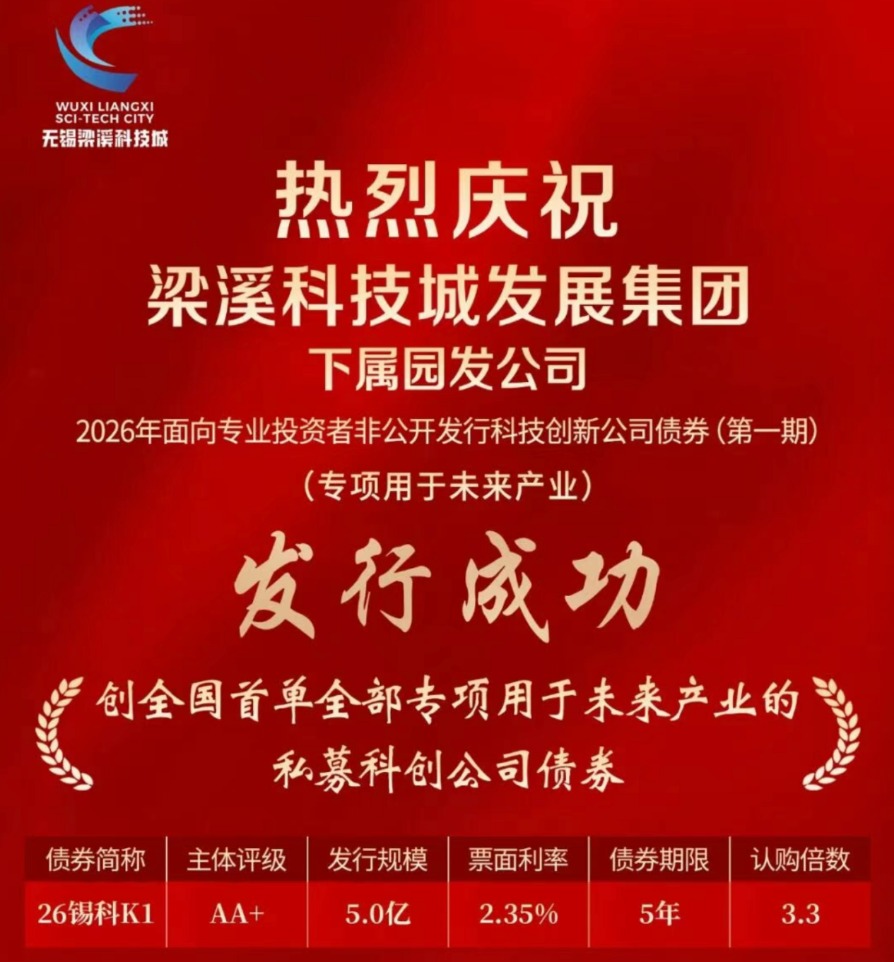
募资5亿元 无锡梁溪科技城斩获全国首单未来产业专项科创债
Zhong Guo Jing Ying Bao· 2026-01-21 17:09
全国首单"募集资金全部专项用于未来产业的私募科创公司债券"在江苏省无锡市诞生。 "梁溪科技城集团将持续深化与各类金融机构的战略合作,拓宽多元化融资渠道,创新金融服务产业模式,以资本活水浇灌创 新沃土,为梁溪科技城打造未来产业新高地、推动经济高质量发展注入源源不断的新活力。"梁溪科技城集团相关负责人表 示。 记者在采访中了解到,作为布局前沿和培育新增长点的战略方向,梁溪科技城已在部分未来产业赛道上形成了先发优势。 以位于无锡市梁溪区的无锡市低空经济运营展示中心为例,该中心由无锡市交通运输局、梁溪区、梁溪科技城联合打造,是无 锡市低空经济产业对外展示窗口,也是无锡市与苏州市、常州市联合申报共建的"环太湖民用无人驾驶航空试验区"重要组成部 分。 其中,低空经济产业展示中心为无锡市低空经济发展的产业窗口,集中展示了"六大集聚产业园区"空间布局,系统梳理覆盖无 锡市全产业链的134家上下游企业名录,同步呈现苏南低空经济与数字城市研究中心等多家产学研平台载体及包括梁溪劳埃德 翱飞基金在内的29只低空产业基金,全面呈现无锡市"贯通上下游、构建全链条"的产业生态闭环,致力打造集政策宣导、科普 教育、体验交互功能于一体的产业新 ...

商业航天:以第一性原理推演中国商业航天降本革命(附报告)
材料汇· 2026-01-21 15:30
Core Conclusion - By 2026, China's commercial aerospace industry is expected to reach a turning point in cost reduction for launch capacity, driven by the concentrated deployment of low Earth orbit (LEO) constellations and the normalization of high-frequency launches, with reusable rockets nearing breakthroughs in reducing unit launch costs. The industry's business model will shift from state-driven tasks to market-driven profitability, with a valuation logic transitioning towards "space infrastructure" as application scenarios and business models are restructured [3]. Market Outlook - 2026 is anticipated to be a prosperous year for China's commercial aerospace sector, with an accelerated pace of multi-constellation launches transitioning to large-scale deployment, leading to a rapid increase in rocket launch frequency. The commercial rocket launch service market in China is projected to grow from 10.26 billion yuan in 2025 to 47.39 billion yuan by 2030, corresponding to a CAGR of approximately 35.8%, primarily driven by high-frequency launch demand from dense deployment of LEO constellations [4][11]. - The industry is expected to maintain medium to long-term growth, with over 237,000 satellites needing to be deployed in accordance with ITU regulations by 2039. Starlink currently has over 9,000 satellites in orbit, and the demand for subsequent launches remains robust due to tightening frequency resources [4][11]. Cost Reduction Pathways - The essence of commercial rockets is a "space logistics" business, where core variables include efficiency improvements and cost reductions in launch capacity. Key pathways for cost reduction include breakthroughs in full-flow engine technology, high-frequency reuse capabilities, and industrialization in manufacturing [5]. - The unit cost of launching rockets is expected to decrease significantly through various stages: 1. Initial launch cost is approximately 55,000 yuan/kg 2. By around 2026, after achieving first-stage reuse, costs may drop to about 25,000 yuan/kg 3. Upgrading from aluminum to stainless steel structures could further reduce costs to approximately 19,000 yuan/kg 4. With the maturation of recovery methods, costs may decline to around 13,000 yuan/kg 5. Long-term, achieving second-stage reuse could bring costs close to 5,000 yuan/kg [5]. Industry Structure and Investment Opportunities - The commercial rocket industry is still in its early growth and valuation evolution phase. Key catalysts for valuation uplift in China's commercial aerospace sector include the realization of reusable rockets for large-scale LEO satellite networking and the transition from customized to standardized launches through long-term batch tasks [7][8]. - The valuation logic for commercial aerospace companies is shifting from manufacturing-oriented to platform and infrastructure-oriented technology enterprises, covering diverse long-term space mission needs such as manned flights and deep space exploration [8]. Key Players and Market Segments - The core technical barriers in rocket engines are concentrated in critical components such as thrust chambers and turbine pumps. The value in satellite manufacturing is primarily found in communication payloads [9]. - Key companies involved in the aerospace supply chain include: - Power Systems: Yingliu Co., Srey New Materials, Guoji Precision Engineering - Satellite Communication Systems: Shanghai Hantong, Aerospace Electronics, Guobo Electronics - Materials and Structural Components: Western Materials, Parker New Materials, Guoji Heavy Industry, Huazhuo High-Tech - Testing and Verification: Xicai Testing, Su Testing [9][10].




钧达股份(02865)拟折让约1.08%配售最多1868.2万股 净筹约3.98亿港元
智通财经网· 2026-01-21 13:47
智通财经APP讯,钧达股份(02865)发布公告,于2026年1月21日,公司与配售代理订立配售协议,配售 代理已有条件同意尽最大努力促使不少于六名承配人购买最多合共1868.2万股配售股份,配售价为每股 配售股份22.00港元,较于2026年1月21日在联交所所报收市价每股H股22.24港元折让约1.08%。假设配 售股份悉数获配售,配售股份占经配发及发行配售股份扩大后现有已发行H股数目约22.75%及现有已发 行股份数目约6.04%。 假设配售股份悉数获配售,配售事项的估计所得款项总额及所得款项净额预期分别为约4.11亿港元及约 3.98亿港元,经扣除该等费用、成本及开支后的估计净配售价约为每股配售股份21.29港元。配售事项所 得款项净额拟用于以下各项:约45%用于太空光伏电池相关产品的研发与生产;约45%用于商业航天领域 的股权投资与合作;及约10%用于补充公司营运资金。 ...

钧达股份(02865.HK)拟折让约1.08%配售最多1868.2万股 净筹约3.98亿港元
Ge Long Hui· 2026-01-21 13:47
配售价为每股配售股份22.00港元,较于2026年1月21日(即配售协议日期)在联交所所报收市价每股H股 22.24港元折让约1.08%;假设配售股份悉数获配售,配售股份占于本公告日期现有已发行H股数目约 29.45%及现有已发行股份数目(不包括库存股份)约6.42%,以及经配发及发行配售股份扩大后现有已发 行H股数目约22.75%及现有已发行股份数目(不包括库存股份)约6.04%(假设除配发及发行配售股份外, 公司已发行股本自本公告日期起至配售事项完成止并无变动)。 假设配售股份悉数获配售,配售事项的估计所得款项总额及所得款项净额(经扣除公司就配售事项产生 的所有费用、成本及开支,包括佣金及徵费)预期分别为约411.0百万港元及约397.7百万港元,经扣除该 等费用、成本及开支后的估计净配售价约为每股配售股份21.29港元。配售事项所得款项净额拟用于以 下各项:(i)约45%用于太空光伏电池相关产品的研发与生产;(ii)约45%用于商业航天领域的股权投资与 合作;(iii)约10%用于补充公司营运资金。 格隆汇1月21日丨钧达股份(02865.HK)公告,于2026年1月21日,公司与配售代理订立配售协议, ...
“十五五”开好局起好步丨天上星、陆上箭、海上船……商业航天如何“链”动未来
Yang Shi Xin Wen Ke Hu Duan· 2026-01-21 12:50
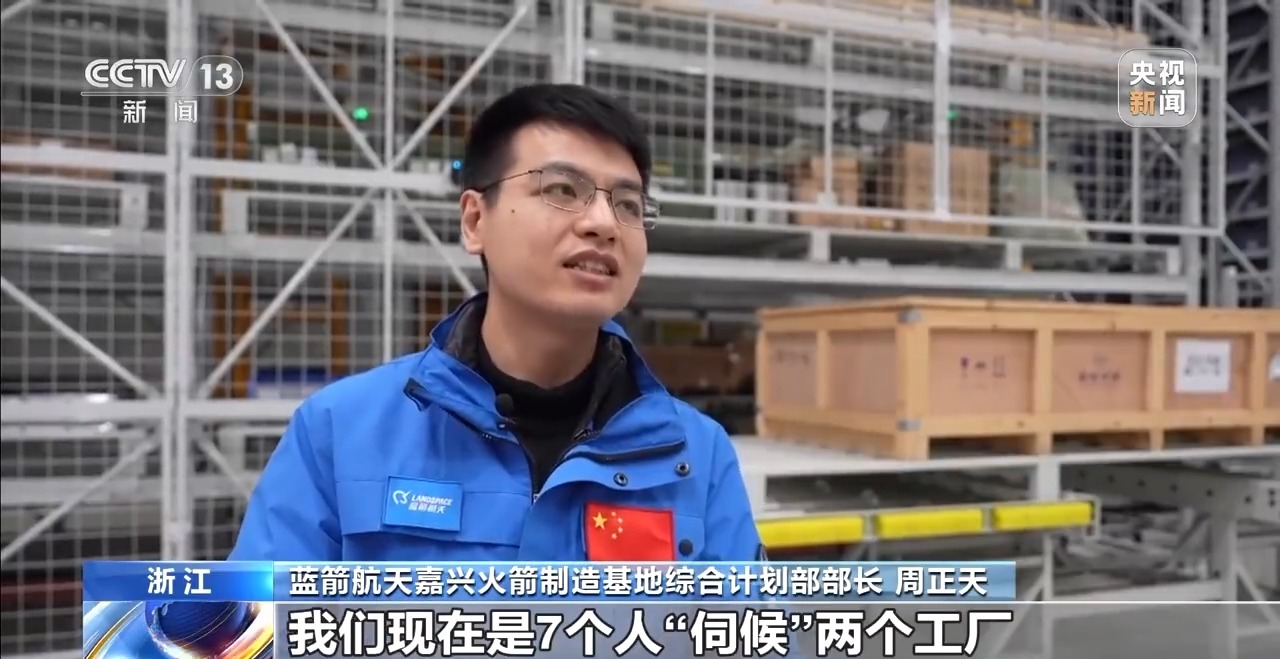
Core Viewpoint - The article discusses the rapid development of the commercial aerospace industry in China, highlighting advancements in rocket manufacturing and the establishment of a new industrial ecosystem driven by innovation and efficiency [1][3]. Group 1: Industry Development - The 14th Five-Year Plan includes the goal of accelerating the construction of a strong aerospace nation, with commercial aerospace acting as a key driver of innovation across various sectors [1]. - Multiple commercial aerospace companies are currently engaged in intensive preparations for the first flights of new rocket models, with automated production lines for satellites and rocket recovery ships being established [1][3]. - The shift from "manual searching for materials" to "materials waiting for people" in rocket assembly signifies a new era of precision logistics in manufacturing [1][3]. Group 2: Supply Chain and Innovation - The development of the Zhuque-3 rocket involves over 600 suppliers across various fields, indicating a robust and synchronized supply chain that supports the growth of the aerospace industry [3][5]. - Small enterprises are increasingly participating in the aerospace manufacturing sector, showcasing the depth of technological innovation within the industry [5][7]. Group 3: Key Components and Challenges - The grid fins, essential for controlling rocket posture during re-entry, are produced by a relatively small company, highlighting the critical role of specialized components in aerospace technology [7][9]. - The production of grid fins requires high precision and the ability to withstand extreme conditions, presenting significant challenges for manufacturers [9][10][12]. Group 4: Economic Impact and Future Prospects - The establishment of the first commercial aerospace launch site in Hainan is expected to drive the entire industry chain, with plans for over 60 launches per year [21][23]. - The launch site has attracted over 700 aerospace companies, forming a collaborative ecosystem that includes rocket, satellite, and data chains [23][25]. - The development of the Wenchang International Aerospace City aims to create a model for commercial aerospace and enhance the efficiency of satellite data applications by 2030 [27].
创业黑马:关于商业航天方向,公司主要通过参股投资方式支持相关科技企业
Zheng Quan Ri Bao Zhi Sheng· 2026-01-21 11:41
Group 1 - The company, Chuangyue Heima, is focusing on a three-pronged approach of "model, computing power, and services" to build a support system that covers the entire lifecycle of AI applications for small and medium-sized enterprises (SMEs) [1] - The company aims to empower SMEs in multiple dimensions through this comprehensive support system [1] - In the commercial aerospace sector, the company is primarily supporting related technology enterprises through equity investments, indicating that this industry is still in its early development stage [1]

隆盛科技(300680) - 300680隆盛科技投资者关系管理信息20260121
2026-01-21 11:20
Group 1: Company Overview and Subsidiaries - Wuxi Longsheng Technology Co., Ltd. is actively involved in the commercial aerospace sector through its subsidiary Wuxi Weiyan Zhongjia Precision Machinery Co., Ltd., focusing on key components for satellite energy systems [2][3]. - The company has established a strong presence in the aerospace supply chain, providing products to major clients such as Aerospace Science and Technology Corporation and Galaxy Aerospace [3]. Group 2: Product Development and Market Position - The company’s commercial aerospace products include critical components like solar wing hinges and control modules, essential for satellite operations [3]. - Wuxi Longsheng has initiated the development of harmonic reducers for commercial aerospace applications, indicating a strategic expansion into emerging markets [3][4]. - The company has completed three phases of its aerospace expansion project, enhancing production capacity to meet growing customer demands [4]. Group 3: Electric Motor and Precision Parts - The electric motor core components are positioned to serve both passenger and commercial vehicle markets, with a focus on high-value segments [4]. - The precision parts division, acquired in 2018, continues to be a cornerstone of the company’s operations, emphasizing automotive components and efficient supply chain management [4]. - The company anticipates a significant increase in production capacity for harmonic reducers, projecting an output of approximately 200,000 units for the year 2026 [4]. Group 4: Market Trends and Future Outlook - The demand for natural gas heavy-duty truck EGR valves is expected to grow, with the company successfully breaking through foreign technology monopolies [4]. - The commercial aerospace sector is recognized as a strategic growth engine for the company, with a focus on leveraging product performance and delivery capabilities to secure a competitive advantage [3][4].

20万颗卫星锁位,火箭从海上“回家”!争夺太空资源,中国选择“双道”出击
Sou Hu Cai Jing· 2026-01-21 10:32
Core Viewpoint - The commercial space industry is experiencing significant investment and competition, with China planning to launch 250,000 satellites over the next 14 years, which is five times the scale of SpaceX's Starlink project [1][2]. Group 1: Investment and Scale - The cost of launching a single rocket ranges from 110 million to 180 million yuan [1]. - China's satellite launch plan includes 20.3 million satellites from the government and 51,300 from various companies, totaling 250,000 satellites [2][4]. - This initiative is seen as a strategic move to secure communication sovereignty and space resources [5]. Group 2: Rocket Launch and Cost Efficiency - The high cost of traditional rocket launches, with 60% of expenses attributed to the first stage, necessitates the development of reusable rockets [6]. - SpaceX has successfully reduced launch costs from 50 million USD to 15 million USD through rocket recovery technology [6]. - China is rapidly advancing in rocket launch capabilities, with a growth rate of 30%, positioning itself as the second-largest player globally by 2025 [7]. Group 3: Technological Innovations - Multiple Chinese companies are developing reusable rocket technologies, with significant advancements in recovery methods [8]. - Two distinct recovery methods have been developed: a "sea net capture" system and a "precision landing" system for rockets [9]. - The establishment of a domestic production base for reusable rockets indicates a complete industrial chain from production to recovery [9][10]. Group 4: Future Prospects - The rapid development in China's commercial space sector, supported by policy and technological advancements, is expected to significantly reduce launch costs in the near future [11].
1.21犀牛财经晚报:ETF总规模回到6万亿元以下
Xi Niu Cai Jing· 2026-01-21 10:30
Group 1: ETF Market - The total market size of ETFs has decreased to 5.93 trillion yuan, down from 6.24 trillion yuan [1] - The scale of the CSI A500 ETF has dropped below 300 billion yuan, currently at 285.98 billion yuan, with 8 out of 40 ETFs having a scale of over 10 billion yuan [1] Group 2: Investment Outlook - Bridgewater Associates remains optimistic about the Chinese stock market, projecting a 45% return for its onshore hedge fund in 2025, marking the best performance in five years [1] - The All Weather Plus fund of Bridgewater saw a 9.1% increase in Q4, with an annual return of 44.5%, compared to an 18% rise in the benchmark CSI 300 index [1] Group 3: Energy Storage Market - GGII forecasts that global household energy storage system shipments will reach approximately 35 GWh in 2025, representing a nearly 50% year-on-year growth [2] - The market concentration for household storage systems is significant, with Germany, the US, Australia, and Japan accounting for 57% of the total global installation [2] Group 4: Film Industry - China's film industry chain is projected to reach a value of 817.26 billion yuan in 2025, with a box office multiplier of approximately 1:15.77, ranking among the top globally [3] Group 5: Commercial Aerospace - In 2025, China's commercial aerospace sector is expected to complete 50 launches, accounting for 54% of the total national space launches, with 311 commercial satellites successfully placed into orbit [3] Group 6: Strategic Partnerships - Lianlong has signed a strategic framework agreement with Runyinglian to enhance the reliability and efficiency of the lubricating oil additive supply chain in China and the Asia-Pacific region [8] Group 7: Financial Performance Forecasts - Limin Co. anticipates a net profit of 465 million to 500 million yuan for 2025, representing a year-on-year increase of 471.55% to 514.57% [11] - Guanghui Energy expects a net profit of 1.32 billion to 1.47 billion yuan for 2025, indicating a decline of 50.03% to 55.13% year-on-year [12] - Jiajiayue forecasts a net profit of 198 million to 228 million yuan for 2025, reflecting a growth of 50.06% to 72.79% year-on-year [13] - Xianghe Industrial projects a net profit of 120 million to 148 million yuan for 2025, showing an increase of 59.17% to 96.31% year-on-year [14] - Baiao Intelligent expects a net profit of 90 million to 120 million yuan for 2025, indicating a growth of 228.34% to 337.79% year-on-year [15] - Hekang New Energy anticipates a net profit of 50 million to 75 million yuan for 2025, representing a year-on-year increase of 385.62% to 628.43% [16]