超市零售

Search documents
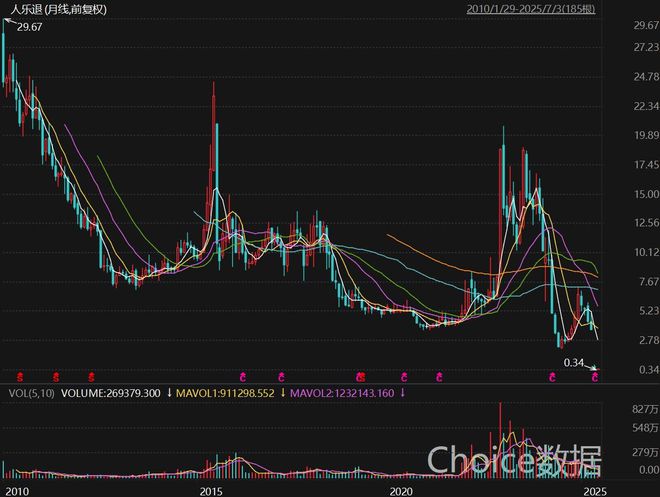
上市15年亏损9年,人人乐自救未改“退市命”
Xin Jing Bao· 2025-07-04 14:06
Core Viewpoint - The decline of Renrenle, the first private supermarket listed in China, leading to its delisting, reflects the challenges faced by traditional retail in the face of e-commerce competition and changing consumer habits [1][12]. Financial Performance - Renrenle was listed on January 13, 2010, with an initial stock price of 26.98 yuan per share, reaching a peak market capitalization of approximately 136.68 billion yuan shortly after [2]. - By July 3, 2025, Renrenle's stock price had fallen to 0.36 yuan per share, resulting in a total market capitalization of about 1.58 million yuan [2]. - The company reported a net asset of -4.04 billion yuan for the fiscal year 2024, continuing a trend of negative net profits since its third year of listing [4][6]. Operational Challenges - Renrenle faced significant operational challenges, including rising store operating costs, intense competition from online retailers, and a shift in consumer shopping habits [1][4]. - The company has experienced net losses in nine out of its fifteen years since going public, with attempts at transformation and new business ventures yielding little success [1][4]. Store Management and Strategy - Renrenle's store count peaked at 149 in 2019 but has since declined, with the company closing 45 stores and opening only one new store by the end of 2024 [11]. - The company has attempted to mitigate losses through asset sales and restructuring, including the divestment of subsidiaries and renegotiation of debts with suppliers [6][12]. Market Context - The retail sector has seen a significant number of companies delist, with 17 companies exiting the A-share market in 2024 alone, highlighting the broader challenges within the industry [12][13]. - Analysts attribute Renrenle's struggles to poor strategic decisions, including overexpansion and failure to adapt to e-commerce trends, which ultimately led to its loss of competitive advantage [12][13].


苏州吴江区永辉超市“胖东来模式”调改进程加速
Sou Hu Cai Jing· 2025-07-04 13:17
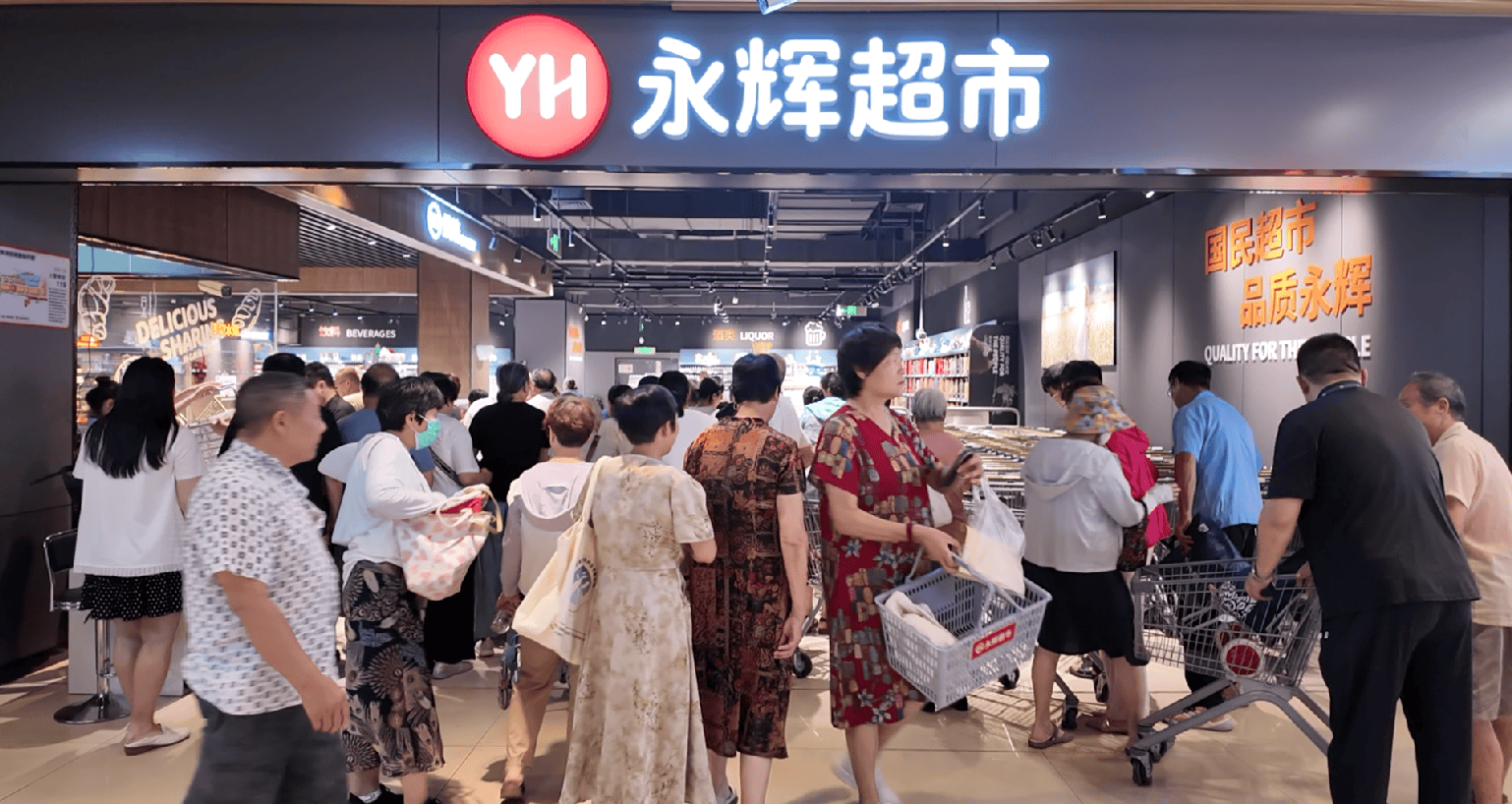
Core Insights - The article highlights the rapid development of the Wujiang District's Taihu New City as a modern service industry hub and a demonstration area for urban integration, under the strategic framework of Suzhou's "One Core and Four Cities" initiative [1] - The successful opening of the first store in Suzhou, the Taicang Wanda store, which achieved a 334% year-on-year increase in sales and a 189% rise in foot traffic, sets a strong precedent for the new Wujiang store [1][2] Company Developments - The Wujiang Wuyue Plaza store, which is the first "Fat Donglai" model store in the Wujiang District, opened on July 3, featuring significant upgrades in product offerings, store environment, and service quality [1][2] - The product assortment was dramatically revamped, with 7,440 items removed (a 79.6% elimination rate) and 5,093 new selected items added, achieving a 54.5% introduction rate of new products [2] - The overall product structure now meets over 80% of the "Fat Donglai" standards, creating a three-dimensional matrix of "people's livelihood quality products + Jiangnan characteristics + quality selection" to cater to local consumer demands [2] Marketing and Consumer Engagement - The launch of the "717 Good Eating Festival" on July 1 is a key initiative aimed at enhancing the shopping experience, focusing on "good shopping, good brands, good quality, and good food" [2][3] - Over 100 potential new products were selected for the festival, emphasizing health and unique experiences, alongside more than 100 core high-repurchase items to meet essential consumer needs [3] Employee Welfare and Development - The store's employee base has significantly expanded, with frontline employee salaries increasing from 4,000 yuan to 4,900 yuan, marking a 22.5% rise [7] - Employee benefits have been enhanced, including 10 days of paid annual leave for employees with over one year of service, free meals, and improved working conditions [7] - The company is implementing a "Craftsman Plan" to cultivate skilled workers, aiming to elevate their roles from "service providers" to "retail craftsmen" with potential salaries reaching 10,000 yuan [7] Future Plans - The company plans to continue learning from the successful experiences of the "Fat Donglai" model and accelerate the renovation of stores nationwide [8] - With the addition of the Wujiang Wuyue store, the total number of renovated stores has reached 125, with a goal of completing renovations for 200 stores by September 30 of this year [8]

网传美团秘密筹备“快乐猴”硬折扣超市,对标盒马NB
Guan Cha Zhe Wang· 2025-07-04 08:58
Core Insights - Meituan's discount supermarket project, named "Happy Monkey," is set to open in August 2023, with initial stores planned in Beijing and Hangzhou, each covering an area of approximately 800-1000 square meters [1] - The "Happy Monkey" trademark was registered by Meituan's subsidiary, Beijing Xiangxian Technology Co., Ltd., along with several other trademarks, indicating a strategic move into the discount retail sector [1] - The "Happy Monkey" WeChat mini-program has been launched, although it currently only displays a basic membership code and is not yet fully operational [2] Company Developments - The "Happy Monkey" project is positioned to compete with Alibaba's Hema NB discount stores, suggesting a direct rivalry in the discount supermarket segment [1] - The trademarks registered by Meituan cover a wide range of categories, including food, beverages, and household goods, indicating a comprehensive approach to market entry [1] - The WeChat mini-program for "Happy Monkey" is categorized under "Department Store/Supermarket/Convenience Store, Food and Beverage," and is associated with Hangzhou Xiangxian Technology Co., Ltd. [2] Market Positioning - The branding of "Happy Monkey" emphasizes affordability and value, as indicated by the mini-program's tagline "Good goods are not expensive, saving money is not tiring" [1] - The project reflects Meituan's ongoing exploration of large store formats, aiming to establish a competitive presence in the grocery retail market [1]

小米新车配套纸巾盒卖169元雷军解释成本巨高,”被骂上热搜但已经售罄”
Sou Hu Cai Jing· 2025-07-04 06:39
Group 1 - Roma's platform is facing issues with insufficient deposits, leading to delays in refunding consumers for recalled power banks [1] - The parent company of Roma has changed its legal representative twice in three months, indicating internal restructuring and preparation for new products [1] - The incident has sparked significant consumer backlash and discussions on social media [1] Group 2 - Xiaomi's new product, the "Xiaomi Life Magnetic Tissue Box," priced at 169 yuan, has generated controversy and criticism online for its high price [3] - CEO Lei Jun defended the pricing by highlighting the product's advanced materials and manufacturing processes, which meet automotive standards [3] - Despite the criticism, the product has sold out quickly, indicating strong demand [3] Group 3 - The CEO of Yunhai Yao in Singapore has pleaded guilty in a food poisoning case that affected 130 employees of ByteDance, with the company facing potential fines [8] - The incident involved a dish with bacteria levels exceeding safety standards, raising concerns about the company's food safety practices [8] - This event may negatively impact Yunhai Yao's brand reputation and international expansion strategy [8] Group 4 - Meituan is launching a new discount supermarket brand called "Happy Monkey," set to open its first stores in Beijing and Hangzhou in August [9][10] - The new brand aims to compete directly with Hema and is part of Meituan's strategy to strengthen its retail business in response to market competition [11] - The brand will be operated by the team behind Meituan's existing supermarket operations, indicating a focused approach to market entry [10] Group 5 - South Korean instant noodle brand Samyang is establishing its first overseas factory in Jiaxing, China, with an investment of approximately 1 billion yuan [13] - The factory is expected to produce 840 million servings annually, catering exclusively to the Chinese market [13] - This move reflects Samyang's strategy to diversify its product offerings beyond its popular spicy noodles and strengthen its presence in China [13] Group 6 - Skims co-founder Jens Grede aims to position the brand as the "Starbucks of lingerie," focusing on creating a premium yet accessible experience for consumers [15] - The brand's valuation has surpassed $4 billion, and it is expanding its product range beyond women's shapewear to include men's underwear [15] - Despite Skims' growth, Starbucks is currently facing operational challenges, highlighting the competitive landscape in the consumer goods sector [15] Group 7 - The horror game "Paper Wedding 8" has been released, continuing the series' tradition of engaging storytelling and gameplay mechanics [17] - The game has maintained a high rating on platforms like Taptap, showcasing its popularity and the growing interest in Chinese horror games [17] - The series has successfully carved out a niche in a market dominated by Western developers, indicating a shift in consumer preferences [17]



扬州创新融资机制畅通资金链循环金融活水助力小店“闷声干大事”
Xin Hua Ri Bao· 2025-07-03 23:34
Group 1 - Jiangsu Qiwushui Aquaculture Development Co., Ltd. has transformed from a single shrimp farming business to a comprehensive cold chain logistics entity for special aquatic products, with a total industry chain output value exceeding 100 million yuan [1] - The local financial institution, Gaoyou Rural Commercial Bank, has introduced innovative loan products such as "breeding loans" and "industry loans," providing 79.5 million yuan in loans to 740 shrimp farmers, enabling nearly zero-capital entrepreneurship [1] - Yangzhou has a significant number of small and micro enterprises, totaling 526,800, which account for over 90% of private enterprises in the region [1] Group 2 - Baoying County, known as the "hometown of lotus root," has launched innovative products like salted egg yolk cheese lotus root and lotus root chips, gaining popularity among young consumers [2] - The establishment of lotus root cooperatives and a trading market has created an industrial operation model that connects small farmers with large markets, supported by Baoying Rural Commercial Bank [2] - Jiangsu Hongxin Supermarket Chain Co., Ltd. successfully listed on the Hong Kong Stock Exchange, with financial support playing a crucial role in its development, including various inclusive financial policies [2] Group 3 - Yangzhou is focusing on developing six major industrial clusters and thirteen emerging industrial chains, having provided credit services to over 980 technology enterprises [3] - The city plans to expand its financing coordination mechanism to all private and foreign trade enterprises, aiming to enhance satisfaction and accessibility of financial policies [3] - Yangzhou aims to create a business-friendly environment that supports investment, operations, and development for enterprises [3]
谢谢盒马把我演了
半佛仙人· 2025-07-03 09:15
Core Viewpoint - The article discusses the prevalence of pre-packaged food and beverages in modern life, highlighting the emotional and psychological aspects of consumerism, particularly through the lens of Hema's cold brew tea, which attempts to provide a semblance of authenticity in a world dominated by convenience and pre-prepared products [2][4][21]. Group 1: Pre-packaged Food and Consumer Behavior - The author reflects on living in a world filled with pre-packaged items, from ready-to-eat meals to bottled beverages, and critiques the lack of authenticity in these products [7][9]. - There is a growing acceptance of pre-packaged food, but the author emphasizes the importance of perceived quality and the emotional connection consumers have with their food [9][15]. - The article suggests that while pre-packaged products are convenient, they often lack the personal touch and authenticity that consumers desire [10][18]. Group 2: Hema's Cold Brew Tea - Hema's cold brew tea is presented as a unique product that includes actual tea leaves, differentiating it from other pre-packaged beverages that do not offer the same level of authenticity [13][21]. - The presence of tea leaves in Hema's product is seen as a marketing strategy to create an illusion of freshness and quality, despite the product being pre-packaged [22][30]. - The author appreciates Hema's effort to "perform" for consumers, suggesting that even a small gesture of authenticity can enhance the consumer experience [31][45]. Group 3: Emotional Connection and Consumer Expectations - The article discusses the desire for brands to acknowledge consumer feelings and provide a sense of care, even if it is through a facade [36][40]. - The author argues that the willingness of a brand to "pretend" to care about the consumer experience is a form of compassion in a world where authenticity is often lacking [45][46]. - The conclusion emphasizes that the act of pretending to provide quality and care can be more comforting than outright neglect from brands [46].

★对接渠道与商业模式转型两手抓 外贸企业出口转内销破局
Zhong Guo Zheng Quan Bao· 2025-07-03 01:56
Core Viewpoint - The article discusses the challenges and strategies of foreign trade enterprises in transitioning from export to domestic sales, emphasizing the need for long-term planning and structural adjustments to enhance resilience against risks in the domestic market [1][4]. Group 1: Challenges in Transitioning - Foreign trade enterprises face significant challenges in connecting with domestic sales channels, which include both online and offline platforms, as well as B2B and B2C interactions [1][4]. - The shift from export to domestic sales requires adjustments in supply chain and production models, as domestic orders tend to be smaller and more fragmented compared to large export orders [4][6]. - Companies like Jin Dao Electric and Today Food have experienced inventory buildup due to external factors such as tariffs, prompting them to accelerate their domestic market strategies [2][3]. Group 2: Strategies for Market Entry - Major retail platforms like Yonghui Supermarket and e-commerce giants like JD and Meituan are actively facilitating the entry of foreign trade products into the domestic market through initiatives like "green channels" [1][2][4]. - The "破浪计划" (Breaking Waves Plan) initiated by Baidu aims to assist businesses in quickly listing products on their platforms, thereby enhancing market access for foreign trade enterprises [4]. - Companies are adapting their products to meet domestic consumer preferences, such as modifying flavors and packaging to increase acceptance of products like canned goods [6][7]. Group 3: Long-term Mechanisms - Experts suggest that the transition from export to domestic sales should be viewed as a long-term strategy, requiring top-level design and the establishment of sustainable mechanisms [8][9]. - Recommendations include building platforms for better communication between foreign trade enterprises and domestic retailers, as well as providing financial support and tax incentives to ease the transition [9]. - Companies like Fuling Co. have successfully increased their domestic sales proportion by focusing on long-term market development strategies and diversifying their customer base [8].


永辉超市:京东世贸减持1.2567%公司股份
news flash· 2025-07-02 12:25
永辉超市(601933)公告,股东京东世贸因自身资金需求,计划于2025年3月12日披露之日起15个交易 日后的3个月内,通过集中竞价、大宗交易方式减持公司股份不超过2.66亿股,即减持比例不超过公司 股份总数的2.94%。近日,公司收到京东世贸出具的《北京京东世纪贸易有限公司关于永辉超市股份有 限公司股份减持计划期限届满暨减持结果的告知函》,京东世贸在减持计划期间内通过集中竞价及大宗 交易方式合计减持所持公司股份1.14亿股,占公司目前总股本的1.2567%。本次减持计划期限已届满。 减持价格区间为4.32~6.39元/股,减持总金额为6.04亿元。减持后,京东世贸持有公司股份1.52亿股, 持股比例为1.6791%。 ...
清美品上生活自营超级市场盛大开业!携万份鲜鸡蛋空降长宁!
Zhong Guo Shi Pin Wang· 2025-07-02 07:17
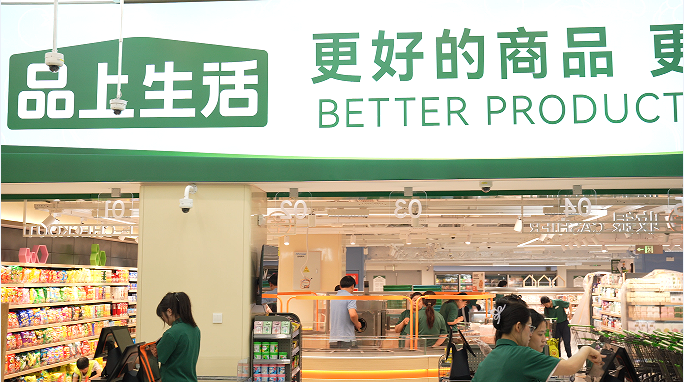
Core Insights - The opening of the self-operated supermarket "Pinshang Life" by Qingmei Group in Changning District, Shanghai, is set to provide fresh and affordable food products directly to consumers without any membership fees [1][10]. Group 1: Business Model and Offerings - "Pinshang Life" operates on a full industry chain model, ensuring seamless integration from production to retail, which eliminates middlemen and enhances food safety and traceability [3]. - The supermarket boasts a large area of 5000m² and is backed by Qingmei Group's extensive resources, including 11,000 acres of self-operated farms and 500,000 acres of designated planting bases [10]. Group 2: Promotional Activities - To celebrate the grand opening, Qingmei Group is offering three major promotions, including free eggs for customers who engage on social media, a guaranteed prize draw for purchases over 158 yuan, and significant discounts on a wide range of products [4][5][6]. - The promotional pricing includes competitive offers such as roasted duck for 19.9 yuan each and organic milk at 29.9 yuan for 12 bottles, aiming to reshape consumer perceptions of Shanghai's high living costs [8]. Group 3: Commitment to Freshness and Safety - The supermarket emphasizes its commitment to freshness, safety, and affordability, with a promise of delivering products within two hours from local sources [10]. - The operational infrastructure includes 600 refrigerated logistics vehicles and a 350,000 square meter intelligent factory, ensuring a controlled supply chain from farm to table [10].
临期商品为何卖不动?原来是“抠门”标签在作怪
3 6 Ke· 2025-07-02 06:42
Core Insights - The article discusses the significant issue of food waste, highlighting that over 30% of food is wasted globally, with a substantial portion being discarded due to nearing expiration dates [1][2] - It explores consumer perceptions of near-expired products, revealing that price promotions, while commonly used, may negatively impact consumer perceptions and lead to a stigma associated with purchasing such items [2][8] Group 1: Consumer Behavior and Perception - A study indicates that consumers often associate purchasing near-expired products with being "stingy," as evidenced by a higher "stinginess score" for those buying such items compared to regular products [3][4] - The social pressure of being perceived as "cheap" significantly affects consumer choices, with a notable decrease in the willingness to purchase near-expired products when the choice is public [4][8] Group 2: Marketing Strategies - Marketing strategies that emphasize sustainability and smart consumer choices can improve consumer attitudes towards near-expired products, as shown by higher click-through rates for ads framing these purchases positively [5][9] - The article suggests that retailers should avoid terms like "cheap" and instead focus on narratives around sustainability and responsible consumption to reshape consumer perceptions [9][10] Group 3: Recommendations for Retailers - Retailers are encouraged to create private shopping environments for near-expired products to alleviate social pressure, such as using self-checkout options or dedicated stores for these items [10][12] - Implementing strategies that highlight the environmental benefits of purchasing near-expired products can enhance their appeal and align with corporate social responsibility initiatives [13][14] Group 4: Pricing Strategies - The article advises against overt discounting strategies that may reinforce negative stereotypes, suggesting alternative approaches like limited-time offers or bundling near-expired products with regular items [15][16] - A shift in consumer perception from "stingy" to "smart" can be achieved through thoughtful marketing and pricing strategies, emphasizing the rationality behind purchasing near-expired goods [16][17]