军工制造

Search documents
美政府欲售沙特F-35战机 以色列要求安全担保
Xin Hua She· 2025-11-18 08:40
Core Points - The U.S. plans to sell F-35 fighter jets to Saudi Arabia, which has been in discussion for months, raising concerns about Israel's military advantage in the region [1][2] - Saudi Arabia may seek to purchase up to 48 F-35 jets, potentially becoming the first country in the Middle East to acquire them, aside from Israel [1] - The U.S. has a long-standing policy to maintain Israel's military superiority over other Middle Eastern countries, complicating the sale to Saudi Arabia [1][2] - Israeli officials have indicated that normalization of relations with Saudi Arabia is a prerequisite for the F-35 sale, and they may seek additional security guarantees from the U.S. [2][3] - The sale could face opposition in the U.S. Congress, which may require assurances that it will not undermine Israel's military position [2] - The normalization talks between Saudi Arabia and Israel have stalled following the recent escalation of the Israel-Palestine conflict [3] - A potential civil nuclear cooperation agreement and significant investments in U.S. AI infrastructure are also on the agenda during the Saudi Crown Prince's visit to the U.S. [3]
全线爆发!两大板块,涨停潮
Zheng Quan Shi Bao· 2025-11-17 09:48
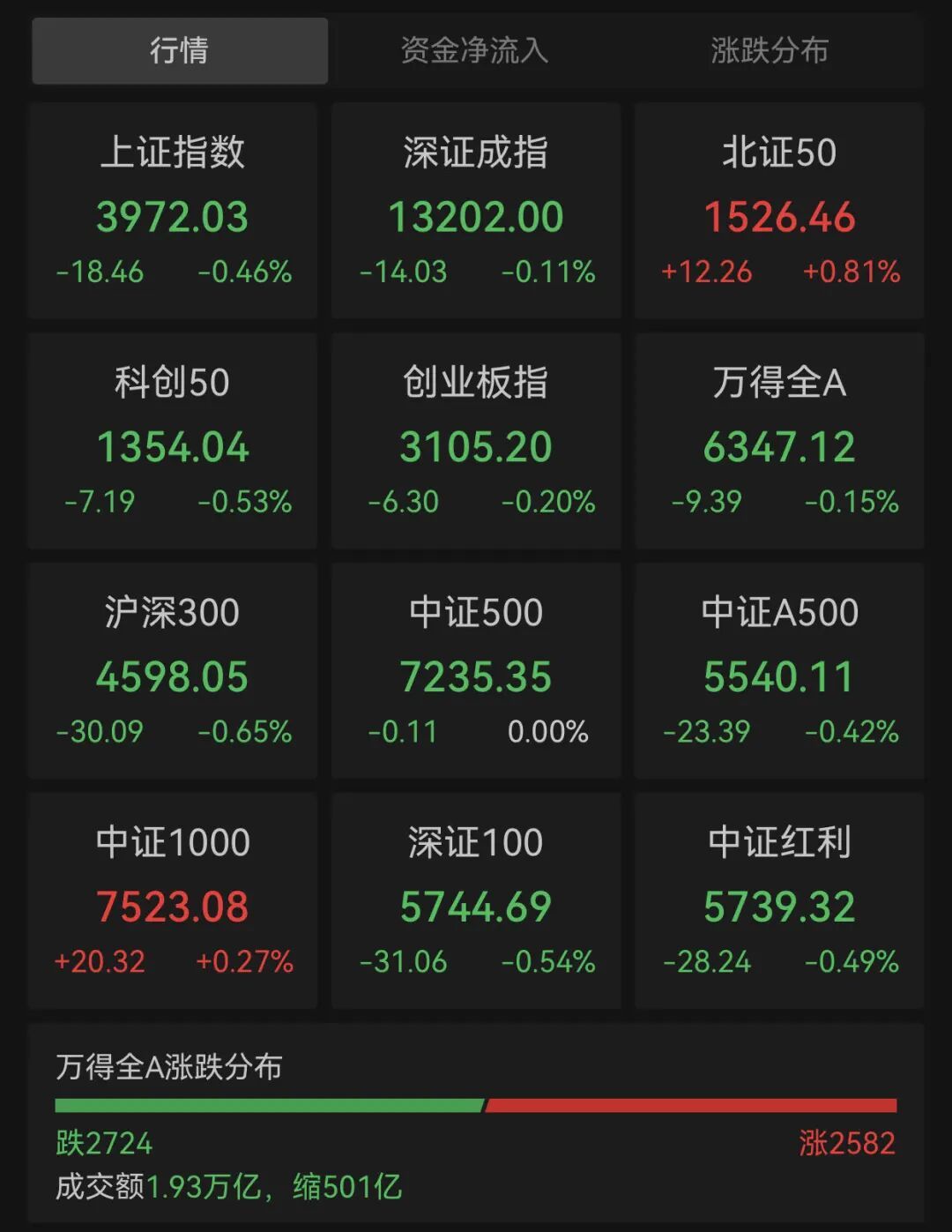
Market Overview - The military and lithium mining sectors experienced significant growth, with military stocks like Hongxiang Co., Zhongfutong, Jianglong Shipbuilding, and Tengjing Technology hitting the daily limit of 20% increase [3][5] - The Shanghai Composite Index closed down 0.46% at 3972.03 points, while the Shenzhen Component Index and ChiNext Index saw slight recoveries [1][2] Military Sector - The military sector showed strong performance, with several stocks reaching their daily limit, indicating increased investor interest due to rising geopolitical uncertainties [5][7] - Analysts predict a positive trend for the military industry from 2025 to 2027, driven by domestic demand and international military trade orders [7] Lithium Mining Sector - The lithium mining sector also demonstrated robust performance, with stocks like Tianhua New Energy and Shengxin Lithium Energy reaching their daily limit of 20% increase [8][9] - Predictions indicate a 30% increase in lithium carbonate demand by 2026, with potential price increases if demand exceeds expectations [10] AI Application Sector - The AI application sector was active, with stocks such as Xuan Ya International and BlueFocus reaching daily limits of 20% and over 12% increases, respectively [11][12] - Alibaba's recent developments in AI, including the launch of the "Qwen" personal AI assistant, are expected to enhance its market position in the AI sector [13]





港股收评:三大指数齐跌,恒科指跌0.96%,军工股上涨
Ge Long Hui· 2025-11-17 09:05
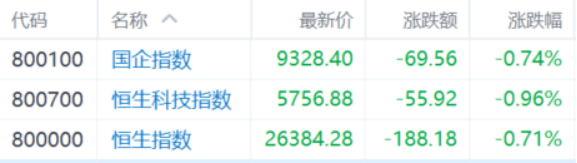
港股三大指数全天表现弱势,恒生指数跌0.71%报26384点,国企指数跌0.74%报9328点,恒生科技指数 跌0.96%报5756点,市场情绪继续疲软,三者均录得2连跌行情。 | 最新价 涨跌额 涨跌幅 | 代码 | | --- | --- | | 800100 国企指数 | 9328.40 -69.56 -0.74% | | 800700 恒生科技指数 5756.88 -55.92 -0.96% | | | 800000 | | 盘面上,大型科技股表现低迷拖累大市下行,其中,上周五大跌超7%的百度再度下跌近3%,铝、铜、 黄金等有色金属板块齐跌。另一方面,电池股逆势领涨,军工股拉升明显,中船防务盘中一度涨至 9%,服装股板块下跌。 | | | | | 汽车 | 地产发展商 -0.25% | 生物技术 -2.04% | | 图层 -1.32% | | --- | --- | --- | --- | --- | --- | --- | --- | --- | | 銀行 | -0.76% | 线上零售商 -0.20% | 电讯服务 -0.63% | -0.54% | 黄金及贵 | 互动媒体及 | 煤炭 | 家庭 ...
港股收盘 | 恒指收跌0.71% “锂矿双雄”逆市走强 黄金、医药股等承压
Zhi Tong Cai Jing· 2025-11-17 08:49
港股全天震荡走低,三大指数盘中均跌超1%。截止收盘,恒生指数跌0.71%或188.18点,报26384.28 点,全日成交额为2176.13亿港元;恒生国企指数跌0.74%,报9328.4点;恒生科技指数跌0.96%,报 5756.88点。 银河证券表示,展望未来,市场风险偏好趋于谨慎,场内热点轮动加快,港股或延续震荡走势。建议关 注以下板块:"反内卷"政策效果逐渐显现,供需格局变化下,商品价格上涨的周期股或持续反弹;美联 储降息政策面临较大不确定性,市场风险偏好下降,投资者或转向红利股寻求防御。 蓝筹股表现 携程集团-S(09961)全天承压。截至收盘,跌3.56%,报555.5港元,成交额17.59亿港元,拖累恒指8.8 点。11月14日,外交部和中国驻日本使领馆郑重提醒中国公民近期避免前往日本。11月16日,红星新闻 致电携程,客服表示平台方也在密切关注。现在有很多日本的酒店订单取消,在帮顾客处理;有的客人 还在观望。部分酒店好沟通,同意免费退改,携程可直接提交申请并自动退款;部分酒店则需进一步沟 通,尚在协调中。 其他蓝筹股方面,康师傅控股(00322)涨2.08%,报12.25港元,贡献恒指0.77 ...


沸腾!董事长一句话,集体涨停
Zhong Guo Ji Jin Bao· 2025-11-17 08:30
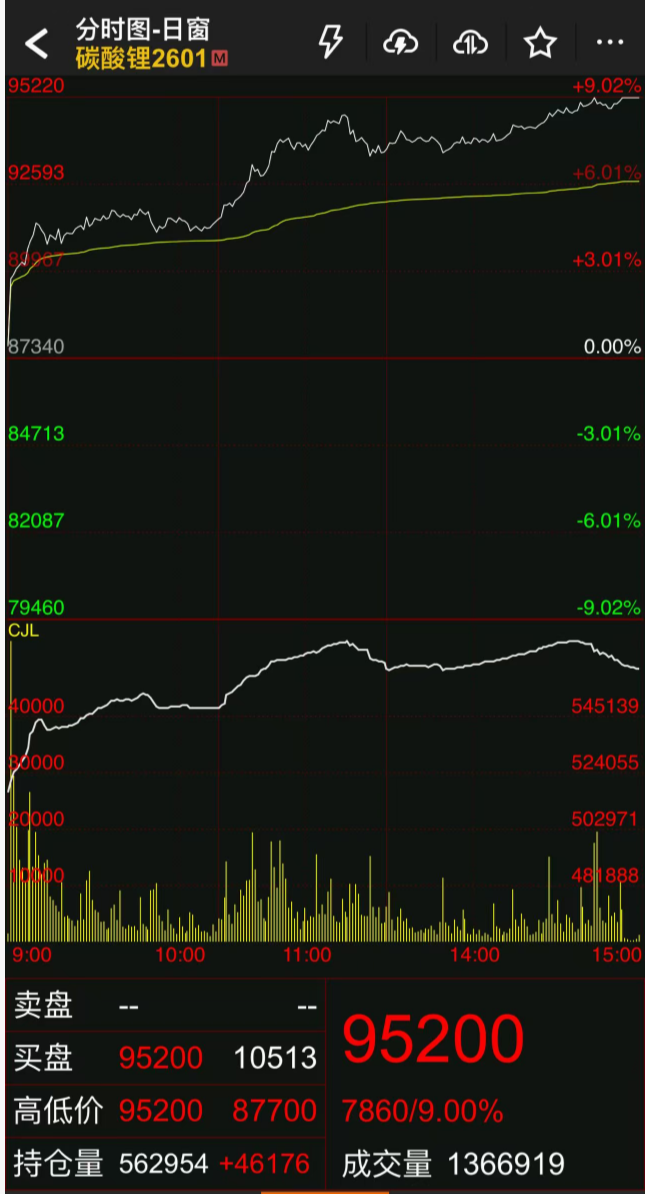
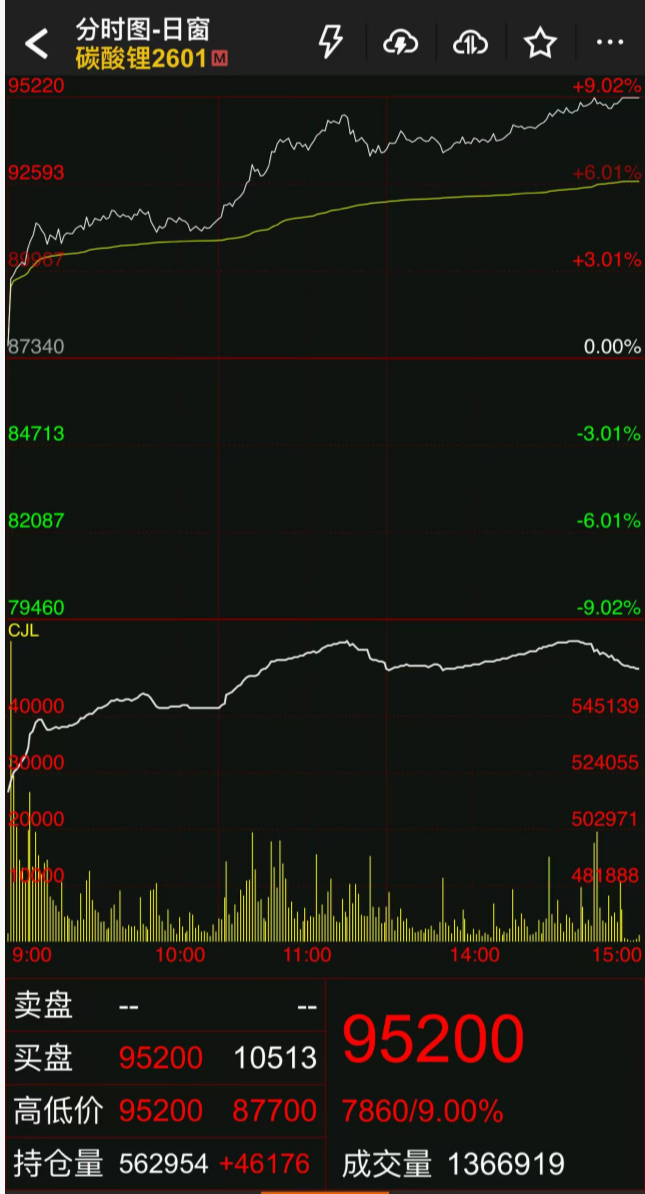
碳酸锂期货涨停 11月17日,碳酸锂期货主力合约触及涨停,涨幅达9%,报95200元/吨,创2024年7月以来新高。 受此影响,午后锂矿概念股涨势扩大,多只个股集体涨停。 A股震荡 再看回A股的整体情况,市场全天震荡调整,三大指数小幅下跌。截至收盘,沪指跌0.46%,深成指跌 0.11%,创业板指跌0.2%。 市场共2584只个股上涨,100只个股涨停,2726只个股下跌。 | 880006 停板家数 | | | | --- | --- | --- | | 日中 | 涨停 | 100 | | 涨幅 | > 7% | 149 | | 涨幅 | 5-7% | 105 | | 涨幅 | 3-5% | 257 | | 涨幅 | 0-3% | 2073 | | 跌幅 | 0-3% | 2390 | | 跌幅 | 3-5% | 254 | | 跌幅 | 5-7% | 50 | | 跌幅 | > 7% | 32 | | 其中 | 跌停 | 10 | | 涨停家数 | | 100 | | 跌停家药 | | 10 | | | | 2584 | | | | 2726 | | 自成交额 | | 19303.21亿 | | 总成交量 ...
沸腾!董事长一句话,集体涨停!
Zhong Guo Ji Jin Bao· 2025-11-17 08:08
【导读】A股震荡,锂矿概念集体暴涨 大家好,今天市场走势较为震荡,一起看看发生了什么事情。 碳酸锂期货涨停 11月17日,碳酸锂期货主力合约触及涨停,涨幅达9%,报95200元/吨,创2024年7月以来新高。 | 大介理业 | 62.20 +9.87% 7.02亿 | | +5. | | --- | --- | --- | --- | | sz 002466 成交活跃 | | | | | 西藏城投 | 14.25 | +9.62% 1.24亿 | +1. | | SH 600773 60日新高 | | | | | 永兴材料 | | 56.28 +8.86% -1.12亿 | +4. | | sz 002756 60日新高 | | | | | 赣锋锂业 | 74.04 | +7.48% 7.18亿 | +5 | | sz 002460 实时热搜 | | | | | 江特电机 | 12.35 | +6.93% 1.92亿 | +0. | | sz 002176 60日新高 | | | | | 永杉锂业 | 11.95 | +6.32% 3454.96万 | +0 | | SH 603399 60日新高 | | | ...
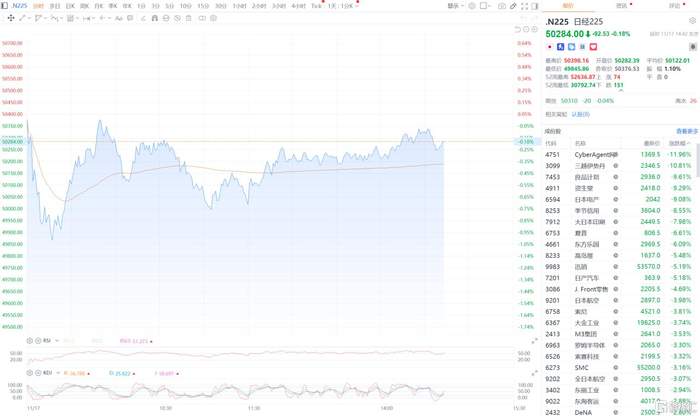
高市妄言,日股“躺枪”!
Ge Long Hui A P P· 2025-11-17 08:07
Group 1: Japanese Stock Market Reaction - The Japanese stock market experienced significant declines, with the Nikkei 225 index showing volatility and major consumer sectors like tourism, airlines, and retail suffering losses [1] - Notable declines included a drop of over 12% for Mitsukoshi Isetan, and declines exceeding 9% for companies like Sony and Japan Airlines [1] Group 2: Economic Indicators - The 20-year Japanese government bond yield rose by 3 basis points to 2.745%, marking the highest level since August 1999 [3] - Weak GDP data has led to a downward adjustment in market expectations for Bank of Japan interest rate hikes, contributing to the yen's weakness [3] Group 3: Impact of Political Statements - High-profile political statements by Prime Minister Kishi Nobuo have led to increased geopolitical uncertainty, prompting criticism and concerns about Japan's national crisis [8][11] - The deterioration of Sino-Japanese relations is expected to have a significant negative impact on Japan's economy, particularly through reduced Chinese tourism [17][18] Group 4: Tourism and Economic Impact - China is Japan's largest trading partner, and a decline in Chinese tourists could lead to a GDP decrease of 0.36%, equating to an economic loss of approximately 2.2 trillion yen (around 101.16 billion RMB) [12][19] - Chinese tourists accounted for about 25% of all foreign visitors to Japan, with nearly 7.5 million visits in the first nine months of the year [14] Group 5: Market Sentiment and Future Outlook - Analysts have indicated that the market's future performance is contingent on maintaining high political support for the government and the ruling party [19] - Concerns over potential government stimulus measures have led to increased pressure on long-term government bonds and the yen [19]
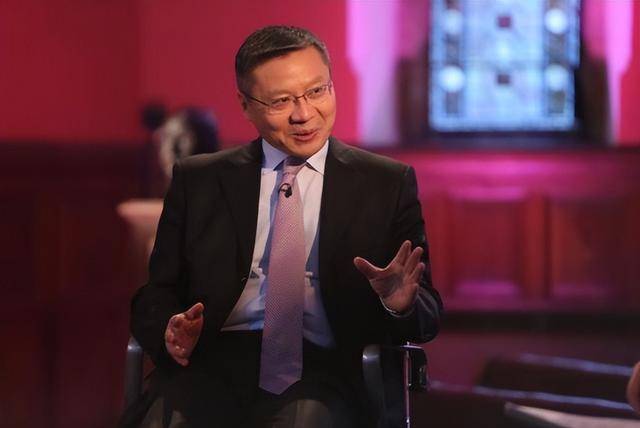
犹太和盎撒资本内斗?张维为:一个重要原因是美国收割不了中国
Sou Hu Cai Jing· 2025-11-17 08:00
Group 1 - The historical collaboration between Jewish capital and Anglo-Saxon capital has allowed the U.S. to dominate global wealth through military and financial means [1][3][5] - Post-World War II, this partnership continued to exploit global resources, utilizing strategies such as food embargoes and dollar hegemony to control other nations [5][9] - The U.S. agricultural sector, particularly the four major grain companies, has historically monopolized global food trade, using tactics to undermine countries like the Soviet Union and Brazil [5][7] Group 2 - The U.S. dollar's dominance has been maintained through the Federal Reserve, heavily influenced by Jewish capital, which manipulates interest rates to attract global capital [9][11] - Despite U.S. financial maneuvers, China's currency has remained stable, showcasing its resilience against American economic strategies [9][14] - China's advancements in technology and self-sufficiency, particularly in rare earth elements, have shifted the balance of power, making it less reliant on U.S. markets [11][14] Group 3 - The differing interests of Jewish and Anglo-Saxon capital have led to internal conflicts within the U.S., particularly as trade wars and technology sanctions impact Jewish capital's investments in China [14][16] - The passage of the Anti-Semitism Awareness Act has exacerbated tensions between political parties, reflecting the growing divide between these two capital factions [16] - The lack of new wealth sources for the U.S. has intensified competition between these capital groups, potentially leading to ongoing internal strife [16]
涨停潮!A股,两大利好来袭!
券商中国· 2025-11-17 07:43
Group 1: Lithium Battery Sector - The main contract for lithium carbonate futures hit the limit up with a 9% increase, reaching 95,200 yuan/ton, leading to a surge in the lithium battery sector where 23 stocks either hit the limit up or rose over 10% [1][5] - Specific companies such as Rongbai Technology, Tianhua New Energy, and Zhongyi Technology achieved a 20% limit up, while others like ST Hezhong and Kelong Co. saw increases exceeding 10% [3][4] - Analysts predict a strong demand for batteries in the coming years, with a forecast of a 31% year-on-year growth in battery demand by 2026 [5] Group 2: Military Industry Sector - The military sector experienced a significant rally, with 20 stocks hitting the limit up or rising over 10%, including companies like Hongxiang Co., Zhongfutong, and Jianglong Shipbuilding [6][7] - The military industry is expected to benefit from increased military spending, equipment upgrades, and rapid military trade expansion, with a focus on high-quality development and modernization of military governance [8] - Analysts highlight that geopolitical tensions are driving up global military expenditures, which is likely to sustain high demand in the military sector [8]

当前美国最棘手的问题是什么?
虎嗅APP· 2025-11-16 03:09
以下文章来源于文化纵横 ,作者刘露馨 文化纵横 . 倡导文化重建,共同思想未来,发掘不一样的深度阅读。 近日,美国国会参议院已就结束联邦政府"停摆"达成一致。有史以来美国联邦政府持续最长的"停 摆"迎来结束。本次停摆始于2025年10月1日,原因是美国国会未能通过2026财年的拨款法案。本次 政府"停摆"给美国造成的伤害是巨大的。约有75万联邦雇员被迫无薪休假,而大量民众也无法获得 急需的政府服务。美国联邦政府的"停摆"不仅反映了美国国内的财政纠纷,更暗示着美国深刻的财政 内生性矛盾。 作者指出,军事开支与社会支出之间的配置资源是美国长期面临的财政问题。在冷战初期,这两者呈 现出积极的关联效应。然而,这种"枪炮与黄油兼得"的平衡体制是在特殊的国际权力结构下实现的。 随着经济复苏后的盟友国家的经济竞争压力越来越强,美国军事与经济兼顾的平衡体制开始不断动 摇。此时,军事的生产性投资的负面效益愈发明显。美国奉行多年的战争资本主义的遗产使得"维持 军费"、"改善民生"、"消除债务",成为美国经济政策的不可能三角。 特朗普政府虽然试图通过政府效率部来削减预算、缓解债务难题,但其实际效果乏善可陈。美国政府 的财政支出包含 ...