
潮玩

Search documents
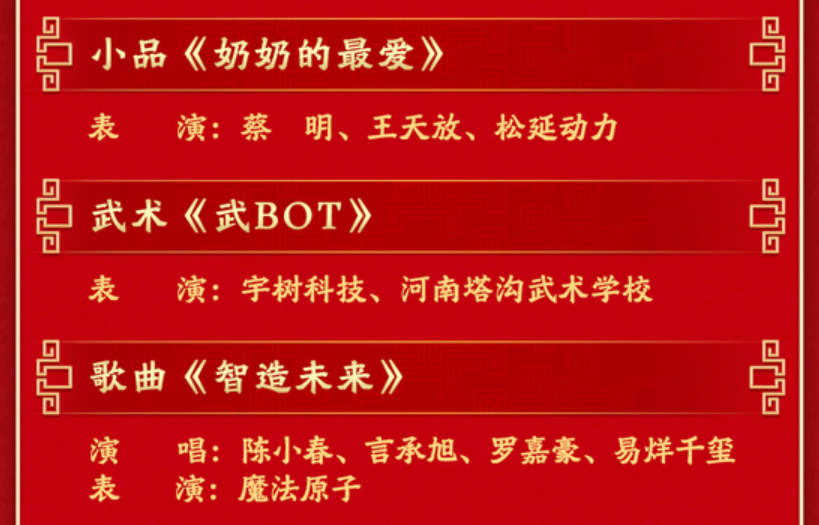
2026年央视春晚节目单发布,合作伙伴超20家知名公司,宇树机器人今年将表演武术
Jin Rong Jie· 2026-02-16 08:09
Group 1: Event Overview - The 2026 Spring Festival Gala will be broadcasted live on 10 TV channels, 9 radio frequencies, and 6 new media platforms, covering various genres including comprehensive, variety, and ultra-high-definition channels [1] - CGTN will collaborate with over 3,500 media outlets in more than 200 countries and regions to provide comprehensive coverage of the event in 85 languages [1] Group 2: Technology and Partnerships - The gala will feature significant technological elements, particularly in robotics and artificial intelligence, with confirmed partners including Yushutech, Volcano Engine, and Magic Atom [2] - Notable performances will include a martial arts display by Yushutech robots in collaboration with Henan Tagou Martial Arts School, and a skit by Songyan Power with celebrities [2] Group 3: Corporate Participation - Over 20 partners have been announced for the gala, spanning various sectors such as smart mobility, AI robotics, and the liquor industry, including companies like Huawei and Great Wall Motors [4] - At least 8 publicly listed companies are among the partners, representing industries such as liquor, automotive, and video platforms, including Wuliangye and Bilibili [5]






当年轻人说“爱你老己”:情绪经济正在成形吗?
Xin Lang Cai Jing· 2026-02-16 07:24
Core Concept - The article discusses the emergence of the "emotional economy," which encompasses various aspects such as "self-love economy," "companionship economy," and "anger economy," highlighting how emotions are increasingly activated and monetized in consumer behavior [2][30]. Group 1: Emotional Economy Overview - The emotional economy is defined as a new economic form where consumer purchases are driven by emotional value rather than just functional or price considerations [5][33]. - Emotional consumption is characterized by the pursuit of inner joy, comfort, recognition, or stress relief, emphasizing the experience of feeling over the physical product itself [5][33]. - The emotional economy includes three layers: emotions as commodities, the role of platforms in capturing and analyzing emotional data, and the shift of brands towards providing meaning and empathy [6][33][36]. Group 2: Case Study - Pop Mart - Pop Mart serves as a clear example of how the emotional economy operates, utilizing a blind box model that creates uncertainty and emotional anticipation, significantly enhancing purchase willingness [7][35]. - The business model of Pop Mart relies on a system that converts emotions into data, allowing for the adjustment of emotional supply based on consumer feedback [8][36]. - Pop Mart's strategy focuses on maintaining ongoing emotional connections with consumers rather than just completing sales, thus transforming emotions into a systematic economic resource [8][36]. Group 3: Market Trends and Growth - The emotional economy in China is rapidly evolving, with a significant portion of young consumers (over 40.1%) prioritizing emotional value and interest in their purchasing decisions [9][37]. - The market size of the emotional economy in China reached approximately 2.3 trillion yuan in 2024, with projections to exceed 4.5 trillion yuan by 2029 [9][37]. - Emotional experiences shared on social media contribute to the formation of a "sympathy network," which can be transformed into economic value [9][37]. Group 4: Key Aspects of Emotional Economy - The "self-love economy" emphasizes personal well-being and mental health expenditures, with services like massage and meditation becoming regular budget items [16][44]. - The "companionship economy" includes the growing pet economy, which reached nearly 300 billion yuan in 2025, and the increasing acceptance of online psychological services [19][47]. - The "anger economy" highlights how negative emotions are exploited for engagement on social media, with anger being a particularly effective driver of content sharing and interaction [22][23].

官宣!2026年央视春晚节目单发布,合作伙伴超20家知名公司
Di Yi Cai Jing· 2026-02-16 06:51
Core Viewpoint - The 2026 Spring Festival Gala program list has been officially released by the Central Radio and Television Station, featuring a diverse lineup of performances and hosts across multiple locations [2][12]. Program Details - The gala will be directed by Yu Lei, with co-directors Zhao Dazhi, Li Meilan, and Yang Jinmeng [4]. - The main hosts for the Beijing venue include Ren Luyu, Sa Beining, and Nigmat, with additional hosts for various regional venues [13]. - The program includes performances such as songs, skits, and martial arts, featuring well-known artists and groups [4][5][6]. Technological Integration - The 2026 gala emphasizes technological innovation, collaborating with companies in robotics and AI, including Yushutech and Volcano Engine [19]. - Over 20 partners have been announced for the gala, spanning various sectors such as smart mobility, AI robotics, and the liquor industry [20]. Broadcast Information - The gala will be broadcasted across multiple channels, including CCTV's comprehensive channel and various international platforms, reaching over 3,500 media outlets globally [12].
官宣!2026年央视春晚节目单发布,合作伙伴超20家知名公司
第一财经· 2026-02-16 06:49
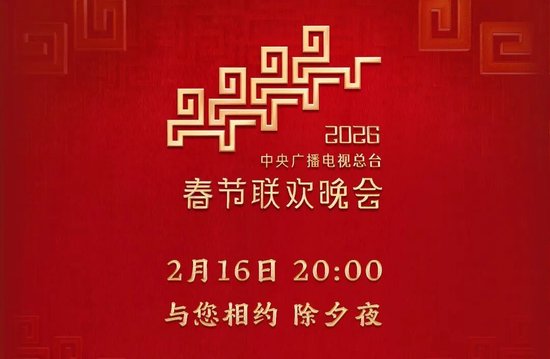
Core Viewpoint - The 2026 Spring Festival Gala, organized by the China Central Television (CCTV), will feature a diverse lineup of performances and collaborations with over 20 partners from various industries, emphasizing technological innovation and cultural celebration [3][26]. Group 1: Event Details - The gala will be broadcast live on multiple platforms, including 10 television channels and 9 radio frequencies, as well as 6 new media platforms, reaching a global audience through 3500 media outlets in over 200 countries [15]. - The event is scheduled for February 16, 2026, at 8 PM [4][15]. Group 2: Host and Performance Lineup - The main hosts for the Beijing venue include Ren Luyu, Sa Beining, and others, with regional hosts for various sub-venues [16]. - The performance lineup includes a variety of acts such as songs, dances, and comedy skits, featuring well-known artists and groups from different regions [5][8][12]. Group 3: Partnerships and Collaborations - The gala has partnered with over 20 companies across sectors like artificial intelligence, smart transportation, and traditional industries, including notable brands such as Wuliangye and Great Wall Motors [26]. - Among the partners, 8 are publicly listed companies, indicating a significant intersection between the event and the stock market [26].


从圈层文化到春晚舞台,卡游入局背后,看中国消费形态的升级
Mei Ri Jing Ji Xin Wen· 2026-02-16 06:01
Core Insights - The article discusses the emergence of card games as a mainstream consumer product in China, particularly highlighted by the announcement of KAYOU as the exclusive card partner for the 2026 Spring Festival Gala, marking a significant shift in consumer perception and market presence for card products [1][2]. Group 1: Reasons for Card Games' Popularity - Card games are chosen for their simplicity and broad appeal, making them easily understandable for a diverse audience, including both young and older generations [2][3]. - The card game market has seen substantial growth, with the global collectible card market reaching $11.13 billion in 2020 and projected to grow to $31.26 billion by 2027, while China's market is expected to exceed 30 billion yuan by 2025 [6][7]. - The rise of the Z and Alpha generations, who prioritize emotional value and social belonging over mere functionality, aligns with the characteristics of card games, which offer entertainment, social interaction, and light collectibility [2][7]. Group 2: Cultural and Market Context - Card games fit well within the current cultural trends of "Guochao" (national trend) and "cultural confidence," appealing to younger consumers and promoting traditional culture in a modern context [5][9]. - The card game industry has expanded its reach from niche markets to mainstream retail, with products now available in convenience stores, supermarkets, and various cultural events, enhancing accessibility [7][9]. - KAYOU has successfully integrated traditional cultural elements into its card designs, collaborating with institutions like the Dunhuang Museum and leveraging popular IPs to create a unique cultural exchange platform [9][10]. Group 3: Strategic Positioning of KAYOU - KAYOU's approach focuses on building a strong consumer relationship through real social interactions rather than relying solely on digital marketing or fleeting trends, establishing a solid foundation for long-term brand loyalty [10][12]. - The choice of KAYOU as a partner for the Spring Festival Gala reflects its ability to resonate across different age groups, making it a suitable representative of contemporary consumer trends while maintaining cultural relevance [12][13]. - The card's design for the Spring Festival Gala, featuring elements like bronze patterns and modern zodiac symbols, serves as a medium for intergenerational communication, enhancing its appeal to a wide audience [12][13].

春晚合作公司名单曝光,覆盖智能出行、人工智能机器人、白酒等领域
Ge Long Hui· 2026-02-16 05:00
Group 1 - The core viewpoint of the article highlights that the 2026 Spring Festival Gala has announced over 20 partners across various sectors, including smart mobility, artificial intelligence, and liquor [1] - In the robotics and AI sector, notable partners include Yushu Technology, Volcano Engine, Galaxy General, Songyan Power, Magic Atom, and Zhuimi Technology [1] - ByteDance's AI company, Volcano Engine, and its large model Doubao have also partnered with the 2026 Spring Festival Gala [1] Group 2 - Among the announced partners, eight are publicly listed companies, including Wuliangye, Yanghe, Gujing Gongjiu, Great Wall Motors, JAC Motors, Kuaishou-W, Bilibili-W, and Miniso [1] - The listed companies consist of three liquor firms, two automotive companies, two video platforms, and one trendy toy company [1]


当年轻人说“爱你老己”:情绪经济正在成形吗?
经济观察报· 2026-02-16 03:07
Core Viewpoint - The article discusses the emergence of the "emotional economy," which encompasses various consumer behaviors driven by emotions, such as self-care, companionship, and anger, highlighting the complexities and implications of these trends in modern society [4][6][30]. Group 1: Emotional Economy Overview - The emotional economy is defined as a new economic form where consumers prioritize emotional value over functional value in their purchasing decisions [9][12]. - Emotional consumption is driven by the need for psychological comfort, self-identity, and emotional resonance, rather than just the utility of products [8][9]. - The emotional economy includes three layers: emotions as commodities, the role of data and platforms in shaping emotional experiences, and the shift from functional value to emotional connection in brand relationships [9][11]. Group 2: Examples of Emotional Economy - Pop Mart serves as a clear example of the emotional economy, where its blind box model creates emotional anticipation and excitement, leading to increased consumer willingness to purchase [10][11]. - The emotional value derived from Pop Mart's products is not just about the toys themselves but the designed emotional experience associated with the purchase [10][11]. - The emotional economy is rapidly growing, with a projected market size of approximately 2.3 trillion yuan in 2024, expected to exceed 4.5 trillion yuan by 2029 [12]. Group 3: Subcategories of Emotional Economy - The "self-love economy" has gained prominence, where consumers focus on personal well-being and emotional satisfaction through various expenditures, such as wellness services and hobbies [20][21]. - The "companionship economy" is characterized by the rise of AI companionship and emotional support services, which have become significant in addressing loneliness and emotional needs [24][25]. - The "anger economy" reflects the monetization of negative emotions, particularly through social media, where content designed to provoke anger garners more engagement and visibility [26][27]. Group 4: Future Implications of Emotional Economy - The emotional economy raises concerns about the potential for emotional commodification to lead to a depoliticized approach to self-care, shifting responsibility for emotional well-being onto individuals rather than addressing systemic issues [30][32]. - The article suggests that while the emotional economy can provide short-term comfort, it may also internalize structural problems as personal issues, complicating the relationship between individual well-being and societal conditions [31][32]. - The evolution of the emotional economy may lead to a revaluation of emotional skills in the workforce, particularly as AI takes over more analytical tasks, potentially benefiting those with strong emotional intelligence [33].


奇妙拉比获数千万天使轮融资
Bei Jing Shang Bao· 2026-02-14 04:18
Core Insights - The AI toy brand Qimiaola has launched a new product "Yin Yang Shuang Sheng" based on its core IP RAGUS & WHITE and disclosed its latest financing progress [1] - Qimiaola has completed its angel round financing, raising several tens of millions of RMB, led by Jinqiu Fund with participation from Shoucheng Holdings and Canglan Capital as the exclusive financial advisor [1] Financing and Investment - The financing will focus on two main areas: content ecosystem development and SKU matrix expansion [1] - The funds will be used to enhance the worldview and character system of the AI toy universe, fostering long-term interaction between users and characters through continuous content updates [1] - Qimiaola aims to innovate product forms and gameplay around its core IP RAGUS & WHITE, exploring collaborations with established IPs and artists to enrich the character network of its IP universe [1] Market Performance - The core IP product RAGUS has consistently ranked among the top three in sales since its launch on October 1, 2025, at Tao Zhu Xin Zao Ju, indicating strong offline consumer recognition and category potential [1] - The solid sales data from offline C-end channels has been a key factor in Shoucheng Holdings' decision to invest in Qimiaola [1]
奇梦岛2026财年Q2营收指引增长18%-25.9%,关注线下扩张与IP生态
Jing Ji Guan Cha Wang· 2026-02-13 22:57
Financial Performance - The company provided revenue guidance for Q2 of FY2026, estimating between 150 million to 160 million yuan, representing a quarter-over-quarter growth of 18% to 25.9% [2] Business Expansion - The company plans to continue expanding its direct retail stores in top-tier shopping districts in major cities such as Beijing, Shanghai, Guangzhou, and Shenzhen, with four brand stores set to open in Beijing and Chongqing from late December 2025 to early January 2026 [3] - The company is also making strides in international market expansion, with products entering nearly 20 countries through a distribution network, including North America, Europe, Southeast Asia, and the Middle East [5] Industry Resource Advantages - The company possesses 11 proprietary IPs and 6 licensed IPs, with the star IP WAKUKU generating 89.73 million yuan in revenue during Q1 of FY2026. The monthly production of plush blind boxes has significantly increased, reaching 35 times the output of January 2025 by October 2025, which may impact future business growth [4]
春节消费新意浓文旅市场“马力足”
Shang Hai Zheng Quan Bao· 2026-02-13 17:04
Group 1: Film Industry Developments - Six new films, including "Fast Life 3" and "Silent Awakening," will be released on the first day of the Lunar New Year, indicating a strong push for film consumption during the holiday season [1] - The National Film Administration and the Ministry of Commerce have launched an initiative to promote cross-industry collaboration between film and market consumption, aiming to stimulate the film economy and activate consumer potential in lower-tier markets [1] - Cinemas are enhancing the consumer experience by transforming into "new cultural spaces," with notable upgrades in decor and facilities to attract audiences during the festive season [1] Group 2: Cultural and Entertainment Trends - Popular games are also launching updates for the Spring Festival, with miHoYo's "Honkai: Star Rail" introducing a new character inspired by traditional culture, showcasing the integration of cultural elements into gaming [1] - Stand-up comedy remains popular during the Spring Festival, with performances scheduled in major cities and overseas, reflecting the ongoing demand for live entertainment [2] Group 3: Consumer Trends in New Year Goods - The definition of New Year goods is evolving, with younger consumers driving demand for innovative and culturally relevant products, as seen in the creative merchandise inspired by the classic animation "Journey to the West" [3] - Bubble Mart's new zodiac-themed products have become popular among young consumers for gifting and collecting, indicating a trend towards unique and culturally infused merchandise [3][4] - Brands are encouraged to merge traditional culture with modern aesthetics through collectible toys, aiming to engage younger audiences in the appreciation of traditional festivals [4]