房地产

Search documents
新政明确!二手房交易迎利好!
Sou Hu Cai Jing· 2025-12-31 20:06
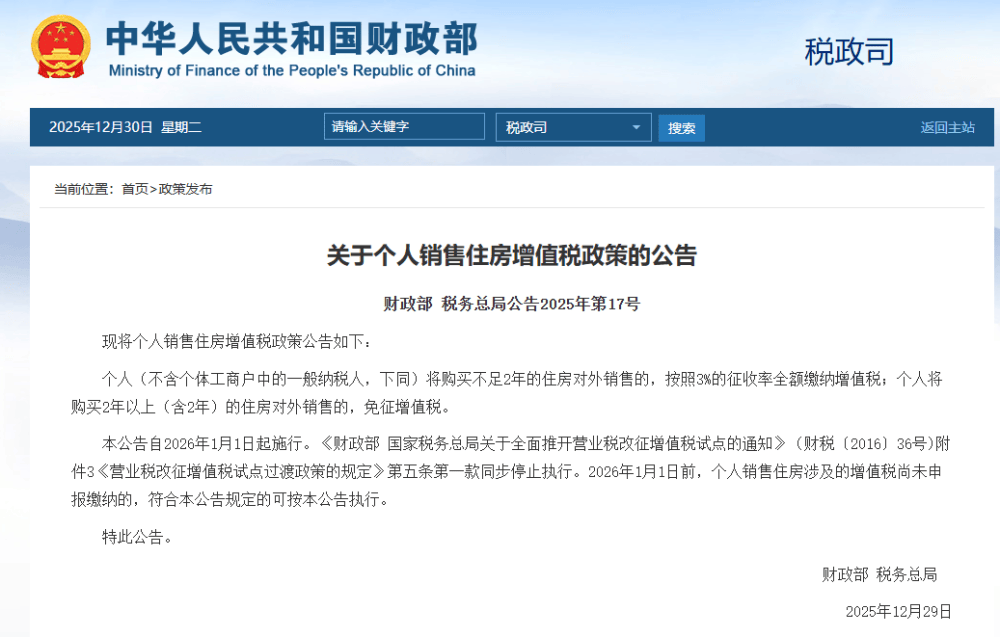
两部门发布关于个人销售住房增值税政策的公告 关于个人销售住房增值税政策的公告 财政部 税务总局公告2025年第17号 现将个人销售住房增值税政策公告如下: 个人(不含个体工商户中的一般纳税人,下同)将购买不足2年的住房对外销售的,按照3%的征收率全额缴纳增值税; 个人将购买2年以上 (含2年)的住房对外销售的,免征增值税。 本公告自2026年1月1日起施行。《财政部 国家税务总局关于全面推开营业税改征增值税试点的通知》(财税〔2016〕36号)附件3《营业税改 征增值税试点过渡政策的规定》第五条第一款同步停止执行。2026年1月1日前,个人销售住房涉及的增值税尚未申报缴纳的,符合本公告规定 的可按本公告执行。 特此公告。 财政部 税务总局 2025年12月29日 ...

明年起,如果房价继续下跌,中国将近一半的家庭将面临4个大麻烦
Sou Hu Cai Jing· 2025-12-31 16:47
这几年,关于房价的讨论明显变了味。以前更多是"涨得快不快""还能不能再等等",现在却变成了"会 不会继续跌""已经买了怎么办"。尤其是已经有房的家庭,表面上生活照旧,但心里多少都有点不安。 麻烦一:房子"账面缩水",家庭安全感被反复冲击 原本觉得"房子在,底气就在",可当周围成交价不断刷新低点,心理上的安全感会被慢慢削弱。很多人 嘴上说"不卖就不亏",可心里很清楚,这种安慰并不能解决现实焦虑。 更现实的是,资产缩水会直接影响家庭规划。换房、改善居住条件、给孩子准备空间,都会变得更加犹 豫。以前敢算的大账,现在变得不敢轻易动笔,生怕算来算去,发现退路越来越窄。 麻烦二:换房和变现难度加大,生活被"卡"在原地 房价下行时,最难受的往往不是没房的人,而是想调整房子的家庭。比如一家三口想换更大的房子,或 者从老房子搬到更合适的位置。 如果房价只是短期波动,其实影响有限;可一旦下行趋势被拉长,影响就不只是买房卖房那么简单,而 是会慢慢渗透到普通家庭的资产结构、生活决策,甚至心态变化中。很多麻烦不是一下子砸下来,而是 像温水一样,一点点让人感到吃力。 对大多数中国家庭来说,房子往往占据了家庭资产的大头。有些家庭,七成甚至 ...

图说中国宏观专题-经济动能等待变化
2025-12-31 16:02
Summary of Key Points from the Conference Call Industry Overview - The macroeconomic data for November indicates a weakening in China's economy, particularly in domestic demand, with consumption, fixed asset investment, and the real estate market showing signs of decline [1][4] - Industrial enterprises are experiencing negative growth in revenue and profit for two consecutive months, raising concerns about corporate profitability and its impact on stock valuations [1][5] Core Insights and Arguments - **Economic Performance**: November's industrial value added showed a slight increase of 0.44% month-on-month, but high-tech industries grew at a slower pace, with some sectors like smartphones and solar batteries experiencing negative growth [2][4] - **Consumer Spending**: Retail sales growth was only 1.3% year-on-year, with significant declines in categories such as jewelry and home appliances due to high base effects and recent price fluctuations [2][3] - **Investment Trends**: Fixed asset investment decreased by 2.6% year-on-year, with manufacturing, infrastructure, and real estate investments all showing declines [2][4] - **Real Estate Market**: The real estate sector continues to struggle, with sales volume and area reaching their lowest points of the year, indicating a lack of recovery [3][4] - **Corporate Profitability**: Industrial enterprises reported a revenue decline of 0.3% and a profit drop of 13.1% year-on-year, with the profit margin decreasing to 5.3% [5][6] - **Inventory and Debt Levels**: Industrial inventories are on the rise, with nominal and actual inventories increasing by 4.6% and 6.8% year-on-year, respectively, indicating growing operational pressures [7] - **Monetary Policy**: M1 and M2 money supply growth has slowed, reflecting weak consumer demand, while short-term loans to households decreased significantly [8] - **Fiscal Policy**: General public fiscal revenue fell to -0.02% year-on-year, with government spending growth lagging behind previous years, particularly in infrastructure [8][9] Additional Important Insights - **Government Initiatives**: The Central Economic Work Conference emphasized the need to stimulate economic potential, stabilize the real estate market, and boost investment, which may enhance risk appetite in the market [2][4][15] - **Sectoral Performance**: High-tech manufacturing and related raw material industries are showing resilience, while traditional consumer goods and public utilities face challenges [8][10] - **Future Outlook**: The fiscal rhythm is expected to accelerate in 2026, with a focus on timely implementation of policies to support economic recovery and corporate profitability [10][11] This summary encapsulates the critical insights from the conference call, highlighting the current challenges and potential policy responses within the Chinese economy and specific industries.
中国图说中国宏观周报:分行业看贸易盈余
2025-12-31 16:02
Summary of Key Points from the Conference Call Industry Overview - The report focuses on China's macroeconomic situation and trade dynamics, particularly in the context of the goods trade surplus and service trade deficit as of September 2025. The current account to GDP ratio is below 3.5%, indicating a moderate external imbalance [3][5]. Core Insights and Arguments - **Trade Surplus Growth**: China's goods trade surplus reached a historical high of $1,075.8 billion from January to November 2025, with a year-on-year growth rate of 21%. Exports increased by $174.6 billion (5.4% year-on-year), while imports decreased by $13 billion (-0.6% year-on-year) [4]. - **Economic Structure Changes**: The increase in trade surplus is attributed to a shift in resource allocation towards high-efficiency high-end manufacturing, accelerated technological advancements, and a decline in non-trade goods prices due to real estate adjustments. This has reduced intermediate input costs for trade goods, boosting exports [3]. - **Deleveraging Impact**: The private sector's deleveraging has suppressed demand, leading to a slowdown in imports. Additionally, the upgrading of manufacturing has increased domestic production capabilities, further reducing reliance on imports [3]. - **Regional Trade Dynamics**: The main regions contributing to the trade surplus include Hong Kong ($273.2 billion), the EU ($266.9 billion), and the US ($257.0 billion). Conversely, trade deficits were noted with Taiwan (-$133.4 billion) and Australia (-$47.7 billion) [5]. - **Product-Specific Trade Surplus**: The largest trade surpluses were recorded in electrical equipment (HS85: $352.7 billion), machinery (HS84: $320.7 billion), and vehicles (HS87: $182.9 billion). In contrast, significant trade deficits were observed in mineral fuels (HS27: -$354.4 billion) and minerals (HS26: -$239.5 billion) [6]. Additional Important Insights - **Long-term Trends**: The proportion of manufacturing imports to total output has decreased from 11.3% in 2012 to 7.4% in 2024, indicating a growing competitive advantage for domestic manufacturing over foreign counterparts [4]. - **Trade Remedy Cases**: The increase in trade surplus has led to a rise in trade remedy cases involving China, with 199 cases reported in 2024, up from 87 in 2023 [4]. - **Economic Indicators**: The report highlights that the current account surplus to GDP ratio was 3.4% as of September 2025, significantly lower than the 10.2% recorded in September 2007, reflecting a long-term trend of service trade and income item deficits [5]. This summary encapsulates the key points from the conference call, focusing on the trade dynamics and economic indicators relevant to China's macroeconomic landscape.
固收-2026年度策略-时光倒流
2025-12-31 16:02
Summary of Key Points from Conference Call Industry Overview - The discussion primarily revolves around the Chinese economy and its comparison with Japan, emphasizing that the economic conditions and corporate investments in China are distinct from Japan's past experiences [1][3] - The focus is on the structural performance of the Chinese market, particularly in the TMT (Technology, Media, and Telecommunications) sector, which is becoming increasingly significant [1][6] Core Insights and Arguments - High-quality development is emphasized, prioritizing sustainability over reliance on infrastructure and real estate, which have diminished in importance for A-shares [1][5] - The correlation between memory prices and A-shares is highlighted, with a reported correlation of 0.76, indicating that memory prices are more relevant for investment decisions than real estate prices [6][7] - The contribution of real estate to GDP is declining, with its impact now less significant than that of some software and information sectors [8] - The relationship between housing prices and interest rates is unstable, with historical examples showing varying trends [9] - Consumer behavior is affected by real estate market fluctuations, but this impact varies significantly across different regions [10] - Export data is crucial for asset pricing, but over-reliance on it can lead to misjudgments, as seen in past economic cycles [11] Important but Overlooked Content - The global inflation transmission mechanism indicates a reversal of long-term deflation expectations in China, challenging previous assumptions about the economy [12] - Anticipated monetary policy adjustments for 2026 include a potential rate cut and reserve requirement ratio reduction, but significant credit expansion is unlikely [13] - The bond market faces challenges such as spread issues and changing commercial models, with a forecasted 10-year government bond yield range of 1.7% to 2.1% for 2026 [2][18] - Investment opportunities for 2026 include timing for government bond purchases, EVE indicator management, and changes in fiscal debt structure, with an overall increase in risk appetite due to rising stock proportions in financial products [19]
南平住建出台11条措施!“共有产权”等房地产、建筑业领域多项政策持续发力
Xin Lang Cai Jing· 2025-12-31 16:01
Group 1: Core Insights - The article outlines measures to achieve high-quality development in the housing and urban construction sector in Nanping City for the first quarter of 2026, as part of a broader economic strategy [1][7] Group 2: Real Estate Development - The "shared ownership" housing policy will continue to be implemented and deepened, with city-level support provided in the form of housing vouchers to lower the threshold for home purchases [2][8] - Differentiated housing support measures will be introduced, targeting key groups such as new citizens, youth, first-time homebuyers, families with multiple children, and various talents, to provide tiered subsidies and tax incentives [2][8] - There will be encouragement for converting existing commercial housing into affordable housing, utilizing special bonds and policy bank loans to enhance housing security [2][9] - Diverse home purchasing models will be promoted, including "rent-to-own" and shared ownership models, with policy support for those purchasing through these methods [2][9] Group 3: Construction Industry Upgrades - Support will be provided for enterprises to enhance market competitiveness through reforms in project bidding processes, encouraging collaboration between state-owned and private enterprises [4][10] - A one-stop service for project approval will be optimized, focusing on key projects to ensure timely commencement and productivity [4][10] - Administrative approval processes will be expedited, with a push for online handling of construction permits and simplified procedures [4][11] - Monitoring and adjustment of construction material and labor costs will be strengthened, particularly in light of seasonal factors affecting construction expenses [5][11] - Projects will be encouraged to maintain production and resume work promptly after the holiday period, ensuring that essential services remain operational [6][11]
商业不动产试点正式开启 证监会发文推动REITs高质量发展
Zhong Guo Jing Ying Bao· 2025-12-31 15:45
中经记者 孙汝祥 夏欣 北京报道 2025年12月31日,证监会发布《关于推动不动产投资信托基金(REITs)市场高质量发展有关工作的通 知》(以下简称"《通知》")。《通知》明确提出,推动商业不动产REITs平稳健康发展,加快推进 REITs市场体系建设,完善REITs申报注册制度机制,加强监管与风险防范。 同日,《中国证监会关于推出商业不动产投资信托基金试点的公告》(以下简称"《公告》")正式发 布,并自当日起实施。 除了推动商业不动产REITs平稳健康发展外,《通知》还提出要加快推进REITs市场体系建设,完善 REITs申报注册制度机制,加强监管与风险防范。 《通知》表示,重点支持符合政策导向、具有商业属性的资产发行商业不动产REITs,提高发行上市效 率。鼓励REITs持有业态相近、功能互补或运营协同的资产组合,推动跨领域资产整合,提升规模效应 和风险分散能力。支持经营规范、治理健全、资产管理经验丰富的银行保险业资产管理公司等金融机构 参与商业不动产REITs业务。有序拓展原始权益人范围。 《公告》明确了商业不动产REITs的定义,指通过持有商业不动产以获取稳定现金流并向基金份额持有 人分配收益的封 ...
TA们,在2026年能否“峰回路转”?
Shang Hai Zheng Quan Bao· 2025-12-31 15:27
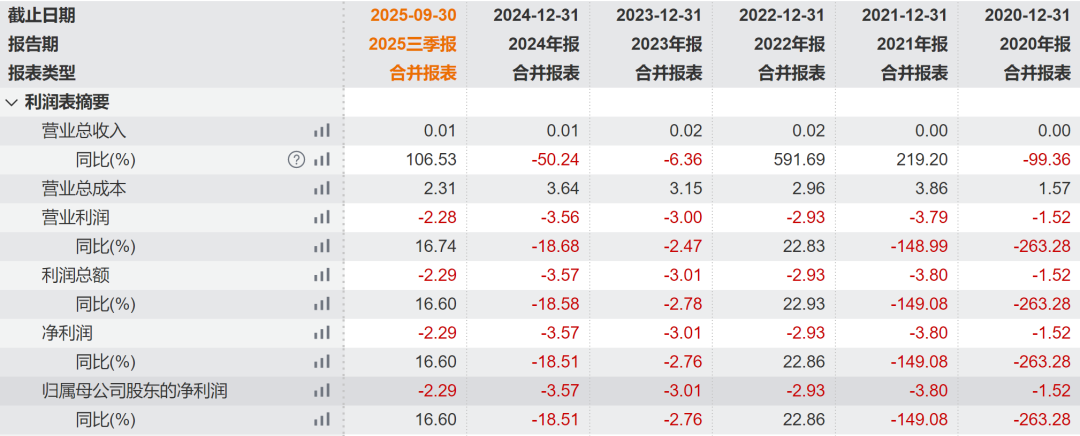
Market Overview - In 2025, the A-share market experienced a structural "small bull" market, with 4,110 out of 5,176 stocks showing positive growth, and 523 stocks rising over 100% [1] - However, 40 stocks fell over 30%, with 7 stocks declining more than 40% [1] Worst Performing Stocks - The largest decline was seen in Shijing Technology, which dropped 50.99% in 2025, primarily due to a significant decrease in completed orders after entering the photovoltaic sector [3] - Kangle Weishi ranked second with a decline of 49.97%, continuing to face losses since 2013, with a net profit loss of 2.29 billion yuan in the first three quarters of 2025 [3][4] - Longda Meishi experienced a 48.11% drop, affected by a prolonged downturn in the pig cycle and intensified competition in the prepared food sector [3] Financial Performance - Kangle Weishi reported a revenue of 1.2763 million yuan in the first three quarters of 2025, a year-on-year increase of 106.53%, but still faced a net profit loss of 2.29 billion yuan [4] - The food and beverage sector saw a 9.69% decline in 2025, marking its fifth consecutive year of losses, with a cumulative drop of over 50% since the peak in 2021 [8][10] Industry Trends - The pharmaceutical and biotechnology sector showed signs of recovery in 2025, with an 11.94% increase, ending a four-year downtrend [10] - The food and beverage sector is expected to benefit from macro policies aimed at boosting domestic demand, with potential recovery in the white liquor and pre-processed food segments [10][11]



A股晚间热点 | 国常会部署工作!事关水网建设、跨境贸易等
智通财经网· 2025-12-31 14:18
Group 1: Economic and Policy Developments - President Xi Jinping highlighted that China's economy is expected to reach 140 trillion yuan in 2026, marking significant advancements in economic, technological, and defense capabilities [1] - The State Council, led by Premier Li Qiang, discussed the national water network construction and cross-border trade facilitation, emphasizing the need for innovative financing mechanisms and quality assurance in infrastructure projects [2][3] Group 2: Financial Market Regulations - The China Securities Regulatory Commission (CSRC) announced measures to enhance the REITs index system and encourage long-term funds, such as insurance and pension funds, to enter the market, aiming to stabilize the financial environment [4][5] - The CSRC released the "Implementation Measures for Securities and Futures Market Supervision," detailing 14 common regulatory measures to improve market oversight [9] Group 3: Corporate Developments - Blue Arrow Aerospace's IPO on the Sci-Tech Innovation Board has been accepted, with plans to raise 7.5 billion yuan, focusing on the development of liquid oxygen-methane engines and commercial rocket launch services [3] - Shougang Co. expects a net profit increase of 95%-125% for 2025, indicating strong financial performance [18] Group 4: Real Estate Sector Insights - The Ministry of Housing and Urban-Rural Development issued guidelines to enhance housing quality, with a focus on urban village and old housing renovations, suggesting potential policy adjustments in early 2026 [12] - The real estate sector is expected to benefit from liquidity safety and strong urban positioning, with a focus on companies adapting to new consumption trends [12]

楼市“低税费时代”来临,一线城市“卖一买一”能省数十万
第一财经· 2025-12-31 14:14
本文字数:2291,阅读时长大约4分钟 作者 | 第一财经 马一凡 2025.12. 31 封图 | AI生成 近年来,中央层面出台多项房地产税收减免或调整政策,涉及契税、个人所得税、增值税三大税种。 经上海易居房地产研究院测算,房地产三大税种减税政策落实后,全国住房交易一年可以减税约千亿 元。 从购房人或卖房人的角度看,减税政策对普通家庭来说并不是几千块的"象征性优惠",而是动辄10 万–50万元量级的现金减负,对一线城市置换型购房者来说,税负下降金额甚至足够覆盖家庭两至三 年的生活成本。 综合来看,房地产税收总体向交易成本不断减轻、一线城市税负平权、促进市场流动性的方向发展, 对稳定楼市预期、激活交易和支持改善型需求起到了重要作用。 房地产交易三大税种系统性下调 2025年12月30日,财政部、税务总局发布《关于个人销售住房增值税政策的公告》(以下简称"公 告"),明确自2026年1月1日起,个人销售购买不足2年的住房,按照3%的征收率全额缴纳增值税; 购买满2年(含2年)的住房对外销售,继续免征增值税。 此前相关规定中,个人出售未满2年的住房,需按5%的征收率全额缴纳增值税。此次新政直接将征 收率下调2 ...