
贸易

Search documents
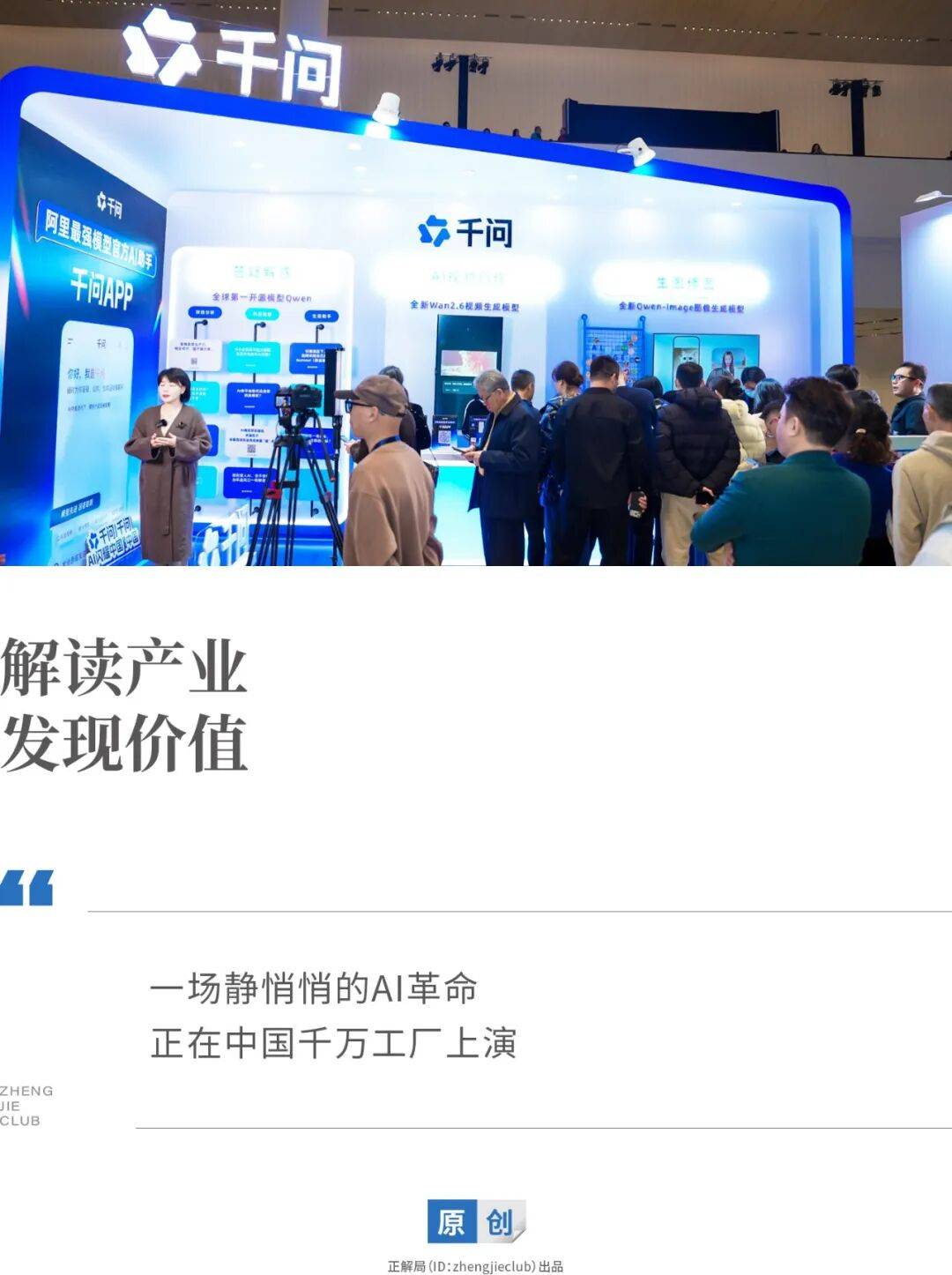
用千问“魔改”老厂,这些企业家闷声发大财
Sou Hu Cai Jing· 2025-12-31 07:15
Core Insights - The core argument presented is that artificial intelligence (AI) has transitioned from a conceptual phase to practical applications in various industries, leading to significant innovations and transformations in business operations [4][7]. Group 1: AI in Business Transformation - AI tools like Qianwen are enabling traditional businesses to enhance their marketing and operational efficiency, allowing for high-quality product images to be generated quickly and at low cost [10][12]. - Companies are leveraging AI to understand customer preferences in different markets, which has improved their ability to attract buyers and communicate effectively [12][20]. - The introduction of AI has drastically reduced costs and time associated with content production, enabling small and medium enterprises to compete with larger firms [13][21]. Group 2: AI in Compliance and Risk Management - AI is proving valuable in helping companies navigate compliance challenges, particularly in industries with stringent regulations, by quickly providing updates on changing standards [16][18]. - The use of AI in contract review processes has streamlined operations, allowing for faster and more efficient assessments of legal documents [18][20]. Group 3: AI's Impact on Small Enterprises - Small businesses are experiencing significant growth and efficiency improvements through the comprehensive application of AI tools, with some reporting revenue increases without expanding their workforce [21][23]. - The integration of AI has allowed entrepreneurs to automate various tasks, freeing up time for strategic decision-making and enhancing overall productivity [21][24]. - The emergence of "super individuals" who utilize AI to perform tasks traditionally requiring larger teams is reshaping the entrepreneurial landscape in China [24][26].

财经观察:外媒热议中国2025年经济亮点
Huan Qiu Shi Bao· 2025-12-30 22:34
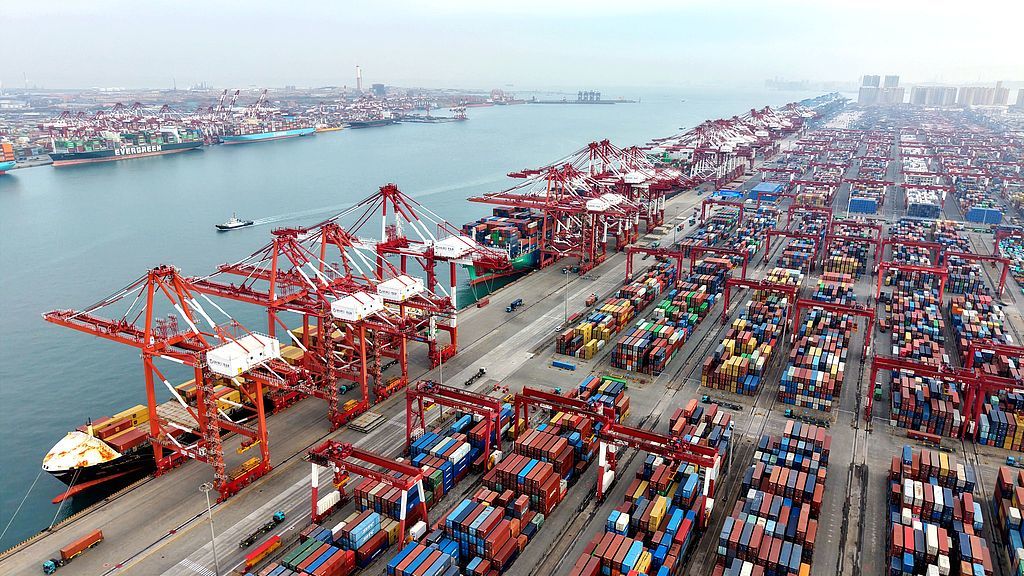
Core Viewpoint - In 2025, China's economy demonstrates resilience and vitality amidst global challenges, attracting international attention and investment opportunities in various sectors, including stock markets, AI development, and soft power expansion [1] Trade Resilience - Despite ongoing U.S. tariff policies, China's goods trade has shown consistent growth, with exports expected to increase by 8% year-on-year in 2025 [2][4] - China achieved a record annual trade surplus of $1 trillion in November 2025, offsetting declines in specific markets through expanded trade with Europe, Latin America, and Africa [4] - China's export innovation and new trade dynamics are crucial for maintaining global supply chain stability, with predictions of increased global market share by 2030 [4] Artificial Intelligence Advancements - 2025 marks a pivotal year for AI, with China's DeepSeek releasing the R1 model, challenging U.S. dominance in the AI sector [5][6] - China has emerged as a leader in open-source AI, with significant competition against U.S. companies, as evidenced by the rapid development and availability of free models [6] - The influence of Chinese technology extends beyond AI into robotics and deep-sea science, showcasing a systematic advancement in various high-tech fields [5] Stock Market Performance - The total market capitalization of A-shares surpassed 100 trillion yuan for the first time in 2025, with significant returns exceeding initial predictions [7][8] - High expectations for the Chinese stock market are supported by a bullish outlook, with forecasts indicating a potential 38% increase by the end of 2027 [7] - Global investors are increasingly interested in Chinese equities, driven by strong market performance and the emergence of innovative companies like DeepSeek [8] Soft Power and Global Influence - China ranks second in the global soft power index, surpassing the UK, with cultural products like the toy "Labubu" gaining international acclaim [9][10] - The success of Chinese lifestyle brands and cultural exports reflects a shift towards China leading global trends rather than merely following them [9] - The expansion of Chinese brands into international markets, including the U.S., highlights the growing global presence of Chinese products [10] Economic Growth Outlook - Multiple international organizations have raised China's GDP growth forecast for 2025 to 5%, recognizing its role as a key stabilizer in global growth [11][12] - Consumer spending is projected to significantly contribute to economic growth, with its quarterly contribution rate rising from 29.7% at the end of 2024 to 56.6% by the third quarter of 2025 [12] - The outlook for 2026 remains positive, with expectations of continued strong performance in the technology sector driven by AI innovations and supportive policies [12]
2025国际十大经济新闻
Jing Ji Ri Bao· 2025-12-30 22:26
Group 1 - China proposed a global governance initiative at the Shanghai Cooperation Organization (SCO) summit, receiving support from over 140 countries and organizations, marking a significant milestone in the organization's history [1] - The SCO summit was the largest and most fruitful since its establishment, outlining a 10-year development strategy and advocating for multilateral trade systems [1] - China will serve as the rotating presidency of the SCO from July 2024 to September 2025, hosting over 100 activities and achieving multiple cooperation agreements [1] Group 2 - The meeting between Chinese President Xi Jinping and U.S. President Trump in Busan is seen as a pivotal moment for U.S.-China relations, providing a new direction and injecting certainty into the global economy [2] - The international community views this meeting as an opportunity to reshape bilateral relations and address global challenges [2] Group 3 - China responded decisively to the U.S. imposition of tariffs on Chinese goods, employing a combination of tariff retaliation, WTO litigation, and entity list sanctions [3] - Ongoing discussions between China and the U.S. since May have yielded positive results, demonstrating that dialogue can lead to solutions [3] Group 4 - The U.S. implementation of "reciprocal tariffs" has raised global import costs and disrupted supply chains, increasing market uncertainty and the risk of stagflation [4] - This policy has undermined global investment and consumer confidence, threatening multilateral trade rules and pushing the world economy towards fragmentation [4] Group 5 - At the APEC summit, China emphasized the importance of open development and inclusive economic globalization, aiming to build a community in the Asia-Pacific region [5] - The summit's outcomes align with the expectations of APEC members and are expected to foster regional cooperation [5] Group 6 - The signing of the upgraded China-ASEAN Free Trade Area 3.0 agreement expands cooperation into emerging fields such as digital economy and green economy, promoting trade facilitation [6] - This agreement reflects a commitment to multilateralism and free trade, setting a precedent for addressing international economic challenges [6] Group 7 - Gold prices have consistently reached new highs, reflecting a decline in trust in the U.S. dollar, with gold trading above $4,000 per ounce [7] - The rise in precious metal prices is attributed to increased central bank reserves and a shift in global economic dynamics [7] Group 8 - The second China-Central Asia summit resulted in a commitment to high-quality development and strengthened cooperation among Central Asian countries [8] - The summit established a framework for future cooperation, with plans for the next summit in 2027 [8] Group 9 - The U.S. export controls on AI chips have significant implications for global technology innovation, affecting companies worldwide [10] - The restrictions have led to dissatisfaction among U.S. tech companies, prompting the government to reconsider its approach to AI chip exports [10]
贸易板块12月30日跌1.04%,凯瑞德领跌,主力资金净流出8393.7万元
Zheng Xing Xing Ye Ri Bao· 2025-12-30 09:00
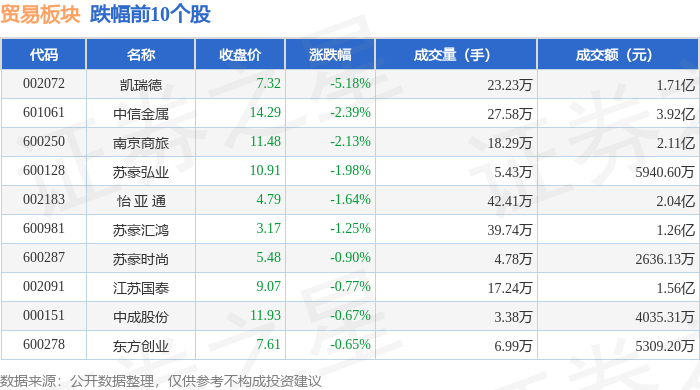
Core Viewpoint - The trade sector experienced a decline of 1.04% on December 30, with key stocks like 凯瑞德 leading the drop, while the overall market showed mixed results with the Shanghai Composite Index closing at 3965.12, down 0.0%, and the Shenzhen Component Index at 13604.07, up 0.49% [1] Trade Sector Performance - The trade sector's stocks showed varied performance, with notable declines in stocks such as 訓瑞德, which fell by 5.18% to a closing price of 7.32, and 中信金属, which decreased by 2.39% to 14.29 [1] - The trading volume for 訓瑞德 was 232,300 shares, with a transaction value of 171 million yuan, while 中信金属 had a volume of 275,800 shares and a transaction value of 392 million yuan [1] Capital Flow Analysis - The trade sector saw a net outflow of 83.937 million yuan from institutional investors, while retail investors contributed a net inflow of 81.328 million yuan [1] - Individual stock capital flows indicated that 訓瑞德 had a net inflow of 3.9623 million yuan from institutional investors, while it faced a net outflow of 12.9702 million yuan from retail investors [2] - 江苏国泰 experienced a significant net outflow of 21.2126 million yuan from institutional investors, despite a net inflow of 17.088 million yuan from retail investors [2]

外贸发展韧性如何延续?丨落实会议部署 问答中国经济
Zheng Quan Shi Bao· 2025-12-30 06:34
Core Viewpoint - China's merchandise trade exports have shown a surprising year-on-year growth of 6.2% in the first 11 months of this year, exceeding initial expectations despite high tariffs imposed by certain countries, reflecting the resilience brought by the long-term transformation and upgrading of the manufacturing sector and diversification of trade partners [1][2]. Group 1: Export Growth and Structure - The export structure of China has improved, with intermediate goods and capital goods showing significant growth rates of 9.7% and 6% respectively in the first 10 months, contributing 5.6 percentage points to overall export growth [1]. - Intermediate goods accounted for 47.4% of total exports in the first three quarters, an increase of 2 percentage points compared to the end of last year, indicating a shift towards a more favorable export structure [1]. Group 2: Trade Partner Diversification - Exports to the U.S. have decreased by 18.3%, but exports to non-U.S. markets such as Africa, ASEAN, India, the EU, the UK, Latin America, and Australia have maintained high growth, effectively offsetting the decline in exports to the U.S. [2]. - The long-term advantages of manufacturing transformation and market diversification are expected to continue, with a generally optimistic outlook for foreign trade in the coming year [2]. Group 3: Future Strategies - Continued promotion of manufacturing transformation and upgrading is essential, with a focus on integrating technological and industrial innovation to enhance the self-sufficiency of the industrial chain [3]. - The service sector's export potential is significant, with service trade exports growing by 14.3% in the first 10 months, including a 52.5% increase in travel service exports [3]. Group 4: Multilateral Trade System - China has actively supported the multilateral trade system, proposing measures to stabilize and develop the World Trade Organization (WTO) framework, which has garnered widespread support [4]. - Plans for gradual institutional opening and the signing of more regional and bilateral trade agreements are underway, aimed at promoting the free flow of goods, services, and investments [4].
外贸发展韧性如何延续?丨落实会议部署 问答中国经济
证券时报· 2025-12-30 03:15
Core Viewpoint - China's merchandise trade exports have shown a year-on-year growth rate of 6.2% in the first 11 months, exceeding initial expectations despite high tariffs imposed by certain countries, reflecting the resilience brought by the long-term transformation and upgrading of the manufacturing sector and diversification of trade partners [1] Group 1: Export Performance - The export structure of China has improved, with "China Manufacturing" becoming a preferred choice for more trade partners. In the first 10 months, the export growth rates for intermediate goods and capital goods were 9.7% and 6% respectively, contributing 5.6 percentage points to overall exports [1] - Intermediate goods accounted for 47.4% of total exports in the first three quarters, an increase of 2 percentage points from the end of last year [1] Group 2: Trade Partner Diversification - The manufacturing sector's strength is a key support for export growth, while the diversification of trade partners provides greater flexibility to counter external shocks. Exports to the U.S. fell by 18.3%, but exports to non-U.S. markets such as Africa, ASEAN, India, the EU, the UK, Latin America, and Australia maintained high growth [2] - The meeting between the Chinese and U.S. presidents in Busan yielded positive results, leading to a more optimistic outlook for foreign trade in the coming year, despite ongoing trade protectionism and unilateralism [2] Group 3: Future Economic Strategies - The integration of technological and industrial innovation remains a crucial task for the upcoming economic work, with plans to enhance the self-controllability of industrial chains and implement high-quality development actions [3] - Service trade exports grew by 14.3% in the first 10 months, with knowledge-intensive services increasing by 9.5% and travel services by 52.5% [3] Group 4: Domestic Market and Trade System - Building a strong domestic demand market is essential for countering external shocks and achieving a balanced import-export structure. Measures include improving income distribution systems and enhancing social security to boost consumer spending [4] - China actively supports the multilateral trade system and has proposed initiatives to stabilize and develop the World Trade Organization's work, reflecting a commitment to open cooperation and regional trade agreements [4]

A股三大指数集体低开,贵金属等板块领跌
Guan Cha Zhe Wang· 2025-12-30 01:52
Core Viewpoint - The A-share market opened lower on December 30, with all three major indices declining, indicating a bearish sentiment in the market [1] Market Performance - The Shanghai Composite Index fell by 0.44% - The Shenzhen Component Index decreased by 0.52% - The ChiNext Index also dropped by 0.44% [1] Sector Performance - The precious metals, energy metals, and other metal sectors led the decline - Other sectors such as trade, solid-state batteries, retail, commercial aerospace, and photovoltaics also experienced losses - Conversely, sectors like beer, outbound tax refunds, facial recognition, digital marketing, and multimodal AI concepts showed strength [1]
二〇二五年中国经济关键词
Xin Lang Cai Jing· 2025-12-29 22:22
Group 1: New Quality Productive Forces - In 2025, China focuses on technological innovation and industrial upgrading to cultivate new quality productive forces, enhancing the foundation for high-quality development [2] - Traditional industries are crucial for accelerating the development of new quality productive forces, with the Ministry of Industry and Information Technology releasing action plans for ten key industries [2] - Strategic emerging industries and future industries are the main battlegrounds for cultivating new quality productive forces, with significant growth in sectors like new energy vehicles, photovoltaics, and quantum technology [2][3] Group 2: Expanding Domestic Demand - Expanding domestic demand is a strategic choice for China to respond to economic changes and promote high-quality development, with policies implemented to stimulate consumption and investment [4] - Consumer markets are recovering, with significant growth in retail sales of home appliances and communication equipment, with year-on-year increases of 14.8%, 18.2%, and 20.9% respectively [6] - Investment in emerging sectors is also strong, with notable increases in manufacturing and renewable energy investments, such as a 15.3% growth in automotive manufacturing [6] Group 3: High-Level Opening Up - Expanding high-level opening up is essential for China's high-quality development, providing stability to the uncertain global economy [7] - China's foreign trade resilience is improving, with policies promoting service exports and green trade, reflecting a commitment to innovative leadership [7][8] - Trade with major partners like ASEAN has seen growth, with a year-on-year increase of 8.5% in trade volume [8] Group 4: Risk Mitigation - In 2025, China continues to address key risk areas to ensure high-quality development, with measures in place to manage local government debt and mitigate financial risks [9] - The real estate sector has seen successful completion of housing delivery tasks, with policies aimed at stabilizing the market and supporting housing supply [9] Group 5: Appropriate Monetary Easing - Since 2025, a moderately loose monetary policy has been in effect, with social financing scale increasing significantly, reaching 33.39 trillion yuan in the first eleven months [10] - The structure of credit has improved, supporting key sectors and strategic economic transformations, with notable growth in technology and green loans [11] Group 6: Green Transition - China has introduced numerous policies for green low-carbon transition and ecological civilization construction, achieving significant progress in various fields [14] - The energy structure is shifting towards non-fossil sources, with ambitious targets for renewable energy installations [14][15] - The green economy is thriving, with over 218.7 million existing green economy-related enterprises, indicating sustained vitality in the sector [14]
外贸发展韧性如何延续?
Zheng Quan Shi Bao· 2025-12-29 19:01
Core Viewpoint - China's merchandise trade exports have shown a year-on-year growth rate of 6.2% in the first 11 months of this year, exceeding initial expectations despite high tariffs imposed by certain countries, reflecting the resilience brought by the long-term transformation and upgrading of the manufacturing industry and diversification of trade partners [1] Group 1: Export Performance - The export structure of China has improved, with intermediate goods and capital goods showing significant growth rates of 9.7% and 6% respectively in the first ten months, contributing 5.6 percentage points to overall export growth [1] - Intermediate goods accounted for 47.4% of total exports in the first three quarters, an increase of 2 percentage points compared to the end of last year [1] Group 2: Trade Partner Diversification - Exports to the U.S. have decreased by 18.3%, but exports to non-U.S. markets such as Africa, ASEAN, India, the EU, the UK, Latin America, and Australia have maintained high growth, effectively offsetting the decline in exports to the U.S. [2] - The meeting between the Chinese and U.S. leaders in Busan has yielded positive results, leading to a more optimistic outlook for foreign trade in the coming year [2] Group 3: Future Strategies - Continued promotion of manufacturing transformation and upgrading is essential, with a focus on integrating technological and industrial innovation to enhance the self-controllability of the industrial chain [3] - The service sector's export potential is significant, with service trade exports growing by 14.3% in the first ten months, including a 52.5% increase in travel service exports [3] Group 4: Multilateral Trade System - China has actively supported the multilateral trade system by proposing initiatives at the WTO and committing to not seek new special and differential treatment in current and future negotiations [4] - Plans for steady institutional opening and expanding service sector openness are underway, along with efforts to sign more regional and bilateral trade investment agreements to facilitate the free flow of goods, services, and investments [4]

厦门信达:第十二届董事会第十六次会议决议公告
Zheng Quan Ri Bao Zhi Sheng· 2025-12-29 12:49
证券日报网讯 12月29日,厦门信达发布公告称,公司第十二届董事会2025年度第十六次会议审议通过 《关于修订公司的议案》《关于修订公司的议案》《关于修订公司的议案》等多项议案,并拟发行不超 过50亿元超短融、15亿元短融、15亿元中票、20亿元永续中票及合计不超过20亿元私募公司债与可续期 公司债,全部议案将提交2026年1月20日临时股东会审议。 (编辑 丛可心) ...
