铜加工

Search documents
引导民企建立健全内审监督体系,宁波做对了什么?
Zhong Guo Jing Ji Wang· 2025-07-29 06:44
Core Viewpoint - The article highlights the importance of internal audit systems in promoting the healthy development of private enterprises in Ningbo, emphasizing the integration of policy support, digital technology, and best practices to enhance governance and risk management [1][2][28]. Group 1: Policy and Government Support - The Ningbo government prioritizes the establishment of internal audit systems as a key component for improving risk management and corporate governance in private enterprises [3][28]. - A combination of policies, including financial incentives and recognition awards, is employed to encourage private enterprises to develop internal audit systems [4][5]. - The number of participating enterprises in internal audit evaluations has increased nearly threefold from 2020 to 2023, indicating a growing recognition of internal audit as a standard for excellence [6]. Group 2: Association's Role - The Ningbo Internal Audit Association plays a crucial role in facilitating the development of internal audit systems by providing professional guidance and fostering resource sharing among enterprises [8][9]. - In 2023, the association provided consulting services to 87 private enterprises, addressing over 200 specific issues related to internal audit system construction [11]. - The association has organized numerous exchange activities, with participation from over a thousand enterprises, promoting a culture of mutual learning [12]. Group 3: Best Practices from Leading Enterprises - Leading private enterprises in Ningbo have developed various effective models for internal audit system construction, serving as benchmarks for others [14][15]. - By the end of 2023, 68% of private enterprises with annual revenues exceeding 500 million yuan have established dedicated internal audit departments, a 40% increase from three years ago [16]. - The shift from traditional financial auditing to value-added auditing is a common trend among leading enterprises, enhancing their operational efficiency and risk management [18]. Group 4: Digital Transformation in Auditing - Ningbo is actively promoting the integration of digital technologies, such as big data and artificial intelligence, into internal audit practices to enhance efficiency and value creation [23][24]. - By 2023, 35% of private enterprises with annual revenues over 1 billion yuan have established dedicated digital audit systems, a fivefold increase since 2020 [24]. - The application of big data analysis has opened new avenues for internal auditing, allowing enterprises to identify cost-saving opportunities and improve customer satisfaction [25]. Group 5: Lessons and Future Directions - The Ningbo experience demonstrates the effectiveness of a supportive ecosystem involving government guidance, association facilitation, enterprise initiative, and technological support in developing internal audit systems [28][29]. - Key insights include the need for tailored strategies based on enterprise characteristics, the importance of technology in enhancing audit effectiveness, and the necessity of a robust talent development framework [29]. - The ongoing digital transformation and the increasing focus on ESG (Environmental, Social, and Governance) factors are expected to further shape the future of internal auditing in Ningbo [30].



金田股份: 金田股份关于“金铜转债”预计满足赎回条件的提示性公告
Zheng Quan Zhi Xing· 2025-07-25 16:14
Group 1 - The company issued convertible bonds totaling 1.45 billion yuan, with a maturity of 6 years and a tiered interest rate starting from 0.20% in the first year to 2.00% in the sixth year [1][2] - The convertible bonds, named "Jin Tong Convertible Bonds," began trading on the Shanghai Stock Exchange on August 28, 2023 [2] - The initial conversion price for the bonds was set at 6.75 yuan per share, which was later adjusted to 6.63 yuan due to the company's annual equity distribution [2][3] Group 2 - The conversion price was further adjusted down to 5.90 yuan per share following a board resolution and shareholder meeting, effective from August 28, 2024 [3] - The current conversion price stands at 5.79 yuan per share after another adjustment due to the 2024 annual equity distribution, effective from June 13, 2025 [4] Group 3 - The redemption clause for the convertible bonds allows the company to redeem them if the stock price exceeds 130% of the conversion price for a specified number of trading days [5] - The company anticipates that the redemption clause may be triggered if the stock price remains above 7.53 yuan per share for a certain period [5]
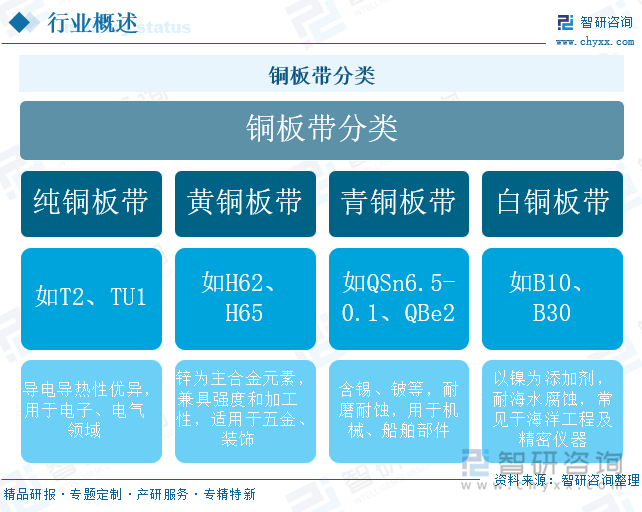
研判2025!中国铜板带行业产业链、发展现状、进出口情况及发展趋势分析:高端转型加速推进,新能源汽车等新兴领域需求爆发[图]
Chan Ye Xin Xi Wang· 2025-07-19 02:29
Industry Overview - Copper strip is a key material in modern industry, known for its excellent electrical and thermal conductivity, processing performance, and corrosion resistance, widely used in new energy and electronic electrical fields [1][4] - The industry is experiencing a "quantity and quality rise" trend, with total production capacity expected to reach 4.179 million tons and output exceeding 3 million tons by 2024, while the proportion of high-end products is projected to increase to 35% [1][10] - The new energy vehicle sector has become a core growth driver, with production and sales in the first five months of 2025 increasing by over 44% year-on-year, significantly boosting demand for high-conductivity copper strips [1][22] Import and Export Dynamics - The import and export landscape is characterized by accelerated import substitution and steady export growth, with exports expected to increase by 20.61% year-on-year in 2024 [1][12] - In 2024, the total import volume of copper strips is projected to be approximately 88,800 tons, a year-on-year increase of 14.28%, while exports are expected to reach 124,200 tons [12][14] - The import structure is shifting towards high-value-added products, while exports are primarily focused on general-purpose products, indicating a trend towards higher technical content and added value in trade [14][21] Competitive Landscape - The competitive landscape of the copper strip industry is evolving into a gradient structure, with leading companies like Jiangxi Copper and Tongling Nonferrous Metals dominating over 60% of the high-end market through technological innovation and cost reduction [16][18] - Medium-sized enterprises are focusing on niche markets, while smaller firms are facing pressure due to environmental standards and market saturation, leading to accelerated exits from the market [16][18] - The industry is expected to consolidate further, with a focus on technological leadership and high-end production capabilities [18][21] Future Trends - The copper strip industry is witnessing three core trends: high-end breakthrough, structural differentiation, and green transformation, driven by technological advancements and market demands [21][22] - The demand for copper strips in the new energy vehicle sector is expected to exceed 2 million tons by 2025, accounting for over 40% of global copper consumption growth [22][23] - Companies are increasingly investing in green technologies and innovations to enhance competitiveness, with significant potential for import substitution in high-end markets [23]


特朗普疯了?50%铜关税连半成品都薅,电网军工要集体涨价!
Sou Hu Cai Jing· 2025-07-15 23:17
Group 1 - The global copper market is facing turmoil due to former President Trump's proposed 50% tariffs on imported copper and semi-finished products, which has triggered a significant price surge and market chaos [1][6][12] - The immediate reaction includes protests outside the White House and anxiety among major manufacturing companies in key cities like New York, Los Angeles, and Chicago, indicating widespread concern over the potential impact on the manufacturing sector [2][4][6] - The U.S. domestic copper production accounts for only 5% of global supply, necessitating over $20 billion in annual imports, which suggests that high tariffs could severely damage the U.S. manufacturing industry [7][9] Group 2 - The rising copper prices are causing panic among various sectors, including electrical, automotive, and military industries, leading to increased costs and potential project delays [6][9][11] - Chinese copper exporters are considering strategies such as relocating production to Mexico or raising prices, reflecting the global supply chain's response to the U.S. tariffs [10][11] - The increase in copper prices is expected to affect consumer costs significantly, with potential price hikes in electricity, internet services, and consumer goods, creating uncertainty in public sentiment and spending [11][15][17] Group 3 - The market is experiencing volatility, with companies hoarding supplies and speculators taking advantage of the situation, indicating a state of uncertainty across the industry [12][13] - Experts warn that Trump's protectionist policies may backfire, harming domestic industries rather than protecting them, as global supply chains are increasingly interconnected [12][13] - If the tariffs are implemented, the U.S. manufacturing sector may undergo significant adjustments, and China's copper exports could find new pathways, leading to further unpredictability in global copper prices [13][19]
金田股份: 金田股份2025年半年度业绩预告
Zheng Quan Zhi Xing· 2025-07-11 09:16
Group 1 - The company expects to achieve a net profit attributable to shareholders of the parent company between 340 million yuan and 400 million yuan for the first half of 2025, representing an increase of 217.11 million yuan to 277.11 million yuan compared to the same period last year, which corresponds to a year-on-year increase of 176.66% to 225.48% [1][2] - The net profit attributable to shareholders of the parent company for the same period last year was 122.89 million yuan, with a total profit of 190.64 million yuan [2] - The company attributes the increase in profit to enhanced overseas customer development, continued growth in overseas market sales, and improved operational efficiency through digitalization, leading to higher gross profit margins and profitability [2] Group 2 - The earnings forecast is based on preliminary calculations by the company's finance department and has not been audited by registered accountants [2] - The company confirms that there are no significant uncertainties affecting the accuracy of this earnings forecast as of the announcement date [2] - The final and accurate financial data will be disclosed in the company's formal announcements [2]
金田股份: 金田股份关于闲置募集资金暂时补充流动资金部分归还的公告
Zheng Quan Zhi Xing· 2025-07-11 09:16
Group 1 - The company has decided to temporarily use idle funds from convertible bonds amounting to RMB 76.8 million to supplement working capital, with a usage period not exceeding twelve months [1][2] - As of the announcement date, the company has cumulatively repaid RMB 141 million of the funds raised from the "Jin Tong Convertible Bonds," leaving a remaining balance of RMB 62.7 million [2] - The company will ensure the repayment of the temporarily supplemented working capital before the due date and will fulfill its information disclosure obligations [2] Group 2 - The board of directors and all directors of the company guarantee that the announcement content does not contain any false records, misleading statements, or major omissions [1] - The company has communicated the repayment status of the raised funds to its sponsor institution and the sponsor representative in a timely manner [1]
传特朗普50%铜关税扩至半成品 美国电网、数据中心材料恐遭重击
智通财经网· 2025-07-11 04:08
Core Viewpoint - The proposal by President Trump to impose a 50% tariff on imported copper products, including semi-finished copper goods, is expected to significantly impact various economic sectors and the U.S. copper supply chain [1][2]. Group 1: Tariff Proposal Details - The proposed tariff will cover copper products used in power grids, military equipment, and data centers, with semi-finished products likely included [1]. - The details of the tariff plan are not fully disclosed, and adjustments to the measures are still possible [1]. - The market had anticipated tariffs on refined copper, but the inclusion of semi-finished products (such as wire, sheet, and pipe) was uncertain until now [1]. Group 2: Economic Impact - The tariff is expected to raise production costs across multiple sectors, including electronics, automotive manufacturing, construction, and defense [1]. - In 2022, the U.S. imported 908,000 tons of refined copper, which constituted the largest import category, and these materials are processed into rods, cables, and alloy products [1]. Group 3: Industry Insights - The U.S. Copper Development Association highlighted that semi-finished copper products are critical to the military supply chain, representing 90% of U.S. semi-finished copper producers [2]. - The U.S. domestic copper production is insufficient to meet its own demand, necessitating significant imports of semi-finished copper products, estimated at 800,000 tons last year [2]. - The potential for a 50% tariff on semi-finished products raises national security concerns, as any disruption in foreign copper supply could severely impact U.S. electricity supply [2]. Group 4: Processing Sector Challenges - Imposing tariffs on semi-finished products will directly increase costs for processing companies, which rely heavily on imported raw materials [3]. - Current domestic processing capacity cannot meet the additional demand for 800,000 tons of semi-finished products, and establishing new capacity may take up to seven years [3].
海亮股份董事会换届,拟打造更具技术背景的年轻化管理团队
Zheng Quan Shi Bao Wang· 2025-07-09 00:57
Group 1 - The core viewpoint of the news is the restructuring of Hailiang Co., Ltd.'s board of directors, which aims to adapt to future business development directions and enhance strategic execution capabilities [1][2] - The newly nominated candidates for the ninth board of directors include individuals with diverse backgrounds in marketing, technology, and group management, reflecting a strong emphasis on youth and professionalism, with most candidates being born in the 1980s and 1990s [1] - The company has been actively advancing in technology research and development, capacity layout, and overseas expansion, indicating a strategic focus on optimizing management team structure [1] Group 2 - Hailiang Co., Ltd. is a leading global copper processing manufacturer, with main products including copper tubes, rods, and foils, and has entered the new energy materials sector [2] - The company operates 23 production bases worldwide, with overseas revenue accounting for 40.87% of total income as of 2024 [2] - Future plans include leveraging existing industrial foundations and international platforms to optimize product structure and drive technological innovation, enhancing overall competitiveness and long-term value [2]

沪铜日评:国内铜治炼厂7月检修产能或环减,国内外电解铜总库存量初现累积-20250704
Hong Yuan Qi Huo· 2025-07-04 07:11
1. Report Industry Investment Rating - Not provided in the given content 2. Core Viewpoint of the Report - The expansion of the US fiscal deficit and the Fed's potential interest rate cuts, along with disruptions in production or transportation at multiple overseas copper smelters, are countered by the easing of Sino - US tariffs and the traditional off - season for consumption. With the global electrolytic copper inventory starting to accumulate, the upward space for copper prices may be limited. It is recommended that investors hold their previous long positions cautiously and pay attention to the support and resistance levels of Shanghai copper, London copper, and US copper [5]. 3. Summary by Relevant Content 3.1 Market Data - **Shanghai Copper Futures Active Contract**: On July 3, 2025, the closing price was 80,560, up 20 from the previous day; the trading volume was 83,386 lots, down 18,572; the open interest was 224,672 lots, up 1,550; the inventory was 24,103 tons, down 994 [2]. - **Shanghai Copper Basis and Spot Premium/Discount**: The average price of SMM 1 electrolytic copper was 80,980, down 10; the Shanghai copper basis was 420, down 30; the spot premium/discount in different regions showed various changes, such as a 20 - point decrease in Guangzhou and East China [2]. - **London Copper**: The closing price of LME 3 - month copper futures (electronic trading) was 9,951.5, down 58.5; the total inventory of registered and cancelled warrants decreased by 94,325; the LME copper futures 0 - 3 - month contract spread was 87.61, down 8.59 [2]. - **COMEX Copper**: The closing price of the active copper futures contract was 5.196, up 0.08; the total inventory was 213,171, up 1,962 [2]. 3.2 Important News - **Macro - news**: The US Senate - version "Six - Pretty" bill was passed, planning to raise the debt ceiling to $5 trillion, with potential fiscal deficit expansion. The Trump administration's tariff policy affects consumption, and the US ADP employment number in a certain month was - 33,000, lower than expected and the previous value, reducing the probability of the Fed not cutting interest rates in July, with expected rate - cut months being September, October, or December [3]. - **Industry - specific News**: Some copper mines and smelters faced disruptions. For example, Las Bambas and Constancia had copper concentrate transportation interruptions; several smelters, including Pasar in the Philippines, Rosh Pinah in Namibia, and Altonorte in Chile, had production suspensions. Meanwhile, some new projects were progressing, such as the Jiangxi Copper Hongyuan's projects and other copper - related projects in China [4]. 3.3 Downstream Market - Some copper rod enterprises plan to cut production to reduce inventory in July. The capacity utilization rates of various copper products, including refined copper rods, copper wire and cable, copper foil, and copper pipes, are expected to decline in July, except for the potentially rising capacity utilization rate of electrolytic copper rod production [5]. 3.4 Trading Strategy - Due to the factors mentioned above, it is recommended that investors hold their previous long positions cautiously and pay attention to the support and resistance levels of Shanghai copper (76,000 - 78,000 and 81,000 - 83,000), London copper (9,300 - 9,600 and 9,900 - 10,200), and US copper (4.6 - 4.9 and 5.2 - 5.5) [5].
港湾周评|一家上市公司董事长被监管层认定要“换人”后辞职
Sou Hu Cai Jing· 2025-06-28 02:07
Core Viewpoint - The company Jingyi Co., Ltd. (002295.SZ) faced regulatory scrutiny from the Shenzhen Stock Exchange and the Guangdong Securities Regulatory Bureau due to the chairman's lack of qualifications and failure to disclose his status as a dishonest executor, leading to his resignation shortly after the announcement [2][3][4]. Group 1: Regulatory Issues - The Shenzhen Stock Exchange issued a regulatory letter highlighting that the chairman Huang Yuhui failed to disclose his status as a dishonest executor, which is a violation of the company's disclosure obligations [2][3]. - Huang Yuhui's status as a dishonest executor disqualifies him from serving as a director or senior executive under the Company Law of the People's Republic of China [3]. - The Guangdong Securities Regulatory Bureau mandated corrective measures for the company and issued warning letters to Huang Yuhui, the general manager Wei Guo, and the board secretary Yang Xiangrui [4]. Group 2: Company Background and Performance - Jingyi Co., Ltd. was established in July 1999 and successfully listed on the Shenzhen Stock Exchange in September 2009, recognized as a top private enterprise in Guangdong [7]. - The company specializes in copper processing and digital carbon services, with a comprehensive new materials industry cluster that includes copper pipes, rods, wires, and busbars, serving various sectors such as telecommunications and electric vehicles [8]. - In 2024, the company reported revenue of 3.754 billion yuan, a year-on-year increase of 38.43%, and a net profit attributable to shareholders of 27.71 million yuan, up 15.57% [8]. Group 3: Stock Market Performance - As of June 27, the stock price of Jingyi Co., Ltd. has increased by over 30% since the beginning of the year, indicating strong market performance despite the recent regulatory issues [9].