外卖

Search documents
“平台补贴”掺水分 商家不愿发声 这场角力尚无终点
Mei Ri Shang Bao· 2025-07-23 10:57
Core Viewpoint - The recent external competition among food delivery platforms has led to a temporary halt in aggressive promotional activities, impacting consumer behavior and sales in the tea beverage sector [1][2][3] Group 1: Impact of Platform Subsidies - Many tea beverage stores have experienced an increase in order volume due to platform subsidies, but this increase is heavily reliant on the availability of these subsidies [2][3] - The demand for iced beverages like coffee and tea has surged during the summer, making them the most popular category among consumers [2][3] - The reduction or removal of subsidies has resulted in a noticeable decline in order volume, indicating that consumer interest is largely driven by promotional offers [2][3] Group 2: Nature of Subsidies - The so-called "platform subsidies" are not solely funded by the platforms; merchants also contribute to these discounts, complicating the overall financial picture for consumers [3][4] - Merchants are compelled to participate in subsidy programs to maintain order volume, as consumers tend to choose cheaper alternatives when discounts are not available [3][4] - The overall profitability for stores has decreased due to the reliance on subsidies, which has also affected customer retention rates [4] Group 3: Delivery Personnel Perspective - Delivery personnel report that while order volumes may increase during promotional periods, their income remains relatively stable and is primarily dependent on their delivery speed [4] - The income per delivery has not significantly changed, with average earnings around 6-7 yuan per order, regardless of the promotional activities [4]
【尝鲜】《公司的秘密》+智解财经 | 解码12家大公司的跌落与重生
第一财经· 2025-07-23 10:20
Core Viewpoint - The article discusses the decline and rebirth of major companies, drawing parallels to Nietzsche's "Twilight of the Idols," and emphasizes the importance of understanding the lifecycle of businesses [1]. Group 1: Company Analysis - The report analyzes 12 notable companies, focusing on their peaks and challenges, including Pinduoduo and Lululemon, which are rethinking their user base despite differing pricing strategies [2]. - Starbucks and Yonghui are examined for their slow business pace amidst fast-changing market conditions [2]. - Haidilao and Meituan are assessed on how they are adapting in a time when dining costs are rising [2]. - Mixue Ice City is highlighted for its performance in lower-tier markets during challenging times [2]. - Intel's competitive position against TSMC and NVIDIA is questioned regarding its future viability [2]. - Toyota's late entry into the electric vehicle market raises concerns about its competitiveness [2]. - Alphabet's advancements in AI are scrutinized for their impact on the company's intelligence and market position [2]. - The report questions whether Hongkong Land can regain its former glory and if Disney can continue to leverage its intellectual property [2]. Group 2: Report Features - The report is noted for its depth, providing insights from financial data to market trends, and strategic directions to corporate mindsets, making it a valuable resource for industry professionals [4]. - It is designed to save time, allowing readers to grasp essential data points efficiently, compared to traditional methods like reading annual reports [5]. - The report serves practical purposes, helping users understand future industry trends and evaluate the reliability of a company's strategy [6].





突发!全面下线“零元购”活动,上海约谈饿了么等平台
新浪财经· 2025-07-23 09:51
Core Viewpoint - The ongoing competition among major food delivery platforms like Meituan, Taobao, and JD has led to aggressive promotional activities, including significant discounts and "zero-cost" offers, which have raised concerns about market regulation and sustainability in the food service industry [1][8]. Group 1: Market Dynamics - The food delivery platforms are engaged in a fierce promotional battle, with offers such as "free milk tea" and substantial discount coupons driving consumer interest and sales [1]. - The promotional activities have resulted in record-high daily orders, with figures reaching 80 million, 120 million, and 150 million for various platforms [8]. - Delivery personnel have benefited from this competition, with reports of hourly wages exceeding 100 yuan and potential monthly earnings surpassing 10,000 yuan, with some even reaching 20,000 to 30,000 yuan [8]. Group 2: Regulatory Response - The State Administration for Market Regulation has intervened, requiring platforms like Ele.me, Meituan, and JD to adhere to laws such as the E-commerce Law and the Anti-Unfair Competition Law, and to regulate their promotional behaviors [8][9]. - A special task force has been established to monitor promotional activities, control pricing, and ensure the rights of delivery personnel are protected [3]. Group 3: Industry Concerns - While the promotional activities have increased brand visibility, many restaurant operators express frustration, stating their businesses are heavily reliant on these platforms, which control their market fate [8]. - Experts warn that the subsidy-driven competition may lead to long-term issues, including food safety risks and the potential for subpar businesses to thrive at the expense of quality operators [10].



被外卖大战折磨的商家,不想干了
商业洞察· 2025-07-23 09:26
Core Viewpoint - The ongoing price war in the food delivery industry is unsustainable and detrimental to all parties involved, including consumers, merchants, and platforms [4][90][102]. Group 1: Industry Dynamics - The State Administration for Market Regulation has urged major food delivery platforms to engage in rational competition, indicating that the current aggressive pricing strategies are harmful to the industry [5][6]. - Meituan's CEO expressed concerns that the majority of orders in the current price war are "bubble" orders that do not contribute to actual revenue or profit [10][11]. - The influx of nearly 800 billion in subsidies from various platforms has created a competitive atmosphere where companies feel pressured to participate in irrational pricing wars [13][14]. Group 2: Impact on Merchants - Many small and medium-sized businesses are suffering due to the price war, as consumer demand is being redirected towards larger brands benefiting from subsidies [30][34]. - Merchants are finding it increasingly difficult to compete, with some resorting to self-subsidizing to attract customers, which further erodes their profit margins [41][42]. - The rising costs of raw materials, exacerbated by increased order volumes, are putting additional financial strain on merchants [45][46]. Group 3: Consumer Behavior - Consumers may initially benefit from lower prices, but the long-term implications include potential declines in food quality and service as merchants cut costs to survive [100][101]. - The perception of low prices due to subsidies may lead consumers to believe that such prices are sustainable, which is misleading and could result in higher prices once subsidies are removed [98][99]. Group 4: Calls for Change - Industry leaders and restaurant associations are calling for an end to the irrational competition, emphasizing the need for platforms to allow merchants to set their own prices [68][71]. - The consensus among industry stakeholders is that the current model is unsustainable and that a return to rational pricing is necessary for the health of the industry [89][105].
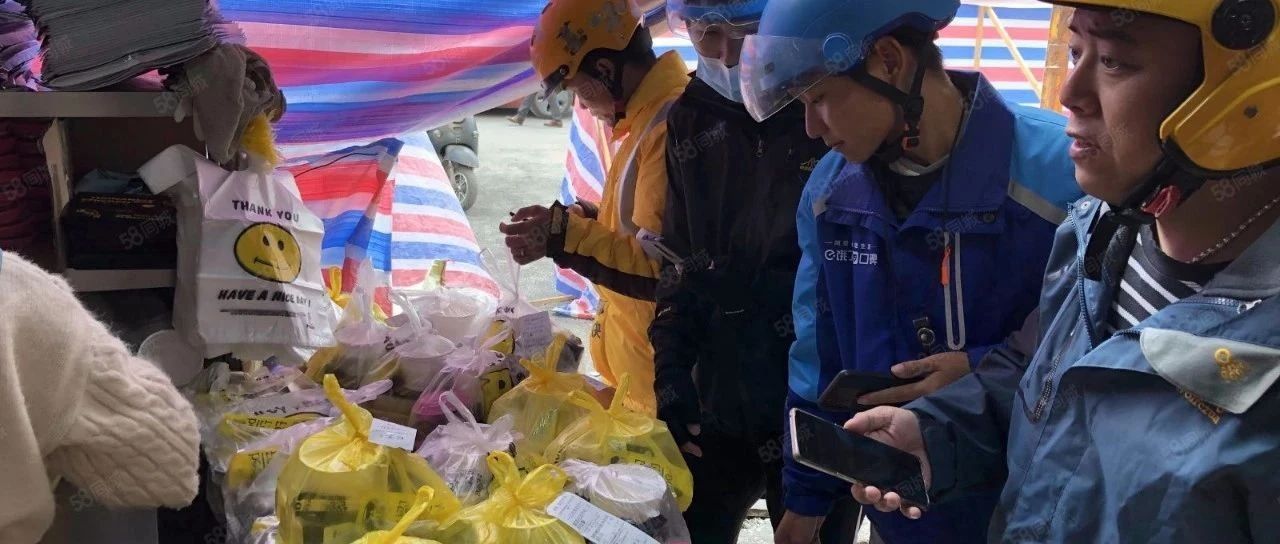
被外卖大战折磨的商家,不想干了
Hu Xiu· 2025-07-23 07:43
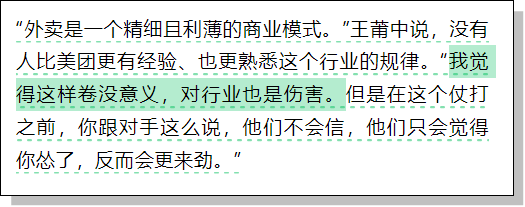
Core Viewpoint - The intense competition in the food delivery industry is being called to a halt due to irrational pricing strategies that harm the overall market and businesses involved [1][2][3][4]. Group 1: Industry Competition - The State Administration for Market Regulation has warned major food delivery platforms to engage in rational competition [2]. - The CEO of Meituan expressed that the ongoing price war is meaningless and detrimental to the industry, stating that most orders are "bubbles" [5][6]. - A significant influx of nearly 800 billion in subsidies from various platforms has created a festive atmosphere around low prices, leading to unsustainable competition [9][10]. Group 2: Impact on Small Businesses - The price war has severely affected the operational structure of many small businesses, with some reporting a drastic drop in customer traffic as consumers flock to subsidized delivery options [22][24]. - Small businesses are caught in a dilemma where they either participate in subsidy wars, which erodes their profit margins, or risk losing visibility and sales [32][33]. - Many small businesses are now forced to subsidize their own prices to remain competitive, which is not a sustainable solution [34][35]. Group 3: Consumer Behavior - Consumer demand for food is limited, and the influx of subsidies has shifted orders towards larger brands, leaving smaller businesses struggling [28][29]. - The perception of low prices due to subsidies may lead consumers to believe that normal prices are too high, further harming small businesses when subsidies end [87][90]. - The competition has created a scenario where consumers may enjoy short-term benefits, but the long-term implications could lead to reduced quality and fewer choices [89][90]. Group 4: Calls for Change - Various restaurant associations across multiple provinces have called for an end to irrational competition, highlighting the survival crisis faced by businesses due to excessive subsidies [58][59]. - Industry leaders have voiced concerns about the negative impact of the price war on profitability and the overall health of the restaurant sector [56][57]. - The need for rational pricing strategies and a focus on sustainable growth has been emphasized, as the current approach is deemed harmful to all parties involved [94][95].

突发!“零元购”全面下线
Zhong Guo Ji Jin Bao· 2025-07-23 07:25
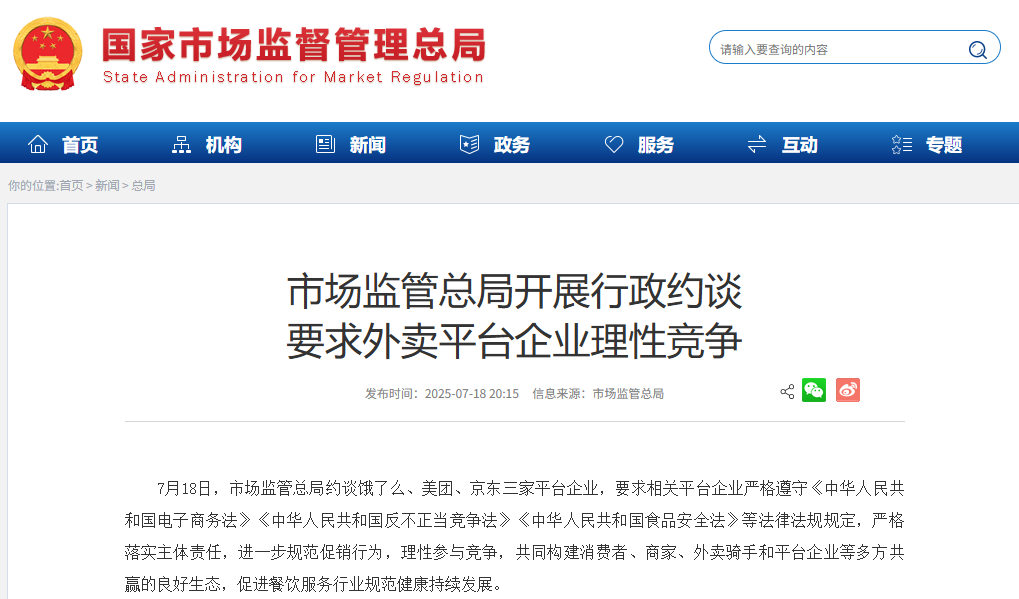
Core Viewpoint - The Shanghai market regulatory authorities have taken action against platforms like Ele.me, requiring them to implement significant rectifications in response to the ongoing "takeout war" and related promotional practices [2][5]. Group 1: Regulatory Actions - Shanghai's market regulatory department has conducted talks with Ele.me and other platforms, mandating three key rectifications: the complete removal of "zero-yuan purchase" promotions, a significant reduction in the scope of free meal marketing, and the establishment of a special task force to enhance activity monitoring, price control, and rider rights protection [1][2]. - The National Market Supervision Administration previously held discussions with major platforms including Ele.me, Meituan, and JD.com, urging them to comply with legal regulations and promote fair competition [2][4]. Group 2: Industry Response - In light of the intensified competition, major platforms have launched various promotional campaigns, including significant discounts and "zero-yuan" offers, which have led to record-high order volumes [5][6]. - Meituan reported a daily order volume exceeding 1.5 billion as of July 12, a notable increase from 1.2 billion the previous week, while Taobao Flash Sale announced a new high of 80 million daily orders [5]. Group 3: Future Strategies - Following the regulatory actions, major platforms are pivoting to new strategies. Meituan has initiated a "Ten Thousand Brands" plan to support 10,000 well-known restaurant brands, while JD.com has launched a "Dish Partner" recruitment plan with a cash investment of 1 billion yuan [7]. - JD.com has emphasized its focus on reducing industry commissions, ensuring rider benefits, and promoting quality takeout, distancing itself from the recent aggressive subsidy practices [6][7].
突发!“零元购”全面下线!
中国基金报· 2025-07-23 07:09
Core Viewpoint - The Shanghai market supervision department has taken action against platforms like Ele.me, requiring them to implement three key rectifications to ensure fair competition and consumer protection in the food delivery industry [4][5]. Group 1: Regulatory Actions - The Shanghai market supervision department has conducted talks with Ele.me and other platforms, mandating the complete removal of "zero yuan purchase" promotional activities [4][5]. - Platforms are required to significantly reduce the scope of free meal marketing and establish a special task force to enhance activity monitoring, price control, and rider rights protection [4][5]. - Continuous enforcement of regulations is emphasized to ensure compliance and promote a healthy and sustainable development of the food service industry [4][5]. Group 2: Industry Competition - The recent "food delivery war" has prompted regulatory bodies to intervene after platforms engaged in aggressive discounting strategies, including free offers and substantial coupon distributions [8]. - Major platforms like Meituan reported a surge in daily order volumes, with Meituan exceeding 1.5 billion orders and Taobao Flash Sale reaching over 80 million orders [8]. - Industry leaders are calling for a return to rational competition, with Meituan's CEO highlighting the need for fair practices to avoid detrimental outcomes for all parties involved [8]. Group 3: New Initiatives Post-Regulation - Following the regulatory actions, Meituan has launched the "Ten Thousand Brands" initiative to support 10,000 well-known restaurant brands with tailored services [10]. - JD.com has introduced a "Dish Partner" recruitment plan, investing 1 billion yuan to find partners for 1,000 signature dishes, aiming to enhance quality and supply chain efficiency [10]. - Taobao Flash Sale has denied rumors regarding operational strategies, asserting that their business practices adhere to normal commercial regulations [10].
外卖新战场:对决供应链
2 1 Shi Ji Jing Ji Bao Dao· 2025-07-23 06:37
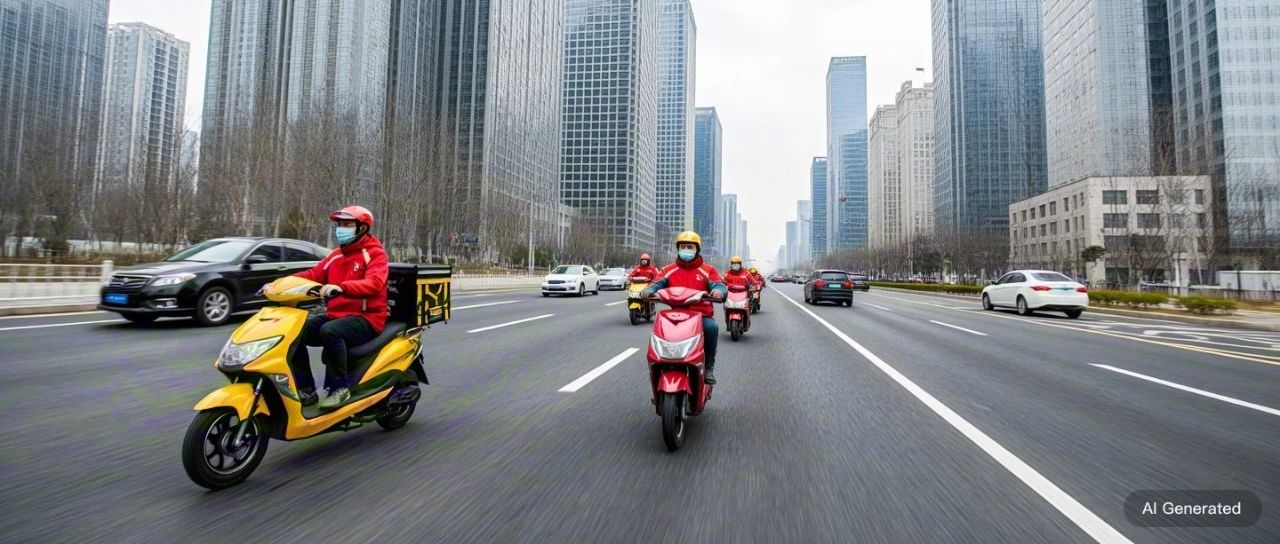
Core Insights - The competition in the food delivery industry is shifting from online subsidies to physical kitchens, with major players like JD and Meituan launching their own delivery kitchens [1][7] - JD's "Qixian Xiaochu" aims to innovate the supply chain in the food delivery market, while Meituan's "Huanxiong Shitang" focuses on providing infrastructure for merchants [4][7] - Both companies are targeting significant expansion, with JD planning to open over 10,000 kitchens and Meituan aiming for 1,200 within three years [3][8] JD's Strategy - JD's "Qixian Xiaochu" will operate as a partnership model, where JD invests heavily in the infrastructure while partners provide recipes and share in profits [2][5] - The company plans to invest over 10 billion yuan in the next three years to establish its kitchen network [3] - JD emphasizes a full-chain operation, leveraging its supply chain advantages to ensure quality and efficiency in food preparation and delivery [5] Meituan's Approach - Meituan's "Huanxiong Shitang" is designed as a shared kitchen space where merchants can operate independently while benefiting from Meituan's supply chain services [7] - The platform does not self-operate kitchens but focuses on providing a safe and efficient environment for merchants [7] - Meituan's goal is to create a food safety infrastructure that supports merchants while maintaining brand recognition with them [7] Challenges and Future Outlook - Both companies face significant challenges in balancing costs, quality, and profitability in their new business models [10][11] - JD must attract and retain competitive partners while scaling its operations, whereas Meituan needs to ensure merchant profitability and motivation to join its platform [11] - The competition is expected to intensify as both companies aim to redefine the food delivery landscape through their respective strategies [12]
国际投行点:互联网企业应将资源投向具有更大增长潜力的市场
Huan Qiu Wang· 2025-07-23 04:08
Group 1 - The core viewpoint of the article highlights that the current "burning money" war in the food delivery market is not worthwhile, as excessive subsidies have led to four negative effects: weakening offline restaurant traffic, compressing overall industry profits, burdening small restaurants, and exacerbating waste issues [1] - UBS reports that the overall scale and profit margin of the food delivery market are limited, with a total profit of 30 billion yuan last year, ranking at the bottom of the internet industry in terms of profit margin [3] - The competition in the food delivery sector is seen as a "coward's game," where the first party to concede will suffer losses on prior investments, and this battle is expected to continue at least until the Double Eleven shopping festival [4] Group 2 - UBS suggests that leading internet companies should redirect their resources towards markets with greater growth potential, such as international markets or AI, rather than depleting capital in the instant retail sector [4] - The report indicates that while instant retail may double to 1.5 trillion yuan in three years, its market size will only account for 10% of the entire e-commerce market, with an estimated actual profit of around 30 billion yuan based on a 2.5% operating profit margin [3] - Comparatively, major US tech giants are heavily investing in AI, with Microsoft planning to invest 80-90 billion USD (approximately 600 billion yuan) by 2025, and the total capital expenditure for AI among the four giants reaching an astonishing 320 billion USD, a 39% increase from the previous year [4]
外卖大战:残暴的开始必将以残暴结束
创业邦· 2025-07-23 03:13
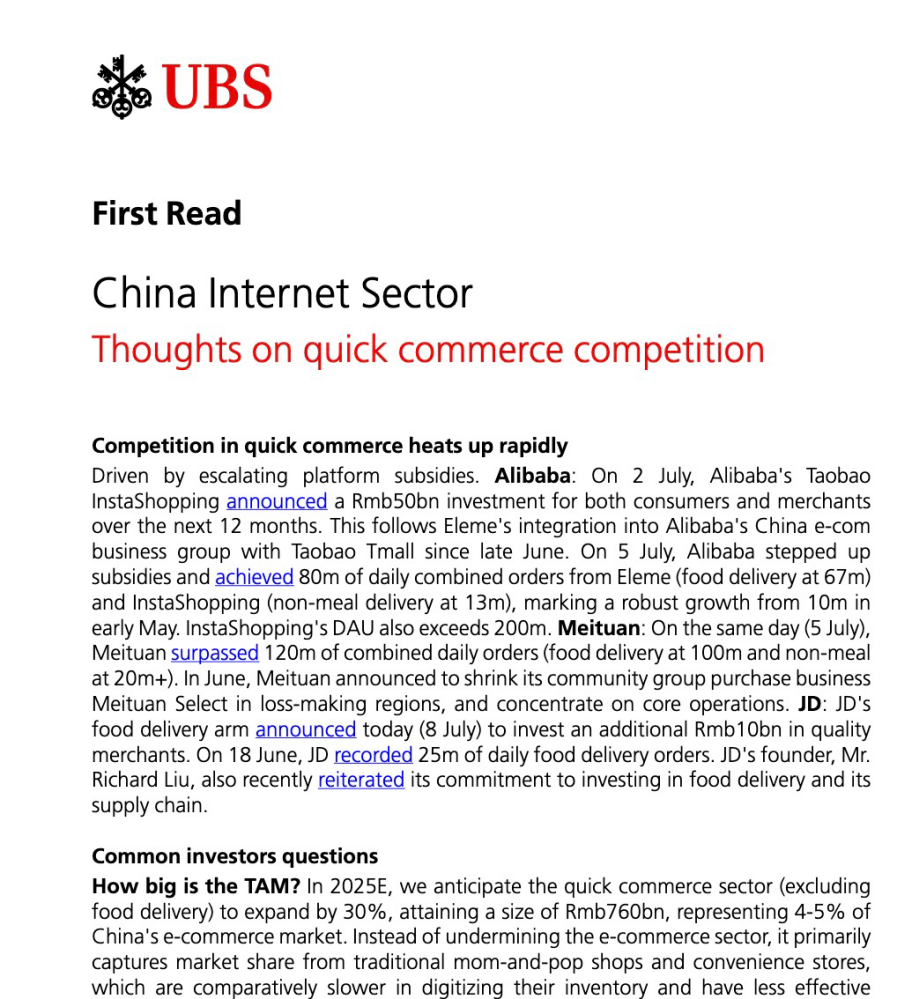
Core Viewpoint - The article discusses the intense competition in the food delivery market in China, particularly focusing on the aggressive subsidy strategies employed by major players like Meituan, Alibaba, and JD.com, and the implications of these strategies on market dynamics and consumer behavior [4][10][12]. Summary by Sections Market Dynamics - The food delivery market in China is experiencing a significant increase in order volume, with a record of 200 million orders on July 5, driven by substantial subsidies from major companies [4][10]. - Meituan, Alibaba, and JD.com are collectively burning through approximately 20 billion RMB monthly in subsidies, despite the average daily order volume being less than 100 million [4][10]. Company Strategies - Alibaba's delayed entry into the subsidy war is attributed to internal organizational adjustments and the need to consolidate its resources before launching a competitive response [6][7]. - The timeline of Alibaba's strategic moves includes integrating its food delivery service Ele.me into its e-commerce division and announcing a 50 billion RMB subsidy plan [8][10]. Competitive Landscape - The competition is characterized by a focus on resource allocation and execution rather than ethical considerations, with companies prioritizing market share over profitability [12][20]. - Meituan's strategic response to the competition includes a focus on maintaining high operational efficiency, which is seen as a critical factor in its market leadership [22]. Financial Implications - The intense competition has led to stock price declines for all major players, with JD.com down 20%, Meituan down 10.3%, and Alibaba down 16% since the onset of the subsidy war [16][18]. - The article highlights the fragile profitability model of the food delivery business, which relies heavily on subsidies to attract customers and maintain market share [21][22]. Future Outlook - The article suggests that the food delivery market may face a reckoning as companies struggle to balance aggressive growth strategies with sustainable profitability [19][22]. - The potential for new entrants like Pinduoduo and Douyin to disrupt the market is acknowledged, indicating that the competitive landscape may continue to evolve rapidly [22].