家电

Search documents
京东发布年度金榜:上榜商品销量增长率比普通商品高12倍
Xin Lang Cai Jing· 2025-12-09 23:45
12月9日,京东金榜年度盛典在上海举行,美的、华硕、飞利浦、韶音、小米、华为、三只松鼠、农夫 山泉、海澜之家、波司登、伯希和等超140个品牌单品获得年度金奖。数据显示,金榜上榜商品销量增 长率比普通商品高12倍,复购率高1倍。(智通财经记者 范佳来) ...

美的集团完成百亿股份回购 业绩高增托底累派现1382亿
Chang Jiang Shang Bao· 2025-12-09 23:33
登录新浪财经APP 搜索【信披】查看更多考评等级 长江商报消息 全球化科技集团美的集团(000333.SZ、00300.HK)的百亿元巨额回购完成了! 12月8日,美的集团发布公告称,公司100亿元股份回购方案已实施完毕。此次回购于2025年6月17日首 次启动,截至12月8日,累计回购股份1.35亿股,占公司总股本1.76%,总支付金额约100亿元,达到回 购方案金额上限。本次回购股份中的70%及以上将予以注销。 长江商报记者注意到,美的集团2025年抛出了两轮大手笔回购,除了上述百亿规模的回购外,还有一轮 15亿元至30亿元规模的回购方案正在实施中,目前已投入15.1亿元。 美的集团还通过稳定分红回报股东。数据显示,2013年上市以来,美的集团累计分红金额达1381.95亿 元,分红比例高达46%。 一年两次大手笔回购 历时半年,美的集团的巨额回购方案顶额完成。 美的集团表示,本次回购股份用于注销减资及实施股权激励或员工持股计划,其中70%及以上将用于注 销。公告显示,9500万股回购股份将依法注销,注销后公司总股本将降至约75.96亿股。 作为A股市场的回购常客,美的集团在2025年4月还抛出了一份最高 ...

财信证券晨会纪要-20251210
Caixin Securities· 2025-12-09 23:30
Market Strategy - The market is experiencing a volume contraction and fluctuation, with the computing hardware sector leading the gains [5][7] - The overall A-share market saw a decline of 0.55%, with the Shanghai Composite Index down by 0.37% and the Shenzhen Component Index down by 0.39% [7][8] - The innovation growth sector, represented by the ChiNext Index, increased by 0.61%, while the North Star 50 Index, representing small and medium-sized enterprises, fell by 1.72% [7][8] Industry Dynamics - In November 2025, the brand television market in China saw a shipment volume of approximately 3.22 million units, a year-on-year decrease of 15.7% [25] - In the first eleven months of 2025, China's crude oil imports increased by 3.2%, while natural gas imports decreased by 4.7% [27] - The overall trade value of goods in China for the first eleven months reached 41.21 trillion yuan, a year-on-year growth of 3.6% [28] Company Tracking - Midea Group (000333.SZ) announced that the total amount of share repurchase has reached 10 billion yuan, completing the repurchase plan [29][30] - Yuanli Co., Ltd. (300174.SZ) plans to acquire 49% of Clarimex to expand its presence in the American activated carbon market [31][33] - Zhengtai Electric (601877.SH) intends to purchase photovoltaic components from related parties, with a total amount not exceeding 3.5 billion yuan [34] - Yisheng Industrial (002458.SZ) reported a 10.27% year-on-year decline in the sales of white feather broiler chicks in November, while sales of breeding pigs increased by 203.74% [36] - Jingji Zhino (000048.SZ) sold 2.11 million pigs from January to November 2025, a year-on-year increase of 8.27% [38]
这一年 经济运行总体平稳、稳中有进(年终特别报道)
Ren Min Ri Bao· 2025-12-09 22:32
Economic Development - The year 2025 is significant for China's modernization process, with a focus on high-quality development and achieving major economic and social goals [1] - The Central Economic Work Conference has outlined systematic plans for 2025, emphasizing the development of various economies such as the "first release economy," "ice and snow economy," "silver-haired economy," "platform economy," "county economy," and "marine economy" [1][2] First Release Economy - The first release economy is gaining traction, with cities like Beijing, Shanghai, and Chengdu enhancing policy support to attract new brands and stores, thus tapping into domestic demand [1][3] - Chengdu has seen a significant increase in first stores, with 631 new stores established in the first three quarters of the year, making the concept of "catching the first release" a new lifestyle trend [5] Ice and Snow Economy - The ice and snow economy is evolving from a seasonal focus to year-round activities, with the industry expected to exceed 1 trillion yuan by 2025 [1][6] - Harbin is enhancing its ice and snow attractions with innovative features, including AI interactions and diverse shopping experiences, to boost consumer engagement during the ice and snow season [6][7] Silver-Haired Economy - The silver-haired economy is expanding, with tailored services for the elderly, such as specialized travel experiences and community engagement activities, reflecting a shift in consumption patterns towards quality and personalization [1][8] - In Yunnan, over 80% of tourists on specialized silver-haired travel trains are aged 60 and above, indicating the growing importance of this demographic in the tourism market [8][9] Platform Economy - The platform economy is transitioning from a "what to sell" model to a "what is needed" approach, enhancing consumer satisfaction through direct connections between platforms and manufacturers [1][10] - E-commerce platforms have significantly boosted domestic demand and facilitated foreign trade, with notable growth in agricultural product sales and a 5.5% increase in industry e-commerce transaction volumes [10][11] County Economy - The county economy is experiencing rapid growth, with initiatives like "Hundred Villages, Thousand Stays" promoting eco-tourism and local agricultural products, leading to increased income for rural communities [1][12] - In Luanchuan County, the integration of tourism and local agriculture has resulted in high occupancy rates for rural accommodations and significant revenue growth for local farmers [12][13] Marine Economy - The marine economy is advancing with a focus on green technologies, such as ammonia fuel for ships, aiming for zero carbon emissions in the shipping industry [1][14] - The marine engineering sector in Qingdao is witnessing robust growth, with a reported 16.9% increase in output value for the shipbuilding industry in the first ten months of the year [14][15] Bay Area Economy - The Guangdong-Hong Kong-Macau Greater Bay Area is fostering innovation and collaboration, with companies leveraging local resources for technological advancements and market expansion [1][16] - The synergy between Hong Kong's research capabilities and the manufacturing strengths of the Pearl River Delta is enhancing the commercialization of scientific innovations [16][17]
这一年,经济运行总体平稳、稳中有进(年终特别报道)
Ren Min Ri Bao· 2025-12-09 22:32
Group 1: Economic Development Trends - The year 2025 is significant for China's modernization process, with a focus on high-quality development and achieving major economic and social goals [10] - Key economic sectors highlighted include the "first launch economy," "ice and snow economy," "silver economy," platform economy, county economy, marine economy, and bay area economy, all of which are experiencing growth [11][12] Group 2: First Launch Economy - The first launch economy is gaining traction, with cities like Beijing, Shanghai, and Chengdu enhancing policy support to attract flagship stores and brands, becoming a vital driver for domestic demand [11] - Chengdu's first flagship store of the Swiss sports brand On opened in April, attracting significant customer traffic and showcasing a unique shopping experience [15][16] Group 3: Ice and Snow Economy - The construction of the Harbin Ice and Snow World is underway, with nearly 10,000 workers involved, and the park is set to cover 1.2 million square meters [17] - The ice and snow economy is evolving from a seasonal to a year-round industry, with projections indicating the industry scale will exceed 1 trillion yuan by 2025 [11][18] Group 4: Silver Economy - The silver economy is expanding, with tailored services for the elderly, such as the "Starry·Lanmei" themed tourist train, which caters to the needs of senior travelers [19] - The elderly demographic is becoming a significant force in the tourism market, with over 80% of travelers on certain routes being aged 60 and above [19][20] Group 5: Platform Economy - The platform economy is shifting from a "what to produce" model to a "what is needed" approach, enhancing consumer experience through direct subsidies and one-stop services [21][22] - E-commerce platforms are driving domestic demand growth and facilitating foreign trade transformation, with significant sales increases during promotional events [23] Group 6: County Economy - The county economy is thriving, with initiatives like "Hundred Villages, Thousand Lodgings" promoting rural tourism and local industries, leading to increased income for residents [24][25] - The county's tourism revenue reached 11.265 billion yuan, with over 15.45 million visitors recorded in the first ten months of the year [25] Group 7: Marine Economy - The marine economy is advancing with the delivery of the "Guoxin 1号2—2," a large smart fishing vessel, which will conduct year-round farming trials [26][27] - The focus on green and low-carbon initiatives is reshaping the shipping industry, with a significant portion of new vessels being designed for zero-carbon emissions [27] Group 8: Bay Area Economy - The Guangdong-Hong Kong-Macao Greater Bay Area is fostering innovation and collaboration, with companies leveraging regional strengths for technological advancements [29][30] - The integration of research and industry within the bay area is enhancing the commercialization of scientific achievements, creating a robust ecosystem for startups [30]


你追我赶与携手并肩(评论员观察)
Ren Min Ri Bao· 2025-12-09 22:14
Core Insights - The article emphasizes the importance of both innovation and collaboration among companies in similar industries to avoid competition that leads to price wars and instead focus on technological advancements [1][2][3] Group 1: Industry Trends - Companies in Shandong, such as Haier, Hisense, and Goer, are observed to share similar development strategies and industry layouts, focusing on industrial internet, smart connected vehicles, and urban governance [1] - The rise of new technologies like big data and artificial intelligence is seen as a critical opportunity for companies to align with market trends and user demands, leading to a competitive edge in high-quality development [2] - The transformation of the Chinese television industry from reliance on imports to becoming a global leader in sales is attributed to innovation across various domains, including hardware, software, and algorithms [2] Group 2: Innovation and Collaboration - The article highlights the necessity of collaborative efforts in technological breakthroughs, suggesting that modern scientific endeavors resemble an ecosystem rather than a linear production line [2] - A leading energy storage battery company in Zhuhai is actively recruiting industry experts to overcome technical challenges, demonstrating the importance of collective problem-solving for innovation [3] - The concept of "synergistic development" is emphasized, where companies must balance their growth with collaborative efforts to enhance their competitive advantages [3] Group 3: Strategic Positioning - Companies are encouraged to broaden their perspectives and identify their unique strengths to secure their market positions, avoiding the pitfalls of excessive competition [1][3] - The example of the "Six Little Dragons" in Hangzhou illustrates how companies can thrive in future industries by leveraging their specialized expertise while fostering open collaboration [3] - The article concludes that understanding the current landscape and carving out a distinct path is essential for sustainable growth and innovation in the industry [3][4]
小米人事重大调整,中国区总裁亲自下场“抓业绩”!
Mei Ri Jing Ji Xin Wen· 2025-12-09 14:24
Core Viewpoint - Xiaomi is undergoing a series of personnel adjustments in its China operations, focusing on key operational roles in mobile, automotive, and home appliance sectors to address performance pressures and enhance ecosystem synergy [1][5][6]. Group 1: Personnel Adjustments - Wang Xiaoyan, Senior Vice President and President of Xiaomi China, will take over as General Manager of the Sales Operations Division [3]. - Guo Jinbao, General Manager of the Jiangsu Branch, will become General Manager of the Sales Operations Division II while retaining his current role [3]. - Zhang Jian, former General Manager of the Automotive Sales and Service Division, will now lead the New Retail Division [3]. Group 2: Performance Pressures - Xiaomi's China operations are facing performance challenges, prompting Wang Xiaoyan to personally oversee efforts to boost sales [5]. - The smartphone sector is under pressure due to rising component costs, with expectations of significant price increases for products next year [5]. - In the automotive sector, Xiaomi reported a revenue of 28.3 billion yuan in Q3, achieving its first quarterly operating profit of 700 million yuan, but anticipates a decline in gross margin due to reduced purchase tax subsidies next year [5][6]. Group 3: Ecosystem Synergy - The personnel changes aim to break down silos between the smartphone, automotive, and home appliance divisions, which have previously operated independently [6][8]. - The adjustments are expected to facilitate resource sharing and improve operational efficiency across the ecosystem, allowing for better customer experience and cost reduction through centralized procurement [6][9]. - There is a potential plan to close underperforming stores to focus resources on high-potential locations, which may impact some offline services [8][9].


格力电器:年轻消费者普遍青睐简约的主流浅色系设计
Zheng Quan Ri Bao Wang· 2025-12-09 14:10
Core Insights - Gree Electric Appliances (000651) has identified a trend among young consumers favoring minimalist designs in light color schemes, indicating a shift in consumer preferences towards aesthetic and material quality [1] Company Insights - The company conducted research revealing that young consumers prefer products made from materials such as glass and acrylic, which are perceived as having a higher quality [1]

超1500亿元 四成以上为注销!A股年内回购大数据出炉
Zheng Quan Shi Bao· 2025-12-09 13:19
(原标题:超1500亿元 四成以上为注销!A股年内回购大数据出炉) 在政策引导、估值修复需求及股东回报优化等多重因素推动下,近年来,A股上市公司注销式回购的积 极性越来越高。 据数据统计,截至12月9日,年内发布股票回购计划的方案中,四成以上的回购目的为全部注销或部分 注销,较2024年的比例进一步提升。 今年以来,龙头公司回购股份积极性较高,带动回购实施金额超过1500亿元。数据显示,A股上市公司 年内已累计回购1507.95亿元。其中,美的集团以100亿元回购金额居首;接下来为贵州茅台、宁德时 代,分别回购60亿元和43.86亿元。此外,牧原股份、徐工机械、海康威视、通威股份等公司的回购金 额不低于20亿元,三安光电、三一重工、顺丰控股等多家公司的回购金额在10亿元以上。 对于今年以来,龙头公司积极回购股份的情况,排排网财富研究总监刘有华认为,一方面上市公司回购 股份,积极响应了新"国九条"等政策引导,借助专项贷款等支持降低回购成本;另一方面,当公司股价 被低估,回购股份传递了对未来经营的信心,并可能带来股价积极反应。 回购注销占比提升至40%以上 近年来,监管层大力倡导上市公司采用"注销式回购"等方式回 ...


周云杰与海尔智家的四年之困:难破2500亿市值魔咒?
Xin Lang Cai Jing· 2025-12-09 13:11
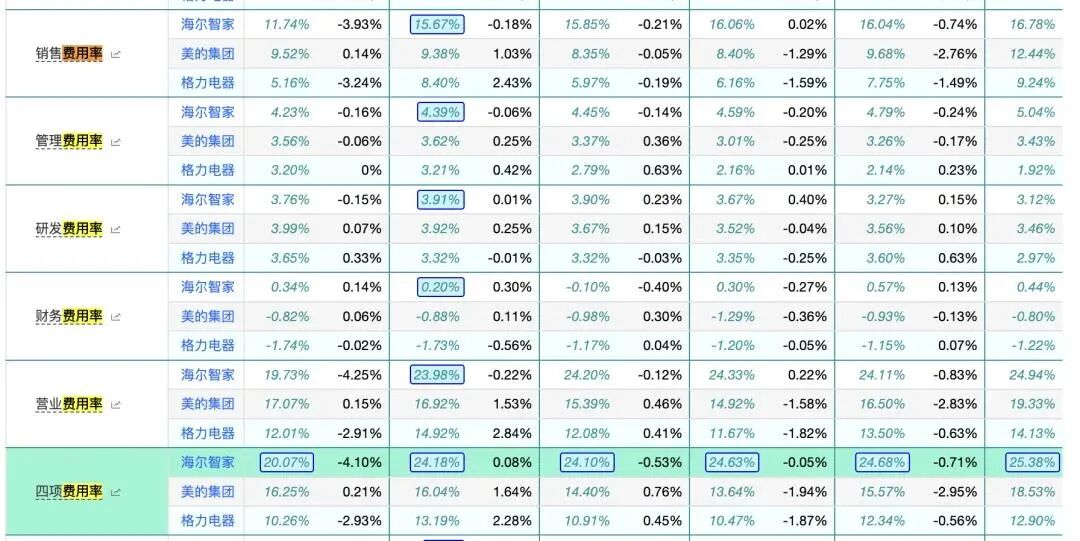
Core Viewpoint - Haier Smart Home has struggled to escape a low valuation trap, with its market capitalization hovering around 250 billion yuan for four years, while competitors like Midea have achieved significantly higher valuations through strategic narratives and business diversification [2][3][7]. Group 1: Market Perception and Valuation - Investors have two common misconceptions about Haier Smart Home: first, they incorrectly compare it directly with Midea, which has a market cap of approximately 600 billion yuan, leading to the belief that Midea has a dominant advantage in the home appliance market [4][5]. - The second misconception is regarding Haier's hidden assets, as many believe that Haier Smart Home does not represent the entire Haier Group, which has substantial off-balance-sheet assets. However, even when aggregating these assets, the total market value is only around 350 billion yuan [6]. - The core issue of Haier's valuation dilemma is the lack of narrative premium, as the market has grown weary of old stories and prefers companies that can present innovative technological narratives [7][8]. Group 2: Financial Performance and Efficiency - Under the leadership of Zhou Yunjie, Haier Smart Home's revenue increased from 227.5 billion yuan to over 280 billion yuan, and net profit rose from 11.8 billion yuan to 17.8 billion yuan, yet the market cap has remained stagnant [11]. - Haier Smart Home's current price-to-earnings (P/E) ratio is approximately 14 times, which is not low compared to Midea and Gree, but the company's profitability is hindered by high operational costs, leading to a low net profit margin of 6.9% compared to Midea's 9.5% [12][15]. - The company's high expense ratios, including a sales expense ratio of 11.7% and a management expense ratio of 4.2%, contribute to a total expense ratio that has reached 24.18%, significantly higher than Midea's 16.92% and Gree's 14.92% [16][18]. Group 3: Strategic Choices and Globalization - Haier's strategy over the past decade has focused on globalization and acquisitions, which has led to a complex organizational structure and high management costs, ultimately impacting profitability [19][20]. - The company has expanded its global footprint, with nearly 50% of its revenue coming from overseas markets, but the integration of acquired companies has proven challenging, leading to inefficiencies [20][21]. - Unlike Midea, which has focused on internal innovation and B2B transformation, Haier has faced difficulties in managing its expansive global operations, resulting in a scale trap where increased revenue does not translate to higher profits [22]. Group 4: External Market Pressures - Haier faces significant external pressures, including the waning of policy incentives that previously boosted the home appliance sector, with a reported 3.2% year-on-year decline in retail sales for the industry [23][24]. - The high-end segment, once a strong growth driver for Haier, has also shown signs of slowing, with sales growth for its premium brand, Casarte, declining from 14% in 2023 to 12% in 2024 [25]. - Additionally, growth in overseas markets has stagnated, with the Americas and Australia showing minimal growth rates of 2.4% and 1%, respectively, while other major markets are under significant pressure [26].