
租赁和商务服务业

Search documents
锐财经丨今年以来税收收入稳中有升
Ren Min Ri Bao Hai Wai Ban· 2025-09-24 01:59
Core Insights - The national general public budget revenue for the first eight months of this year reached 14.82 trillion yuan, showing a year-on-year growth of 0.3%, with the growth rate improving by 0.2 percentage points compared to the first seven months [1] - Tax revenue for the same period amounted to 12.11 trillion yuan, a slight increase of 0.02% year-on-year, marking the first positive cumulative growth [1][2] Tax Revenue Growth - Major tax categories maintained positive growth, with domestic value-added tax at 47,389 billion yuan (up 3.2%), domestic consumption tax at 11,523 billion yuan (up 2%), corporate income tax at 31,477 billion yuan (up 0.3%), and personal income tax at 10,547 billion yuan (up 8.9%) [2] - Manufacturing and financial sectors showed rapid tax revenue growth, with manufacturing accounting for over 30% of total tax revenue and experiencing growth rates exceeding 5% [2] - High-end manufacturing sectors, such as railway, shipbuilding, aerospace, and other transportation equipment manufacturing, saw tax revenue growth exceeding 30% [2] Economic Factors Supporting Tax Revenue - The increase in tax revenue is attributed to a series of effective policies and a stable economic environment, leading to high-quality development [4] - The capital market's active trading in July and August contributed significantly, with the Shanghai Composite Index surpassing 3,800 points and A-share total market value exceeding 100 trillion yuan [4] - Tax revenue from the securities industry grew over 70%, while insurance industry tax revenue increased by over 10% during the same period [4] Compliance and Taxpayer Awareness - Enhanced awareness of lawful and honest tax payment among taxpayers has been noted, supported by tax authorities' efforts in promoting compliance and fair taxation [5] - The increase in tax revenue is also influenced by a lower base from the previous year, which may lead to a potential decline in growth rates in the fourth quarter due to a higher base effect [5] Fiscal Expenditure and Policy Outlook - National general public budget expenditure has been growing, with social security and employment spending increasing by 10% and education spending by 5.6% in the first eight months [8] - The overall fiscal situation is improving, with expectations for continued positive trends in revenue and expenditure in the latter half of the year [8] - Future tax administration will focus on legal fairness and compliance management to foster a favorable business environment for high-quality economic development [8]
(活力中国调研行)海南外资企业突破万户 逾七成系近五年入驻
Zhong Guo Xin Wen Wang· 2025-09-24 01:11
Core Insights - Hainan has surpassed 10,000 foreign-funded enterprises, with 74% established after June 1, 2020 [1] - The number of foreign enterprises in Hainan is projected to reach 10,690 by August 2025, marking a year-on-year growth of 13.61%, maintaining the highest growth rate in the country for eight consecutive months [1] - The majority of foreign enterprises are concentrated in Haikou and Sanya, accounting for 58.34% and 17.82% respectively, with key industries being wholesale and retail, leasing and business services, and information technology services, which together represent 63.5% of the total [1] Industry Distribution - The foreign enterprises in Hainan are primarily involved in wholesale and retail, leasing and business services, and information transmission, software, and information technology services [1] - Notable international companies such as LVMH from France, Richemont from Switzerland, De Beers from the UK, and Dun & Bradstreet from the USA have established operations in Hainan, covering sectors like consumer goods, healthcare, finance, and digital economy [1] Regulatory Innovations - Hainan has implemented a series of innovative measures in the registration of foreign enterprises, including the direct registration system for foreign companies, allowing them to operate in service trade without establishing a Chinese entity [1] - Future upgrades to the market entity registration platform will include multilingual guidance services and AI response systems, enhancing online identity verification for foreigners and expanding electronic service coverage [2]
7、8月份增幅均超过5% 今年以来税收收入稳中有升
Ren Min Ri Bao· 2025-09-24 00:44
Core Insights - The national general public budget revenue for the first eight months of this year reached 14.82 trillion yuan, a year-on-year increase of 0.3%, with the growth rate improving by 0.2 percentage points compared to the first seven months [1] - Tax revenue amounted to 12.11 trillion yuan, showing a slight increase of 0.02% year-on-year, marking the first positive cumulative growth [1] Tax Revenue Growth - Major tax categories maintained positive growth, with total tax revenue (excluding export tax rebates) increasing by 2% in the first eight months [2] - Key tax types included domestic value-added tax at 47,389 billion yuan (up 3.2%), domestic consumption tax at 11,523 billion yuan (up 2%), corporate income tax at 31,477 billion yuan (up 0.3%), and personal income tax at 10,547 billion yuan (up 8.9%) [2] - Manufacturing and financial sectors showed rapid tax revenue growth, with manufacturing accounting for over 30% of total tax revenue and experiencing a growth rate exceeding 5% [2] Economic Factors Supporting Tax Revenue - The increase in tax revenue is attributed to a series of effective policies and a stable economic environment, leading to high-quality development [4] - The capital market's active trading contributed significantly, with the Shanghai Composite Index surpassing 3,800 points and A-share total market value exceeding 100 trillion yuan [4] - Tax revenue from the securities industry grew over 70%, while insurance industry tax revenue increased by more than 10% [4] Compliance and Taxpayer Awareness - There has been a noticeable enhancement in taxpayers' awareness of lawful and honest tax payment, supported by tax authorities' efforts in promoting compliance and fair taxation [5] - The increase in tax revenue in recent months is also influenced by a lower base of tax revenue from the previous year [5] Fiscal Expenditure and Policy Outlook - National general public budget expenditure has been growing, with social security and employment spending increasing by 10% and education spending by 5.6% in the first eight months [8] - The overall fiscal situation is improving, indicating a positive economic outlook, with expectations for continued favorable trends in fiscal revenue and expenditure [8]
7、8月份增幅均超过5%——今年以来税收收入稳中有升
Xin Hua Wang· 2025-09-23 23:30
Core Insights - The overall public budget revenue in China for the first eight months of the year reached 14.82 trillion yuan, showing a year-on-year growth of 0.3%, with tax revenue slightly increasing by 0.02% to 12.11 trillion yuan, marking the first positive cumulative growth [2][3] Tax Revenue Growth - Major tax categories, including domestic value-added tax, domestic consumption tax, corporate income tax, and personal income tax, all maintained positive growth in the first eight months [3] - Domestic value-added tax amounted to 47,389 billion yuan, up 3.2% year-on-year; domestic consumption tax reached 11,523 billion yuan, increasing by 2%; corporate income tax was 31,477 billion yuan, with a growth of 0.3%; personal income tax totaled 10,547 billion yuan, rising by 8.9% [3] - The manufacturing and financial sectors exhibited rapid tax revenue growth, with manufacturing accounting for over 30% of total tax revenue and showing an increase of over 5% [3] Economic Factors Supporting Tax Revenue - The increase in tax revenue is attributed to a series of effective policies and a stable economic environment, leading to high-quality development [5][6] - The capital market's activity significantly contributed to tax revenue, with the Shanghai Composite Index surpassing 3,800 points in August, and daily stock trading volume averaging 2.3 trillion yuan [6] - Enhanced compliance and tax awareness among taxpayers, driven by tax authorities' efforts, have also supported tax revenue growth [6][7] Fiscal Expenditure and Policy Outlook - National public budget expenditure has been on the rise, with social security and employment spending increasing by 10% and education spending by 5.6% in the first eight months [8] - The overall fiscal situation is improving, with expectations for continued positive trends in revenue and expenditure in the latter half of the year [8]

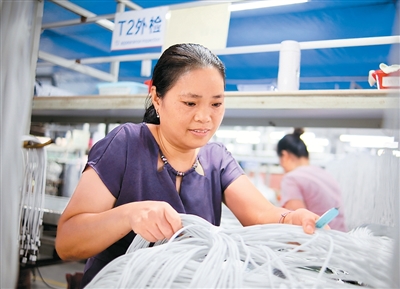
今年以来税收收入稳中有升(锐财经)
Ren Min Ri Bao· 2025-09-23 22:52
Core Insights - The overall public budget revenue for the first eight months of the year reached 14.82 trillion yuan, showing a year-on-year growth of 0.3%, with the growth rate improving by 0.2 percentage points compared to the first seven months [1] - Tax revenue amounted to 12.11 trillion yuan, a slight increase of 0.02% year-on-year, marking the first positive cumulative growth [1] Tax Revenue Growth - Major tax categories maintained positive growth, with total tax revenue (excluding export tax rebates) increasing by 2% in the first eight months [2] - Key tax types included domestic value-added tax at 47,389 billion yuan (up 3.2%), domestic consumption tax at 11,523 billion yuan (up 2%), corporate income tax at 31,477 billion yuan (up 0.3%), and personal income tax at 10,547 billion yuan (up 8.9%) [2] - Manufacturing and financial sectors showed rapid tax revenue growth, with manufacturing accounting for over 30% of total tax revenue and experiencing growth rates above 5% [2] Economic Factors Supporting Tax Revenue - The increase in tax revenue in recent months is attributed to the robust performance of major tax types, indicating a positive economic recovery and active capital markets [4] - The capital market's activity significantly contributed to tax revenue, with the Shanghai Composite Index surpassing 3,800 points and A-share total market value exceeding 100 trillion yuan [4] - Enhanced taxpayer compliance and awareness of legal tax obligations have also supported tax revenue growth [5] Fiscal Expenditure and Policy Outlook - Public budget expenditure has been on the rise, with social security and employment spending increasing by 10% and education spending by 5.6% in the first eight months [8] - The overall fiscal situation is improving, with expectations for continued positive trends in revenue and expenditure in the latter half of the year [8] - The tax authorities plan to maintain a fair legal framework and optimize management practices to foster a conducive environment for high-quality economic development [8]
【宏观经济】一周要闻回顾(2025年9月17日-9月23日)
乘联分会· 2025-09-23 08:39
Core Viewpoint - The article highlights the growth in tax revenue and public budget income in China for the first eight months of 2025, indicating a stable economic recovery and increased activity in various sectors, particularly manufacturing and capital markets [2][3][4]. Tax Revenue Summary - Tax revenue for the first eight months of 2025 increased by 2% year-on-year, with significant growth observed in July and August [2][3]. - Major tax categories such as domestic value-added tax, domestic consumption tax, corporate income tax, and personal income tax all showed positive growth [2]. - Manufacturing and financial sectors contributed to a robust tax revenue increase, with high-end manufacturing sectors like railways, shipbuilding, and aerospace seeing tax revenue growth exceeding 30% [2][3]. Public Budget Income and Expenditure - The general public budget revenue for the first eight months reached 148,198 billion yuan, reflecting a year-on-year growth of 0.3% [4][6]. - Tax revenue accounted for 121,085 billion yuan, with a slight increase of 0.02%, while non-tax revenue was 27,113 billion yuan, growing by 1.5% [6]. - Central government budget revenue decreased by 1.7% to 64,268 billion yuan, while local government revenue increased by 1.8% to 83,930 billion yuan [6]. Key Tax Revenue Items - Domestic value-added tax amounted to 47,389 billion yuan, growing by 3.2% [7]. - Domestic consumption tax reached 11,523 billion yuan, with a growth of 2% [8]. - Corporate income tax totaled 31,477 billion yuan, showing a modest increase of 0.3% [9]. - Personal income tax grew significantly by 8.9%, totaling 10,547 billion yuan [10]. - Notably, securities transaction stamp duty surged by 81.7%, amounting to 1,187 billion yuan [15]. Government Fund Budget - Government fund budget revenue for the first eight months was 26,449 billion yuan, a decrease of 1.4% [33]. - Fund budget expenditure increased significantly by 30%, totaling 62,602 billion yuan [34]. Foreign Investment Overview - In the first eight months of 2025, foreign investment in China reached 506.58 billion yuan, with a decrease of 12.7% year-on-year [35][38]. - The manufacturing sector attracted 129.03 billion yuan, while the service sector received 366.19 billion yuan in foreign investment [38]. E-commerce Development - E-commerce in China continued to grow steadily, with online retail sales increasing by 9.6% in the first eight months [41]. - The growth in online sales of digital products was particularly strong, with smart wearables, computers, and mobile phones seeing increases of 25.2%, 23.7%, and 20.2% respectively [41]. - The article also notes the significant role of artificial intelligence in enhancing e-commerce operations and consumer engagement [41].

【华龙策略】周报:市场中长期将继续稳健运行
Sou Hu Cai Jing· 2025-09-22 15:16
Group 1 - Growth style shows strong resilience, with growth and cyclical indices rising by 0.29% and 0.04% respectively, while other styles adjusted downwards, particularly the financial sector [3][5] - In August, the industrial added value increased by 5.2% year-on-year, with significant growth in high-tech manufacturing at 9.3% and equipment manufacturing at 8.1% [6][10] - The service sector's production index grew by 5.6% year-on-year in August, with information transmission and software services growing by 12.1% [6][10] Group 2 - The Federal Reserve cut interest rates by 25 basis points, marking the first rate cut in nine months, primarily due to a weakening labor market and economic slowdown [4][8] - The market is expected to continue steady operation in the medium to long term, despite recent adjustments caused by significant declines in the financial sector [10][11] - Investment opportunities are identified in technology and advanced manufacturing sectors, with a projected increase in R&D investment to over 3.6 trillion yuan in 2024, a 48% increase from 2020 [5][11] Group 3 - The "anti-involution" policy is promoting high-quality industrial development, with positive price changes observed in some sectors [5][11] - Domestic demand policies are expected to create opportunities in industries such as machinery, home appliances, and consumer electronics [5][11] - Fixed asset investment from January to August grew by 0.5%, with infrastructure investment increasing by 2.0% [6][10]

1-8月,济南市规模以上工业实现增加值同比增长8.1%
Qi Lu Wan Bao Wang· 2025-09-22 15:10
Economic Overview - Jinan's economy showed overall stability in the first eight months of 2023, with a focus on implementing national macro policies effectively [1] - The city's industrial production increased significantly, with a year-on-year growth of 8.1% in the value added of above-scale industries [1] Industrial Performance - The six key industries in Jinan experienced a combined value added growth of 13.0%, surpassing the overall industrial growth by 4.9 percentage points [1] - The computer, communication, and other electronic equipment manufacturing sectors saw remarkable growth, with increases of 63.3% and 27.6% in the automotive manufacturing sector [1] - The equipment manufacturing industry maintained a strong growth rate of 21.3%, contributing 9.6 percentage points to the overall industrial growth [1] - High-tech manufacturing also performed well, with a year-on-year growth of 21.1%, contributing 4.2 percentage points to the overall industrial growth [1] Service Sector - The service sector showed steady growth, with above-scale service industry revenues reaching 275.54 billion yuan, a year-on-year increase of 6.0% [2] - Among the ten major service sectors, eight reported revenue growth, with transportation, storage, and postal services generating 115.58 billion yuan, up 5.2% [2] - The leasing and business services sector achieved a revenue of 45.68 billion yuan, growing by 15.9% [2] - Private enterprises in the above-scale service sector generated 109.12 billion yuan, accounting for 39.6% of the total service revenue, with an 8.8% growth rate [2] Retail and Consumption - Retail sales in Jinan showed a stable growth, with a total retail sales of consumer goods reaching 131.92 billion yuan, a year-on-year increase of 2.1% [3] - Basic living goods performed well, with food and oil retail sales increasing by 5.8% and daily necessities by 8.4% [3] - Online consumption remained active, with retail sales through public networks reaching 35.26 billion yuan, growing by 21.2% [3] - The "trade-in" policy positively impacted sales, with significant growth in communication equipment (34.7%), cultural and office supplies (32.5%), and new energy vehicles (12.8%) [3] Financial and Trade Performance - Financial institutions in Jinan reported a total deposit balance of 3.19063 trillion yuan, a growth of 6.9% year-to-date [4] - The total loan balance reached 3.42752 trillion yuan, increasing by 10.2% since the beginning of the year [4] - Jinan's foreign trade saw rapid growth, with total imports and exports reaching 178.03 billion yuan, a year-on-year increase of 26.2% [4] - Exports amounted to 118.16 billion yuan (up 21.7%), while imports were 59.87 billion yuan (up 36.3%) [4] - Private enterprises accounted for 59.5% of the total trade, with a total of 105.92 billion yuan in imports and exports, growing by 17.5% [4] Price Trends - The Consumer Price Index (CPI) in Jinan increased by 0.2% cumulatively in the first eight months, with a year-on-year decrease of 0.8% in August [5] - Prices of eight major categories of goods and services showed a "five up, three down" trend, with healthcare and living services rising by 0.3%, clothing by 1.6%, and education and entertainment by 5.8% [5] - Conversely, housing prices decreased by 0.6%, food and tobacco prices fell by 1.7%, and transportation and communication prices dropped by 2.9% [5]
信阳市公布8月份全市经济运行情况 主要经济指标保持稳增
Sou Hu Cai Jing· 2025-09-22 10:32
Economic Overview - The economic operation of Xinyang City remains stable and resilient, with major economic indicators showing steady growth and improved development quality [1][5] - The city has implemented a "1+2+4+N" target task system focusing on stabilizing employment, enterprises, markets, and expectations [1] Industrial Performance - In August, the industrial production in Xinyang City saw a year-on-year increase of 8.2%, matching the provincial growth rate [1] - Among 33 industrial sectors, 23 reported growth, with a growth coverage of 69.7% [1] - The manufacturing sector showed strong support, with a 10.0% year-on-year increase in manufacturing value added, contributing 8.0 percentage points to the overall industrial growth [1] - Key industries such as biomedicine, equipment manufacturing, green food, and green home products experienced significant growth, with increases of 18.6%, 13.2%, 13.2%, and 8.8% respectively [1] Fixed Asset Investment - From January to August, fixed asset investment in Xinyang City grew by 5.8%, surpassing the provincial growth rate by 1.1 percentage points [2] - Industrial investment saw a substantial increase of 34.9%, significantly higher than the provincial rate of 14.4% [2] - Major project investments contributed positively, with investments in projects worth over 100 million yuan increasing by 11.0%, driving overall investment growth by 7.3 percentage points [2] Consumer Market - The retail market in Xinyang City maintained growth, with total retail sales of consumer goods reaching 9.61 billion yuan in August, a year-on-year increase of 4.7% [3] - Over 60% of retail categories saw growth, with 13 out of 21 categories in the above-limit units reporting year-on-year increases [3] - Basic living consumption remained stable, with significant growth in food and clothing retail sales [3] Emerging Industries - The high-tech industry in Xinyang City showed promising growth, with a year-on-year increase of 7.2% in high-tech industrial value added [4] - Investment in high-tech manufacturing increased by 31.0%, significantly outpacing the overall investment growth rate [4] - The modern service sector also demonstrated vitality, with substantial revenue growth in cultural, sports, and entertainment industries [4] Challenges and Future Outlook - Despite the overall positive economic performance, challenges remain for enterprises, particularly in key industries [5] - The city aims to continue focusing on the "1+2+4+N" target system to navigate current challenges and enhance economic momentum [5]
前8月规上工业总产值破3万亿元
Su Zhou Ri Bao· 2025-09-21 01:58
Economic Overview - Suzhou's economy shows resilience and vitality with key indicators reflecting stable overall performance and high-quality development, achieving an industrial output value exceeding 30 trillion yuan by August [1] - The total import and export volume reached 17,608.7 billion yuan, indicating a year-on-year growth of 5.4% [7] Industrial Production and Investment - Industrial output value for the first eight months reached 31,264.4 billion yuan, with a year-on-year growth of 4.0%, and industrial investment completed at 1,527.7 billion yuan, growing 11.3% [2][3] - Key industries such as electronic information and electrical machinery saw significant investment growth of 17.3% and 27.7% respectively [3] New Industries and Economic Drivers - High-tech industries achieved an output value of 17,740.3 billion yuan, growing 6.5% year-on-year, accounting for 56.7% of the total industrial output [4] - New product outputs, including optical devices and industrial robots, saw substantial increases of 10.9% and 28.1% respectively [4] Service Sector Growth - The service sector's revenue grew by 8.0% year-on-year, with modern services such as leasing and business services increasing by 12.6% [5] - The logistics sector showed robust performance, with freight turnover increasing significantly across various transport modes [5] Consumer Market Trends - Social retail sales totaled 6,084.3 billion yuan, reflecting a 3.2% year-on-year increase, with basic living goods performing well [6] - Policies to boost consumption have shown effectiveness, particularly in household appliances and cultural products [6] Foreign Trade Developments - The total import and export volume for the first eight months reached 17,608.7 billion yuan, with exports growing by 7.1% [7] - Trade with Belt and Road countries increased by 15.1%, highlighting successful market expansion efforts [7] Financial Sector Performance - Financial institutions reported a deposit balance of 56,715.0 billion yuan, growing 5.7%, and a loan balance of 59,635.0 billion yuan, increasing by 7.1% [8] - The number of newly listed companies reached 11, with a total of 276 companies listed by the end of August [9]