房地产

Search documents
总经理离任后开启高管选聘 珠江人寿经营困局仍待解
Bei Jing Shang Bao· 2025-12-26 02:01
Core Viewpoint - The insurance industry is experiencing a wave of executive recruitment, with Zhujiang Life Insurance Co., Ltd. seeking to fill five senior management positions, including a general manager, amid ongoing operational challenges and a lack of transparency in financial reporting [1][3]. Group 1: Executive Recruitment - Zhujiang Life is publicly recruiting for five senior management roles, including general manager, CFO, board secretary, chief investment officer, and chief compliance officer, with a deadline for applications set for January 15, 2026 [1]. - The previous general manager, Fu Anping, has left the company, and Zhujiang Life aims to fill key management gaps through this recruitment drive, which is uncommon in the insurance sector [2]. Group 2: Company Background and Challenges - Established in 2012, Zhujiang Life is the only national life insurance company headquartered in Guangzhou, with shareholders including Guangdong Zhujiang Investment Holding Group Co., Ltd. and Guangzhou Financial Holdings Group Co., Ltd. [3]. - The company initially thrived by leveraging an "asset-driven liability" model during a booming real estate market, achieving profitability by 2015 [3]. Group 3: Financial Difficulties - Zhujiang Life has faced significant challenges as the real estate sector has entered a downturn, leading to investment risks. In 2021, the company reported overdue investments totaling 3.5 billion yuan in a real estate project [4]. - As of the end of Q4 2021, Zhujiang Life's core and comprehensive solvency adequacy ratios were 52.02% and 104.04%, respectively, indicating a precarious financial position [5]. - The company has ceased disclosing solvency information since 2022, raising concerns about its operational transparency and future performance [5].
明年房地产如何去库存?丨落实会议部署 问答中国经济
证券时报· 2025-12-26 00:55
Core Viewpoint - The article emphasizes the importance of effectively reducing real estate inventory as a key measure to stabilize the real estate market in the coming year, highlighting the need for coordinated efforts on both supply and demand sides [1][4]. Group 1: Inventory Reduction Strategies - The national inventory of unsold commercial housing has been decreasing for nine consecutive months since March, yet it still exceeds 750 million square meters as of the end of November, indicating significant inventory pressure [1]. - Revitalizing existing stock through the acquisition of surplus housing for affordable housing is a crucial strategy. This approach not only accelerates inventory reduction but also alleviates financial pressure on some real estate companies [2]. - The progress of the stock acquisition policy has been slow due to challenges such as funding sources, pricing mechanisms, and project selection criteria. Future efforts will focus on optimizing related policies to enhance local government autonomy in acquisition [2]. Group 2: Supply-Side Measures - The shift in urban development from large-scale expansion to improving existing stock necessitates a focus on quality housing rather than merely increasing supply. This includes limiting land supply in high-inventory areas to prevent exacerbating the inventory issue [2]. - The construction of high-quality housing is expected to stimulate demand for upgrading and improving living conditions, with an emphasis on orderly development to avoid short-term disruptions to existing inventory [2]. Group 3: Demand-Side Measures - The real estate market shows significant differentiation across cities, requiring targeted measures to unleash residents' rigid and improvement-driven housing demands. Policies may include loosening restrictions in first-tier cities and providing subsidies and housing fund support in others [3]. - Financial support policies, particularly regarding housing funds, are anticipated to strengthen, potentially including higher loan limits, lower down payments and interest rates, and expanded usage of funds to lower purchasing costs [3]. - The ongoing urbanization process is expected to continue driving the demand for housing among new urban residents, while the potential for upgrading existing housing remains substantial due to rising living standards [4].


开源晨会-20251226
KAIYUAN SECURITIES· 2025-12-26 00:38
Group 1: Strategy and Market Trends - The report emphasizes the rise of "portfolio management" as a crucial strategy in the public fund industry, driven by the need for a structural transformation from focusing on scale to prioritizing returns and clients [5][6] - The "Action Plan" released by the China Securities Regulatory Commission in May 2025 marks a significant shift towards standardized, professional, and long-term fund management practices [5][6] - The report outlines the challenges faced by public funds in transitioning to portfolio management, including the need for a shift in performance assessment from short-term to long-term metrics [8] Group 2: Electric Vehicle Industry - In November 2025, the sales of new energy vehicles in nine European countries reached 281,000 units, reflecting a year-on-year increase of 39%, with a penetration rate of 34.3% [10][11] - The report highlights significant growth in electric vehicle sales in Germany, France, and Italy, driven by government subsidies and increasing consumer demand [11][12] - Investment recommendations include companies in the lithium battery sector such as CATL and Yiwei Lithium Energy, as well as lithium material producers like Hunan Youneng and Tianqi Lithium [13] Group 3: Semiconductor Industry - The semiconductor sector is experiencing a price uptrend due to increased demand from AI and supply-side capacity shortages, with foundries like SMIC announcing price hikes of around 10% [15][16] - The report notes that NAND and DRAM prices have surged significantly, with indices showing increases of 173% and 169% respectively since July [18] - Key beneficiaries in the semiconductor space include foundries like SMIC and storage companies such as Jiangbo Long and Zhaoyi Innovation [19] Group 4: Real Estate Industry - Beijing's recent policy changes to relax purchase restrictions for non-local families aim to stimulate the housing market, with adjustments to social security requirements and mortgage rates [21][22] - The report indicates that the sales performance of China Jinmao has been strong despite market fluctuations, with projected net profits of 11.1 billion, 15.6 billion, and 16.2 billion yuan for 2025-2027 [35][37] - Investment recommendations focus on high-credit real estate firms that can capitalize on improving market conditions, such as Greentown China and China Overseas Land & Investment [26][36] Group 5: Company-Specific Developments - Lingyi Technology plans to acquire 35% of Limin Da for 875 million yuan, enhancing its capabilities in AI server cooling and power supply [27][28] - Jin Gu Co., a leading automotive wheel manufacturer, is transitioning to a diversified new materials technology platform, with projected revenues of 42.78 billion, 61.08 billion, and 88.82 billion yuan from 2025 to 2027 [32][33] - The report highlights the strategic shift of Jin Gu Co. towards new applications in electric two-wheelers and robotics, leveraging its innovative materials [34]


财经慧说|明年房地产市场怎么稳?更多信息量来了
Xin Hua Wang· 2025-12-26 00:07
主编:于佳欣、刘夏村 记者:刘慧、王优玲 拍摄:郝晓江、刘晓霞 制作:胡戈、刘羽佳 新华社国内部出品 策划:邹伟 【纠错】 【责任编辑:王萌萌】 ...
上周南京二手房成交1772套,环比增长10.8%
Xin Lang Cai Jing· 2025-12-25 17:23
Core Insights - The Nanjing real estate market showed a significant increase in second-hand housing transactions, with 1,772 units sold last week, representing a week-on-week growth of 10.8% and an average daily transaction of 253 units, surpassing the 10-week average by 11.2% [1] - Cumulatively, the market recorded 4,849 transactions in December, reflecting a year-on-year growth of 0.4% [1] Transaction Details - The most sold properties were in the 60-90 square meters range, accounting for 36.1% of total transactions, followed by the 90-120 square meters range at 28.1%. Properties sized between 60-120 square meters made up 64.1% of total sales [1] - Properties priced under 1 million yuan represented the highest share at 44.3%, while those priced between 1 million and 2 million yuan accounted for 33.3%. Overall, properties priced below 2 million yuan dominated the market, making up 77.6% of total transactions [1] Pricing Trends - The average transaction price for properties sold last week was 1.49 million yuan, showing a week-on-week decrease of 2.3%. The highest average transaction price was recorded in Jianye District at 2.615 million yuan, followed by Gulou District at 1.951 million yuan [1] - The average price per square meter for transactions was 16,413 yuan, reflecting a week-on-week increase of 1%. Gulou District had the highest average price per square meter at 25,655 yuan, closely followed by Jianye District at 25,654 yuan [1] - The average listing price for newly added properties was 21,460 yuan per square meter, which is a week-on-week increase of 6% [1]
人民币汇率破7重返6时代,你的资产将如何变动?
Sou Hu Cai Jing· 2025-12-25 16:25
企业出口高增的结汇需求在年底集中释放,而美联储一再降息推动的美元走弱趋势,共同将人民币重新推回6时代。 2025年12月25日,离岸人民币对美元即时汇率升破7.0大关。自今年4月触及低点7.3498后,人民币呈现"先抑后扬、震荡走升"的趋势,最终在年末重返"6时 代"。 从宏观经济角度看,这一变化不仅是中国经济超市场预期与美元走弱交织共振的结果,更将直接影响到每个人的投资决策和资产配置。 01 汇率破局 人民币对美元中间价报7.0392,较前一交易日上调79个基点。这一关键心理关口的突破,标志着自2024年9月以来人民币首次回到7以下水平。 回顾2025年全年,人民币汇率走出了一条明显的V型轨迹。Wind资讯数据显示,在岸人民币对美元汇率从4月9日的年内最低点7.3498开始震荡上行。 截至5月底已上涨1.48%,随后持续走强直至突破7.0关口。与此同时,美元指数从年初的109高位一路下滑,年内累计下跌超过8%,目前已回落至100以内。 截至2025年第一季度,外资仅持有A股市值的3.4%,这限制了资金流入带来的实质提振作用。 02 升值动力 此次人民币汇率升值的背后,是国内经济韧性与外部环境变化共同作用的结 ...

滨江集团董事长戚金兴配偶2600万元购买自家商业大平层一套
Mei Ri Jing Ji Xin Wen· 2025-12-25 14:41
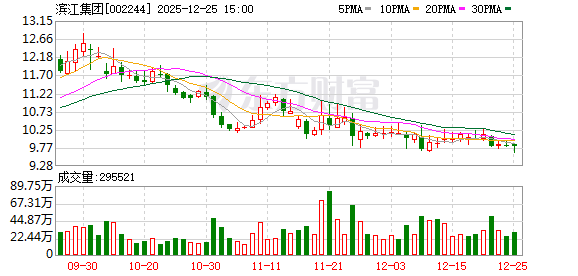
公开资料显示,揽奥望座项目位于杭州市萧山区,规划用地面积1.8万平方米,计容规划建筑面积7.56万 平方米。第三方购房平台显示,揽奥望座均价约46000元/平方米,套均价格约1300万元。 公告显示,上述关联交易的价格根据该项目商业大平层相关销售政策确定,交易价格公平合理。俞理立 拟与滨澳公司签署《商品房买卖合同》,合同条款及内容与普通购买者一致,未做其他特殊约定。 揽奥望座项目商业大平层,标的资产产权清晰,不存在抵押、质押及其他任何限制转让的情况,也不涉 及诉讼、仲裁事项或查封、冻结等司法措施,亦不存在妨碍权属转移的其他情况。 (文章来源:每日经济新闻) 12月25日,滨江集团(SZ002244,股价9.81元,总市值305.2亿元)发布关联交易公告称,因个人需 求,俞理立以总价2600.6168万元购买滨江集团控股子公司杭州滨澳房地产开发有限公司(以下简称滨 澳公司)开发的揽奥望座商业大平层一套。 俞理立为公司董事长戚金兴配偶,根据《深圳证券交易所股票上市规则》的相关规定,俞理立为滨江集 团的关联自然人,本次交易构成关联交易。 公司独立董事已就本次关联交易事项召开了专门会议并发表了同意的独立意见。2025 ...

兴业证券:哪些行业股价与人民币汇率相关性较强?
智通财经网· 2025-12-25 12:13
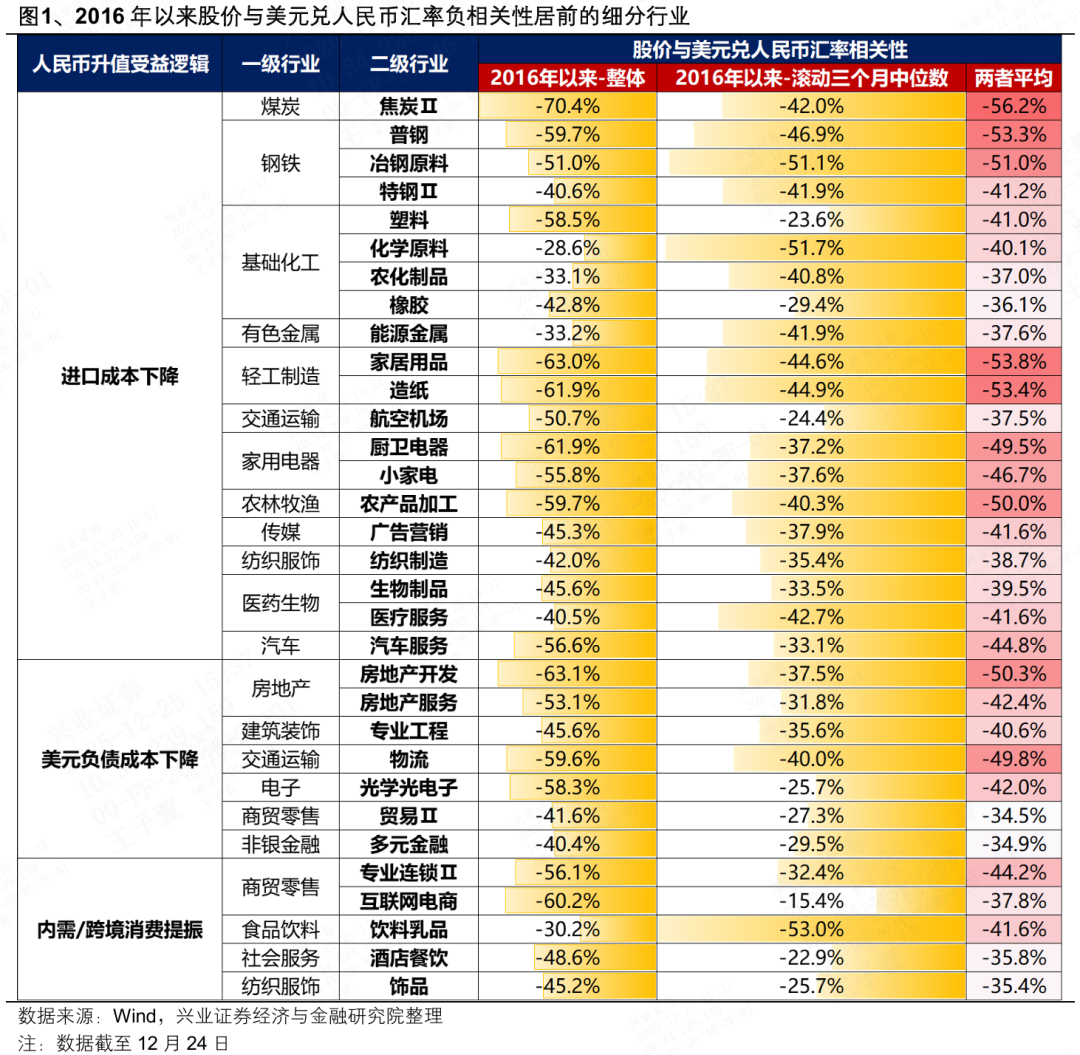
Core Viewpoint - The report from Industrial Securities highlights the negative correlation between stock prices and the USD/CNY exchange rate since 2016, indicating that a stronger RMB tends to drive stock prices higher across various sectors [1] Group 1: Industries Benefiting from RMB Appreciation - Industries with high reliance on imported raw materials benefit from RMB appreciation, leading to reduced import costs. Key sectors include coke, steel, certain chemicals (plastics, chemical raw materials, agricultural chemicals, rubber), energy metals, paper, airport operations, and agricultural product processing [1] - The construction and real estate sectors, which have high USD-denominated debt, see a decrease in financing costs due to RMB appreciation. This includes real estate development, real estate services, and specialized engineering [1] - The service and high-end consumption sectors, such as cross-border e-commerce, hotel and catering services, and jewelry, benefit from increased domestic demand and cross-border consumption driven by enhanced RMB purchasing power [1] Group 2: Correlation Data - The median negative correlation between stock prices and the USD/CNY exchange rate since 2016 shows significant figures for various sectors: - Coke: -70.4% overall, -42.0% rolling three months - Steel: -59.7% overall, -46.9% rolling three months - Basic chemicals: -58.5% overall, -23.6% rolling three months - Transportation (airports): -50.7% overall, -24.4% rolling three months - Real estate development: -63.1% overall, -37.5% rolling three months [2] Group 3: Impact on Financing Costs - Industries with high USD debt benefit from RMB appreciation, leading to lower financing costs. This includes logistics, optical electronics, trade, and diversified finance sectors [1] - Specific correlations include: - Logistics: -59.6% overall, -40.0% rolling three months - Optical electronics: -58.3% overall, -25.7% rolling three months - Trade: -41.6% overall, -27.3% rolling three months [2] Group 4: Domestic Demand and Cross-Border Consumption - The sectors benefiting from increased domestic demand and cross-border consumption include: - Food and beverage (dairy products): -30.2% overall, -53.0% rolling three months - Hospitality (hotels and restaurants): -48.6% overall, -22.9% rolling three months - Textiles (jewelry): -45.2% overall, -25.7% rolling three months [2]

专访邢自强:从投资于物到投资于人,持续撬动消费市场
2 1 Shi Ji Jing Ji Bao Dao· 2025-12-25 12:03
Core Insights - The future of China's economy relies on achieving a dual focus on "starry skies and vast seas" innovation and "daily necessities" improvement in living standards, emphasizing the need for a balanced approach to technological advancement and social welfare [1][2][3] Group 1: Economic Strategy - The strategy involves leveraging China's existing advantages in industrial chains, engineer dividends, and a large-scale market to foster innovation in cutting-edge technologies like 6G, quantum technology, and biomanufacturing [2][5] - The "dual-wheel drive" approach necessitates simultaneous progress in technological innovation and enhancing living standards to solidify the economic foundation [2][3] Group 2: Capital Market Role - The capital market must support both innovation and living standards by enhancing residents' consumption capacity and promoting a sustainable innovation ecosystem [6] - A robust capital market can help alleviate the low-price cycle by providing a stable return on investment, thus encouraging consumer spending [6][8] Group 3: Market Confidence Recovery - Since September 2024, market confidence has been restored due to a threefold awakening in policy, enterprise resilience, and funding dynamics [7][8] - Policy reforms aimed at addressing the low-price cycle have signaled a commitment to development alongside security, fostering a healthier market environment [7] Group 4: Structural Reforms - Key reforms during the "14th Five-Year Plan" include enhancing the national unified market and substantial social security reforms to improve consumer spending and reduce preventive savings [9][11] - The goal is to increase the share of resident consumption in GDP from under 40% to around 45% by 2030, creating a $10 trillion consumption market [9][12] Group 5: Fiscal Transformation - The shift from "investment in material" to "investment in people" is crucial for addressing structural issues of high savings and low consumption [11][13] - Strategies include increasing the proportion of state-owned capital allocated to social security funds and adjusting fiscal spending towards social services [13][14] Group 6: Real Estate Market Stabilization - To stabilize the real estate market, strategies include inventory reduction through government purchases of unsold properties and supporting key real estate firms facing difficulties [15][16] - Implementing interest subsidies on mortgage loans can significantly ease the financial burden on homebuyers, thereby boosting consumer confidence [16]

【投资风口】北京祭出重磅楼市新政;广州重磅扶持游戏电竞产业
第一财经· 2025-12-25 11:43
Group 1 - Beijing has introduced significant new policies to stabilize the real estate market, effective from December 24, 2025, aimed at activating market activity towards the end of the year [2] - Guangzhou has launched a substantial support initiative for the gaming and esports industry, with measures including million-level subsidies to stimulate sector growth [3]