啤酒

Search documents
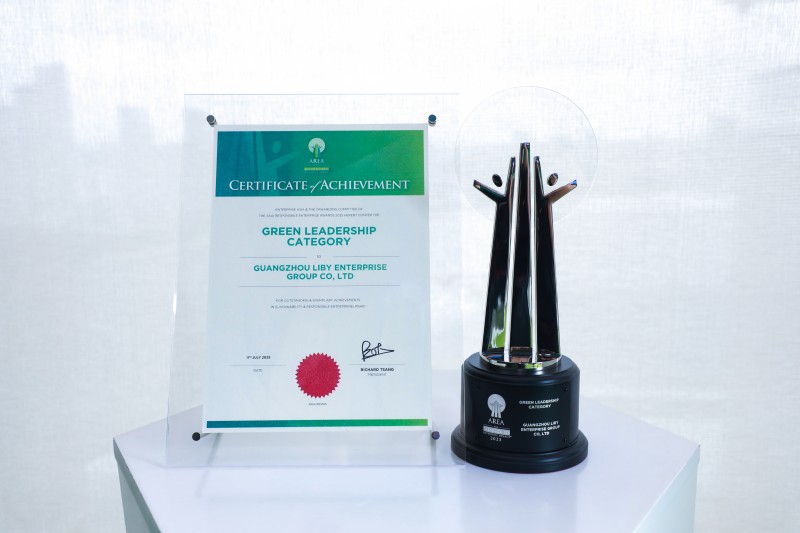
本届唯一获奖中国日化企业,立白科技集团荣获亚洲企业社会责任奖“绿色领导奖”
Zhong Jin Zai Xian· 2025-08-04 06:54
Group 1 - Liby Technology Group won the "Green Leadership Award" at the 2025 Asia Responsible Enterprise Awards, becoming the only Chinese daily chemical company to receive this honor [1][3] - The award ceremony took place on July 11, 2025, in Shanghai, organized by the Asia Corporate Social Responsibility Chamber [3][4] - Liby is the first Chinese household cleaning company to announce a net-zero target, with its "Green Future·Net Zero Liby" climate action plan outlining eight major initiatives and 30 pathways [3][5] Group 2 - The Asia Responsible Enterprise Awards (AREA) has been a leading ESG award in Asia since its establishment in 2011, recognizing over 900 companies for their ESG and sustainability projects [5] - The awards cover eight categories, highlighting outstanding performance in environmental, social responsibility, and corporate governance [5] - This year's winners include prominent companies across various industries, such as China Bank (Hong Kong), China Construction Bank, and JD Group, showcasing a diverse representation of the business landscape [5]

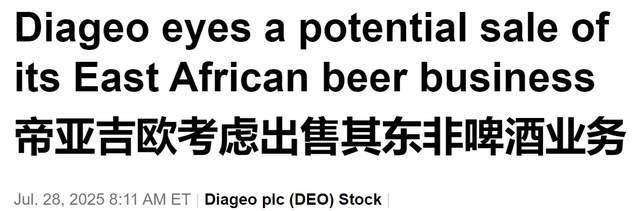
价值20亿美元!帝亚吉欧考虑出售其东非啤酒业务
Sou Hu Cai Jing· 2025-08-04 04:17
Group 1 - Diageo has selected Bank of America and Goldman Sachs for a strategic review of East African Breweries Limited, with a potential sale of its beer business valued at approximately $2 billion [1][2] - East African Breweries Limited is recognized as a leading alcoholic beverage company in East Africa, headquartered in Nairobi, Kenya, with a strong portfolio including brands like Tusker, Bell, Pilsner, Guinness, WhiteCap, Senator, Serengeti, and Allsopps [2] - Diageo is seeking a light-asset model to free up capital and restore growth [2] Group 2 - Diageo's stock price has declined by 44% over the past two years, and its debt has doubled since 2017 [4] - Following the sudden death of CEO Ivan Menezes two years ago, Debra Crew took over but is now being asked to step down after only two years, with Nik Jhangiani, the current CFO, appointed as interim CEO [6] - Analysts suggest that the new CEO must immediately optimize the product portfolio by divesting categories and brands with no growth potential [6]

食品饮料周报(25年第31周):行业进入中报业绩期,关注板块结构性机会-20250804
Guoxin Securities· 2025-08-04 03:37
Investment Rating - The investment rating for the food and beverage industry is "Outperform the Market" [4][5][80]. Core Views - The industry is entering the mid-year performance reporting period, with a focus on structural opportunities within the sector [11]. - The liquor segment is experiencing slight price declines for high-end products during the off-season, with attention on mid-year performance [12][13]. - The beer and beverage sectors are entering a peak season, with stable performance from leading companies in basic condiments [14][15]. - The report emphasizes the importance of consumer engagement and market health for liquor companies, with a shift towards internationalization and youth-oriented strategies [13][19]. Summary by Sections Liquor - The high-end liquor prices have slightly decreased, with a focus on mid-year performance [11]. - Major companies like Kweichow Moutai and Wuliangye are expanding their cultural and consumer engagement strategies [11][12]. - The report suggests three investment themes: resilient market leaders, companies showing digital transformation benefits, and those with market share growth potential [13]. Consumer Goods - The beer sector is seeing a slight decrease in fund holdings, with a focus on Yanjing Beer for internal reforms [14]. - The snack sector has seen an increase in fund holdings, particularly in Yanjing and Wancheng Group [15]. - The condiment sector is expected to perform steadily, with a focus on mid-year performance windows [16]. Frozen Foods - Companies are actively developing new products during the off-season, benefiting from industrialization trends [17]. Dairy Products - The dairy sector is experiencing a stable recovery in demand, with supply adjustments leading to improved conditions for 2025 [18]. Beverages - The beverage sector is entering a peak season, with significant performance differentiation among leading companies [19].




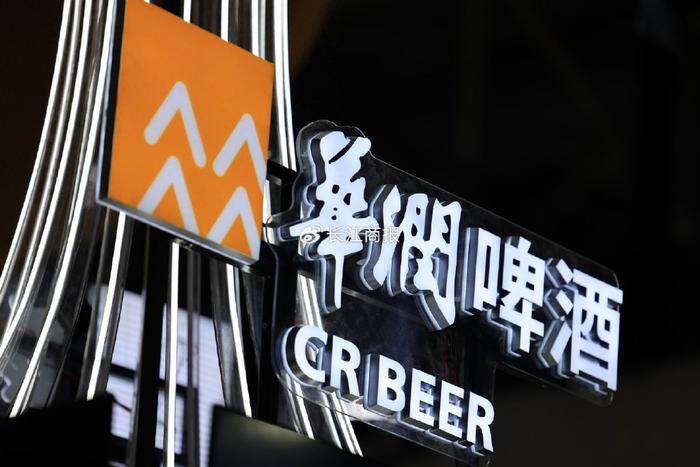
华润啤酒转让资产8年关停36家酒厂 侯孝海卸任“啤+白”双轮驱动模式
Chang Jiang Shang Bao· 2025-08-04 01:52
Core Viewpoint - China Resources Beer is undergoing significant asset disposals, including the transfer of several brewery facilities, which raises concerns about its dual business model of beer and liquor facing challenges in the current market environment [2][4][12]. Group 1: Asset Disposals - China Resources Beer is planning to transfer assets from its Snow Beer factories located in Zhumadian, Shantou, and Dazhou, as part of a broader strategy to optimize its production capacity [4]. - The company has reduced its number of factories from 98 in 2016 to 62 by the end of 2024, indicating a net closure of 36 factories over eight years [2][4]. - The decision to dispose of these factories is attributed to their smaller production capacities and outdated equipment, as the company aims to eliminate inefficient production and adjust its capacity layout [4][11]. Group 2: Financial Performance - In 2024, China Resources Beer experienced a rare decline in both revenue and net profit, with total revenue of 38.635 billion yuan, down 0.76% year-on-year, and net profit of 4.739 billion yuan, down 8.03% [15][16]. - The beer sales volume was approximately 10.8774 million kiloliters, reflecting a year-on-year decrease of about 2.5%, while the liquor business generated revenue of 2.149 billion yuan, growing only 4% [15][16]. Group 3: Leadership and Strategic Challenges - The leadership of Hou Xiaohai, who has been pivotal in the company's growth and strategic direction, will transition as he steps down as chairman in June 2025 [2][16]. - The dual business model of "beer + liquor" initiated by Hou has not yielded significant results in the liquor segment, with the liquor business facing challenges in achieving growth targets [12][14][16]. - The liquor segment's performance has been disappointing, with significant revenue declines in subsidiaries like Jinzhongzi and Jingzhi, raising questions about the sustainability of the dual business strategy [14][15][16].

华润啤酒转让资产8年关停36家酒厂 侯孝海卸任“啤+白”双轮驱动模式临考
Chang Jiang Shang Bao· 2025-08-03 23:32
Core Viewpoint - China Resources Beer is actively transferring assets, particularly factories, which has raised market attention regarding its operational strategy and future prospects [2][3]. Group 1: Asset Transfer and Factory Closures - China Resources Beer is planning to transfer assets from several factories, including the Zhu Ma Dian, Shantou, and Dazhou plants [4]. - Since April 2024, the company has frequently promoted asset disposals, indicating a strategic shift in its operational focus [2]. - The number of factories has decreased from 98 in 2016 to 62 by the end of 2024, representing a net closure of 36 factories over eight years [2][5]. Group 2: Business Strategy and Performance - The closure and transfer of factories may be aimed at upgrading production capacity and improving utilization rates [2]. - The "Beer + White" dual-drive strategy, initiated by former chairman Hou Xiaohai, is facing significant challenges, particularly as the company reported a rare decline in both revenue and net profit in 2024 [2][21]. - The beer market is evolving towards segmentation, with traditional industrial beer losing competitiveness [9]. Group 3: White Wine Business Challenges - China Resources Beer entered the white wine market in December 2020, but its performance has been underwhelming, with significant revenue declines reported for its subsidiaries [16][17]. - The revenue of its subsidiary, Jinsha Winery, dropped from 3.641 billion yuan in 2021 to 2.149 billion yuan in 2024, while profits fell from 1.315 billion yuan to less than 200 million yuan [16]. - The company’s white wine segment has struggled with losses and slow national expansion, raising questions about the sustainability of the "Beer + White" strategy [17][21]. Group 4: Leadership Transition - Hou Xiaohai, who has been instrumental in the company's growth and strategic direction, will step down as chairman in June 2025, marking a significant leadership transition [21]. - Under his leadership, the company saw substantial growth, but the current market dynamics pose challenges that may impact future performance [8][21].
食品饮料周观点:育儿补贴政策落地,推新积极挖掘增量-20250803
GOLDEN SUN SECURITIES· 2025-08-03 10:36
Investment Rating - The report maintains an "Increase" rating for the food and beverage industry, indicating a positive outlook for the sector [5]. Core Insights - The implementation of the childcare subsidy policy is expected to stimulate growth in the food and beverage sector, particularly benefiting the infant formula and dairy product markets [4]. - The report highlights three main investment themes in the liquor segment: strong leading brands, sustained regional advantages, and recovery-driven elastic stocks [1][2]. - In the beer and beverage segment, Budweiser faces sales pressure but is seeing price recovery, while the sugary tea category is gaining market share during peak seasons [3]. Summary by Sections Liquor Industry - Leading brands such as Moutai, Wuliangye, and Luzhou Laojiao dominate the global rankings, with Moutai valued at $58.4 billion, maintaining its position as the most valuable liquor brand globally [2]. - The liquor sector is transitioning from scale growth to high-quality development, with a focus on brand strength and market positioning [2]. Beer and Beverage Sector - Budweiser's Q2 2025 results show a revenue decline of 3.9% and a profit drop of 31.1%, with a notable 6.2% decrease in sales volume [3]. - The sugary tea segment is experiencing a resurgence, with brands like Kang Shifu and Uni-President maintaining leading positions, and sales of Yuanqi Forest's iced tea growing by 53.9% year-on-year [3]. Food Sector - The national childcare subsidy program, effective from January 1, 2025, is projected to enhance birth rates and subsequently increase demand for dairy products [4]. - New product launches by companies like Qiaqia and Ximai are aimed at expanding market presence and tapping into health-oriented consumer trends [4][7].

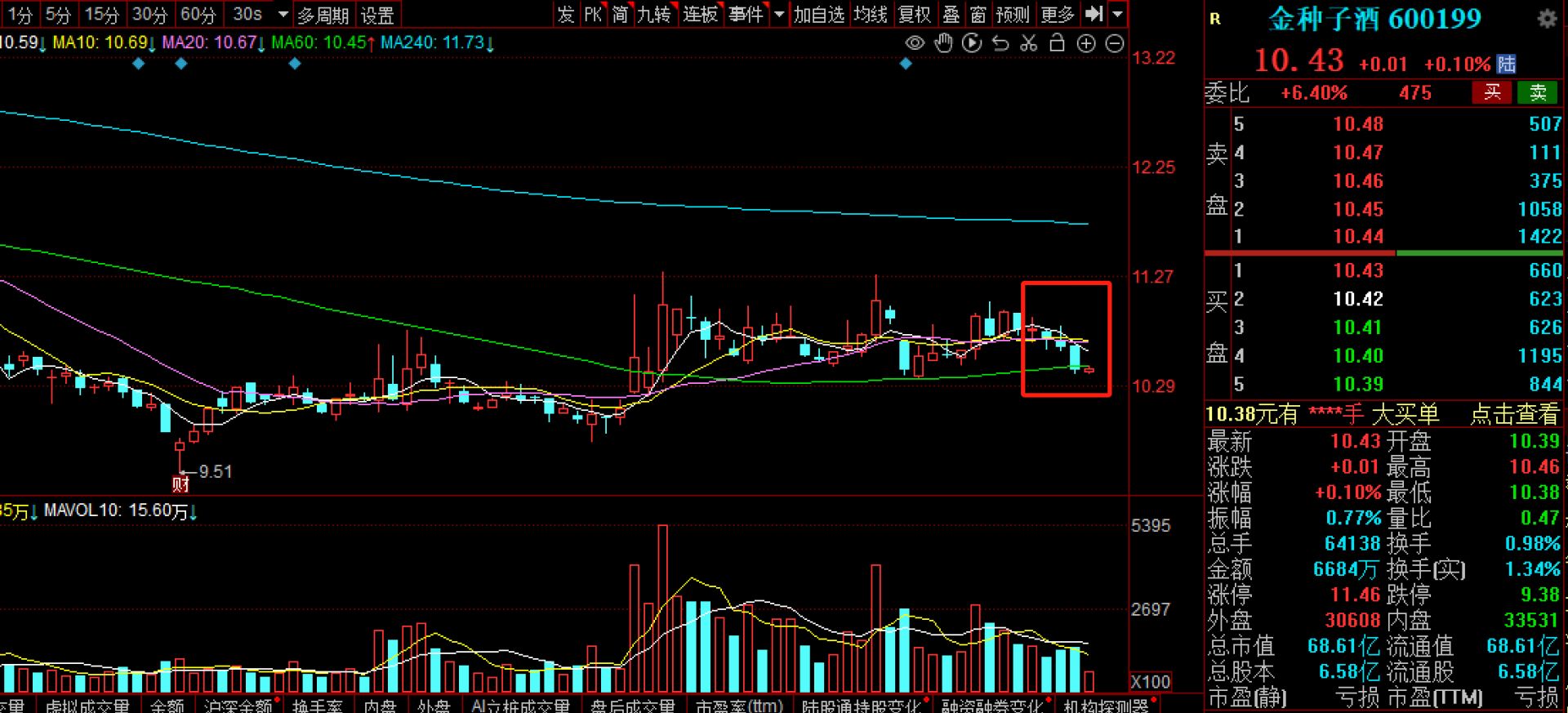
金种子酒等白酒股周跌超3%,白酒指数未能实现周线7连阳
Xin Lang Cai Jing· 2025-08-03 10:33
Group 1 - The white liquor index experienced a weekly decline of 2.15%, failing to achieve a seven-week upward trend [1] - The white liquor sector is characterized by low valuation, low expectations, low holdings, and high dividend returns, indicating a potential investment opportunity as consumer demand gradually recovers [1][5] - Major liquor companies are showing strong competitive advantages due to their robust market positions and brand strength [1] Group 2 - Hong Kong's San Miguel Brewery reported a 26% weekly increase in stock price, driven by a mid-term performance that exceeded expectations, with a revenue of approximately HKD 390 million, up 3.22% year-on-year [3] - In contrast, Budweiser APAC faced a 7.75% weekly decline due to poor performance, with a reported 8.2% decrease in sales and a 9.5% drop in revenue in the Chinese market for the first half of 2025 [3] - The white liquor industry is undergoing significant changes, including a shift towards lower alcohol content, younger demographics, and higher cost-performance ratios [3][5] Group 3 - The white liquor industry is currently marked by low valuation metrics, with the white liquor index's price-to-earnings ratios at historical lows, indicating potential undervaluation [5] - The proportion of fund holdings in the white liquor sector has significantly decreased, reaching a new low compared to previous years, reflecting reduced investor confidence [5] - Despite the challenges, the dividend yield for leading liquor brands has become relatively attractive, with several companies showing an increase in dividend rates [5]

食饮行业周报(2025年7月第4期):白酒关注中秋国庆表现,重视新消费回调机会-20250803
ZHESHANG SECURITIES· 2025-08-03 09:59
Investment Rating - The industry rating is maintained as "Positive" [4] Core Views - The report emphasizes the importance of the Mid-Autumn Festival and National Day performance for the liquor industry, recommending strong brand leaders in the liquor sector, particularly in the white liquor category [1][10] - The new consumption trend is expected to continue despite a short-term adjustment, with opportunities for investment in brands that align with rational quality consumption and emotional value [2][24] - The white liquor sector is advised to focus on potential policy catalysts and low-level rebounds, with a cautious assumption of profit bottoms for leading companies [10] Summary by Sections White Liquor Sector - Recommended brands include Guizhou Moutai, Shanxi Fenjiu, and Luzhou Laojiao, with a focus on strong brand momentum and high ROE, dividends, and share buybacks [1][10] - The white liquor sector experienced a decline of 2.40% during the trading period from July 28 to August 1, with specific companies like Zhenjiu Lidu and Gujing Gongjiu facing significant drops [3][30] Consumer Goods Sector - The new consumption sector is undergoing a structural adjustment but remains a key area for investment, with recommended stocks including Weidong Meishi, Wancheng Group, and Yili Group [2][24] - The consumer goods sector saw a mixed performance, with meat products gaining slightly while non-dairy beverages and white liquor faced declines [11][30] Company Updates - Guizhou Moutai is expanding its market presence through partnerships with platforms like Meituan, indicating a strategic move to enhance distribution channels [5] - Jinshiyuan is focusing on national expansion, with a clear three-step plan to establish itself as a leading brand in the high-end liquor market [6][7] Market Data - The report notes that the white liquor price for Moutai remains stable at 1860 RMB per bottle, with similar stability observed in other leading brands [9][47] - The overall valuation for the food and beverage industry is reported at 20.66 times, with the white liquor sector showing a valuation of 18.06 times [35]


旗舰品牌×超级平台:在变局中,百威中国与经销商共建韧性增长路径
Sou Hu Cai Jing· 2025-08-02 19:19
Core Insights - The article discusses the challenges faced by distributors in the current fragmented market, particularly in the alcoholic beverage sector, emphasizing the need for effective collaboration between brands and distributors to navigate these challenges [1][2][3] - The "Flagship Brand × Super Platform" strategy of Anheuser-Busch InBev is highlighted as a systematic response to market trends, focusing on leveraging brand strength and platform capabilities to create sustainable growth models [1][8] Brand Strategy - The importance of brand power is underscored, as consumers increasingly seek emotional value and craftsmanship in their beer choices, moving beyond mere price competition [2][3] - Anheuser-Busch InBev aims to concentrate resources on building widely recognized and commercially viable brand assets, with Budweiser and Harbin Beer as core brands driving market growth [5][9] Marketing and Engagement - The company employs innovative marketing strategies that focus on high-frequency consumer engagement through immersive experiences, such as collaborations with music and esports events [6][8] - The integration of top-tier IP resources into marketing efforts allows for deeper connections with consumers, enhancing brand recognition and loyalty [11][13] Distribution and Ecosystem - The "Super Platform" strategy emphasizes the need for brands to adapt to a multi-channel environment, where traditional marketing methods are becoming less effective [11][15] - By focusing on high-value consumer scenarios, such as sports and music events, Anheuser-Busch InBev aims to create a closed-loop system that enhances brand visibility and consumer engagement [11][16] Digital Transformation - The company has initiated a digital ecosystem to improve operational efficiency for distributors, exemplified by the "BEES" B2B platform, which has expanded to over 320 cities in China [19][20] - This digital transformation not only aids in inventory management but also enhances market responsiveness, thereby increasing distributor confidence and loyalty [19][20] Sustainable Growth - The combined "Flagship Brand × Super Platform" approach is positioned as a pathway for sustainable growth, enabling distributors to see long-term value through resource sharing and collaborative efforts [20] - Anheuser-Busch InBev's focus on sustainability and digital innovation aligns with broader industry trends, contributing to high-quality development in the fast-moving consumer goods sector [20]


夏日狂欢引爆消费激情!2025宁乡“YEAH——夏”激情消费季暨青岛啤酒嘉年华开启
Sou Hu Cai Jing· 2025-08-02 17:24
Group 1 - The 2025 Ningxiang "YEAH—Summer" Passion Consumption Season and the Third Qingdao Beer Carnival have commenced, making Ningxiang Wuyue Plaza a popular destination for cultural and tourism consumption [1][3] - The event is a core pre-activity for the Fourth Changsha Tourism Development Conference, showcasing a collaborative effort between government and enterprises to stimulate consumer activity [1][4] Group 2 - The event features a vibrant parade with elements from Qingdao Beer, Fantawild, and Tanhe Ancient City, engaging the audience with lively performances and interactions [4][8] - Qingdao Beer has introduced new products at the event, with an investment of over 700 million yuan in Ningxiang, contributing 200 million yuan in annual tax revenue [4][8] - Various entertainment programs are being presented by major scenic spots, including a "King of Beer" competition that has gained traction on social media [8][9] Group 3 - The event will run until August 4, featuring themed nights such as "Qing Beer Adventure" and "Qing Beer Accompanied Beautiful Ningxiang Night," inviting citizens to participate in various performances and activities [9]