
新能源

Search documents
联讯仪器、瑞尔竞达等4家公司IPO即将上会
Zheng Quan Shi Bao Wang· 2026-01-08 02:15
Group 1 - Four companies are set to present their IPO applications, including Lianxun Instruments for the Sci-Tech Innovation Board, Gaote Electronics for the Growth Enterprise Market, and Ruier Jieda and Bangze Chuangke for the Beijing Stock Exchange [1] - Lianxun Instruments aims to raise the highest amount of 1.711 billion yuan, with funds allocated for the development and industrialization of next-generation optical communication testing equipment, as well as various other projects [1] - Gaote Electronics and Bangze Chuangke plan to raise 850 million yuan and 400 million yuan, respectively, with Gaote focusing on new energy battery management systems [3][5] Group 2 - Lianxun Instruments specializes in the research, manufacturing, sales, and service of electronic measurement instruments and semiconductor testing equipment [4] - Bangze Chuangke is engaged in the research, production, and sales of office and household electrical products, while Ruier Jieda focuses on the development and production of energy-efficient and environmentally friendly materials for iron-making blast furnaces [5] - The companies are distributed across various provinces, with one each from Anhui, Guangdong, Jiangsu, and Zhejiang [1]
宝新能源:实控人叶华能与前董事长宁远喜因隐秘代持5%股权遭深交所公开谴责
2 1 Shi Ji Jing Ji Bao Dao· 2026-01-08 01:53
Group 1 - The Shenzhen Stock Exchange publicly reprimanded Ye Huane, the actual controller of Guangdong Baoliwa New Energy Co., Ltd., and the then chairman Ning Yuanxi for failing to disclose shareholding arrangements [1] - In January 2017, Ye Huane decided to transfer 111 million shares of Baoliwa Group's stake in Baonengyuan (approximately 5.11% of total shares) to Ning Yuanxi, who agreed to hold them on behalf of Ye [1] - Both parties did not report the shareholding arrangement to Baonengyuan, violating the Shenzhen Stock Exchange's disclosure regulations, which impacted the transparency of the company's shareholding structure and investors' right to know [1]

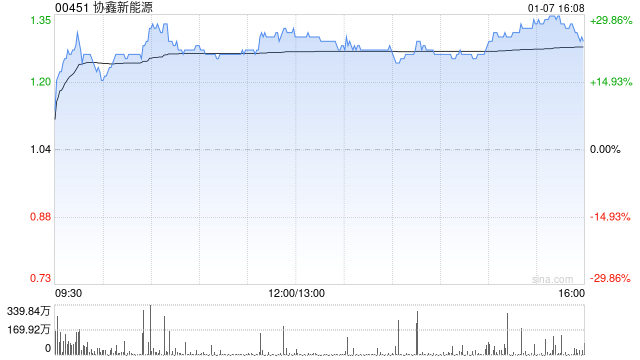
协鑫新能源高开近7% 拟向Pharos发行1.865亿股认购股份 协同加速Web3与新能源产业融合
Zhi Tong Cai Jing· 2026-01-08 01:32
Core Viewpoint - GCL-Poly Energy (00451) has seen a significant stock price increase of nearly 7%, currently trading at HKD 1.38, following the announcement of a subscription and investment agreement with Pharos [1] Group 1: Investment Agreement - The company plans to issue 186.5 million subscription shares at a price of HKD 1.033 per share to Pharos [1] - This investment aims to leverage Pharos's advanced technology and the company's resources to accelerate the integration of Web3 and the renewable energy industry, creating synergistic value for all parties involved [1] - The board believes that this subscription represents a good opportunity for the company to expand its capital and shareholder base [1] Group 2: Pharos Overview - Pharos is a next-generation Layer 1 blockchain focused on building institutional-grade tokenized asset application scenarios [1] - The investment will allow the company to explore the potential of blockchain technology in innovating the renewable energy sector and creating sustainable value for shareholders [1]
合肥“十五五”规划建议:围绕“芯屏汽合”等重点方向,聚力推动主导产业壮大规模、增强优势
Zheng Quan Shi Bao Wang· 2026-01-08 01:31
Core Viewpoint - The Hefei Municipal Committee emphasizes the acceleration of emerging and future industries, focusing on key sectors such as "chip, display, automotive, and integration" to enhance the scale and advantages of leading industries [1] Group 1: Emerging Industries - The strategy includes fostering the smart connected new energy vehicle industry to maintain a leading position in new energy passenger vehicles and to differentiate the layout of new energy commercial vehicles [1] - The new generation information technology industry will focus on integrated circuits and new display technologies, accelerating the application of new technologies like 3D DRAM and flexible OLED [1] - The new energy industry aims to expand the comparative advantage and market share of the energy storage sector, while promoting innovation in power battery technology [1] Group 2: Advanced Manufacturing and Materials - The new materials industry will prioritize the demand of leading industries, developing superconducting materials, semiconductor materials, and functional film materials [1] - The smart home appliance industry is set to advance towards high-end, intelligent, green, and scenario-based development, exploring new markets such as service-oriented appliances and wearable devices [1] - The high-end equipment manufacturing sector will enhance international competitiveness in fields like engineering machinery and smart equipment, while cultivating new growth points such as industrial robots and semiconductor equipment [1]
经济日报金观平:因地制宜推进节能降碳
Jing Ji Ri Bao· 2026-01-08 00:58
Group 1 - The State Council has emphasized the importance of energy conservation and carbon reduction, aiming for higher quality and level in these efforts, while promoting green transformation in economic development [1] - Energy conservation and carbon reduction are key to achieving carbon peak and carbon neutrality goals, with significant progress made since the 14th Five-Year Plan, including an average energy consumption growth rate of 3.3% supporting a 6.1% economic growth [1] - China has established the world's largest and most complete new energy industry chain, providing 80% of global photovoltaic components and 70% of wind power equipment, contributing significantly to global energy transition [1] Group 2 - The strategy focuses on both increasing new green low-carbon industries and phasing out inefficient capacities, particularly in high carbon emission sectors like steel, cement, and refining, with energy efficiency benchmarks improving by an average of 6 percentage points since the 14th Five-Year Plan [2] - Specific measures include enhancing energy conservation reviews for new projects, optimizing existing facilities, and improving the recovery and utilization of waste heat in rapidly growing energy-consuming sectors like computing facilities [2] Group 3 - The transition to energy conservation and carbon reduction requires participation from all sectors of society, with a need to strengthen the internal motivation for green low-carbon development and optimize the market mechanisms for carbon emissions and resource rights [3] - The approach to energy conservation and carbon reduction must be tailored to local conditions, ensuring a coordinated national strategy while allowing for local initiatives to drive progress [3]
新疆纵深推进污染防治攻坚筑牢生态安全屏障
Zhong Guo Huan Jing Bao· 2026-01-08 00:46
Core Viewpoint - The news emphasizes the importance of green development in Xinjiang as part of China's modernization efforts, highlighting the region's commitment to ecological civilization and sustainable development through various initiatives and policies aimed at pollution prevention and environmental protection [2][3][22]. Group 1: Green Transformation and Development Goals - Xinjiang aims to accelerate comprehensive green transformation in economic and social development, with a focus on building a beautiful Xinjiang by 2025 [2][3]. - The region's economic work priorities include promoting carbon reduction, pollution control, and green expansion, with specific targets set for energy system construction and green electricity application [2][20]. Group 2: Pollution Prevention and Environmental Quality Improvement - Xinjiang has made significant progress in pollution prevention, achieving high marks in national assessments and maintaining over 90% satisfaction in ecological environment quality among residents [4][5]. - The air quality in the Tianshan North Slope urban cluster improved, with a 91.0% rate of good air quality days in 2025, and a reduction in heavy pollution days [5]. - Water quality has also improved, with 97.3% of surface water meeting good quality standards, reflecting a 1.4% increase [5]. Group 3: Ecological Protection and Sustainable Practices - The region has implemented comprehensive measures for soil pollution prevention, ensuring 100% safety in the utilization of contaminated farmland [6]. - Xinjiang has established a robust system for solid waste management, with 77 hazardous waste disposal facilities capable of processing 13.99 million tons annually [6][11]. - The development of eco-friendly practices, such as desert aquaculture, is being promoted to address ecological challenges while enhancing economic growth [9]. Group 4: Carbon Market Participation and Low-Carbon Development - Xinjiang is actively participating in the national carbon market, focusing on key industries and ensuring compliance with carbon emission regulations [20][21]. - The region is enhancing its capacity for carbon data management and quality supervision, aiming to improve the overall effectiveness of carbon market participation [21]. Group 5: Systematic Approach to Ecological Civilization - The implementation of a comprehensive plan for ecological civilization construction includes 25 key tasks across various sectors, aiming for a coordinated approach to environmental management [9][10]. - Continuous monitoring and improvement of ecological conditions are being prioritized, with new monitoring stations established to enhance data collection and analysis [18].


协鑫新能源拟发行1.865亿股认购股份 牵手Pharos加速Web3与新能源产业的融合
Xin Lang Cai Jing· 2026-01-08 00:35
Core Viewpoint - GCL-Poly Energy (00451) has entered into a subscription and investment agreement with Pharos, planning to issue 186.5 million subscription shares at HKD 1.033 per share, with an investment amount of approximately USD 24.74 million, equivalent to HKD 192.65 million [1][4]. Group 1 - The company will grant future rights to shares of Pharos under a simplified future equity agreement, which will be triggered by specific events such as equity financing or liquidation of Pharos [1][4]. - The investment includes a token purchase warrant, allowing the company to purchase tokens created or managed by Pharos or its affiliates at an agreed exercise price before the warrant's expiration [1][4]. Group 2 - Pharos is a next-generation Layer 1 blockchain focused on institutional-grade tokenized asset applications, aiming to leverage advanced technology and resources to accelerate the integration of Web3 and the renewable energy sector [2][5]. - The investment is seen as an opportunity for the company to explore the potential of blockchain technology in renewable energy innovation and to create sustainable value for shareholders [2][5].
内蒙古全区电力总装机在全国率先突破3亿千瓦 外送电量3500亿千瓦时
Zhong Guo Dian Li Bao· 2026-01-08 00:32
Core Insights - Inner Mongolia is expected to complete investments exceeding 300 billion yuan in major energy projects by 2025, with energy industrial investment accounting for approximately 35% of the region's fixed asset investment [2] Group 1: Energy Supply and Capacity - The energy supply security capability has significantly improved, with Inner Mongolia set to fulfill a coal supply task of 795 million tons by 2025, adding 13 new coal production capacity reserve projects totaling 23.6 million tons [2] - The total installed power capacity in Inner Mongolia is projected to exceed 300 million kilowatts, leading the nation, with an external electricity delivery of 3.5 trillion kilowatt-hours, maintaining the top position for 21 consecutive years [2] Group 2: Power System Enhancements - The power system's support and regulation capabilities will be further enhanced, with the completion of the 500 kV main grid construction for both the eastern and western power grids by 2025 [2] - The State Grid's eastern power market will initiate continuous settlement trial operations, while the western power market will transition to formal operations [2] Group 3: Renewable Energy Development - Wind power installed capacity in Inner Mongolia has surpassed 10 million kilowatts, with an annual addition of 35 million kilowatts, bringing the cumulative installed capacity to over 170 million kilowatts and generating 270 billion kilowatt-hours, ranking first in the nation for ten consecutive years [2] - The region has delivered 90 billion kilowatt-hours of green electricity externally, marking a year-on-year growth of over 40% [2] Group 4: Energy Storage and Hydrogen Production - Inner Mongolia has accelerated energy storage development through policy support, implementing a "discharge compensation" mechanism with compensation rates set at 0.35 yuan/kWh for 2025 and 0.28 yuan/kWh for 2026, with a cumulative new energy storage capacity exceeding 17 million kilowatts [3] - The green hydrogen production in Inner Mongolia is expected to exceed 10,000 tons by 2025, quadrupling the output from 2024, leading the nation in this sector [4] Group 5: Technological Innovation - By 2025, the proportion of green and intelligent coal mines in production will reach 61% and 74%, respectively, with ten technological equipment in hydrogen energy, energy storage, and new power systems recognized as major national first sets [4] - Seven projects have been selected as national pilot projects in the hydrogen energy sector, the highest number in the country [4]
“圈”出三秦大地新图景
Shan Xi Ri Bao· 2026-01-08 00:28
Core Viewpoint - The development of the Xi'an metropolitan area has significantly enhanced regional collaboration, resource sharing, and innovation, leading to economic growth and improved living standards. Group 1: Economic Development - The Xi'an metropolitan area has a permanent population of 18.75 million and an economic output exceeding 1.67 trillion yuan [4] - The area has established a collaborative innovation network that integrates various industrial chains, promoting deep integration of technological and industrial innovation [2] Group 2: Infrastructure and Transportation - A preliminary network of commuting infrastructure has been formed, facilitating a spatial development pattern of "one core, two axes, and multiple groups" [2] - The total investment for the newly announced Xi'an Fourth Ring Road project is 15.361 billion yuan, surpassing the initial investment scale of the Sixth Ring Road [12] - The opening of the Xi'an Metro Line 15 and the Ma Jing Expressway has significantly improved commuting times and connectivity within the metropolitan area [13] Group 3: Healthcare and Social Services - The establishment of 25 specialized medical alliances has enhanced specialized medical service capabilities across the province and neighboring regions [3] - The Xi'an metropolitan area has implemented a medical alliance framework that allows for the sharing of medical resources, benefiting not only local residents but also those from surrounding provinces [18] Group 4: Innovation and Technology - In 2023, Xi'an was approved to build a national comprehensive science center, injecting strong momentum into the high-quality development of the metropolitan area [10] - The total R&D investment during the 14th Five-Year Plan period reached 71.749 billion yuan, a 41.8% increase compared to the end of the 13th Five-Year Plan [10] - The number of high-tech enterprises in Xi'an has surpassed 12,000, with the number of companies listed on the Sci-Tech Innovation Board ranking eighth nationwide [10]
协鑫新能源拟发行1.865亿股认购股份
Zheng Quan Shi Bao Wang· 2026-01-08 00:25
Group 1 - GCL-Poly Energy has entered into a subscription and investment agreement with Pharos, issuing 186.5 million subscription shares at a price of HKD 1.033 per share [1] - The total investment amounts to approximately USD 24,739,894, equivalent to about HKD 192,654,500 [1] - As part of the agreement, Pharos will grant GCL-Poly Energy future rights to acquire shares in specific events such as equity financing or liquidation [1] Group 2 - Pharos is a next-generation Layer 1 public chain focused on building institutional-level tokenized asset application scenarios [1] - The investment aims to leverage Pharos' advanced technology and GCL-Poly Energy's resource advantages to accelerate the integration of Web3 and the new energy industry, creating synergistic value for all parties involved [1]