光伏设备及元器件制造

Search documents
强化政策协同,筑牢“十五五”价格合理回升基石
Sou Hu Cai Jing· 2025-09-22 22:49
Group 1 - The core viewpoint of the articles highlights the persistent low inflation in China as a significant challenge for the economy, affecting both macroeconomic stability and microeconomic sentiment [1][8][9] - The Consumer Price Index (CPI) has shown a positive trend, with the core CPI rising by 0.9% year-on-year in August, marking the highest level since February 2024, indicating potential recovery in prices [1][4][3] - The industrial producer price index (PPI) has also shown signs of improvement, with a year-on-year decline of 2.9% in August, a narrowing of the decline by 0.7 percentage points from the previous month [6][8] Group 2 - Experts emphasize the need for a combination of short-term policies and long-term reforms to stabilize prices, suggesting a target CPI growth of 2% as a long-term goal for the 14th Five-Year Plan [11][12] - The "anti-involution" policy is seen as a crucial measure for structural adjustment in the economy, aimed at reducing excess capacity and optimizing supply structures [12][10] - The current economic environment is characterized by insufficient demand, which is expected to continue influencing price trends during the 14th Five-Year Plan period [9][8]


中利集团增资至30亿,增幅约245%
Qi Cha Cha· 2025-09-18 05:39
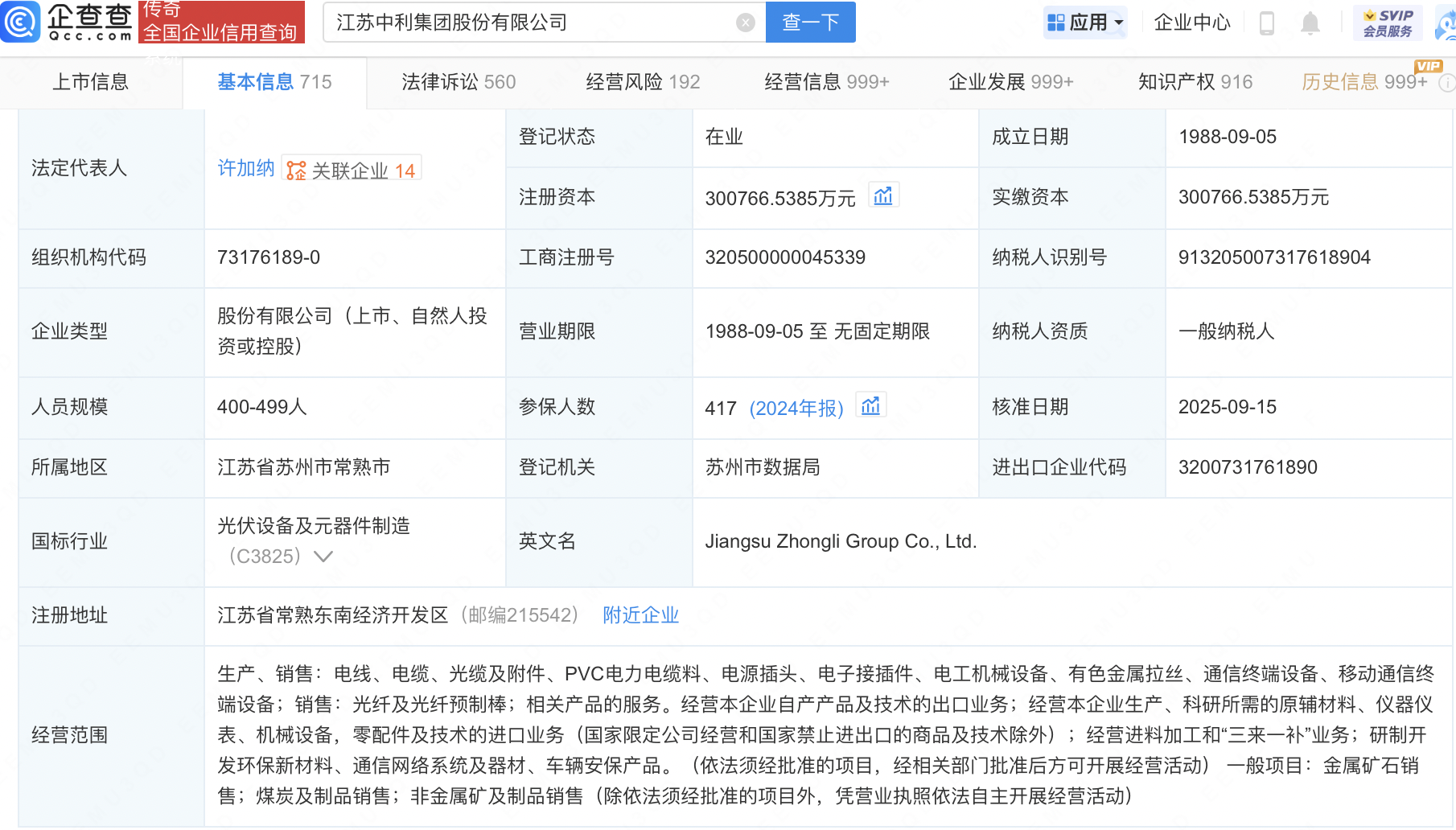
Group 1 - Zhongli Group's registered capital has increased from 872 million yuan to 3.008 billion yuan, representing an increase of approximately 245% [1][2] - The company was established in 1988 and is legally represented by Xu Jiagana [1][2] - Zhongli Group's business scope includes the production and sales of wires, cables, optical cables and accessories, PVC power cable materials, power plugs, and electronic connectors [1][2] Group 2 - The company is classified under the national standard industry of photovoltaic equipment and components manufacturing (C3825) [2] - Zhongli Group is located in Changshu City, Suzhou, Jiangsu Province, with a registered address in the Southeast Economic Development Zone [2] - The company employs between 400 to 499 people, with 417 individuals insured as of the 2024 report [2]

权威发布|8月生产、内需、外贸等运行平稳 经济转型升级稳步推进
Ren Min Ri Bao· 2025-09-16 03:29
Economic Overview - The overall economic operation in August is stable, with steady progress and no change in the growth stability [2][4][11] - Industrial production shows rapid growth, with the industrial added value increasing by 5.2% year-on-year and 0.37% month-on-month [4] - The service sector also performs well, with a production index growth of 5.6% year-on-year, surpassing industrial growth [4] Consumption and Investment - Social retail sales from January to August increased by 4.6% year-on-year, with service retail sales growing by 5.1% [5] - Fixed asset investment rose by 0.5% year-on-year, while excluding real estate, it grew by 4.2% [5] - Consumer goods retail sales in August increased by 3.6% year-on-year, with significant growth in furniture and home appliances [8] Employment and Prices - The urban unemployment rate in August was 5.3%, unchanged from the previous year [7] - The Consumer Price Index (CPI) decreased by 0.4% year-on-year, primarily due to falling food prices, while core CPI rose by 0.9% [7] Trade Performance - In August, the total import and export value of goods increased by 3.5% year-on-year, with both exports and imports achieving three consecutive months of growth [6] Industrial and Technological Development - The manufacturing sector shows positive trends, with high-tech manufacturing and equipment manufacturing increasing by 9.3% and 8.1% year-on-year, respectively [10] - New energy vehicles and related components saw significant production increases, with new energy vehicle production up by 22.7% [10] Policy Impact - The Producer Price Index (PPI) showed signs of improvement, with a narrowing year-on-year decline, reflecting the effectiveness of macroeconomic policies [11] - Policies aimed at boosting consumption and stabilizing the economy are showing positive results, with various sectors experiencing growth [12] Future Outlook - Despite external challenges, the foundation for economic growth remains strong, with potential for continued stable and progressive development [12][13]
国家统计局:抵制无序竞争显成效 8 月光伏设备及元器件制造价格收窄2.8%
Guo Jia Tong Ji Ju· 2025-09-15 09:38
Core Viewpoint - In August, the Producer Price Index (PPI) showed positive changes, ending a continuous decline for eight months, with a year-on-year decrease of 2.9%, which is a narrowing of 0.7 percentage points from the previous month, and a month-on-month stability after a 0.2% decline in July [1] Group 1: Factors Contributing to PPI Changes - The macroeconomic policy effectiveness, the deepening of the national unified market construction, the gradual optimization of enterprise competition order, and the rapid growth of new driving forces contributed to the positive changes in PPI [1] - The optimization of market competition order has been evident, with recent efforts to promote industry self-discipline and resist disorderly competition, leading to a reduction in the downward pressure on PPI from key industries [1] - In August, the ex-factory prices in coal processing, black metal smelting, and coal mining industries narrowed by 3.2% to 10.3% compared to the previous month, with significant reductions in the downward impact on PPI [1] Group 2: Emerging Industry Demand - Demand from emerging industries has strengthened, with steady expansion in market demand due to the ongoing adjustment of economic structure and the positive development of high-end and intelligent industries [2] - In August, the prices for integrated circuit packaging and testing manufacturing rose by 1.1%, and shipbuilding and related equipment manufacturing prices increased by 0.9% [2] - The rapid development of artificial intelligence applications has enhanced the market appeal of smart products, with wearable smart device manufacturing prices increasing by 1.6% in August [2] Group 3: Consumption Policy Impact - The effects of consumption-boosting policies have begun to show, with special actions to stimulate consumption and the expansion of trade-in programs leading to increased demand for upgraded goods [2] - In August, the prices for arts and crafts, ceremonial goods manufacturing rose by 13%, while sports balls and specialized sports equipment prices increased by 4.7% and 0.4%, respectively [2] - Prices for nutritional and health food manufacturing rose by 0.9% and 0.3%, indicating a positive trend in consumer goods pricing [2]
国家统计局:近期相关部门倡导抵制企业无序竞争,推动重点行业产能治理效果逐步显现
Ge Long Hui· 2025-09-15 04:43
Core Viewpoint - The National Bureau of Statistics spokesperson, Fu Linghui, announced that recent efforts to promote industry self-discipline and resist disorderly competition have shown gradual effects, particularly in key industries [1] Group 1: Industry Price Changes - In August, the ex-factory prices in coal processing, black metal smelting and rolling industries, and coal mining and washing industries narrowed by 3.2% to 10.3% compared to the previous month [1] - The price decline in photovoltaic equipment and components manufacturing, as well as new energy vehicle manufacturing, saw year-on-year reductions narrow by 2.8% and 0.6% respectively [1] - The downward impact of these five industries on the year-on-year Producer Price Index (PPI) decreased by approximately 0.5 percentage points compared to the previous month [1]
国家统计局:8月5行业PPI下拉影响减少约0.5个百分点
Sou Hu Cai Jing· 2025-09-15 04:15
Core Insights - The National Bureau of Statistics reported that recent industry self-regulation measures have shown positive effects, leading to a reduction in price declines in certain sectors [1] Group 1: Industry Performance - In August, the ex-factory prices in coal processing, black metal smelting and rolling, and coal mining and washing industries narrowed their decline by 3.2% to 10.3% compared to the previous month [1] - The price decline in photovoltaic equipment and components manufacturing, as well as in new energy vehicle manufacturing, decreased year-on-year by 2.8% and 0.6% respectively [1] - The impact of these five industries on the year-on-year Producer Price Index (PPI) has reduced by approximately 0.5 percentage points compared to the previous month [1]
速览8月重磅经济数据:规上工业增长5.2%,出口增长4.8%
21世纪经济报道· 2025-09-15 04:11
Core Viewpoint - The overall economic operation in August 2025 shows stability and progress, with macro policies effectively supporting high-quality development despite external uncertainties and risks [1][5]. Group 1: Economic Indicators - In August, the Producer Price Index (PPI) decreased by 2.9% year-on-year, with the decline narrowing by 0.7 percentage points compared to the previous month. Month-on-month, the PPI remained flat, ending an eight-month streak of negative growth [5][6]. - The PPI's year-on-year decline was influenced by improved market competition order, with significant price reductions in industries such as coal processing and black metal smelting, which saw price decreases narrow by 3.2% to 10.3% [6][7]. Group 2: Factors Influencing PPI - The optimization of market competition order has been a key factor, with government initiatives promoting industry self-discipline and curbing disorderly competition, leading to a reduced downward impact on PPI from key industries [6][7]. - Demand from emerging industries has strengthened, with prices in sectors like integrated circuit packaging and testing rising by 1.1%, and smart wearable devices increasing by 1.6% year-on-year [6][7]. - Consumption-boosting policies have shown positive effects, with prices in certain consumer goods sectors, such as arts and crafts, increasing by 13% year-on-year, indicating a rise in demand for upgraded products [6][7]. Group 3: Future Outlook - Despite the positive changes, the PPI remains in a declining range, which poses challenges for industrial enterprises. Future efforts should focus on expanding domestic demand and further promoting a unified national market to stabilize industrial prices [7].

国家统计局答21:抵制企业无序竞争显效,8月PPI现积极变化
2 1 Shi Ji Jing Ji Bao Dao· 2025-09-15 03:47
Group 1 - In August, the Producer Price Index (PPI) decreased by 2.9% year-on-year, with the decline narrowing by 0.7 percentage points compared to the previous month, and the month-on-month change shifted from a decrease of 0.2% to flat, ending an eight-month negative growth trend [1] - The improvement in PPI is attributed to macro policy effectiveness, the deepening of the national unified market construction, optimization of enterprise competition order, and rapid growth of new driving forces [1][2] - The optimization of market competition order has been a significant factor, with key industries such as coal processing and black metal smelting seeing price reductions narrowing by 3.2% to 10.3% compared to the previous month [2] Group 2 - Demand from emerging industries has strengthened, with prices in sectors like integrated circuit packaging and testing manufacturing increasing by 1.1%, and shipbuilding and related equipment manufacturing prices rising by 0.9% [2] - Consumption-boosting policies have shown effects, with prices in categories such as arts and crafts manufacturing increasing by 13% year-on-year, and sports equipment prices rising by 4.7% [3] - Despite the positive changes, PPI remains in a declining range, which is unfavorable for industrial enterprise operations, indicating a need for further expansion of domestic demand and regulation of competition [3]
2025年8月份核心CPI继续回升 PPI同比降幅收窄
Guo Jia Tong Ji Ju· 2025-09-12 08:22
Group 1: Core CPI Analysis - The core Consumer Price Index (CPI) increased by 0.9% year-on-year, marking the fourth consecutive month of growth [3] - The decline in overall CPI is attributed to a high comparison base from the previous year and lower seasonal food price increases, with food prices down 4.3% year-on-year [2][3] - Non-food prices rose by 0.5%, contributing approximately 0.43 percentage points to the CPI year-on-year increase [2][3] Group 2: PPI Analysis - The Producer Price Index (PPI) saw a year-on-year decline of 2.9%, but the rate of decline narrowed by 0.7 percentage points compared to the previous month, the first narrowing since March [5] - The PPI's month-on-month change shifted from a 0.2% decline to flat, influenced by improved supply-demand relationships in certain sectors [4][5] - Prices in coal processing, black metal smelting, and other industries showed reduced year-on-year declines, contributing to the overall narrowing of the PPI decline [5][6]
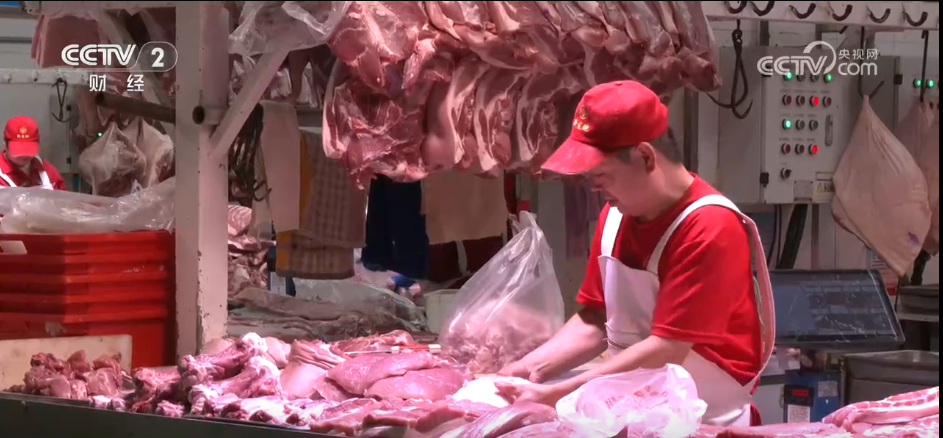
8月份消费市场运行总体平稳 “果盘子”“肉案子”物丰价降
Yang Shi Wang· 2025-09-11 03:53
Group 1 - The consumer price index (CPI) in August showed a year-on-year decline of 0.4%, primarily due to a high comparison base from the previous year and lower seasonal food price increases [1] - The core CPI, excluding food and energy, increased by 0.9% year-on-year, marking the fourth consecutive month of growth [1] - The producer price index (PPI) remained flat month-on-month, with a year-on-year decline of 2.9%, but the rate of decline narrowed by 0.7 percentage points compared to the previous month [1] Group 2 - In August, pork prices in Beijing's Xinfadi wholesale market averaged 16.87 yuan per kilogram, a decrease of 7.1% from July and 31.37% from the same period last year [3] - The decline in pork prices is attributed to a slight oversupply of live pigs and increased market supply, reaching a five-year high in daily average listings [3] - Seasonal fruits also experienced price declines due to an overlap in supply from summer fruits and new harvests of apples and pears [8] Group 3 - Industry experts predict that pork prices will stabilize in September due to factors such as school stocking and cooler weather, with prices expected to rise by only 1%-3% compared to August [5]