工业

Search documents
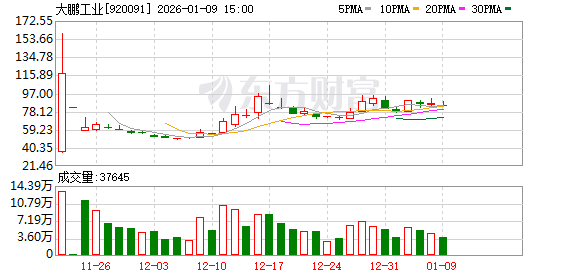
大鹏工业龙虎榜数据(1月12日)
Zheng Quan Shi Bao Wang· 2026-01-12 15:20
Group 1 - Dapeng Industrial (920091) experienced a price increase of 1.71% with a turnover rate of 29.42%, and a total transaction amount of 340 million yuan, showing a volatility of 6.00% [1] - Institutional investors net bought 459,300 yuan, while the total net buying from brokerage seats reached 9.2996 million yuan [1][2] - The stock has appeared on the龙虎榜 (Dragon and Tiger List) 34 times in the past six months, with an average price increase of 0.61% the day after being listed and an average increase of 6.55% over the following five days [2] Group 2 - The top five brokerage seats accounted for a total transaction amount of 76.1148 million yuan, with a buying amount of 42.9368 million yuan and a selling amount of 33.1780 million yuan, resulting in a net buying of 9.7588 million yuan [2] - Specific brokerage activities included significant buying from Guosen Securities and Guojin Securities, with the largest buy amount being 10.5098 million yuan and the largest sell amount being 8.8580 million yuan [2]

全球资产配置资金流向月报(2026年1月)-20260112
Shenwan Hongyuan Securities· 2026-01-12 14:42
Group 1: Seasonal Capital Inflows - In January, significant seasonal inflows of global capital into Chinese equity markets (including A-shares, H-shares, and Chinese concept stocks) are expected, with a historical probability of 76% for the Hang Seng Index to have a positive annual return if inflows are positive[12] - Since 2000, global capital typically experiences a significant inflow into Hong Kong local stocks in January after marginal outflows in December[10] - In December 2025, the inflow into the Chinese equity market reached $177.6 billion, while the inflow into the emerging market bond market was $177.7 billion[26] Group 2: Global Asset Flow Overview - As of December 31, 2025, the relative inflow ratio for Chinese fixed-income funds reached 11.2%, leading other markets, while equity funds saw a 1.3% inflow, also leading other major markets[23] - In December, the U.S. equity market saw inflows of $778.8 billion, while emerging markets experienced inflows of $339.5 billion[19] - The inflow into the U.S. fixed-income market was substantial, with $391.3 billion in December, indicating a preference for U.S. assets[19] Group 3: Fund Type Analysis - In December, passive equity funds accounted for a significant portion of inflows into emerging markets, with $347 billion, although this was a decrease from $424 billion in November[60] - Active equity funds saw outflows of $7 billion in emerging markets, with China experiencing a $5 billion outflow in December[60] - The inflow into Chinese fixed-income markets was $178 billion in December, representing 68% of the total inflow into emerging market bonds[57]
机构席位买入655.3万 北交所上市公司大鹏工业登龙虎榜
Sou Hu Cai Jing· 2026-01-12 09:55
Core Insights - Dapeng Industrial (920091) was featured on the trading leaderboard on January 12, 2026, due to a turnover rate of 29.42% and a trading volume of 3.9989 million shares, amounting to a transaction value of 340 million yuan [1][2]. Trading Activity - The top buying entity was Guosen Securities Co., Ltd. Shenzhen Internet Branch, purchasing shares worth approximately 10.51 million yuan [2]. - The leading selling entity was CITIC Securities Co., Ltd. Shanghai Yingkou Road Securities Business Department, selling shares valued at about 8.997 million yuan [2]. - Other notable buying and selling activities included: - Guojin Securities Co., Ltd. Shenzhen Branch bought shares worth approximately 8.86 million yuan and sold shares worth about 4.62 million yuan [2]. - An institutional investor bought shares worth approximately 6.55 million yuan and sold shares worth about 6.09 million yuan [2].

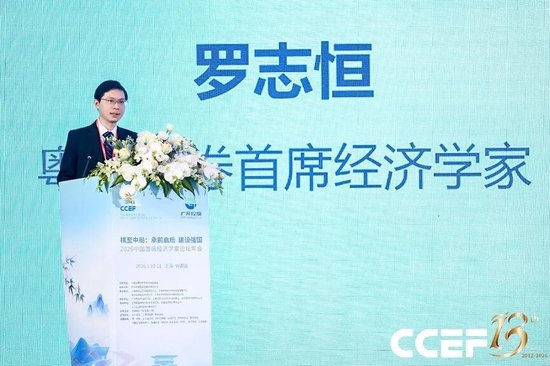
罗志恒:优化国民收入分配的思考——如何提高居民收入
Xin Lang Cai Jing· 2026-01-12 00:06
Core Viewpoint - The speech emphasizes the importance of optimizing national income distribution to enhance residents' income, addressing the current economic challenges of strong supply and weak demand, particularly in the context of consumption stagnation [3][38]. Group 1: Economic Background - The current economic situation is characterized by "strong supply and weak demand," with the core issue being weak consumption [3][38]. - The government has implemented measures such as consumer incentives and fiscal subsidies to stimulate consumption, which have shown positive results [3][38]. - To fundamentally resolve consumption issues, income distribution reform is essential, focusing on improving consumption capacity, willingness, and supply-demand adaptability [3][38]. Group 2: Characteristics of National Income Distribution - China's national income distribution exhibits four main characteristics: 1. Residents have the highest income share among the three sectors, followed by enterprises, with the government having the lowest share [6][21]. 2. The share of residents' income is moderately low compared to international standards, primarily due to low property income [12][21]. 3. The enterprise sector's income share is relatively high, ranking fifth among 20 sample economies, influenced by the high proportion of state-owned enterprises [13][21]. 4. The government sector has a low income share and weak redistributive capacity, with a significant reliance on indirect taxes [15][21]. Group 3: Factors Influencing Income Distribution - The income distribution structure is determined by development stages, resource endowments, and industrial structures [22][30]. - The transition from a supply-shortage to a demand-shortage economy necessitates a shift in the income distribution model towards labor compensation [22][30]. - The relationship between industrial structure and income distribution indicates that labor-intensive sectors tend to have higher resident income shares, while capital-intensive sectors do not [22][30]. Group 4: Recommendations for Optimizing Income Distribution - To address the imbalance of low resident income share and high enterprise share, two main strategies are proposed: 1. Increase state-owned enterprise contributions to the fiscal budget to enhance social security benefits for residents [25][30]. 2. Encourage listed companies to increase dividends and implement equity incentives to boost residents' property income [25][30]. - Establish a long-term wage growth mechanism to stabilize employment and promote wage increases through fiscal support for companies that raise salaries [26][30]. - Enhance the direct tax system to improve its redistributive function, including optimizing personal income tax deductions and introducing property taxes [28][30].
德国去年前11个月工业产出同比下降1.2%
Xin Hua She· 2026-01-09 14:20
新华社柏林1月9日电(记者车云龙)德国联邦统计局9日公布数据显示,经工作日调整后,2025年前11 个月德国工业产出同比下降1.2%。 ...
关税裁决交易指南:如果最高法院说“不”,特朗普还有什么牌?
Hua Er Jie Jian Wen· 2026-01-09 11:35
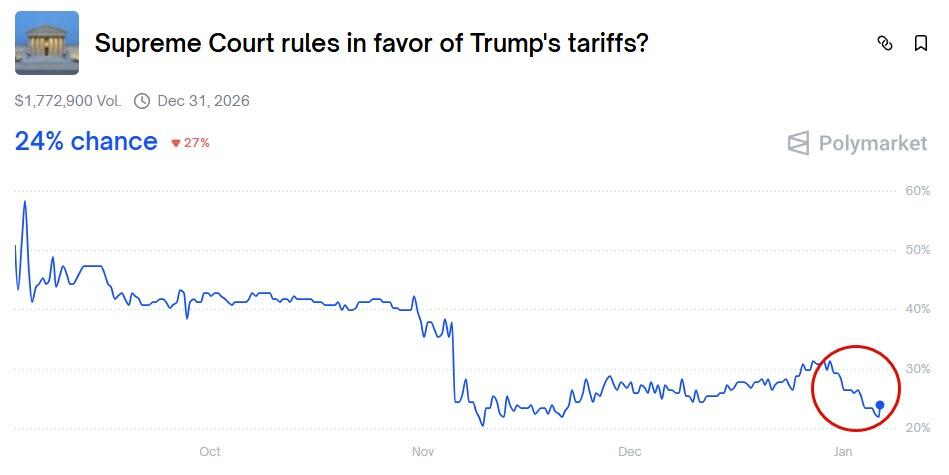
Core Viewpoint - The U.S. Supreme Court is set to make a ruling on tariffs, which is expected to significantly impact market direction, with a focus on potential responses from the White House following the decision [1][3]. Market Reactions - If tariffs are overturned but replaced, the S&P 500 index may initially rise but then decline, while a complete removal of tariffs would benefit consumer and financial stocks but could raise concerns about fiscal deficits, complicating the Federal Reserve's interest rate path [1][3]. - Current market predictions indicate a 24% chance that Trump's tariff policy will be maintained, with analysts expecting a 7:2 or 6:3 majority against the tariffs [1][3]. Sector Analysis - Consumer and retail sectors, particularly companies reliant on imports like Nike and Mattel, are expected to benefit the most if tariffs are lifted [4]. - Financial institutions such as JPMorgan and Goldman Sachs may gain from increased consumer confidence, while transportation stocks could also see positive impacts if tariffs are removed alongside tax cuts [9]. Legal Alternatives - The government has alternative legal avenues to maintain its trade agenda, including the use of various trade laws, although these options may face significant legal challenges [3][7]. - Specific trade laws mentioned include the Trade Expansion Act of 1962 and the Trade Act of 1974, which provide the president with broad powers to impose tariffs but come with limitations and potential legal hurdles [10].
2025年港股IPO行业图谱:全口径下工业募资723亿港元 新面孔中新消费 信息技术 医疗成募资主力
Xin Lang Cai Jing· 2026-01-09 10:51
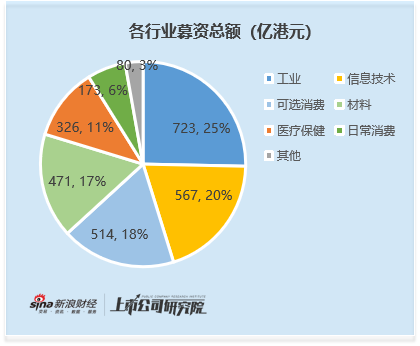
Core Viewpoint - The Hong Kong IPO market experienced a strong resurgence in 2025, with 114 companies completing listings and raising a total of 285.3 billion HKD, a 224% increase from 88.1 billion HKD in 2024, making it the largest IPO fundraising exchange globally [1][9]. Industry Analysis - The fundraising distribution in the Hong Kong IPO market shows a clear structural characteristic, with significant differences in financing vitality and capital preferences across different sectors, highlighting the importance of understanding the market ecology [1][9]. - The top five industries—Industrial, Information Technology, Consumer Discretionary, Materials, and Healthcare—accounted for 90% of the total fundraising, raising a combined 260.2 billion HKD, demonstrating the strong appeal of core sectors to investors [1][9]. Major Fundraising Projects - Notably, the largest IPO projects in these five industries came from well-known companies, including CATL, which raised 41.0 billion HKD, and SANY Heavy Industry, which raised 15.3 billion HKD through A to H listings [3][11]. - The fundraising landscape changes significantly when excluding established companies, revealing that the top three industries for new entrants are Consumer Discretionary, Information Technology, and Healthcare, which collectively raised 72.5 billion HKD, representing 81% of the total for new entrants [4][12]. Sector Highlights - The Consumer Discretionary sector led the new entrants with a total fundraising of 30.2 billion HKD, driven by key players like Chery Automobile, which raised 10.4 billion HKD [6][14]. - The Information Technology sector also performed well, with 20 new entrants raising a total of 21.8 billion HKD, benefiting from the rise of robotics and artificial intelligence [6][14]. - The Healthcare sector raised 20.5 billion HKD, with 16 unprofitable biotech companies completing IPOs, accounting for 65% of the sector's total fundraising, showcasing the sector's potential as a financing platform for innovative medical enterprises [6][14]. Market Preferences - The distribution of industry fundraising aligns with market capital preferences, where established industries attract long-term capital due to stable profitability, while new sectors like Consumer Discretionary, Information Technology, and Healthcare are favored for their high growth potential [7][15].
大鹏工业1月9日龙虎榜数据
Zheng Quan Shi Bao Wang· 2026-01-09 09:36
Core Viewpoint - Dapeng Industrial (920091) experienced a decline of 2.97% today, with a turnover rate of 27.70% and a transaction volume of 321 million yuan, indicating significant trading activity and potential volatility in the stock [2] Trading Activity - The stock was listed on the龙虎榜 due to its turnover rate reaching 27.70%, with institutional investors net buying 3.375 million yuan [2] - The top five trading departments accounted for a total transaction volume of 62.2226 million yuan, with a net buying amount of 3.1289 million yuan [2] - Among the trading departments, one institutional seat was noted, which had a net buying of 3.375 million yuan after buying 6.175 million yuan and selling 2.7999 million yuan [2] Historical Performance - Over the past six months, the stock has appeared on the龙虎榜 33 times, with an average price increase of 0.57% the day after being listed and an average increase of 6.49% in the following five days [2]
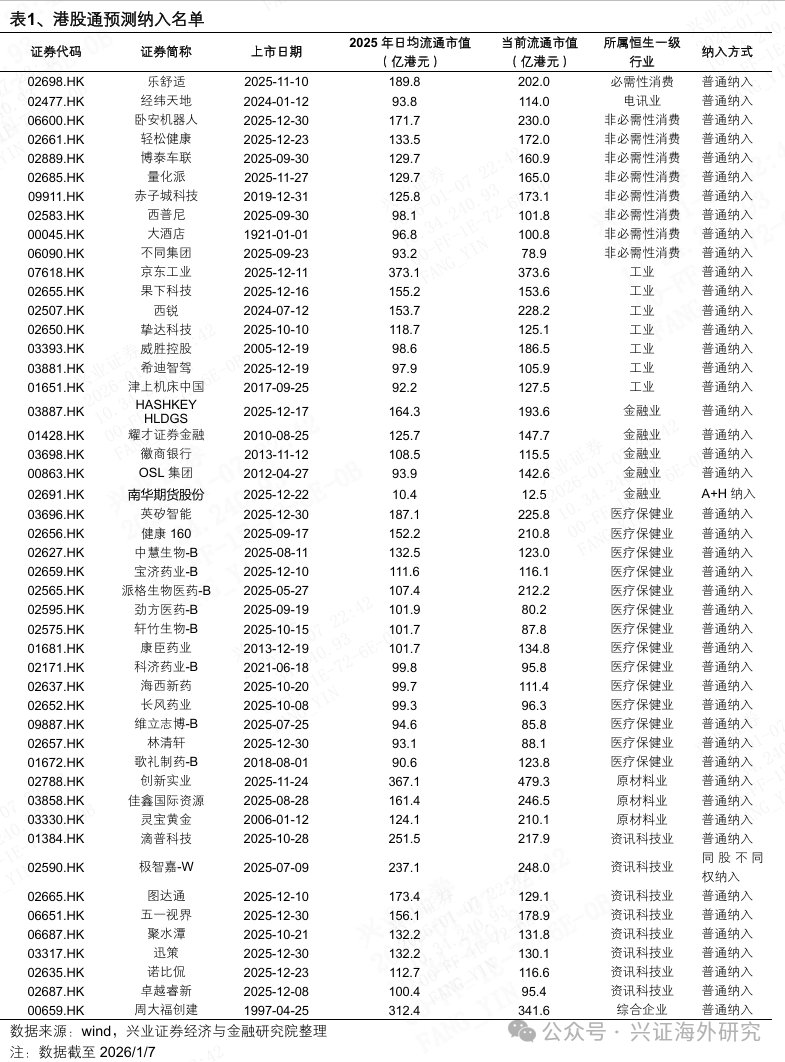
兴业证券:港股通新一轮调整在即 48只港股标的或入围
Zhi Tong Cai Jing· 2026-01-09 07:33
Core Viewpoint - The semi-annual review of the Hang Seng Composite Index has concluded, and a new round of adjustments to the Hong Kong Stock Connect eligible stocks is imminent, with results expected to be announced on February 20 and effective from March 9, 2025 [1][2]. Group 1: Adjustments and Market Impact - A total of 48 Hong Kong stocks are expected to be included in the Hong Kong Stock Connect eligible list based on simulated calculations [2][3]. - The market capitalization threshold for new eligible stocks has been raised to HKD 9 billion as of December 31, 2025 [3]. Group 2: Industry Distribution of New Eligible Stocks - The new eligible stocks are primarily concentrated in the following sectors: - Healthcare: 14 companies, including names like 英矽智能 and 健康160 [3]. - Information Technology: 8 companies, including 滴普科技 and 极智嘉-W [3]. - Consumer Discretionary: 8 companies, including 卧安机器人 and 轻松健康 [3]. - Industrial: 7 companies, including 京东工业 and 果下科技 [3]. - Financials: 5 companies, including HASHKEY HLDGS and 徽商银行 [3]. - Materials: 3 companies, including 创新实业 and 佳鑫国际资源 [3]. - Consumer Staples: 1 company, 乐舒适 [3]. - Telecommunications: 1 company, 经纬天地 [3]. - Conglomerates: 1 company, 周大福创建 [3]. Group 3: Detailed List of New Eligible Stocks - A detailed list of stocks expected to be included includes: - 乐舒适 (2025-11-10, average daily market cap: HKD 1.898 billion) [4]. - 经纬天地 (2024-01-12, average daily market cap: HKD 0.938 billion) [4]. - 卧安机器人 (2025-12-30, average daily market cap: HKD 1.717 billion) [4]. - 轻松健康 (2025-12-23, average daily market cap: HKD 1.335 billion) [4]. - 博泰车联 (2025-09-30, average daily market cap: HKD 1.297 billion) [4]. - 京东工业 (2025-12-11, average daily market cap: HKD 37.31 billion) [4]. - HASHKEY HLDGS (2025-12-17, average daily market cap: HKD 1.643 billion) [4].

帮主郑重:道指与纳指“分道扬镳”,市场在担心什么?
Sou Hu Cai Jing· 2026-01-09 01:50
Core Viewpoint - The current divergence in the U.S. stock market reflects a transition from high-valuation growth stocks to a re-evaluation of value and policy-benefiting sectors, indicating a healthy adjustment within the ongoing bull market [4] Market Dynamics - The divergence is marked by a decline in the Nasdaq index, driven by notable AI stocks like Nvidia and Oracle, alongside a continuous drop in Apple shares, signaling a reassessment of tech stock valuations [3] - The defense and industrial sectors are attracting investment, particularly in light of geopolitical tensions and proposed increases in defense budgets, such as Trump's call for a $1.5 trillion defense budget by 2027 [3] - Strong third-quarter productivity data and low unemployment rates in the U.S. suggest a macroeconomic environment characterized by stable growth and manageable inflation, providing leeway for future monetary policy adjustments by the Federal Reserve [3] Investment Strategy Insights - Investors should rationally view external market fluctuations, particularly the adjustments in high-valuation growth sectors, as they may influence related sectors in the A-share market [5] - Emphasis should be placed on the "application landing" logic, shifting focus from mere concept speculation to companies that effectively apply AI and robotics in sectors like healthcare, industry, and finance [5] - A balanced investment approach is recommended, incorporating not only aggressive tech growth stocks but also sectors benefiting from economic recovery and policy support, to mitigate volatility and adapt to changing market styles [5]