
清洁能源

Search documents
媒体报道丨能源投资“点绿成金” 助力保供和经济增长
国家能源局· 2026-01-04 10:11
Core Viewpoint - The article emphasizes the rapid growth of clean energy projects in China, which are crucial for ensuring energy supply during peak winter demand and stimulating economic growth through green initiatives [2][4][5][6]. Group 1: Clean Energy Capacity Growth - As of November 2025, China's total installed power generation capacity reached 3.79 billion kilowatts, a year-on-year increase of 17.1% [2]. - Solar power capacity reached 1.16 billion kilowatts, growing by 41.9% year-on-year, while wind power capacity increased to 600 million kilowatts, up by 22.4% [2]. - Hydropower capacity stood at 440 million kilowatts, with a 3% year-on-year growth, and nuclear power capacity reached 60 million kilowatts, growing by 7.6% [2]. Group 2: Nuclear Power Projects - The Zhangzhou Nuclear Power Phase I project has been completed, with the second unit of the project expected to provide approximately 60 billion kilowatt-hours of clean electricity annually [4]. - The construction of the world's largest "Hualong One" nuclear power base is underway, with plans for six units [4]. Group 3: Energy Storage Developments - The largest all-vanadium flow battery energy storage station in China, located in Xinjiang, is set to enhance the utilization rate of associated photovoltaic power stations by over 10%, potentially generating an additional 230 million kilowatt-hours of clean energy annually [4]. Group 4: Solar Energy Projects - The first flexible support photovoltaic project in sandy areas, with a capacity of 2 million kilowatts, is expected to generate 2.96 billion kilowatt-hours of electricity annually, reducing carbon dioxide emissions by over 2.68 million tons [4]. - The first million-kilowatt offshore photovoltaic project in China is projected to meet 60% of the electricity demand in its locality, generating 1.78 billion kilowatt-hours annually [4]. Group 5: Hydropower Projects - The Yebatan Hydropower Station, the highest arch dam power station under construction in China, has begun operations, with an expected annual generation of over 10.2 billion kilowatt-hours, saving approximately 3.1 million tons of standard coal and reducing carbon emissions by over 8.3 million tons [5]. Group 6: Investment Growth in Clean Energy - From January to November 2025, investment in the electricity, heat, gas, and water production and supply sectors grew by 10.7%, contributing 0.8 percentage points to overall investment growth [5]. - Investment in solar, wind, nuclear, and hydropower collectively increased by 7.4% [5]. Group 7: Infrastructure Projects - Recent approvals for major infrastructure projects, including the Zhejiang UHV AC ring network project and the Dadu River Danba hydropower station, involve total investments exceeding 400 billion yuan, aimed at enhancing China's modern infrastructure system [6]. Group 8: Economic Implications - The rapid growth in clean energy investment is significant for economic stability, leveraging China's large market to enhance the competitiveness of clean energy and stimulate related industries [6].



水电给光伏“撑腰”?全球最大水光互补项目藏了什么玄机?
Sou Hu Cai Jing· 2026-01-04 04:01
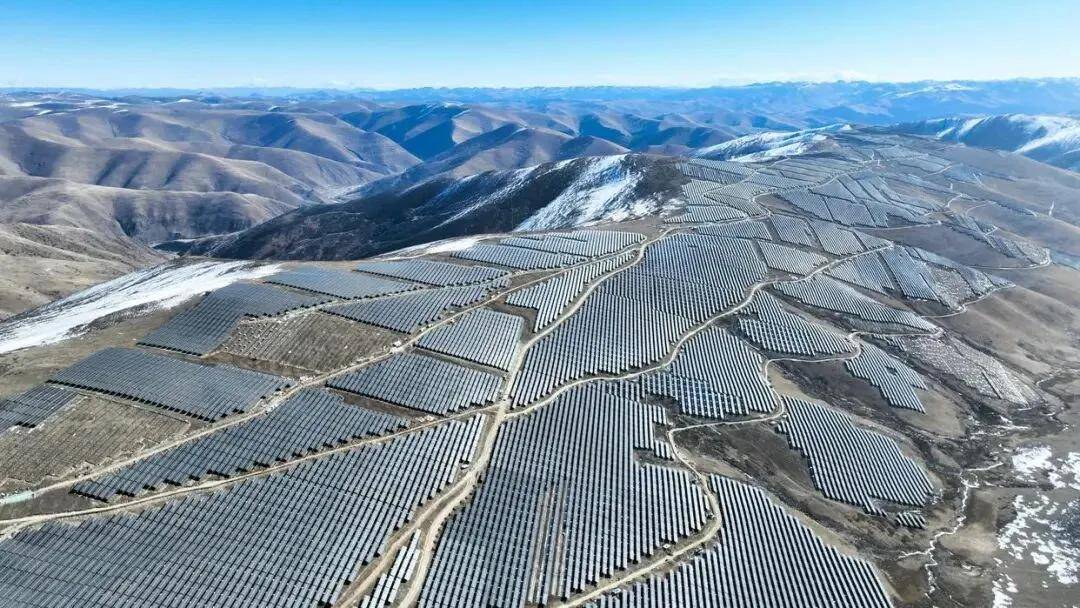
Group 1 - The core project involves the simultaneous commissioning of two large photovoltaic power stations by the Yalong River, creating the world's largest hydropower and solar energy complementary project with a total installed capacity of 6 million kilowatts, sufficient to meet the annual electricity needs of over 5 million households [2] - The project addresses the instability of solar power generation by integrating hydropower, allowing hydropower stations to act as a stabilizing partner for solar energy, thus providing a reliable electricity supply to the grid [4] - The Yalong River project is part of a national strategy to develop nine large clean energy bases, with the Yalong River basin planned to have a total installed capacity of 78 million kilowatts by 2035, capable of generating 200 billion kilowatt-hours of electricity annually, enough for two cities the size of Beijing [6] Group 2 - The construction of power stations in remote areas, such as at an altitude of 4,400 meters, brings significant economic benefits, including over 1 billion yuan in tax revenue and approximately 5,000 job opportunities during the construction phase [8] - The clean energy projects are transforming the development logic of western regions from merely exporting resources to establishing sustainable green energy bases, with ongoing benefits from tax revenues and infrastructure improvements [8] - The Yalong River basin's integrated hydropower and solar energy base currently has nearly 23 million kilowatts of installed capacity, with plans to reach 30 million kilowatts by 2035 [8][9]
奏响“红”“绿”进行曲 铿锵迈步新征程 ——省委十一届十次全会侧记
Si Chuan Ri Bao· 2026-01-04 03:38
Group 1 - The core theme of the discussions is the integration of historical education and green low-carbon development, emphasizing the importance of learning from the Party's history while promoting sustainable industrial growth [1][2] - The Sichuan Provincial Committee has approved two significant decisions: one focuses on consolidating the achievements of Party history education, and the other aims to drive high-quality development of green low-carbon industries [1][2] - The discussions highlight the need for political awareness and commitment to the leadership of Xi Jinping, which is seen as crucial for overcoming challenges and advancing the province's development [2][3] Group 2 - The emphasis on protecting and utilizing red resources, such as memorials for martyrs, reflects a commitment to enhancing the moral and ethical standards of society, particularly among veterans [3] - The conference has set a clear direction for Sichuan to leverage its clean energy advantages and promote a comprehensive green transition, aiming to establish the province as a key area for green technology innovation and low-carbon industry concentration [3][4] - The strategy includes transforming ecological advantages into developmental strengths, particularly in regions like Liangshan, which possess rich natural resources [4]
不输出意识形态,只做实事:中国如何领跑全球气候治理?
Xin Lang Cai Jing· 2026-01-04 02:26
Core Viewpoint - China is emerging as a global leader in climate governance, contrasting with the West's lack of clear direction and commitment in this area [1][2]. Group 1: China's Leadership in Climate Governance - China's rise as a green development leader is remarkable, with projections indicating that by 2024, two-thirds of global electric vehicle sales will come from China, and new energy vehicles will account for 50% of domestic new car sales, compared to around 10% in the U.S. and 20% in Europe [2]. - China produces over 70% of the world's electric vehicles and controls 85% of the global battery supply chain [2]. - In 2024, China's investment in clean energy will exceed $625 billion, representing 31% of global investment in this sector, with renewable energy capacity being more than four times that of the U.S. [2]. Group 2: Integration of Climate Policy and Economic Strategy - China's governance model integrates development goals with net-zero emissions, viewing climate policy as a crucial pillar of national security rather than merely a sustainability issue [2][5]. - The country combines market mechanisms with state guidance, achieving significant results that may be more persuasive for many nations compared to traditional Western models [4]. Group 3: Global Influence and Cooperation - As countries in Africa, Latin America, Southeast Asia, and Central Asia seek scalable solutions, China's low-cost clean energy technologies may surpass Western innovations, making the Chinese model attractive for rapid development and energy transition [5]. - China has signed 55 climate cooperation memorandums with 43 developing countries and implemented over 300 capacity-building projects, providing training for more than 10,000 individuals [6].
元旦假期多地清洁能源齐发力 保供兼具暖意与绿意
Xin Hua She· 2026-01-03 04:21
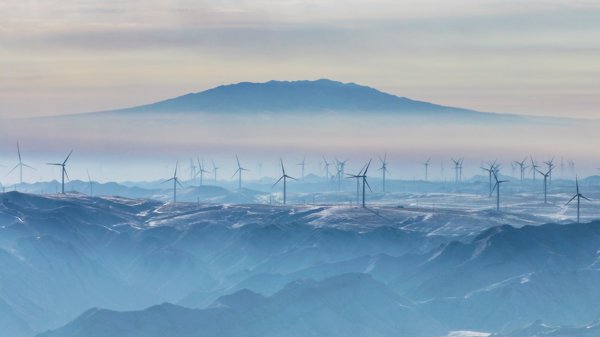
Core Insights - The news highlights the effective utilization of clean energy during the New Year holiday across various regions in China, ensuring stable electricity supply and promoting green energy usage [1][2]. Group 1: Clean Energy Supply and Utilization - In Inner Mongolia, clean heating initiatives contributed to a supply of over 240,000 kilowatt-hours of clean energy on New Year's Day, benefiting 33,000 households [2]. - Hebei's Xiong'an High-speed Railway Station features over 17,000 solar panels, generating more than 30 million kilowatt-hours since its grid connection in 2020, ensuring reliable power for holiday travelers [1]. - Jilin's Baicheng has increased its clean energy capacity to over 16 million kilowatts with the commissioning of the Changfu Wind Farm, facilitating the transmission of clean electricity across regions [1][2]. Group 2: Infrastructure and Future Projects - Ningxia is advancing a 1 million-kilowatt wind power project, which is expected to enhance future energy supply capabilities [2]. - In Xinjiang, power employees completed inspections of 1,808 kilometers of high-voltage transmission lines, contributing to a total electricity export of 460 million kilowatt-hours on New Year's Day [2]. - Hebei aims to increase green electricity trading volume to over 43 billion kilowatt-hours by 2025, supporting various events and platforms [1].
海南自贸港封关以来新增经营主体近1.2万家
Hai Nan Ri Bao· 2026-01-01 00:20
Core Viewpoint - The overall operation of Hainan Free Trade Port's closure is stable and orderly, with a positive start, as evidenced by the significant increase in new business entities and the smooth flow of goods and people since the closure began on December 18, 2025 [2][3]. Group 1: Economic Performance - As of December 28, 2025, Hainan has seen the establishment of 11,957 new business entities since the closure, indicating a robust economic environment [2]. - The province's GDP is expected to exceed 800 billion yuan for the year, marking a significant growth trajectory [4]. - The advanced manufacturing sector is driving double-digit growth in industrial output, while retail sales are increasing at a rate that ranks among the top in the nation [4]. Group 2: Trade and Transportation - Since the closure, 112,100 passengers have entered and exited through Hainan's ports, with 32,700 of them being visa-free arrivals [2]. - A total of 753 aircraft and 180 vessels have moved in and out of the province, with significant traffic through secondary ports, including 3,848 vessels and 160,900 vehicles [2][3]. - The opening of new international routes, including 89 overseas passenger routes, has enhanced Hainan's status as an international aviation hub [3]. Group 3: Policy and Structural Changes - The implementation of policies such as zero tariffs on eligible imports and the use of local products in processing has improved customs efficiency [3]. - The province's economic structure is evolving, with four main industries accounting for nearly 70% of the economic output, and foreign investment increasing by 51.5% from January to November [4]. - Hainan is focusing on building a modern industrial system with unique characteristics, enhancing technological and talent support, and promoting coordinated regional development [6].
量质齐升,“新质之效”重塑烟台发展版图
Qi Lu Wan Bao· 2025-12-31 15:32
Core Insights - Yantai aims to become a model city for green, low-carbon, and high-quality development, showcasing significant achievements in the economy and people's livelihoods by 2025 [1] Economic Growth - In 2023, Yantai became the first city in northern China to surpass a GDP of 1 trillion yuan, with a GDP growth of 6.4% in the first three quarters of 2025, leading among 27 trillion-yuan cities nationwide and 16 cities in the province [1] - From January to October, the city's industrial added value increased by 13.9%, and industrial technological transformation investment grew by 29.1%, indicating a simultaneous renewal of both incremental and stock growth [2] Industrial Transformation - Yantai has established a modern industrial structure categorized into three levels: - Level one focuses on optimizing five leading industry clusters: green chemicals, non-ferrous and precious metals, equipment manufacturing, deep processing of food, and modern services - Level two aims to cultivate five emerging industry clusters: electronic information, advanced structural materials, biomedicine, clean energy, and commercial aerospace - Level three anticipates future industry clusters in intelligent robotics, smart connected vehicles, low-altitude intelligent navigation, cell and gene therapy, and comprehensive utilization of hydrogen energy and LNG [2] Innovation Ecosystem - The transformation speed from laboratory to production line is a key measure of the effectiveness of Yantai's innovation ecosystem, exemplified by the Shandong Provincial Laboratory for Advanced Materials and Green Manufacturing, which has generated a sales increase of 1 billion yuan for partner companies and attracted 11 incubated companies [3] Green Development - Yantai has achieved a 20.9% cumulative reduction in energy intensity over the past three years and has met energy-saving and carbon reduction targets for 19 consecutive years [4] - The city has made significant strides in clean energy, being the first in Shandong to generate nuclear power and offshore wind power, and has established the largest tidal flat solar storage power station in the country [4] Social Impact - The integration of green low-carbon transformation with improvements in living standards has been a focus, with projects like the Haiyang nuclear heating project providing zero-carbon heating to hundreds of thousands of households [4] - The city has enhanced green travel and digital living, with smart city initiatives making services more accessible and improving commuting efficiency [4] Overall Transformation - The new quality productivity has led to a comprehensive, deep, and systematic evolution of Yantai, characterized by innovation-driven, green low-carbon, and people-centered development paths [5] - This transformation has resulted in higher development quality, better industrial structure, improved ecological environment, and enhanced public welfare, positioning Yantai as a more creative, competitive, and happier city [5]
新开发银行:破解煤都转型新地标融资难题
Xin Lang Cai Jing· 2025-12-31 14:50
Core Insights - The Taiyuan Wusu International Airport is becoming a key observation point for the transformation of resource-based regions in China, with a focus on achieving a "zero carbon" status [1][2] - The New Development Bank (NDB) has approved a sovereign loan of 1.448 billion RMB for the construction of the airport, marking the largest international green infrastructure financing in Shanxi province to date [1] - The project aims to utilize renewable energy sources such as solar and geothermal energy to achieve net-zero carbon emissions annually [2][3] Funding and Investment Structure - The total investment for the project is 1.86 billion RMB, with the NDB financing amounting to 1.448 billion RMB and the remaining 412 million RMB sourced from domestic funding [1] - The project has received concept approval on June 21, 2024, and financing approval on July 14, 2025, with public disclosure now underway [1] Environmental and Technical Aspects - The airport's carbon emissions are expected to rise significantly without a change in energy structure, prompting the need for the zero-carbon airport project, which is a national key demonstration project [2] - The project includes the construction of a new terminal and other facilities over an area of 11.68 hectares, with a focus on integrating renewable energy sources [3] - Advanced technologies such as photovoltaic systems, energy storage, and smart management platforms will be implemented to meet energy demands and reduce carbon emissions [4] Challenges and Mitigation Strategies - The project faces potential risks such as groundwater pollution from geothermal drilling and the impact of photovoltaic panels on bird behavior [4][5] - The project team plans to adhere to national standards and implement environmental and social management plans to mitigate these risks [5]
花旗:中集安瑞科(03899)商业航空业务快速发展 予“买入”评级 目标价9.5港元
智通财经网· 2025-12-31 09:08
Core Viewpoint - Citigroup's report indicates that CIMC Enric (03899) has outperformed the Hang Seng Index in the past month, primarily due to the rapid development of its commercial aviation business [1] Group 1: Business Performance - The company is expected to see a recovery in its clean energy and chemical businesses in a low-interest-rate environment [1] - According to management, the company's relevant business revenue has exceeded 100 million RMB this year, with 50% coming from overseas [1] Group 2: Growth Potential - The report suggests that while the revenue from the commercial aviation business is currently limited, it could become a fast-growing segment for CIMC Enric due to the recent release of the "Action Plan for Promoting High-Quality and Safe Development of Commercial Aerospace (2025-2027)" by the China National Space Administration [1] Group 3: Investment Rating - Citigroup has assigned a "Buy" rating to CIMC Enric with a target price of 9.5 HKD [1]

青海十四五生态产业民生三突破,筑牢中华水塔激活发展动能
Xin Lang Cai Jing· 2025-12-31 08:33
Group 1: Ecological Protection - Qinghai, known as the "Water Tower of China," emphasizes ecological value, with over 17,000 herders becoming ecological guardians [1] - The province contributes over 60 billion cubic meters of water annually, enhancing its ecological significance [1] - The construction of national parks, including the Sanjiangyuan National Park and the Qilian Mountain National Park, is progressing steadily [1] Group 2: Industrial Transformation - Qinghai is leveraging its salt lake resources for lithium extraction and magnesium chloride dehydration, supporting China's food security and new energy development [2] - The province has installed 73 million kilowatts of clean energy, providing green electricity to 22 provinces and regions [2] - Qinghai is recognized as an international eco-tourism destination, with its natural beauty attracting global attention [2] Group 3: Improvement in Livelihoods - During the 14th Five-Year Plan, Qinghai's economic output is expected to exceed 400 billion yuan, with urban and rural income growth outpacing economic growth [2] - The province has made significant progress in poverty alleviation, healthcare, and education, enhancing the well-being of its residents [2] - Eight major industries are contributing to improved living conditions, fostering a sense of community and happiness among diverse populations [2]