
运动服饰

Search documents
马年将至消费板块修复在即,摩根大通研报:中国消费股已具备足够吸引力
Zhi Tong Cai Jing· 2026-01-20 14:28
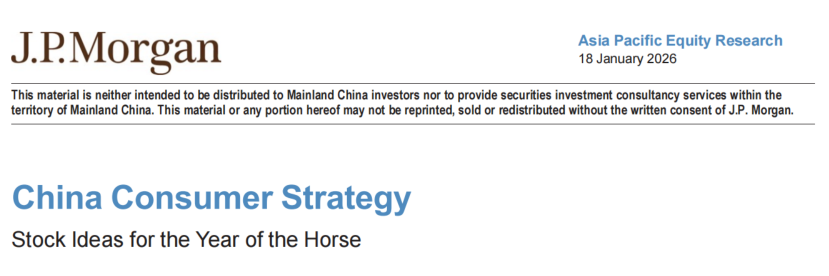
Core Insights - The Chinese consumer sector is showing signs of recovery in early 2026 after a five-year underperformance period from 2021 to 2025, driven by a combination of policy support and structural differentiation in demand [1] - The report highlights that the risk-reward ratio for Chinese consumer stocks is now attractive due to valuation advantages and profit resilience, with a focus on sector differentiation and company-specific opportunities [1] Industry Fundamentals: Mild Recovery Under Pressure - The current landscape of the Chinese consumer industry is characterized by "weak demand recovery and profit repair," with retail sales growth slowing to 1.3% year-on-year in November 2025 [2] - Forecasts suggest retail sales growth will remain at 2.6% and 2.5% for 2026 and 2027, respectively, amid a GDP growth slowdown to 4.5% and 4.1% [2] - Profit expectations for 2025 have been downgraded, with projected sales and net profit growth of only 3.7% and 8.8%, respectively, indicating potential further downward revisions if no additional stimulus is implemented [2] Core Trends Iteration: Restructuring Competitive Landscape - Price deflation has become a significant characteristic of the industry, with notable declines in key products, such as the price of Feitian Moutai dropping over 60% from its peak [3] - The trend of industry consolidation is accelerating, with leading companies leveraging cost control and digital technologies to capture market share from smaller brands [3] Changes in Consumer Behavior: Affordable Self-Indulgence and Experience-Driven Consumption - In the context of consumption downgrade, "affordable self-indulgence" has emerged as a core logic for younger consumers, who are price-sensitive yet willing to pay for emotional value and experiences [4] - Successful strategies in this segment involve differentiation, as seen with companies like Pop Mart, which utilizes a multi-IP matrix to mitigate risks associated with single IP lifecycle [4] Overseas Expansion and Demographic Restructuring Growth Logic - To counter domestic growth challenges, leading companies in sectors like home appliances and sportswear are accelerating their overseas expansion, benefiting from stronger demand and more rational competition [6] - The ongoing demographic shift, including a declining birth rate and an aging population, presents both challenges and opportunities for various sectors, driving demand growth in areas like personal care and elder services [6] Global Perspective: Valuation Advantages of Chinese Consumer Stocks - After five years of adjustment, the valuation bubble in the Chinese consumer sector has significantly compressed, with a projected P/E ratio of 17 times for 2026, lower than several other markets [7] - Notable performers since early 2026 include brands like Gu Ming and Li Ning, reflecting market recognition of quality leading companies [7] Transition from High Growth to Steady Defensive Full-Spectrum Layout - The Chinese consumer industry is transitioning from a "same rise and fall" cycle to an era where "structure is king," supported by policy measures and evolving consumption trends [8] Recommended Investment Targets - JPMorgan highlights six key investment targets across different sectors, including Laopu Gold, Luckin Coffee, and Pop Mart, focusing on companies that benefit from policy support and have strong competitive advantages [9] - Investment strategies should concentrate on sectors benefiting from policy stimulus, affordable self-indulgence trends, and those with overseas expansion capabilities to navigate domestic growth challenges [9]

安踏Q4业绩发布 多品牌韧性凸显 去年高端户外增长近50%
Ge Long Hui· 2026-01-20 11:20
Core Viewpoint - Anta Group (2020.HK) reported strong retail performance for Q4 and the full year of 2025, achieving over 70 billion in total revenue despite macroeconomic challenges and insufficient consumer momentum [1] Group Performance - The company recorded high single-digit growth in Q4 revenue and low double-digit growth for the full year, indicating a solid performance [1] - The multi-brand strategy of Anta has demonstrated strong resilience and advantages, contributing to a robust fundamental base [1] Brand Highlights - The FILA brand achieved mid-single-digit positive growth for both the full year and Q4, showcasing strong growth resilience and industry leadership in a challenging market environment [1] - Other brands in the portfolio, such as DESCENTE and KOLON SPORT, performed exceptionally well, with full-year retail revenue growth of 45-50% and Q4 growth of 35-40% [1] Future Outlook - Short-term macroeconomic and climate factors are not expected to alter the long-term positive fundamentals of the sports consumption market [1] - Market perspectives suggest that as long as Anta continues to adhere to its multi-brand collaborative growth strategy, deepen the differentiated positioning of each brand, enhance product support through technological innovation, and improve operational efficiency and health, it can continue to outperform the industry and further expand its leading advantage [1]
运动巨头渠道策:销售下滑 门店升级丨消费参考
2 1 Shi Ji Jing Ji Bao Dao· 2026-01-20 05:10
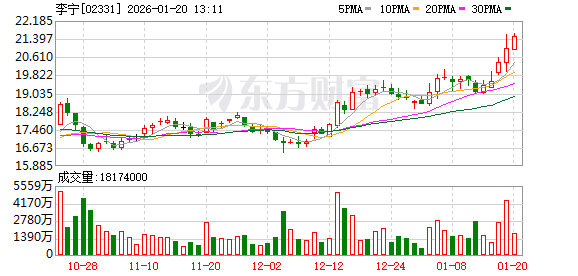
Group 1: Li Ning Company Overview - Li Ning remains optimistic about its future despite a low single-digit decline in retail sales for the fourth quarter ending December 31, 2025, excluding Li Ning YOUNG [2] - The number of sales points in China for Li Ning (excluding Li Ning YOUNG) decreased by 41 to a total of 6,091, with retail points down by 59 and wholesale points up by 33 [3] - Li Ning is investing in flagship stores, launching its first "Dragon Store" in Beijing, which is expected to create a strong synergy with the new "Honor Gold Standard" product line [3] Group 2: Market Trends and Competitors - The trend in the industry shows major brands like Nike upgrading key stores in China, with a reported 25% sales increase in upgraded locations, despite a 16% decline in overall sales [4] - Li Ning's stock price increased by 2.94% to HKD 21 per share on January 19, 2026, indicating positive market sentiment [4] Group 3: Financial Performance and Projections - Li Ning's e-commerce virtual store business remained flat, indicating stability in that segment amidst overall sales declines [2] - The company is focusing on enhancing customer experience through flagship stores, aligning with broader industry trends of investing in experiential retail [4]
运动巨头渠道策:销售下滑,门店升级
2 1 Shi Ji Jing Ji Bao Dao· 2026-01-20 04:52
Group 1 - The company remains confident about its future despite a slight decline in retail sales, with a low single-digit decrease in overall retail revenue for the fourth quarter ending December 31, 2025 [1] - The offline channel, including retail and wholesale, experienced a medium single-digit decline, while the e-commerce segment remained flat [1] - The total number of sales points in China, excluding Li Ning YOUNG, decreased by 41 to 6091, with retail points down by 59 and wholesale points up by 33 [1] Group 2 - The company is investing in flagship stores, having opened its first "Dragon Store" in Beijing, which is expected to create a strong synergy with the newly launched Honor Gold Label product series [2] - An outdoor store named "COUNTERFLOW" has also opened in Beijing, indicating a diversification in retail offerings [3] - The industry trend shows major brands like Nike are upgrading key stores, with a notable 25% sales increase in upgraded product categories, despite a 16% decline in overall sales in the Greater China region [4][5]
申万宏源证券晨会报告-20260120
Shenwan Hongyuan Securities· 2026-01-20 00:41
Economic Overview - The GDP growth for Q4 2025 is reported at 4.5%, matching expectations but down from 4.8% in the previous quarter. December retail sales growth is at 0.9%, below the expected 1.5% and previous 1.3% [12][12] - Fixed asset investment shows a cumulative year-on-year decline of 3.8%, worse than the expected decline of 2.4% and previous 2.6%. Real estate development investment has a cumulative decline of 17.2% compared to the previous 15.9% [12][12] - Industrial value-added growth for December is reported at 5.2%, exceeding the expected 4.9% and previous 4.8% [12][12] Key Changes in Economic Structure - Three significant changes are identified: improvement in service consumption, easing of the "crowding out effect" from debt reduction, and recovery in new economic sectors [12][12] - The shift in consumption policies from goods to services is noted, with service retail growth increasing while traditional retail indicators decline [12][12] - Investment slowdown is attributed to intensified corporate debt repayment policies, which ultimately benefit cash flow recovery for companies [12][12] Sector Performance - The electric grid equipment sector shows a significant increase of 60.88% over the past six months, with a daily increase of 7.01% [1] - The digital media sector has seen a decline of 4.34% yesterday, with a 21.93% increase over the past month [1] - The hotel and catering industry has increased by 3.87% yesterday and 20.46% over the past six months, indicating resilience in service consumption [1] Investment Opportunities - The report highlights potential investment opportunities in sectors benefiting from service consumption recovery and easing debt repayment pressures [12][12] - Companies in the PCB drilling needle industry are noted for their growth potential, driven by increasing demand in emerging markets [20][20] - The report suggests focusing on companies with strong cash flow recovery and those positioned in high-growth sectors such as healthcare and technology [12][12][20]
特步国际(01368.HK)获贝莱德增持225.5万股
Ge Long Hui· 2026-01-20 00:09
Group 1 - BlackRock, Inc. increased its stake in Xtep International (01368.HK) by purchasing 2.255 million shares at an average price of HKD 5.2647 per share, totaling approximately HKD 11.872 million [1] - Following the acquisition, BlackRock's total shareholding in Xtep International rose to 169,725,072 shares, increasing its ownership percentage from 5.97% to 6.05% [1]

贝莱德增持特步国际225.5万股 每股作价约5.26港元
Zhi Tong Cai Jing· 2026-01-19 11:36
香港联交所最新资料显示,1月14日,贝莱德增持特步国际(01368)225.5万股,每股作价5.2647港元,总 金额约为1187.19万港元。增持后最新持股数目约为1.7亿股,最新持股比例为6.05%。 ...

贝莱德增持特步国际(01368)225.5万股 每股作价约5.26港元
智通财经网· 2026-01-19 11:34
智通财经APP获悉,香港联交所最新资料显示,1月14日,贝莱德增持特步国际(01368)225.5万股,每股 作价5.2647港元,总金额约为1187.19万港元。增持后最新持股数目约为1.7亿股,最新持股比例为 6.05%。 ...
你穿过的双星鞋,正经历一场“生死”内斗
3 6 Ke· 2026-01-19 11:27
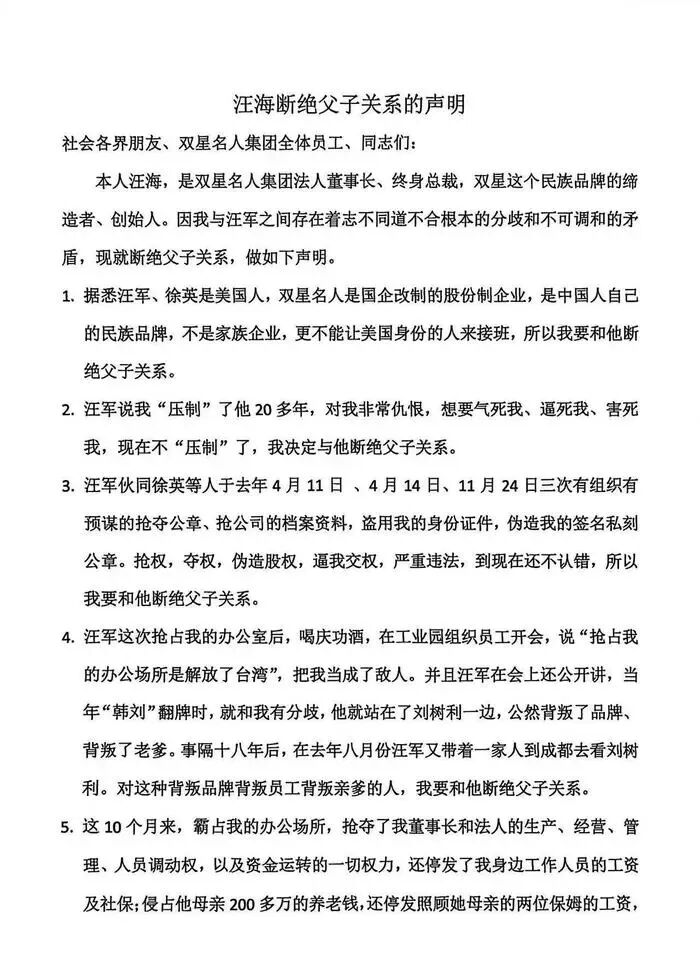
Core Viewpoint - The challenges faced by Double Star Group highlight the importance of governance and succession planning in family-owned businesses within the Chinese sports brand industry, reflecting a broader issue of maintaining stability and competitiveness in a rapidly evolving market [1][16][19]. Company History - Founded in 1921, Double Star Group is one of China's earliest shoe manufacturing enterprises, originally known as Qingdao No. 9 Rubber Factory [4]. - The company transitioned to producing civilian shoes under the "Double Star" brand in the 1970s, with significant growth leading to its listing on the Shenzhen Stock Exchange in 1996 [7][10]. Brand Development - Double Star became a pioneer in brand awareness and marketing strategies in China, sponsoring various sports events and teams, which helped establish its image as a professional sports brand [8]. - By 2005, the brand's value was estimated at 49.29 billion yuan, with its products recognized as "Chinese famous brands" [8]. Internal Conflicts - The company has faced significant internal strife, particularly following the transition of leadership from founder Wang Hai to his son Wang Jun, leading to a clash of management philosophies [11][12]. - The conflict escalated in 2022 when Wang Hai lost control over the company, resulting in a public family dispute that has drawn attention to the challenges of governance in family businesses [12][15]. Industry Implications - The issues at Double Star reflect a broader trend in the Chinese sports brand industry, where family-owned companies often struggle with succession and governance, leading to instability [16][19]. - Research indicates that the average lifespan of family businesses in China is only 24 years, with a significant drop in continuity beyond the second generation, underscoring the need for professional management and structured succession plans [16][19]. Future Considerations - The future of Double Star and similar companies hinges on their ability to implement effective governance structures and succession strategies to remain competitive against international giants like Nike and Adidas [19].
可选消费W03周度趋势解析:美联储独立性和未来货币政策稳定性的担忧和要求设置信用卡利率上限,本周海外消费集体下挫-20260118
Haitong Securities International· 2026-01-18 14:35
Investment Rating - The report assigns an "Outperform" rating to multiple companies including Nike, Midea Group, JD Group, and Anta Sports, among others [1]. Core Insights - Concerns regarding the independence of the Federal Reserve and future monetary policy stability have led to a collective decline in overseas consumer sectors [4][11]. - The snack sector has shown resilience, outperforming the MSCI China index, while other sectors such as luxury goods and overseas sportswear have faced significant declines [4][11]. - The report highlights that most sectors are currently undervalued compared to their historical averages, indicating potential investment opportunities [9][15]. Sector Performance Summary - **Snack Sector**: Increased by 1.7%, with Wei Long's revenue guidance for 2026 projected to grow over 15% due to innovative products and channel expansion [6][14]. - **Jewelry Sector**: Rose by 1.6%, driven by Chow Tai Fook's strong operational performance expectations for FY26Q3 [6][14]. - **Overseas Cosmetics**: Gained 1.1%, with E.L.F Beauty's sales growth exceeding previous guidance [6][14]. - **Domestic Sportswear**: Increased by 1.5%, with Li Ning's revenue meeting expectations and a positive outlook for net profit margins [8][14]. - **Pet Sector**: Grew by 0.3%, with strong annual growth despite a slight decline in December [8][14]. - **Gambling Sector**: Slight decline of 0.1%, with Galaxy Entertainment showing resilience as a preferred investment choice [8][14]. - **Domestic Cosmetics**: Decreased by 0.3%, with expectations for recovery in 2026 [8][14]. - **Retail Sector**: Fell by 1.5%, with Target's positive leadership changes noted [8][14]. - **Luxury Goods**: Declined by 2.9%, impacted by market concerns over credit risks following Saks Global's bankruptcy [8][14]. - **Overseas Sportswear**: Experienced a significant drop of 4.0%, with major brands like Nike and Adidas facing declines [8][14]. - **Credit Card Sector**: Decreased by 5.1%, influenced by proposed caps on credit card interest rates [8][14]. Valuation Analysis - The report indicates that the expected PE ratios for various sectors in 2025 are below their historical averages, suggesting potential undervaluation: - Overseas Sportswear: 30.4x (57% of historical average) - Domestic Sportswear: 13.5x (71% of historical average) - Jewelry: 22.8x (43% of historical average) - Luxury Goods: 27.4x (49% of historical average) - Gambling: 16.2x (26% of historical average) - Overseas Cosmetics: 41.0x (61% of historical average) - Domestic Cosmetics: 27.3x (51% of historical average) - Pet Sector: 36.9x (50% of historical average) - Snack Sector: 29.8x (72% of historical average) - Retail: 29.9x (54% of historical average) - US Hotels: 34.8x (21% of historical average) - Credit Cards: 28.3x (54% of historical average) [9][15].