
农产品

Search documents
红枣迷局:新季减产,期价缘何大跌?
经济观察报· 2025-11-02 06:50
Core Viewpoint - The article discusses the recent fluctuations in the red date market, highlighting a significant increase in inventory levels and a decline in futures prices, attributed to a combination of factors including production levels and consumer demand [1][8][16]. Group 1: Inventory and Production - As of October 31, 2025, physical inventory of red dates reached 9,348 tons, an increase of 245 tons week-on-week, representing a 2.69% rise compared to the previous week and a 120.78% increase year-on-year [1][8]. - The 2024 production year in Xinjiang saw a record yield of 750,000 tons, leading to slow consumption of old date inventory [1][8]. - The market consensus indicates a slight reduction in new season production, with estimates ranging from 400,000 tons to 550,000 tons, reflecting significant disagreement among market participants [5][6]. Group 2: Price Trends - The main contract for red dates closed at 10,145 yuan/ton on October 31, 2025, down 1.46%, with a weekly decline of 5.63%, marking the largest drop among domestic commodity futures [2]. - Since October 17, the futures price has dropped by 11.17%, while the corresponding spot price for dried red dates only decreased by 0.84% [2][13]. - The price fluctuations are attributed to the market's reaction to the anticipated production levels and the increasing inventory pressure due to weak consumer demand [13][16]. Group 3: Consumer Demand and Market Dynamics - The overall performance of red date consumption has been lackluster, with a noted 20-day reduction in the traditional peak consumption period leading up to the Spring Festival [11]. - Promotional activities have intensified as merchants attempt to clear old inventory, with significant discounts observed in retail settings [8][9]. - The market is currently characterized by cautious purchasing behavior, with many buyers opting for on-demand procurement rather than bulk purchases [11][16]. Group 4: Regulatory Changes - New delivery regulations allow for the delivery of old dates at a discount, which may impact market dynamics and pricing strategies [12][15]. - The changes in delivery rules are expected to stabilize the futures market while aligning it more closely with the spot market [15].


连巴西也要卡中国!大豆涨价趁机会,中国不买账,美抢着送订单
Sou Hu Cai Jing· 2025-11-02 06:09
Group 1 - The international soybean market is experiencing significant price fluctuations, with Brazilian soybean prices rising sharply while U.S. prices are declining due to excess inventory [1][3] - Brazilian soybean prices increased from $580 to $650 per ton, representing a 12% rise, which translates to an additional $7 million for a 100,000-ton purchase [1] - U.S. soybean inventory has reached 1.82 billion bushels, a 45% increase compared to the same period last year, leading to lower prices [1][3] Group 2 - The price difference between U.S. and Brazilian soybeans has widened to $66 per ton, creating a competitive environment for buyers [3] - Chinese buyers are now in a strong position, having diversified their sources of soybean imports, reducing reliance on any single supplier [3][6] - Argentina is expected to increase its market share in China to 22% by 2025, while Russia is also increasing its soybean exports to China, providing more options for buyers [6][8] Group 3 - The competitive landscape allows China to leverage its purchasing power, choosing suppliers based on price and quality rather than loyalty [8][10] - U.S. soybean prices are becoming attractive again due to the need for U.S. farmers and exporters to clear excess inventory, providing opportunities for Chinese buyers to take advantage of lower prices [8][10] - The dynamics of the global soybean market are increasingly influenced by China's purchasing decisions, making it a key player in determining market trends [10]
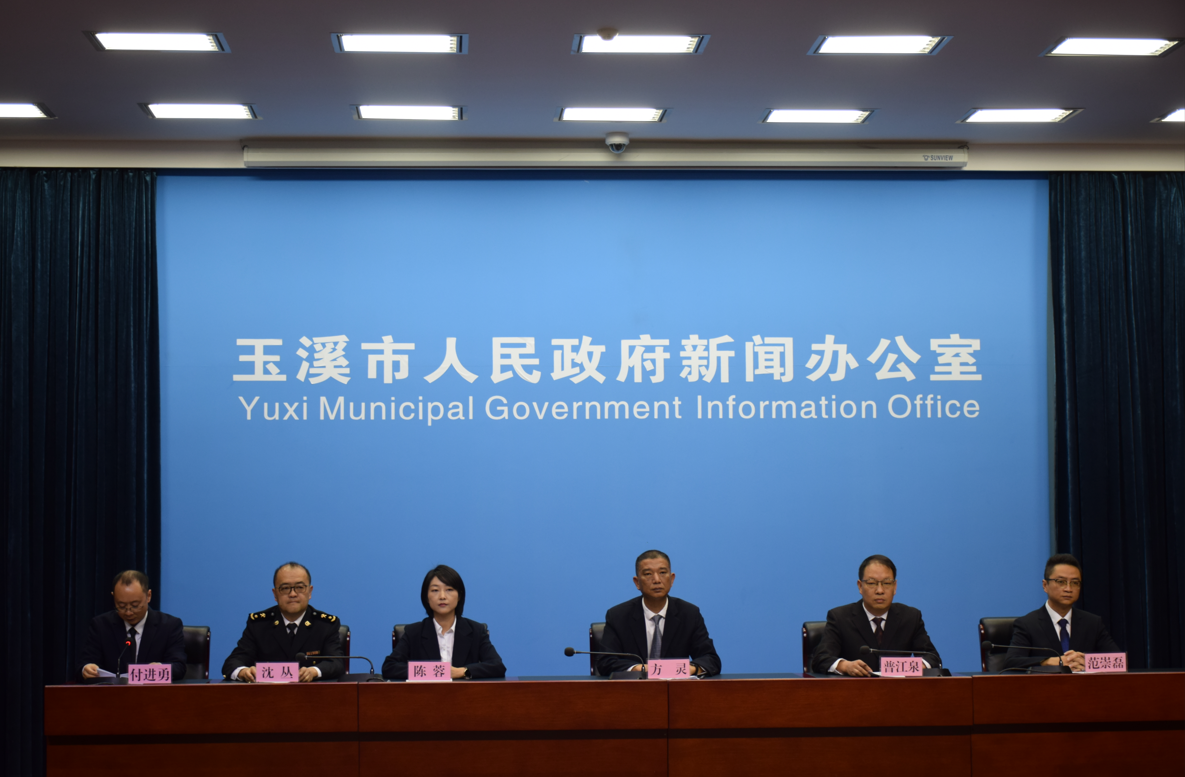
玉溪打造面向南亚东南亚辐射中心 开放型经济迈出新步伐
Zhong Guo Jin Rong Xin Xi Wang· 2025-11-02 01:03
Core Insights - Yuxi City is actively contributing to the national and provincial development goals by enhancing its transportation and economic connectivity, aiming to establish itself as a radiation center for South and Southeast Asia [1] Infrastructure Development - Yuxi City has implemented a comprehensive action plan to enhance transportation capabilities, resulting in a well-formed integrated transportation network, including 258 kilometers of railway and a projected 18,396 kilometers of road by 2024, ranking second in road density in the province [3] - The city has optimized its energy network and achieved "township-level" charging facility coverage, becoming the only city in the province recognized as a national-level IPv6 technology innovation pilot [3] International Cooperation - Yuxi City is enhancing its foreign trade mechanisms and has established connections with six overseas business representative offices, fostering cooperation with international cities such as An Phu in Vietnam and Oudomxay in Laos [4] - The city’s foreign trade from January to August reached 3.419 billion yuan, with Laos being the largest trading partner, accounting for 1.247 billion yuan [4] Economic Growth - Yuxi City is accelerating the development of highland characteristic modern agriculture, achieving significant agricultural exports and establishing a cooperative agricultural planting area of over 1.2 million mu overseas [5] - The industrial sector is also seeing growth, with traditional industries being strengthened and new industries emerging, including breakthroughs in the biopharmaceutical sector [5] Logistics and Transportation - The construction of national logistics hubs is progressing, with the establishment of logistics parks and the successful operation of international cold chain freight trains [6] - Yuxi City is developing a multi-modal transport system, enhancing logistics efficiency and establishing a comprehensive logistics service network focused on various commodities [7]
43万吨美国大豆将运往中国,贝森特放话:下周签协议,中国将买1200万吨大豆!
Sou Hu Cai Jing· 2025-11-01 17:05
Group 1 - The meeting between the leaders of China and the United States in Busan resulted in China agreeing to purchase 12 million tons of U.S. soybeans this quarter and plans to buy 25 million tons annually over the next three years [1][3] - This soybean deal is seen as a significant political gesture for the U.S., particularly for President Trump, as it aims to support American farmers who have suffered economically due to previous trade tensions [1][3] - The agreement is expected to provide political backing for the upcoming midterm elections in the U.S., showcasing a form of "economic gift" to farmers [3] Group 2 - China's annual demand for soybeans exceeds 100 million tons, making U.S. soybeans a crucial option due to their quality and supply capabilities [3][5] - The meeting emphasized the importance of cooperation in U.S.-China relations, with both sides recognizing that confrontation would lead to mutual losses [5][7] - The outcomes of the meeting, including the suspension of retaliatory measures and tariff reductions, indicate a pragmatic approach to fostering a stable economic relationship [3][5] Group 3 - The strategic significance of the meeting lies in both countries' willingness to seek cooperation amidst a complex international environment, marking a potential shift in their relationship [7] - The commitment to mutual benefits and communication, even in sensitive areas like technology and agriculture, is essential for long-term market relationships [5][7] - The expectation is that, despite ongoing challenges, a comprehensive trade war is unlikely to resume, as both nations have vested interests in maintaining stable trade relations [5][7]

中美谈妥后,赢家还不知是谁,输家却至少有四位,第一个就是印度
Sou Hu Cai Jing· 2025-11-01 12:51
Core Points - The unexpected thaw in US-China relations in the second half of 2025, with the US postponing tariffs on certain Chinese goods, particularly those related to fentanyl, while China also suspended some countermeasures [1][3] - The agreement appears to be a strategic maneuver for both countries, with the US aiming to secure votes from agricultural states and China signaling a willingness to cooperate while maintaining core interests [3][15] - Other countries, particularly India and Mexico, are facing negative repercussions from this agreement, as their strategies to capitalize on US-China tensions have backfired [5][9][11] Group 1: US-China Relations - The US President's decision to delay tariffs is seen as a move to stabilize domestic political support, particularly from agricultural voters [3][15] - China’s response indicates a desire to maintain its export market while asserting its core interests, such as in rare earth elements [3][15] - The agreement is characterized as a "pause" rather than a resolution, suggesting ongoing competition between the two nations [17] Group 2: Impact on Other Countries - India, which sought to benefit from US-China tensions, is now attempting to restart tariff negotiations with the US but faces a cold reception [7][9] - Mexico's earlier decision to impose high tariffs on Asian goods has resulted in retaliatory measures from China, leading to significant economic consequences [9][11] - The EU finds itself in a precarious position, having tried to balance relations with both the US and China, but now risks being sidelined [11][13] Group 3: Strategic Implications - The agreement alters the dynamics of international relations, with countries that anticipated gains from US-China tensions now reassessing their positions [15][17] - The situation highlights the importance of understanding global supply chains and the potential for countries to misjudge their influence [15][17] - The strategic maneuvering by both the US and China reinforces their positions in the global economy, while other nations must adapt to the new landscape [15][17]

湖北农展产业联盟成立
Zhong Guo Jing Ji Wang· 2025-11-01 06:20
Core Points - The establishment of the Hubei Agricultural Exhibition Industry Alliance marks a new phase of collaborative cooperation and innovative development for high-quality agricultural products in Hubei [2][3] - The alliance aims to leverage the Hubei Agricultural Exhibition platform to create a brand matrix and expand the market for Hubei agricultural products, contributing to the construction of a "land of fish and rice" in the new era [3] Summary by Sections - **Alliance Formation**: The Hubei Agricultural Exhibition Industry Alliance was officially established on October 31, with representatives unanimously approving the alliance's charter [2] - **Sales Performance**: In the first three quarters of the year, the Hubei Agricultural Exhibition achieved sales of 1.171 billion yuan, with 279 suppliers and 3,466 products participating [2] - **Strategic Focus**: The alliance will focus on three key areas: improving channels, strengthening supply chains, and building brands to promote the high-quality development of Hubei's agricultural industry [2] - **Operational Model**: The alliance will operate under a model of "consultation, resource sharing, project-driven, and shared results," aiming to address shortcomings in the agricultural product supply chain [2][3] - **Leadership Commitment**: The first chairman of the alliance, represented by Wushang Supermarket, emphasized the commitment to work with member units to enhance the Hubei Agricultural Exhibition brand [2]

中美会晤释放强信号!大豆、豆粕价格要变天?一文看懂核心逻辑
Hua Xia Shi Bao· 2025-11-01 00:32
Core Viewpoint - The recent surge in U.S. soybean futures prices is attributed to expectations of China purchasing U.S. soybeans, marking a significant shift after a period of zero imports from the U.S. [3][5] Group 1: U.S. Soybean Market Dynamics - On October 30, U.S. soybean futures reached a peak of $11.14 per bushel, the highest in 15 months, closing at $11.09 on October 31 [3]. - Analysts suggest that the potential for China to resume soybean purchases from the U.S. is a key driver behind the price increase [5][6]. - Following a meeting between Chinese President Xi Jinping and U.S. President Trump, there is optimism regarding the stabilization of U.S.-China relations, which could positively impact global soybean trade [5]. Group 2: Chinese Purchasing Behavior - There is speculation that China may agree to purchase 12 million tons of U.S. soybeans this season, with potential procurement actions expected in November and December [6]. - The Chinese market's demand for soybeans is influenced by domestic supply conditions, with analysts noting that increased imports could stabilize domestic soybean supply [6][10]. - The Chinese soybean purchasing strategy may involve a mix of U.S. and Brazilian soybeans, depending on price competitiveness [7]. Group 3: Domestic Soybean and Meal Demand - Domestic demand for soybean meal remains strong, supported by high inventory levels in the livestock sector [8][10]. - Recent data indicates that China's industrial feed production has shown significant year-on-year growth, reflecting robust demand for soybean meal [8]. - As of October 24, major oil mills in China reported a decrease in soybean inventory and an increase in soybean meal inventory, indicating shifting market dynamics [10]. Group 4: Price Outlook and Market Sentiment - Analysts express mixed views on the future of soybean prices, with some predicting a bullish trend while others caution against potential downward pressure if imports increase [6][11]. - The ongoing U.S. government shutdown has hindered the release of updated agricultural reports, contributing to uncertainty in the market [9]. - The overall sentiment in the market is cautious, with expectations that any recovery in U.S. soybean prices may be limited by global supply conditions, particularly from South America [11][12].

期货市场中,什么才是顺势而为?
Sou Hu Cai Jing· 2025-10-31 18:12
Core Viewpoint - OPEC+ has reached a historic production cut agreement of 9.7 million barrels per day, signaling an end to the oil price war and leading to a rebound in international oil prices [1] Oil and Chemical Industry - The recent production cut is expected to create a buying opportunity for crude oil and chemical products, as prices have reached a low point and are likely to recover [1] - The statement emphasizes that the value of oil will eventually return, suggesting that the current price disparity between oil and water is unsustainable [1] Market Conditions - Global market volatility has led to a decline in A-shares, indicating the need for asset allocation to hedge against market risks [1] - The agricultural sector is also experiencing price increases due to the intensifying pandemic, highlighting broader inflationary pressures across various commodities [1]
玉米类市场周报:现货价格偏弱调整,期价维持低位震荡-20251031
Rui Da Qi Huo· 2025-10-31 09:05
1. Report Industry Investment Rating - Not provided in the content 2. Core Viewpoints of the Report - For both corn and corn starch, the report suggests maintaining a bearish outlook in the medium to long term [8][12] 3. Summary According to the Table of Contents 3.1 Weekly Highlights Summary Corn - This week, corn futures fluctuated narrowly at a low level. The closing price of the main 2601 contract was 2130 yuan/ton, a decrease of 3 yuan/ton from last week. The market is still cautious as the USDA has not released the crop progress report. With the advancement of US corn harvest, supply pressure will gradually increase. However, the estimated US corn yield per acre this year is lower than the USDA's previous forecast, and the expectation of a China-US trade agreement boosts the US corn market. In China, the corn yield per acre in the Northeast has increased significantly due to favorable climate during the sowing period. Farmers are willing to sell, but traders are slow to build inventories, and drying towers operate on a "buy-and-sell" basis. Feed enterprises have not replenished their inventories on a large scale, and the purchase price has been slightly adjusted downward as new grain arrives. In the North China and Huanghuai regions, the pressure to sell high-moisture grain has eased with the drop in temperature. As the price of new grain has fallen, farmers are more reluctant to sell, resulting in a slight decrease in the volume of grain on the market. Traders are cautious about building inventories. Large feed enterprises still have some wheat stocks and are mainly on the sidelines regarding new corn purchases. Most enterprises adjust their purchase prices flexibly according to the volume of grain arriving at the factory gates. The corn futures price has generally been fluctuating at a low level recently [9] Corn Starch - Dalian corn starch futures fluctuated narrowly. The closing price of the main 2601 contract was 2440 yuan/ton, a decrease of 1 yuan/ton from last week. As the volume of new-season corn on the market gradually increases, the supply pressure of raw material corn intensifies, and the cost support for corn starch weakens. The substitution advantage of tapioca starch still exists, continuing to squeeze the market demand for corn starch. However, the industry's operating rate has been lower than the same period in previous years, and enterprises have had good sales recently, resulting in a slight decline in inventory. As of October 29, the total starch inventory of national corn starch enterprises was 1.128 million tons, a decrease of 12,000 tons from last week, a weekly decline of 1.05%, a monthly decline of 0.97%, and a year-on-year increase of 36.89%. The starch market has been fluctuating in tandem with the corn market [13] 3.2 Futures and Spot Market Futures Price and Position Changes - This week, the January contract of corn futures fluctuated narrowly at a low level, with a total open interest of 931,151 lots, an increase of 42,659 lots from last week. The January contract of corn starch futures fluctuated narrowly, with a total open interest of 211,483 lots, a decrease of 126 lots from last week [19] Net Position Changes of the Top 20 - This week, the net position of the top 20 in corn futures was -79,110, compared with -86,514 last week, indicating a slight decrease in net short positions. The net position of the top 20 in starch futures was -54,866, compared with -53,333 last week, showing little change in net short positions [25] Futures Warehouse Receipts - The registered warehouse receipts of yellow corn were 63,966 lots, and the registered warehouse receipts of corn starch were 12,504 lots [31] Spot Price and Basis - As of October 30, 2025, the average spot price of corn was 2,242.16 yuan/ton. The basis between the January active contract of corn futures and the average spot price was +112 yuan/ton. The spot price of corn starch in Jilin was 2,600 yuan/ton, and in Shandong it was 2,750 yuan/ton. The spot price was relatively stable this week. The basis between the January contract of corn starch futures and the spot price in Changchun, Jilin was 160 yuan/ton [37][42] Inter - Month Spread - The 1 - 3 spread of corn was -29 yuan/ton, at a relatively low level compared to the same period. The 1 - 3 spread of starch was -8 yuan/ton, at a medium level compared to the same period [48] Futures Spread - The spread between the January contracts of starch and corn was 310 yuan/ton. As of Thursday this week, the spread between Shandong corn and corn starch was 614 yuan/ton, an increase of 52 yuan/ton compared to last week [58] Substitute Spread - As of October 30, 2025, the average spot price of wheat was 2,487 yuan/ton, and the average spot price of corn was 2,242.16 yuan/ton. The wheat - corn spread was 244.84 yuan/ton. In the 44th week of 2025, the average spread between tapioca starch and corn starch was 291 yuan/ton, a narrowing of 7 yuan/ton compared to last week [63] 3.3 Industry Chain Situation - Corn Supply Side - **Inventory at North and South Ports**: As of October 24, 2025, the domestic trade corn inventory at Guangdong Port totaled 270,000 tons, an increase of 152,000 tons from last week; the foreign trade inventory was 337,000 tons, a decrease of 25,000 tons from last week. The total corn inventory at the four northern ports was 945,000 tons, a week - on - week decrease of 14,000 tons; the shipping volume at the four northern ports that week was 888,000 tons, a week - on - week increase of 84,000 tons [52] - **Monthly Import Volume**: In September 2025, China's total corn imports were 56,562.26 tons, a decrease of 256,532.84 tons compared to the same period last year (313,095.10 tons), a year - on - year decrease of 81.93%, and a month - on - month increase of 20,404.55 tons compared to 36,157.71 tons last month [71] - **Feed Enterprises' Corn Inventory Days**: As of October 30, the average inventory of national feed enterprises was 24.10 days, an increase of 0.06 days from last week, a month - on - month increase of 0.25%, and a year - on - year decrease of 13.74% [75] Demand Side - **Livestock Inventory**: At the end of the third quarter, the national pig inventory was 436.8 million heads, an increase of 9.86 million heads compared to the same period last year, a growth of 2.3%, and an increase of 12.33 million heads compared to the previous quarter, a growth of 2.9%. Among them, the inventory of breeding sows was 40.35 million heads, a decrease of 280,000 heads compared to the same period last year, a decrease of 0.7%, and a decrease of 90,000 heads compared to the previous quarter, a slight decrease of 0.2% [79] - **Breeding Profit**: As of October 24, 2025, the breeding profit of self - bred and self - raised pigs was -185.68 yuan/head, and the breeding profit of purchased piglets was -289.07 yuan/head [83] - **Processing Profit**: As of October 30, 2025, the corn starch processing profit in Jilin was 105 yuan/ton. The corn alcohol processing profit was -213 yuan/ton in Henan, -379 yuan/ton in Jilin, and -196 yuan/ton in Heilongjiang [88] 3.4 Industry Chain Situation - Corn Starch Supply Side - **Enterprise Inventory**: As of October 29, 2025, the total corn inventory of 96 major corn processing enterprises in 12 regions across the country was 2.827 million tons, an increase of 7.82% [92] - **Starch Enterprises' Operating Rate and Inventory**: From October 23 to October 29, 2025, the total national corn processing volume was 597,300 tons, an increase of 23,300 tons from last week; the national corn starch output for the week was 304,500 tons, an increase of 16,800 tons from last week; the weekly operating rate was 58.86%, an increase of 3.25% from last week. As of October 29, the total starch inventory of national corn starch enterprises was 1.128 million tons, a decrease of 12,000 tons from last week, a weekly decline of 1.05%, a monthly decline of 0.97%, and a year - on - year increase of 36.89% [96] 3.5 Option Market Analysis - As of October 31, the main 2601 contract of corn fluctuated at a low level, and the corresponding option implied volatility was 9.15%, a decrease of 0.83% from 9.98% last week. This week, the implied volatility fluctuated downward and was at a relatively low level compared to the 20 - day, 40 - day, and 60 - day historical volatility [99]
农产品日报-20251031
Guang Da Qi Huo· 2025-10-31 08:15
1. Report Industry Investment Rating No relevant content provided. 2. Core Views of the Report - Corn: The corn futures price showed a weak and volatile performance. New grain listings increased in the spot market, and the supply pressure in Jilin was transmitted to the ports, causing the prices at northern ports to decline under pressure. Prices in different regions of North China were differentiated, and prices in the sales areas were generally weak. The corn main 2601 contract rebounded under pressure, and there was a long - term bearish expectation [1]. - Soybean Meal: CBOT soybeans hit a 15 - month high on Thursday. After the China - US economic and trade consultations in Kuala Lumpur, there were expectations of increased demand. Domestic soybean meal followed the upward trend of the external market, but the market trading was sluggish. The strategy was to think in a slightly bullish and volatile way [1]. - Oils: BMD palm oil rebounded after four consecutive days of decline. The Indonesian Palm Oil Association expected the 2025 palm oil production to increase by 10% year - on - year to 56 million tons. In August, Indonesia's inventory decreased by 1% to 2.54 million tons. Domestically, palm oil declined more than soybean oil and rapeseed oil. Short - term participation was recommended, waiting for long - position entry opportunities [1]. - Eggs: The egg futures fluctuated and adjusted on Thursday, with the main 2512 contract slightly down 0.25%. The spot prices were mostly stable, with individual fluctuations. The short - term supply pressure and supply improvement were in a game, and the rebound height was expected to be limited [1]. - Pigs: The main 2601 contract of live pigs closed with a long negative line on Thursday, and the futures price returned to the shock mode. The spot prices in production and sales areas were running strongly, but the price increases in Shandong and Hebei slowed down. Although it was expected that the prices of live pigs and pork would stop falling and rebound in the fourth quarter, the supply pressure still loomed over the market, and the futures price was expected to resume a slow decline after the rebound ended [2]. 3. Summary by Relevant Catalogs 3.1 Market Information - The European Central Bank kept the interest rate at 2% on Thursday, while the Federal Reserve cut the interest rate by 25 basis points earlier [3]. - In September 2025, Canada's rapeseed crushing volume was 1,007,389 tons, an increase of 16.07% from the previous month and 7.97% from the same period last year [3]. - The estimated soybean production in the 2025/26 season in Brazil's Paraná state was 21.96 million tons, higher than the September forecast [3]. - China made its first soybean purchase from the US in this harvesting season [3]. 3.2 Variety Spreads - **Contract Spreads**: There were charts showing the 1 - 5 spreads of corn, corn starch, soybeans, soybean meal, soybean oil, palm oil, eggs, and live pigs [5][6][10][14]. - **Contract Basis**: There were charts showing the basis of corn, corn starch, soybeans, soybean meal, soybean oil, palm oil, eggs, and live pigs [13][16][17][22]. 3.3 Research Team Members - Wang Na is the director of the agricultural product research at Everbright Futures Research Institute, with rich experience and many honors. Her futures trading consultation qualification number is Z0001262 [26]. - Hou Xueling is an analyst of soybeans at Everbright Futures, with over a decade of futures trading experience and multiple awards. Her futures trading consultation qualification number is Z0013637 [26]. - Kong Hailan is a researcher of eggs and live pigs at Everbright Futures Research Institute, with a master's degree in economics. Her futures trading consultation qualification number is Z0013544 [26].